

Fast Delivery
Quick, reliable shipping to any location.

Free & easy returns
Return this item by mail or in store within 90 days for a full refund.
Tooling Flexibility — In-house design covers both knife and laser cutting, letting you match the method to the material rather than forcing one technology across every job.
Technical Specifications
| Parameter | Value |
|---|---|
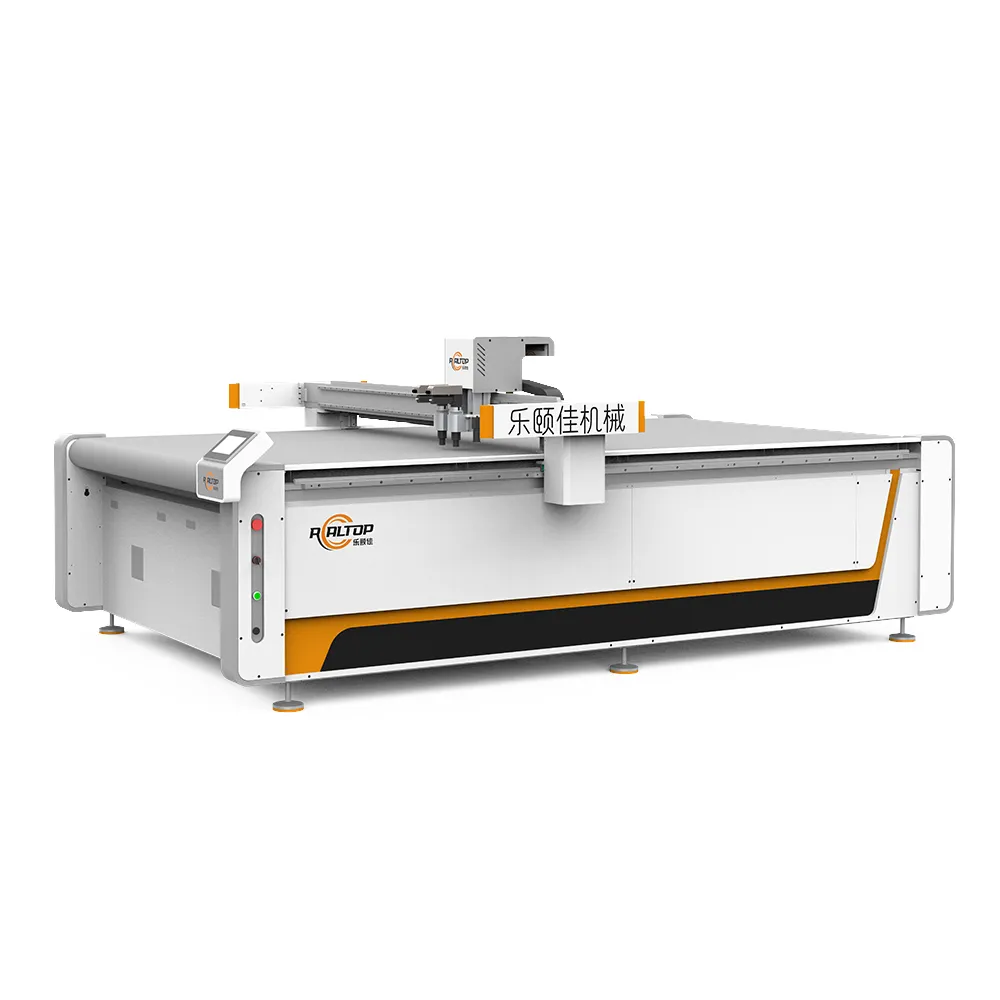
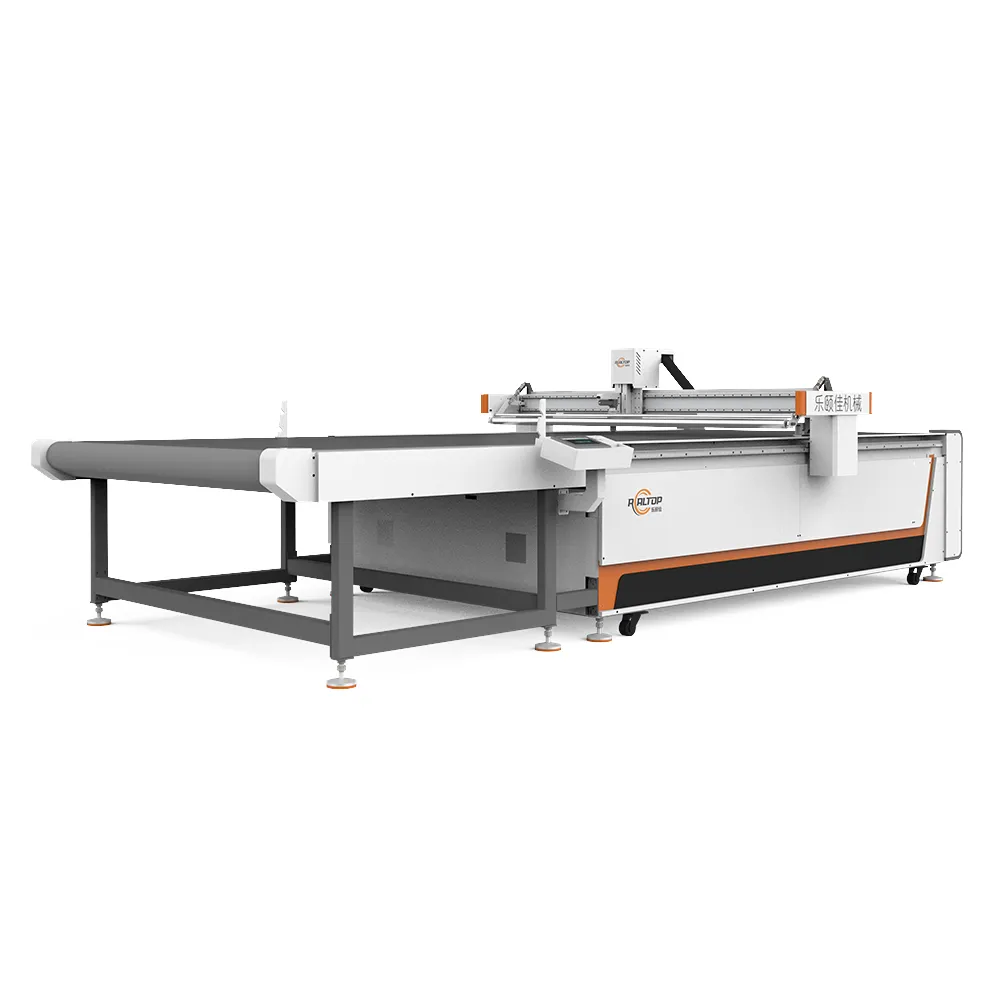
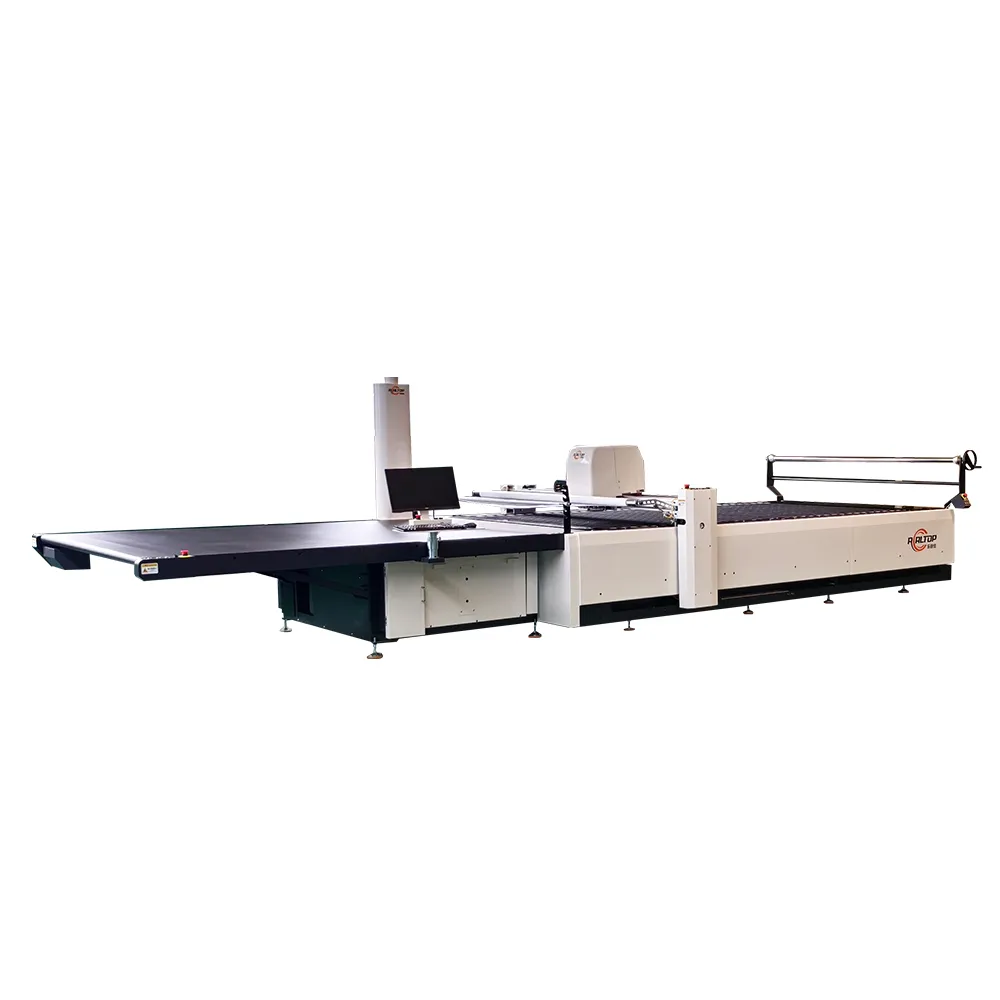
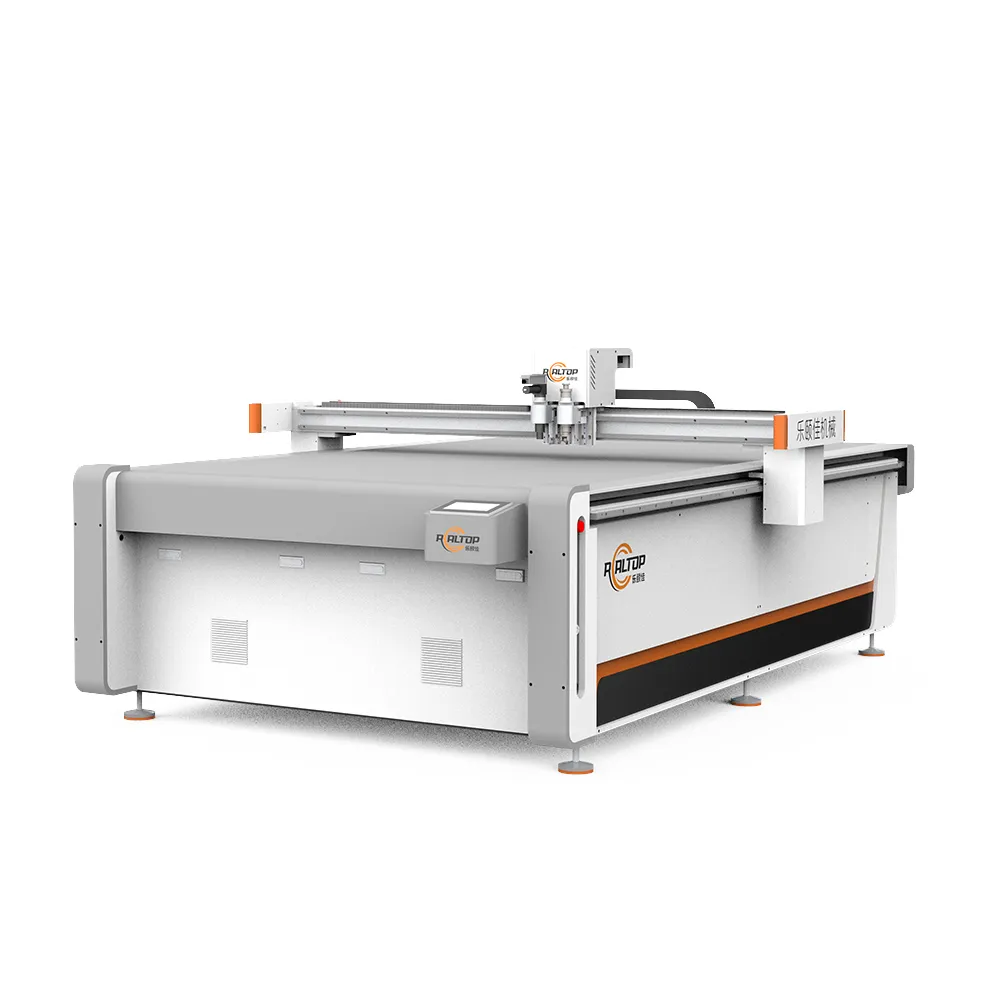
| Product Type | CNC Oscillating Knife Cutting Machine |
| Effective Cutting Area | 2500×1600mm / 2500×2200mm / 3000×2200mm |
| Maximum Speed | 2000mm/s |
| Reset Accuracy | ±0.1mm |
| Cutting Thickness | ≤40mm (basis not stated in source — confirm material type and density) |
| Table Type | Automatic feeding with industrial belt |
| Optional Tools | Round knife, oscillating knife, marking pen |
| Positioning System | Panoramic visual positioning for edge and template cutting |
| Control System | REALTOP customized high-speed control system |
| Data Formats | dxf, plt, ai, pdf |
| Voltage Options | 380V / 220V |
| Safety Devices | Infrared blocking stop, anti-collision protection |
| Belt Construction | Low noise, high temperature resistant, glass fiber tension cord |
| Wiring | Oxygen-free copper shielded wire |
| Bed Treatment | Quenched to eliminate internal stress |
Application Suitability
| Application | Material or Output |
|---|---|
| Automotive interior trimming | EVA foam, synthetic leather, fabric laminates, fiberglass-reinforced PP honeycomb |
| Car seat upholstery cutting | Multi-layer fabric, genuine and faux leather, headliner material |
| Advertising and signage production | PVC foam board, self-adhesive vinyl, corrugated plastic, acrylic sheet |
| Gasket and seal fabrication | Non-asbestos fiber, rubber sheet, PTFE, composite gasket material |
| Packaging sample making | Corrugated cardboard, greyboard, folding carton stock |
Why Working Area Alone Is Not Enough for a CNC Oscillating Knife Cutting Machine for Sale
Specifying a machine by table size without confirming tool head compatibility is the fastest way to ruin your first production run.
I watched a buyer receive a machine that performed flawlessly on the EVA foam samples tested at the factory. When it arrived on their floor and met fiberglass-reinforced PP honeycomb board, the oscillating knife left ragged, delaminated edges that required manual cleanup on every single piece. The team spent four days re-tuning feed rates, amplitude and blade geometry before achieving acceptable quality. The working area was correct. The tooling was not. [NEED_CITE: material-specific cutting configuration requirements]
Mapping the Equipment Range to Your Production Volume
Choosing between the three available cutting areas — 2500×1600mm, 2500×2200mm and 3000×2200mm — depends on your typical sheet dimensions and how much material waste you can tolerate. A smaller table forces you to nest patterns more aggressively or accept more offcuts per sheet. The larger format allows full-hide leather layouts and automotive interior panels to be cut with fewer repositioning cycles, which matters when daily volume justifies continuous operation.
Visual Positioning and Its Role in Contour Work
The panoramic visual positioning system on this CNC oscillating knife cutting machine for sale supports both automatic edge cutting and template-based contour following. For printed materials like signage vinyl or sublimated fabric, the camera reads registration marks and adjusts the cutting path in real time. This eliminates the drift you see when mechanical stops alone guide the head across a long sheet, particularly on materials that stretch or shift under vacuum hold-down. [NEED_CITE: CCD camera registration accuracy in digital cutting]
What the Specifications Mean on the Shop Floor
The reset accuracy of ±0.1mm determines how closely consecutive cuts align when you are nesting multiple parts from a single hide or fabric roll — essential for automotive seat covers where stitch lines must match across panels. The quenched machine bed removes internal stresses from welding and machining, which prevents the frame from warping as ambient temperature changes through the seasons. Oxygen-free copper shielded wiring reduces signal degradation across the cable chain, keeping high-speed motion commands clean even after millions of flex cycles. The automatic feeding table with its glass fiber tension cord belt handles continuous roll-fed material without stretching or tracking off-center, which is a common failure point on lighter belt constructions.
The Hidden Cost of Skipping Material Trials
Ordering a machine based on a brochure specification sheet without running your actual material through it first leads to problems that only appear during commissioning. Vacuum table zoning that works for large signage panels may fail to hold small gasket pieces flat, causing lift and blade deflection. A round knife that slices cleanly through single-ply vinyl may crush multi-layer foam composites. These issues are not defects — they are configuration mismatches that a sample cutting report would have revealed before the machine left the factory. [NEED_CITE: vacuum hold-down requirements for small part cutting]
Why Buyers Source This Equipment Here
In-house design and production span both knife and laser cutting technologies, so you receive a recommendation based on material behavior rather than a single product line quota. Tool head and table configurations are specified per material type and daily volume, not quoted from a fixed catalog page. CCD camera positioning is confirmed against your actual printed registration marks before the order is finalized. Software compatibility is verified with your existing dxf, plt, ai and pdf nesting workflows. Voltage, plug type and control language are locked in before production begins, avoiding the shipment-day surprises that delay installation.
Documentation & Verification
- Machine specification sheet listing the exact tool head and table configuration matched to your material
- Sample cutting report produced on your own fabric, foam or composite stock before order confirmation
- Electrical schematic with voltage and frequency confirmation for your facility
- Software licence and file format compatibility note covering your nesting workflow
- Factory test record documenting motion accuracy and cutting quality on agreed materials
- Operation and maintenance manual with spare parts list in your specified language
Installation, Commissioning & Support
- Foundation must be level within tolerance to maintain the ±0.1mm reset accuracy across the full cutting area
- Dedicated circuit matching your confirmed 380V or 220V supply with correct breaker rating for the control system
- Machine arrives with belt and vacuum table pre-assembled; leveling and alignment completed on-site
- First-run parameter tuning includes blade depth, oscillation amplitude and feed rate for your specific material
- Operator training covers panoramic visual positioning setup and registration mark calibration procedures
- Spare blade and belt inventory specified based on your material abrasiveness and daily cutting hours
What We Need to Quote Accurately
Send the material type, maximum thickness, typical sheet or roll dimensions and your expected daily cutting volume. Confirm your facility voltage, frequency and the control language your operators require. If you work with printed materials, provide a sample with registration marks so visual positioning can be tested before the CNC oscillating knife cutting machine for sale is configured for shipment.
Frequently Asked Questions
Q: How do I decide between knife cutting and laser cutting for my material?
A: Knife cutting works well for materials that melt, discolor or release fumes under laser heat — foam, multi-layer fabric, fiberglass composites and PVC-based substrates are typical examples. Laser cutting suits acrylic, thin wood veneer and certain textiles where a sealed edge is required. The decision starts with your material composition and the edge finish your downstream process demands.
Q: Which working area size should I choose for automotive interior panels?
A: Headliner panels and dashboard skins often exceed 1600mm in one dimension, making the 2522 or 3022 format the practical choice. Door panel inserts and console trims may fit within the 2516 area. Match the table to your largest single-piece pattern, not your average part size.
Q: How do I know which tool head my material requires?
A: Oscillating knives handle thick foam, composites and multi-layer fabric by vibrating the blade to reduce drag. Round knives suit single-ply woven fabric and thin vinyl at high speed. A marking pen scores fold lines on carton samples. Your material sample test determines the final selection before the machine ships.
Q: What file formats does the control system accept?
A: The system imports dxf, plt, ai and pdf files directly. If your current nesting software exports in one of these formats, the workflow transfers without an intermediate conversion step. Confirm your specific software version during the specification review stage.
Q: Can the machine be configured for my country’s electrical standard?
A: Voltage is configurable between 380V and 220V, and plug type is matched to your market. The control system language is also set before production. All electrical details are documented in the schematic and confirmed prior to shipment.
Tooling Flexibility — In-house design covers both knife and laser cutting, letting you match the method to the material rather than forcing one technology across every job.
Technical Specifications
| Parameter | Value |
|---|---|
| Product Type | CNC Oscillating Knife Cutting Machine |
| Effective Cutting Area | 2500×1600mm / 2500×2200mm / 3000×2200mm |
| Maximum Speed | 2000mm/s |
| Reset Accuracy | ±0.1mm |
| Cutting Thickness | ≤40mm (basis not stated in source — confirm material type and density) |
| Table Type | Automatic feeding with industrial belt |
| Optional Tools | Round knife, oscillating knife, marking pen |
| Positioning System | Panoramic visual positioning for edge and template cutting |
| Control System | REALTOP customized high-speed control system |
| Data Formats | dxf, plt, ai, pdf |
| Voltage Options | 380V / 220V |
| Safety Devices | Infrared blocking stop, anti-collision protection |
| Belt Construction | Low noise, high temperature resistant, glass fiber tension cord |
| Wiring | Oxygen-free copper shielded wire |
| Bed Treatment | Quenched to eliminate internal stress |
Application Suitability
| Application | Material or Output |
|---|---|
| Automotive interior trimming | EVA foam, synthetic leather, fabric laminates, fiberglass-reinforced PP honeycomb |
| Car seat upholstery cutting | Multi-layer fabric, genuine and faux leather, headliner material |
| Advertising and signage production | PVC foam board, self-adhesive vinyl, corrugated plastic, acrylic sheet |
| Gasket and seal fabrication | Non-asbestos fiber, rubber sheet, PTFE, composite gasket material |
| Packaging sample making | Corrugated cardboard, greyboard, folding carton stock |
Why Working Area Alone Is Not Enough for a CNC Oscillating Knife Cutting Machine for Sale
Specifying a machine by table size without confirming tool head compatibility is the fastest way to ruin your first production run.
I watched a buyer receive a machine that performed flawlessly on the EVA foam samples tested at the factory. When it arrived on their floor and met fiberglass-reinforced PP honeycomb board, the oscillating knife left ragged, delaminated edges that required manual cleanup on every single piece. The team spent four days re-tuning feed rates, amplitude and blade geometry before achieving acceptable quality. The working area was correct. The tooling was not. [NEED_CITE: material-specific cutting configuration requirements]
Mapping the Equipment Range to Your Production Volume
Choosing between the three available cutting areas — 2500×1600mm, 2500×2200mm and 3000×2200mm — depends on your typical sheet dimensions and how much material waste you can tolerate. A smaller table forces you to nest patterns more aggressively or accept more offcuts per sheet. The larger format allows full-hide leather layouts and automotive interior panels to be cut with fewer repositioning cycles, which matters when daily volume justifies continuous operation.
Visual Positioning and Its Role in Contour Work
The panoramic visual positioning system on this CNC oscillating knife cutting machine for sale supports both automatic edge cutting and template-based contour following. For printed materials like signage vinyl or sublimated fabric, the camera reads registration marks and adjusts the cutting path in real time. This eliminates the drift you see when mechanical stops alone guide the head across a long sheet, particularly on materials that stretch or shift under vacuum hold-down. [NEED_CITE: CCD camera registration accuracy in digital cutting]
What the Specifications Mean on the Shop Floor
The reset accuracy of ±0.1mm determines how closely consecutive cuts align when you are nesting multiple parts from a single hide or fabric roll — essential for automotive seat covers where stitch lines must match across panels. The quenched machine bed removes internal stresses from welding and machining, which prevents the frame from warping as ambient temperature changes through the seasons. Oxygen-free copper shielded wiring reduces signal degradation across the cable chain, keeping high-speed motion commands clean even after millions of flex cycles. The automatic feeding table with its glass fiber tension cord belt handles continuous roll-fed material without stretching or tracking off-center, which is a common failure point on lighter belt constructions.
The Hidden Cost of Skipping Material Trials
Ordering a machine based on a brochure specification sheet without running your actual material through it first leads to problems that only appear during commissioning. Vacuum table zoning that works for large signage panels may fail to hold small gasket pieces flat, causing lift and blade deflection. A round knife that slices cleanly through single-ply vinyl may crush multi-layer foam composites. These issues are not defects — they are configuration mismatches that a sample cutting report would have revealed before the machine left the factory. [NEED_CITE: vacuum hold-down requirements for small part cutting]
Why Buyers Source This Equipment Here
In-house design and production span both knife and laser cutting technologies, so you receive a recommendation based on material behavior rather than a single product line quota. Tool head and table configurations are specified per material type and daily volume, not quoted from a fixed catalog page. CCD camera positioning is confirmed against your actual printed registration marks before the order is finalized. Software compatibility is verified with your existing dxf, plt, ai and pdf nesting workflows. Voltage, plug type and control language are locked in before production begins, avoiding the shipment-day surprises that delay installation.
Documentation & Verification
- Machine specification sheet listing the exact tool head and table configuration matched to your material
- Sample cutting report produced on your own fabric, foam or composite stock before order confirmation
- Electrical schematic with voltage and frequency confirmation for your facility
- Software licence and file format compatibility note covering your nesting workflow
- Factory test record documenting motion accuracy and cutting quality on agreed materials
- Operation and maintenance manual with spare parts list in your specified language
Installation, Commissioning & Support
- Foundation must be level within tolerance to maintain the ±0.1mm reset accuracy across the full cutting area
- Dedicated circuit matching your confirmed 380V or 220V supply with correct breaker rating for the control system
- Machine arrives with belt and vacuum table pre-assembled; leveling and alignment completed on-site
- First-run parameter tuning includes blade depth, oscillation amplitude and feed rate for your specific material
- Operator training covers panoramic visual positioning setup and registration mark calibration procedures
- Spare blade and belt inventory specified based on your material abrasiveness and daily cutting hours
What We Need to Quote Accurately
Send the material type, maximum thickness, typical sheet or roll dimensions and your expected daily cutting volume. Confirm your facility voltage, frequency and the control language your operators require. If you work with printed materials, provide a sample with registration marks so visual positioning can be tested before the CNC oscillating knife cutting machine for sale is configured for shipment.
Frequently Asked Questions
Q: How do I decide between knife cutting and laser cutting for my material?
A: Knife cutting works well for materials that melt, discolor or release fumes under laser heat — foam, multi-layer fabric, fiberglass composites and PVC-based substrates are typical examples. Laser cutting suits acrylic, thin wood veneer and certain textiles where a sealed edge is required. The decision starts with your material composition and the edge finish your downstream process demands.
Q: Which working area size should I choose for automotive interior panels?
A: Headliner panels and dashboard skins often exceed 1600mm in one dimension, making the 2522 or 3022 format the practical choice. Door panel inserts and console trims may fit within the 2516 area. Match the table to your largest single-piece pattern, not your average part size.
Q: How do I know which tool head my material requires?
A: Oscillating knives handle thick foam, composites and multi-layer fabric by vibrating the blade to reduce drag. Round knives suit single-ply woven fabric and thin vinyl at high speed. A marking pen scores fold lines on carton samples. Your material sample test determines the final selection before the machine ships.
Q: What file formats does the control system accept?
A: The system imports dxf, plt, ai and pdf files directly. If your current nesting software exports in one of these formats, the workflow transfers without an intermediate conversion step. Confirm your specific software version during the specification review stage.
Q: Can the machine be configured for my country’s electrical standard?
A: Voltage is configurable between 380V and 220V, and plug type is matched to your market. The control system language is also set before production. All electrical details are documented in the schematic and confirmed prior to shipment.










商品评价
There are no reviews yet.