

Fast Delivery
Quick, reliable shipping to any location.

Free & easy returns
Return this item by mail or in store within 90 days for a full refund.
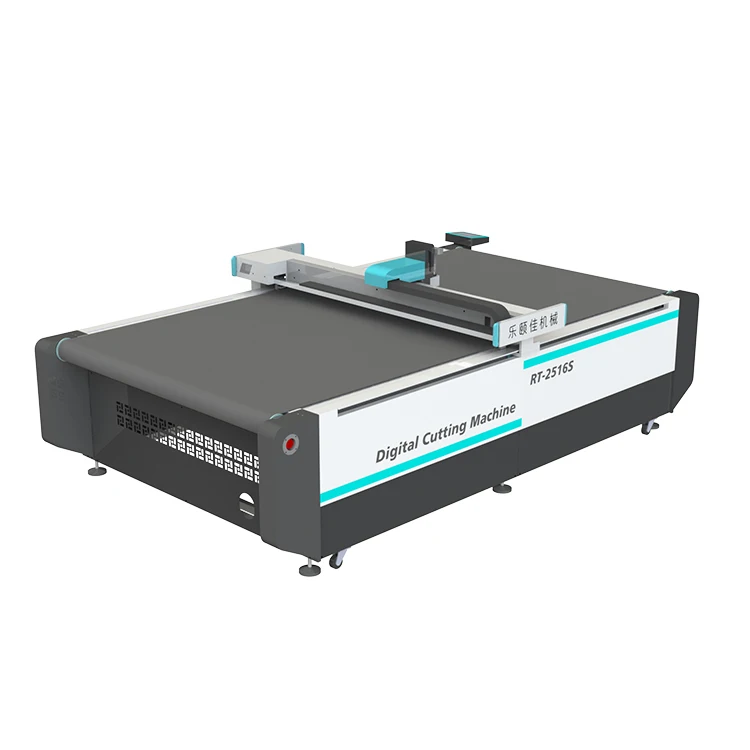
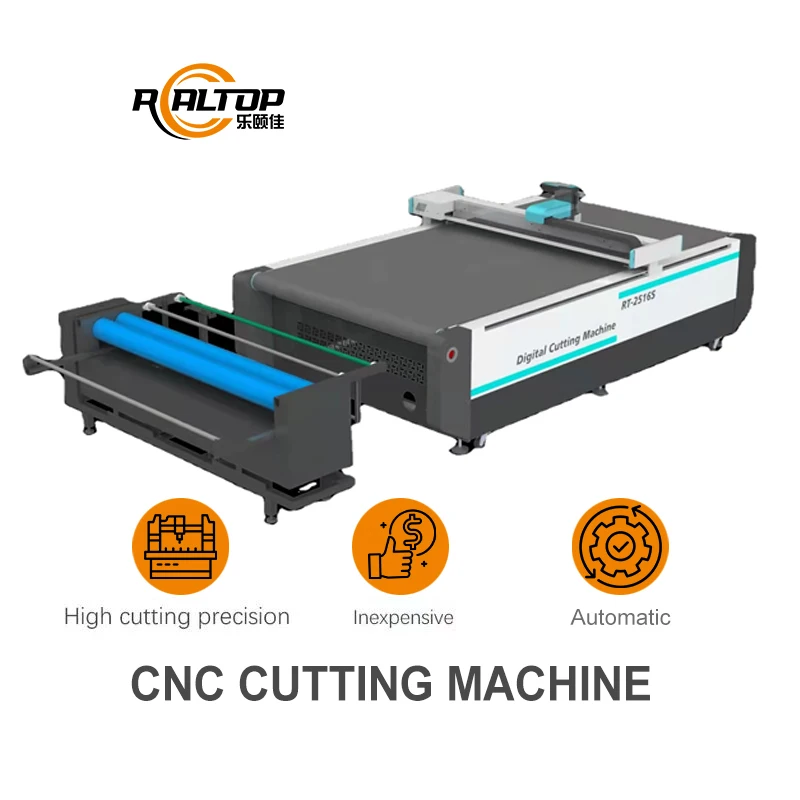
Material-First Configuration — RT-D2516/RT-S2516 auto-feeding cutting tables are matched to fabric type, ply count and roll width before the tool head and vacuum zoning are locked in, avoiding the common mistake of sizing a machine on bed area alone.
Technical Specifications
| Parameter | Value |
|---|---|
| Model | RT-D2516/RT-S2516 |
| Product Type | CNC Oscillating Knife Cutting Machine with Auto Feeding |
| Working Area | 1600×2500 mm |
| Overall Dimensions (L×W×H) | 3450×2300×1250 mm |
| Rated Power | 9 kW |
| Voltage | 380V ±10% (frequency 50/60 Hz to be confirmed per market) |
| Working Table | Flat vacuum table with conveyor belt and high-density felt surface |
| Vacuum Pump | 7.5 kW |
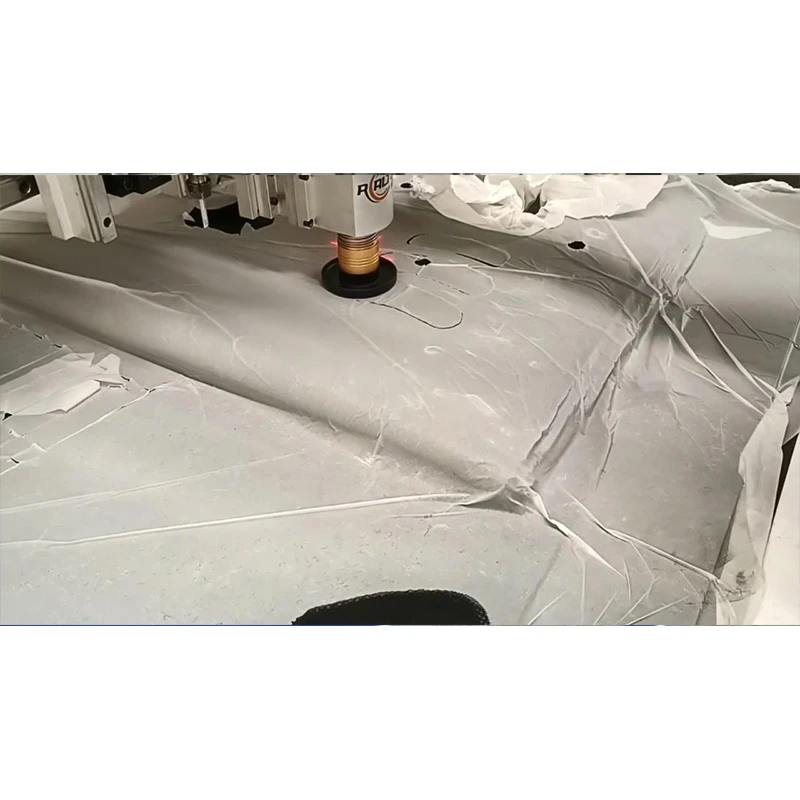
| Multifunctional Tool Head | Swiss imported oscillating knife — full cut, half cut and cursor location |
| Compatible Tools | Round knife, marking pen, auto feeder (modular tool holder) |
| Translational Velocity | 800–1200 mm/s |
| Cutting Thickness | ≤50 mm (varies by material) |
| Repeated Accuracy | ≤0.1 mm |
| Transmission | Digital servo motor, linear guide, synchronous belt, ball screw, rack and pinion |
| Servo Motor | Panasonic or Delta (configuration-dependent) |
| Guide Rail | Taiwan Hiwin |
| Conveyor Belt | Germany imported |
| Safety Device | Infrared sensors |
| Instruction Format | HP-GL compatible |
| Control Language | English, Russian, Italian, Chinese (additional languages configurable) |
| Assembly State | Fully assembled |
| Certification | CE |
Application Suitability
| Application | Material or Output |
|---|---|
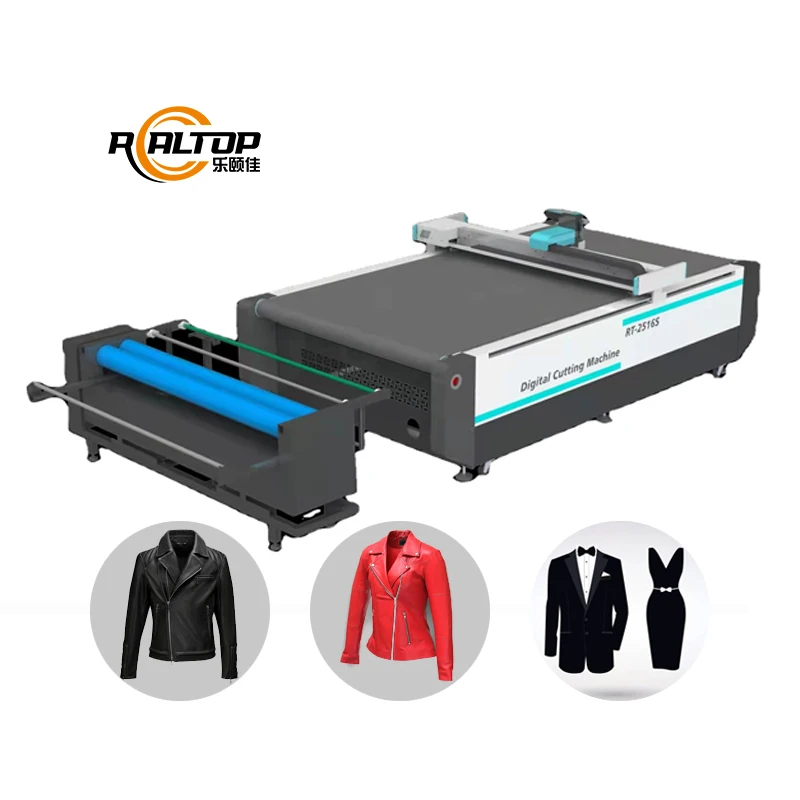
| Garment and fashion fabric cutting | Single-layer and multi-layer cotton, polyester, blended textiles from roll stock |
| Automotive interior and upholstery | Leather, sponge composite leather, PVC, soft flexible trim materials |
| Soft signage and flexible graphics | Vinyl, banner material, flexible banner substrate on flatbed vacuum table |
| Technical textile processing | Silicone, rubber, soft glass, composite gasket materials up to 50 mm thickness |
What "Cutting Thickness ≤50 mm" Actually Depends On
The maximum cutting depth is only meaningful when the material, ply count and blade type are all specified together.
I have watched a fabric cutting line lose an entire week because the oscillating knife was spec’d for single-layer cotton but the real job was six-layer coated polyester — the blade couldn’t bite, translational velocity dropped sharply and throughput fell to roughly half the expected figure. That mismatch didn’t show up on any brochure. The lesson was simple: every roll-fed CNC fabric cutting machine for sale needs its cutting depth validated against the buyer’s actual material stack, not a generic reference sheet [NEED_CITE: oscillating knife cutting depth by material density and ply count]. When the tool head, vacuum hold-down and feed rate are all tuned to the specific fabric, the ≤50 mm figure holds. When they aren’t, the number is just a starting point for negotiation.
Why the Full Catalogue Matters Before Picking Knife or Laser
A buyer surveying cutting equipment for the first time faces a choice that goes beyond working area. Oscillating knife cutting handles layered textiles, sponge composites and thick flexible materials without melting edges — a problem CO2 lasers introduce on synthetics. Laser, in turn, seals edges on certain fabrics that knife cutting leaves raw. REALTOP builds both knife and laser platforms in-house, so the RT-D2516/RT-S2516 sits in the knife portion of the range specifically for high-volume soft material work where edge sealing is not required and ply stacking is routine. Comparing the two methods against the same material sample is how the right CNC oscillating knife cutting machine manufacturer gets identified early, rather than after a purchase regret.
Roll Feeding, Vacuum Zoning and the Small-Part Problem
Continuous roll-fed operation demands two things working together: the conveyor belt must advance the web accurately, and the vacuum table must hold every piece flat — including small pattern parts near the edges. The 7.5 kW vacuum pump on this table pulls through a high-density felt surface that distributes suction across the full 1600×2500 mm working area [NEED_CITE: vacuum table zoning requirements for nested fabric patterns]. The German-imported conveyor belt and the auto feeder module work as a pair: the feeder pulls the next section of roll stock forward while the belt positions the previous section for the next cutting cycle. If vacuum zoning is inadequate, small garment pieces lift during the final cuts and produce ragged edges that fail quality inspection.
Reading the Specs That Matter for Fabric Cutting
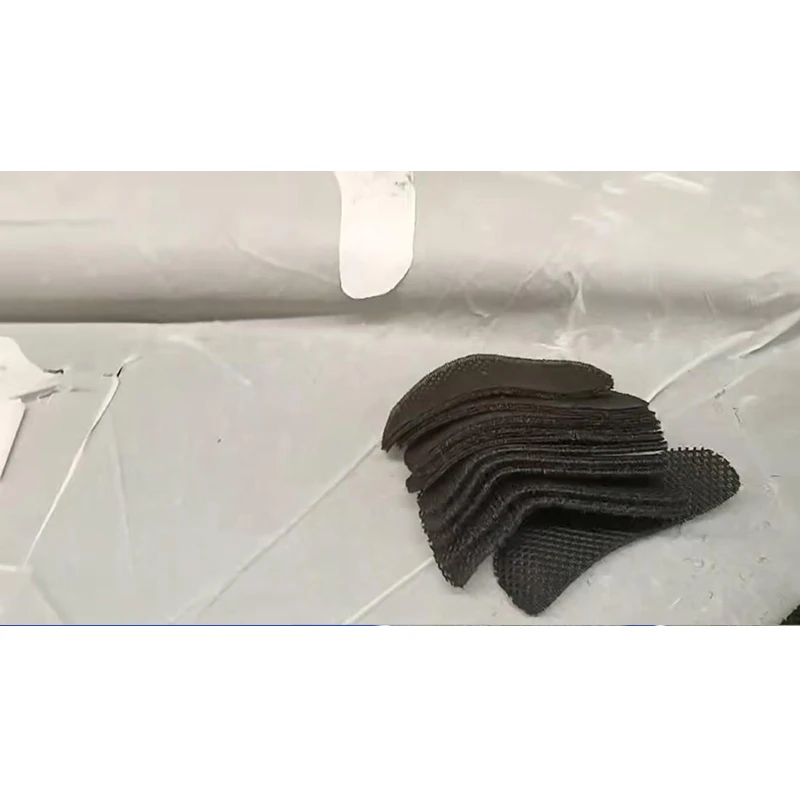
Repeated accuracy of ≤0.1 mm is achieved through the combination of Taiwan Hiwin linear guides and rack-and-pinion transmission driven by Panasonic or Delta digital servo motors. In fabric cutting, this tolerance keeps pattern contours aligned across multiple plies so that stacked pieces match the digital template after every cut. The Swiss imported oscillating knife supports both full-cut and half-cut modes — full cut for separating pattern pieces from the web, half cut for kiss-cutting where the backing layer must remain intact. Translational velocity ranges from 800 to 1200 mm/s depending on material resistance and ply count; denser coated fabrics pull the speed toward the lower end while single-layer lightweight textiles allow the upper range. The HP-GL compatible instruction system accepts file formats common in garment CAD software, reducing the conversion work between design and production [NEED_CITE: HP-GL compatibility with garment nesting software workflows].
When the Wrong Tool Head Costs More Than the Machine
Choosing a drag knife for a material that needs oscillating action produces crushed edges on foam composites and frayed contours on layered textiles. Selecting a round knife for intricate pattern work leaves internal corners uncut. I have seen a buyer commit to a cutting table based on bed size and discover after delivery that the tool holder didn’t support the marking pen they needed for pattern ID on automotive leather pieces. The modular tool holder on the RT-D2516/RT-S2516 accepts oscillating knife, round knife and marking pen, but the configuration must be stated on the order — swapping heads in the field is possible, but production stops while it happens [NEED_CITE: tool head changeover time on CNC oscillating knife platforms].
Why Buyers Source This Range Here
In-house design and production across both knife and laser platforms means the cutting method is matched to the material, not forced into one technology. The tool head and table configuration on each RT-D2516/RT-S2516 is specified against the buyer’s material type, thickness and daily volume before the order is finalized. CCD camera positioning is available for printed contour work where registration marks must be tracked at production speed. Software compatibility — file format, nesting workflow, HP-GL import — is confirmed before the machine enters production. Voltage, control language and plug type are customized to the destination market, and sample cutting on the buyer’s own material is completed before commitment, with cycle data and edge quality documented in a formal report.
Documentation & Verification
- Machine specification sheet with confirmed voltage, frequency and plug type for the destination market
- Sample cutting report on buyer’s own fabric, documenting edge quality, ply count and cycle data
- Tool head and vacuum table configuration list matched to the specified material and production volume
- Electrical schematic and wiring diagram for on-site troubleshooting and maintenance reference
- Software licence with HP-GL compatibility note and file format verification record
- Spare parts list covering blades, felt sections and conveyor belt segments
Installation, Commissioning & Support
- 9 kW rated power plus 7.5 kW vacuum pump require a dedicated 380V circuit with confirmed frequency before energizing
- Overall dimensions 3450×2300×1250 mm demand clear floor space and overhead clearance for auto feeder roll loading
- Machine ships fully assembled — positioning requires forklift access and level concrete floor for vacuum seal integrity
- First-run commissioning includes vacuum zoning check across the 1600×2500 mm table with the buyer’s actual roll stock
- Operator training covers modular tool holder changeover between oscillating knife, round knife and marking pen
- Infrared sensor safety devices tested and calibrated during commissioning before production release
What to Include in Your Inquiry
Provide the fabric type, weight per square meter, ply count and roll width you plan to run daily. Specify your local voltage and frequency, preferred control language, and whether your existing CAD software outputs HP-GL or another format. If the material is a coated or composite textile, send a sample roll section so the tool head and vacuum settings can be validated before the quotation is finalized.
Frequently Asked Questions
Q: How do I decide between knife and laser cutting for my fabric?
A: Knife cutting handles multi-layer stacks, sponge composites and thick flexible materials without edge melting. Laser cutting seals edges on synthetics but cannot stack plies. We run your material on both platforms and compare edge quality, cycle time and throughput before recommending a method — the full catalogue covers both so the choice is based on evidence, not assumption.
Q: What is the difference between RT-D2516 and RT-S2516?
A: Both models share the same 1600×2500 mm working area, tool head options and auto-feeding capability. The distinction lies in configuration details such as servo motor brand and transmission arrangement. The right choice depends on your material density and daily volume — we confirm the exact build against your production requirements before issuing a quotation.
Q: Can you test my material and provide a cutting report before I order?
A: Yes. Send a section of your actual roll stock and we run it on the RT-D2516/RT-S2516 with the proposed tool head and vacuum settings. The sample cutting report documents edge quality, achievable translational velocity and cutting thickness for your specific ply count, so you see real data before committing.
Q: What voltage and language customizations are available?
A: The standard voltage is 380V ±10%, with frequency configured to 50 or 60 Hz depending on your market. Control language options include English, Russian, Italian and Chinese, with additional languages configurable on request. Voltage, plug type and language are all confirmed on the specification sheet before production begins.
Q: What documentation ships with the machine?
A: Every unit ships with a machine specification sheet, electrical schematic, tool head and table configuration list, CE declaration, factory test record, operation and maintenance manual, software licence with file format compatibility note and a spare parts list. Packing photographs are provided before dispatch for shipping verification.










商品评价
There are no reviews yet.