


Fast Delivery
Quick, reliable shipping to any location.

Free & easy returns
Return this item by mail or in store within 90 days for a full refund.
Tool Head Mapping Before Purchase — every 1625 unit leaves the factory with a configuration list matched to your material thickness and edge-quality requirement, not just a working-area label.
Technical Specifications
| Parameter | Value |
|---|---|
| Model | 1625 |
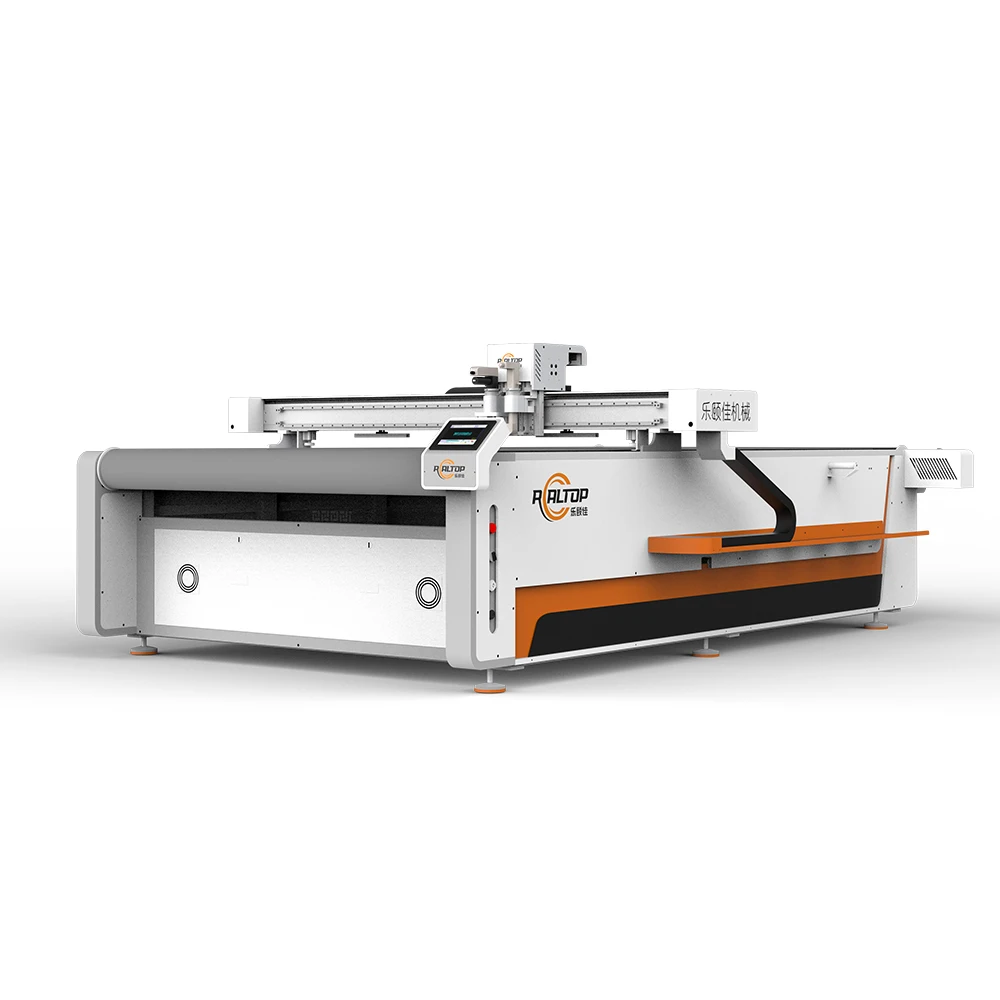
| Product Type | CNC Oscillating Knife Cutting Machine |
| Working Area | 1600 × 2500 mm |
| Cutting Thickness | Up to 30 mm (depends on material density) |
| Cutting Accuracy | ±0.1 mm |
| Cutting Speed | 0 – 2000 mm/s (depends on material and contour complexity) |
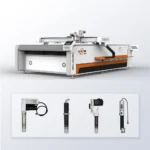
| Available Tool Heads | Oscillating knife, driven rotary knife, creasing wheel, kiss cutting tool, pneumatic knife, milling tool, V-groove knife |
| Vacuum Table | Aluminum bellows vacuum table |
| Vacuum Pump | 9 kW |
| Servo Motor Options | Panasonic, Delta, or Dorna (selection based on buyer requirement) |
| Control System | PLC control panel with intuitive interface |
| Supported File Formats | PLT, DXF, AI, PDF |
| Voltage Options | 110V / 220V / 380V |
| Software Language Options | English, Russian, Italian, Chinese; custom languages available on request |
| Safety Device | Infrared sensor device and emergency stop device |
| Machine Size | 3300 × 2100 × 1350 mm |
| Certification | CE (verify exact scope with manufacturer before shipment) |
Application Suitability
| Application | Material or Output |
|---|---|
| Apparel Manufacturing | Suits, knitwear, lace, and complex multi-layer fabrics |
| Automotive Interiors | Seat fabrics, carpets, and PVC floor mats |
| Home Textiles | Sofa fabrics, curtains, and heavy rugs |
| Composite Material Processing | Carbon fiber prepreg, aramid, and specialty layered materials |
| Footwear & Leather Goods | Genuine leather, synthetic leather, and insole board |
| Packaging & Carton Sample Making | Corrugated cardboard, grey board, and folding carton stock |
Why Working Area Alone Does Not Tell You What the Machine Can Actually Cut
Specifying a CNC oscillating knife cutting machine manufacturer by table size is how production floors end up with equipment that cannot hold down small gasket pieces or slice through the foam density they actually run. The working area tells you the maximum sheet footprint; the tool head, vacuum zoning, and stroke length decide whether the machine survives your real shift.
The 1625 is configured per material sample, not per catalogue row.
I have watched buyers sign off on a 1600 × 2500 mm bed, then discover their 25 mm EVA foam lifts off the table at the corners because the vacuum zones were never matched to their nesting pattern. That discovery usually happens after the container is on the water. [NEED_CITE: vacuum hold-down requirements for flexible materials on flatbed cutters]
Matching Tool Heads to the Full Textile Spectrum
A single oscillating knife blade does not cover every fabric, leather, and composite in the table above. The 1625 offers seven interchangeable tool heads, and the correct selection depends on whether you are kiss-cutting vinyl for signage, slicing through thirty millimeters of bonded foam, or creasing carton board for sample boxes. Buyers evaluating a CNC oscillating knife cutting machine manufacturer should request a tool head and blade recommendation sheet tied to their specific material list before committing to a build slot.
What the Aluminum Bellows Table Means for Daily Hold-Down
Flat vacuum tables with drilled holes lose suction the moment a cut part is smaller than the nearest zone boundary. The aluminum bellows design on the 1625 creates a continuous sealing surface across the 1600 × 2500 mm bed, which matters when you are nesting small leather shoe components or gasket profiles that would otherwise drift during the final pass. A 9 kW pump sits behind this; its job is to keep the material flat even when the knife exits a cut and air rushes into the kerf. [NEED_CITE: aluminum bellows versus drilled-hole vacuum tables in flatbed digital cutting]
Reading the Specifications That Decide Your Daily Output
Cutting speed is listed as 0 – 2000 mm/s, but that upper figure is only reachable on straight-line paths through thin, single-layer materials. Complex contours in multi-layer fabric drop the effective speed considerably because the servo drive has to decelerate at every direction change to maintain the ±0.1 mm accuracy. The PLC control panel manages this trade-off in real time, adjusting acceleration curves based on the geometry in your DXF or PLT file.
Servo motor selection — Panasonic, Delta, or Dorna — affects how aggressively the machine can brake and reverse at tight corners. Higher-resolution encoders hold tighter tolerances on intricate lace patterns, while a cost-effective servo may be entirely adequate for straight-cut automotive carpet. This is where a CNC oscillating knife cutting machine manufacturer earns its reputation: by specifying the drive train to the buyer’s actual contour mix, not just quoting the peak traverse rate.
What Happens When Configuration Is Skipped
When a buyer accepts a default configuration instead of insisting on a sample cutting report, the consequences arrive quietly. Foam edges that should be clean show compression bruising because the oscillation frequency was too low for the material density. Printed fabric contours drift because the CCD camera was never calibrated to the ink density of the registration marks. Small carton samples tear at the crease line because the creasing wheel pressure was set for a board weight the machine never actually runs. [NEED_CITE: common configuration mismatches in oscillating knife cutting applications]
Why Source the 1625 Through This Build Path
In-house design and production covering both knife and laser cutting technologies means the buyer is not forced into one method when the material actually suits the other. The 1625 sits inside a broader catalogue where a buyer surveying options can compare knife, CO2, and fiber laser head-to-head before narrowing the choice.
Tool head and table configuration is specified per material and production volume, not left to a default build sheet. Software compatibility is confirmed before the order is locked, so your existing nesting workflow transfers without a second software purchase. Voltage, plug type, and control language are agreed in writing before production begins. Sample cutting on the buyer’s own material is standard before commitment, so edge quality is a verified fact rather than a catalogue promise.
Documentation & Verification
- Machine specification sheet listing every tool head and blade type included in the build
- Electrical schematic confirming voltage, phase, and plug type for your facility
- Sample cutting report produced on your material with measured edge quality and accuracy
- Factory test record showing run-in hours and servo tuning parameters before dispatch
- Software licence and file format compatibility note covering your existing nesting workflow
- Spare parts list with blade and belt part numbers matched to the tool heads supplied
Installation, Commissioning & Support
- Foundation requires a level concrete floor capable of supporting the 3300 × 2100 × 1350 mm footprint plus operator clearance
- Dedicated electrical circuit matching the confirmed voltage option (110V / 220V / 380V) and the 9 kW vacuum pump draw
- Machine ships in a single crate; bellows table and gantry are assembled on-site by the installation team
- First-power commissioning includes servo tuning and vacuum zone mapping across the 1600 × 2500 mm bed
- Operator training covers PLC panel navigation, tool head changeover, and file import from DXF, PLT, AI, or PDF
- Consumable blade and oscillating knife stock listed in the spare parts sheet for local reorder
Before You Request a Quote
Send the material type, thickness, and sheet dimensions you actually run, along with your daily cut volume and the contour complexity of your typical nesting layout. Confirm your facility voltage and frequency, the control language your operators need, and whether your current nesting software exports DXF or PLT. If your material is a laminate or composite with layers that behave differently under a blade, ask for a sample cutting test before the build is finalized.
Frequently Asked Questions
Q: How do I choose between oscillating knife and laser for my fabric?
A: Oscillating knife cuts without heat, so synthetic fabrics do not melt or seal at the edge. Laser cuts faster on thin single layers and seals edges automatically, which suits some apparel but damages others. Request a sample cut on your actual fabric with both methods before deciding which 1625 configuration to order.
Q: The working area is 1600 × 2500 mm — can it cut thicker than 30 mm?
A: The 30 mm figure is the maximum rated stroke for the oscillating knife head. Actual cuttable thickness depends on material density and compressibility; low-density foam may exceed this while dense rubber may fall short. A sample cut on your material confirms the real limit.
Q: Which tool head should I specify for leather and footwear components?
A: Genuine leather typically runs on the oscillating knife for straight and curved profiles, with a driven rotary knife added for long continuous cuts. A kiss cutting tool handles synthetic uppers on a backing liner. Request a tool head recommendation sheet matched to your leather weight and cut geometry.
Q: Can the control language be changed to match my operators?
A: The PLC panel ships in English, Russian, Italian, or Chinese as standard. Custom language packs are available on request and should be confirmed at the order stage so the HMI screens and error messages are correct when the machine arrives at your facility.
Q: Do I need to send my own material for a test cut before ordering?
A: Yes. A sample cutting report on your actual material is the only way to verify edge quality, hold-down behavior, and achievable speed before the build slot is reserved. This test also confirms which tool heads and blades are included in your configuration.
Tool Head Mapping Before Purchase — every 1625 unit leaves the factory with a configuration list matched to your material thickness and edge-quality requirement, not just a working-area label.
Technical Specifications
| Parameter | Value |
|---|---|
| Model | 1625 |
| Product Type | CNC Oscillating Knife Cutting Machine |
| Working Area | 1600 × 2500 mm |
| Cutting Thickness | Up to 30 mm (depends on material density) |
| Cutting Accuracy | ±0.1 mm |
| Cutting Speed | 0 – 2000 mm/s (depends on material and contour complexity) |
| Available Tool Heads | Oscillating knife, driven rotary knife, creasing wheel, kiss cutting tool, pneumatic knife, milling tool, V-groove knife |
| Vacuum Table | Aluminum bellows vacuum table |
| Vacuum Pump | 9 kW |
| Servo Motor Options | Panasonic, Delta, or Dorna (selection based on buyer requirement) |
| Control System | PLC control panel with intuitive interface |
| Supported File Formats | PLT, DXF, AI, PDF |
| Voltage Options | 110V / 220V / 380V |
| Software Language Options | English, Russian, Italian, Chinese; custom languages available on request |
| Safety Device | Infrared sensor device and emergency stop device |
| Machine Size | 3300 × 2100 × 1350 mm |
| Certification | CE (verify exact scope with manufacturer before shipment) |
Application Suitability
| Application | Material or Output |
|---|---|
| Apparel Manufacturing | Suits, knitwear, lace, and complex multi-layer fabrics |
| Automotive Interiors | Seat fabrics, carpets, and PVC floor mats |
| Home Textiles | Sofa fabrics, curtains, and heavy rugs |
| Composite Material Processing | Carbon fiber prepreg, aramid, and specialty layered materials |
| Footwear & Leather Goods | Genuine leather, synthetic leather, and insole board |
| Packaging & Carton Sample Making | Corrugated cardboard, grey board, and folding carton stock |
Why Working Area Alone Does Not Tell You What the Machine Can Actually Cut
Specifying a CNC oscillating knife cutting machine manufacturer by table size is how production floors end up with equipment that cannot hold down small gasket pieces or slice through the foam density they actually run. The working area tells you the maximum sheet footprint; the tool head, vacuum zoning, and stroke length decide whether the machine survives your real shift.
The 1625 is configured per material sample, not per catalogue row.
I have watched buyers sign off on a 1600 × 2500 mm bed, then discover their 25 mm EVA foam lifts off the table at the corners because the vacuum zones were never matched to their nesting pattern. That discovery usually happens after the container is on the water. [NEED_CITE: vacuum hold-down requirements for flexible materials on flatbed cutters]
Matching Tool Heads to the Full Textile Spectrum
A single oscillating knife blade does not cover every fabric, leather, and composite in the table above. The 1625 offers seven interchangeable tool heads, and the correct selection depends on whether you are kiss-cutting vinyl for signage, slicing through thirty millimeters of bonded foam, or creasing carton board for sample boxes. Buyers evaluating a CNC oscillating knife cutting machine manufacturer should request a tool head and blade recommendation sheet tied to their specific material list before committing to a build slot.
What the Aluminum Bellows Table Means for Daily Hold-Down
Flat vacuum tables with drilled holes lose suction the moment a cut part is smaller than the nearest zone boundary. The aluminum bellows design on the 1625 creates a continuous sealing surface across the 1600 × 2500 mm bed, which matters when you are nesting small leather shoe components or gasket profiles that would otherwise drift during the final pass. A 9 kW pump sits behind this; its job is to keep the material flat even when the knife exits a cut and air rushes into the kerf. [NEED_CITE: aluminum bellows versus drilled-hole vacuum tables in flatbed digital cutting]
Reading the Specifications That Decide Your Daily Output
Cutting speed is listed as 0 – 2000 mm/s, but that upper figure is only reachable on straight-line paths through thin, single-layer materials. Complex contours in multi-layer fabric drop the effective speed considerably because the servo drive has to decelerate at every direction change to maintain the ±0.1 mm accuracy. The PLC control panel manages this trade-off in real time, adjusting acceleration curves based on the geometry in your DXF or PLT file.
Servo motor selection — Panasonic, Delta, or Dorna — affects how aggressively the machine can brake and reverse at tight corners. Higher-resolution encoders hold tighter tolerances on intricate lace patterns, while a cost-effective servo may be entirely adequate for straight-cut automotive carpet. This is where a CNC oscillating knife cutting machine manufacturer earns its reputation: by specifying the drive train to the buyer’s actual contour mix, not just quoting the peak traverse rate.
What Happens When Configuration Is Skipped
When a buyer accepts a default configuration instead of insisting on a sample cutting report, the consequences arrive quietly. Foam edges that should be clean show compression bruising because the oscillation frequency was too low for the material density. Printed fabric contours drift because the CCD camera was never calibrated to the ink density of the registration marks. Small carton samples tear at the crease line because the creasing wheel pressure was set for a board weight the machine never actually runs. [NEED_CITE: common configuration mismatches in oscillating knife cutting applications]
Why Source the 1625 Through This Build Path
In-house design and production covering both knife and laser cutting technologies means the buyer is not forced into one method when the material actually suits the other. The 1625 sits inside a broader catalogue where a buyer surveying options can compare knife, CO2, and fiber laser head-to-head before narrowing the choice.
Tool head and table configuration is specified per material and production volume, not left to a default build sheet. Software compatibility is confirmed before the order is locked, so your existing nesting workflow transfers without a second software purchase. Voltage, plug type, and control language are agreed in writing before production begins. Sample cutting on the buyer’s own material is standard before commitment, so edge quality is a verified fact rather than a catalogue promise.
Documentation & Verification
- Machine specification sheet listing every tool head and blade type included in the build
- Electrical schematic confirming voltage, phase, and plug type for your facility
- Sample cutting report produced on your material with measured edge quality and accuracy
- Factory test record showing run-in hours and servo tuning parameters before dispatch
- Software licence and file format compatibility note covering your existing nesting workflow
- Spare parts list with blade and belt part numbers matched to the tool heads supplied
Installation, Commissioning & Support
- Foundation requires a level concrete floor capable of supporting the 3300 × 2100 × 1350 mm footprint plus operator clearance
- Dedicated electrical circuit matching the confirmed voltage option (110V / 220V / 380V) and the 9 kW vacuum pump draw
- Machine ships in a single crate; bellows table and gantry are assembled on-site by the installation team
- First-power commissioning includes servo tuning and vacuum zone mapping across the 1600 × 2500 mm bed
- Operator training covers PLC panel navigation, tool head changeover, and file import from DXF, PLT, AI, or PDF
- Consumable blade and oscillating knife stock listed in the spare parts sheet for local reorder
Before You Request a Quote
Send the material type, thickness, and sheet dimensions you actually run, along with your daily cut volume and the contour complexity of your typical nesting layout. Confirm your facility voltage and frequency, the control language your operators need, and whether your current nesting software exports DXF or PLT. If your material is a laminate or composite with layers that behave differently under a blade, ask for a sample cutting test before the build is finalized.
Frequently Asked Questions
Q: How do I choose between oscillating knife and laser for my fabric?
A: Oscillating knife cuts without heat, so synthetic fabrics do not melt or seal at the edge. Laser cuts faster on thin single layers and seals edges automatically, which suits some apparel but damages others. Request a sample cut on your actual fabric with both methods before deciding which 1625 configuration to order.
Q: The working area is 1600 × 2500 mm — can it cut thicker than 30 mm?
A: The 30 mm figure is the maximum rated stroke for the oscillating knife head. Actual cuttable thickness depends on material density and compressibility; low-density foam may exceed this while dense rubber may fall short. A sample cut on your material confirms the real limit.
Q: Which tool head should I specify for leather and footwear components?
A: Genuine leather typically runs on the oscillating knife for straight and curved profiles, with a driven rotary knife added for long continuous cuts. A kiss cutting tool handles synthetic uppers on a backing liner. Request a tool head recommendation sheet matched to your leather weight and cut geometry.
Q: Can the control language be changed to match my operators?
A: The PLC panel ships in English, Russian, Italian, or Chinese as standard. Custom language packs are available on request and should be confirmed at the order stage so the HMI screens and error messages are correct when the machine arrives at your facility.
Q: Do I need to send my own material for a test cut before ordering?
A: Yes. A sample cutting report on your actual material is the only way to verify edge quality, hold-down behavior, and achievable speed before the build slot is reserved. This test also confirms which tool heads and blades are included in your configuration.










商品评价
There are no reviews yet.