


Fast Delivery
Quick, reliable shipping to any location.

Free & easy returns
Return this item by mail or in store within 90 days for a full refund.
In-house design across knife and laser cutting — covering both methods under one roof lets you match the process to the material rather than forcing one technology across every advertising print job.
Technical Specifications
| Parameter | Value |
|---|---|
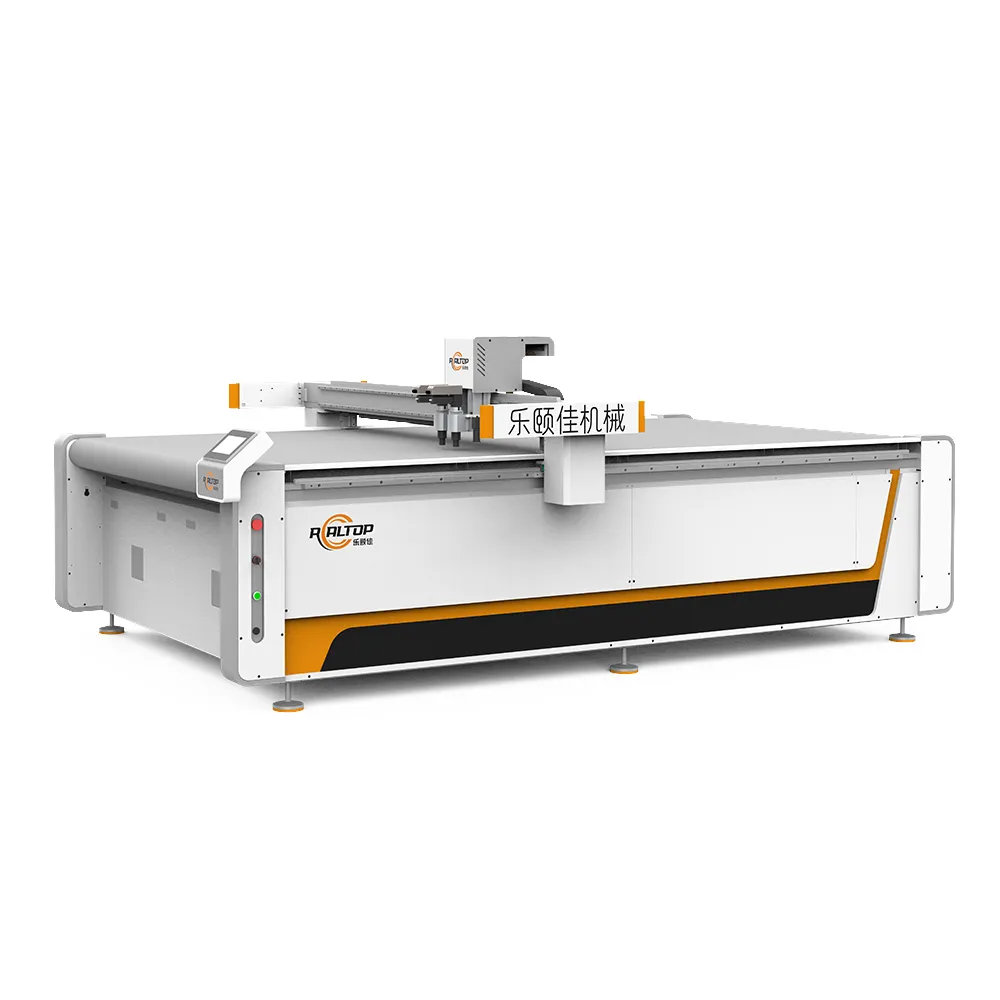
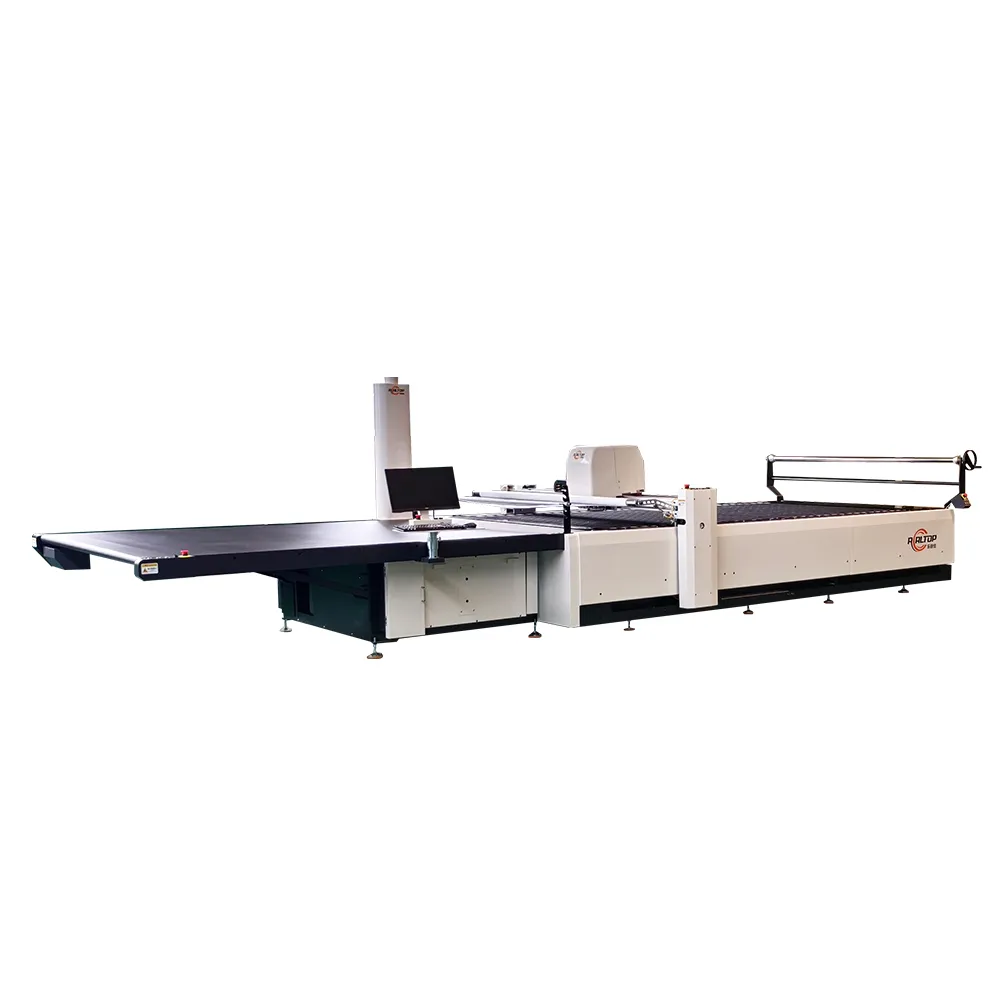
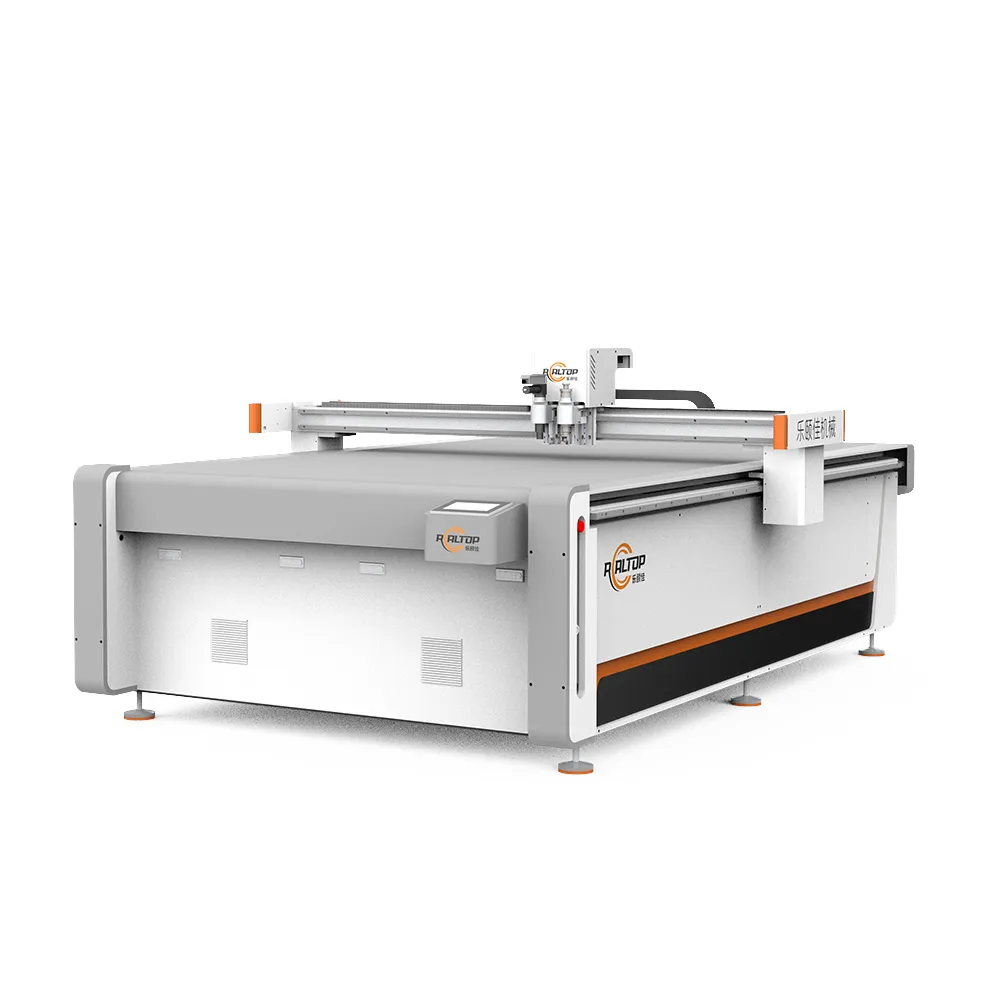
| Product Type | CNC Oscillating Knife Cutting Machine with CCD Vision System |
| Effective Cutting Area | 2500×1600mm / 2500×2200mm / 3000×2200mm |
| Maximum Speed | 2000mm/s (basis not stated in source — confirm material / thickness / tool head) |
| Reset Accuracy | ±0.1mm |
| Cutting Thickness | ≤40mm (basis not stated in source — confirm material type) |
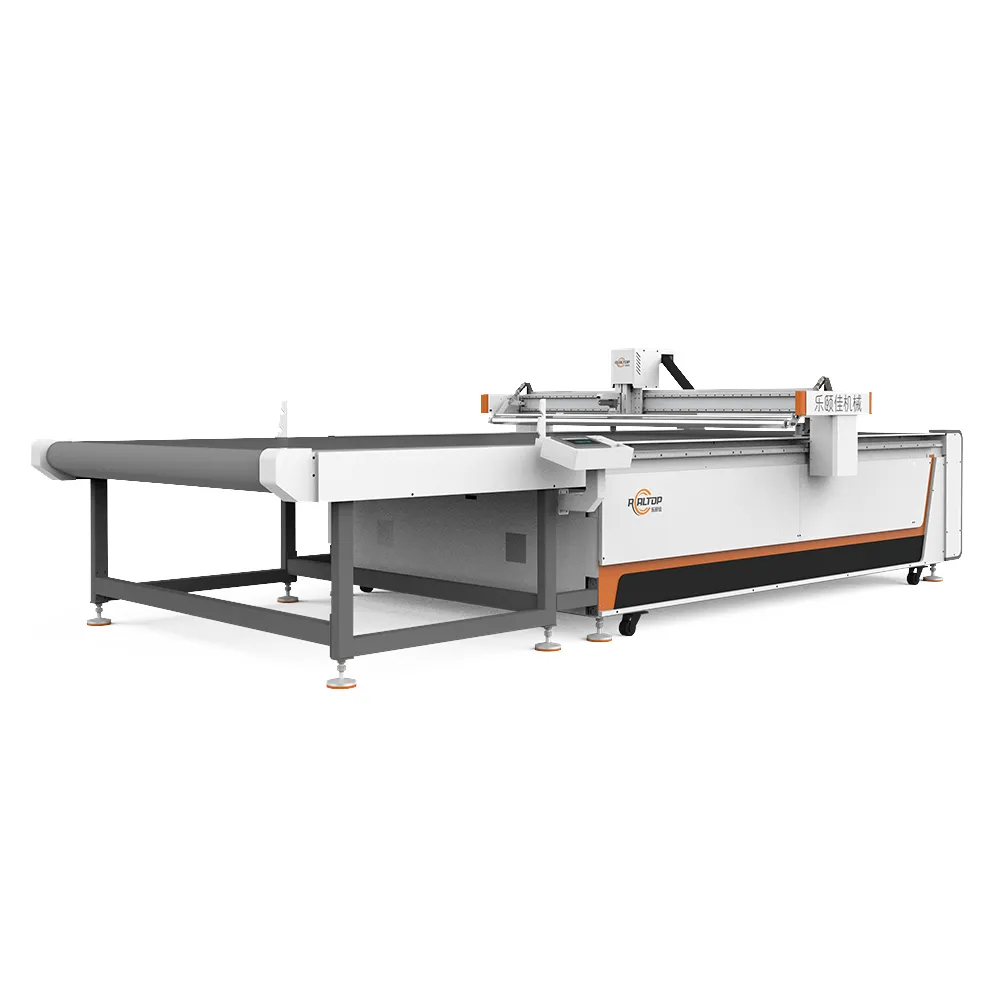
| Table Type | Automatic feeding with industrial belt conveyor |
| Positioning System | Panoramic visual positioning (CCD camera) |
| Optional Tools | Round knife, oscillating knife, marking pen, conventional vibrating knife, servo vibrating knife, pneumatic knife, circular knife |
| Data Format | dxf, plt, ai, pdf |
| Control System | REALTOP customized high-speed control system |
| Voltage | 380V / 220V (frequency not stated in source) |
| Safety Device | Infrared blocking stop and anti-collision protection |
| Bed Treatment | Quenched to eliminate internal stress |
| Wire Specification | Oxygen-free copper shielded wire |
| Belt Specification | Glass fiber tension cord, high temperature and corrosion resistant |
Application Suitability
| Application | Material or Output |
|---|---|
| Advertising print contour cutting | Printed PVC board, KT board, foam board with printed registration marks |
| Signage and display production | Self-adhesive vinyl, reflective film, banner material on conveyor feed |
| Template and sample making | Corrugated cardboard, gray board, honeycomb paper for packaging prototypes |
| Flexible media edge cutting | Roll-fed printed textiles and heat transfer vinyl with CCD tracking |
Why "40mm Cutting Thickness" Can Mislead Advertising Print Buyers
The stated depth applies only to specific material densities; composite advertising boards with foam cores behave entirely differently from solid PVC.
When a client orders a CNC Oscillating Knife Cutting Machine for Sale based solely on working area and maximum thickness, they often skip the material verification step. Last year, an advertising signage customer received a machine configured for standard PVC sheet. The edge quality was clean during factory testing. But their actual stock was a co-extruded board with a foamed inner layer, and the oscillating knife crushed the core, leaving ragged edges on over three hundred sheets in the first week. Parameters had to be rebuilt from scratch — tool head pressure, oscillation frequency, and feed rate all required re-tuning for that specific composite structure [NEED_CITE: material density variation in co-extruded advertising boards].
This is why sample cutting on the buyer’s actual printed material should happen before the order is finalized, not after the machine arrives on the shop floor.
Matching the Knife Head to Advertising Substrates
Advertising print shops handle a wider range of substrates than almost any other cutting environment. A shop might run rigid foam board in the morning, self-adhesive vinyl in the afternoon, and corrugated display stands the next day. Each material responds differently to blade geometry and oscillation amplitude. The servo vibrating knife suits dense semi-rigid boards where edge compression must be avoided, while the circular knife handles continuous straight-line cuts on thinner flexible media. Choosing the correct tool head for each material class is the difference between a finished part and scrap. A CNC Oscillating Knife Cutting Machine for Sale with multiple quick-change tool options lets the same table handle this variety without swapping machines.
CCD Vision Accuracy at Production Speeds
Panoramic visual positioning with a CCD camera sounds straightforward until you test it on a real production run. Printed registration marks vary in contrast, size, and placement consistency depending on the printer used upstream. If the camera cannot track marks reliably at the machine’s running speed, every contour cut drifts, and the entire sheet becomes waste. Before committing to a configuration, verify that the CCD system reads your specific print quality — ink density, mark dimensions, and background color — at the throughput you actually need [NEED_CITE: CCD recognition requirements for wide-format printed graphics]. This test should replicate a full sheet with multiple nested parts, not just a single sample piece.
Reading the Specification Sheet Against Your Production Reality
The three available working areas — 2500×1600mm, 2500×2200mm, and 3000×2200mm — cover most standard advertising print sheet sizes, but the choice goes beyond fitting the material. Larger tables require more vacuum zoning to hold smaller parts flat during cutting; insufficient zoning allows lift at the cut edges. The automatic feeding conveyor with glass fiber tension cord enables roll-to-sheet workflows, which changes how you plan daily throughput compared to manual sheet loading. The quenched bed construction eliminates residual welding stress, which matters for long-term dimensional accuracy — a table that warps after months of use will throw off CCD alignment and cut registration. Oxygen-free copper shielded wiring reduces signal interference, supporting consistent communication between the CCD camera, control system, and drive motors during high-speed contour cuts.
The Hidden Cost of Skipping Material Verification
Buyers who specify a machine on brochure specs alone often discover the problem only after installation. A vacuum table with inadequate zoning for small cut parts lets pieces lift during the final passes, ruining nested layouts. Software that cannot import the shop’s existing AI or PDF artwork files forces manual redrawing, adding hours to each job. Voltage mismatches discovered at delivery mean weeks of delay while transformers are sourced locally. These are not machine defects — they are specification gaps that a pre-order material test and configuration review would have caught [NEED_CITE: common configuration mismatches in imported CNC cutting equipment].
Why Buyers Source This Range Here
In-house design covers both knife and laser cutting, so an advertising producer can evaluate which method fits each material without being pushed toward a single technology. Tool head and table configuration is specified per material and production volume, not chosen from a fixed menu. CCD camera positioning is tested against the buyer’s actual printed sheets before the order is confirmed. Software compatibility with dxf, plt, ai, and pdf formats is verified during the pre-order stage. Voltage, control language, and plug type are confirmed to match the target market before production begins. Sample cutting on the buyer’s own material provides a physical reference — not a promise — before any commitment is made.
Documentation & Verification
- Machine specification sheet listing confirmed working area, tool heads, and voltage
- Sample cutting report produced on buyer’s own printed advertising material
- Electrical schematic with voltage and frequency matched to destination market
- Software licence and file format compatibility note for dxf, plt, ai, pdf
- Factory test record documenting run parameters before crating
Installation, Commissioning & Support
- Foundation must support the full machine weight across the 3000×2200mm maximum footprint
- Dedicated circuit required matching confirmed 380V or 220V supply with correct frequency
- Conveyor belt tensioning and CCD camera calibration performed during on-site commissioning
- Tool head pressure and oscillation parameters set per material during first production run
- Spare blade and belt inventory defined based on daily volume and material abrasiveness
What to Include With Your Inquiry
Send the exact advertising materials you plan to cut — printed board samples, vinyl rolls, or corrugated stock — along with typical sheet dimensions and daily part volume. Confirm your facility’s voltage, frequency, and preferred control language. If your workflow depends on specific nesting software or existing file formats, share those details upfront so compatibility is verified before the quotation stage.
Frequently Asked Questions
Q: Should I choose knife cutting or laser cutting for printed advertising materials?
A: Knife cutting suits most advertising substrates — PVC foam board, KT board, vinyl, corrugated — because it produces clean edges without heat discoloration or melted edges. Laser cutting is preferred when edge sealing is needed on synthetic textiles or when very intricate internal contours are required. The choice depends on your specific material mix, and both options are available from the same manufacturer for direct comparison.
Q: Which tool head works best for foam-cored advertising boards?
A: Co-extruded boards with a foamed inner layer typically require a servo vibrating knife with adjusted oscillation amplitude to avoid crushing the core. Standard oscillating knives may compress the foam, leaving visible edge defects. The correct tool head and parameter set should be established through sample cutting on your exact board stock before finalizing the machine configuration.
Q: What print quality does the CCD camera need for reliable contour cutting?
A: The CCD system requires registration marks with sufficient contrast against the background, consistent size, and predictable placement across the sheet. Low-contrast marks, smudged ink, or marks placed outside the camera’s scan path will cause tracking failures. A pre-order test using your actual printer output confirms whether the system reads your marks reliably at running speed.
Q: How do I match the working area and feeding method to my daily volume?
A: For shops running standard sheet sizes with moderate daily output, a fixed table in 2516 or 2522 format may be sufficient. For higher-volume operations using roll-fed printed media, the automatic feeding conveyor with the 3022 area allows continuous material advance and reduces manual handling between cuts. Daily volume and material format drive the selection.
Q: What electrical and software details must be confirmed before shipment?
A: Voltage, frequency, and plug type must match the destination facility’s supply. Control system language should be specified for the operator team. File format compatibility — dxf, plt, ai, pdf — must be verified against your existing design software. Confirming these points before production avoids delays and rework at installation.










商品评价
There are no reviews yet.