



Fast Delivery
Quick, reliable shipping to any location.

Free & easy returns
Return this item by mail or in store within 90 days for a full refund.
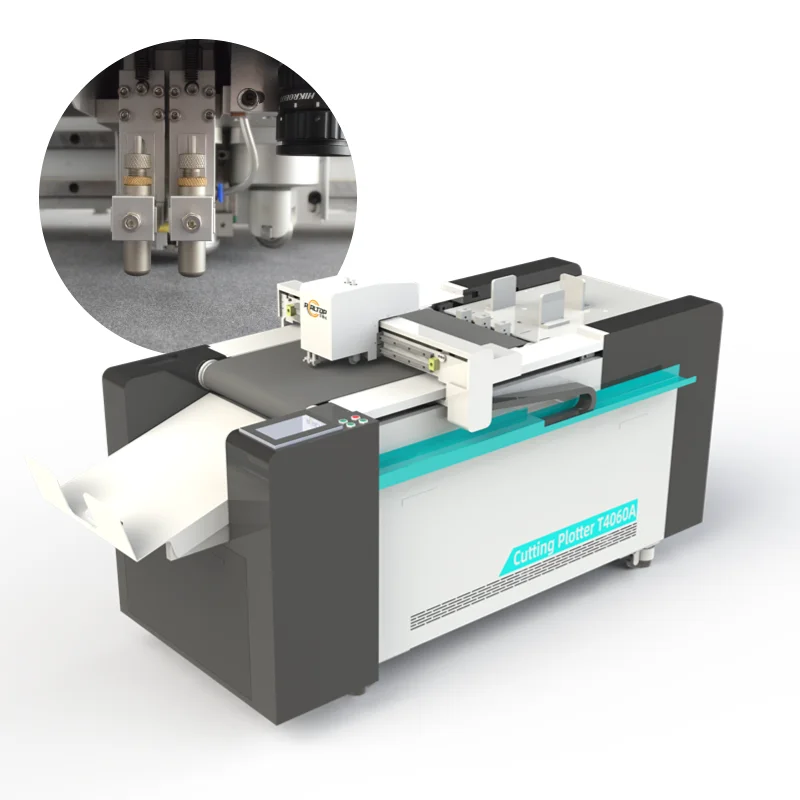
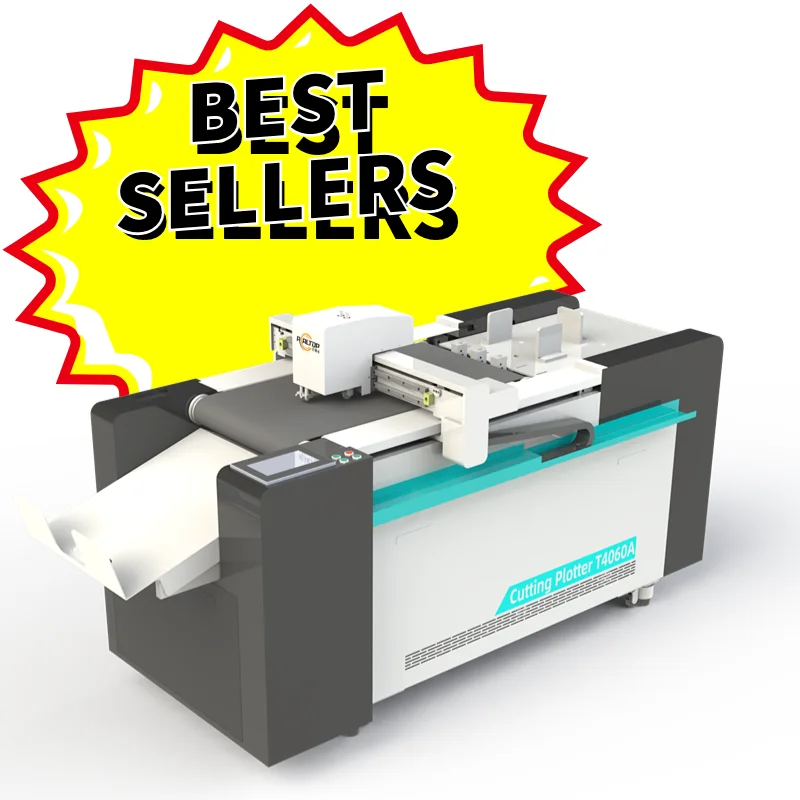
Material-first configuration — the RTT4060 compact cutting plotter is set up around your label stock or cardstock thickness before a single specification is locked in, not sold as a one-size-fits-all desktop unit.
Technical Specifications
| Parameter | Value |
|---|---|
| Model | RTT4060 |
| Product Type | Cutting Plotter / Digital Flatbed Cutter |
| Working Area | 400 × 600 mm |
| Tool Head Options | Oscillating knife, drag knife, creasing wheel |
| Positioning System | CCD camera contour recognition (optional) |
| Vacuum Table | Zoned vacuum table for small-part holding |
| Control System | CNC controller with customizable interface language |
| Voltage & Frequency | Configurable to destination market (e.g. 110 V / 220 V, 50 Hz / 60 Hz) |
| Software Compatibility | Common vector formats including DXF, PLT, AI |
| Assembly State | Fully assembled, factory tested before dispatch |
| Certification | CE (where applicable) |
Application Suitability
| Application | Material or Output |
|---|---|
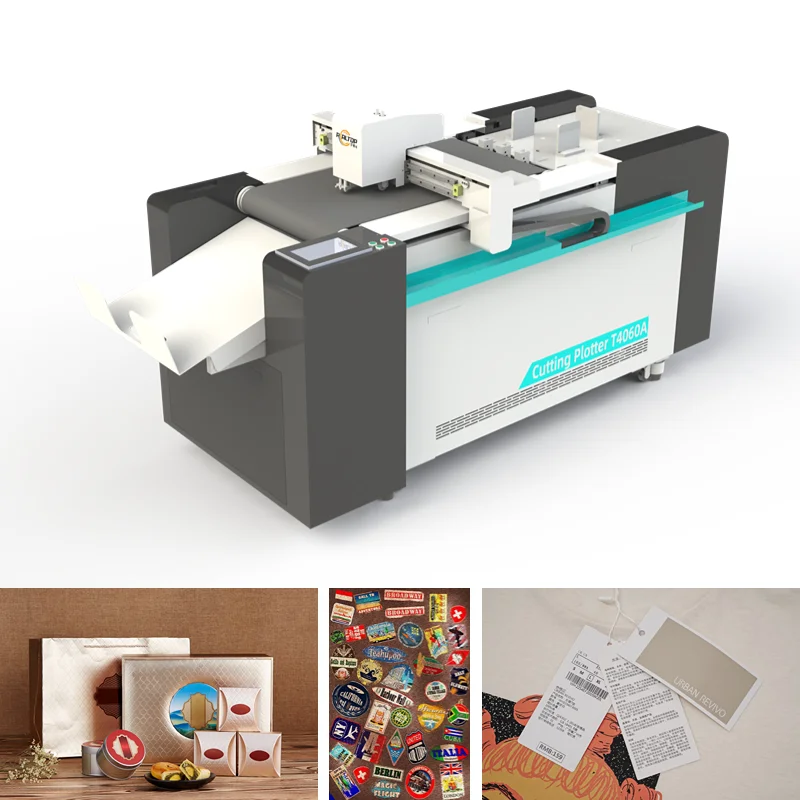
| Short-run label and sticker cutting | Pressure-sensitive vinyl, PP, PET, coated paper up to moderate caliper |
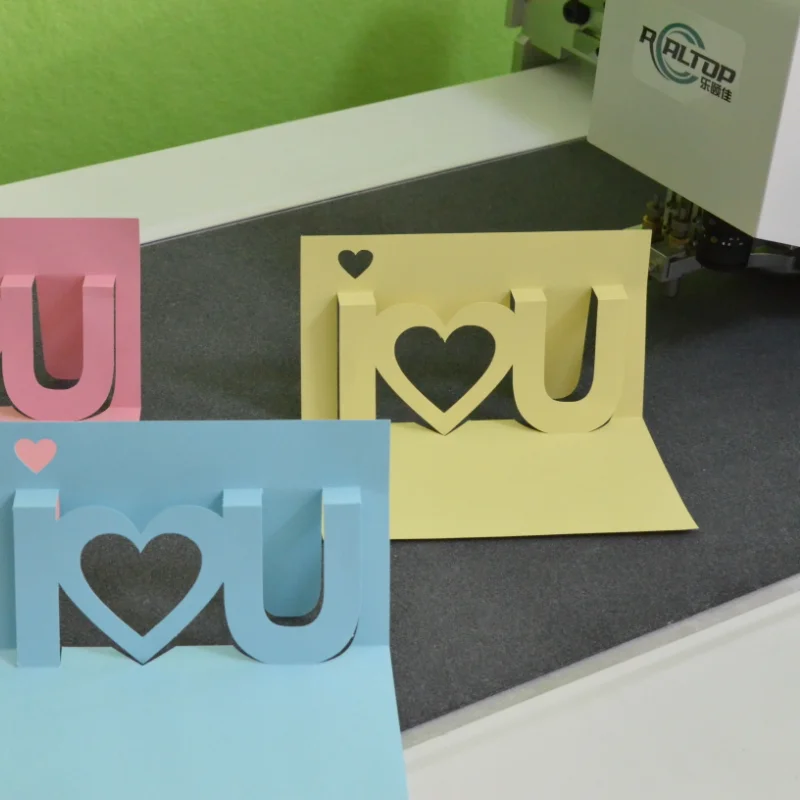
| Packaging sample prototyping | Cardstock, single-face corrugated, folding carton board |
| Small-format signage graphics | Self-adhesive vinyl, magnetic sheet, thin rigid board |
| Point-of-sale display components | Foam board, lightweight PVC, synthetic paper |
What "Compact Working Area" Leaves Out About Small-Part Holding
A 400 × 600 mm table is only useful if the vacuum zoning actually grips the smallest sticker in your nest.
When buyers select a compact cutting plotter based on footprint and price alone, they often discover mid-run that quarter-inch label corners lift off the table the moment the drag knife changes direction. I have walked through enough sticker shops in Jinan to see the waste pile: half-cut sheets where the vacuum zone was too coarse to hold narrow offcuts, forcing operators to tape material down and babysit every contour job. The real cost is not the machine — it is the reprinted sheet, the missed delivery, and the operator who stops trusting the equipment. [NEED_CITE: vacuum zoning density and small-part retention on flatbed cutters]
Knife Selection Matched to Your Actual Label Stock
The RTT4060 is offered with oscillating knife, drag knife, and creasing wheel heads, but only one of those will produce a clean edge on your specific face stock and adhesive combination. Drag knives work well on thin vinyl and cast films, while oscillating knives handle thicker laminates and foam-backed sticker materials without dragging the adhesive layer. Choosing the wrong head does not just leave a ragged edge — it pulls the liner, jams the feed path, and creates registration drift across the rest of the sheet. We cut samples on the exact material you ship us before the tool head is finalized on your order.
CCD Contour Recognition at Production Speed
Printed registration marks on labels shift slightly from sheet to sheet due to printer variation and ambient humidity. The CCD camera option on this cutting plotter reads those marks before each cut path, compensating for skew and stretch across the full 400 × 600 mm field. What matters in practice is whether the camera can keep up when you are running a nested sheet of two hundred small contour-cut stickers back to back. [NEED_CITE: optical registration accuracy on digital cutting tables under continuous feed]
Reading the Specs That Actually Affect Your Daily Output
The working area of 400 × 600 mm tells you the maximum sheet size, but the vacuum zone count determines whether you can cut a full sheet of small labels without manual intervention. The CNC controller supports multiple interface languages, which becomes important the first time an operator in your target market needs to load a new job file without calling the supplier. Voltage and plug configuration are confirmed before shipment so the machine arrives ready for your local supply rather than sitting idle waiting for a transformer. Software compatibility with DXF, PLT, and AI formats means your existing design workflow does not need to be rebuilt around proprietary file types.
The Hidden Cost of Skipping the Sample Cut
When a cutting plotter is ordered on a spec sheet alone, the most common failure arrives with the first real production file: the material is two mils thicker than the sample used at the trade show, the adhesive oozes into the knife path, and every third sticker stays attached to the matrix. I have seen this pattern repeat enough times to insist on running the buyer’s own label roll through the machine before we confirm the tool head and vacuum zoning. That sample report becomes part of the shipping documentation, so both sides know exactly what the machine is contracted to do. [NEED_CITE: material thickness tolerance and cutting plotter setup accuracy]
Why This Source Reduces Specification Risk
Realtop builds both knife and laser cutting platforms in-house, so the conversation starts with your material rather than with whichever machine happens to be on promotion. The RTT4060 configuration is locked only after a sample cutting report on your own stock is reviewed and signed off. Electrical schematics and voltage confirmation are issued before production begins, not improvised on the packing bench. Software license and file format compatibility notes are included with the shipment, so your design team can verify import before the crate is opened.
Documentation & Verification
- Machine specification sheet listing the exact tool head and vacuum zone layout confirmed for your material
- Sample cutting report on your own label stock or cardstock, signed before production release
- Electrical schematic with voltage and plug type matched to your destination market
- Software license and file format compatibility note covering DXF, PLT, and AI import
- Factory test record showing completed cut cycle on your approved sample material
- Operation and maintenance manual with control interface language set to your preference
Installation, Commissioning & Support
- Dedicated circuit required matching the confirmed voltage and frequency rating of the RTT4060
- Fully assembled unit arrives ready for power connection and first-run calibration
- Vacuum zone mapping verified on your actual sheet layout during on-site or remote commissioning
- CNC controller interface language set and confirmed before dispatch per your specification
- Spare knife blades and wear parts list provided based on your daily cutting volume
- Scheduled maintenance intervals documented for the tool head and vacuum pump assembly
What to Include in Your Inquiry
Send us the exact face stock, liner type, and caliper you intend to cut, along with a representative DXF or PLT file of your most demanding nest layout. Include your local voltage, frequency, and plug type, plus the control language your operators will need. If you are replacing an existing plotter, tell us the model and what it fails on — that usually points directly to the configuration decision.
Frequently Asked Questions
Q: How is the cutting method matched to my specific label or cardstock material?
A: We run your actual material through the RTT4060 with different tool heads — drag knife, oscillating knife, or creasing wheel — and document edge quality, liner integrity, and matrix stripping behavior. The sample cutting report becomes part of your order file, so the tool head shipped is the one proven on your stock, not a default guess.
Q: Can the CCD camera track printed registration marks at my production speed?
A: The CCD camera on this cutting plotter reads marks across the full 400 × 600 mm field and compensates for sheet skew before each cut cycle. We test this on your printed file during the sample run, so you can see whether recognition holds across a full nested sheet of small contour labels before the machine ships.
Q: What vacuum table zoning is provided, and will small sticker parts stay flat?
A: Vacuum zones are specified based on the smallest part in your typical nest layout. If your file contains quarter-inch label corners, the zoning is set to maintain suction on those dimensions. We verify holding on your material during the sample cut and note the zone configuration in the documentation.
Q: Which software and file formats does the machine accept, and is compatibility verified?
A: The CNC controller accepts common vector formats including DXF, PLT, and AI. Before shipment, we load a sample of your actual production files and confirm clean import, correct tool path assignment, and nesting behavior. The compatibility note ships with your documentation package.
Q: Are voltage, plug type, and control language confirmed before shipping?
A: Yes. Your destination voltage, frequency, plug standard, and preferred control interface language are recorded at the order stage and verified on the electrical schematic. The RTT4060 leaves the factory wired and labeled for your market, not rewired on the receiving dock.










商品评价
There are no reviews yet.