

Fast Delivery
Quick, reliable shipping to any location.

Free & easy returns
Return this item by mail or in store within 90 days for a full refund.
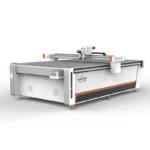
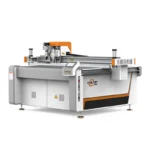
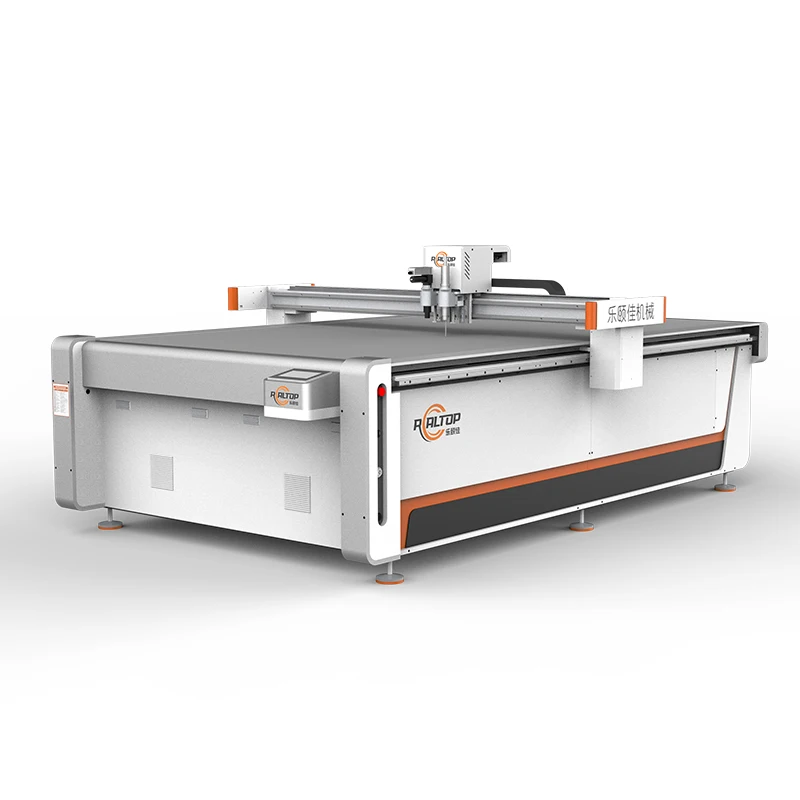
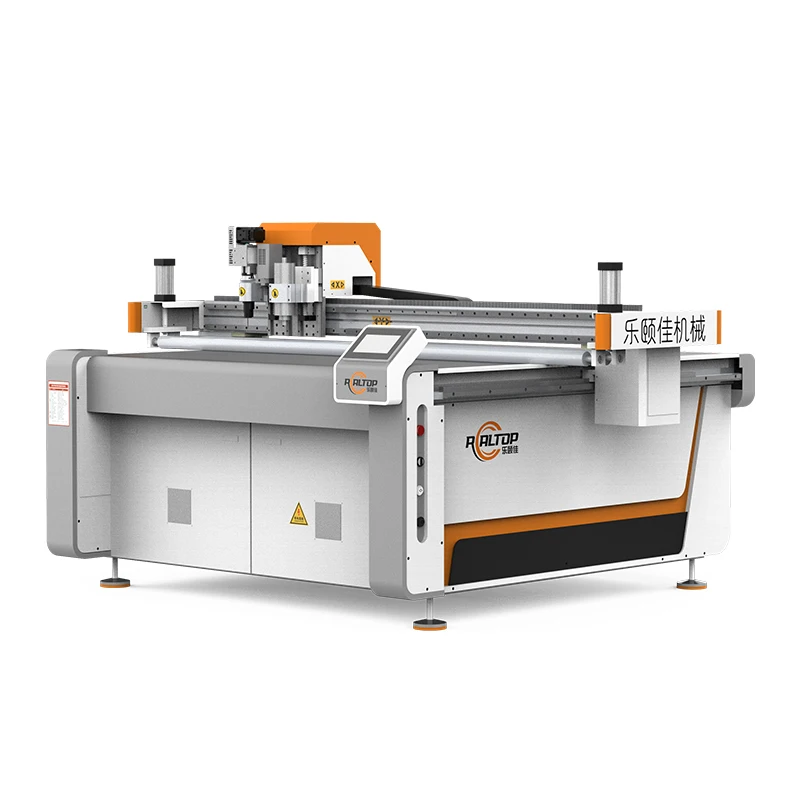
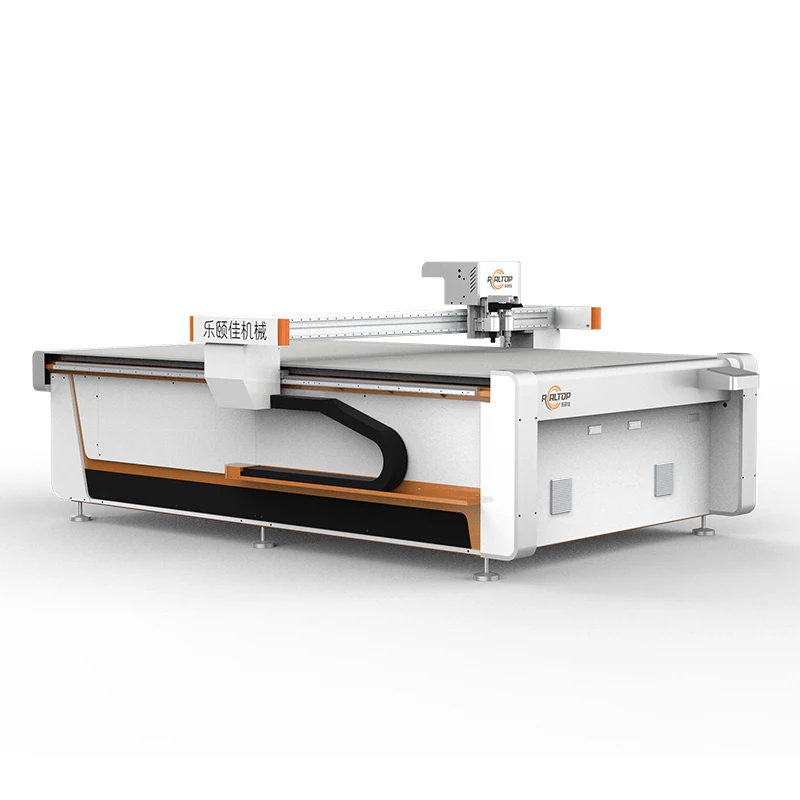
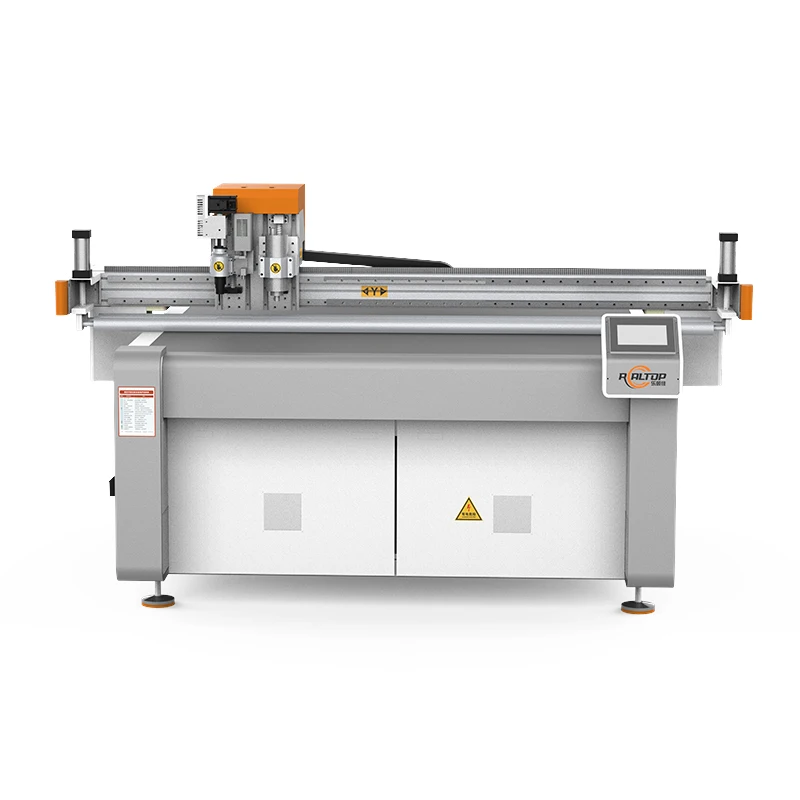
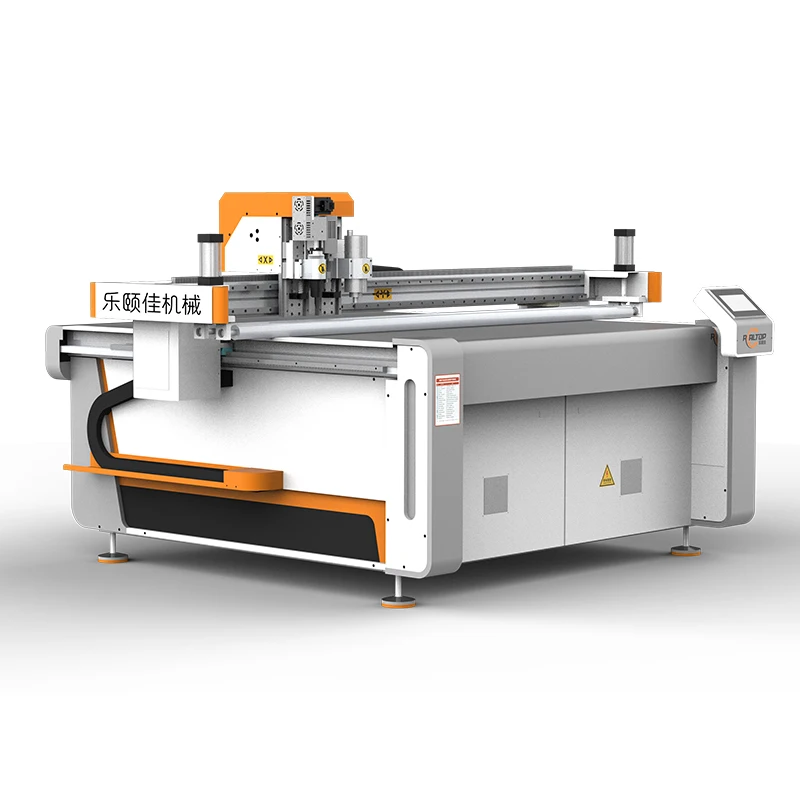
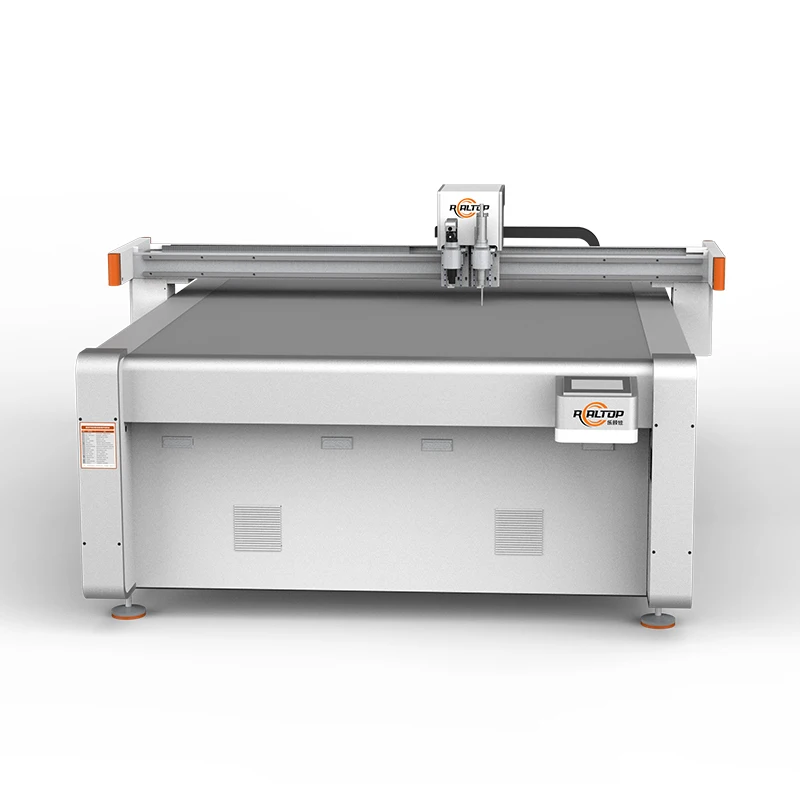
In-house cutting method matching — Realtop builds both knife and laser systems under one roof, so the RT-D2516/RT-S2516 oscillating knife cutter is specified by material behavior rather than forced into a single-process catalog.
Technical Specifications
| Parameter | Value |
|---|---|
| Model | RT-D2516 / RT-S2516 |
| Product Type | CNC Oscillating Knife Cutting Machine |
| Working Area | 1600 × 2500 mm |
| Machine Dimensions (L × W × H) | 3450 × 2300 × 1250 mm |
| Rated Power | 9 kW |
| Voltage | 380V ±10% (50/60 Hz to be confirmed) |
| Table Type | Aluminum honeycomb vacuum adsorption flat table |
| Tool Head | Swiss-imported oscillating knife — full cut, half cut, cursor positioning |
| Translational Velocity | 800–2000 mm/s |
| Cutting Speed | 200–800 mm/s (material dependent) |
| Maximum Cutting Thickness | ≤100 mm (varies with material density) |
| Repeated Positioning Accuracy | ≤0.1 mm |
| Servo System | Taiwan Delta servo motors and drivers |
| Guide Rail | Taiwan Hiwin linear square guide |
| Vacuum Pump | 7.5 kW |
| Conveyor Belt | Germany-imported belt material |
| Safety Devices | Infrared sensors, emergency stop |
| Instruction Format | HP-GL compatible |
| Software | Professional carton nesting software, multi-format import, automatic positioning |
| Control Language | English, Russian, Italian, Chinese; other languages configurable |
| Assembly State | Fully assembled before shipment |
| Warranty | 3 years |
Application Suitability
| Application | Material or Output |
|---|---|
| Carton and packaging sample making | Corrugated cardboard, gray board, kraft paper — large electrical cartons, express boxes, gift boxes |
| Sticker and label contour cutting | Self-adhesive vinyl, printed label stock, reflective film |
| Billboard and signage production | PVC foam board, KT board, corrugated plastic |
| Leather and flexible material cutting | Genuine leather, PU synthetic, sponge-composite leather |
| Gasket and industrial sheet cutting | Soft glass, silicone, rubber, PVC sheet |
Why "Working Area Only" Specifications Lead to Costly Mistakes
Buyers often shortlist a CNC oscillating knife cutting machine manufacturer based on table size and price, then discover the knife head cannot handle their material thickness at production speed. The RT-D2516/RT-S2516 is rated for up to 100 mm cutting depth, but actual throughput depends on material density, knife oscillation frequency, and vacuum hold-down force. A machine specified on working area alone tells you nothing about whether it can cut 3 mm corrugated board cleanly at 800 mm/s or whether the vacuum table zones are granular enough to hold small label stock flat during high-speed contouring [NEED_CITE: oscillating knife cutting parameters by material type]. When the wrong configuration arrives, you spend weeks re-sourcing tooling or waiting for a table retrofit while sample orders pile up.
Knife Versus Laser — Matching the Process to the Packaging Material
Choosing between an oscillating knife and a CO2 laser comes down to edge requirement and material response. The RT-D2516/RT-S2516 oscillating knife leaves a clean, uncompressed edge on corrugated board and foam — critical when the cut sample becomes the die-line template for mass production runs. Laser cutting seals edges on synthetics but chars cardboard and leaves a burn line unacceptable for premium packaging samples. Buyers evaluating a CNC oscillating knife cutting machine manufacturer should ask for sample cuts on their own stock to compare edge quality before committing to a process.
Full Catalogue Positioning — Where the 2516 Format Sits
The 1600 × 2500 mm working area places this model at the midpoint of the flatbed cutting range — large enough for standard carton sample layouts and nested sticker sheets, yet compact enough to fit in a sample room alongside a digital printer. For buyers running high-volume multi-layer fabric or automotive interior panels, larger-format or multi-head machines from the same catalogue may suit better. The value here is comparing knife and laser options side by side against your actual material stack, rather than locking into a single technology before the cutting method is validated [NEED_CITE: flatbed cutting format selection by production volume].
Reading the Specification Sheet Beyond Table Size
The 7.5 kW vacuum pump paired with the aluminum honeycomb table determines whether thin sticker stock stays flat at high traverse speeds — insufficient suction causes material lift and ruins contour accuracy. Delta servo motors on Hiwin linear guides deliver the ≤0.1 mm repeated positioning accuracy needed for crease-line registration on carton samples, where even slight drift misaligns fold lines. The Swiss-imported oscillating knife head integrates full cut, half cut, and cursor positioning in one tool station, eliminating manual tool changes between cutting and creasing operations. Cutting speed of 200–800 mm/s varies with material: dense rubber runs at the lower end, while thin cardstock allows the upper range. Always verify speed on your specific stock rather than relying on a single headline number.
The Hidden Cost of Unconfirmed Electrical and Software Specs
Voltage mismatch is the most common reason a newly delivered cutter sits idle. A 380V machine landing in a 480V three-phase facility requires a step-down transformer — two weeks of downtime while sample deadlines pass. Software incompatibility is equally disruptive: if the nesting software cannot import your existing DXF or AI files, operators revert to manual programming and throughput drops immediately [NEED_CITE: industrial equipment voltage and frequency standards by export market]. Language settings on the control interface, often overlooked at order stage, slow down daily operation when the operator cannot navigate menus in their working language.
Why Source This Machine From a Dual-Technology Manufacturer
Realtop designs and produces both oscillating knife and laser cutting systems in-house, meaning the recommendation is based on material fit rather than pushing a single product line. The RT-D2516/RT-S2516 tool head and table configuration is specified per buyer material — corrugated board gets a different knife angle and vacuum zoning than silicone gasket stock. Sample cutting on the buyer’s own material is completed before order confirmation, providing a physical reference for edge quality and dimensional accuracy. Software compatibility and file format import are verified during this stage, not after the machine arrives. Voltage, plug type, and control language are locked in through an electrical confirmation document before production begins.
Documentation & Verification
- Machine specification sheet listing confirmed knife head type and vacuum zone layout
- Electrical schematic with voltage, frequency, and plug type matched to your facility
- Sample cutting report on your own corrugated board or label stock with dimensional measurements
- Tool head and table configuration list showing selected knife, creasing wheel, and vacuum settings
- Software license with confirmed file format compatibility for your existing design workflow
- Factory test record captured before crating, showing cut accuracy on your specified material
Installation, Commissioning & Support
- 3450 × 2300 mm footprint requires level concrete floor with clearance for material loading on three sides
- 9 kW rated power plus 7.5 kW vacuum pump need dedicated circuit with confirmed 380V ±10% supply
- Machine ships fully assembled — forklift unloading and positional leveling only, no on-site mechanical assembly
- First-run parameter tuning includes vacuum zone mapping and knife oscillation frequency calibration for your material
- Operator training covers nesting software workflow, tool head change procedure, and daily guide rail maintenance
- Spare parts list includes oscillating knife blades, vacuum table seals, and conveyor belt segments
What to Include in Your Inquiry
Provide the material type, thickness range, and maximum sheet size you plan to cut, along with your daily sample volume target. Confirm your facility voltage and frequency, the control language your operators need, and whether your existing design files are in DXF, AI, or PLT format. If you need creasing alongside cutting on carton stock, specify the crease-line width and board flute profile so the correct wheel is included in the tool head configuration.
Frequently Asked Questions
Q: How do I decide between an oscillating knife and a laser for my packaging samples?
A: Oscillating knife cuts cardboard, corrugated board, and foam without burn marks or edge discoloration, producing a clean sample that doubles as a die-line template. Laser suits acrylic, wood, and textile engraving where edge sealing is beneficial. Request sample cuts on your actual material from both processes to compare edge quality before selecting.
Q: What is the difference between the RT-D2516 and RT-S2516 models?
A: Both share the 1600 × 2500 mm working area and core motion components. The distinction lies in configuration options for tool head arrangement and table setup, which are matched to your specific material and production workflow during the specification stage. Confirm your application details so the correct variant is recommended.
Q: How do I verify cutting speed and accuracy on my material before ordering?
A: Submit your material samples to the factory for a test cut. The resulting sample cutting report documents actual cutting speed, edge quality, and dimensional accuracy measured on your stock. Review this report against your production tolerance requirements before confirming the order.
Q: Can the vacuum table hold small sticker and label pieces during high-speed contour cutting?
A: The aluminum honeycomb table is divided into vacuum zones. For small-format label work, confirm the zone layout matches your typical sheet nesting pattern so that suction is concentrated under the cutting area. Insufficient zoning causes material lift at high traverse speeds.
Q: Will the nesting software work with my existing design files?
A: The included carton nesting software supports multiple file format imports including common vector formats. Before order confirmation, share a sample design file so compatibility and nesting workflow can be verified. Any required format conversion or plugin setup is addressed at this stage.










商品评价
There are no reviews yet.