




Fast Delivery
Quick, reliable shipping to any location.

Free & easy returns
Return this item by mail or in store within 90 days for a full refund.
Complete Range Coverage — In-house design covering both knife and laser cutting technologies lets buyers match the method to the material, available across this model and the wider equipment family.
Technical Specifications
| Parameter | Value |
|---|---|
| Model | RT-D2516 / RT-S2516 |
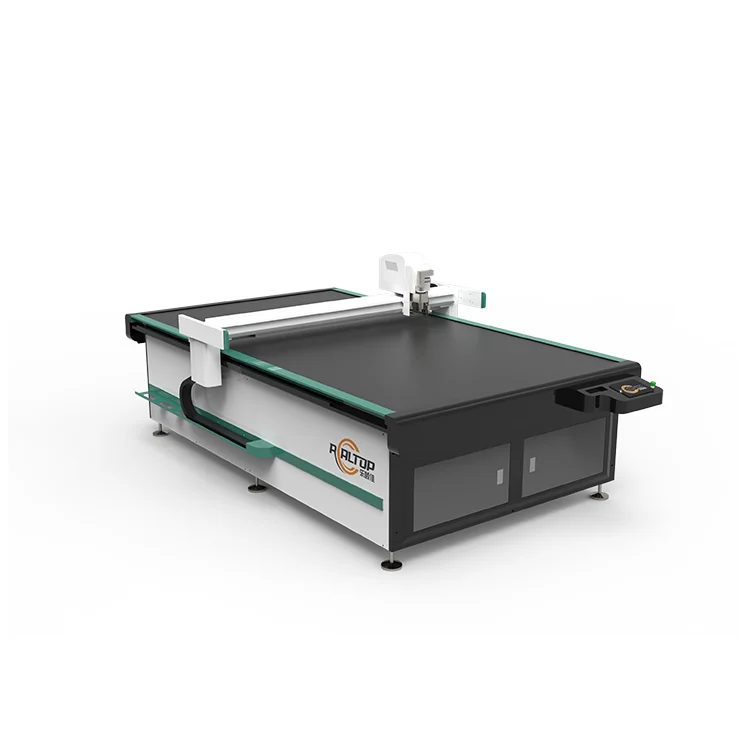
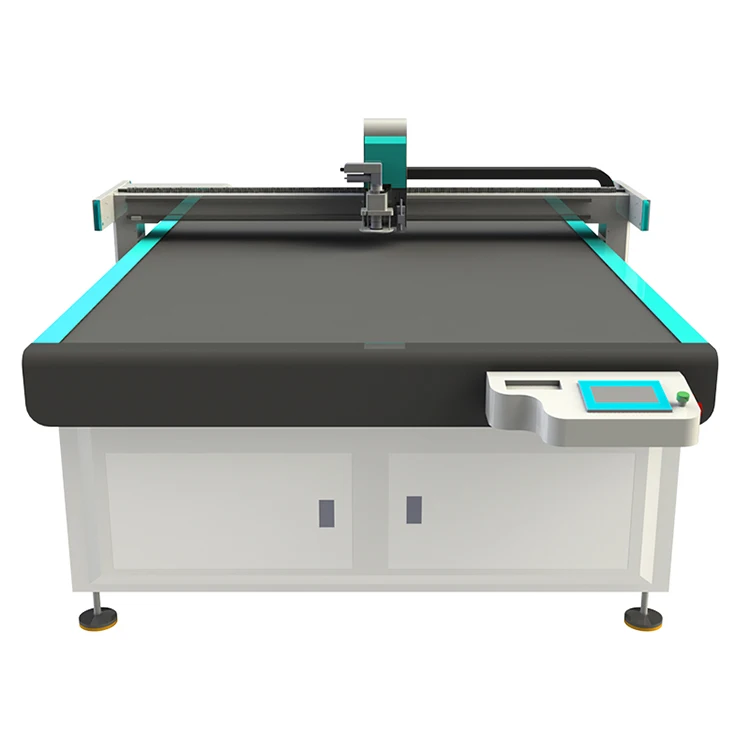
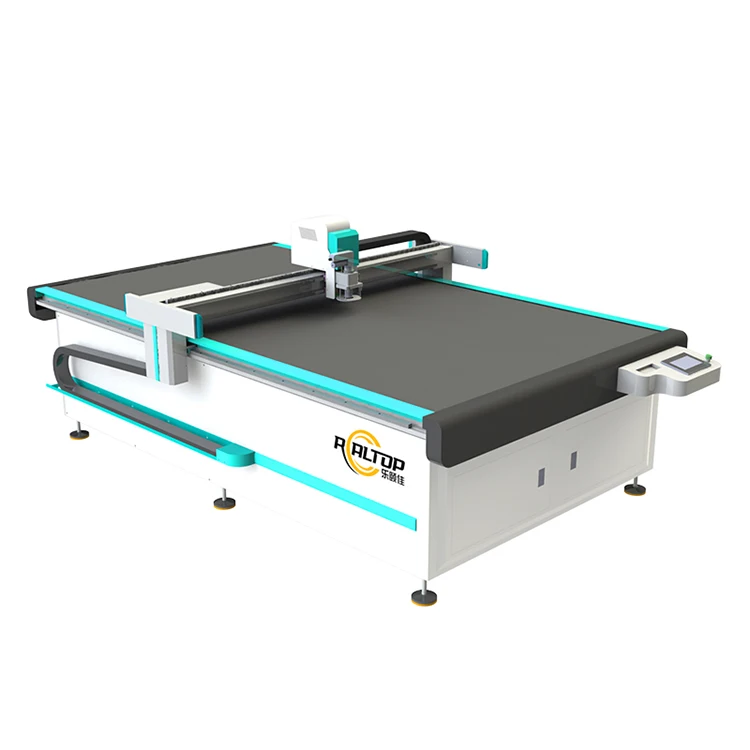
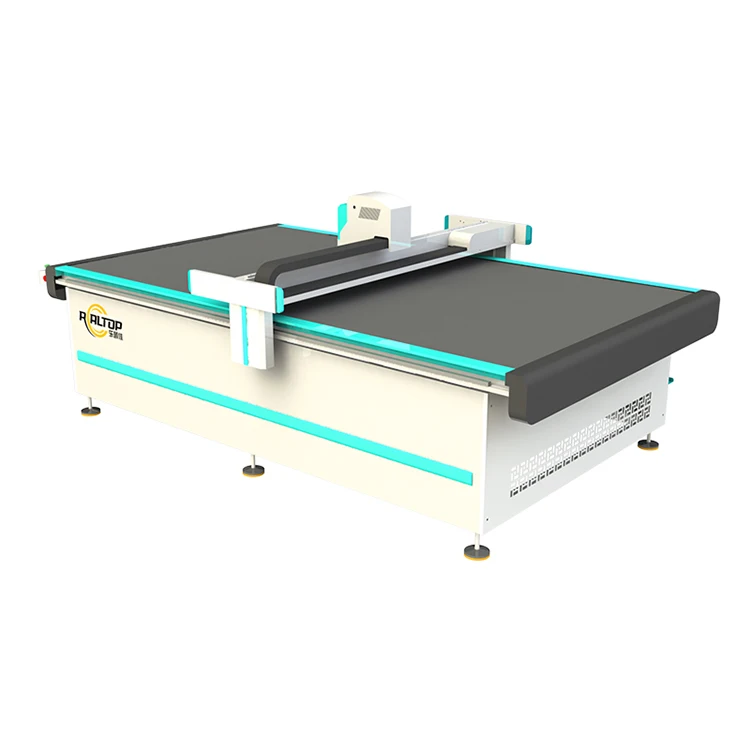
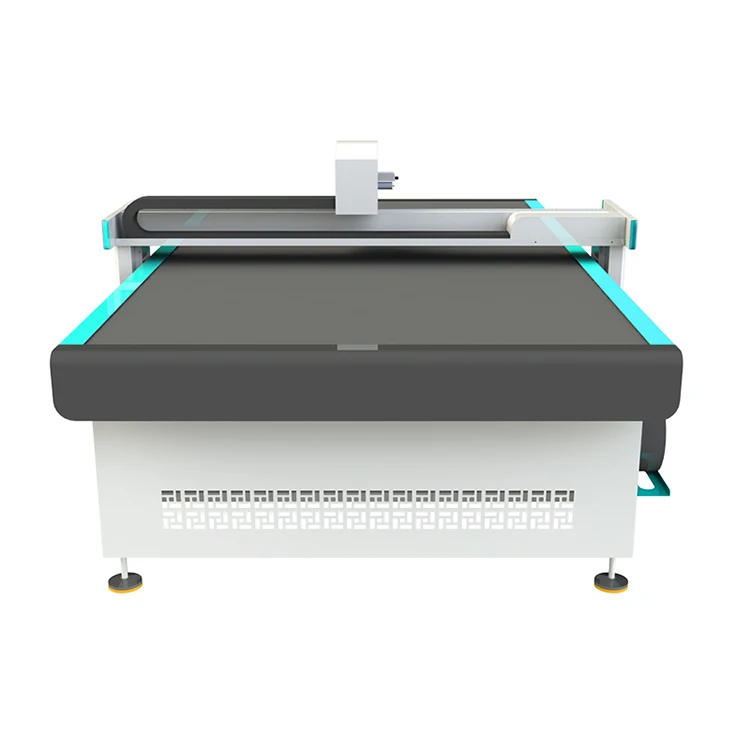
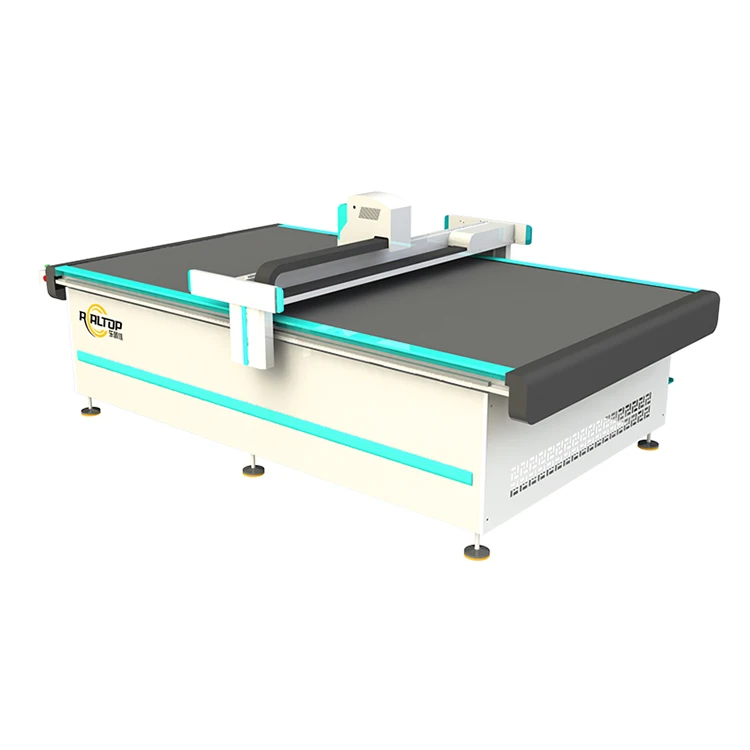
| Product Type | CNC Oscillating Knife Cutting Machine |
| Working Area | 1600 × 2500 mm |
| Overall Dimensions | 3450 × 2300 × 1250 mm |
| Rated Power | 9 kW |
| Voltage | 380V ±10% |
| Vacuum Pump | 7.5 kW |
| Transmission System | Digital servo motor, linear guide, synchronous belt, ball screw (basis to be confirmed) |
| Cutting Speed | 800–2000 mm/s (basis to be confirmed) |
| Repeatability | ≤ 0.1 mm |
| Instruction System | HP-GL compatible format |
| Control Interface | Touch screen with multiple language support |
| Software Compatibility | PLT, DXF, AI file formats |
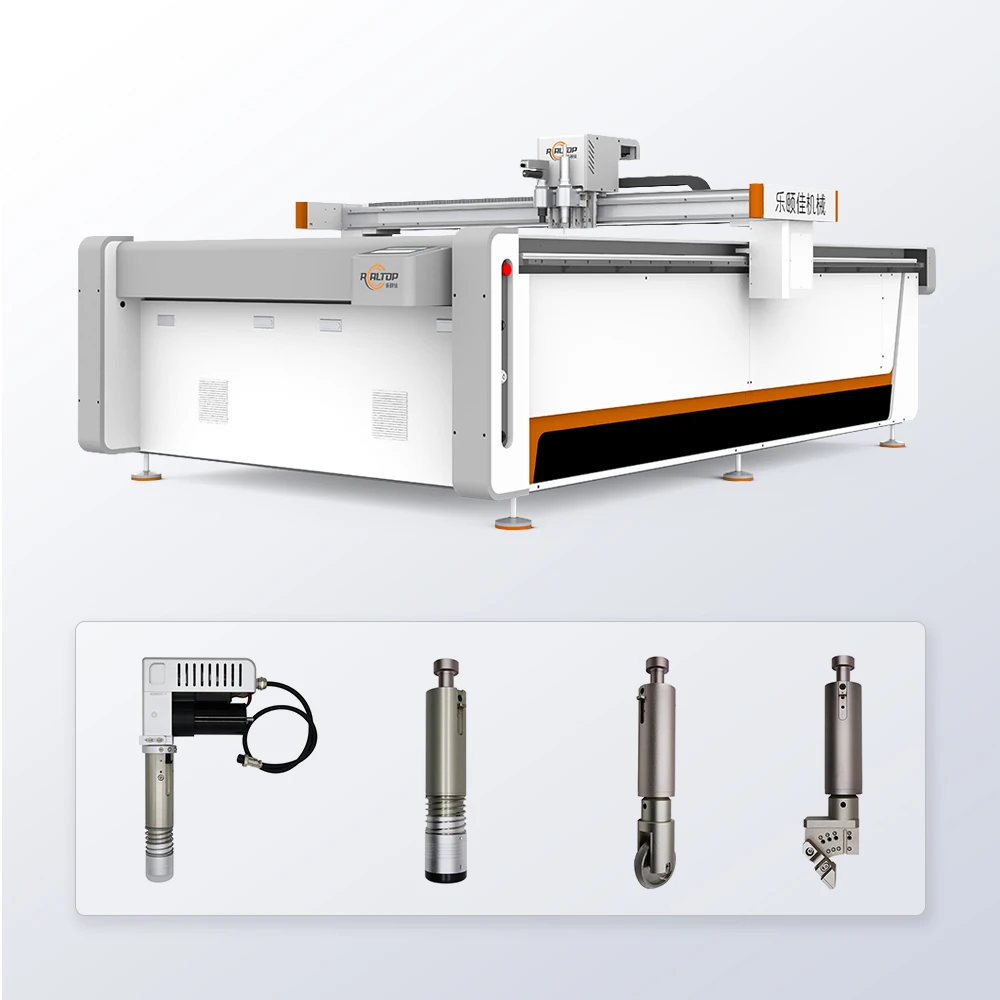
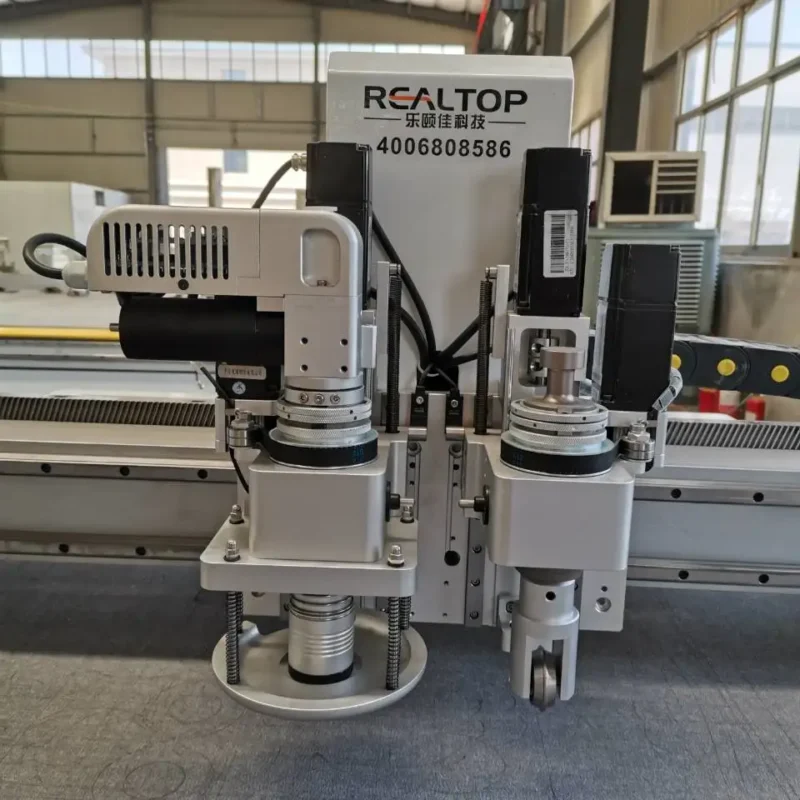
| Tool Head Options | Oscillating knife, creasing wheel, V-cutting knife, drag knife (basis to be confirmed) |
| Table Type | Flat working table or auto feeding table (basis to be confirmed) |
| Safety Device | Infrared sensors with automatic stop function |
Application Suitability
| Application | Material or Output |
|---|---|
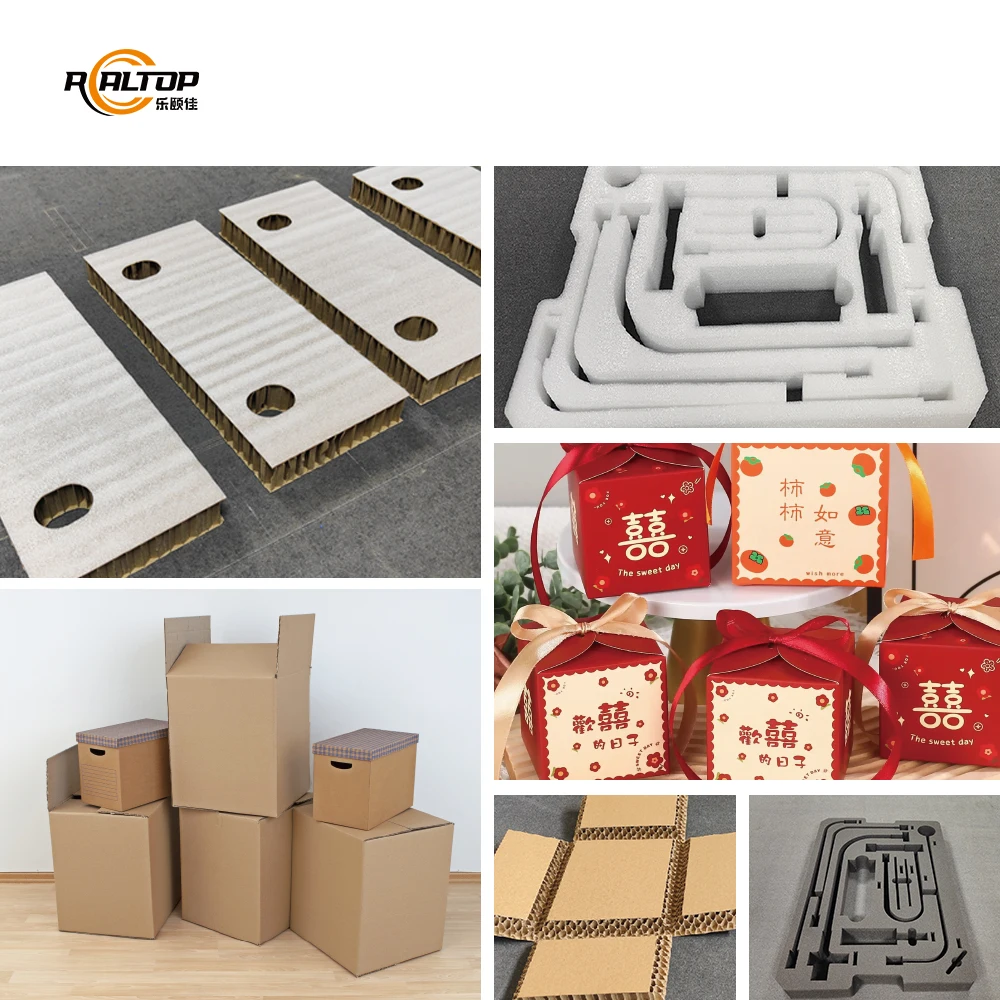
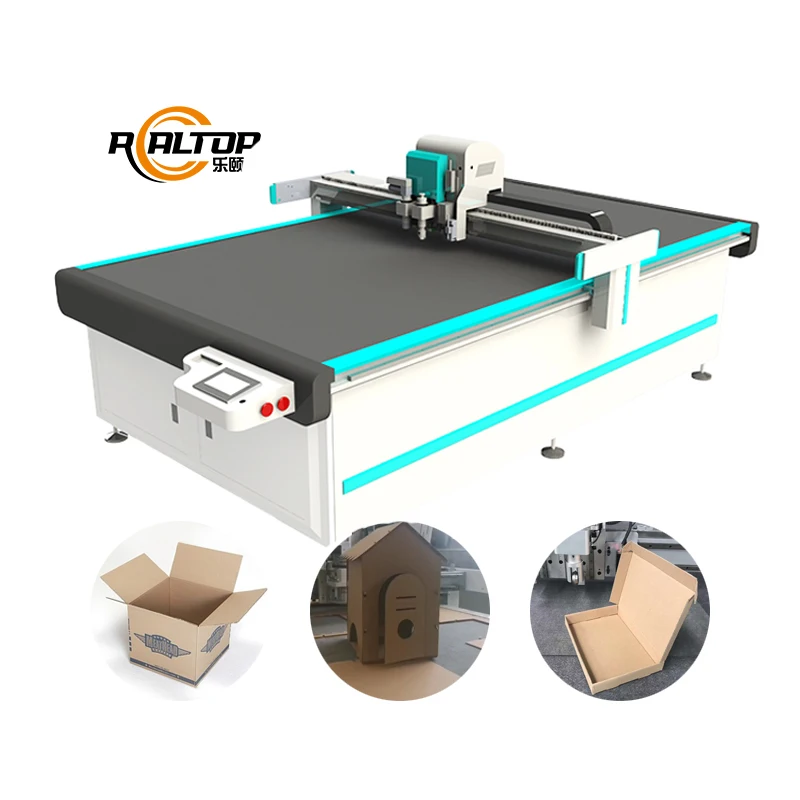
| Packaging sample making | Corrugated board, grey board, folding carton |
| Carton and box production | Slotting, creasing, perforating on single and double-wall board |
| Advertising signage | PVC foam board, acrylic, self-adhesive vinyl |
| Garment and footwear cutting | Multi-layer fabric, leather, synthetic textile |
| Automotive interior components | Leather, composite materials, gasket pads |
| Gasket and sealing production | Rubber, silicone, non-asbestos fiber sheet |
| Foam and composite fabrication | EVA, XPE, sponge, foam board |
When Working Area Is Not Enough: Matching the Full Configuration to Your Material
A 1600 × 2500 mm bed only solves half the problem if the tool head, vacuum zoning, and cutting depth capability are mismatched to your actual stock.
I have seen buyers specify a CNC oscillating knife cutting machine manufacturer purely on table size, then discover on site that the vacuum hold-down cannot grip small gasket blanks or that the oscillating stroke falls short on 15 mm foam. The cutting speed quoted in the brochure assumes a thin, homogeneous material; once you switch to grey board or multi-layer fabric, the real throughput changes. [NEED_CITE: vacuum hold-down requirements vary by part geometry and material porosity]
How the Complete Equipment Range Addresses Material Diversity
This RT-D2516 / RT-S2516 sits within a broader catalogue that pairs oscillating knife tables with CO2 and fiber laser systems. The advantage is method selection: corrugated board and fabric respond well to knife cutting, while acrylic edge sealing demands a laser. A single supplier covering both technologies means the buyer can match the process to the job rather than forcing one method across every material.
Navigating Knife Versus Laser Across the Catalogue
The full range spans compact-format tables for sample rooms through to large-format conveyor-fed systems for high-volume fabric production. Tool heads — oscillating knife, drag knife, creasing wheel, V-cutting knife — are configurable per model. This lets a packaging sample maker run full-cut, kiss-cut, and creasing on the same machine, while a signage producer might pair knife cutting with laser engraving on a second unit from the same manufacturer. [NEED_CITE: oscillating knife stroke and frequency affect cutting depth on dense materials]
Reading the Specification Sheet for Real Production Impact
The 1600 × 2500 mm working area accommodates standard full-size packaging sheets and wide fabric rolls without repositioning. Repeatability at ≤ 0.1 mm, driven by linear guide and ball screw transmission, keeps edge quality consistent across long production runs — critical when cutting interlocking carton blanks where tolerance stacks up over hundreds of pieces. The 7.5 kW vacuum pump provides the suction needed for flat stock, though zoning configuration should be confirmed based on your typical part size. HP-GL compatible instruction and PLT/DXF/AI file support means existing design workflows integrate without file conversion software.
The Hidden Cost of Skipping Configuration Verification
When a buyer accepts a standard tool head package without confirming which heads are included versus optional, the machine may arrive unable to crease carton fold lines or slot thick board. Similarly, if the voltage and plug type are not locked down before shipment, the servo motors and vacuum pump may not match the local supply — leading to days of downtime while transformers are sourced locally. [NEED_CITE: industrial voltage and frequency standards differ by export market]
Why Source This Equipment from a Single-Source Catalogue
In-house design and production across both knife and laser platforms means cutting method is matched to material, not forced. Tool head and table configuration are specified per your material and production volume, not sold as a fixed package. CCD camera positioning is available for printed contour work where registration matters. Software compatibility is confirmed before the order is placed, and voltage, plug, and control language are customized to destination. Sample cutting on your own material is conducted before commitment, providing a physical reference for edge quality and throughput.
Documentation & Verification
- Machine specification sheet listing confirmed tool heads and vacuum zone layout
- Electrical schematic with voltage and frequency matched to destination country
- Sample cutting report produced on buyer-supplied material before shipment
- Software licence and file format compatibility note for PLT, DXF, AI workflows
- Spare parts list identifying wear items for oscillating knife blades and creasing wheels
Installation, Commissioning & Support
- Foundation must support 3450 × 2300 mm footprint with level tolerance for linear guide alignment
- Dedicated 380V ±10% circuit required to feed the 9 kW rated load plus 7.5 kW vacuum pump
- Machine ships in sections; reassembly includes bed leveling and servo calibration on site
- Touch screen configured to operator language before first production run
- Oscillating knife blades and creasing wheels supplied as initial spare set
What to Include in Your First Inquiry
Send the material type, thickness, maximum sheet size, and daily volume so the correct tool head and table configuration can be specified. Confirm local voltage, frequency, and preferred control language before quotation. If your workflow relies on specific nesting software or file formats, share sample files so compatibility is verified before commitment.
Frequently Asked Questions
Q: Knife versus laser — which cutting method fits my packaging and fabric work?
A: Oscillating knife cutting handles corrugated board, grey board, fabric, and foam with clean mechanical edges and no heat-affected zone. Laser is preferred when edge sealing is required on synthetics or when engraving detail on acrylic. The complete catalogue covers both, so the method is chosen based on your material and edge quality requirement rather than equipment limitation.
Q: How do I confirm which tool heads are included with this model?
A: The tool head and table configuration list is finalized during the inquiry stage. Oscillating knife, creasing wheel, V-cutting knife, and drag knife are available options. Each is matched to your material — for example, creasing wheel for carton fold lines and V-cutting knife for slotting thick board. The list clarifies which heads are standard and which are optional.
Q: Can this machine track printed contours for die-cut packaging?
A: CCD camera positioning is available across the range for printed contour recognition. This allows the machine to detect registration marks and adjust the cutting path at production speed. Confirm your print mark size, contrast, and placement during the inquiry so the camera specification matches your artwork layout.
Q: What voltage and control language options are available before shipment?
A: Voltage is configurable to match your local supply, and plug type is specified per destination. The touch screen control supports multiple languages, set before dispatch. Confirming these details during the quotation stage avoids on-site electrical issues and operator confusion during commissioning.
Complete Range Coverage — In-house design covering both knife and laser cutting technologies lets buyers match the method to the material, available across this model and the wider equipment family.
Technical Specifications
| Parameter | Value |
|---|---|
| Model | RT-D2516 / RT-S2516 |
| Product Type | CNC Oscillating Knife Cutting Machine |
| Working Area | 1600 × 2500 mm |
| Overall Dimensions | 3450 × 2300 × 1250 mm |
| Rated Power | 9 kW |
| Voltage | 380V ±10% |
| Vacuum Pump | 7.5 kW |
| Transmission System | Digital servo motor, linear guide, synchronous belt, ball screw (basis to be confirmed) |
| Cutting Speed | 800–2000 mm/s (basis to be confirmed) |
| Repeatability | ≤ 0.1 mm |
| Instruction System | HP-GL compatible format |
| Control Interface | Touch screen with multiple language support |
| Software Compatibility | PLT, DXF, AI file formats |
| Tool Head Options | Oscillating knife, creasing wheel, V-cutting knife, drag knife (basis to be confirmed) |
| Table Type | Flat working table or auto feeding table (basis to be confirmed) |
| Safety Device | Infrared sensors with automatic stop function |
Application Suitability
| Application | Material or Output |
|---|---|
| Packaging sample making | Corrugated board, grey board, folding carton |
| Carton and box production | Slotting, creasing, perforating on single and double-wall board |
| Advertising signage | PVC foam board, acrylic, self-adhesive vinyl |
| Garment and footwear cutting | Multi-layer fabric, leather, synthetic textile |
| Automotive interior components | Leather, composite materials, gasket pads |
| Gasket and sealing production | Rubber, silicone, non-asbestos fiber sheet |
| Foam and composite fabrication | EVA, XPE, sponge, foam board |
When Working Area Is Not Enough: Matching the Full Configuration to Your Material
A 1600 × 2500 mm bed only solves half the problem if the tool head, vacuum zoning, and cutting depth capability are mismatched to your actual stock.
I have seen buyers specify a CNC oscillating knife cutting machine manufacturer purely on table size, then discover on site that the vacuum hold-down cannot grip small gasket blanks or that the oscillating stroke falls short on 15 mm foam. The cutting speed quoted in the brochure assumes a thin, homogeneous material; once you switch to grey board or multi-layer fabric, the real throughput changes. [NEED_CITE: vacuum hold-down requirements vary by part geometry and material porosity]
How the Complete Equipment Range Addresses Material Diversity
This RT-D2516 / RT-S2516 sits within a broader catalogue that pairs oscillating knife tables with CO2 and fiber laser systems. The advantage is method selection: corrugated board and fabric respond well to knife cutting, while acrylic edge sealing demands a laser. A single supplier covering both technologies means the buyer can match the process to the job rather than forcing one method across every material.
Navigating Knife Versus Laser Across the Catalogue
The full range spans compact-format tables for sample rooms through to large-format conveyor-fed systems for high-volume fabric production. Tool heads — oscillating knife, drag knife, creasing wheel, V-cutting knife — are configurable per model. This lets a packaging sample maker run full-cut, kiss-cut, and creasing on the same machine, while a signage producer might pair knife cutting with laser engraving on a second unit from the same manufacturer. [NEED_CITE: oscillating knife stroke and frequency affect cutting depth on dense materials]
Reading the Specification Sheet for Real Production Impact
The 1600 × 2500 mm working area accommodates standard full-size packaging sheets and wide fabric rolls without repositioning. Repeatability at ≤ 0.1 mm, driven by linear guide and ball screw transmission, keeps edge quality consistent across long production runs — critical when cutting interlocking carton blanks where tolerance stacks up over hundreds of pieces. The 7.5 kW vacuum pump provides the suction needed for flat stock, though zoning configuration should be confirmed based on your typical part size. HP-GL compatible instruction and PLT/DXF/AI file support means existing design workflows integrate without file conversion software.
The Hidden Cost of Skipping Configuration Verification
When a buyer accepts a standard tool head package without confirming which heads are included versus optional, the machine may arrive unable to crease carton fold lines or slot thick board. Similarly, if the voltage and plug type are not locked down before shipment, the servo motors and vacuum pump may not match the local supply — leading to days of downtime while transformers are sourced locally. [NEED_CITE: industrial voltage and frequency standards differ by export market]
Why Source This Equipment from a Single-Source Catalogue
In-house design and production across both knife and laser platforms means cutting method is matched to material, not forced. Tool head and table configuration are specified per your material and production volume, not sold as a fixed package. CCD camera positioning is available for printed contour work where registration matters. Software compatibility is confirmed before the order is placed, and voltage, plug, and control language are customized to destination. Sample cutting on your own material is conducted before commitment, providing a physical reference for edge quality and throughput.
Documentation & Verification
- Machine specification sheet listing confirmed tool heads and vacuum zone layout
- Electrical schematic with voltage and frequency matched to destination country
- Sample cutting report produced on buyer-supplied material before shipment
- Software licence and file format compatibility note for PLT, DXF, AI workflows
- Spare parts list identifying wear items for oscillating knife blades and creasing wheels
Installation, Commissioning & Support
- Foundation must support 3450 × 2300 mm footprint with level tolerance for linear guide alignment
- Dedicated 380V ±10% circuit required to feed the 9 kW rated load plus 7.5 kW vacuum pump
- Machine ships in sections; reassembly includes bed leveling and servo calibration on site
- Touch screen configured to operator language before first production run
- Oscillating knife blades and creasing wheels supplied as initial spare set
What to Include in Your First Inquiry
Send the material type, thickness, maximum sheet size, and daily volume so the correct tool head and table configuration can be specified. Confirm local voltage, frequency, and preferred control language before quotation. If your workflow relies on specific nesting software or file formats, share sample files so compatibility is verified before commitment.
Frequently Asked Questions
Q: Knife versus laser — which cutting method fits my packaging and fabric work?
A: Oscillating knife cutting handles corrugated board, grey board, fabric, and foam with clean mechanical edges and no heat-affected zone. Laser is preferred when edge sealing is required on synthetics or when engraving detail on acrylic. The complete catalogue covers both, so the method is chosen based on your material and edge quality requirement rather than equipment limitation.
Q: How do I confirm which tool heads are included with this model?
A: The tool head and table configuration list is finalized during the inquiry stage. Oscillating knife, creasing wheel, V-cutting knife, and drag knife are available options. Each is matched to your material — for example, creasing wheel for carton fold lines and V-cutting knife for slotting thick board. The list clarifies which heads are standard and which are optional.
Q: Can this machine track printed contours for die-cut packaging?
A: CCD camera positioning is available across the range for printed contour recognition. This allows the machine to detect registration marks and adjust the cutting path at production speed. Confirm your print mark size, contrast, and placement during the inquiry so the camera specification matches your artwork layout.
Q: What voltage and control language options are available before shipment?
A: Voltage is configurable to match your local supply, and plug type is specified per destination. The touch screen control supports multiple languages, set before dispatch. Confirming these details during the quotation stage avoids on-site electrical issues and operator confusion during commissioning.
商品评价
There are no reviews yet.