

Fast Delivery
Quick, reliable shipping to any location.

Free & easy returns
Return this item by mail or in store within 90 days for a full refund.
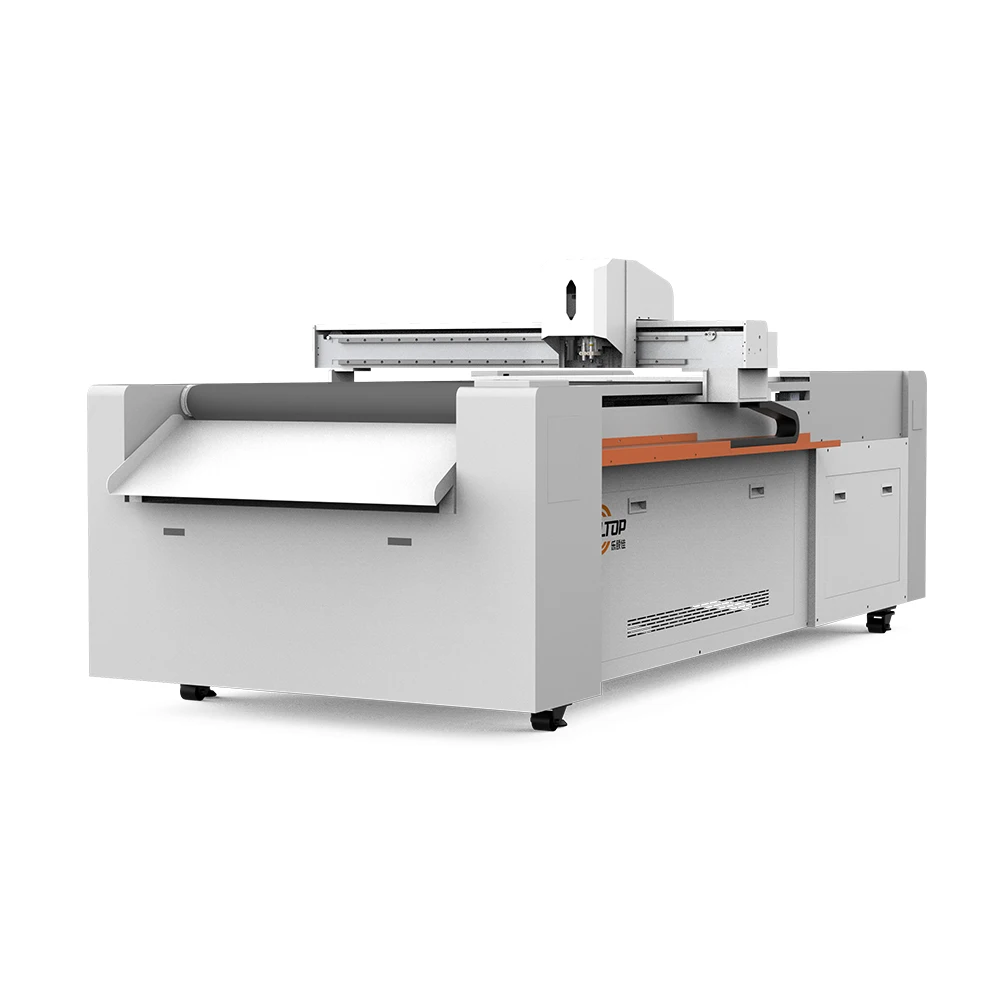
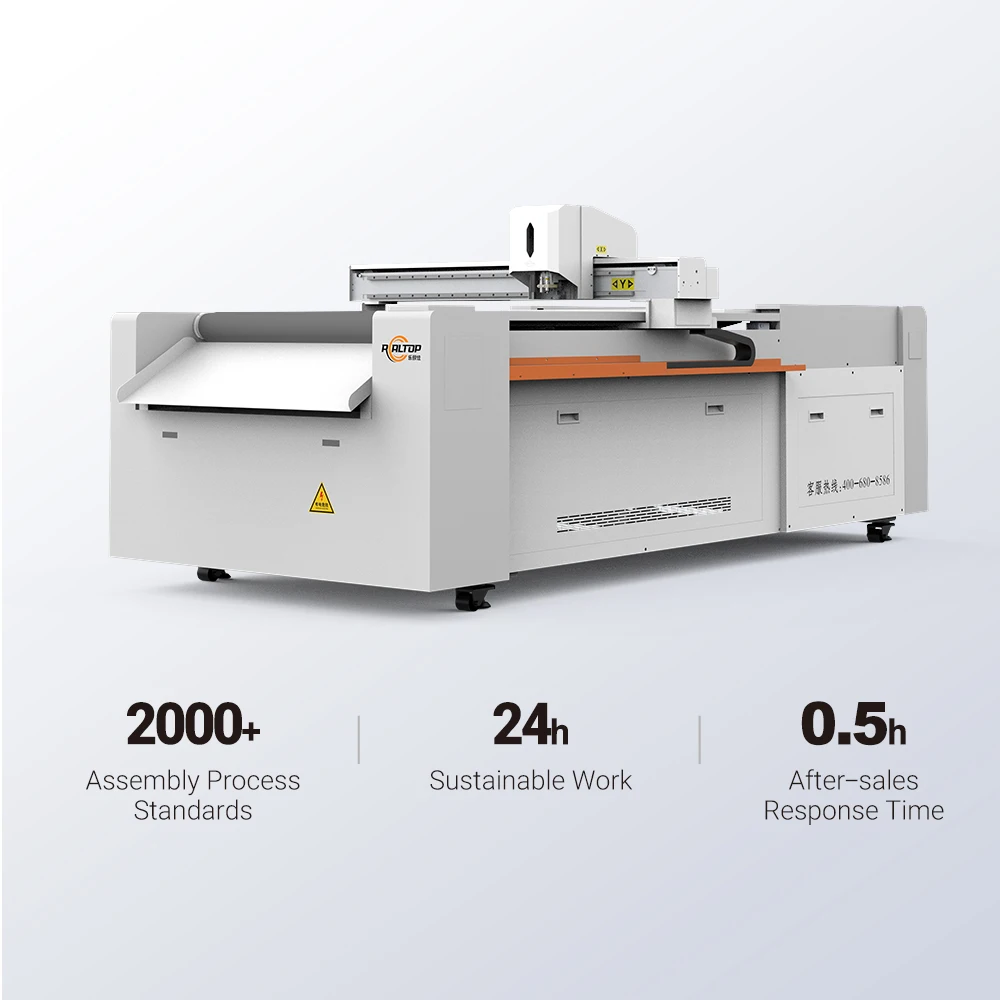
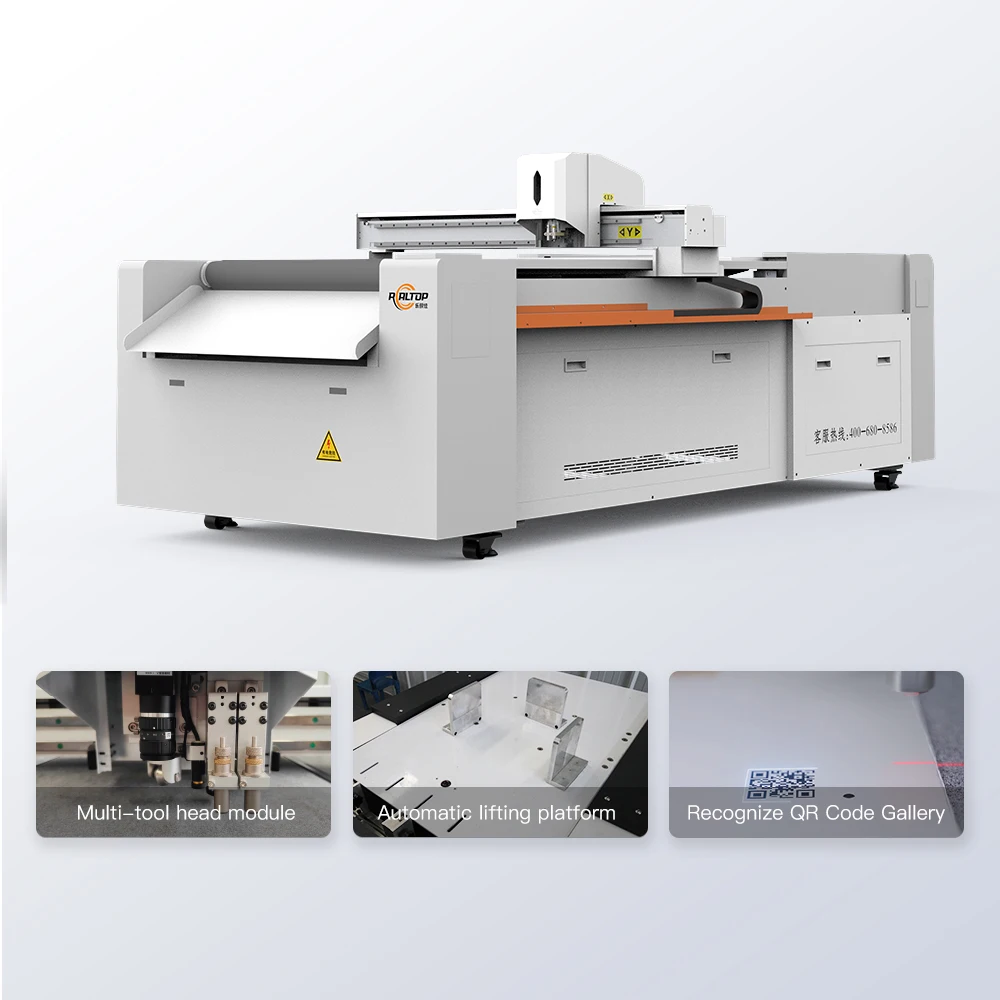
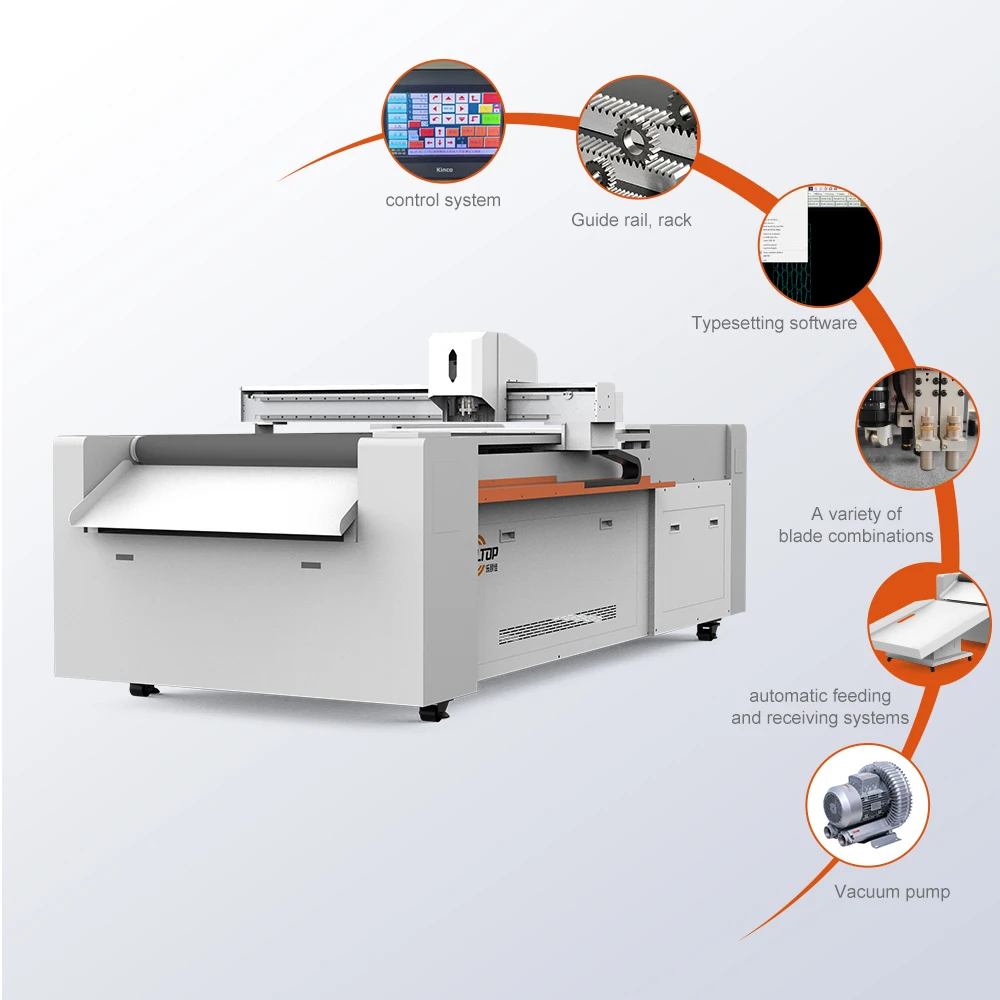
Tool head flexibility by material — The same cutting table can switch between oscillating knife, creasing wheel, and CCD camera, letting packaging houses handle corrugated board, cardstock, and printed vinyl on one platform.
Technical Specifications
| Parameter | Value |
|---|---|
| Product Type | CNC Oscillating Knife Cutting Machine |
| Working Area Options | 400×600 / 600×800 / 900×1200 mm |
| Tool Head Options | Oscillating knife, Creasing wheel, Kiss cutting tool, CCD camera, Marking pen |
| Cutting Speed | 0–1500 mm/s |
| Cutting Thickness | ≤ 20 mm (basis not stated in source) |
| Cutting Accuracy | ±0.1 mm |
| Vacuum Pump Power | 2.5 kW / 3.2 kW |
| Voltage Options | 110V / 220V |
| File Format Compatibility | PLT, DXF, AI, PDF |
| Safety Devices | Infrared sensor device and emergency stop device |
| Control Language Options | English, Russian, Italian, Chinese (custom languages available) |
| Certification | CE |
Application Suitability
| Application | Material or Output |
|---|---|
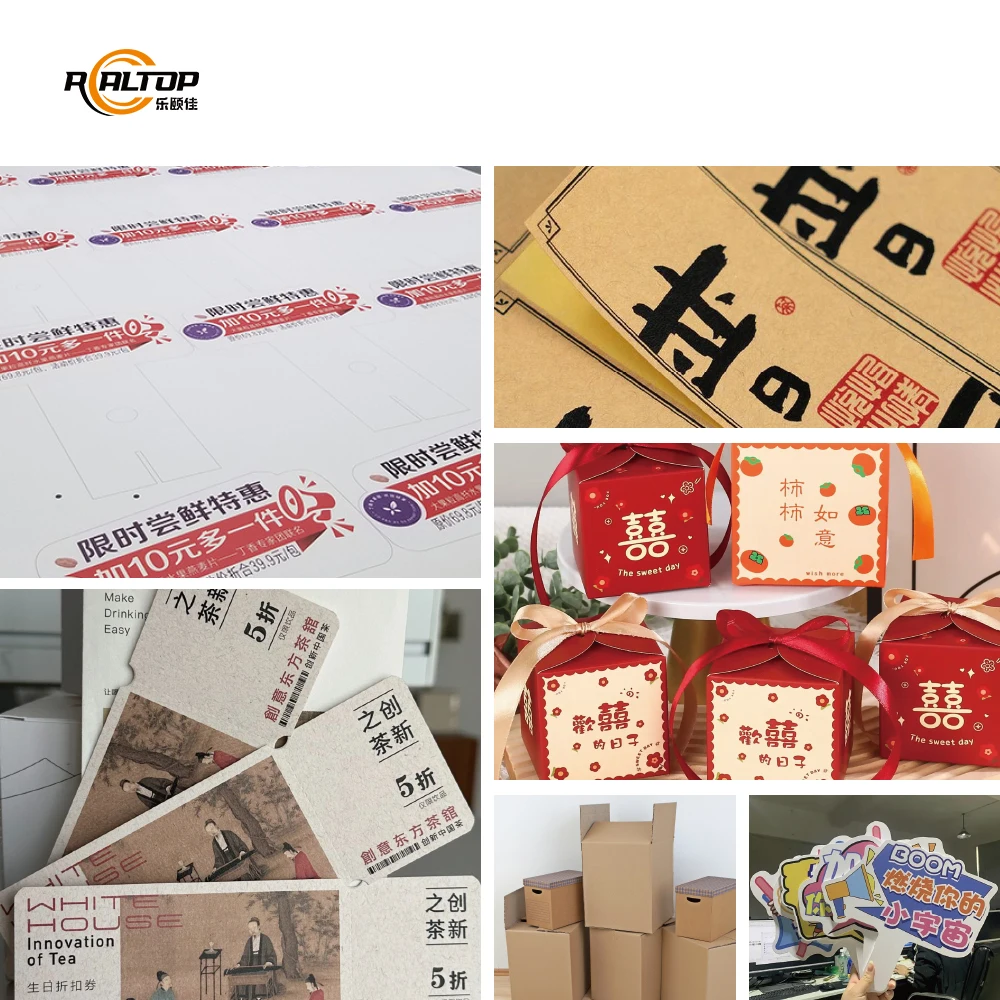
| Packaging & carton sample making | Printed carton, cardboard, packaging prototype sampling |
| Advertising & graphics | Vinyl stickers, self-adhesive vinyl, PVC decals, window clings |
| Education & crafts | Teaching aids, puzzles, cards, science experiment templates |
| Cultural design | Custom paper-cut lamps, leather bookmarks, 3D greeting cards |
| Light industry short runs | Electronic foam gaskets, small-batch production |
Why the Wrong CCD Camera Setting Wastes an Entire Day on Printed Boxes
Printed contour recognition only works when the light source, camera resolution, and material surface are tuned together — not just bolted on.
When a packaging house installs a vibrating knife cutter with CCD contour recognition, the assumption is that the camera will automatically follow the registration marks on every color box. In practice, laminated gray board reflects differently than the standard white card the machine was tested on at the factory. The camera loses track of the mark mid-run, the knife drifts off the die line, and suddenly hundreds of sheets are scrapped before anyone notices the pattern. I once watched a Middle East client lose a full morning to this exact problem — the fix required swapping the LED strip angle and recalibrating the contrast threshold on the actual production material [NEED_CITE: material reflectance impact on CCD contour recognition accuracy].
Tool Head Selection Across the Machine Range
The range covers compact desktop models at 400×600 mm for prototype sampling and short-run educational crafts, up to 900×1200 mm tables for production-format packaging work. Each platform accepts the same tool head family: the oscillating knife handles corrugated board and foam gaskets, the creasing wheel scores fold lines without cutting through, and the kiss cutting tool slices vinyl stickers without damaging the backing paper. A CNC oscillating knife cutting machine manufacturer that builds both knife and laser systems can advise whether a given material is better served by blade or beam, rather than pushing one technology across every substrate.
How CCD Contour Recognition Performs in Real Workshop Conditions
The CCD camera tracks printed registration marks on color boxes, decals, and sticker sheets to auto-align the cut path with the printed image. At production speed, the system must read marks on materials ranging from matte cardstock to glossy laminated board. Reflective surfaces and low-contrast ink can confuse the sensor if the lighting rig is not matched to the material [NEED_CITE: vision system calibration for variable print surfaces]. The configuration list should confirm camera model, LED type, and software version against the buyer’s actual print stock before the machine leaves the factory.
Reading the Specification Sheet Like a Production Manager
The cutting accuracy of ±0.1 mm matters most on intricate packaging prototypes where a scored fold line must land exactly on the printed crease — a drift of even half a millimeter produces a box that will not close square. Vacuum pump power at 2.5 kW or 3.2 kW determines how firmly small parts stay pinned to the table; undersized vacuum on a large-format bed causes thin cardstock to lift at the edges during high-speed knife passes. File format compatibility with PLT, DXF, AI, and PDF means most packaging designers can send artwork directly from Illustrator or CorelDRAW without intermediate conversion, reducing a common source of path errors. The 0–1500 mm/s cutting speed range gives operators room to slow down for thick corrugated board or accelerate for single-ply vinyl cuts.
The Cost of Skipping a Sample Cut on Your Own Material
Buyers who approve a machine based on the factory’s standard test material often discover problems only when their own stock arrives on the shop floor. Foam that cuts cleanly at the factory may crush and fray on a machine with insufficient knife stroke or wrong oscillation frequency. Laminated board may reflect enough light to blind the CCD camera, forcing the operator to abandon auto-registration and cut manually — turning a supposed productivity gain into a bottleneck. Confirming vacuum zoning, knife type, and camera lighting against the buyer’s daily material mix prevents these surprises [NEED_CITE: factory acceptance test best practices for CNC cutting equipment].
Why Buyers Survey the Full Equipment Line Here
The in-house design team covers both oscillating knife and laser cutting on the same engineering platform, so a packaging house can evaluate both methods side by side for their material mix. Each tool head and table size is specified against the buyer’s material type, sheet size, and daily volume rather than quoted as a generic package. CCD camera positioning is calibrated on the buyer’s own printed stock before the order is confirmed. Software file format compatibility is verified against the buyer’s existing design and nesting workflow. Electrical schematics and voltage options are matched to the destination facility before production begins.
Documentation & Verification
- Machine specification sheet confirming selected working area, tool head, and vacuum pump rating
- Electrical schematic with confirmed voltage and plug type for destination country
- Tool head and table configuration list matched to buyer’s material and thickness range
- Sample cutting report on buyer’s own printed carton or vinyl stock before dispatch
- CE declaration and factory test record documenting accuracy and safety device checks
- Software licence with confirmed file format compatibility note for PLT, DXF, AI, PDF
Installation, Commissioning & Support
- Floor space planning around the selected 400×600, 600×800, or 900×1200 mm working area plus material feed clearance
- Dedicated circuit sized for the 2.5 kW or 3.2 kW vacuum pump plus control electronics at confirmed voltage
- On-site leveling of the flatbed table and vacuum zone calibration to ensure consistent hold-down
- First-run commissioning with CCD camera tuning on the buyer’s actual printed material and lighting conditions
- Operator training on tool head changeover between oscillating knife, creasing wheel, and kiss cutting blade
- Spare parts list covering replacement knives, creasing wheels, and vacuum table seals for routine maintenance
What to Include in Your Inquiry
Send the exact material types you cut daily — corrugated board grades, cardstock weights, vinyl thickness — along with maximum sheet dimensions and your typical order volume. Confirm your facility voltage, frequency, and preferred control panel language. If you run printed work requiring contour recognition, include samples of your standard print stock so the camera and lighting can be validated before commitment.
Frequently Asked Questions
Q: Should I choose oscillating knife or laser cutting for my packaging material mix?
A: Oscillating knife is preferred for corrugated board, foam, and thick cardstock where a blade produces a clean edge without heat discoloration. Laser suits acrylic, thin wood veneer, and synthetic textiles where the beam seals the edge as it cuts. When your shop handles both categories, evaluating both technologies from one CNC oscillating knife cutting machine manufacturer lets you match the method to each job rather than forcing one process across every substrate.
Q: What working area and tool head configuration fits my daily production volume?
A: The 400×600 mm table suits prototype sampling and short educational runs, the 600×800 mm fits mid-volume carton work, and the 900×1200 mm handles full-sheet packaging production. Tool head selection — oscillating knife, creasing wheel, kiss cutting tool — is matched to your material type and thickness, confirmed through sample cutting on your own stock before the order is finalized.
Q: How does CCD contour recognition perform at production speed on printed color boxes?
A: The camera tracks registration marks to auto-align cut paths with printed graphics. Performance depends on ink contrast, surface gloss, and lighting angle — laminated or metallic stocks may require adjusted LED positioning. The system is validated on the buyer’s actual printed material during factory testing to confirm reliable tracking at the selected cutting speed.
Q: What voltage and language options are available for my market?
A: The machine is configurable for 110V or 220V supply, with plug type matched to the destination country. Control panel languages include English, Russian, Italian, and Chinese as standard, with custom language files available. Electrical schematics and voltage confirmation are documented before production to prevent wiring mismatches on arrival.
Q: What documentation ships with the machine?
A: Each unit ships with a machine specification sheet, electrical schematic, tool head configuration list, sample cutting report on the buyer’s material, CE declaration, factory test record, operation and maintenance manual, software licence with file format compatibility note, and a spare parts list.
Tool head flexibility by material — The same cutting table can switch between oscillating knife, creasing wheel, and CCD camera, letting packaging houses handle corrugated board, cardstock, and printed vinyl on one platform.
Technical Specifications
| Parameter | Value |
|---|---|
| Product Type | CNC Oscillating Knife Cutting Machine |
| Working Area Options | 400×600 / 600×800 / 900×1200 mm |
| Tool Head Options | Oscillating knife, Creasing wheel, Kiss cutting tool, CCD camera, Marking pen |
| Cutting Speed | 0–1500 mm/s |
| Cutting Thickness | ≤ 20 mm (basis not stated in source) |
| Cutting Accuracy | ±0.1 mm |
| Vacuum Pump Power | 2.5 kW / 3.2 kW |
| Voltage Options | 110V / 220V |
| File Format Compatibility | PLT, DXF, AI, PDF |
| Safety Devices | Infrared sensor device and emergency stop device |
| Control Language Options | English, Russian, Italian, Chinese (custom languages available) |
| Certification | CE |
Application Suitability
| Application | Material or Output |
|---|---|
| Packaging & carton sample making | Printed carton, cardboard, packaging prototype sampling |
| Advertising & graphics | Vinyl stickers, self-adhesive vinyl, PVC decals, window clings |
| Education & crafts | Teaching aids, puzzles, cards, science experiment templates |
| Cultural design | Custom paper-cut lamps, leather bookmarks, 3D greeting cards |
| Light industry short runs | Electronic foam gaskets, small-batch production |
Why the Wrong CCD Camera Setting Wastes an Entire Day on Printed Boxes
Printed contour recognition only works when the light source, camera resolution, and material surface are tuned together — not just bolted on.
When a packaging house installs a vibrating knife cutter with CCD contour recognition, the assumption is that the camera will automatically follow the registration marks on every color box. In practice, laminated gray board reflects differently than the standard white card the machine was tested on at the factory. The camera loses track of the mark mid-run, the knife drifts off the die line, and suddenly hundreds of sheets are scrapped before anyone notices the pattern. I once watched a Middle East client lose a full morning to this exact problem — the fix required swapping the LED strip angle and recalibrating the contrast threshold on the actual production material [NEED_CITE: material reflectance impact on CCD contour recognition accuracy].
Tool Head Selection Across the Machine Range
The range covers compact desktop models at 400×600 mm for prototype sampling and short-run educational crafts, up to 900×1200 mm tables for production-format packaging work. Each platform accepts the same tool head family: the oscillating knife handles corrugated board and foam gaskets, the creasing wheel scores fold lines without cutting through, and the kiss cutting tool slices vinyl stickers without damaging the backing paper. A CNC oscillating knife cutting machine manufacturer that builds both knife and laser systems can advise whether a given material is better served by blade or beam, rather than pushing one technology across every substrate.
How CCD Contour Recognition Performs in Real Workshop Conditions
The CCD camera tracks printed registration marks on color boxes, decals, and sticker sheets to auto-align the cut path with the printed image. At production speed, the system must read marks on materials ranging from matte cardstock to glossy laminated board. Reflective surfaces and low-contrast ink can confuse the sensor if the lighting rig is not matched to the material [NEED_CITE: vision system calibration for variable print surfaces]. The configuration list should confirm camera model, LED type, and software version against the buyer’s actual print stock before the machine leaves the factory.
Reading the Specification Sheet Like a Production Manager
The cutting accuracy of ±0.1 mm matters most on intricate packaging prototypes where a scored fold line must land exactly on the printed crease — a drift of even half a millimeter produces a box that will not close square. Vacuum pump power at 2.5 kW or 3.2 kW determines how firmly small parts stay pinned to the table; undersized vacuum on a large-format bed causes thin cardstock to lift at the edges during high-speed knife passes. File format compatibility with PLT, DXF, AI, and PDF means most packaging designers can send artwork directly from Illustrator or CorelDRAW without intermediate conversion, reducing a common source of path errors. The 0–1500 mm/s cutting speed range gives operators room to slow down for thick corrugated board or accelerate for single-ply vinyl cuts.
The Cost of Skipping a Sample Cut on Your Own Material
Buyers who approve a machine based on the factory’s standard test material often discover problems only when their own stock arrives on the shop floor. Foam that cuts cleanly at the factory may crush and fray on a machine with insufficient knife stroke or wrong oscillation frequency. Laminated board may reflect enough light to blind the CCD camera, forcing the operator to abandon auto-registration and cut manually — turning a supposed productivity gain into a bottleneck. Confirming vacuum zoning, knife type, and camera lighting against the buyer’s daily material mix prevents these surprises [NEED_CITE: factory acceptance test best practices for CNC cutting equipment].
Why Buyers Survey the Full Equipment Line Here
The in-house design team covers both oscillating knife and laser cutting on the same engineering platform, so a packaging house can evaluate both methods side by side for their material mix. Each tool head and table size is specified against the buyer’s material type, sheet size, and daily volume rather than quoted as a generic package. CCD camera positioning is calibrated on the buyer’s own printed stock before the order is confirmed. Software file format compatibility is verified against the buyer’s existing design and nesting workflow. Electrical schematics and voltage options are matched to the destination facility before production begins.
Documentation & Verification
- Machine specification sheet confirming selected working area, tool head, and vacuum pump rating
- Electrical schematic with confirmed voltage and plug type for destination country
- Tool head and table configuration list matched to buyer’s material and thickness range
- Sample cutting report on buyer’s own printed carton or vinyl stock before dispatch
- CE declaration and factory test record documenting accuracy and safety device checks
- Software licence with confirmed file format compatibility note for PLT, DXF, AI, PDF
Installation, Commissioning & Support
- Floor space planning around the selected 400×600, 600×800, or 900×1200 mm working area plus material feed clearance
- Dedicated circuit sized for the 2.5 kW or 3.2 kW vacuum pump plus control electronics at confirmed voltage
- On-site leveling of the flatbed table and vacuum zone calibration to ensure consistent hold-down
- First-run commissioning with CCD camera tuning on the buyer’s actual printed material and lighting conditions
- Operator training on tool head changeover between oscillating knife, creasing wheel, and kiss cutting blade
- Spare parts list covering replacement knives, creasing wheels, and vacuum table seals for routine maintenance
What to Include in Your Inquiry
Send the exact material types you cut daily — corrugated board grades, cardstock weights, vinyl thickness — along with maximum sheet dimensions and your typical order volume. Confirm your facility voltage, frequency, and preferred control panel language. If you run printed work requiring contour recognition, include samples of your standard print stock so the camera and lighting can be validated before commitment.
Frequently Asked Questions
Q: Should I choose oscillating knife or laser cutting for my packaging material mix?
A: Oscillating knife is preferred for corrugated board, foam, and thick cardstock where a blade produces a clean edge without heat discoloration. Laser suits acrylic, thin wood veneer, and synthetic textiles where the beam seals the edge as it cuts. When your shop handles both categories, evaluating both technologies from one CNC oscillating knife cutting machine manufacturer lets you match the method to each job rather than forcing one process across every substrate.
Q: What working area and tool head configuration fits my daily production volume?
A: The 400×600 mm table suits prototype sampling and short educational runs, the 600×800 mm fits mid-volume carton work, and the 900×1200 mm handles full-sheet packaging production. Tool head selection — oscillating knife, creasing wheel, kiss cutting tool — is matched to your material type and thickness, confirmed through sample cutting on your own stock before the order is finalized.
Q: How does CCD contour recognition perform at production speed on printed color boxes?
A: The camera tracks registration marks to auto-align cut paths with printed graphics. Performance depends on ink contrast, surface gloss, and lighting angle — laminated or metallic stocks may require adjusted LED positioning. The system is validated on the buyer’s actual printed material during factory testing to confirm reliable tracking at the selected cutting speed.
Q: What voltage and language options are available for my market?
A: The machine is configurable for 110V or 220V supply, with plug type matched to the destination country. Control panel languages include English, Russian, Italian, and Chinese as standard, with custom language files available. Electrical schematics and voltage confirmation are documented before production to prevent wiring mismatches on arrival.
Q: What documentation ships with the machine?
A: Each unit ships with a machine specification sheet, electrical schematic, tool head configuration list, sample cutting report on the buyer’s material, CE declaration, factory test record, operation and maintenance manual, software licence with file format compatibility note, and a spare parts list.










商品评价
There are no reviews yet.