


Fast Delivery
Quick, reliable shipping to any location.

Free & easy returns
Return this item by mail or in store within 90 days for a full refund.
In-house knife and laser design — Buyers survey the complete cutting range from a single manufacturer, matching the method to the material rather than forcing one approach onto every application.
Technical Specifications
| Parameter | Value |
|---|---|
| Model | RT-D2516 / RT-S2516 |
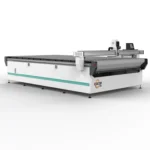
| Product Type | CNC Oscillating Knife Cutting Machine |
| Working Area | 1600 × 2500 mm |
| Machine Size | 3450 × 2300 × 1250 mm |
| Rated Power | 9 kW |
| Voltage | 380V ±10% |
| Control System | CNC with touch screen panel |
| Transmission | Digital servo motor, linear guide, synchronous belt, ball screw |
| Servo Motor Options | Delta or Panasonic (IP67 waterproof) |
| Vacuum Table | Magnesium-aluminum alloy with PVDF coating and hard oxidation |
| Vacuum Pump | 7.5 kW with built-in silencer sponge |
| Translational Velocity | 800–2000 mm/s |
| Cutting Speed | 200–800 mm/s (according to different cutting materials) |
| Repeated Accuracy | ≤0.1 mm |
| Cutting Thickness | ≤100 mm (varies with material) |
| Tool Head Options | Oscillating knife, pneumatic knife, high-power vibrating knife, circular knife, V-cutting knife, drag knife, creasing wheel, dotted line knife, punching, brush |
| Visual Positioning | Small CCD mark point, panoramic camera recognition, projection positioning |
| Table Type | Flat working table or auto feeding conveyor table |
| File Formats | PLT, DXF, AI |
| Instruction System | HP-GL compatible |
| Safety Devices | Infrared induction blocking, anti-collision sensors, emergency stop |
Application Suitability
| Application | Material or Output |
|---|---|
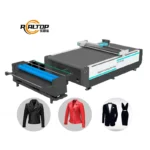
| Soft home furnishings and upholstery | Fabric, textile, non-woven fabric, sponge, PU, EVA |
| Automotive interior trimming | Leather, synthetic leather, carpet, floor mat materials |
| Footwear and luggage manufacturing | Shoe material, luggage material, cloth, composite layers |
| Packaging and carton sample making | Cardboard, corrugated cardboard, plastic box, sticker, film |
| Sealing and gasket production | Rubber, PTFE, ETFE, gasket material, fiberglass |
| Graphic advertising and printing | PVC, PP, PE, foam board, vinyl, printed contour sheets |
Why Working Area Alone Is the Wrong Starting Point for a CNC Oscillating Knife Cutting Machine
A cutting table must be specified by material behavior first, dimensions second.
I have watched buyers choose a flatbed purely on sheet size, then discover that high-density foam or layered composites demand more downward knife pressure than the standard head delivers. The edges come out crushed or ragged, and the entire production run stalls while a different tool head is sourced. With the RT-D2516 and RT-S2516, the conversation starts with your material type, thickness, and daily volume before the working area is even discussed. This prevents the costly mismatch between machine travel and actual cutting capability. [NEED_CITE: material thickness and knife pressure requirements for oscillating cutting]
Knife Versus Laser: Matching the Method to the Material
The fundamental decision for any cutting operation is whether a blade or a beam produces the required edge. Oscillating knife systems excel on layered textiles, foam, and gasket materials where a laser would melt or discolor the cut face. Laser cutting, by contrast, seals edges on synthetics and handles intricate contours on thin films without mechanical pressure. Realtop designs and builds both technologies in-house, so the choice is driven by your material rather than limited to a single process. This full-range approach means a single CNC oscillating knife cutting machine manufacturer can supply the correct equipment across mixed production lines.
Visual Positioning and Contour Accuracy
Printed graphics on fabric or vinyl require the cutting path to follow registration marks at production speed. The RT-D2516/RT-S2516 offers three visual positioning options: small CCD camera mark point positioning for standard printed sheets, panoramic camera recognition for large-format nested layouts, and projection positioning for manual alignment workflows. Choosing the right system depends on your print-to-cut tolerance and the consistency of mark placement from your printer. A panoramic system captures the entire sheet in one pass, reducing cycle time on high-volume graphic jobs. [NEED_CITE: CCD camera positioning accuracy in digital cutting applications]
Reading the Specs That Actually Matter
The 9 kW rated power covers the servo drives, vacuum pump, and control electronics together. The separate 7.5 kW vacuum pump with integrated silencer sponge ensures that suction remains stable even when cutting small parts that tend to lift off the table. Repeated accuracy of ≤0.1 mm is maintained by the combination of linear guides and ball screws on all axes, which matters when nesting tight patterns on expensive leather or composite sheets. The magnesium-aluminum alloy vacuum table with PVDF powder spraying resists chemical exposure from adhesive-backed materials and maintains flatness across the full 1600 × 2500 mm surface. Cutting speed ranges from 200 to 800 mm/s depending on material density and thickness, a range that must be validated on your specific stock before throughput commitments are made.
The Cost of Skipping a Material Sample Test
When a machine arrives configured for standard PVC foam but the workshop runs high-density composite board, the knife pressure, oscillation frequency, and vacuum zoning all need recalibration. I have seen installation teams spend days re-tuning parameters that should have been set before shipment. The consequence is delayed production, wasted material, and eroded trust between buyer and supplier. A sample cutting report on the buyer’s own material eliminates this risk by confirming tool head selection, cutting speed, and edge quality before the order is finalized. [NEED_CITE: sample cutting validation before equipment commitment]
Why Source the Full Equipment Range From One Manufacturer
Realtop’s in-house design team covers both knife and laser cutting platforms, so configuration advice is not limited to a single technology. Tool heads and table layouts are specified per material and production volume, not selected from a fixed menu. CCD camera positioning is integrated at the design stage rather than retrofitted. Software compatibility with PLT, DXF, and AI formats is verified before order confirmation. Voltage, plug type, and control panel language are customized to the destination market, reducing commissioning delays on site.
Documentation & Verification
- Machine specification sheet confirming working area, tool head options, and cutting thickness per material
- Electrical schematic and voltage confirmation matching the buyer’s local supply standard
- Sample cutting report on the buyer’s own fabric or composite material before dispatch
- Software licence and file format compatibility note for PLT, DXF, AI, and HP-GL workflows
- Factory test record documenting repeated accuracy and vacuum table flatness measurements
Installation, Commissioning & Support
- Floor leveling within tolerance for the 3450 × 2300 mm footprint to maintain vacuum table flatness
- Dedicated 380V ±10% circuit with appropriate breaker rating for the combined 9 kW load plus 7.5 kW vacuum pump
- Machine arrives as a single assembled frame; beam and gantry alignment verified on site
- First-run parameter tuning using the buyer’s actual material to set cutting speed and oscillation frequency
- Touch screen control panel language set to English, Russian, Italian, Chinese, or a customized option before shipping
- Spare parts list covering knife blades, vacuum seals, and belt tensioning intervals for routine maintenance
Preparing Your Inquiry With the Right Details
To receive an accurate configuration recommendation, share your material type and thickness, maximum sheet size, and estimated daily cutting volume. Specify your local voltage and frequency, preferred control panel language, and whether your workflow requires CCD contour recognition or projection positioning. If you run nested layouts from specific nesting software, confirm the file format and whether auto feeding with a conveyor table fits your production flow.
Frequently Asked Questions
Q: How do I decide between an oscillating knife and a laser for my material?
A: Oscillating knives cut without melting, making them suitable for foam, layered fabric, gaskets, and composites where edge discoloration or fume extraction is a concern. Lasers seal edges on thin synthetics and handle fine contours on films. The correct choice depends on material composition, thickness, and the edge finish your product requires.
Q: Which visual positioning system fits printed contour cutting?
A: Small CCD mark point positioning works for standard sheets with consistent registration marks. Panoramic camera recognition captures large-format nested layouts in one pass, reducing cycle time. Projection positioning assists manual alignment for low-volume or prototype jobs. The choice depends on your print consistency and production volume.
Q: Can the vacuum table hold small parts securely during cutting?
A: The magnesium-aluminum alloy table with PVDF coating is divided into zones to concentrate suction on the active cutting area. Small parts that might lift during high-speed travel are held by localized vacuum rather than full-table suction. Zone configuration should be confirmed based on your typical part size.
Q: What voltage and language options are available before shipment?
A: The standard configuration is 380V ±10%, with voltage customization available for markets with different supply standards. Control panel languages include English, Russian, Italian, and Chinese, with special languages customizable. Voltage, plug type, and language are confirmed before production begins.










商品评价
There are no reviews yet.