

Fast Delivery
Quick, reliable shipping to any location.

Free & easy returns
Return this item by mail or in store within 90 days for a full refund.
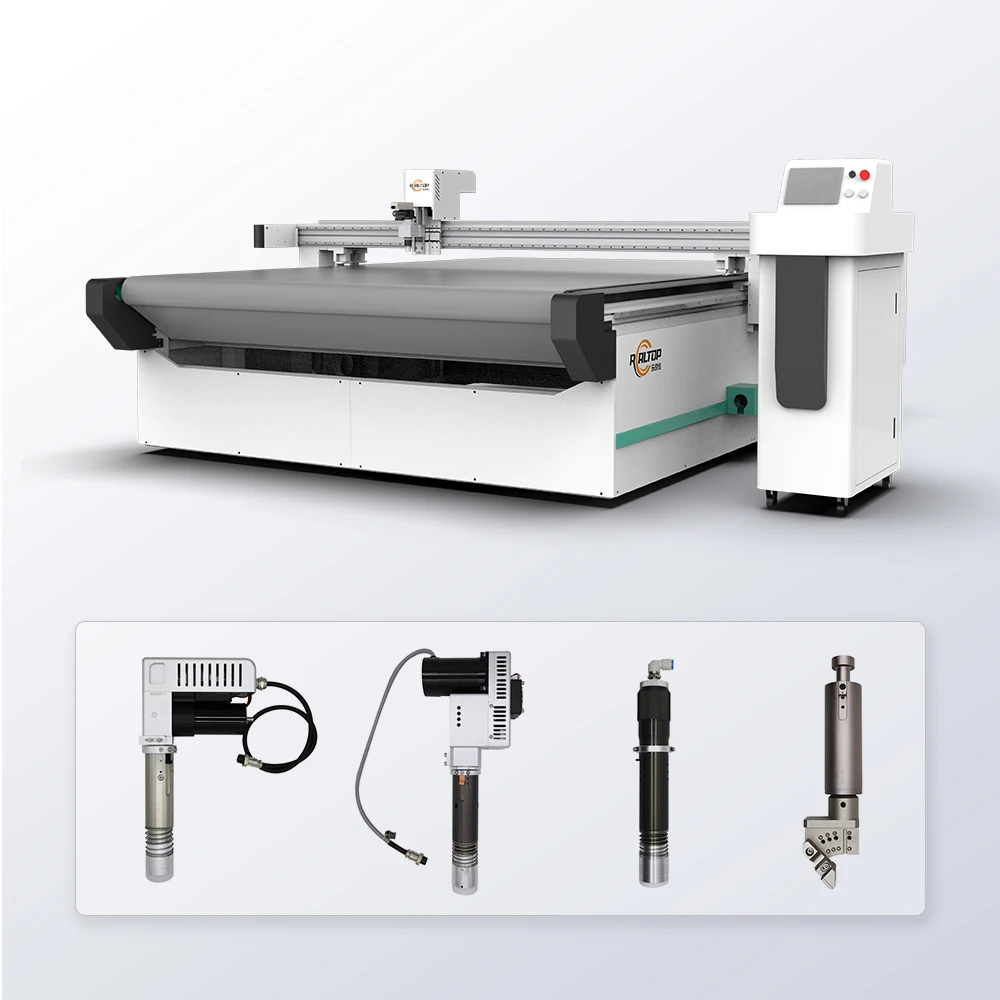
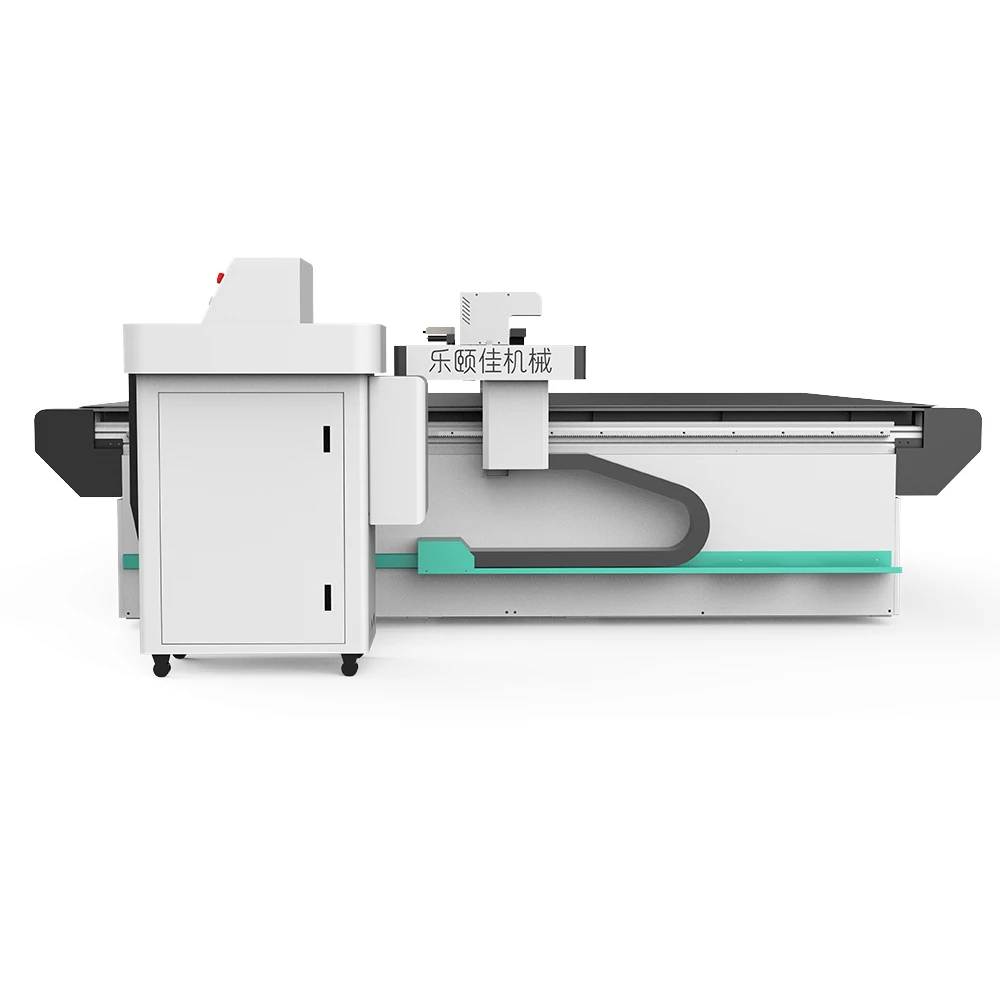
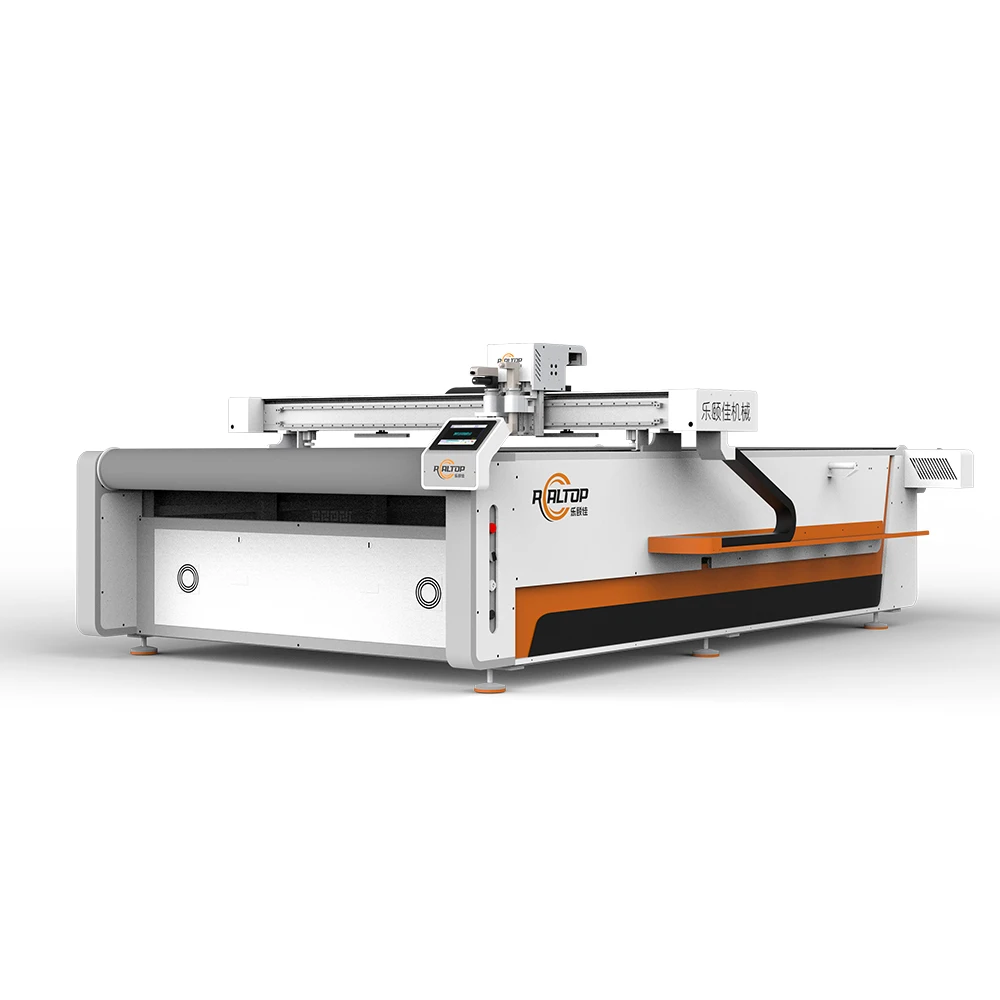
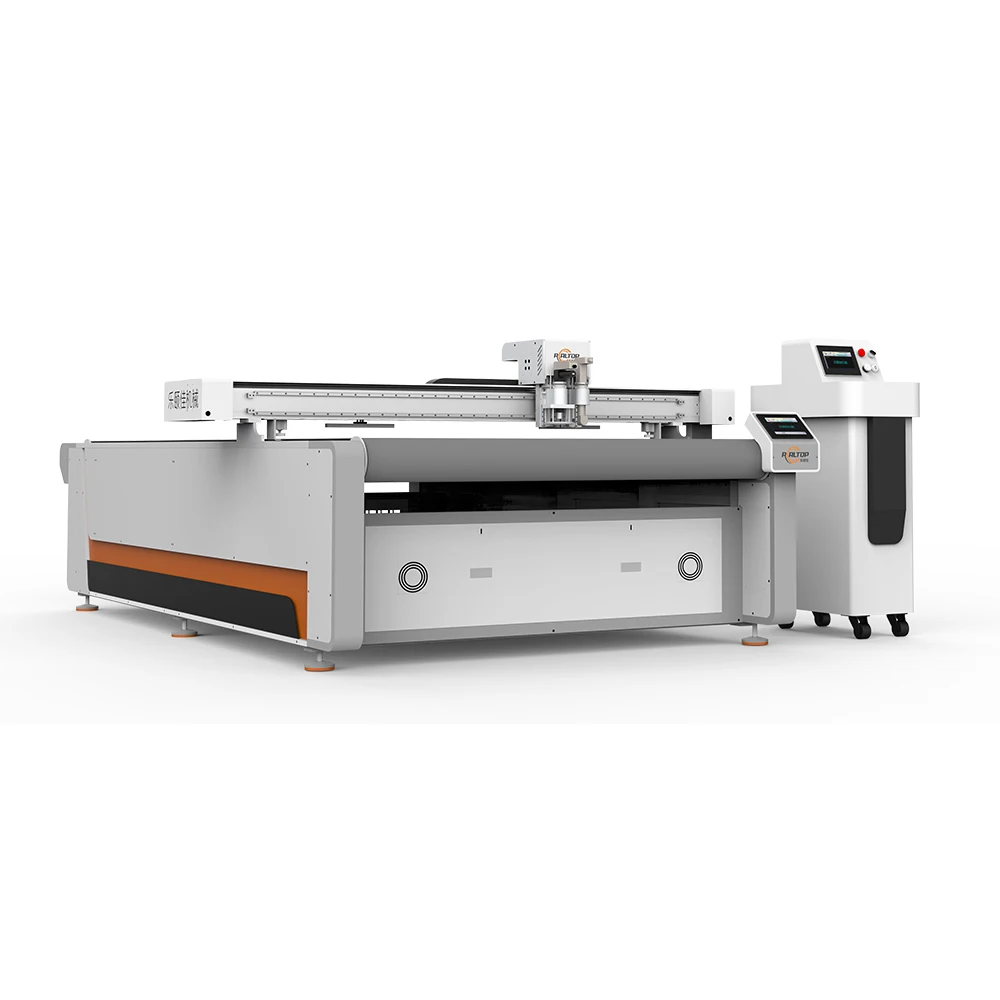
Customized tool head and table zoning — configured per fabric weight and roll width before shipment to eliminate mid-cut lifting and ragged edge failures.
Technical Specifications
| Parameter | Value |
|---|---|
| Model | 1625(Standard) |
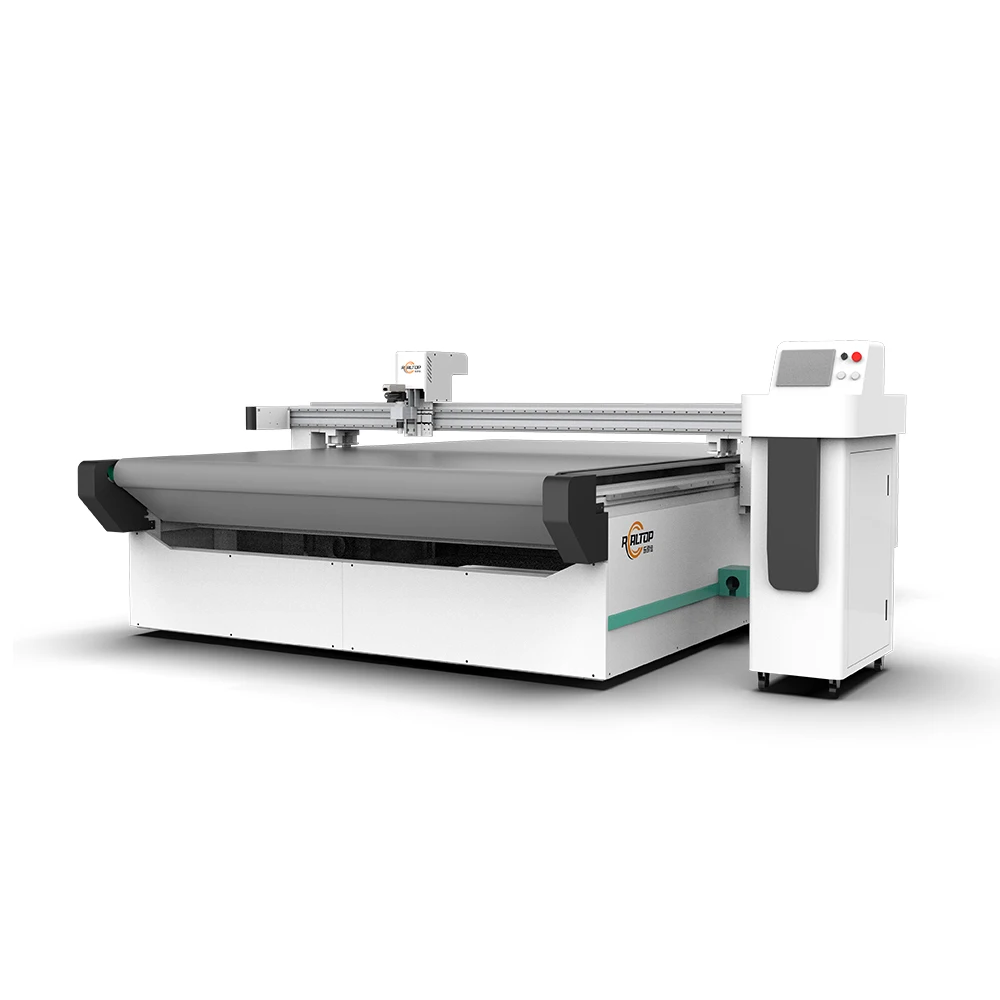
| Product Type | CNC Oscillating Knife Cutting Machine |
| Working Area | 1600 × 2500 mm |
| Tools Available | Oscillating knife, Driven rotary knife, Creasing wheel, Kiss cutting tool, Pneumatic knife, Milling tool, V groove knife |
| Applicable Materials | Fabric, Cardboard, Carton, Mats, PVC, EVA, Leather, Acrylic, Foam, PTFE, Rubber |
| Cutting Speed | 0–2000 mm/s |
| Cutting Thickness | ≤ 30 mm |
| Cutting Accuracy | ±0.1 mm |
| Vacuum Pump Power | 9 kW |
| Vacuum Table Type | Aluminum bellows vacuum table |
| Servo Drive Options | Panasonic, Delta, Dorna |
| Voltage Options | 110 V, 220 V, 380 V |
| Control System | PLC control panel with optional display languages |
| Supported File Formats | PLT, DXF, AI, PDF |
| Safety Devices | Infrared sensor device and emergency stop device |
| Machine Dimensions | 3300 × 2100 × 1350 mm |
| Standards | CE |
Application Suitability
| Application | Material or Output |
|---|---|
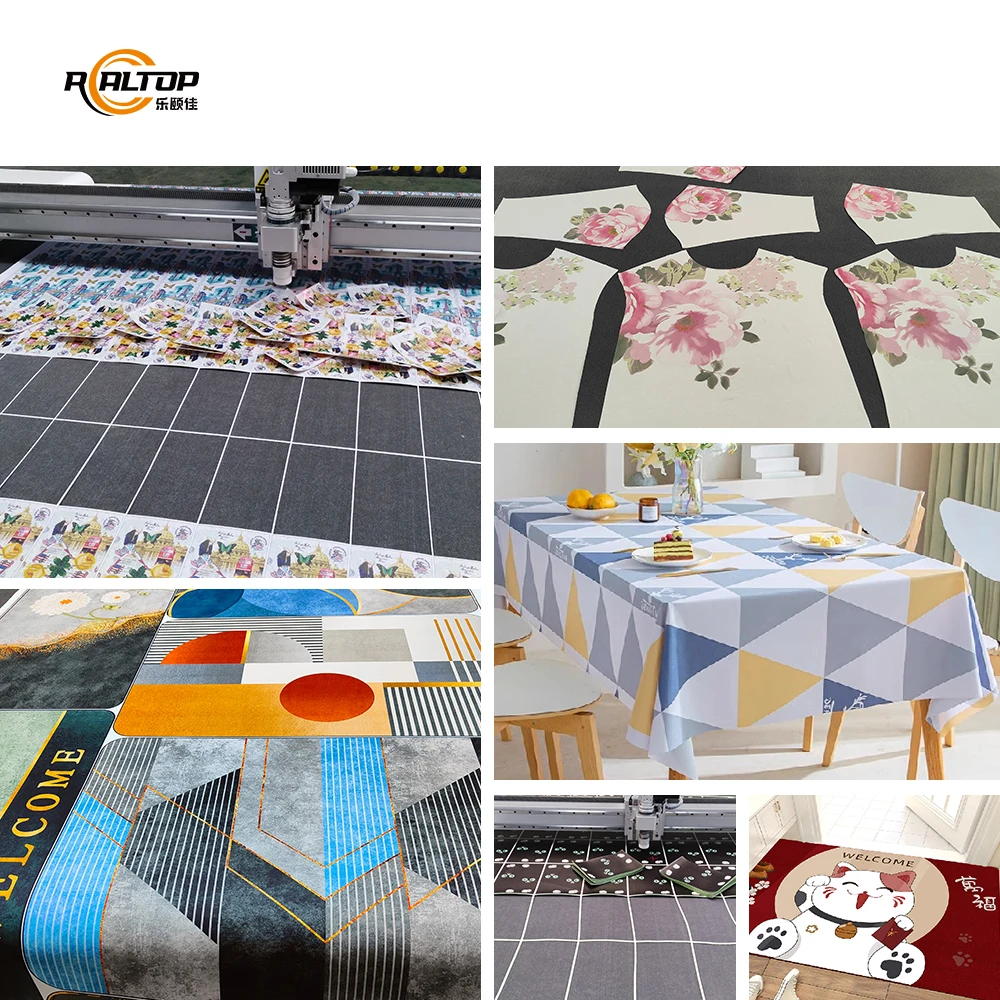
| Apparel and garment cutting | Woven cotton, polyester blends, spandex panels, layered knit fabrics |
| Shoe upper and leather goods | Genuine leather, PU synthetic leather, textile linings |
| Automotive seat covers and interiors | Upholstery fabric, non-woven substrates, foam-backed composites |
| Roller blinds and home furnishings | Blackout fabric, sunscreen mesh, lampshade textiles, sofa upholstery |
| Packaging sample making | Corrugated cardboard, folding carton stock, foam boards |
| Advertising and signage | Vehicle wrap vinyl, PVC sheets, adhesive stickers, acrylic panels |
Why the Wrong Tool Head Fails on Thin Fabric Before the First Hour Ends
A CNC oscillating knife cutting machine for sale must be specified against the buyer’s actual material stack, not just working area dimensions.
I have watched operators in Dhaka fabric mills swap blades three times in one shift because the oscillating knife was set for leather but the job was a single-layer polyester jersey. The driven rotary knife would have handled it cleanly. When the tool head does not match the material behavior — stretch, weave density, coating — the blade pulls threads, leaves burrs on cut edges, or simply crushes foam-backed layers instead of slicing through them [NEED_CITE: tool head selection criteria by material type and thickness]. Matching the tool to the material is not a preference; it determines whether the cutting edge is acceptable to the next sewing or assembly step.
Tool Head Options Across Fabric, Foam and Board
This flatbed system carries seven interchangeable tool heads. The oscillating knife handles multi-layer woven and knit fabrics up to 30 mm thick. The driven rotary knife suits single-layer stretch materials that an oscillating blade would distort. The pneumatic knife slices thicker foam and composite stacks where blade pressure must stay constant through the full depth. Switching between heads takes minutes on the gantry carriage, letting a single operator move from shoe uppers in the morning to carton samples in the afternoon without a second machine.
Vacuum Table Zoning by Actual Part Geometry
The aluminum bellows vacuum table delivers hold-down across the full 1600 × 2500 mm bed, but surface suction alone is not enough when cutting small pattern pieces like collar stays or gasket rings. Without properly divided zones, vacuum escapes through unused areas and thin fabric lifts at the edges mid-cut — exactly what I saw on a blackout roller blind line in Nairobi, where two full rolls were ruined before we redesigned the zone layout on-site. Zone segmentation is set based on the buyer’s smallest part footprint so that suction concentrates where the knife is actually working [NEED_CITE: vacuum zone sizing for small-part cutting on flatbed tables].
Reading the Specs That Matter on the Shop Floor
Cutting speed is rated at 0–2000 mm/s, but real throughput depends on how many direction changes the nesting layout demands; intricate shoe upper patterns with tight curves run considerably slower than straight-line curtain panel cuts. The 9 kW vacuum pump provides the suction baseline, yet the effective hold-down force on any given zone depends on how many zones are open simultaneously. Accuracy at ±0.1 mm ensures pattern pieces align at the sewing stage, which matters when a 0.3 mm drift compounds across a twelve-piece car seat cover set. The PLC control panel ships with language options set to the operator’s local language, avoiding the on-site translation delays that hold up commissioning. Servo drive selection across Panasonic, Delta, and Dorna allows the motion response to be tuned to the gantry mass and the required acceleration profile for the target material.
The Cost of Skipping the Sample Cut Step
Buyers who specify a machine on working area and price alone, without a sample cut on their own material roll, inherit problems that surface only after full production starts. Fabric that appears stable on a test swatch can shift under full-bed vacuum when the weave direction runs diagonal to the cutting path. Leather with a heavy finish coat may require the kiss cutting tool instead of the oscillating knife to avoid scoring the backing layer. Without pre-shipment verification, these mismatches become the buyer’s problem — measured in scrapped material, delayed shipments to downstream customers, and emergency service calls [NEED_CITE: material-specific cutting validation before equipment acceptance].
Why Sourcing This Machine Here Makes Sense for Fabric Cutters
The design team specifies each tool head and table zone layout against the buyer’s material samples before the order enters production. The factory tests the machine on the buyer’s actual fabric or leather stock and provides a documented sample cutting report. Voltage, plug type, and control language are confirmed in writing before shipment, eliminating the arrival-day surprises that delay installation. Software licence and file format compatibility are verified against the buyer’s existing PLT, DXF, AI, or PDF workflow so nesting files transfer without conversion errors. The machine is backed by an operation and maintenance manual, a spare parts list, and a factory test record that traces every configuration decision back to the buyer’s stated requirements.
Documentation & Verification
- Machine specification sheet listing every tool head and zone configuration matched to your material type
- Sample cutting report produced on your own fabric or leather stock before order commitment
- Electrical schematic with confirmed voltage, plug type, and frequency for your facility
- Software licence and file format compatibility note covering PLT, DXF, AI, and PDF workflows
- Factory test record documenting cutting accuracy and vacuum performance across configured zones
- Operation and maintenance manual with localized control language matching your operator team
Installation, Commissioning & Support
- Floor space of at least 3500 × 2300 mm required to accommodate the 3300 × 2100 × 1350 mm machine frame and operator access
- Dedicated circuit matching the confirmed voltage option (110 V, 220 V, or 380 V) plus a separate 9 kW supply for the vacuum pump
- Machine ships in a single crate and requires gantry re-alignment and belt tensioning during on-site assembly
- First-run commissioning includes vacuum zone calibration against your smallest production part geometry
- Operator training covers tool head changeover, nesting file import, and PLC panel navigation in the selected language
- Spare parts list provided at delivery covering oscillating knife blades, rotary knife discs, and vacuum seal strips
Before You Request a Quote
Provide the material type, maximum thickness, and typical roll or sheet dimensions you will cut. Include your target daily output volume and the smallest part size in your nesting layouts so the vacuum zone plan can be built correctly. Confirm your local voltage and frequency, the control language your operators need, and whether your existing design files are in PLT, DXF, AI, or PDF format so software compatibility is resolved before the quotation stage.
Frequently Asked Questions
Q: How do I choose between the oscillating knife and the driven rotary knife for my fabric?
A: The oscillating knife suits multi-layer woven and knit fabrics up to 30 mm, cutting through stacked plies in a single pass. The driven rotary knife is better for single-layer stretch or slippery materials where an oscillating blade might pull threads or distort the weave. We run a sample cut on your actual material to confirm which tool head produces the cleanest edge for your downstream process.
Q: Can the machine handle printed fabric with contour cutting requirements?
A: The system supports CCD camera contour recognition for printed fabrics and patterned rolls, tracking registration marks at production speed to align cuts with the printed design. This configuration must be specified at the order stage so the camera mount and software module are installed and calibrated during factory testing before shipment.
Q: How do I verify the vacuum table holds my small pattern pieces flat?
A: We configure the aluminum bellows vacuum table zones based on the smallest part footprint in your nesting layout. During the sample cutting stage, we test hold-down performance on your material and adjust zone boundaries until no edge lifting occurs at the cutting speed you will use in production.
Q: What happens if my file format is not compatible with the machine software?
A: Supported formats include PLT, DXF, AI, and PDF. Before order confirmation, we verify that your existing design and nesting files import correctly into the machine software and that nesting, tool path generation, and cut sequencing function as expected in your workflow.
Q: What is the process for sample cutting on my material before I commit?
A: Send us a roll or sheet sample of the material you will cut most often, along with a representative nesting file. We run the cut on the configured tool head and vacuum zone layout, then share a sample cutting report showing edge quality, dimensional accuracy, and cutting speed achieved on your specific material.
Customized tool head and table zoning — configured per fabric weight and roll width before shipment to eliminate mid-cut lifting and ragged edge failures.
Technical Specifications
| Parameter | Value |
|---|---|
| Model | 1625(Standard) |
| Product Type | CNC Oscillating Knife Cutting Machine |
| Working Area | 1600 × 2500 mm |
| Tools Available | Oscillating knife, Driven rotary knife, Creasing wheel, Kiss cutting tool, Pneumatic knife, Milling tool, V groove knife |
| Applicable Materials | Fabric, Cardboard, Carton, Mats, PVC, EVA, Leather, Acrylic, Foam, PTFE, Rubber |
| Cutting Speed | 0–2000 mm/s |
| Cutting Thickness | ≤ 30 mm |
| Cutting Accuracy | ±0.1 mm |
| Vacuum Pump Power | 9 kW |
| Vacuum Table Type | Aluminum bellows vacuum table |
| Servo Drive Options | Panasonic, Delta, Dorna |
| Voltage Options | 110 V, 220 V, 380 V |
| Control System | PLC control panel with optional display languages |
| Supported File Formats | PLT, DXF, AI, PDF |
| Safety Devices | Infrared sensor device and emergency stop device |
| Machine Dimensions | 3300 × 2100 × 1350 mm |
| Standards | CE |
Application Suitability
| Application | Material or Output |
|---|---|
| Apparel and garment cutting | Woven cotton, polyester blends, spandex panels, layered knit fabrics |
| Shoe upper and leather goods | Genuine leather, PU synthetic leather, textile linings |
| Automotive seat covers and interiors | Upholstery fabric, non-woven substrates, foam-backed composites |
| Roller blinds and home furnishings | Blackout fabric, sunscreen mesh, lampshade textiles, sofa upholstery |
| Packaging sample making | Corrugated cardboard, folding carton stock, foam boards |
| Advertising and signage | Vehicle wrap vinyl, PVC sheets, adhesive stickers, acrylic panels |
Why the Wrong Tool Head Fails on Thin Fabric Before the First Hour Ends
A CNC oscillating knife cutting machine for sale must be specified against the buyer’s actual material stack, not just working area dimensions.
I have watched operators in Dhaka fabric mills swap blades three times in one shift because the oscillating knife was set for leather but the job was a single-layer polyester jersey. The driven rotary knife would have handled it cleanly. When the tool head does not match the material behavior — stretch, weave density, coating — the blade pulls threads, leaves burrs on cut edges, or simply crushes foam-backed layers instead of slicing through them [NEED_CITE: tool head selection criteria by material type and thickness]. Matching the tool to the material is not a preference; it determines whether the cutting edge is acceptable to the next sewing or assembly step.
Tool Head Options Across Fabric, Foam and Board
This flatbed system carries seven interchangeable tool heads. The oscillating knife handles multi-layer woven and knit fabrics up to 30 mm thick. The driven rotary knife suits single-layer stretch materials that an oscillating blade would distort. The pneumatic knife slices thicker foam and composite stacks where blade pressure must stay constant through the full depth. Switching between heads takes minutes on the gantry carriage, letting a single operator move from shoe uppers in the morning to carton samples in the afternoon without a second machine.
Vacuum Table Zoning by Actual Part Geometry
The aluminum bellows vacuum table delivers hold-down across the full 1600 × 2500 mm bed, but surface suction alone is not enough when cutting small pattern pieces like collar stays or gasket rings. Without properly divided zones, vacuum escapes through unused areas and thin fabric lifts at the edges mid-cut — exactly what I saw on a blackout roller blind line in Nairobi, where two full rolls were ruined before we redesigned the zone layout on-site. Zone segmentation is set based on the buyer’s smallest part footprint so that suction concentrates where the knife is actually working [NEED_CITE: vacuum zone sizing for small-part cutting on flatbed tables].
Reading the Specs That Matter on the Shop Floor
Cutting speed is rated at 0–2000 mm/s, but real throughput depends on how many direction changes the nesting layout demands; intricate shoe upper patterns with tight curves run considerably slower than straight-line curtain panel cuts. The 9 kW vacuum pump provides the suction baseline, yet the effective hold-down force on any given zone depends on how many zones are open simultaneously. Accuracy at ±0.1 mm ensures pattern pieces align at the sewing stage, which matters when a 0.3 mm drift compounds across a twelve-piece car seat cover set. The PLC control panel ships with language options set to the operator’s local language, avoiding the on-site translation delays that hold up commissioning. Servo drive selection across Panasonic, Delta, and Dorna allows the motion response to be tuned to the gantry mass and the required acceleration profile for the target material.
The Cost of Skipping the Sample Cut Step
Buyers who specify a machine on working area and price alone, without a sample cut on their own material roll, inherit problems that surface only after full production starts. Fabric that appears stable on a test swatch can shift under full-bed vacuum when the weave direction runs diagonal to the cutting path. Leather with a heavy finish coat may require the kiss cutting tool instead of the oscillating knife to avoid scoring the backing layer. Without pre-shipment verification, these mismatches become the buyer’s problem — measured in scrapped material, delayed shipments to downstream customers, and emergency service calls [NEED_CITE: material-specific cutting validation before equipment acceptance].
Why Sourcing This Machine Here Makes Sense for Fabric Cutters
The design team specifies each tool head and table zone layout against the buyer’s material samples before the order enters production. The factory tests the machine on the buyer’s actual fabric or leather stock and provides a documented sample cutting report. Voltage, plug type, and control language are confirmed in writing before shipment, eliminating the arrival-day surprises that delay installation. Software licence and file format compatibility are verified against the buyer’s existing PLT, DXF, AI, or PDF workflow so nesting files transfer without conversion errors. The machine is backed by an operation and maintenance manual, a spare parts list, and a factory test record that traces every configuration decision back to the buyer’s stated requirements.
Documentation & Verification
- Machine specification sheet listing every tool head and zone configuration matched to your material type
- Sample cutting report produced on your own fabric or leather stock before order commitment
- Electrical schematic with confirmed voltage, plug type, and frequency for your facility
- Software licence and file format compatibility note covering PLT, DXF, AI, and PDF workflows
- Factory test record documenting cutting accuracy and vacuum performance across configured zones
- Operation and maintenance manual with localized control language matching your operator team
Installation, Commissioning & Support
- Floor space of at least 3500 × 2300 mm required to accommodate the 3300 × 2100 × 1350 mm machine frame and operator access
- Dedicated circuit matching the confirmed voltage option (110 V, 220 V, or 380 V) plus a separate 9 kW supply for the vacuum pump
- Machine ships in a single crate and requires gantry re-alignment and belt tensioning during on-site assembly
- First-run commissioning includes vacuum zone calibration against your smallest production part geometry
- Operator training covers tool head changeover, nesting file import, and PLC panel navigation in the selected language
- Spare parts list provided at delivery covering oscillating knife blades, rotary knife discs, and vacuum seal strips
Before You Request a Quote
Provide the material type, maximum thickness, and typical roll or sheet dimensions you will cut. Include your target daily output volume and the smallest part size in your nesting layouts so the vacuum zone plan can be built correctly. Confirm your local voltage and frequency, the control language your operators need, and whether your existing design files are in PLT, DXF, AI, or PDF format so software compatibility is resolved before the quotation stage.
Frequently Asked Questions
Q: How do I choose between the oscillating knife and the driven rotary knife for my fabric?
A: The oscillating knife suits multi-layer woven and knit fabrics up to 30 mm, cutting through stacked plies in a single pass. The driven rotary knife is better for single-layer stretch or slippery materials where an oscillating blade might pull threads or distort the weave. We run a sample cut on your actual material to confirm which tool head produces the cleanest edge for your downstream process.
Q: Can the machine handle printed fabric with contour cutting requirements?
A: The system supports CCD camera contour recognition for printed fabrics and patterned rolls, tracking registration marks at production speed to align cuts with the printed design. This configuration must be specified at the order stage so the camera mount and software module are installed and calibrated during factory testing before shipment.
Q: How do I verify the vacuum table holds my small pattern pieces flat?
A: We configure the aluminum bellows vacuum table zones based on the smallest part footprint in your nesting layout. During the sample cutting stage, we test hold-down performance on your material and adjust zone boundaries until no edge lifting occurs at the cutting speed you will use in production.
Q: What happens if my file format is not compatible with the machine software?
A: Supported formats include PLT, DXF, AI, and PDF. Before order confirmation, we verify that your existing design and nesting files import correctly into the machine software and that nesting, tool path generation, and cut sequencing function as expected in your workflow.
Q: What is the process for sample cutting on my material before I commit?
A: Send us a roll or sheet sample of the material you will cut most often, along with a representative nesting file. We run the cut on the configured tool head and vacuum zone layout, then share a sample cutting report showing edge quality, dimensional accuracy, and cutting speed achieved on your specific material.










商品评价
There are no reviews yet.