


Fast Delivery
Quick, reliable shipping to any location.

Free & easy returns
Return this item by mail or in store within 90 days for a full refund.
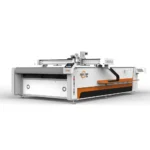
Customized Tool Head Configuration — every RT-D2516/RT-S2516 ships with tool heads and vacuum zones matched to your specific material stack, not a generic package based on working area alone.
Technical Specifications
| Parameter | Value |
|---|---|
| Model | RT-D2516/RT-S2516 |
| Product Type | CNC Oscillating Knife Cutting Machine |
| Working Area | 1600×2500mm |
| Overall Dimensions (L×W×H) | 3450×2300×1250mm |
| Rated Power | 9kW |
| Voltage | 380V±10% (frequency confirm with destination market) |
| Transmission System | Digital servo motor, linear guide, synchronous belt, ball screw |
| Servo Motor Brand | Delta |
| Linear Guide | Taiwan Hiwin rail |
| Translational Velocity | 800-1200mm/s |
| Cutting Thickness | 20-80mm (varies by material — confirm material type and density) |
| Repeated Accuracy | ≤0.1mm |
| Positioning Accuracy | ±0.1mm |
| Tool Head Options | Oscillating knife, pneumatic knife, high-power vibrating knife, circular knife, V-cutting knife, drag knife, creasing wheel, dotted line knife, punching, brush |
| Visual Positioning | Small CCD camera mark point positioning, panoramic camera recognition positioning, projection positioning |
| Working Table | Flat vacuum table with aluminum alloy vacuum adsorption |
| Vacuum Pump | 7.5kW |
| Feeding System | Automatic pulling and receiving (conveyor belt, Germany imported) |
| Safety Device | Infrared sensors |
| Instruction System | HP-GL compatible format |
| Control Language Options | English, Russian, Italian, Chinese (special languages customizable) |
| Software | Realtop self-developed software, pattern cutting design software (carton, car foot pad, seat sleeve, clothing fabric) |
| Assembly State | Fully assembled |
| Warranty | 1 year (lifetime technical support available) |
Application Suitability
| Application | Material or Output |
|---|---|
| Automotive interior trimming | Leather, PU, composite materials, sponge composite leather, carpet |
| Garment and footwear cutting | Clothing cloth, shoe material, fabric, textile, non-woven fabric |
| Packaging and carton sample making | Cardboard, corrugated cardboard, plastic box |
| Gasket and sealing production | Rubber, PTFE, ETFE, gasket material |
| Advertising and signage | Sticker, film, PVC, PP, PE, soft glass |
| Composite and foam fabrication | Fiberglass, foam board, sponge, EVA, XPE, silicon |
Why Material Thickness Decides More Than Table Size
A cutting machine specified only by working area often fails the moment real material hits the bed.
I have seen buyers choose a 1600×2500mm table for automotive interior work, then discover their 60mm fiberglass-reinforced composite required a high-power vibrating knife rather than the standard oscillating head that came with the quote. The CNC oscillating knife cutting machine for sale you are evaluating must be matched to your densest, toughest material first — table dimensions come second. Cutting capacity depends on the interplay between tool head type, blade geometry, vacuum hold-down force, and material density, none of which are visible in a brochure spec sheet [NEED_CITE: cutting force requirements for composite materials by thickness and density].
Tool Head Swapping Across Material Families
The multifunctional head on the RT-D2516/RT-S2516 accepts a Swiss imported knife with vibration full cutting, vibration half cutting, and cursor location. For a buyer running leather on Monday and corrugated board on Wednesday, the ability to swap between an oscillating knife, a creasing wheel, and a drag knife on the same CNC oscillating knife cutting machine for sale eliminates the need for two separate machines. Each tool head addresses a different failure mode: the oscillating knife prevents fraying on woven textiles, the creasing wheel scores folding lines without penetrating the substrate, and the drag knife handles vinyl and sticker films that would bunch under a vibrating blade.
Visual Positioning for Printed Contour Work
Printed fabrics and pre-printed packaging samples require the blade to follow contours that shift with every sheet due to stretch and registration variance. This system offers three tiers of visual positioning: small CCD camera mark point positioning for jobs where fiducial marks are printed at known intervals, panoramic camera recognition for full-sheet contour extraction where marks may be absent, and projection positioning for manual alignment verification. The choice between these three depends entirely on whether your upstream printing process produces consistent registration marks — a detail worth confirming before selecting the CNC oscillating knife cutting machine for sale [NEED_CITE: CCD registration accuracy on stretchable textile substrates].
Drive Train and Positioning Accuracy
The Delta servo motor paired with Taiwan Hiwin linear rail delivers a repeated accuracy of ≤0.1mm and positioning accuracy of ±0.1mm. For gasket cutting where a 0.3mm deviation can cause a sealing failure in an assembled engine, this tolerance band matters in practice, not just on paper. The synchronous belt and ball screw transmission translates servo resolution into actual blade path fidelity across the full 1600×2500mm working area. Translational velocity between 800-1200mm/s provides a usable range — slower for dense composites where the*ilms where speed prevents material drag.
What Happens When the Vacuum Table Zones Are Wrong
A 7.5kW vacuum pump on a flat aluminum alloy table holds full sheets effectively, but small parts nested in the center of a large sheet can lift during the final cut if vacuum zoning does not isolate the active area. When a cut gasket lifts, the blade catches the edge, producing a ragged finish or snapping the blade entirely. The automatic conveyor feeding system adds another variable — if the pulling mechanism advances material while a partially cut small piece remains under vacuum, the piece shifts and ruins the nesting layout. Buyers running high-mix small-part production should confirm vacuum zone granularity before committing [NEED_CITE: vacuum table zoning requirements for nested small-part cutting].
Why the In-House Knife and Laser Range Matters Here
Realtop builds both knife and laser cutting systems in the same facility, which means the RT-D2516/RT-S2516 was designed by engineers who understand where knife cutting ends and laser cutting begins. A buyer cutting acrylic signage does not need a vibrating knife — they need a CO2 laser, and forcing one method onto both jobs produces poor edges on at least one material. The tool head and table configuration for this CNC oscillating knife cutting machine for sale is specified per material and production volume, with sample cutting on the buyer’s own material completed before the order is confirmed. Software compatibility with your existing nesting workflow is verified at the same stage, preventing file format surprises after delivery. Voltage, control language, and plug type are locked in before production begins, matching the destination market requirements.
Documentation & Verification
- Machine specification sheet confirming voltage, frequency, plug type, and control language for your market
- Sample cutting report on your actual material verifying edge quality and achievable thickness
- Tool head and table configuration list matched to your material stack and production volume
- Software licence and file format compatibility note for your existing nesting workflow
- Factory test record documenting positioning accuracy and cutting performance before dispatch
Installation, Commissioning & Support
- Requires a level concrete floor capable of supporting 3450×2300mm footprint plus conveyor clearance
- Dedicated 380V±10% circuit rated for 9kW machine load plus 7.5kW vacuum pump draw
- Ships fully assembled — position, level, connect power and vacuum, then verify rail alignment
- First-run calibration of Delta servo parameters and Hiwin rail preload across full travel range
- Operator training covers tool head swapping, CCD calibration, and nesting software workflow
- Spare blade and tool head consumable list provided with recommended replacement intervals
What to Share When You Request a Quote
Send your material type, thickness range, and maximum sheet dimensions so the correct tool head can be selected before the CNC oscillating knife cutting machine for sale is quoted. Include your local voltage and frequency standard, preferred control language, and the file format your nesting software outputs. If your production involves printed contours, specify whether your printing process produces consistent registration marks — this determines whether CCD, panoramic camera, or projection positioning fits your line.
Frequently Asked Questions
Q: How do I decide between knife cutting and laser cutting for my material?
A: Knife cutting works best for fabrics, leather, foam, gaskets, and composites where a laser would melt or discolor the edge. Laser cutting suits acrylic, wood, and thin textiles where edge sealing is acceptable. The material type, thickness, and required edge finish determine the method — forcing one method across different materials compromises output quality on at least one of them.
Q: Why does cutting capacity depend on more than just working area?
A: A 1600×2500mm table tells you the sheet size the machine accepts, but not whether the tool head can penetrate your material at full thickness. Dense fiberglass composites at 60mm require a high-power vibrating knife and specific blade geometry, while thin PVC film needs a drag knife to prevent bunching. Material density and tool head selection together define real cutting capacity.
Q: Which tool head combination suits a mixed-material production line?
A: A typical mixed line running leather, corrugated board, and gasket material benefits from an oscillating knife for leather, a creasing wheel plus drag knife for carton sample making, and a pneumatic knife for dense rubber gaskets. The multifunctional head accepts all these tools, so configuration depends on your actual material rotation rather than a standard package.
Q: What level of visual positioning does my printed material need?
A: If your upstream printer produces consistent registration marks at known intervals, small CCD camera mark point positioning handles contour tracking. For full-sheet contour extraction where marks may be absent or inconsistent, panoramic camera recognition is required. Projection positioning serves as a manual verification layer for high-value materials where misalignment is costly.
Q: What must be confirmed before the machine ships?
A: Voltage, frequency, and plug type must match your facility supply. Control language should match your operator team. Software file format compatibility with your nesting workflow must be verified. Tool head selection should be based on a sample cutting test using your actual material, not a generic recommendation based on working area alone.










商品评价
There are no reviews yet.