


Fast Delivery
Quick, reliable shipping to any location.

Free & easy returns
Return this item by mail or in store within 90 days for a full refund.
Tool Head Matching Before Purchase — every oscillating knife, drag knife and creasing wheel configuration is tested on your corrugated stock before the RT-D2516/RT-S2516 leaves our Jinan factory.
Technical Specifications
| Parameter | Value |
|---|---|
| Model | RT-D2516/RT-S2516 |
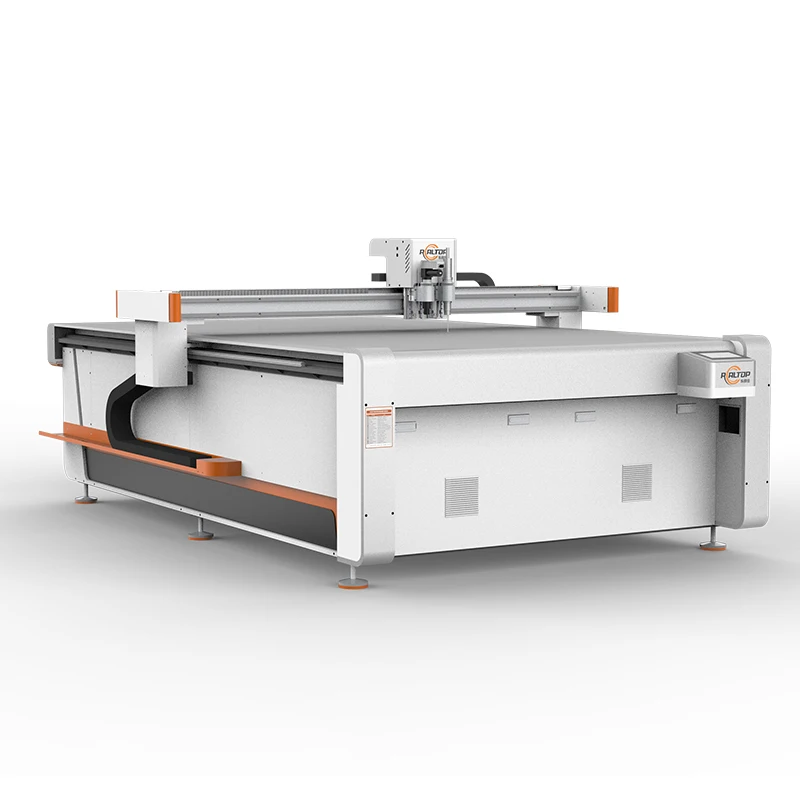
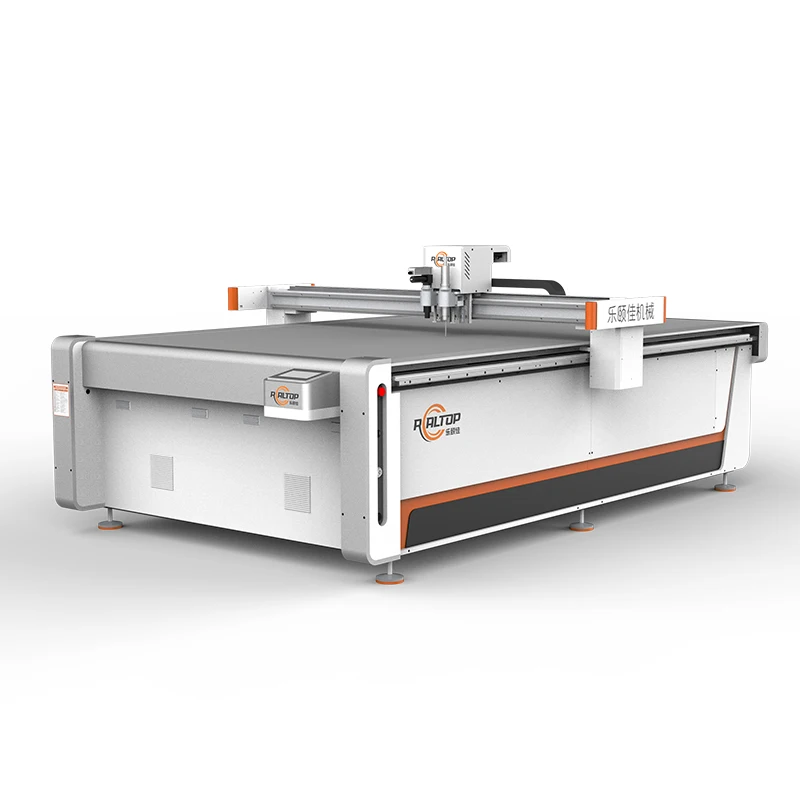
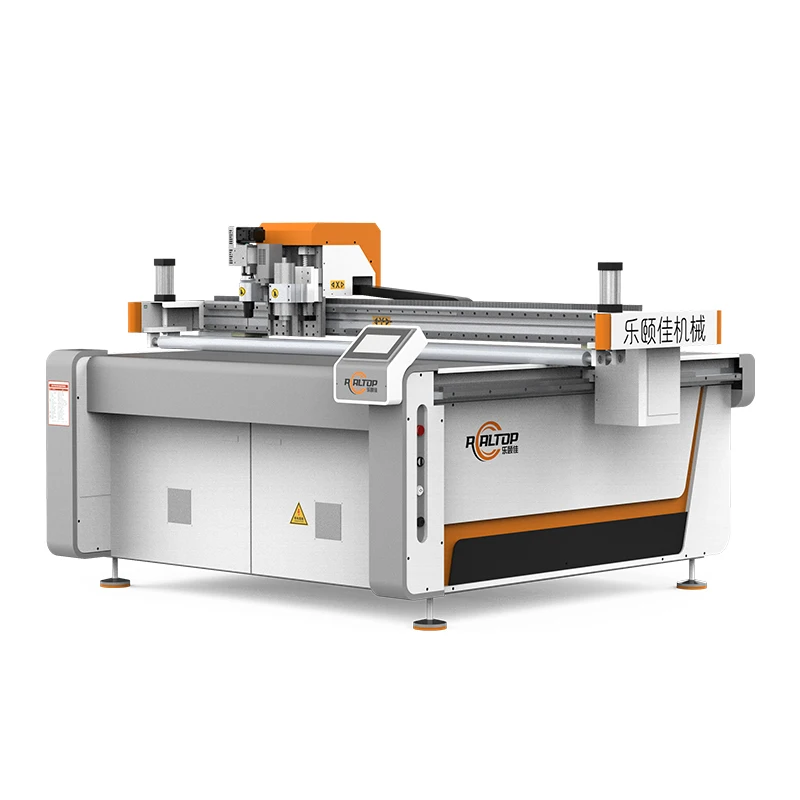
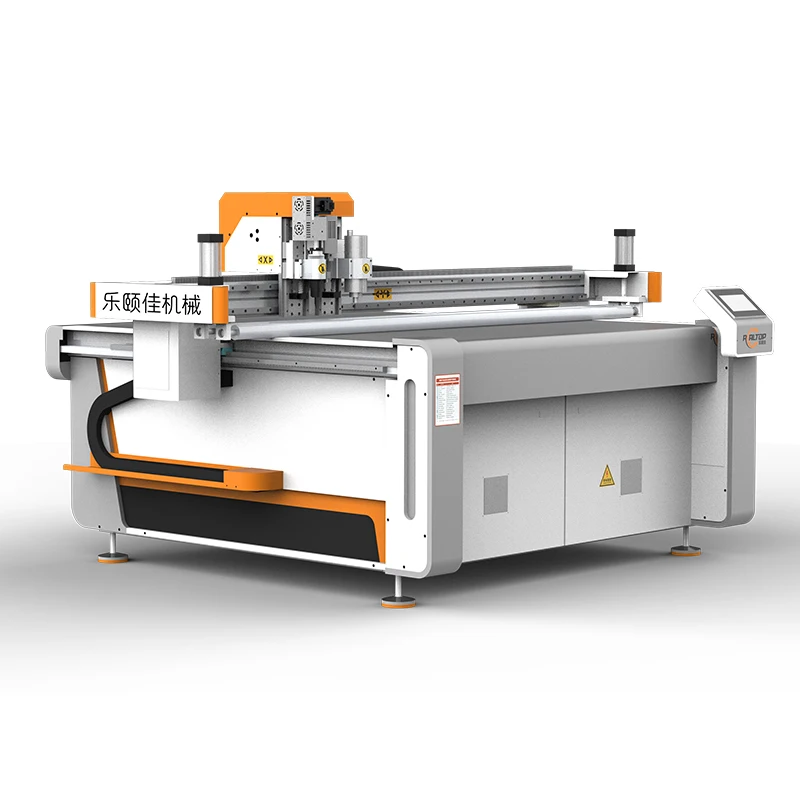
| Product Type | Digital Flatbed CNC Oscillating Knife Cutting Machine |
| Working Area | 1600 × 2500 mm |
| Overall Dimensions | 3450 × 2300 × 1250 mm |
| Rated Power | 9 kW |
| Voltage | 380V ±10% |
| Table Type | Flat working table or auto feeding table |
| Translational Velocity | 800–2000 mm/s |
| Cutting Speed | 200–800 mm/s (basis to be confirmed) |
| Cutting Thickness | ≤100 mm (varies with material) |
| Repeated Accuracy | ≤0.1 mm |
| Transmission System | Digital servo motor, linear guide, synchronous belt, ball screw |
| Servo Motor Options | Delta or Panasonic (IP67 waterproof) |
| Vacuum Pump | 7.5 kW |
| Vacuum Table Material | Magnesium-aluminum alloy, PVDF coating, hard oxidation |
| Conveyor Belt | Germany imported |
| Guide Rail | Taiwan Hiwin |
| Control Panel | Touch screen, multiple languages supported |
| Software Formats | PLT, DXF, AI, HP-GL compatible |
| Visual Positioning Options | Small CCD mark point, panoramic camera, projection positioning |
| Safety Devices | Infrared induction, anti-collision, emergency stop |
| Frame Construction | Thick-walled seamless steel, high-temperature tempering, CNC machined |
| Assembly State | Fully assembled |
| Standards | CE (declaration where applicable) |
Application Suitability
| Application | Material or Output |
|---|---|
| Packaging and carton sample making | Corrugated cardboard, honeycomb board, grey board |
| Advertising and signage production | Vinyl, sticker film, self-adhesive sheets, foam board |
| Garment and footwear manufacturing | Fabric, leather, textile, shoe upper material |
| Gasket and seal fabrication | Rubber, PTFE, graphite composite, non-asbestos fiber |
| Composite and foam fabrication | PU, EVA, XPE, sponge, foam board |
| Luggage and soft goods | PU leather, non-woven fabric, carpet |
Why Specifying Working Area Alone Fails Packaging Buyers
A 1600×2500 mm table does not guarantee clean cuts through double-wall corrugated board.
I have watched packaging sample rooms invest in a Digital Flatbed CNC Knife Cutter based purely on sheet size, only to discover that the standard drag knife tears the flute structure on 5 mm honeycomb cardboard. The cut edge shows crushed cores and delaminated liners, which means the sample fails the folding test before it even reaches the client meeting. Corrugated stock also varies by moisture content — a sheet at 12 percent moisture cuts cleanly, while the same grade at 8 percent shatters under identical blade oscillation frequency. [NEED_CITE: corrugated moisture content effect on cutting quality] These variables are invisible on a spec sheet but dominate daily output once the machine is on the shop floor.
Oscillating Knife Versus Drag Knife on Fluted Board
An oscillating knife vibrates vertically at high frequency, shearing through the flute without dragging the liner. For B-flute and E-flute corrugated cardboard, this produces a burr-free edge and keeps crease lines sharp when combined with a dedicated creasing wheel in the multifunctional head. A drag knife, by contrast, relies on rotational pressure and tends to crush the flute profile on anything above 3 mm thickness. Choosing the wrong tool head is the single most common reason a Digital Flatbed CNC Knife Cutter manufacturer gets a callback within the first month of operation.
CCD Contour Tracking for Printed Packaging Samples
When packaging designers print registration marks onto a test sheet, the small CCD camera option on the RT-D2516/RT-S2516 reads those marks and adjusts the cutting path to compensate for sheet distortion during printing. The panoramic camera alternative scans the entire bed for multi-up layouts where dozens of sample boxes are nested across the 1600×2500 mm area. Without visual positioning, any stretch or skew in the print-to-cut registration forces the operator to manually offset each file, which erodes the time savings the flatbed was supposed to deliver. [NEED_CITE: CCD positioning accuracy in digital cutting tables]
Reading the Specs That Actually Matter
The 7.5 kW vacuum pump paired with a magnesium-aluminum alloy table is significant for packaging work. Thin corrugated sheets warp at the edges, and a weak vacuum lets the corner lift during a high-speed pass, producing a ragged corner radius. The PVDF powder coating and hard oxidation layer prevent the table surface from absorbing moisture or adhesive residue, which extends service life when cutting coated boards. The imported Hiwin guide rails from Taiwan and IP67-rated servo motors keep positioning accuracy within 0.1 mm even when the machine runs in dusty corrugator environments. The auto-feeding table option allows continuous loading from a roll or stack, so an operator can prepare the next sheet while the current one is being cut. Software compatibility with PLT, DXF and AI files means most packaging CAD outputs import directly, and the built-in auto typesetting function reduces material waste on expensive specialty boards.
The Hidden Cost of Skipping a Sample Cut
I recall a buyer who ordered a flatbed based on a supplier’s demonstration on clean, dry PVC foam board. When the machine arrived at their corrugated sample room, the standard oscillating knife burned through blades every few hours because the abrasive clay coating on their kraft liner was wearing the Swiss-imported knife edge prematurely. A different blade geometry and a revised oscillation amplitude would have solved the problem, but that conversation never happened before shipment. [NEED_CITE: abrasive material impact on oscillating knife blade life] The lesson is simple: any Digital Flatbed CNC Knife Cutter manufacturer worth speaking with will run your actual material and document the result before asking for a deposit.
Why Buyers Spec This Range
Realtop Machinery (Jinan) Co., Ltd builds both knife and laser cutting systems in-house, so a packaging buyer evaluating the RT-D2516/RT-S2516 can also compare it against a CO2 laser line for die-board cutting without being locked into one technology. Tool head selection is confirmed against your material list rather than left as a generic option. CCD camera positioning is tested with your print files to verify mark detection at production speed. Voltage and control panel language are documented before production starts, not discovered on arrival. Every machine ships with a sample cutting report run on your own material, giving you a baseline for blade life and achievable speed.
Documentation & Verification
- Machine specification sheet listing every tool head and vacuum zone confirmed for your board grade
- Electrical schematic matching your destination voltage and plug standard
- Sample cutting report documenting edge quality and speed on your corrugated stock
- Software licence and file format note confirming PLT, DXF and AI compatibility
- Operation manual in your chosen control panel language
- Spare parts list covering Swiss-imported knives and consumables
Installation, Commissioning & Support
- 3450×2300 mm footprint requires a clear floor area with level concrete for the 9 kW system
- Dedicated 380V ±10% circuit with correct frequency for your local grid
- Fully assembled delivery; only utility connections and vacuum hose routing on site
- First-run calibration of vacuum zones, servo gain and oscillation amplitude by technician
- Operator training on tool head changeover, CCD mark registration and nesting software
- Consumable blade inventory matched to your material abrasiveness and daily volume
- Scheduled maintenance covering Hiwin rail lubrication and vacuum pump filter replacement
What to Send With Your Inquiry
Share the specific corrugated grades you cut, including flute profile, liner type and typical sheet thickness, along with your daily sample or short-run volume. Let us know your local voltage and frequency standard, the control panel language your operators need, and whether your existing design workflow exports PLT, DXF or AI files. If you have printed samples with registration marks, send those too so we can verify CCD tracking before quoting.
Frequently Asked Questions
Q: Which tool head should I specify for double-wall corrugated cardboard sample making?
A: An oscillating knife handles the full cutting depth of double-wall board without crushing the flute, while a creasing wheel in the multifunctional head scores fold lines in the same pass. For thinner E-flute single-wall, a high-frequency vibrating knife gives a cleaner edge. We confirm the tool head selection by running your actual board stock before order placement.
Q: What print mark quality does the CCD camera need for reliable contour cutting?
A: The small CCD camera reads high-contrast marks, typically black cross-hairs or circles on a light background, with a minimum mark diameter suited to the camera resolution. Smudged, low-contrast or partially covered marks cause tracking errors at higher traverse speeds. We test with your printed sheets to verify detection reliability at your target cutting speed.
Q: How do I decide between a knife cutter and a laser for my packaging material mix?
A: Knife cutting works across corrugated board, foam and flexible films without thermal damage or fume extraction requirements. Laser cutting suits die-board plywood and intricate paper inlays but chars corrugated edges. Because Realtop builds both systems, you can compare cut quality and running cost on your actual materials before choosing.
Q: Can the vacuum table hold small carton samples without lifting during high-speed cuts?
A: The magnesium-aluminum alloy table is divided into independent vacuum zones, so the pump concentrates suction under the specific area being cut. For very small parts, the operator activates only the zone beneath the workpiece, preventing edge lift that causes dimensional drift. Zone layout is confirmed during the pre-order sample cutting session.
Q: What electrical and language details must be confirmed before the machine ships?
A: We document your destination voltage, frequency, plug type and required control panel language on the specification sheet before production. The 380V ±10% system may need a transformer for markets running 220V or 440V three-phase. Control panels support English, Russian, Italian and Chinese, with other languages available on request to avoid operator confusion on site.










商品评价
There are no reviews yet.