


Fast Delivery
Quick, reliable shipping to any location.

Free & easy returns
Return this item by mail or in store within 90 days for a full refund.
Complete cutting equipment range — a single source maps oscillating knife, V-grooving, and laser families to material type and production volume, letting buyers match the method to the job rather than force one technology across every application.
Technical Specifications
| Parameter | Value |
|---|---|
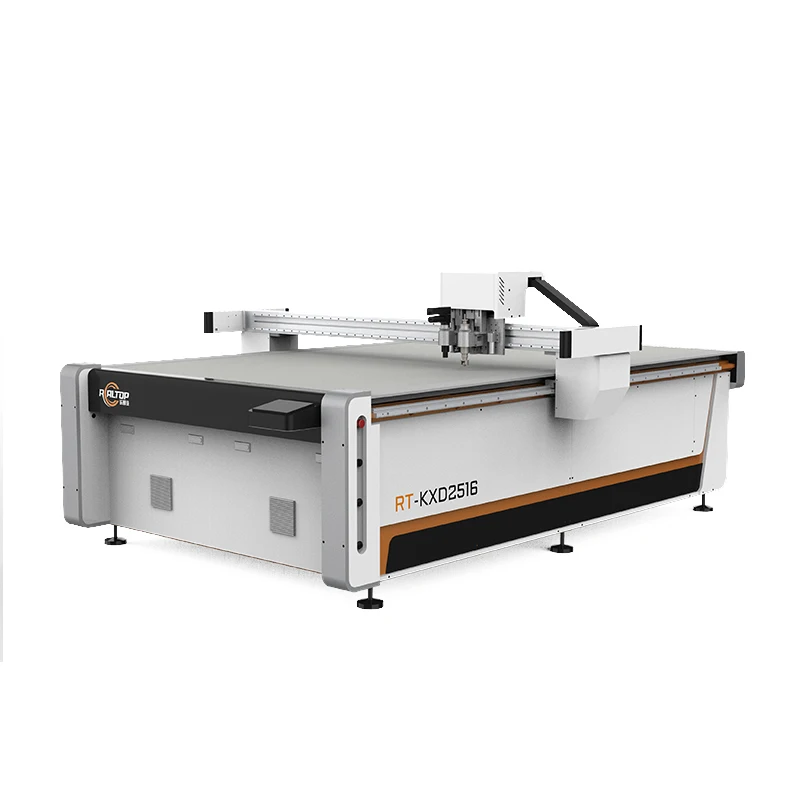
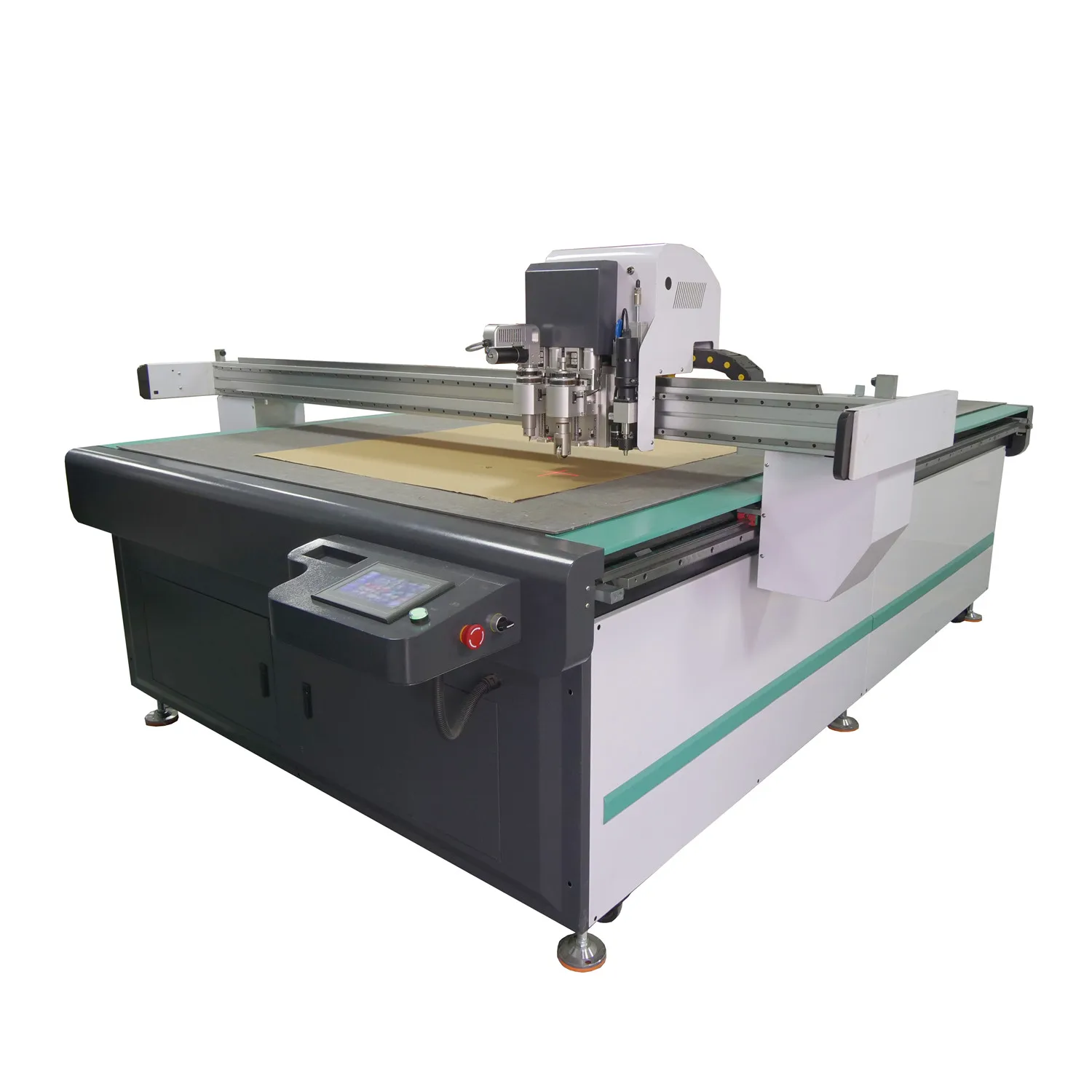
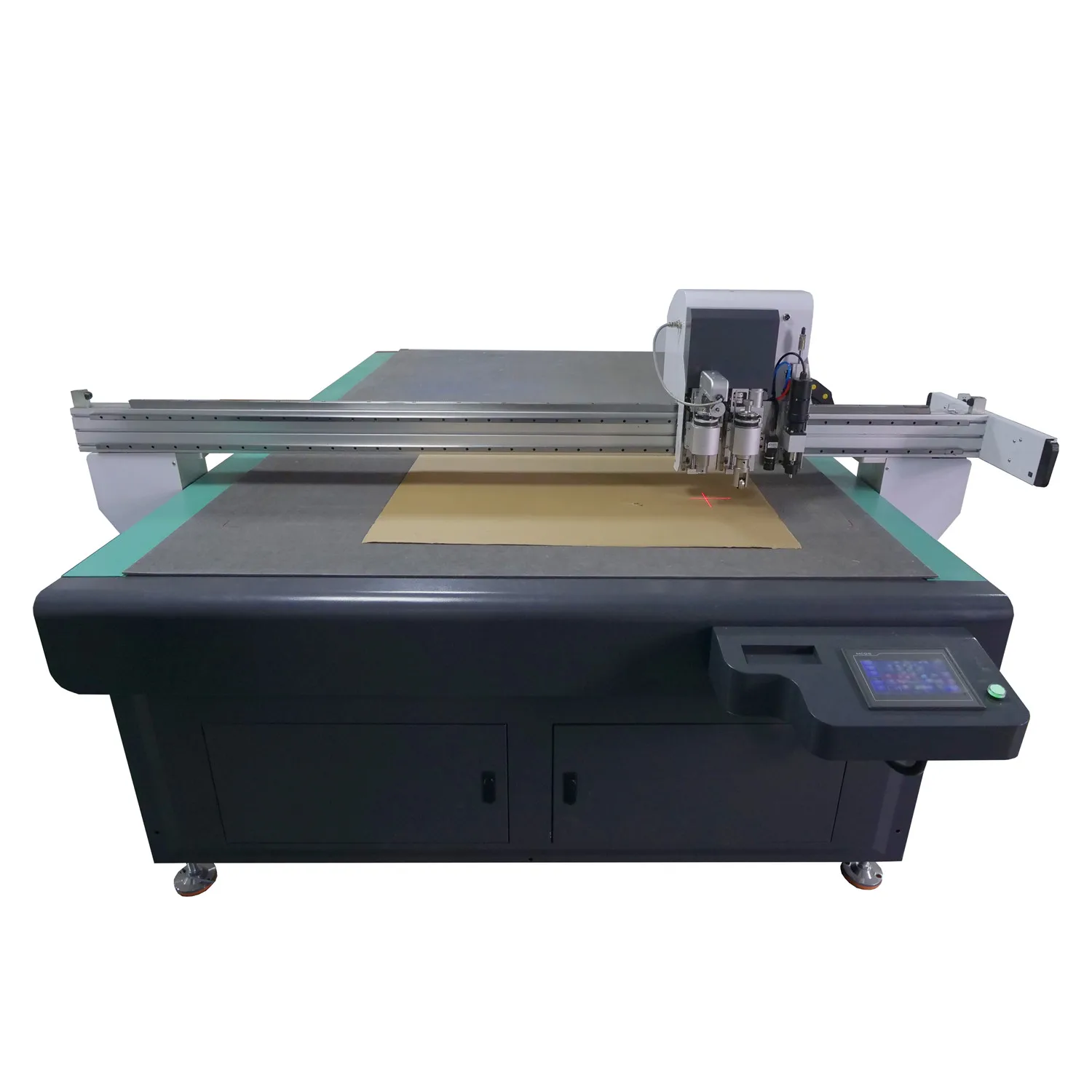
| Product Type | CNC Digital Flatbed Cutting Machine |
| Working Area | 1600 × 2500 mm |
| Overall Dimensions | 3450 × 2300 × 1250 mm |
| Rated Power | 9 kW |
| Voltage | 380V ± 10% |
| Control System | CNC touch screen panel, HP-GL compatible |
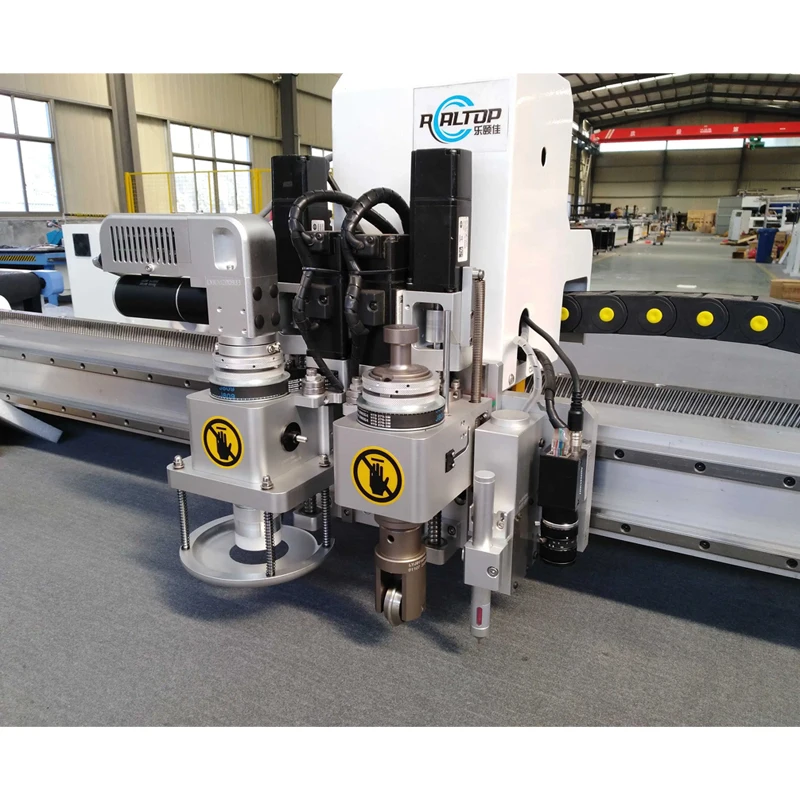
| Tool Head Options | Oscillating knife, pneumatic knife, V cutting knife, drag knife, creasing wheel, circular knife, punching tool |
| Visual Positioning | Small CCD mark point, panoramic camera recognition, projection positioning |
| Cutting Thickness | ≤ 100 mm (varies with material, basis to be confirmed) |
| Translational Velocity | 800–2000 mm/s |
| Effective Cutting Speed | 200–800 mm/s (according to different cutting materials, basis to be confirmed) |
| Repeated Accuracy | ≤ 0.1 mm |
| Transmission System | Digital servo motor, linear guide, synchronous belt, ball screw |
| Servo Motor Options | Delta (China) or Panasonic (Japan) |
| Vacuum Table | Magnesium-aluminum alloy, PVDF powder spraying, integrated box adsorption |
| Vacuum Pump | 7.5 kW, aviation aluminum shell with built-in silencer |
| Table Options | Flat working table or auto feeding table with conveyor belt |
| Software | Auto typesetting, supports PLT / DXF / AI formats |
| Language Options | English, Russian, Italian, Chinese, others customizable |
| Safety Devices | Infrared induction blocking, anti-collision beam sensors, emergency stop |
| Assembly State | Fully assembled |
Application Suitability
| Application | Material or Output |
|---|---|
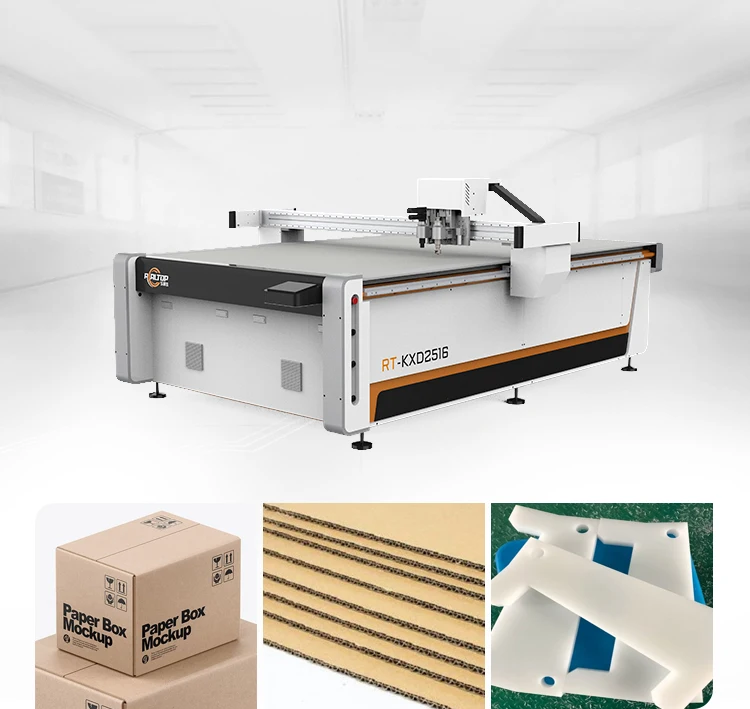
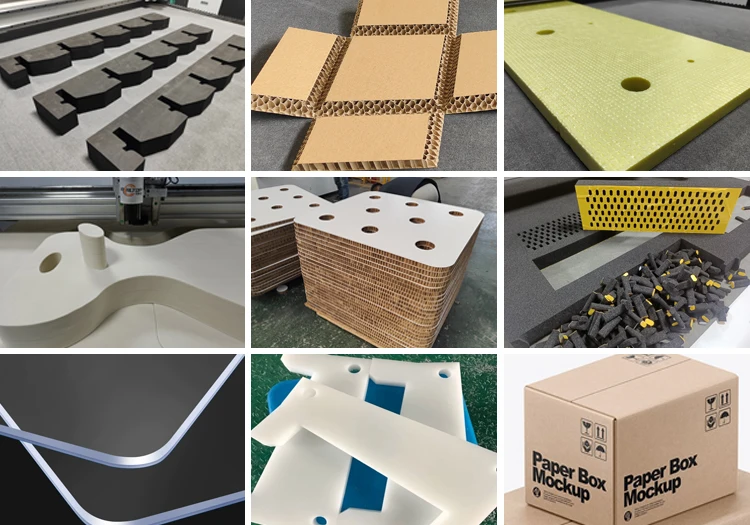
| Corrugated and Honeycomb Packaging | Corrugated cardboard V-grooving, honeycomb board slotting, carton sample making |
| Signage and Advertising | PVC sheet, foam board, vinyl, sticker contour cutting with CCD recognition |
| Gasket and Industrial Seals | Rubber, PTFE, ETFE, silicone, non-woven fabric, composite gasket materials |
| Automotive and Interiors | PU, EVA, XPE, sponge composite leather, carbon fiber, carpet, soft furnishings |
| Apparel and Footwear | Fabric, textile, leather, multi-layer nesting for high-volume pattern cutting |
Why Specifying a CNC Digital Cutting Machine on Working Area Alone Fails
A flatbed sized to your sheet dimensions is useless if the tool head cannot shear the material at the required depth without crushing the edge.
I have watched packaging facilities take delivery of a machine that matched their floor space and sheet size perfectly, only to discover the knife configuration could not cleanly slot a wet-glue honeycomb panel at production speed. The vacuum table held the material, the gantry moved fast, but the V-groove edges tore out and the first batch of cartons went straight to the recycle pile. A CNC digital cutting machine manufacturer should be asking about your heaviest board grade and your wettest composite before they quote a configuration, because the cutting method and tool selection carry far more weight than the footprint [NEED_CITE: material thickness and tooling compatibility on flatbed cutters].
Mapping Every Tool Head to the Material It Actually Cuts
The platform supports a broad tooling range on one flatbed: oscillating knife for full-depth shearing of foam and fabric, V cutting knife for slotting corrugated and honeycomb board, creasing wheel for fold lines on carton stock, drag knife for thin vinyl and sticker, and punching tool for gasket and leather. Switching tooling by job means one machine handles sample making and short-run production across material types. This is where a complete catalogue helps — you can compare which head belongs on your primary material before the order is placed.
Visual Positioning for Printed Contour Work
When cutting pre-printed packaging or signage, the edge must follow the graphic, not a theoretical path. The available positioning options — small CCD mark point, panoramic camera recognition, and projection positioning — cover different registration workflows. Panoramic recognition suits high-speed contour cutting on printed board, while projection positioning helps the operator align irregular sheet stock before the knife engages. Choosing the wrong vision system for your print registration method is a frequent source of scrap [NEED_CITE: CCD and vision registration methods in digital finishing].
What the Spec Sheet Numbers Actually Mean for Daily Output
The 9 kW rated power and 7.5 kW vacuum pump together define what the table can hold and how fast the head can move through dense material. The magnesium-aluminum alloy vacuum table with integrated box adsorption provides even suction across the 1600 × 2500 mm surface, which matters when cutting small carton blanks that tend to lift at the edges. Repeated accuracy of ≤ 0.1 mm comes from the combination of digital servo motors, linear guides, and ball screws — and this tolerance is what keeps a creasing line aligned with the cut path over thousands of cycles. The effective cutting speed range of 200–800 mm/s is material-dependent; a 3 mm corrugated sheet and a 15 mm honeycomb panel will run at very different points within that band. Servo motor selection between Delta and Panasonic lets buyers align the motion system with their maintenance supply chain and local service support.
The Cost of Ignoring Vacuum Zoning and Tool Head Selection
A buyer who specifies only the working area and accepts a single-zone vacuum table often finds that small nesting parts lift during cutting, producing ragged edges and forcing re-runs. Similarly, a V-grooving job run with a standard oscillating knife instead of a dedicated V cutting knife will crush the honeycomb core rather than slot it, leaving visible tear-out on the folding face. These are not warranty claims — they are configuration mismatches that surface only once production starts [NEED_CITE: vacuum hold-down requirements for small-part digital cutting].
What This Manufacturer Covers Before Shipment
In-house design and production across both knife and laser technologies mean the cutting method is matched to the material, not forced into one method because the factory only builds one type. Tool head and table configuration are specified per material and daily production volume, not left as a generic default. CCD camera positioning is confirmed against your actual print mark system. Software file format compatibility — PLT, DXF, AI — is verified before the order is locked. Voltage, plug type, and control panel language are customized to the destination facility. Sample cutting on the buyer’s own material is completed before commitment, so edge quality and achievable depth are documented, not promised.
Documentation & Verification
- Machine specification sheet listing every confirmed tool head and table option
- Electrical schematic with voltage and frequency matched to destination grid
- Sample cutting report on your corrugated or honeycomb material before dispatch
- Tool head and table configuration list tied to your material and nesting workflow
- Software licence and PLT / DXF / AI file format compatibility note
- Factory test record with repeated accuracy measurement on your sheet size
Installation, Commissioning & Support
- Fully assembled delivery on the 3450 × 2300 × 1250 mm frame — no on-site gantry alignment required
- 380V ± 10% supply with dedicated circuit; confirm 50 Hz or 60 Hz before wiring
- 7.5 kW vacuum pump requires separate power drop and exhaust routing for silencer housing
- First-run parameter setting on your corrugated board thickness and V-groove angle
- CNC touch screen language configured to operator preference before training session
- Spare parts list covering oscillating knife blades, V cutting inserts, and vacuum table seals
What to Include in Your Inquiry
Send the material type, maximum sheet thickness, and board grade you run most often — honeycomb, double-wall corrugated, or composite. Note your daily volume target so the auto-feeding table option and conveyor belt can be evaluated against a flat table. Confirm your local voltage and frequency, control panel language, and the file format your current design workflow outputs. If you are cutting printed contours, specify your registration mark system so the correct visual positioning option is selected.
Frequently Asked Questions
Q: How do I choose between an oscillating knife and a V cutting knife for corrugated packaging?
A: Oscillating knives shear through material for full-depth cuts, while V cutting knives remove a channel to create fold slots in honeycomb and corrugated board. The choice depends on whether you need clean edge separation or a folding groove. Request sample cutting on your actual board grade to confirm edge quality before configuration is finalized.
Q: Does the vacuum table hold small carton blanks without lifting during high-speed cuts?
A: The integrated box adsorption platform on the magnesium-aluminum alloy table is designed for even suction across the working area. For very small nested parts, vacuum table zoning should be discussed during configuration so suction zones match your nesting layout and prevent edge lift at cutting speed.
Q: Will the software accept my existing PLT and DXF design files?
A: The auto typesetting software supports PLT, DXF, and AI formats. File format compatibility and nesting workflow are confirmed before the order is placed, so your existing design output connects directly to the machine without intermediate conversion steps or manual nesting rework.
Q: Can I compare knife cutting against laser for my material mix before deciding?
A: This catalogue covers both knife and laser families from the same manufacturer, allowing you to evaluate which method suits each material in your mix. Knife cutting handles composites and board without thermal edge effects, while laser suits acrylic and textile sealing — the method is matched to the job, not forced into one technology.
Q: How is cutting depth verified before I commit to a purchase?
A: A sample cutting report is produced on your own material and thickness, documenting edge quality, achievable depth, and tool head selection. This report is part of the pre-order process so you can see actual results on your substrate rather than relying on generic capability claims.
Complete cutting equipment range — a single source maps oscillating knife, V-grooving, and laser families to material type and production volume, letting buyers match the method to the job rather than force one technology across every application.
Technical Specifications
| Parameter | Value |
|---|---|
| Product Type | CNC Digital Flatbed Cutting Machine |
| Working Area | 1600 × 2500 mm |
| Overall Dimensions | 3450 × 2300 × 1250 mm |
| Rated Power | 9 kW |
| Voltage | 380V ± 10% |
| Control System | CNC touch screen panel, HP-GL compatible |
| Tool Head Options | Oscillating knife, pneumatic knife, V cutting knife, drag knife, creasing wheel, circular knife, punching tool |
| Visual Positioning | Small CCD mark point, panoramic camera recognition, projection positioning |
| Cutting Thickness | ≤ 100 mm (varies with material, basis to be confirmed) |
| Translational Velocity | 800–2000 mm/s |
| Effective Cutting Speed | 200–800 mm/s (according to different cutting materials, basis to be confirmed) |
| Repeated Accuracy | ≤ 0.1 mm |
| Transmission System | Digital servo motor, linear guide, synchronous belt, ball screw |
| Servo Motor Options | Delta (China) or Panasonic (Japan) |
| Vacuum Table | Magnesium-aluminum alloy, PVDF powder spraying, integrated box adsorption |
| Vacuum Pump | 7.5 kW, aviation aluminum shell with built-in silencer |
| Table Options | Flat working table or auto feeding table with conveyor belt |
| Software | Auto typesetting, supports PLT / DXF / AI formats |
| Language Options | English, Russian, Italian, Chinese, others customizable |
| Safety Devices | Infrared induction blocking, anti-collision beam sensors, emergency stop |
| Assembly State | Fully assembled |
Application Suitability
| Application | Material or Output |
|---|---|
| Corrugated and Honeycomb Packaging | Corrugated cardboard V-grooving, honeycomb board slotting, carton sample making |
| Signage and Advertising | PVC sheet, foam board, vinyl, sticker contour cutting with CCD recognition |
| Gasket and Industrial Seals | Rubber, PTFE, ETFE, silicone, non-woven fabric, composite gasket materials |
| Automotive and Interiors | PU, EVA, XPE, sponge composite leather, carbon fiber, carpet, soft furnishings |
| Apparel and Footwear | Fabric, textile, leather, multi-layer nesting for high-volume pattern cutting |
Why Specifying a CNC Digital Cutting Machine on Working Area Alone Fails
A flatbed sized to your sheet dimensions is useless if the tool head cannot shear the material at the required depth without crushing the edge.
I have watched packaging facilities take delivery of a machine that matched their floor space and sheet size perfectly, only to discover the knife configuration could not cleanly slot a wet-glue honeycomb panel at production speed. The vacuum table held the material, the gantry moved fast, but the V-groove edges tore out and the first batch of cartons went straight to the recycle pile. A CNC digital cutting machine manufacturer should be asking about your heaviest board grade and your wettest composite before they quote a configuration, because the cutting method and tool selection carry far more weight than the footprint [NEED_CITE: material thickness and tooling compatibility on flatbed cutters].
Mapping Every Tool Head to the Material It Actually Cuts
The platform supports a broad tooling range on one flatbed: oscillating knife for full-depth shearing of foam and fabric, V cutting knife for slotting corrugated and honeycomb board, creasing wheel for fold lines on carton stock, drag knife for thin vinyl and sticker, and punching tool for gasket and leather. Switching tooling by job means one machine handles sample making and short-run production across material types. This is where a complete catalogue helps — you can compare which head belongs on your primary material before the order is placed.
Visual Positioning for Printed Contour Work
When cutting pre-printed packaging or signage, the edge must follow the graphic, not a theoretical path. The available positioning options — small CCD mark point, panoramic camera recognition, and projection positioning — cover different registration workflows. Panoramic recognition suits high-speed contour cutting on printed board, while projection positioning helps the operator align irregular sheet stock before the knife engages. Choosing the wrong vision system for your print registration method is a frequent source of scrap [NEED_CITE: CCD and vision registration methods in digital finishing].
What the Spec Sheet Numbers Actually Mean for Daily Output
The 9 kW rated power and 7.5 kW vacuum pump together define what the table can hold and how fast the head can move through dense material. The magnesium-aluminum alloy vacuum table with integrated box adsorption provides even suction across the 1600 × 2500 mm surface, which matters when cutting small carton blanks that tend to lift at the edges. Repeated accuracy of ≤ 0.1 mm comes from the combination of digital servo motors, linear guides, and ball screws — and this tolerance is what keeps a creasing line aligned with the cut path over thousands of cycles. The effective cutting speed range of 200–800 mm/s is material-dependent; a 3 mm corrugated sheet and a 15 mm honeycomb panel will run at very different points within that band. Servo motor selection between Delta and Panasonic lets buyers align the motion system with their maintenance supply chain and local service support.
The Cost of Ignoring Vacuum Zoning and Tool Head Selection
A buyer who specifies only the working area and accepts a single-zone vacuum table often finds that small nesting parts lift during cutting, producing ragged edges and forcing re-runs. Similarly, a V-grooving job run with a standard oscillating knife instead of a dedicated V cutting knife will crush the honeycomb core rather than slot it, leaving visible tear-out on the folding face. These are not warranty claims — they are configuration mismatches that surface only once production starts [NEED_CITE: vacuum hold-down requirements for small-part digital cutting].
What This Manufacturer Covers Before Shipment
In-house design and production across both knife and laser technologies mean the cutting method is matched to the material, not forced into one method because the factory only builds one type. Tool head and table configuration are specified per material and daily production volume, not left as a generic default. CCD camera positioning is confirmed against your actual print mark system. Software file format compatibility — PLT, DXF, AI — is verified before the order is locked. Voltage, plug type, and control panel language are customized to the destination facility. Sample cutting on the buyer’s own material is completed before commitment, so edge quality and achievable depth are documented, not promised.
Documentation & Verification
- Machine specification sheet listing every confirmed tool head and table option
- Electrical schematic with voltage and frequency matched to destination grid
- Sample cutting report on your corrugated or honeycomb material before dispatch
- Tool head and table configuration list tied to your material and nesting workflow
- Software licence and PLT / DXF / AI file format compatibility note
- Factory test record with repeated accuracy measurement on your sheet size
Installation, Commissioning & Support
- Fully assembled delivery on the 3450 × 2300 × 1250 mm frame — no on-site gantry alignment required
- 380V ± 10% supply with dedicated circuit; confirm 50 Hz or 60 Hz before wiring
- 7.5 kW vacuum pump requires separate power drop and exhaust routing for silencer housing
- First-run parameter setting on your corrugated board thickness and V-groove angle
- CNC touch screen language configured to operator preference before training session
- Spare parts list covering oscillating knife blades, V cutting inserts, and vacuum table seals
What to Include in Your Inquiry
Send the material type, maximum sheet thickness, and board grade you run most often — honeycomb, double-wall corrugated, or composite. Note your daily volume target so the auto-feeding table option and conveyor belt can be evaluated against a flat table. Confirm your local voltage and frequency, control panel language, and the file format your current design workflow outputs. If you are cutting printed contours, specify your registration mark system so the correct visual positioning option is selected.
Frequently Asked Questions
Q: How do I choose between an oscillating knife and a V cutting knife for corrugated packaging?
A: Oscillating knives shear through material for full-depth cuts, while V cutting knives remove a channel to create fold slots in honeycomb and corrugated board. The choice depends on whether you need clean edge separation or a folding groove. Request sample cutting on your actual board grade to confirm edge quality before configuration is finalized.
Q: Does the vacuum table hold small carton blanks without lifting during high-speed cuts?
A: The integrated box adsorption platform on the magnesium-aluminum alloy table is designed for even suction across the working area. For very small nested parts, vacuum table zoning should be discussed during configuration so suction zones match your nesting layout and prevent edge lift at cutting speed.
Q: Will the software accept my existing PLT and DXF design files?
A: The auto typesetting software supports PLT, DXF, and AI formats. File format compatibility and nesting workflow are confirmed before the order is placed, so your existing design output connects directly to the machine without intermediate conversion steps or manual nesting rework.
Q: Can I compare knife cutting against laser for my material mix before deciding?
A: This catalogue covers both knife and laser families from the same manufacturer, allowing you to evaluate which method suits each material in your mix. Knife cutting handles composites and board without thermal edge effects, while laser suits acrylic and textile sealing — the method is matched to the job, not forced into one technology.
Q: How is cutting depth verified before I commit to a purchase?
A: A sample cutting report is produced on your own material and thickness, documenting edge quality, achievable depth, and tool head selection. This report is part of the pre-order process so you can see actual results on your substrate rather than relying on generic capability claims.










商品评价
There are no reviews yet.