





Fast Delivery
Quick, reliable shipping to any location.

Free & easy returns
Return this item by mail or in store within 90 days for a full refund.
Customized cutting technology match — Each model in this catalogue is specified by material type, thickness, and tool head configuration rather than forcing a single cutting method across every production job.
Technical Specifications
| Parameter | Value |
|---|---|
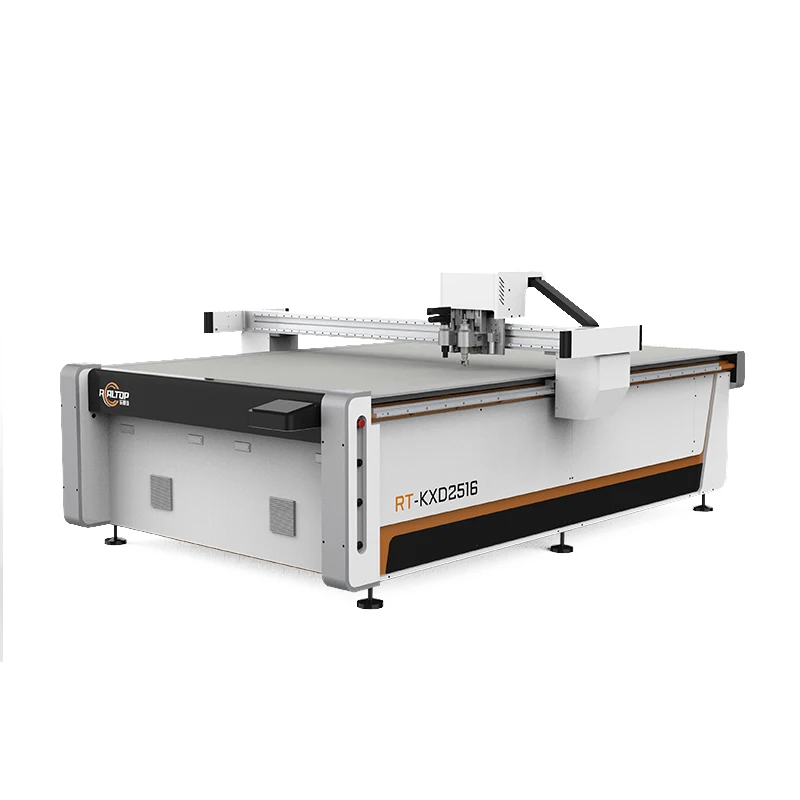
| Model | RT-D2516/RT-S2516 |
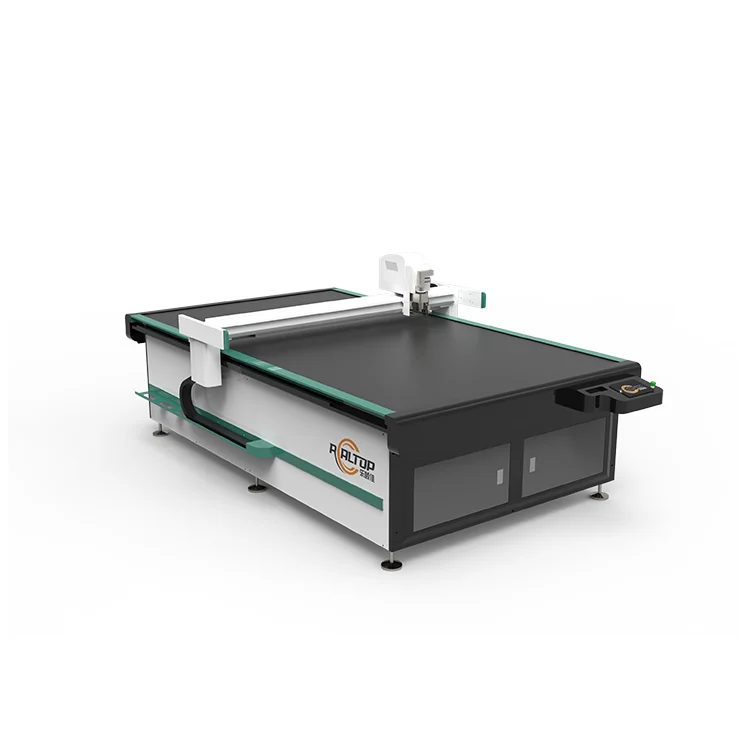
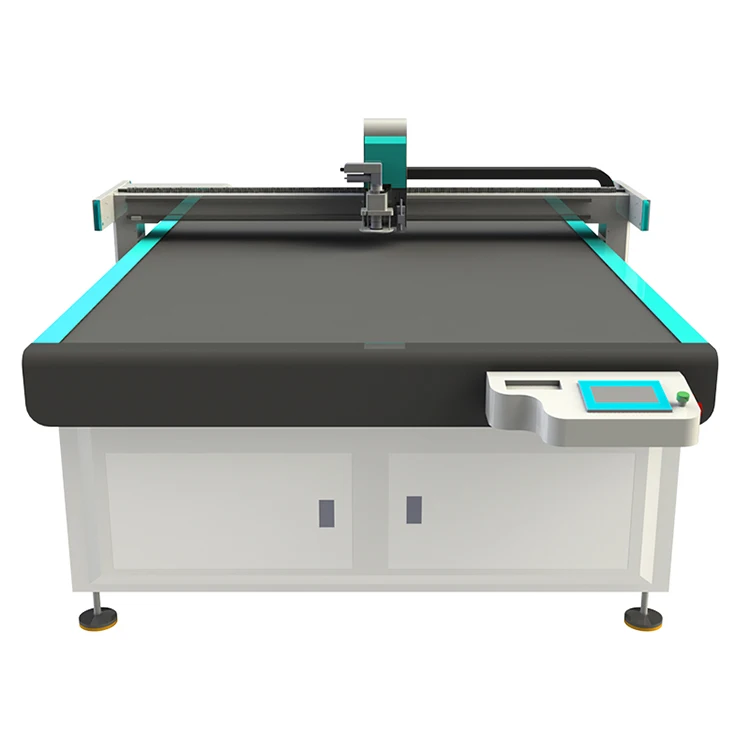
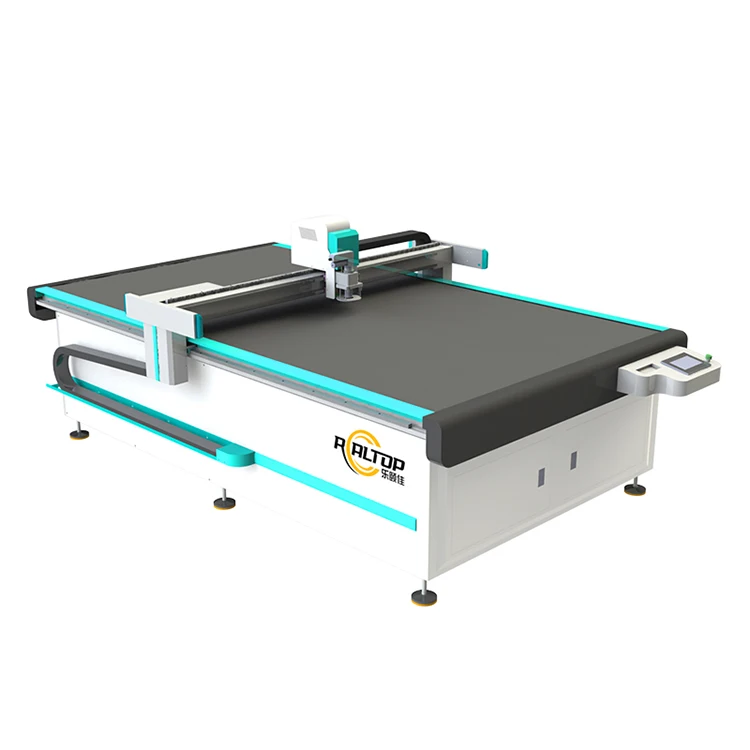
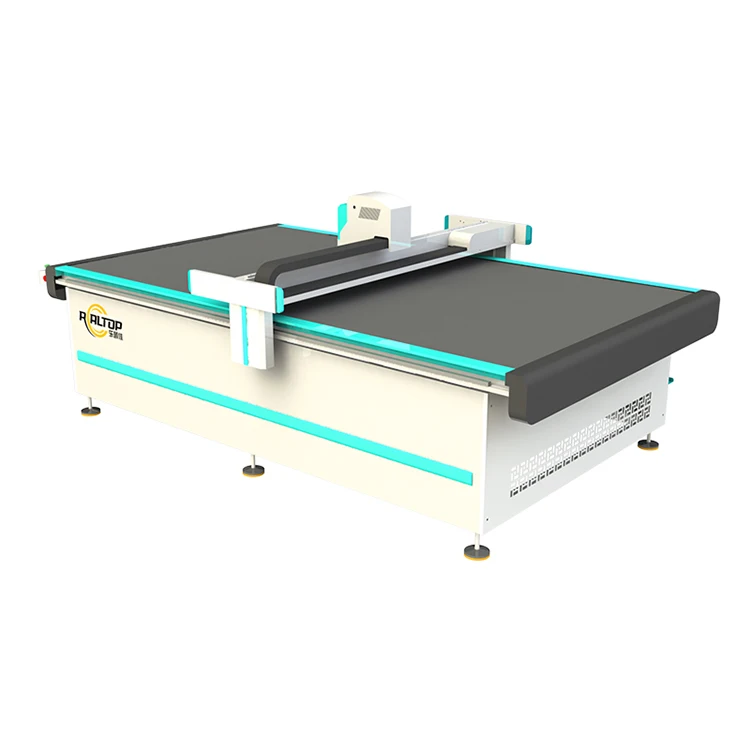
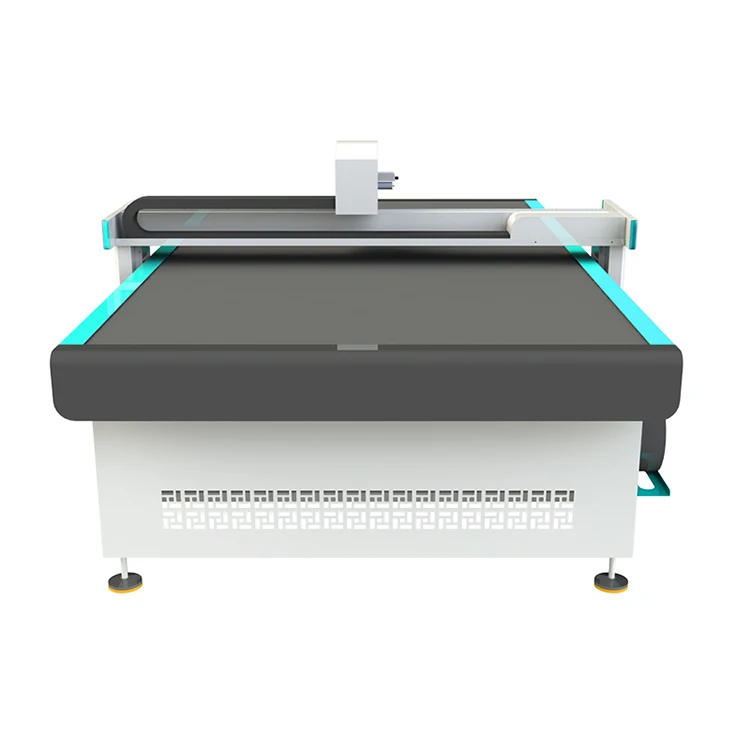
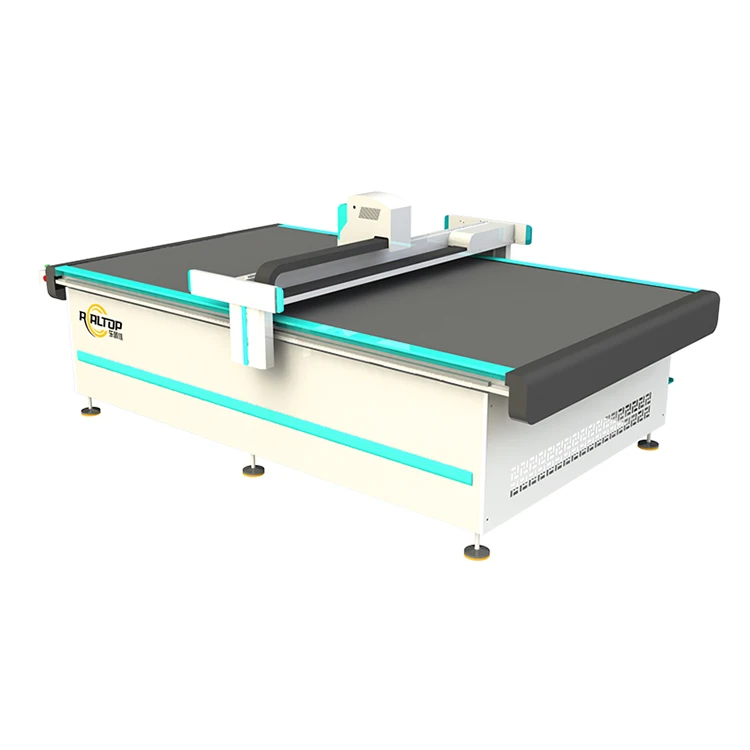
| Product Type | CNC Oscillating Knife Cutting Table |
| Working Area | 1600 × 2500 mm |
| Machine Size | 3450 × 2300 × 1250 mm |
| Rated Power | 9 kW |
| Vacuum Pump | 7.5 kW |
| Table Type | Flat working table with vacuum hold-down |
| Tool Head | Swiss imported oscillating knife with full-cut, half-cut and cursor location functions |
| Servo Motor | Delta digital servo |
| Linear Rail | Taiwan Hiwin |
| Conveyor Belt | Germany imported |
| Translational Velocity | 800–2000 mm/s |
| Cutting Speed | 200–800 mm/s (varies with material type and thickness) |
| Repeated Accuracy | ≤0.1 mm |
| Cutting Thickness | ≤100 mm (varies with material) (basis not stated in source) |
| Transmission System | Digital servo motor, linear guide, synchronous belt, ball screw |
| Instruction System | HP-GL compatible format |
| Software | Professional carton nesting software (free, language customizable) |
| Voltage | 380V ± 10% |
| Safety Device | Infrared sensors |
| Auto Feeding | Yes |
Application Suitability
| Application | Material or Output |
|---|---|
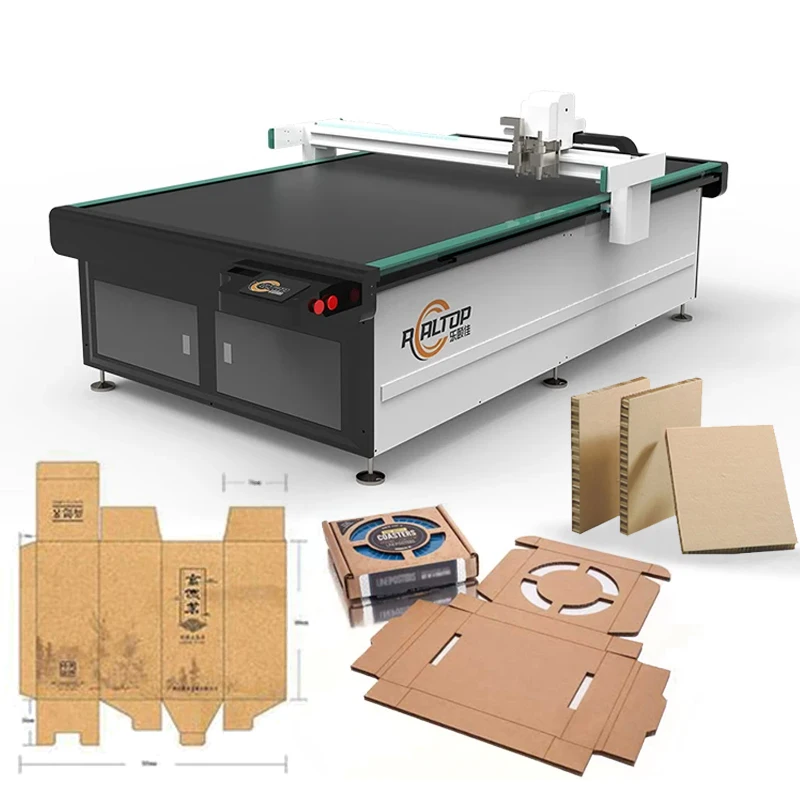
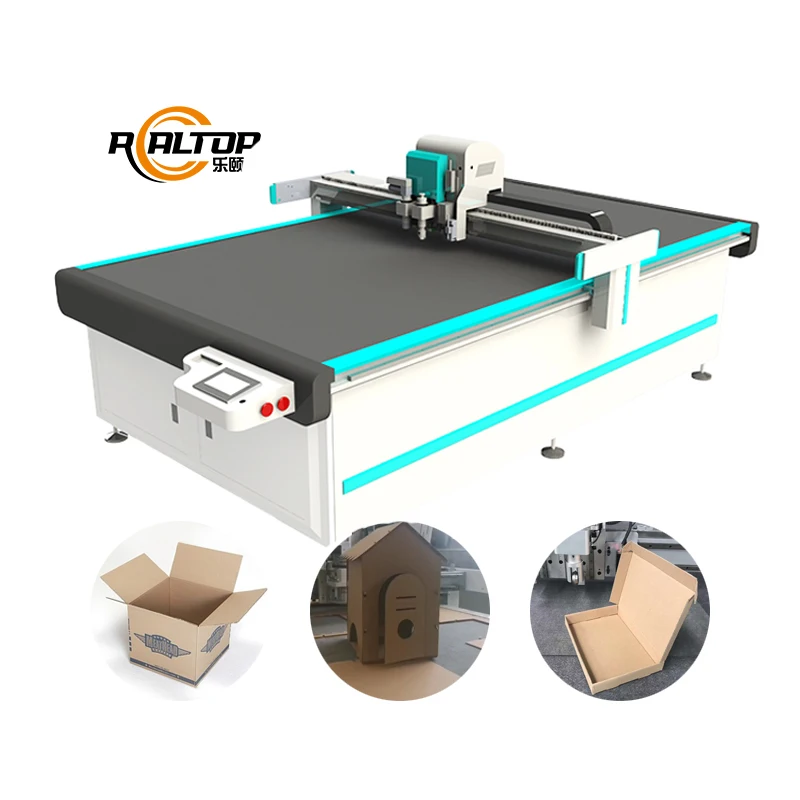
| Carton and packaging sample making | Corrugated cardboard, greyboard, kraft paper |
| Corrugated box short-run production | Single, double and triple-wall corrugated board |
| Large electrical carton packaging | Heavy-duty corrugated and honeycomb board |
| Express paper box packaging | Thin-wall corrugated and card stock |
| Sticker and label cutting | Self-adhesive vinyl, coated paper, PET film |
| Advertising signage and billboard production | PVC foam board, KT board, acrylic sheet |
| High-end gift box packaging | Rigid board, art paper, magnetic closure stock |
| Snack food packaging | Food-grade coated card and laminated board |
What Buyers Misread When They Focus Only on Working Area
The cutting area tells you what fits on the table — not what the tool head can actually process at production speed.
A packaging CNC cutting machine for sale often gets shortlisted by working area alone. Buyers see 1600 × 2500 mm, confirm it fits their sheet size, and move to price. What they discover after installation is that the oscillating knife cannot hold a clean crease line on the triple-wall board they run daily, or that the vacuum zoning was not configured for the small die-cut shapes that dominate their order book. The cutting speed of 200–800 mm/s shifts dramatically depending on whether you are scoring 2 mm card stock or full-cutting 15 mm corrugated [NEED_CITE: cutting speed variance across corrugated board grades]. A CNC oscillating knife cutting machine manufacturer that specifies tool head, vacuum zoning, and blade offset against your actual board samples — not just against the machine’s maximum rated thickness — is the one that avoids these field failures.
Matching the Tool Head to the Board Grade
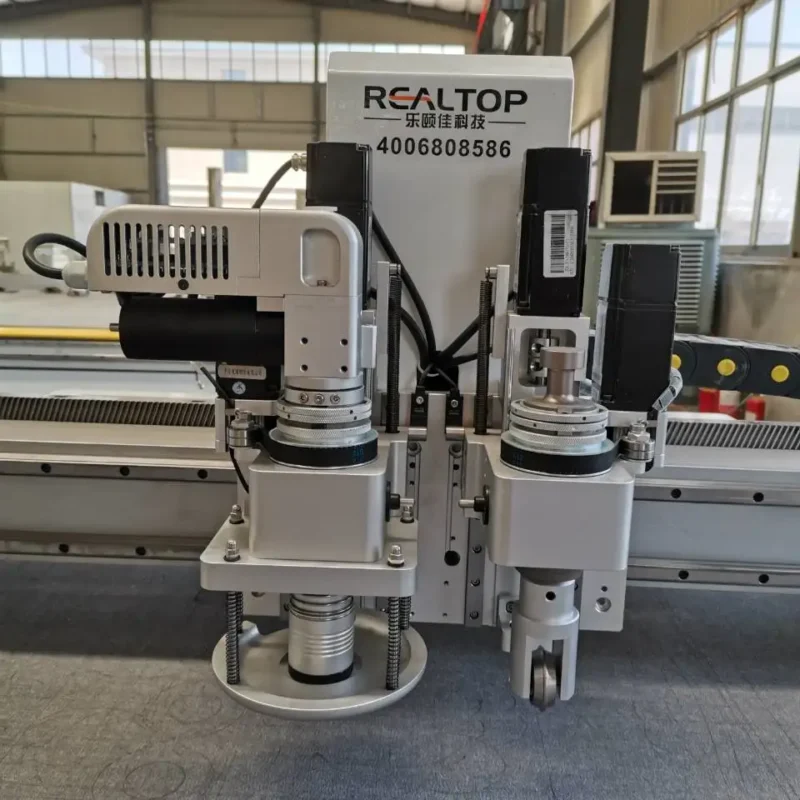
The Swiss imported oscillating knife on the RT-D2516/RT-S2516 delivers full-cut, half-cut, and cursor positioning in a single head cycle. Half-cut mode scores the corrugated flute without severing the liner, which is what lets a box fold square at the crease. For packaging CNC cutting machine users running mixed board grades, this avoids the common problem where a drag knife tears the top liner on double-wall stock while a fixed-depth oscillating blade crushes the flute on thinner card. The tool head configuration must be confirmed against the buyer’s heaviest and lightest board before the order is locked.
Vacuum Hold-Down and Small-Part Stability
Vacuum table zoning determines whether small cutouts — like retail display windows or insert tabs — stay flat during the final cuts. When a single-zone vacuum pulls across the full 1600 × 2500 mm bed, small parts near the edges can lift as adjacent areas are cut away and air leaks in. The flat working table on the RT-D2516/RT-S2516 uses vacuum hold-down paired with auto-feeding and a Germany-imported conveyor belt, keeping material registered through continuous cut cycles [NEED_CITE: vacuum table zoning requirements for nested packaging parts]. This matters most in snack food and express packaging runs where the nesting layout produces dozens of small shapes per sheet.
Drive System and Repeatability Across Long Runs
The Delta digital servo motor and Taiwan Hiwin linear rail combination delivers ≤0.1 mm repeated accuracy across the full travel of the bed. In carton sample making, this means the crease line lands in the same position on the five-hundredth sheet as it did on the first. For packaging CNC cutting machine buyers producing short-run custom boxes, registration drift shows up immediately as boxes that will not close or lock. The synchronous belt and ball screw transmission system maintains this tolerance through the 800–2000 mm/s translational speed range, so positioning accuracy does not degrade when the machine moves between distant cut zones on a large sheet.
Specification Details That Affect Daily Output
The HP-GL compatible instruction system accepts files from most packaging design software without intermediate conversion, and the included professional carton nesting software is language-customizable — a practical requirement in multilingual production environments across Southeast Asia. The 9 kW rated power and 7.5 kW vacuum pump together define the electrical infrastructure needed: a dedicated 380V ± 10% circuit with sufficient amperage for both motors and vacuum running simultaneously. The infrared safety sensors stop travel immediately if an operator enters the cutting zone, a non-negotiable requirement on packaging floors where material handling happens close to the bed.
The Cost of Skipping the Sample Cut
Buyers who approve a machine on paper specifications alone often encounter problems only visible under production conditions. A blade offset that looks negligible on the spec sheet produces crease lines that land 2 mm off the intended fold, causing every box in a shipment to fail the squareness check at the packing line. A vacuum zone layout that works for large carton blanks leaves small retail inserts lifting and shifting during the final contour pass. These failures are not machine defects — they are configuration mismatches [NEED_CITE: common packaging cutting machine commissioning failures]. Running a sample cut on the buyer’s actual board stock before the machine leaves the factory catches these issues when reconfiguration still costs hours rather than weeks.
Why Source From This Cutting Equipment Range
In-house design and production across both knife and laser cutting technologies means a buyer can evaluate whether oscillating knife or CO2 laser is the correct method for their specific board grade and edge requirement. Tool head and table configurations are specified per material and production volume, not offered as a single default build. CCD camera positioning is available for printed contour work where the cut path must track a printed registration mark rather than a fixed coordinate. Software compatibility — file format, nesting workflow, and control language — is confirmed before the order is placed. Sample cutting on the buyer’s own corrugated board, card stock, or label material is completed and documented before commitment.
Documentation & Verification
- Machine specification sheet listing tool head and table configuration per board grade
- Electrical schematic with 380V ± 10% wiring and vacuum pump circuit confirmation
- Sample cutting report on buyer’s own corrugated and card stock materials
- Software licence with HP-GL compatibility and nesting file format confirmation
- Factory test record documenting cut accuracy and crease alignment on buyer’s sheet sizes
- Operation manual in buyer’s specified control language with maintenance schedule
Installation, Commissioning & Support
- Dedicated 380V ± 10% circuit required to support 9 kW machine and 7.5 kW vacuum pump loads
- Floor space of approximately 3450 × 2300 mm plus material infeed and offtake clearance
- Auto-feeding conveyor calibrated to buyer’s sheet dimensions during on-site commissioning
- Delta servo parameters tuned to buyer’s primary board grade and cutting speed range
- Oscillating knife blade offset and half-cut depth set against buyer’s crease and fold specifications
- Hiwin linear rail lubrication schedule and vacuum table filter cleaning intervals documented
What to Include With Your Enquiry
Send your primary board types with flute profile and thickness, your largest and smallest sheet dimensions, and the daily volume you need to sustain. Confirm your local voltage and frequency, the control language your operators require, and whether your existing design software outputs HP-GL or another format. If your production includes printed contour cutting, provide a sample print so registration requirements can be assessed before configuration is finalized.
Frequently Asked Questions
Q: How do I choose between oscillating knife and laser for corrugated board?
A: Oscillating knife cuts corrugated flute cleanly without burning the paper liner, which is important for food-contact packaging and visible edge quality. Laser cuts faster on thin card and seals edges on synthetic materials but leaves burn marks on untreated paper. The correct method depends on your board grade, edge appearance requirement, and whether the packaging contacts food.
Q: What board thickness can this cutting table actually handle in production?
A: The rated cutting thickness is up to 100 mm, but actual capacity depends on board density and flute structure. Triple-wall corrugated cuts differently from solid fibreboard at the same gauge. A sample cut on your specific board confirms the effective thickness and edge quality before the configuration is finalized.
Q: How does vacuum table zoning affect small packaging cutouts?
A: Small parts like retail window inserts or lock tabs lose vacuum hold as surrounding material is cut away. Proper zoning concentrates suction under the remaining parts. Without correct zoning, small pieces shift during final cuts and produce scrap. Zone layout should match your typical nesting pattern.
Q: What software file formats are compatible with the nesting system?
A: The instruction system accepts HP-GL compatible format, which most packaging CAD packages export. The included professional carton nesting software handles layout optimization and is language-customizable. Confirm your design software’s output format before ordering to avoid workflow interruptions.
Q: Can voltage and control language be customized before shipment?
A: Yes. The standard configuration is 380V ± 10%, but voltage and plug type must match your facility supply. Control panel language, manual language, and software interface language are all set before dispatch. These are confirmed during the specification review stage, not adjusted on arrival.
Customized cutting technology match — Each model in this catalogue is specified by material type, thickness, and tool head configuration rather than forcing a single cutting method across every production job.
Technical Specifications
| Parameter | Value |
|---|---|
| Model | RT-D2516/RT-S2516 |
| Product Type | CNC Oscillating Knife Cutting Table |
| Working Area | 1600 × 2500 mm |
| Machine Size | 3450 × 2300 × 1250 mm |
| Rated Power | 9 kW |
| Vacuum Pump | 7.5 kW |
| Table Type | Flat working table with vacuum hold-down |
| Tool Head | Swiss imported oscillating knife with full-cut, half-cut and cursor location functions |
| Servo Motor | Delta digital servo |
| Linear Rail | Taiwan Hiwin |
| Conveyor Belt | Germany imported |
| Translational Velocity | 800–2000 mm/s |
| Cutting Speed | 200–800 mm/s (varies with material type and thickness) |
| Repeated Accuracy | ≤0.1 mm |
| Cutting Thickness | ≤100 mm (varies with material) (basis not stated in source) |
| Transmission System | Digital servo motor, linear guide, synchronous belt, ball screw |
| Instruction System | HP-GL compatible format |
| Software | Professional carton nesting software (free, language customizable) |
| Voltage | 380V ± 10% |
| Safety Device | Infrared sensors |
| Auto Feeding | Yes |
Application Suitability
| Application | Material or Output |
|---|---|
| Carton and packaging sample making | Corrugated cardboard, greyboard, kraft paper |
| Corrugated box short-run production | Single, double and triple-wall corrugated board |
| Large electrical carton packaging | Heavy-duty corrugated and honeycomb board |
| Express paper box packaging | Thin-wall corrugated and card stock |
| Sticker and label cutting | Self-adhesive vinyl, coated paper, PET film |
| Advertising signage and billboard production | PVC foam board, KT board, acrylic sheet |
| High-end gift box packaging | Rigid board, art paper, magnetic closure stock |
| Snack food packaging | Food-grade coated card and laminated board |
What Buyers Misread When They Focus Only on Working Area
The cutting area tells you what fits on the table — not what the tool head can actually process at production speed.
A packaging CNC cutting machine for sale often gets shortlisted by working area alone. Buyers see 1600 × 2500 mm, confirm it fits their sheet size, and move to price. What they discover after installation is that the oscillating knife cannot hold a clean crease line on the triple-wall board they run daily, or that the vacuum zoning was not configured for the small die-cut shapes that dominate their order book. The cutting speed of 200–800 mm/s shifts dramatically depending on whether you are scoring 2 mm card stock or full-cutting 15 mm corrugated [NEED_CITE: cutting speed variance across corrugated board grades]. A CNC oscillating knife cutting machine manufacturer that specifies tool head, vacuum zoning, and blade offset against your actual board samples — not just against the machine’s maximum rated thickness — is the one that avoids these field failures.
Matching the Tool Head to the Board Grade
The Swiss imported oscillating knife on the RT-D2516/RT-S2516 delivers full-cut, half-cut, and cursor positioning in a single head cycle. Half-cut mode scores the corrugated flute without severing the liner, which is what lets a box fold square at the crease. For packaging CNC cutting machine users running mixed board grades, this avoids the common problem where a drag knife tears the top liner on double-wall stock while a fixed-depth oscillating blade crushes the flute on thinner card. The tool head configuration must be confirmed against the buyer’s heaviest and lightest board before the order is locked.
Vacuum Hold-Down and Small-Part Stability
Vacuum table zoning determines whether small cutouts — like retail display windows or insert tabs — stay flat during the final cuts. When a single-zone vacuum pulls across the full 1600 × 2500 mm bed, small parts near the edges can lift as adjacent areas are cut away and air leaks in. The flat working table on the RT-D2516/RT-S2516 uses vacuum hold-down paired with auto-feeding and a Germany-imported conveyor belt, keeping material registered through continuous cut cycles [NEED_CITE: vacuum table zoning requirements for nested packaging parts]. This matters most in snack food and express packaging runs where the nesting layout produces dozens of small shapes per sheet.
Drive System and Repeatability Across Long Runs
The Delta digital servo motor and Taiwan Hiwin linear rail combination delivers ≤0.1 mm repeated accuracy across the full travel of the bed. In carton sample making, this means the crease line lands in the same position on the five-hundredth sheet as it did on the first. For packaging CNC cutting machine buyers producing short-run custom boxes, registration drift shows up immediately as boxes that will not close or lock. The synchronous belt and ball screw transmission system maintains this tolerance through the 800–2000 mm/s translational speed range, so positioning accuracy does not degrade when the machine moves between distant cut zones on a large sheet.
Specification Details That Affect Daily Output
The HP-GL compatible instruction system accepts files from most packaging design software without intermediate conversion, and the included professional carton nesting software is language-customizable — a practical requirement in multilingual production environments across Southeast Asia. The 9 kW rated power and 7.5 kW vacuum pump together define the electrical infrastructure needed: a dedicated 380V ± 10% circuit with sufficient amperage for both motors and vacuum running simultaneously. The infrared safety sensors stop travel immediately if an operator enters the cutting zone, a non-negotiable requirement on packaging floors where material handling happens close to the bed.
The Cost of Skipping the Sample Cut
Buyers who approve a machine on paper specifications alone often encounter problems only visible under production conditions. A blade offset that looks negligible on the spec sheet produces crease lines that land 2 mm off the intended fold, causing every box in a shipment to fail the squareness check at the packing line. A vacuum zone layout that works for large carton blanks leaves small retail inserts lifting and shifting during the final contour pass. These failures are not machine defects — they are configuration mismatches [NEED_CITE: common packaging cutting machine commissioning failures]. Running a sample cut on the buyer’s actual board stock before the machine leaves the factory catches these issues when reconfiguration still costs hours rather than weeks.
Why Source From This Cutting Equipment Range
In-house design and production across both knife and laser cutting technologies means a buyer can evaluate whether oscillating knife or CO2 laser is the correct method for their specific board grade and edge requirement. Tool head and table configurations are specified per material and production volume, not offered as a single default build. CCD camera positioning is available for printed contour work where the cut path must track a printed registration mark rather than a fixed coordinate. Software compatibility — file format, nesting workflow, and control language — is confirmed before the order is placed. Sample cutting on the buyer’s own corrugated board, card stock, or label material is completed and documented before commitment.
Documentation & Verification
- Machine specification sheet listing tool head and table configuration per board grade
- Electrical schematic with 380V ± 10% wiring and vacuum pump circuit confirmation
- Sample cutting report on buyer’s own corrugated and card stock materials
- Software licence with HP-GL compatibility and nesting file format confirmation
- Factory test record documenting cut accuracy and crease alignment on buyer’s sheet sizes
- Operation manual in buyer’s specified control language with maintenance schedule
Installation, Commissioning & Support
- Dedicated 380V ± 10% circuit required to support 9 kW machine and 7.5 kW vacuum pump loads
- Floor space of approximately 3450 × 2300 mm plus material infeed and offtake clearance
- Auto-feeding conveyor calibrated to buyer’s sheet dimensions during on-site commissioning
- Delta servo parameters tuned to buyer’s primary board grade and cutting speed range
- Oscillating knife blade offset and half-cut depth set against buyer’s crease and fold specifications
- Hiwin linear rail lubrication schedule and vacuum table filter cleaning intervals documented
What to Include With Your Enquiry
Send your primary board types with flute profile and thickness, your largest and smallest sheet dimensions, and the daily volume you need to sustain. Confirm your local voltage and frequency, the control language your operators require, and whether your existing design software outputs HP-GL or another format. If your production includes printed contour cutting, provide a sample print so registration requirements can be assessed before configuration is finalized.
Frequently Asked Questions
Q: How do I choose between oscillating knife and laser for corrugated board?
A: Oscillating knife cuts corrugated flute cleanly without burning the paper liner, which is important for food-contact packaging and visible edge quality. Laser cuts faster on thin card and seals edges on synthetic materials but leaves burn marks on untreated paper. The correct method depends on your board grade, edge appearance requirement, and whether the packaging contacts food.
Q: What board thickness can this cutting table actually handle in production?
A: The rated cutting thickness is up to 100 mm, but actual capacity depends on board density and flute structure. Triple-wall corrugated cuts differently from solid fibreboard at the same gauge. A sample cut on your specific board confirms the effective thickness and edge quality before the configuration is finalized.
Q: How does vacuum table zoning affect small packaging cutouts?
A: Small parts like retail window inserts or lock tabs lose vacuum hold as surrounding material is cut away. Proper zoning concentrates suction under the remaining parts. Without correct zoning, small pieces shift during final cuts and produce scrap. Zone layout should match your typical nesting pattern.
Q: What software file formats are compatible with the nesting system?
A: The instruction system accepts HP-GL compatible format, which most packaging CAD packages export. The included professional carton nesting software handles layout optimization and is language-customizable. Confirm your design software’s output format before ordering to avoid workflow interruptions.
Q: Can voltage and control language be customized before shipment?
A: Yes. The standard configuration is 380V ± 10%, but voltage and plug type must match your facility supply. Control panel language, manual language, and software interface language are all set before dispatch. These are confirmed during the specification review stage, not adjusted on arrival.
商品评价
There are no reviews yet.