

Fast Delivery
Quick, reliable shipping to any location.

Free & easy returns
Return this item by mail or in store within 90 days for a full refund.
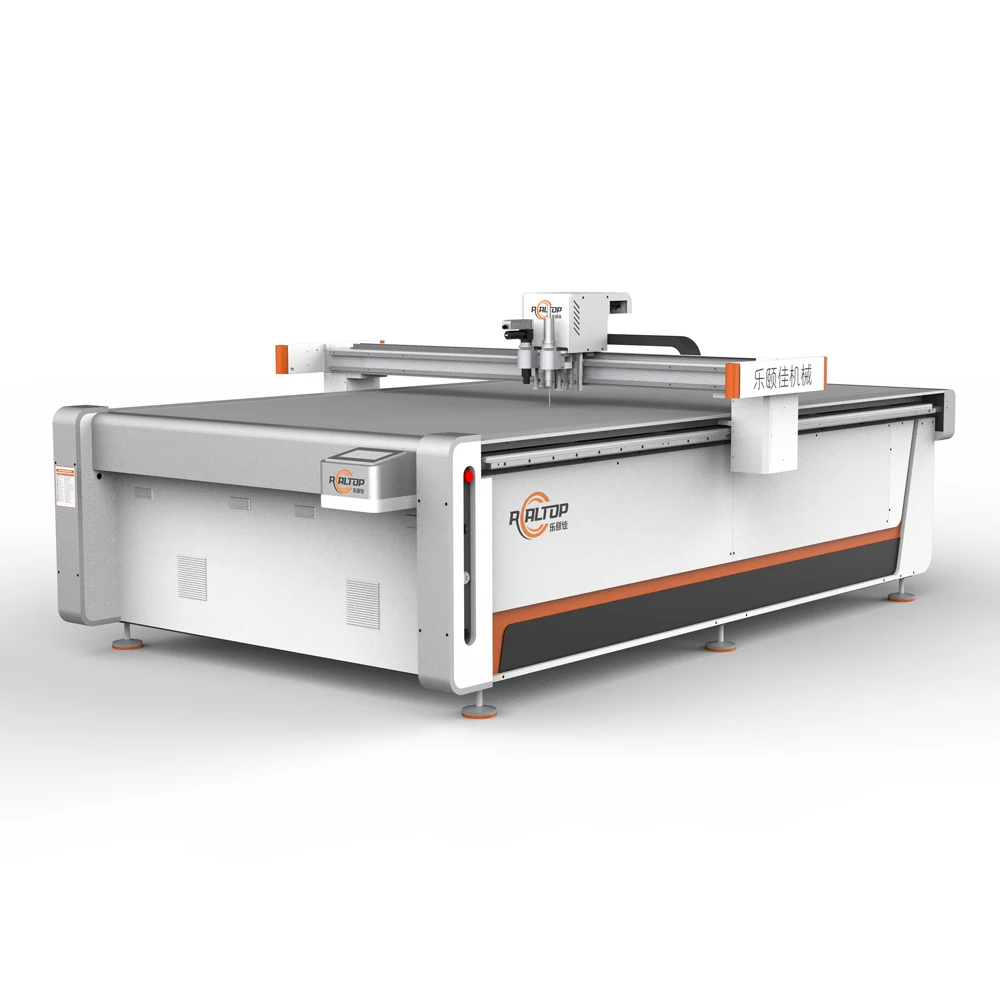
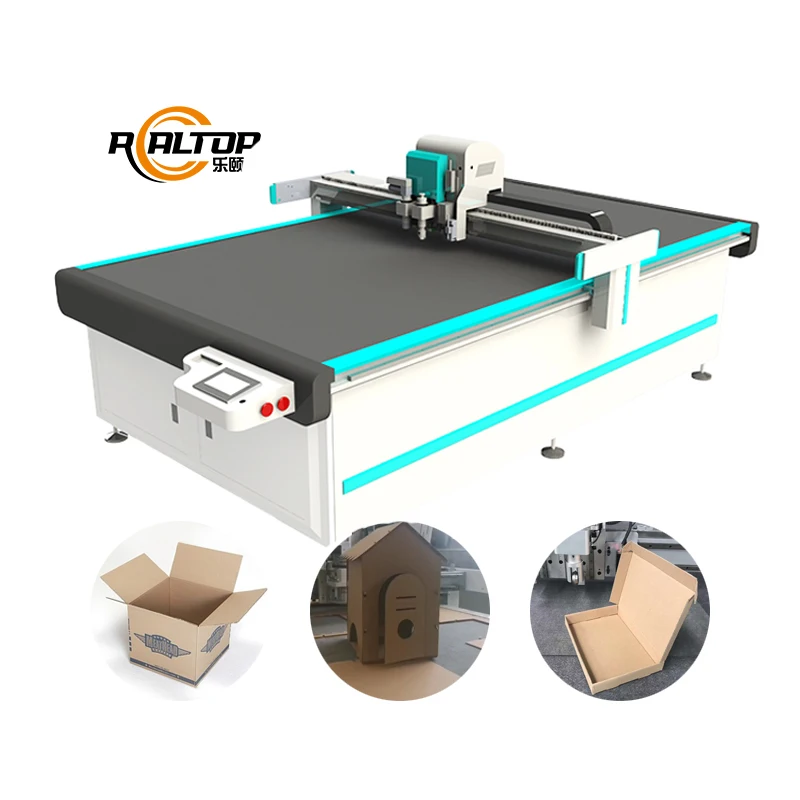
Complete Cutting Range Coverage — Realtop designs and manufactures both oscillating knife and laser cutting platforms under one roof, so packaging converters can match the cutting method to corrugated board, sticker vinyl or foam rather than force a single technology across every substrate.
Technical Specifications
| Parameter | Value |
|---|---|
| Model | RT-D2516 / RT-S2516 |
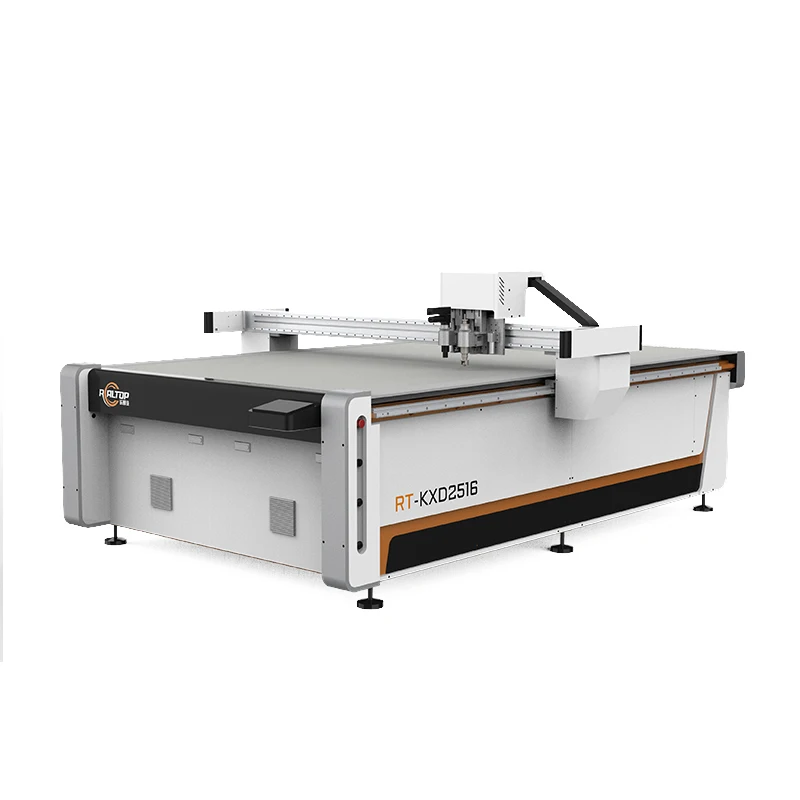
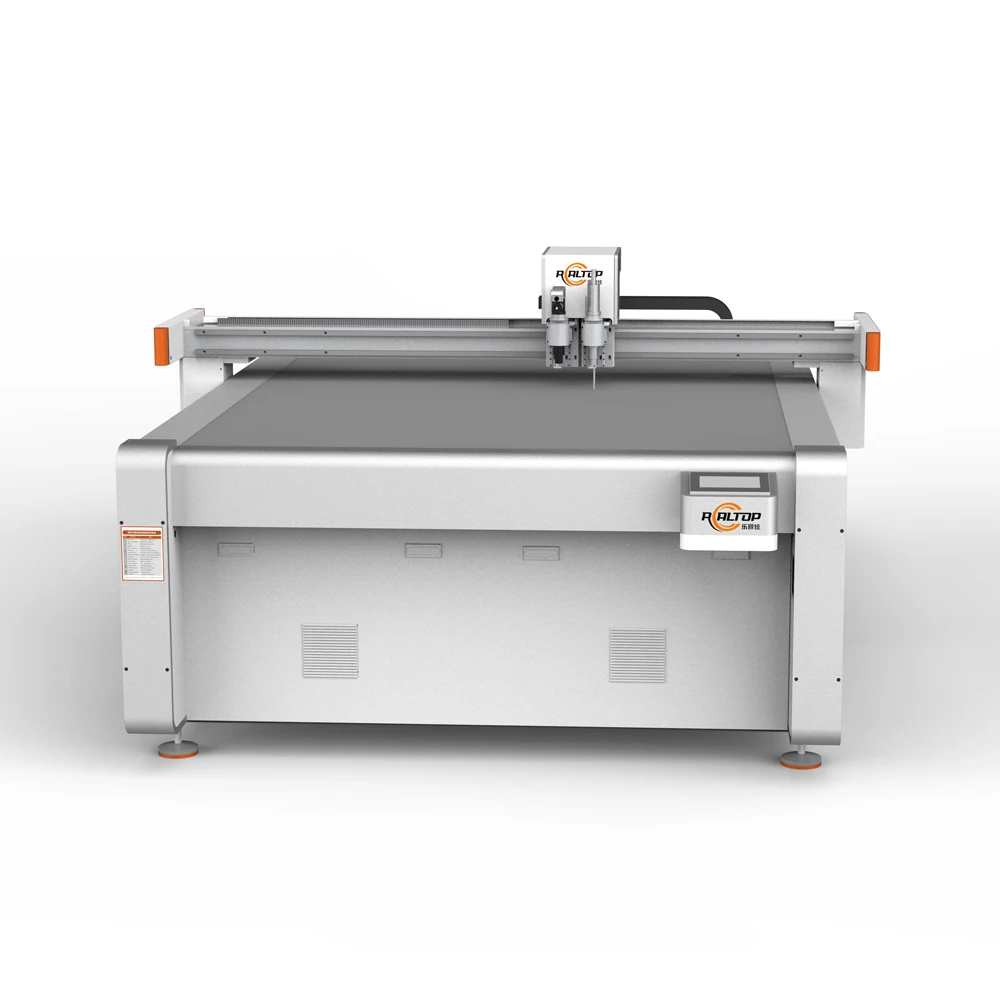
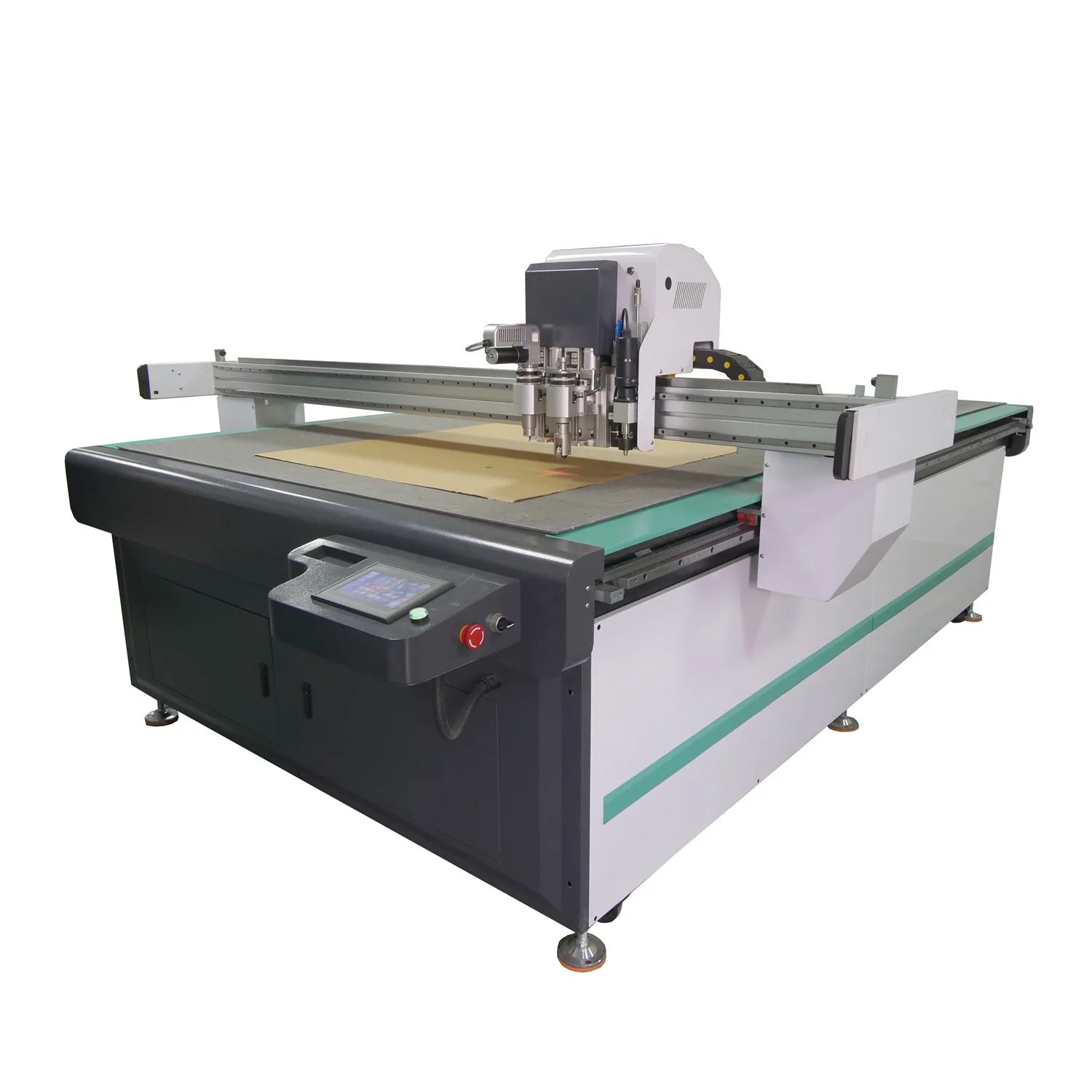
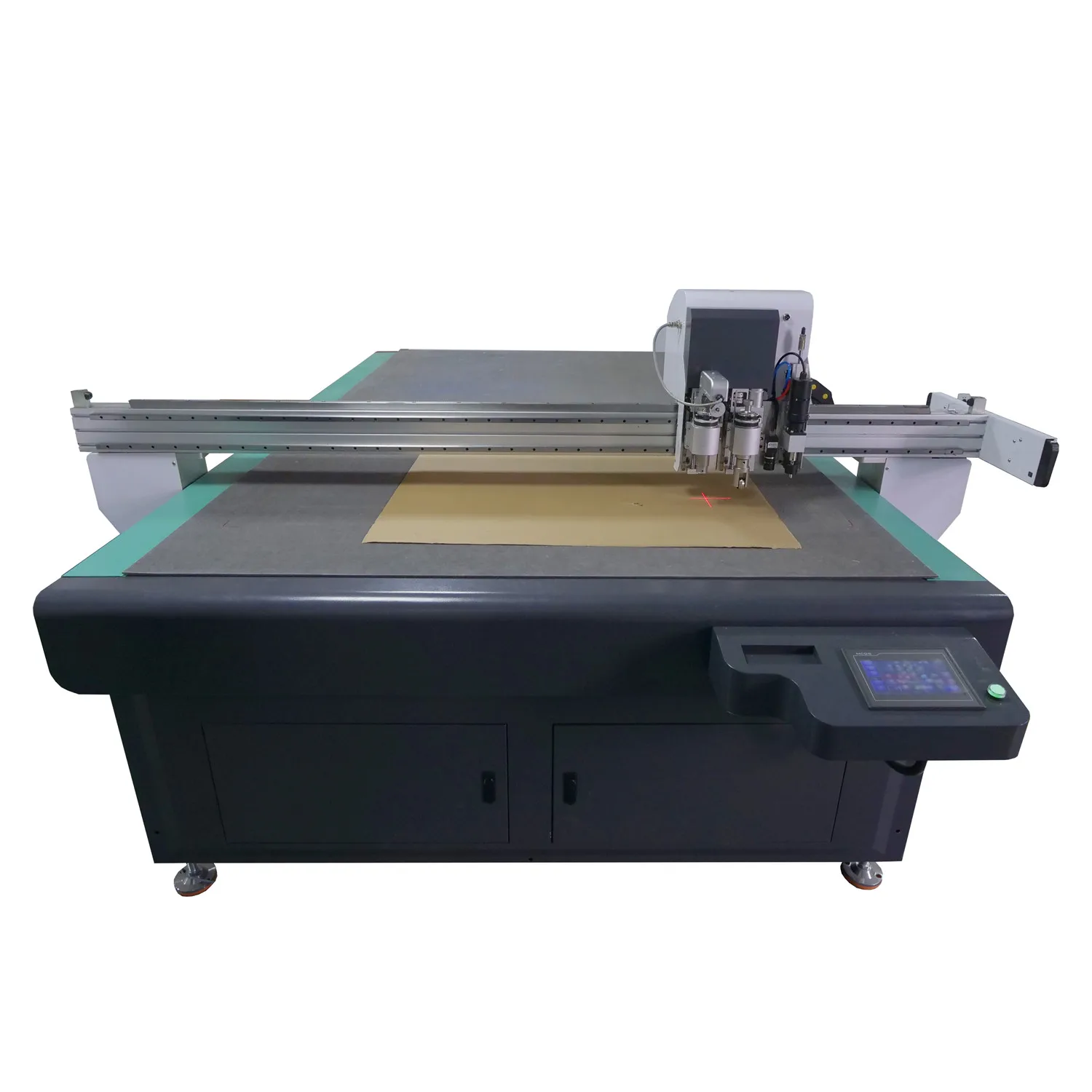
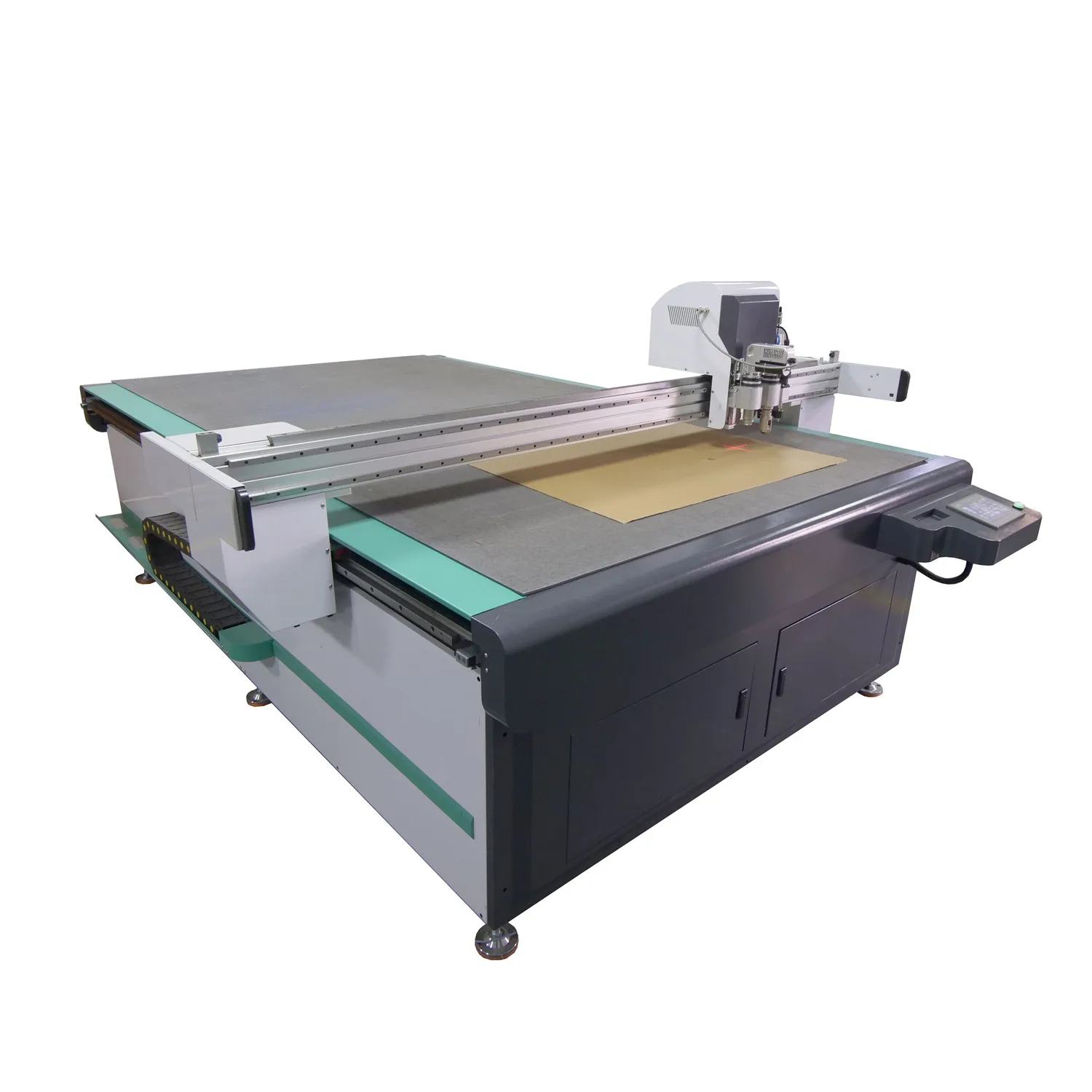
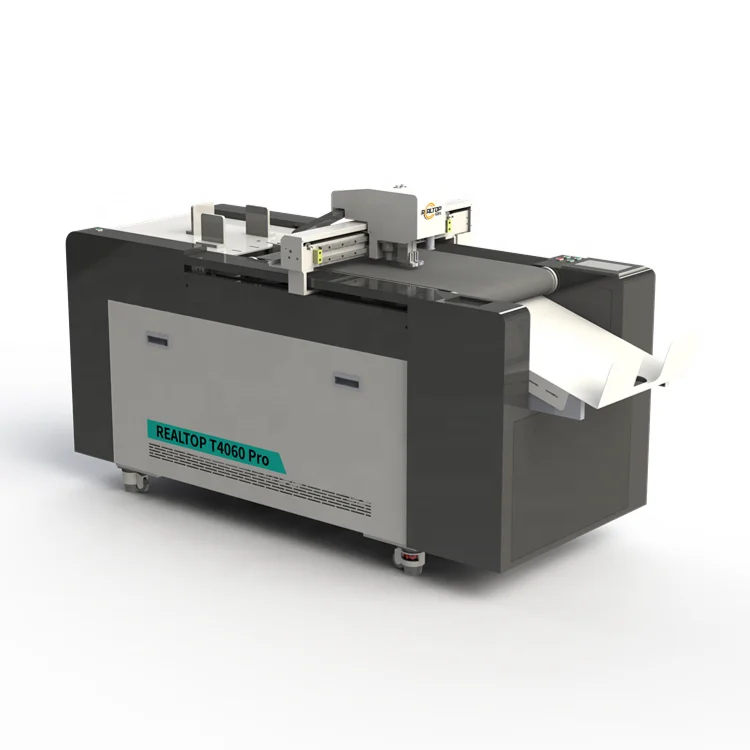
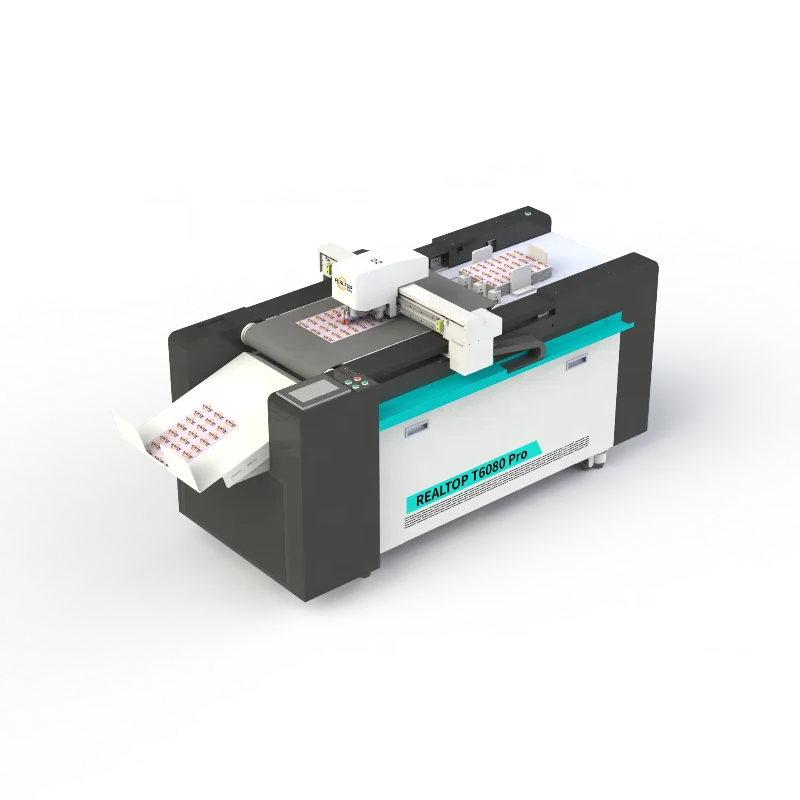
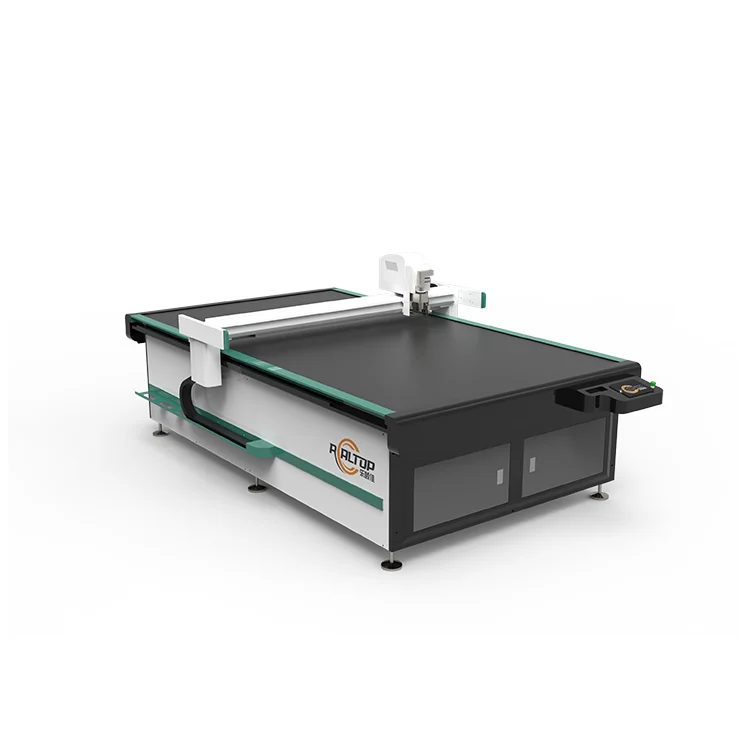
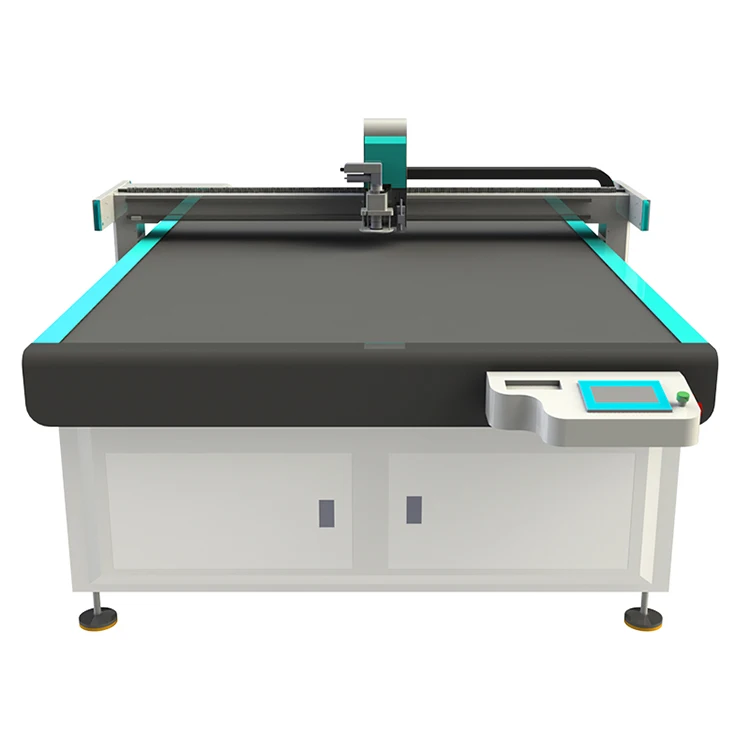
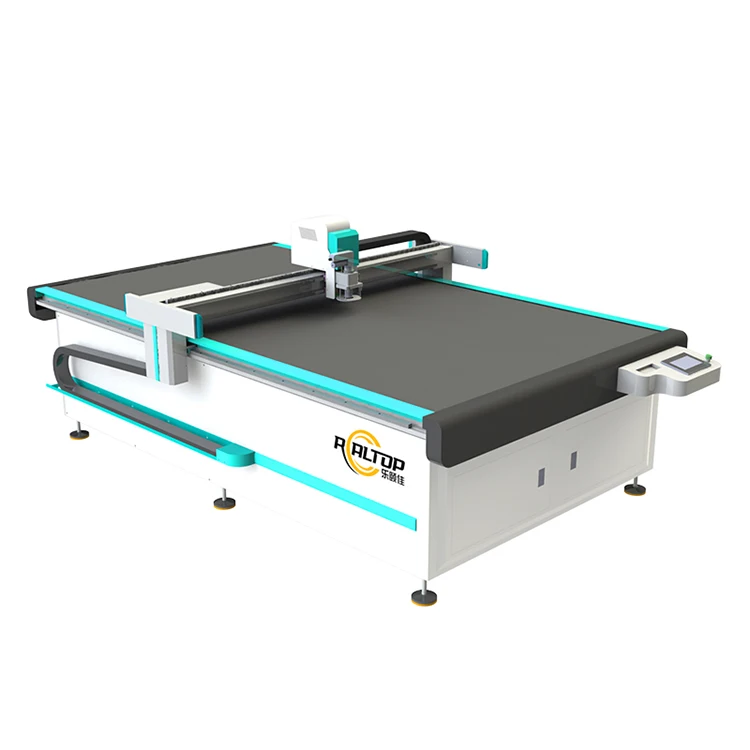
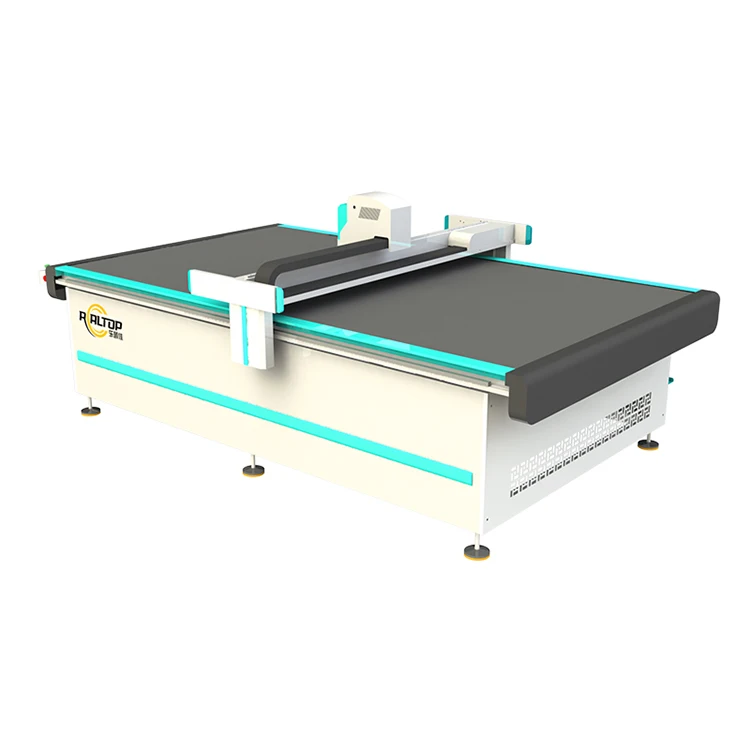
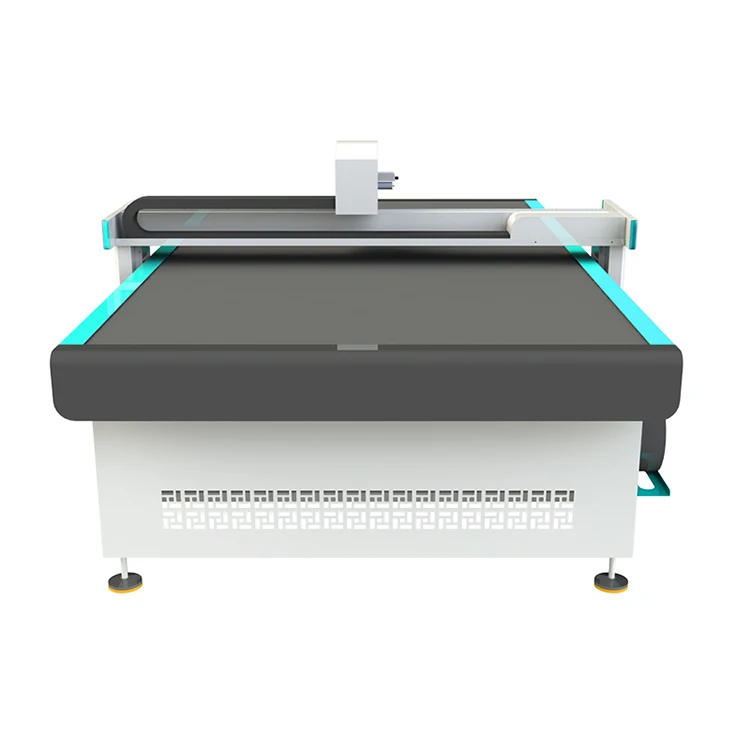
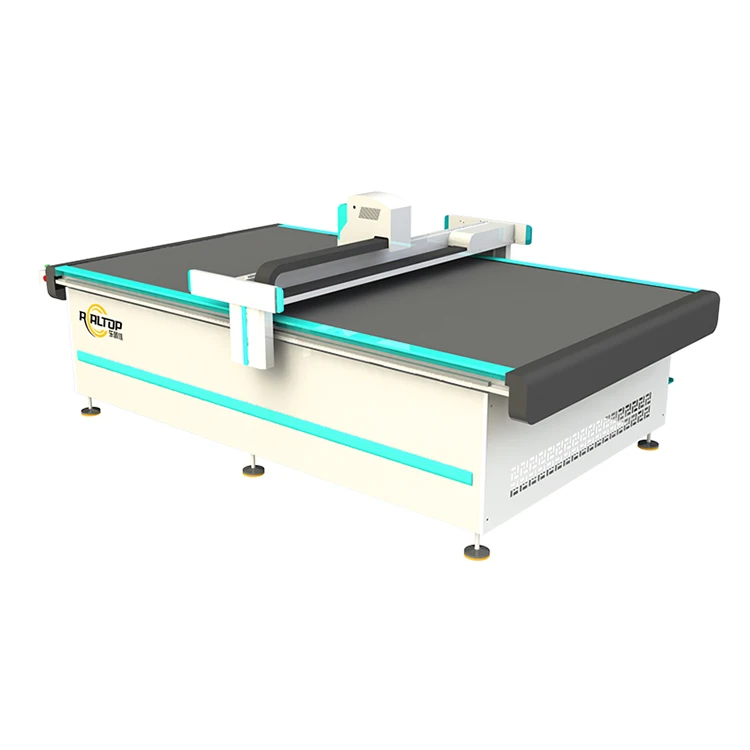
| Product Type | CNC Vibrating Knife Cutting Machine |
| Working Area | 1600 × 2500 mm |
| Machine Footprint | 3450 × 2300 × 1250 mm |
| Rated Power | 9 kW |
| Voltage | 380V ±10% |
| Vacuum Pump | 7.5 kW |
| Translational Velocity | 800–2000 mm/s |
| Repeated Accuracy | ≤0.1 mm |
| Transmission System | Digital servo motor, linear guide, synchronous belt, ball screw |
| Servo Motor | Taiwan Delta |
| Linear Guide | Taiwan Hiwin rail |
| Fixed Model | Aluminum alloy honeycomb vacuum adsorption platform |
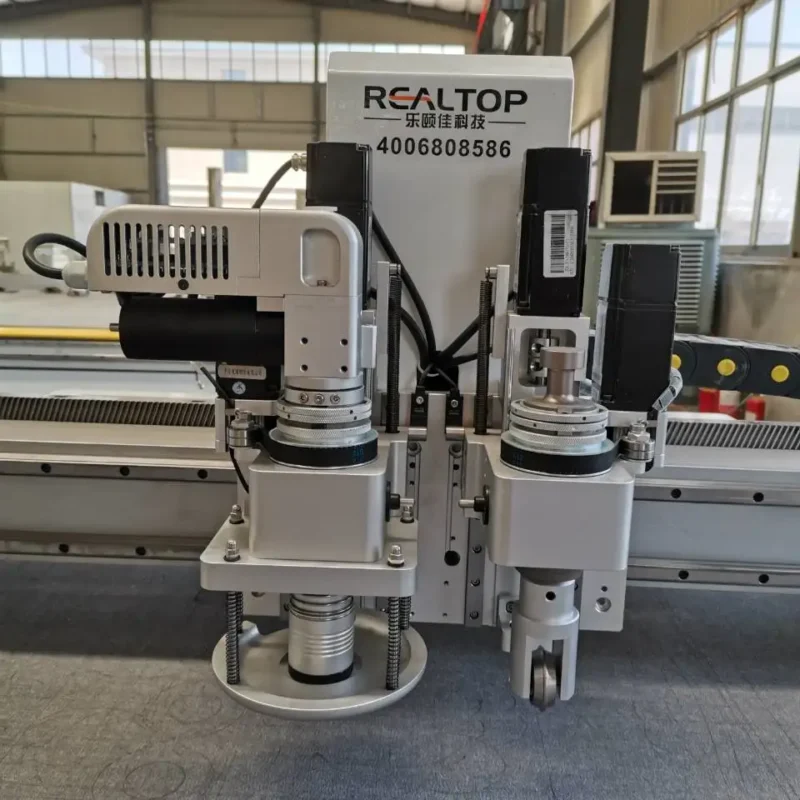
| Multifunctional Head | Swiss imported knife with vibration full cutting, vibration half cutting and cursor location |
| Safety Device | Infrared sensors, emergency stop devices |
| Conveyor Belt | Germany imported |
| Auto Feeding | Yes |
| Instruction System | HP-GL compatible format |
| Software | Professional carton nesting software, multiple format file imports |
| Language Options | English, Russian, Italian, Chinese, custom languages supported |
| Certification | CE (where applicable) |
| Warranty | First year parts provided free; on-site engineer support available |
Application Suitability
| Application | Material or Output |
|---|---|
| Corrugated box and carton sample making | Single, double and triple-wall corrugated board, greyboard |
| Sticker and label contour cutting | Self-adhesive vinyl, sticker sheets, PVC film |
| Large electrical carton and express paper box | Heavy-duty cardboard, kraft liner board |
| High-end gift box and premium packaging | Art paper, foam board, magnetic closure box stock |
| Signage and billboard cutting | Foam PVC, corrugated plastic, display board |
| Business cards, tags and gaskets | Card stock, rubber sheet, composite fibre |
What "200–800 mm/s Cutting Speed" Actually Depends On
Cutting speed is governed by material density and flute profile, not by the machine alone.
Many buyers see a speed range on a spec sheet and assume it applies universally. In reality, slicing through a single-face B-flute sheet at 800 mm/s is straightforward, while a double-wall BC-flute board loaded with recycled fibre and adhesive residue forces the blade to work harder, slowing travel and increasing edge crush. Without defining your exact board grade, any quoted speed figure is incomplete. The RT-D2516/RT-S2516 is configured after your material has been identified — flute type, basis weight, moisture content — so that the vibrating knife stroke and oscillation frequency are matched to what is actually on the table. [NEED_CITE: corrugated flute profiles and cutting resistance characteristics]
Knife Versus Laser: Choosing the Right Method for Packaging Work
Within the Realtop equipment range, the RT-D2516/RT-S2516 occupies the vibrating knife side of the catalogue, purpose-built for fibrous and layered materials where a laser would char the edge or fail to penetrate cleanly. Corrugated board, with its alternating liner and medium layers, responds well to the oscillating blade because the knife slices through each ply without melting the starch adhesive between them. For buyers producing sticker contours or thin PVC signage, the same CNC Vibrating Knife Cutting Machine manufacturer platform can be fitted with a drag knife head instead, avoiding the heat-affected zone entirely.
Full Catalogue Positioning for Mixed-Material Production Floors
A packaging converter running both short-run carton samples and promotional display stands benefits from having knife and laser technologies available from one builder. The RT-D2516/RT-S2516 handles the mechanical cutting tasks — creasing, kiss-cutting, full-depth contouring — while a CO2 laser from the same range picks up acrylic lettering and wood inlay work. Rather than sourcing from two unrelated suppliers and managing different control ecosystems, buyers survey the complete Realtop range and select the machine family that fits each production cell. [NEED_CITE: digital cutting technology selection by substrate type]
Reading the Specifications With a Packaging Lens
The 7.5 kW vacuum pump paired with the aluminum honeycomb table is sized for corrugated sheets up to the full 1600 × 2500 mm bed. In carton sample making, zoning the vacuum into smaller sections matters because die-line layouts often leave narrow offcut strips that lift if the surrounding suction area is too large. Taiwan Delta servo motors driving Hiwin linear rails deliver the ≤0.1 mm repeatability needed when a creasing wheel and cutting knife alternate in the same tool path — even a 0.3 mm drift between the crease and the cut line will cause a box to fold off-square. The Swiss imported multifunctional head oscillates the blade at high frequency, producing a clean shear cut through fluted media rather than tearing the liner. HP-GL compatibility means the instruction system accepts files from most mainstream packaging CAD packages, reducing translation errors between design and machine.
The Cost of Skipping the Material Conversation
When a machine is ordered based on working area alone, the tool head and vacuum configuration often arrive mismatched to the actual production load. A 7.5 kW pump that holds a 5 mm sticker sheet flat will struggle with a 15 mm triple-wall corrugated panel, allowing the board to shift mid-cut and producing registration errors across the sheet. Wrong knife selection — using a drag blade on dense foam board, for example — crushes the core instead of slicing it, leaving ragged edges that fail visual inspection. These mismatches surface only after installation, when retooling and downtime compound the initial mis-specification. [NEED_CITE: industrial cutting tool selection and material compatibility]
Why Source This Equipment From Realtop
The design team and core factory sit under one roof in Jinan, covering both knife and laser cutting technologies so that the cutting method is matched to the buyer’s material rather than forced into a single platform. Tool head and table configurations are specified per substrate and production volume before the order is finalised, not after delivery. CCD camera positioning is available for printed contour work where registration to pre-printed marks is required. Software compatibility, including nesting workflow and file format, is confirmed during the enquiry stage. Sample cutting on the buyer’s own material is offered before any commitment, so edge quality and dimensional accuracy can be judged first-hand.
Documentation & Verification
- Machine specification sheet listing tool head and vacuum table configuration matched to your board grade
- Electrical schematic with voltage and frequency confirmation for your local grid standard
- Sample cutting report on buyer-supplied corrugated or sticker material before order
- Software licence and file format compatibility note for your existing CAD workflow
- Factory test record documenting cutting accuracy on the configured bed size
- Spare parts list identifying consumable blades, vacuum seals and belt sections
Installation, Commissioning & Support
- The 3450 × 2300 mm footprint requires a level concrete floor with clearance for auto-feeding conveyor access
- A dedicated 380V ±10% circuit with appropriate breaker rating must be ready before the 9 kW machine is energised
- Table sections arrive flat-packed and are assembled on-site to maintain honeycomb surface flatness
- First-run commissioning includes vacuum zoning calibration and servo tuning for the configured tool head
- Operator training covers nesting software file import, crease depth adjustment and daily blade inspection
- Spare oscillating blades and vacuum seals ship with the machine for initial production months
Preparing Your Enquiry
To specify the right configuration, share the exact corrugated flute profile and board thickness you run most often, along with your typical sheet size and daily cutting volume. Let us know your local voltage and frequency standard, the control language your operators prefer, and whether your design files originate from a specific CAD package so that file format compatibility can be verified before the order. If you can send a sample of your heaviest board or a CAD drawing of your most complex die-line, a cutting test can be arranged to validate edge quality and dimensional accuracy.
Frequently Asked Questions
Q: How is the actual cutting speed determined for my corrugated board grade?
A: Speed depends on flute profile, liner weight and board moisture. We test your specific material to establish a realistic throughput before quotation, rather than quoting a generic range that may not apply to your production conditions.
Q: Should I choose a knife or laser system for my packaging materials?
A: Fibrous and layered materials like corrugated board, foam and gasket respond better to knife cutting, which slices without charring. Laser systems suit acrylic, wood engraving and synthetic textiles. We help you match the method to your substrate mix.
Q: What voltage and control language options are available before shipment?
A: The listed standard is 380V ±10%, but voltage and plug type are confirmed against your local grid before production. Control interface languages include English, Russian, Italian and Chinese, with custom language support available on request.
Q: Which software file formats does the carton nesting system accept?
A: The instruction system is HP-GL compatible and imports common CAD formats used in packaging design. File format compatibility and nesting workflow integration are verified during the enquiry stage to match your existing design software.
Q: What validation is provided before I confirm the order?
A: We offer sample cutting on your own material or from your CAD drawings, producing a cutting report that documents edge quality, dimensional accuracy and achievable speed on your specific board grade before you commit.
Complete Cutting Range Coverage — Realtop designs and manufactures both oscillating knife and laser cutting platforms under one roof, so packaging converters can match the cutting method to corrugated board, sticker vinyl or foam rather than force a single technology across every substrate.
Technical Specifications
| Parameter | Value |
|---|---|
| Model | RT-D2516 / RT-S2516 |
| Product Type | CNC Vibrating Knife Cutting Machine |
| Working Area | 1600 × 2500 mm |
| Machine Footprint | 3450 × 2300 × 1250 mm |
| Rated Power | 9 kW |
| Voltage | 380V ±10% |
| Vacuum Pump | 7.5 kW |
| Translational Velocity | 800–2000 mm/s |
| Repeated Accuracy | ≤0.1 mm |
| Transmission System | Digital servo motor, linear guide, synchronous belt, ball screw |
| Servo Motor | Taiwan Delta |
| Linear Guide | Taiwan Hiwin rail |
| Fixed Model | Aluminum alloy honeycomb vacuum adsorption platform |
| Multifunctional Head | Swiss imported knife with vibration full cutting, vibration half cutting and cursor location |
| Safety Device | Infrared sensors, emergency stop devices |
| Conveyor Belt | Germany imported |
| Auto Feeding | Yes |
| Instruction System | HP-GL compatible format |
| Software | Professional carton nesting software, multiple format file imports |
| Language Options | English, Russian, Italian, Chinese, custom languages supported |
| Certification | CE (where applicable) |
| Warranty | First year parts provided free; on-site engineer support available |
Application Suitability
| Application | Material or Output |
|---|---|
| Corrugated box and carton sample making | Single, double and triple-wall corrugated board, greyboard |
| Sticker and label contour cutting | Self-adhesive vinyl, sticker sheets, PVC film |
| Large electrical carton and express paper box | Heavy-duty cardboard, kraft liner board |
| High-end gift box and premium packaging | Art paper, foam board, magnetic closure box stock |
| Signage and billboard cutting | Foam PVC, corrugated plastic, display board |
| Business cards, tags and gaskets | Card stock, rubber sheet, composite fibre |
What "200–800 mm/s Cutting Speed" Actually Depends On
Cutting speed is governed by material density and flute profile, not by the machine alone.
Many buyers see a speed range on a spec sheet and assume it applies universally. In reality, slicing through a single-face B-flute sheet at 800 mm/s is straightforward, while a double-wall BC-flute board loaded with recycled fibre and adhesive residue forces the blade to work harder, slowing travel and increasing edge crush. Without defining your exact board grade, any quoted speed figure is incomplete. The RT-D2516/RT-S2516 is configured after your material has been identified — flute type, basis weight, moisture content — so that the vibrating knife stroke and oscillation frequency are matched to what is actually on the table. [NEED_CITE: corrugated flute profiles and cutting resistance characteristics]
Knife Versus Laser: Choosing the Right Method for Packaging Work
Within the Realtop equipment range, the RT-D2516/RT-S2516 occupies the vibrating knife side of the catalogue, purpose-built for fibrous and layered materials where a laser would char the edge or fail to penetrate cleanly. Corrugated board, with its alternating liner and medium layers, responds well to the oscillating blade because the knife slices through each ply without melting the starch adhesive between them. For buyers producing sticker contours or thin PVC signage, the same CNC Vibrating Knife Cutting Machine manufacturer platform can be fitted with a drag knife head instead, avoiding the heat-affected zone entirely.
Full Catalogue Positioning for Mixed-Material Production Floors
A packaging converter running both short-run carton samples and promotional display stands benefits from having knife and laser technologies available from one builder. The RT-D2516/RT-S2516 handles the mechanical cutting tasks — creasing, kiss-cutting, full-depth contouring — while a CO2 laser from the same range picks up acrylic lettering and wood inlay work. Rather than sourcing from two unrelated suppliers and managing different control ecosystems, buyers survey the complete Realtop range and select the machine family that fits each production cell. [NEED_CITE: digital cutting technology selection by substrate type]
Reading the Specifications With a Packaging Lens
The 7.5 kW vacuum pump paired with the aluminum honeycomb table is sized for corrugated sheets up to the full 1600 × 2500 mm bed. In carton sample making, zoning the vacuum into smaller sections matters because die-line layouts often leave narrow offcut strips that lift if the surrounding suction area is too large. Taiwan Delta servo motors driving Hiwin linear rails deliver the ≤0.1 mm repeatability needed when a creasing wheel and cutting knife alternate in the same tool path — even a 0.3 mm drift between the crease and the cut line will cause a box to fold off-square. The Swiss imported multifunctional head oscillates the blade at high frequency, producing a clean shear cut through fluted media rather than tearing the liner. HP-GL compatibility means the instruction system accepts files from most mainstream packaging CAD packages, reducing translation errors between design and machine.
The Cost of Skipping the Material Conversation
When a machine is ordered based on working area alone, the tool head and vacuum configuration often arrive mismatched to the actual production load. A 7.5 kW pump that holds a 5 mm sticker sheet flat will struggle with a 15 mm triple-wall corrugated panel, allowing the board to shift mid-cut and producing registration errors across the sheet. Wrong knife selection — using a drag blade on dense foam board, for example — crushes the core instead of slicing it, leaving ragged edges that fail visual inspection. These mismatches surface only after installation, when retooling and downtime compound the initial mis-specification. [NEED_CITE: industrial cutting tool selection and material compatibility]
Why Source This Equipment From Realtop
The design team and core factory sit under one roof in Jinan, covering both knife and laser cutting technologies so that the cutting method is matched to the buyer’s material rather than forced into a single platform. Tool head and table configurations are specified per substrate and production volume before the order is finalised, not after delivery. CCD camera positioning is available for printed contour work where registration to pre-printed marks is required. Software compatibility, including nesting workflow and file format, is confirmed during the enquiry stage. Sample cutting on the buyer’s own material is offered before any commitment, so edge quality and dimensional accuracy can be judged first-hand.
Documentation & Verification
- Machine specification sheet listing tool head and vacuum table configuration matched to your board grade
- Electrical schematic with voltage and frequency confirmation for your local grid standard
- Sample cutting report on buyer-supplied corrugated or sticker material before order
- Software licence and file format compatibility note for your existing CAD workflow
- Factory test record documenting cutting accuracy on the configured bed size
- Spare parts list identifying consumable blades, vacuum seals and belt sections
Installation, Commissioning & Support
- The 3450 × 2300 mm footprint requires a level concrete floor with clearance for auto-feeding conveyor access
- A dedicated 380V ±10% circuit with appropriate breaker rating must be ready before the 9 kW machine is energised
- Table sections arrive flat-packed and are assembled on-site to maintain honeycomb surface flatness
- First-run commissioning includes vacuum zoning calibration and servo tuning for the configured tool head
- Operator training covers nesting software file import, crease depth adjustment and daily blade inspection
- Spare oscillating blades and vacuum seals ship with the machine for initial production months
Preparing Your Enquiry
To specify the right configuration, share the exact corrugated flute profile and board thickness you run most often, along with your typical sheet size and daily cutting volume. Let us know your local voltage and frequency standard, the control language your operators prefer, and whether your design files originate from a specific CAD package so that file format compatibility can be verified before the order. If you can send a sample of your heaviest board or a CAD drawing of your most complex die-line, a cutting test can be arranged to validate edge quality and dimensional accuracy.
Frequently Asked Questions
Q: How is the actual cutting speed determined for my corrugated board grade?
A: Speed depends on flute profile, liner weight and board moisture. We test your specific material to establish a realistic throughput before quotation, rather than quoting a generic range that may not apply to your production conditions.
Q: Should I choose a knife or laser system for my packaging materials?
A: Fibrous and layered materials like corrugated board, foam and gasket respond better to knife cutting, which slices without charring. Laser systems suit acrylic, wood engraving and synthetic textiles. We help you match the method to your substrate mix.
Q: What voltage and control language options are available before shipment?
A: The listed standard is 380V ±10%, but voltage and plug type are confirmed against your local grid before production. Control interface languages include English, Russian, Italian and Chinese, with custom language support available on request.
Q: Which software file formats does the carton nesting system accept?
A: The instruction system is HP-GL compatible and imports common CAD formats used in packaging design. File format compatibility and nesting workflow integration are verified during the enquiry stage to match your existing design software.
Q: What validation is provided before I confirm the order?
A: We offer sample cutting on your own material or from your CAD drawings, producing a cutting report that documents edge quality, dimensional accuracy and achievable speed on your specific board grade before you commit.
商品评价
There are no reviews yet.