




Fast Delivery
Quick, reliable shipping to any location.

Free & easy returns
Return this item by mail or in store within 90 days for a full refund.
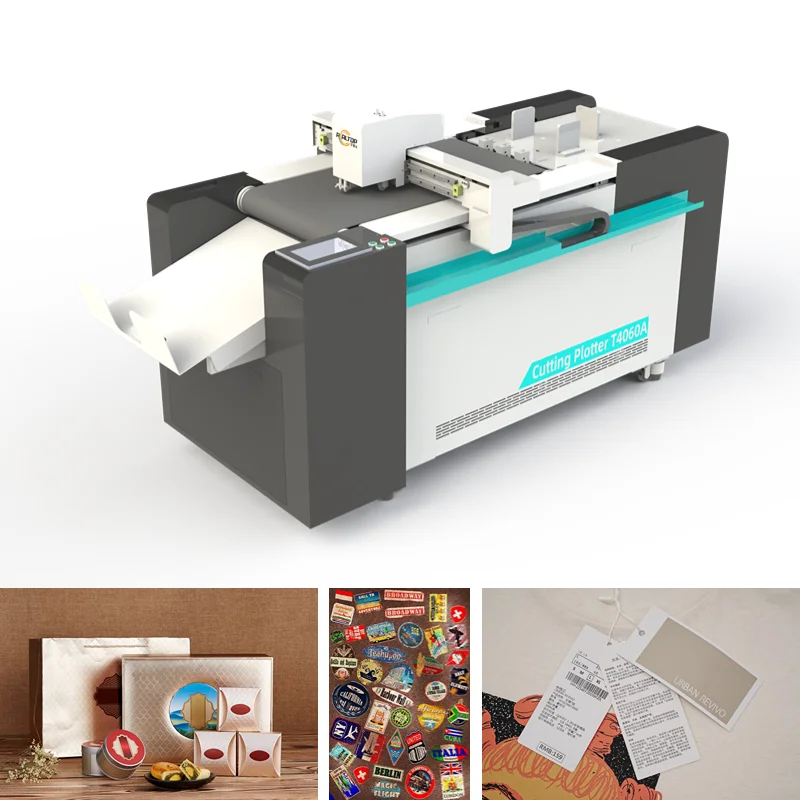
Multi-tool cutting platform — Every T-series unit leaves the Jinan factory with tool head, vacuum zoning and voltage matched to the buyer’s actual substrate, not just a generic working area.
Technical Specifications
| Parameter | Value |
|---|---|
| Product Type | CNC Digital Cutting Plotter |
| Working Area Options | 400×600 mm, 600×800 mm, 900×1200 mm |
| Tool Head Configuration | Oscillating knife, Creasing wheel, Kiss cutting tool, CCD camera, Marking pen |
| Cutting Speed Range | 0–1500 mm/s |
| Maximum Cutting Thickness | ≤ 20 mm |
| Cutting Accuracy | ±0.1 mm |
| Repeat Positioning Precision | ±0.1 mm |
| Vacuum Pump Power | 2.5 kW or 3.2 kW depending on table size |
| Voltage Options | 110V or 220V configurable |
| Supported File Formats | PLT, DXF, AI, PDF |
| Safety Devices | Infrared sensor device and emergency stop |
| Control Language Options | English, Russian, Italian, Chinese, custom languages available |
| Assembly State | Desktop structure, plug-and-play with no preheating required |
| Software Feature | Auto-recognition of registration marks |
| Compliance | CE |
Application Suitability
| Application | Material or Output |
|---|---|
| Packaging prototype sampling | Cardboard, printed carton, cardstock up to 2 mm |
| Printed box contour cutting | Self-adhesive vinyl, PVC stickers, photo backing paper |
| Advertising and signage production | Vinyl sticker sheets, window clings, custom car decals |
| Store display graphics | Self-adhesive films and printed contour labels |
| Educational and craft production | Teaching aids, puzzles, cards, paper-cut templates |
| Cultural design items | Leather bookmarks, keychains, 3D greeting cards |
| Small-batch light industry runs | Electronic foam gaskets, leather tags, 1–50 piece batches |
Why the Wrong Tool Head Costs More Than the Machine
Choosing a CNC digital cutting plotter manufacturer based on working area alone, then discovering the tool head cannot produce a clean crease on 350 gsm cardstock, is one of the most common mistakes in packaging procurement. The cutting method must be matched to the substrate before the table size is selected.
I worked with a buyer who ordered a flatbed cutter for greyboard sample boxes, tested successfully on 2 mm board, then ran 350 gsm white card for small retail boxes in production. The knife pressure and speed settings that worked perfectly on greyboard crushed the white card fibres, leaving ragged fold lines and wasting material through an entire shift [NEED_CITE: substrate thickness versus knife pressure matching in digital cutting]. When the tool head is wrong for the material, no amount of speed adjustment recovers edge quality.
Matching the Cutting Method to the Production Job
The T-series range spans three working area formats, but the real decision point is which tool head configuration sits on the gantry. An oscillating knife handles thicker substrates like foam gaskets and corrugated board by vibrating through the material at high frequency, while a creasing wheel compresses fold lines into cardstock without cutting through the surface. A CNC digital cutting plotter manufacturer that offers both on the same platform lets packaging sample makers switch between cutting and creasing within one job file, eliminating the need for two separate machines.
Printed Contour Work and Registration Mark Tracking
For signage producers cutting printed vinyl or self-adhesive labels, the CCD camera system auto-recognises registration marks and adjusts the cutting path in real time. This matters when printed graphics shift slightly during the printing process — the camera tracks the actual print position rather than following a fixed coordinate path. Without this capability, contour cuts drift off the printed edge, and an entire sheet of decals is scrapped [NEED_CITE: CCD registration mark recognition accuracy in digital cutting plotters].
How Core Parameters Translate to Cutting Quality
The ±0.1 mm repeat positioning precision across all T-series formats means that a crease line laid down on the first pass aligns with the cut path on the second pass, which is critical when producing folding carton prototypes that must assemble without gaps. The 0–1500 mm/s cutting speed range is usable only when matched to material density — running at maximum speed on thin cardstock causes the knife to drag and tear, while thick foam requires slower passes to allow the oscillating blade to clear chips from the kerf. The vacuum pump selection between 2.5 kW and 3.2 kW depends on table size and part geometry: small sticker labels need stronger vacuum hold-down across more zones to prevent lifting during kiss cutting, whereas large-format carton sheets distribute suction over a wider area with less risk of movement. File format compatibility with PLT, DXF, AI and PDF means the software accepts artwork directly from the buyer’s existing design workflow without intermediate conversion steps that can distort curve geometry.
What Happens When Vacuum Zoning Is Undersized
A vacuum table with insufficient zoning for small parts causes material lift during high-speed contour cutting. When a kiss-cut vinyl sticker sheet has dozens of small labels across the bed, the vacuum must hold each label flat even after surrounding waste matrix is stripped away. If the zoning is too coarse, air leaks through the cut lines and small labels curl upward into the knife path, producing ragged edges or pulling the label entirely off the table [NEED_CITE: vacuum table zoning requirements for small-part digital cutting]. This failure mode does not appear during the sample test on a large sheet — it only shows up when production runs small-format jobs at full speed.
What This Manufacturer Brings to the Table
In-house design and production covering both knife and laser cutting technologies means a buyer evaluating the T-series can compare oscillating knife cutting against CO2 laser cutting for the same substrate, rather than being locked into one method. Tool head and table configuration are specified per material and production volume, so a packaging sample maker running short-run carton prototypes gets a different setup than a signage producer cutting long runs of printed vinyl. CCD camera positioning is included as a standard option for printed contour work rather than treated as an aftermarket add-on. Software compatibility is confirmed against the buyer’s existing file formats before the order is placed. Voltage, language and specification customisation are addressed during the quotation stage, not discovered at the packing stage.
Documentation & Verification
- Machine specification sheet listing every tool head and table configuration per model format
- Sample cutting report produced on your actual material before order commitment
- Electrical schematic and voltage confirmation matching your facility power supply
- Software licence and file format compatibility note for PLT, DXF, AI and PDF workflows
- Factory test record documenting cutting accuracy and positioning precision before dispatch
- Operation and maintenance manual in your selected control language
Installation, Commissioning & Support
- Desktop plug-and-play structure requires no preheating or extended assembly on arrival
- Voltage configuration confirmed at 110V or 220V matching your local power frequency and plug type
- 2.5 kW or 3.2 kW vacuum pump requires a dedicated circuit separate from the main cutting head supply
- Infrared sensor device and emergency stop tested and calibrated during first commissioning run
- Control language set to English, Russian, Italian, Chinese or custom language before shipment
- Spare parts list covering oscillating knife blades, creasing wheels and CCD calibration targets
Before You Request a Quote
Send the material type, thickness and sheet size you will actually run in production, along with your daily volume and whether the job involves printed contour cutting or plain substrate. Confirm your local voltage and frequency, the control language your operators need, and whether your design team works in AI, PLT, DXF or PDF. If you want sample cutting on your own material before committing, ship a representative sheet and specify the edge quality and crease depth you expect in the finished part.
Frequently Asked Questions
Q: How do I choose the right T-series working area for my production volume?
A: Match the working area to your largest sheet size plus a margin for clamping and tool path clearance. The 400×600 mm format suits label and small carton sampling, the 600×800 mm handles mid-size packaging prototypes, and the 900×1200 mm covers full-size carton sheets and large signage panels. Consider your typical sheet size, not just the maximum.
Q: Which tool head should I use for cardstock versus vinyl sticker material?
A: Cardstock and corrugated board respond well to an oscillating knife for cutting and a creasing wheel for fold lines. Vinyl stickers and self-adhesive films require a kiss cutting tool that cuts through the face stock without penetrating the backing paper. The CCD camera adds registration mark tracking for printed contour jobs on either material.
Q: Can the voltage and control language be customised before shipment?
A: Yes. Voltage is configurable at 110V or 220V depending on your facility supply, and the plug type is matched to your local standard. Control language options include English, Russian, Italian and Chinese, with custom languages available. All electrical settings are confirmed during the quotation stage and verified on the electrical schematic before packing.
Q: Will the software accept my existing design files without conversion?
A: The T-series software natively reads PLT, DXF, AI and PDF formats. Before placing an order, send a sample file in your primary format so compatibility can be verified against your nesting workflow and curve geometry requirements. Any conversion issues are identified and resolved before the machine ships.
Q: How does sample cutting on my own material work?
A: Send a representative sheet of your production material with the thickness and coating you will actually run. Specify the cutting profile, crease pattern and edge quality standard you require. The sample cutting report documents tool head settings, speed, knife pressure and edge inspection results so you can evaluate performance before committing to a purchase.










商品评价
There are no reviews yet.