

Fast Delivery
Quick, reliable shipping to any location.

Free & easy returns
Return this item by mail or in store within 90 days for a full refund.
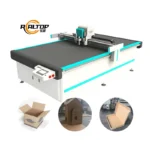
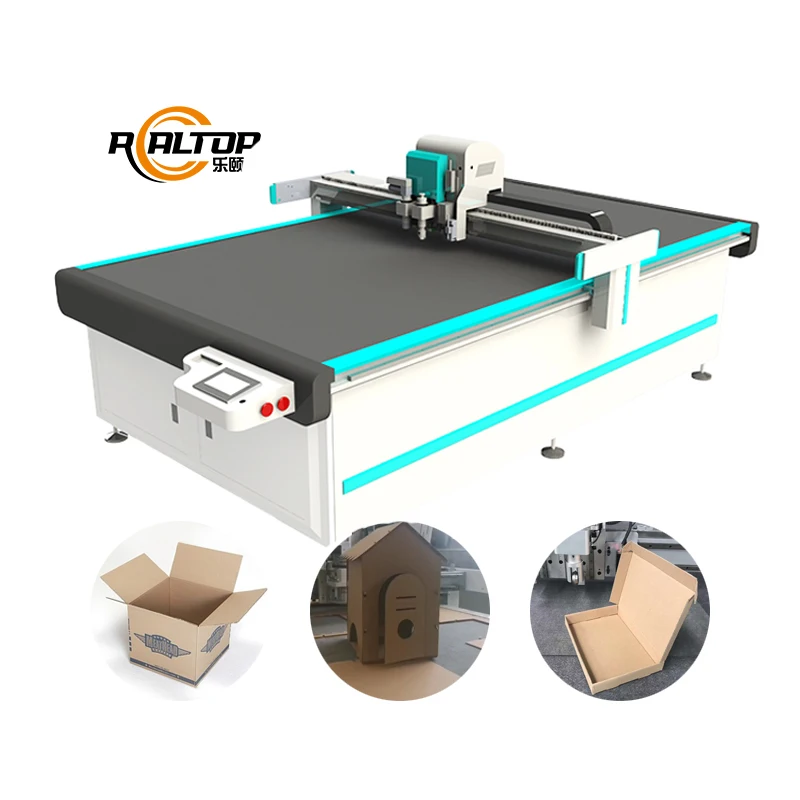
Tool head and table configuration specified per material — every corrugated flute type and board thickness is verified on the buyer’s actual sample before a cutting table leaves the factory.
Technical Specifications
| Parameter | Value |
|---|---|
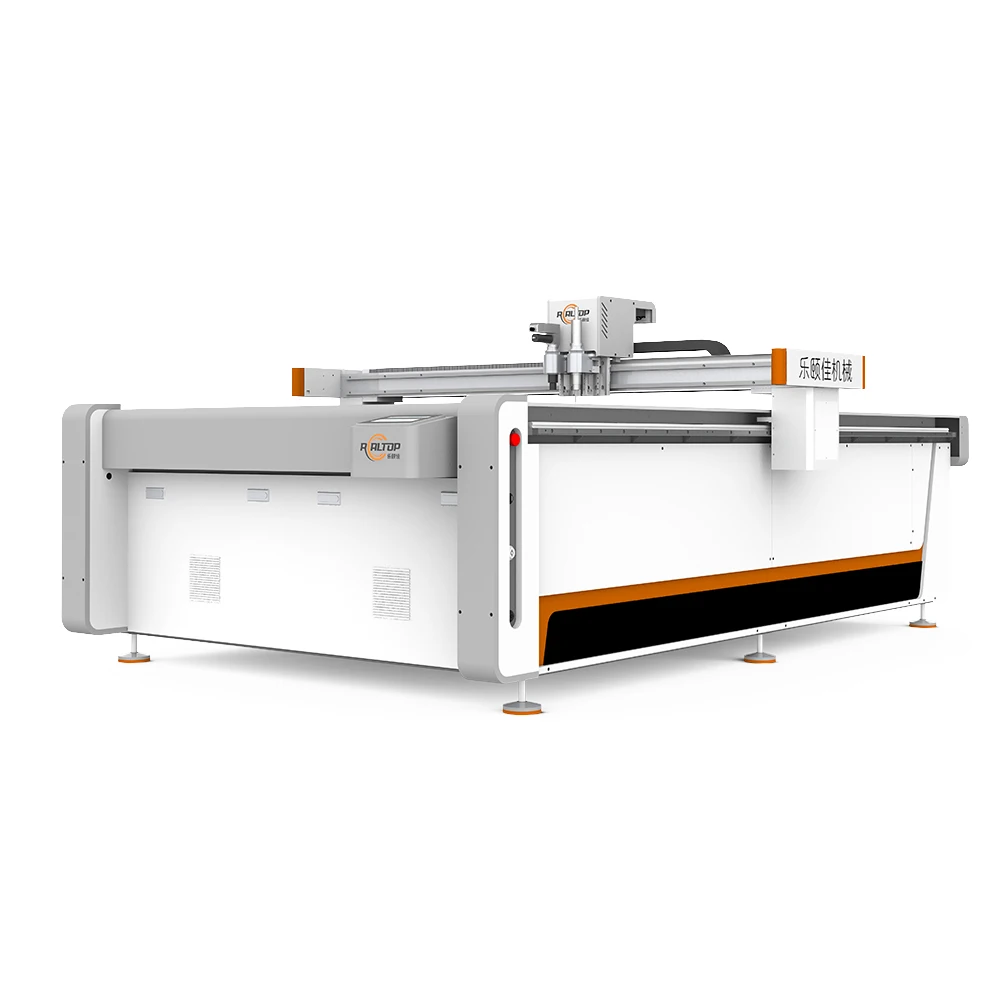
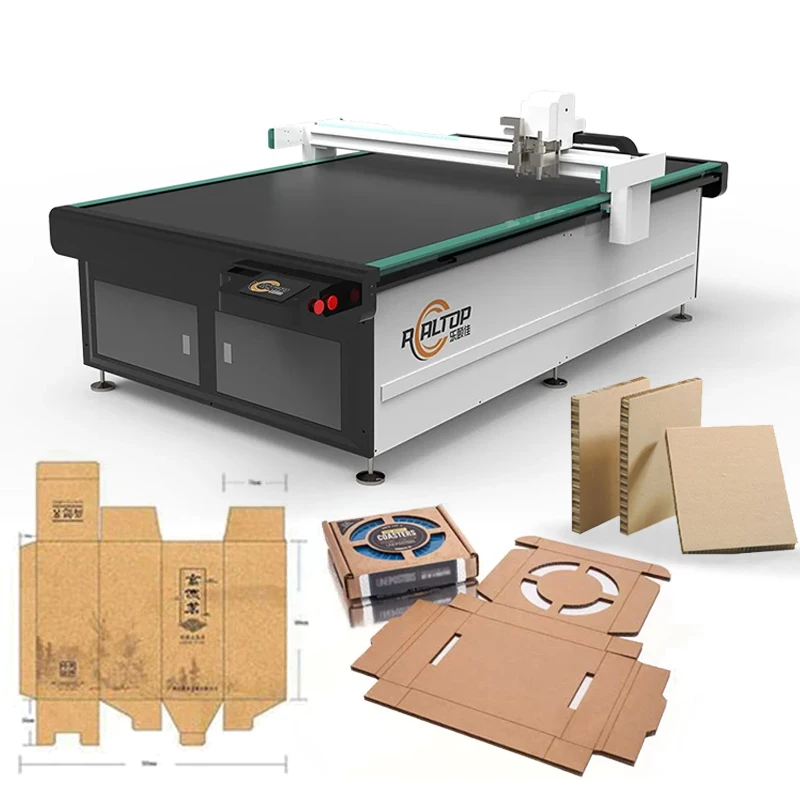
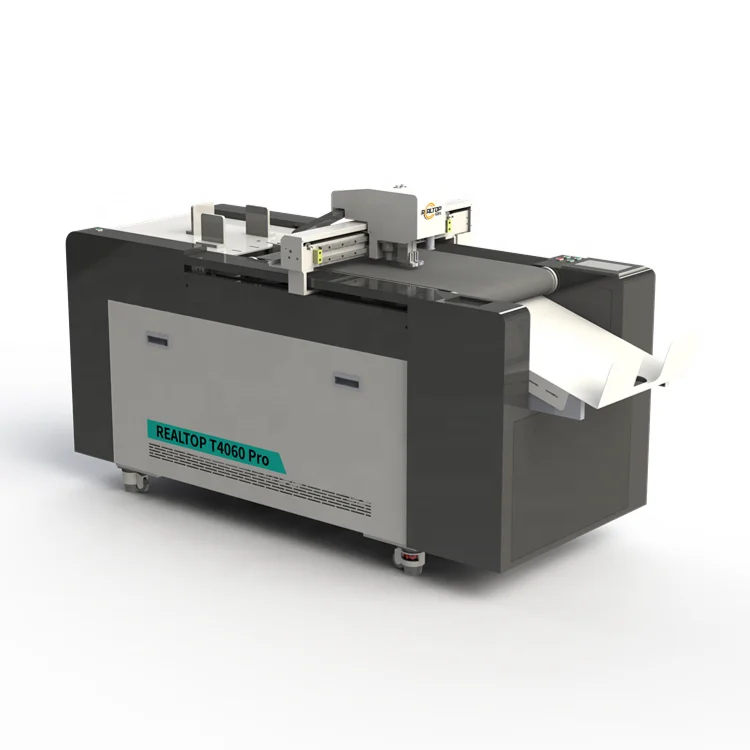
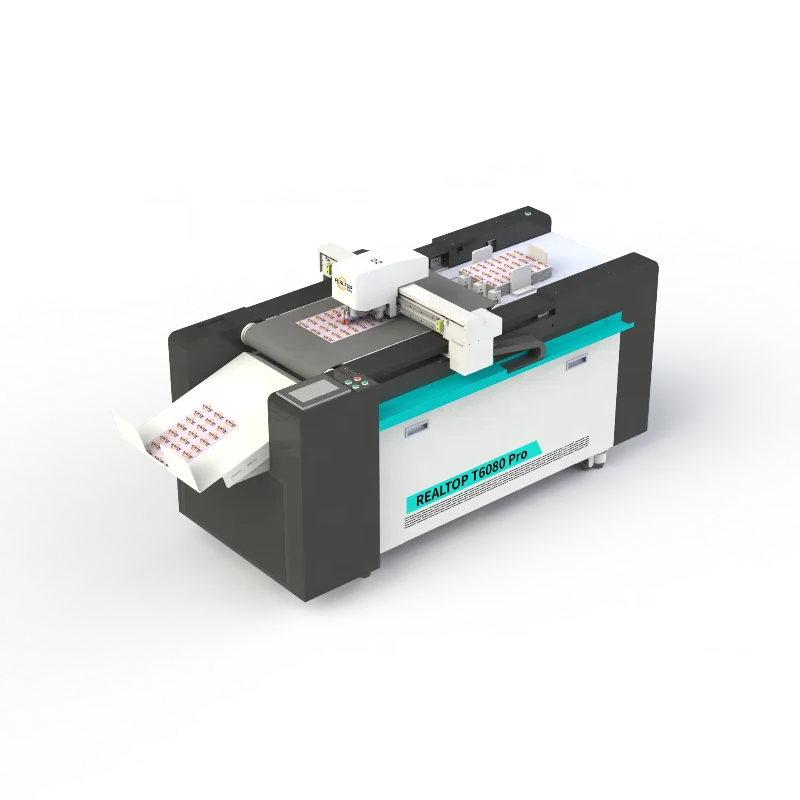
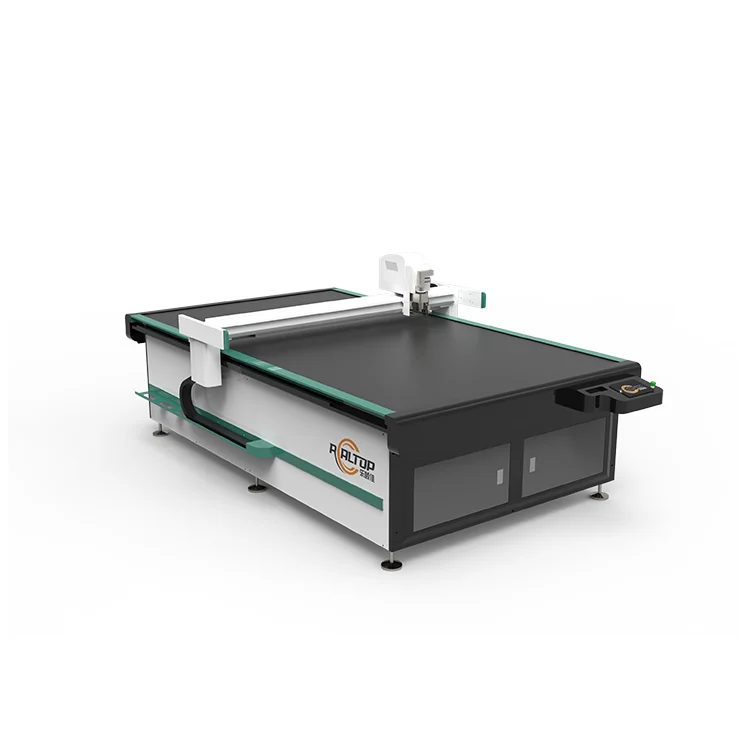
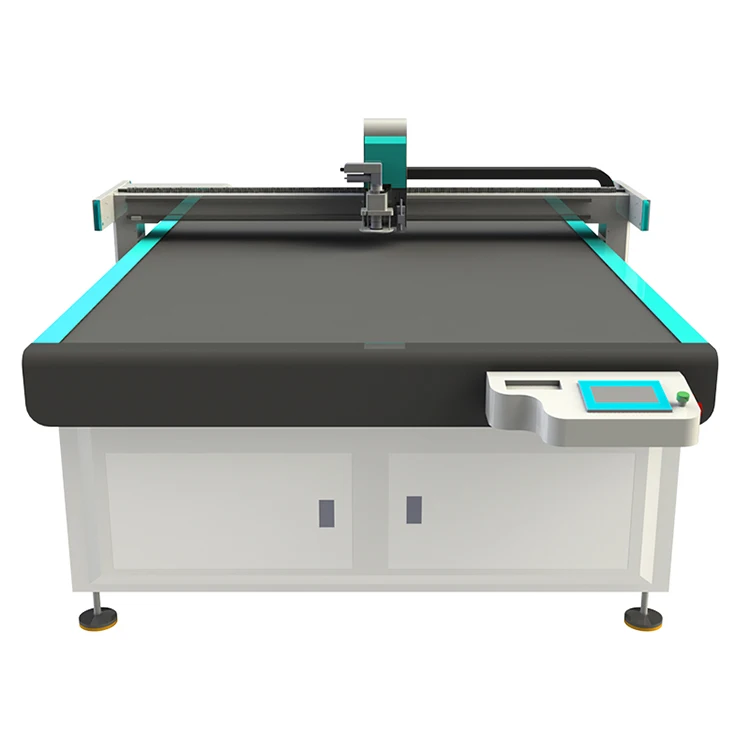
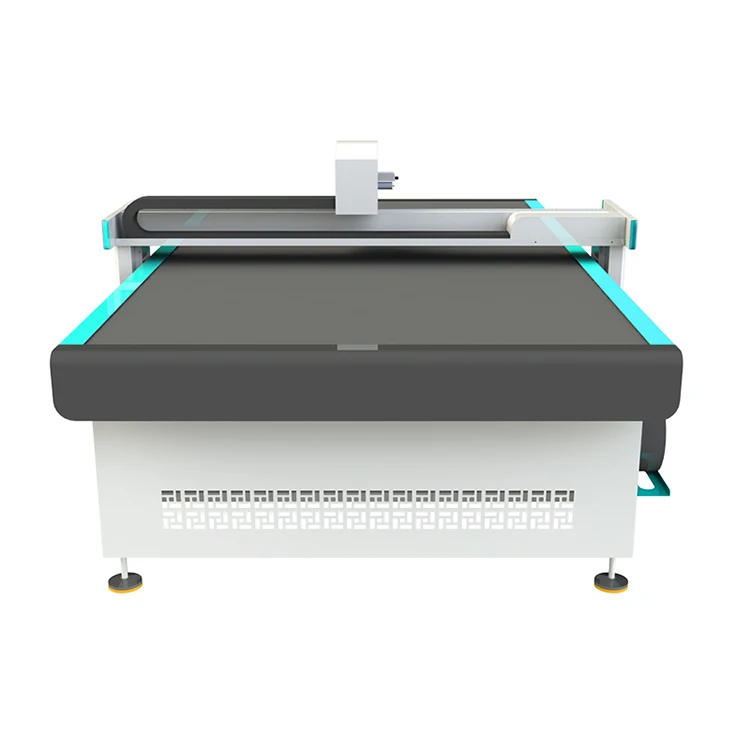
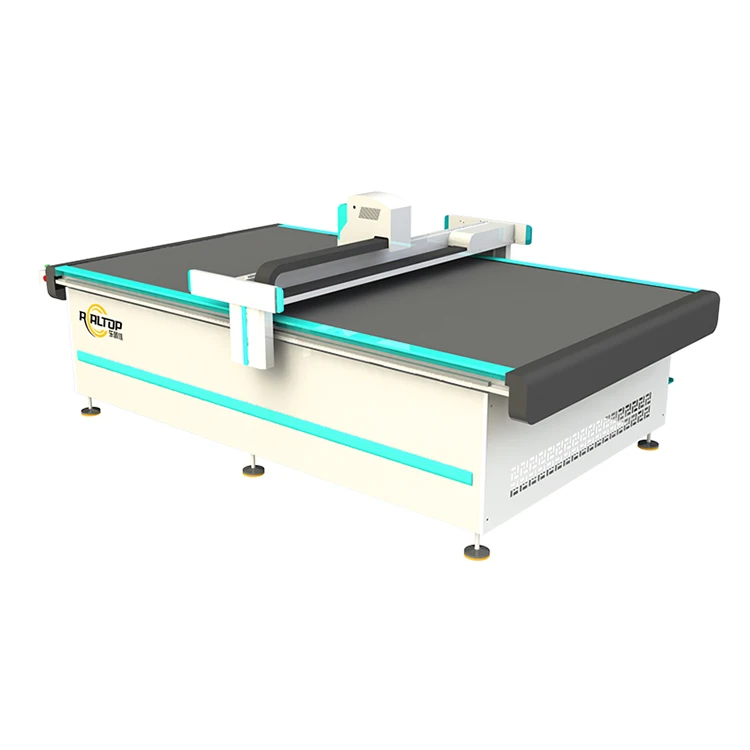
| Product Type | CNC Oscillating Knife Cutting Table for Packaging |
| Working Area Options | 2500×1300 mm / 1600×2500 mm |
| Machine Dimensions | 3550×1910×1400 mm (2500×1300) / 3450×2300×1250 mm (2500×1600) |
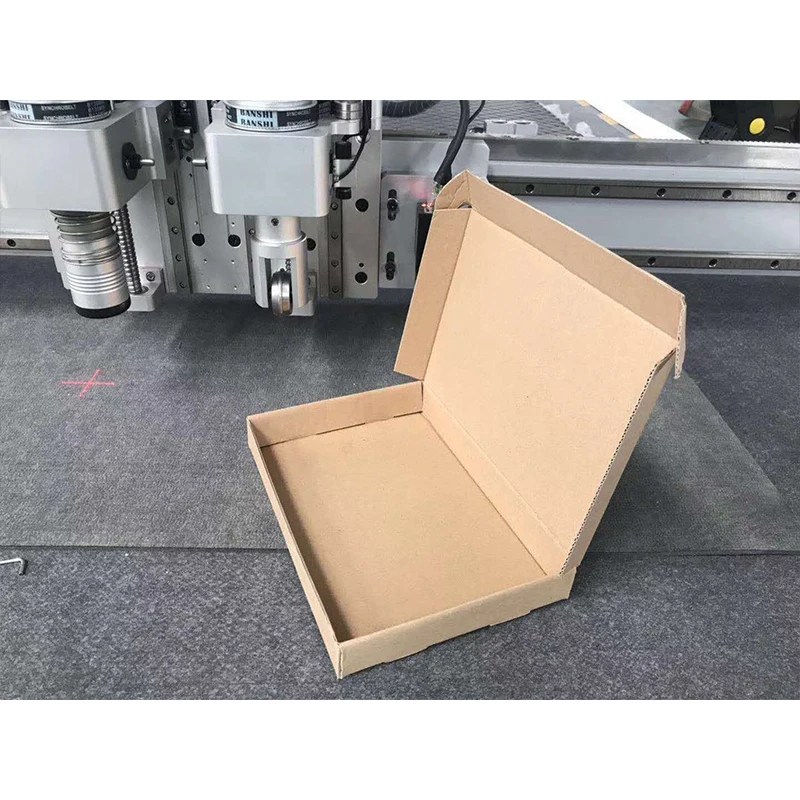
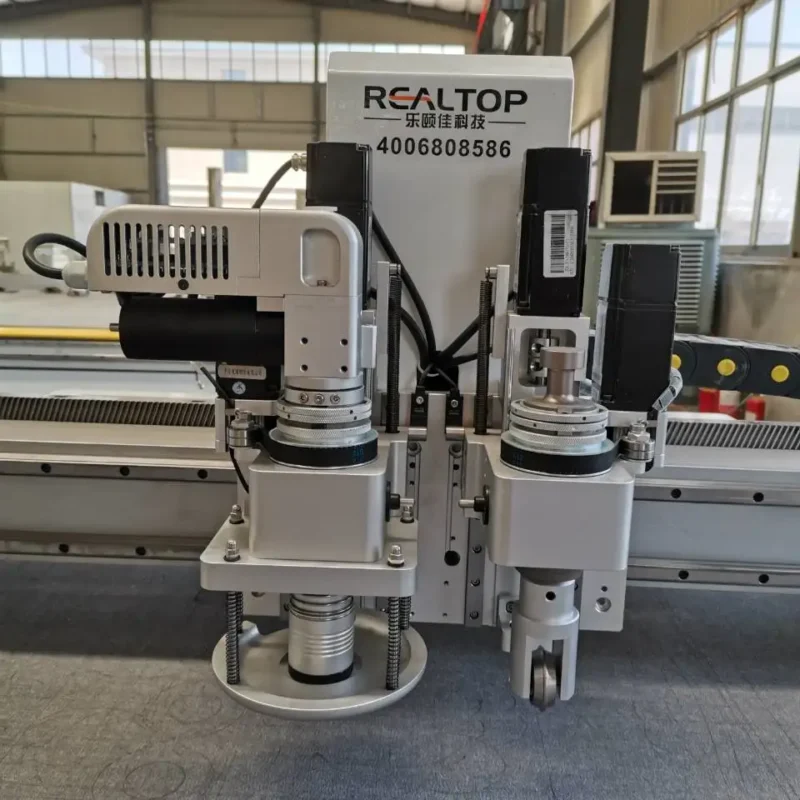
| Cutting Tools | Oscillating knife, Creasing tool, Kiss-Cut Knife Tool, Round punch |
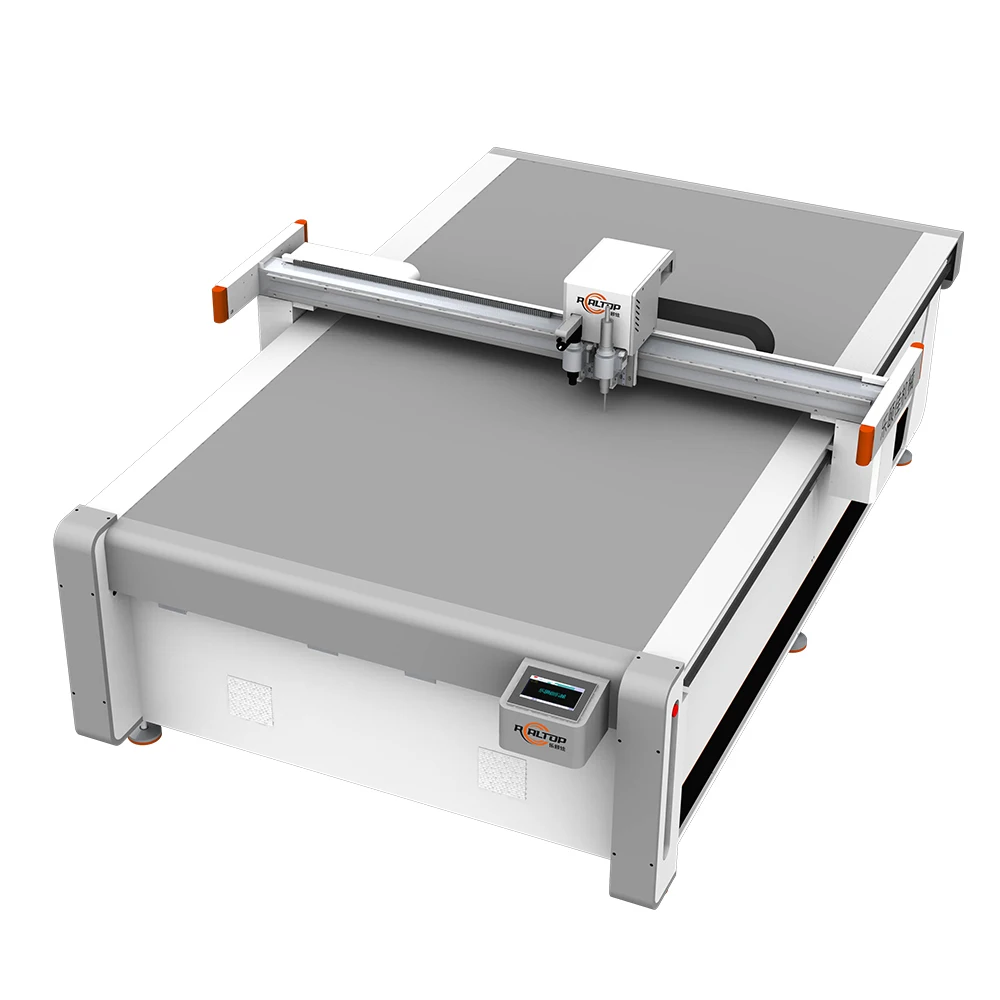
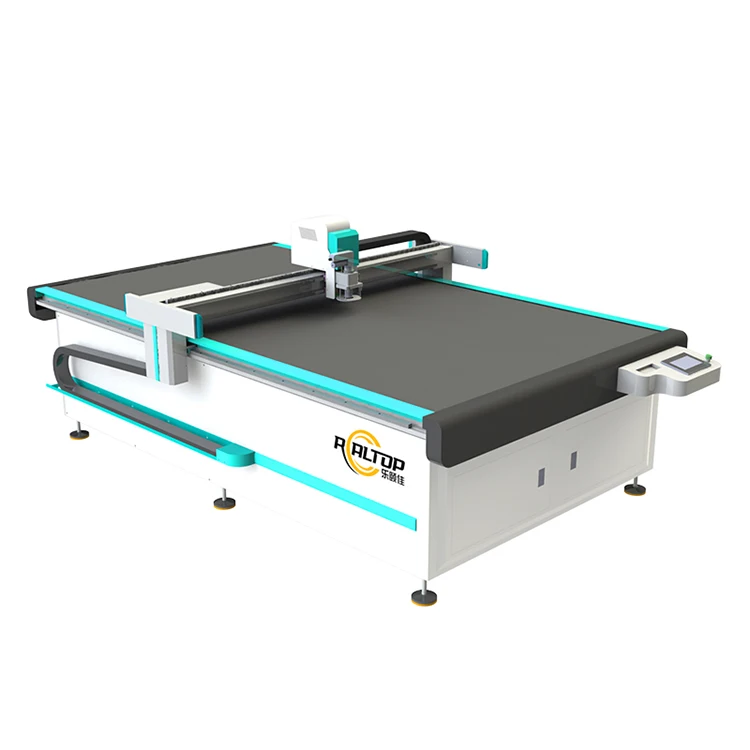
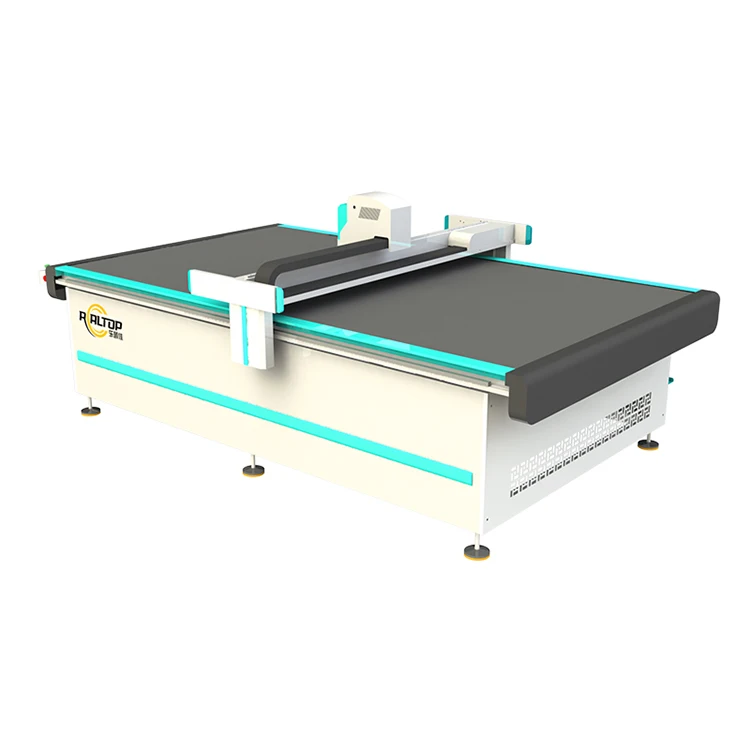
| Fixing Method | Vacuum system with aluminum alloy honeycomb table |
| Vacuum Pump | 7.5 kW |
| Rated Power | 9 kW |
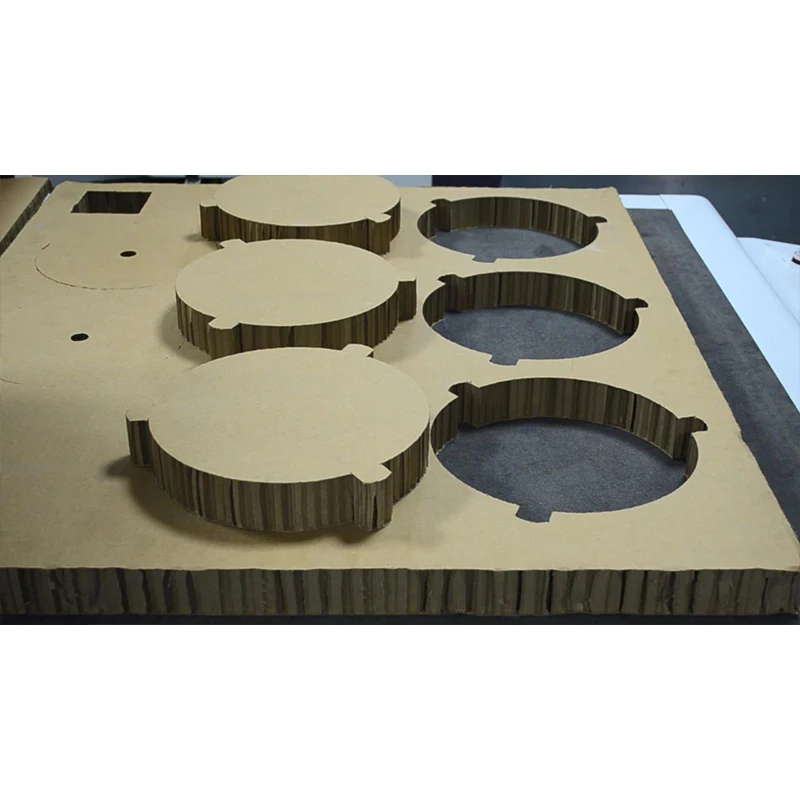
| Cutting Thickness | Up to 18 mm (basis not stated in source — confirm material type and flute profile) |
| Repeated Accuracy | <0.05 mm |
| Voltage | 380 V (configurable) |
| Servo Motor | Dongling or Delta servo |
| File Formats | DXF, OLT, PDF, AI |
| Transmission | Ethernet port |
| Guide Rail | Taiwan Hiwin rail |
| Safety Device | Infrared sensors |
| Blade Included | 10 pieces of oscillating blades |
| Language Options | English, Russian, Italian, Chinese; special languages customizable |
| Delivery Time | Under 30 working days |
| Warranty | 1 year (excluding consumables such as felt and knife blades) |
Application Suitability
| Application | Material or Output |
|---|---|
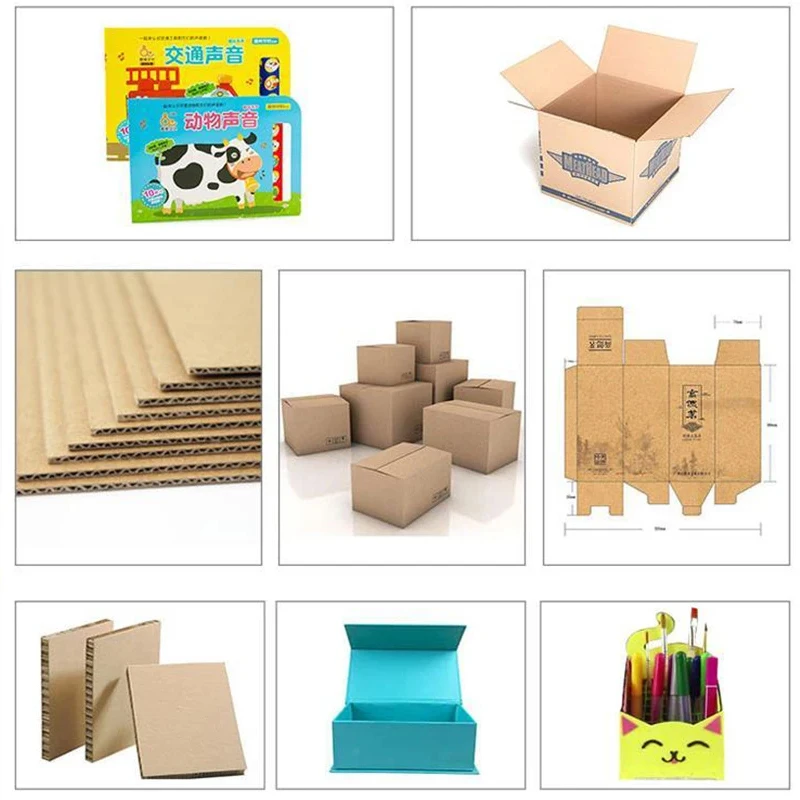
| Corrugated carton and packaging sample making | Single-face, double-wall and honeycomb corrugated board up to 18 mm |
| Carton prototyping and short-run production | Gray board, folding carton stock, kraft liner |
| Sticker and label contour cutting | Self-adhesive vinyl, printed PP paper, label stock |
| Signage and display board fabrication | Foam board, corrugated plastic, honeycomb paper panels |
| Gasket and non-metal flat cutting | Leather, rubber sheet, composite gasket material |
Why Board Thickness Matters More Than Working Area When Choosing a CNC Corrugated Carton Cutting Machine Manufacturer
The working area is the easiest spec to compare, but it is the flute profile and ply count that determine whether a machine can actually finish the job.
I once walked into a Middle East packaging plant where a brand-new oscillating knife table sat idle. The buyer had specified a large-format working area, and the supplier had shipped accordingly. What nobody confirmed was that the plant primarily ran five-layer honeycomb board rather than standard three-layer corrugated sheets. The knife head configuration could not penetrate cleanly through the thicker stock, leaving crushed flutes and ragged edges on every cut [NEED_CITE: corrugated flute profiles and cutting tool selection]. The production manager had no choice but to halt the line. That is the kind of mismatch that never shows up on a spec sheet until you are standing on the shop floor looking at ruined blanks.
Matching Tool Heads to Flute Types
A CNC corrugated carton cutting machine manufacturer must configure the tool head around the actual board being processed, not a generic assumption about packaging material. The oscillating knife handles through-cuts on single and double-wall corrugated, while the creasing wheel scores fold lines without cracking the liner. Kiss-cut tools slice through the face stock of adhesive labels without damaging the backing paper, and round punches handle ventilation holes or hanging slots. Getting this combination right before the machine ships is what separates a working production cell from an expensive lesson.
Vacuum Zoning and Small Part Hold-Down
The aluminum alloy honeycomb vacuum table on this platform is divided into adsorption zones. When cutting small carton components or intricate display inserts, the operator activates only the zones beneath the active cut area. This keeps suction concentrated where it is needed, preventing lightweight corrugated pieces from lifting under knife pressure [NEED_CITE: vacuum table zoning principles for digital flatbed cutters]. A full-bed vacuum with no zoning tends to lose grip on parts smaller than a palm, and once a piece shifts mid-cut, the entire sheet is scrap.
Reading the Specs That Actually Affect Production
The 7.5 kW vacuum pump paired with the honeycomb table provides the suction force needed to hold corrugated board flat across the full cutting area. The Taiwan Hiwin guide rails maintain repeated accuracy below 0.05 mm, which matters when kiss-cutting printed labels where even a slight drift puts the cut line outside the printed contour. Dongling or Delta servo motors drive the gantry, giving the control system the responsiveness required for tight corner geometry on carton crease patterns. The 380 V supply (configurable for destination markets) and 9 kW rated power draw mean the electrical room needs a dedicated circuit, not just a standard outlet. File compatibility across DXF, PDF, AI, and OLT allows packaging designers to send artwork directly without re-drawing in an unfamiliar CAD environment.
What Happens When Configuration Is Skipped
When a buyer sources a cutting table based on price and working area alone, the consequences arrive during the first production run. The wrong knife angle tears through the flute structure instead of slicing it. An undersized vacuum pump lets thin PP paper lift at the trailing edge, turning clean contour cuts into jagged rejects. Creasing wheels set to a generic depth crack the top liner on double-wall board, and the carton fails the drop test at the customer’s warehouse [NEED_CITE: packaging carton structural integrity and crease depth]. These problems are not defects in the machine; they are gaps in the specification conversation that should have happened before the order was confirmed.
Why Production Teams Source This Equipment Here
The design team in Jinan covers both knife and laser cutting technology, so the cutting method is matched to the material rather than forcing every job through one process. Each tool head and table configuration is specified against the buyer’s actual corrugated flute type, ply count, and daily volume. CCD camera positioning is available for printed sticker and label contour work, with mark quality verified during sample cutting. Software and file format compatibility are confirmed before the order, not discovered during installation. Voltage, control language, and plug type are customized to the destination market before shipment. Sample cutting on the buyer’s own material at production speed is standard procedure before any commitment.
Documentation & Verification
- Machine specification sheet confirming working area, tool head list and vacuum zone layout
- Sample cutting report run on buyer’s corrugated board at target production speed
- Electrical schematic with confirmed voltage, frequency and plug type for destination market
- Software licence and file format compatibility note issued before order confirmation
- Factory test record documenting repeated accuracy and cut quality on specified material
- CE declaration documentation where applicable to destination market requirements
Installation, Commissioning & Support
- Dedicated 380 V circuit required for 9 kW machine load plus 7.5 kW vacuum pump
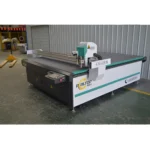
- Machine footprint up to 3550×1910 mm demands level concrete floor with clear access on three sides
- Assembly of honeycomb vacuum table and gantry frame completed on-site after delivery
- First-run parameter setting includes vacuum zone calibration, knife depth and crease pressure tuning
- Operator training covers tool head changeover, nesting software and file import workflow
- Ten oscillating blades included as starter consumables; felt and replacement blades available as spares
Preparing Your Inquiry
To move from a general inquiry to a firm configuration, share the specific corrugated flute types and ply counts you run most often, along with the maximum board thickness and typical sheet dimensions. Include your local voltage and frequency standard, preferred control language, and the design software your packaging team currently uses. If you have printed label or sticker work requiring contour cutting, send a sample of the print with registration marks so CCD tracking can be evaluated before the machine is built.
Frequently Asked Questions
Q: How do I select the right working area and tool head combination for my corrugated board?
A: Start with the largest sheet size you run and the flute profiles in your daily production. The tool head combination — oscillating knife for through-cuts, creasing wheel for fold lines, kiss-cut for labels — is then matched to those specific materials. Sample cutting on your actual board confirms the setup before the machine ships.
Q: Should I choose knife cutting or laser cutting for corrugated carton work?
A: Oscillating knife cutting handles corrugated board without burning or discoloring the edges, which is important for visible packaging surfaces. Laser cutting suits thin non-metal materials where sealed edges are needed. The choice depends on your material mix, and both methods are available from the same production facility.
Q: What does CCD camera contour recognition require from my printed material?
A: The printed marks must have sufficient contrast and consistent placement for the camera to track at production speed. Send a sample of your printed sheet with registration marks so the system can be tested against your actual print quality before the CCD option is confirmed on your machine.
Q: Can voltage, plug type and control language be customized before shipment?
A: Voltage and frequency are configured to match your local electrical standard, and the plug type is fitted accordingly. The control interface language is selectable from English, Russian, Italian and Chinese, with additional languages available on request. All of these details are locked in before production begins.
Tool head and table configuration specified per material — every corrugated flute type and board thickness is verified on the buyer’s actual sample before a cutting table leaves the factory.
Technical Specifications
| Parameter | Value |
|---|---|
| Product Type | CNC Oscillating Knife Cutting Table for Packaging |
| Working Area Options | 2500×1300 mm / 1600×2500 mm |
| Machine Dimensions | 3550×1910×1400 mm (2500×1300) / 3450×2300×1250 mm (2500×1600) |
| Cutting Tools | Oscillating knife, Creasing tool, Kiss-Cut Knife Tool, Round punch |
| Fixing Method | Vacuum system with aluminum alloy honeycomb table |
| Vacuum Pump | 7.5 kW |
| Rated Power | 9 kW |
| Cutting Thickness | Up to 18 mm (basis not stated in source — confirm material type and flute profile) |
| Repeated Accuracy | <0.05 mm |
| Voltage | 380 V (configurable) |
| Servo Motor | Dongling or Delta servo |
| File Formats | DXF, OLT, PDF, AI |
| Transmission | Ethernet port |
| Guide Rail | Taiwan Hiwin rail |
| Safety Device | Infrared sensors |
| Blade Included | 10 pieces of oscillating blades |
| Language Options | English, Russian, Italian, Chinese; special languages customizable |
| Delivery Time | Under 30 working days |
| Warranty | 1 year (excluding consumables such as felt and knife blades) |
Application Suitability
| Application | Material or Output |
|---|---|
| Corrugated carton and packaging sample making | Single-face, double-wall and honeycomb corrugated board up to 18 mm |
| Carton prototyping and short-run production | Gray board, folding carton stock, kraft liner |
| Sticker and label contour cutting | Self-adhesive vinyl, printed PP paper, label stock |
| Signage and display board fabrication | Foam board, corrugated plastic, honeycomb paper panels |
| Gasket and non-metal flat cutting | Leather, rubber sheet, composite gasket material |
Why Board Thickness Matters More Than Working Area When Choosing a CNC Corrugated Carton Cutting Machine Manufacturer
The working area is the easiest spec to compare, but it is the flute profile and ply count that determine whether a machine can actually finish the job.
I once walked into a Middle East packaging plant where a brand-new oscillating knife table sat idle. The buyer had specified a large-format working area, and the supplier had shipped accordingly. What nobody confirmed was that the plant primarily ran five-layer honeycomb board rather than standard three-layer corrugated sheets. The knife head configuration could not penetrate cleanly through the thicker stock, leaving crushed flutes and ragged edges on every cut [NEED_CITE: corrugated flute profiles and cutting tool selection]. The production manager had no choice but to halt the line. That is the kind of mismatch that never shows up on a spec sheet until you are standing on the shop floor looking at ruined blanks.
Matching Tool Heads to Flute Types
A CNC corrugated carton cutting machine manufacturer must configure the tool head around the actual board being processed, not a generic assumption about packaging material. The oscillating knife handles through-cuts on single and double-wall corrugated, while the creasing wheel scores fold lines without cracking the liner. Kiss-cut tools slice through the face stock of adhesive labels without damaging the backing paper, and round punches handle ventilation holes or hanging slots. Getting this combination right before the machine ships is what separates a working production cell from an expensive lesson.
Vacuum Zoning and Small Part Hold-Down
The aluminum alloy honeycomb vacuum table on this platform is divided into adsorption zones. When cutting small carton components or intricate display inserts, the operator activates only the zones beneath the active cut area. This keeps suction concentrated where it is needed, preventing lightweight corrugated pieces from lifting under knife pressure [NEED_CITE: vacuum table zoning principles for digital flatbed cutters]. A full-bed vacuum with no zoning tends to lose grip on parts smaller than a palm, and once a piece shifts mid-cut, the entire sheet is scrap.
Reading the Specs That Actually Affect Production
The 7.5 kW vacuum pump paired with the honeycomb table provides the suction force needed to hold corrugated board flat across the full cutting area. The Taiwan Hiwin guide rails maintain repeated accuracy below 0.05 mm, which matters when kiss-cutting printed labels where even a slight drift puts the cut line outside the printed contour. Dongling or Delta servo motors drive the gantry, giving the control system the responsiveness required for tight corner geometry on carton crease patterns. The 380 V supply (configurable for destination markets) and 9 kW rated power draw mean the electrical room needs a dedicated circuit, not just a standard outlet. File compatibility across DXF, PDF, AI, and OLT allows packaging designers to send artwork directly without re-drawing in an unfamiliar CAD environment.
What Happens When Configuration Is Skipped
When a buyer sources a cutting table based on price and working area alone, the consequences arrive during the first production run. The wrong knife angle tears through the flute structure instead of slicing it. An undersized vacuum pump lets thin PP paper lift at the trailing edge, turning clean contour cuts into jagged rejects. Creasing wheels set to a generic depth crack the top liner on double-wall board, and the carton fails the drop test at the customer’s warehouse [NEED_CITE: packaging carton structural integrity and crease depth]. These problems are not defects in the machine; they are gaps in the specification conversation that should have happened before the order was confirmed.
Why Production Teams Source This Equipment Here
The design team in Jinan covers both knife and laser cutting technology, so the cutting method is matched to the material rather than forcing every job through one process. Each tool head and table configuration is specified against the buyer’s actual corrugated flute type, ply count, and daily volume. CCD camera positioning is available for printed sticker and label contour work, with mark quality verified during sample cutting. Software and file format compatibility are confirmed before the order, not discovered during installation. Voltage, control language, and plug type are customized to the destination market before shipment. Sample cutting on the buyer’s own material at production speed is standard procedure before any commitment.
Documentation & Verification
- Machine specification sheet confirming working area, tool head list and vacuum zone layout
- Sample cutting report run on buyer’s corrugated board at target production speed
- Electrical schematic with confirmed voltage, frequency and plug type for destination market
- Software licence and file format compatibility note issued before order confirmation
- Factory test record documenting repeated accuracy and cut quality on specified material
- CE declaration documentation where applicable to destination market requirements
Installation, Commissioning & Support
- Dedicated 380 V circuit required for 9 kW machine load plus 7.5 kW vacuum pump
- Machine footprint up to 3550×1910 mm demands level concrete floor with clear access on three sides
- Assembly of honeycomb vacuum table and gantry frame completed on-site after delivery
- First-run parameter setting includes vacuum zone calibration, knife depth and crease pressure tuning
- Operator training covers tool head changeover, nesting software and file import workflow
- Ten oscillating blades included as starter consumables; felt and replacement blades available as spares
Preparing Your Inquiry
To move from a general inquiry to a firm configuration, share the specific corrugated flute types and ply counts you run most often, along with the maximum board thickness and typical sheet dimensions. Include your local voltage and frequency standard, preferred control language, and the design software your packaging team currently uses. If you have printed label or sticker work requiring contour cutting, send a sample of the print with registration marks so CCD tracking can be evaluated before the machine is built.
Frequently Asked Questions
Q: How do I select the right working area and tool head combination for my corrugated board?
A: Start with the largest sheet size you run and the flute profiles in your daily production. The tool head combination — oscillating knife for through-cuts, creasing wheel for fold lines, kiss-cut for labels — is then matched to those specific materials. Sample cutting on your actual board confirms the setup before the machine ships.
Q: Should I choose knife cutting or laser cutting for corrugated carton work?
A: Oscillating knife cutting handles corrugated board without burning or discoloring the edges, which is important for visible packaging surfaces. Laser cutting suits thin non-metal materials where sealed edges are needed. The choice depends on your material mix, and both methods are available from the same production facility.
Q: What does CCD camera contour recognition require from my printed material?
A: The printed marks must have sufficient contrast and consistent placement for the camera to track at production speed. Send a sample of your printed sheet with registration marks so the system can be tested against your actual print quality before the CCD option is confirmed on your machine.
Q: Can voltage, plug type and control language be customized before shipment?
A: Voltage and frequency are configured to match your local electrical standard, and the plug type is fitted accordingly. The control interface language is selectable from English, Russian, Italian and Chinese, with additional languages available on request. All of these details are locked in before production begins.
商品评价
There are no reviews yet.