



Fast Delivery
Quick, reliable shipping to any location.

Free & easy returns
Return this item by mail or in store within 90 days for a full refund.
Material-Matched Cutting — In-house design covering both knife and laser technologies lets you match the method to the textile, not the other way around.
Technical Specifications
| Parameter | Value |
|---|---|
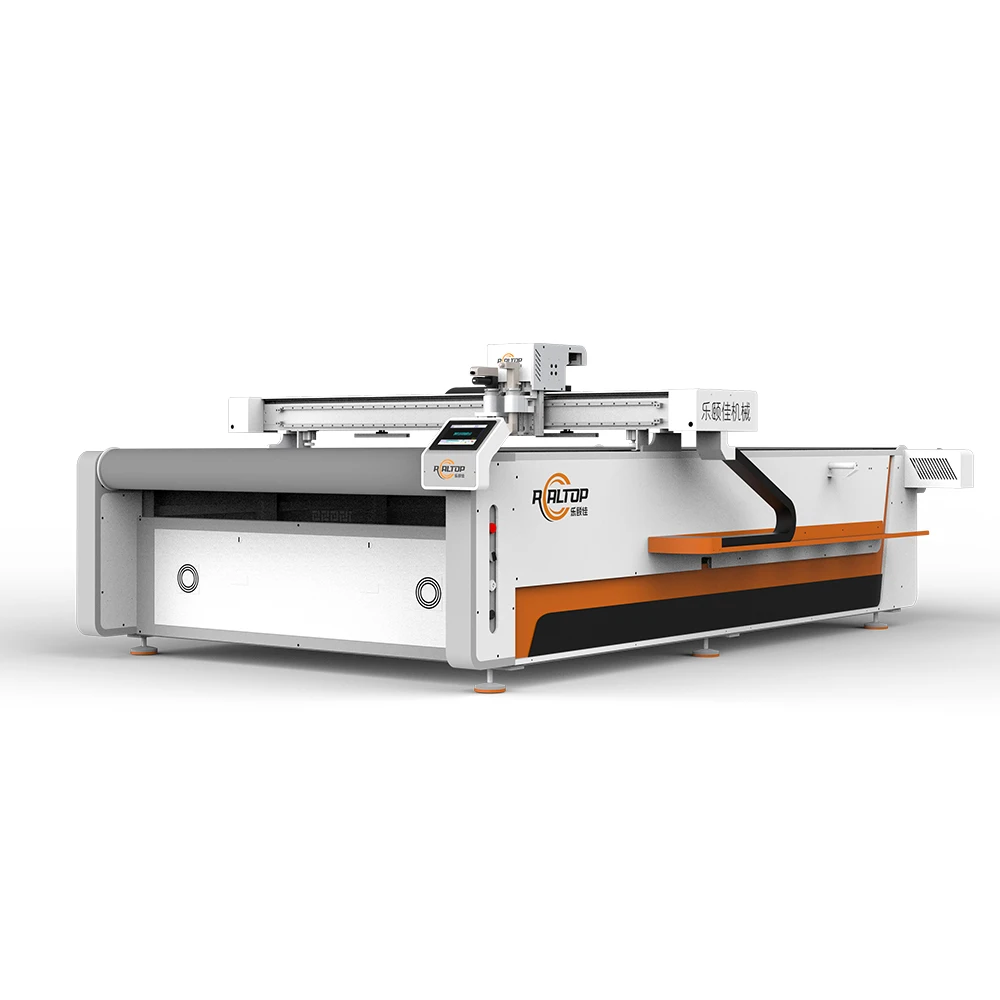
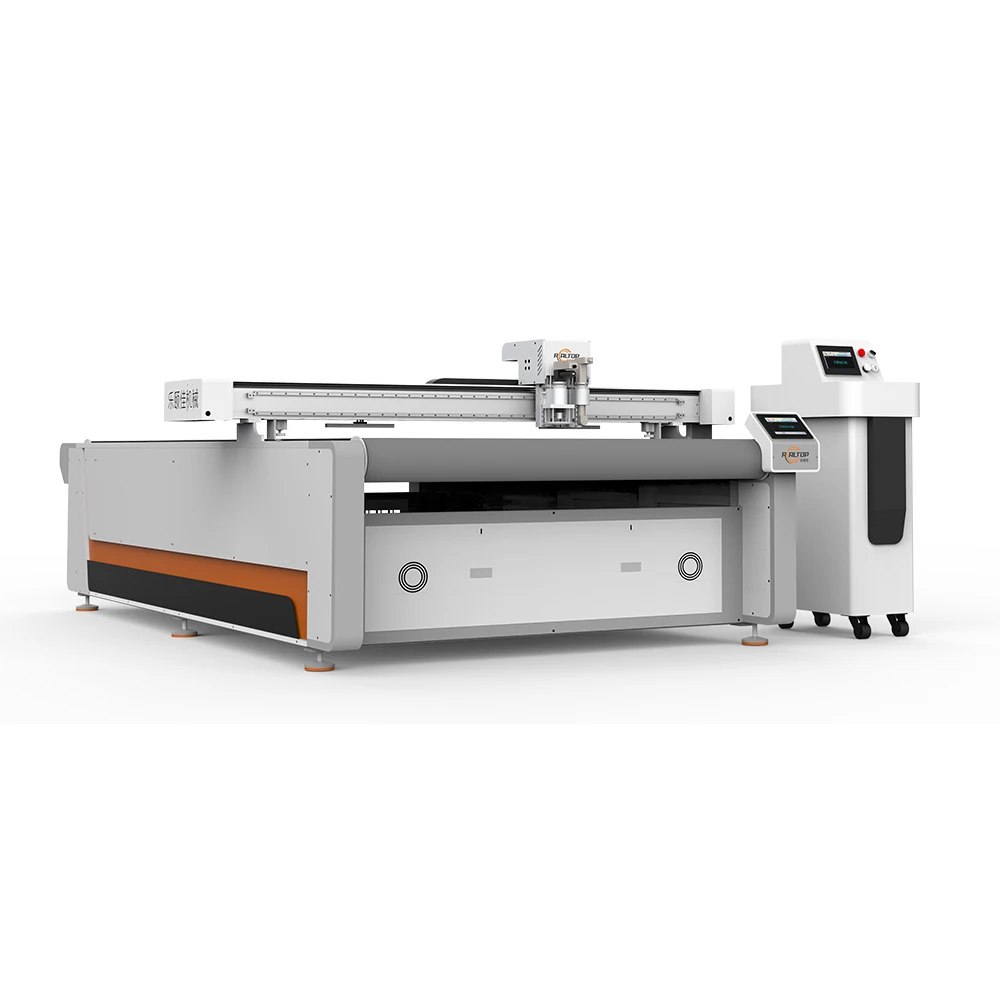
| Product Type | CNC Oscillating Knife Cutting Machine |
| Working Area | 1600×2500 mm |
| Tool Head Options | Oscillating knife, Driven rotary knife, Creasing wheel, Kiss cutting tool, Pneumatic knife, Milling tool, V-groove knife |
| Cutting Speed | 0–2000 mm/s |
| Cutting Thickness | ≤ 30 mm (basis to be confirmed with material type and layer configuration) |
| Cutting Accuracy | ±0.1 mm |
| Repeat Positioning Accuracy | ±0.1 mm |
| Multi-Layer Cutting Capacity | up to 30–50 mm thickness (basis to be confirmed with fabric type, layer count, and compression state) |
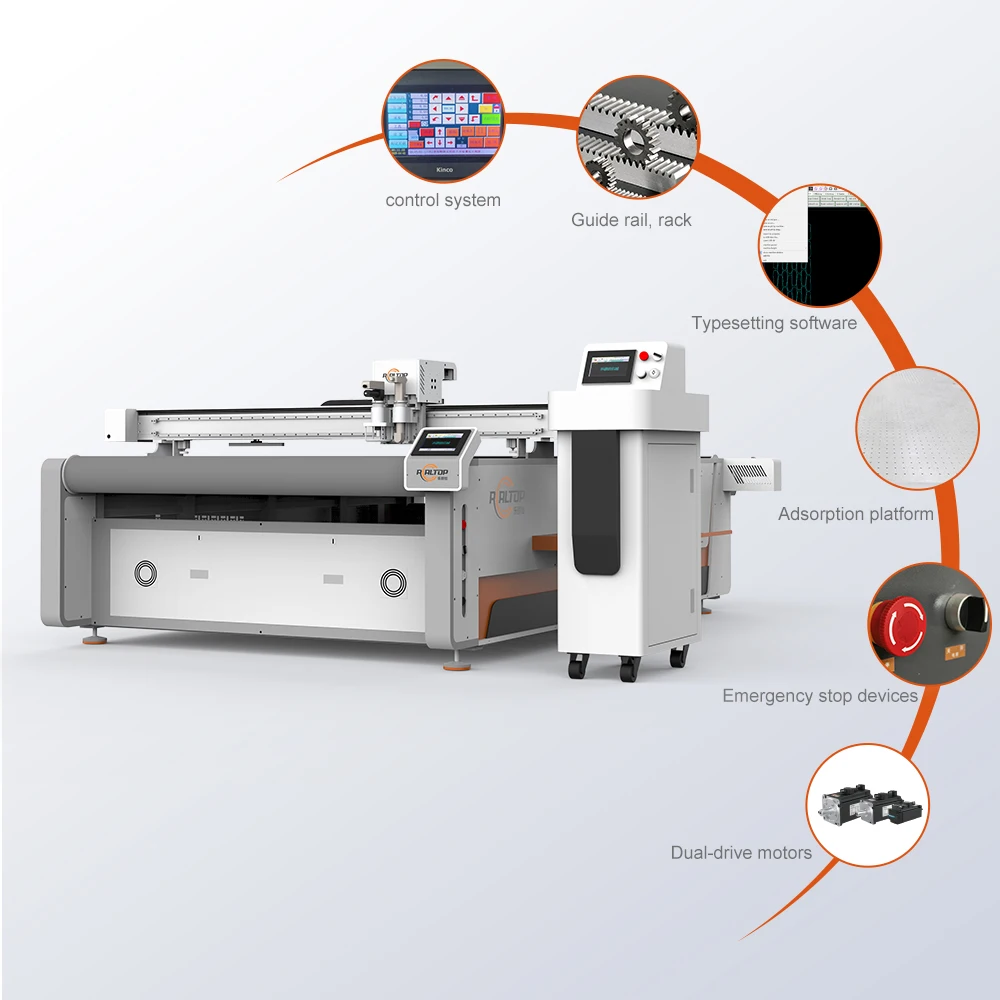
| Vacuum Table | Aluminum bellows vacuum table |
| Vacuum Pump Power | 9 kW |
| Control System | PLC control panel |
| Servo Drive Options | Panasonic, Delta, Dorna |
| Supported File Formats | PLT, DXF, AI, PDF |
| Voltage Options | 110V, 220V, 380V (frequency to be confirmed) |
| Language Options | English, Russian, Italian, Chinese (custom languages available) |
| Safety Device | Infrared sensor and emergency stop |
| Machine Size | 3300×2100×1350 mm |
| Standards | CE |
Application Suitability
| Application | Material or Output |
|---|---|
| Apparel manufacturing | Suits, knitwear, lace, complex woven fabrics, pattern-matching layouts |
| Automotive interiors | Seat fabrics, carpets, PVC mats cut to burr-free edges |
| Home textiles | Sofa fabrics, curtains, rugs in multi-layer stacks |
| Composite processing | Carbon fiber prepreg, aramid weaves, specialty laminates |
Why "Cutting Thickness ≤ 30 mm" Tells You Nothing Without the Material
A thickness number without material context is a guess, not a specification.
I have watched buyers compare two machines on a single thickness figure and pick the cheaper one, only to discover their layered non-woven stack compresses differently than the supplier’s test material. A CNC Oscillating Knife Cutting Machine for sale that claims 30 mm capacity on open-cell foam may struggle at 15 mm on densely packed aramid prepreg. The oscillation frequency, blade geometry, and vacuum hold-down all interact with the actual material you run [NEED_CITE: cutting force variation across textile densities]. Until a sample of your production fabric goes under the knife, every thickness claim is provisional.
Knife Head Selection Across Textile Types
The machine supports seven interchangeable tool heads, and picking the correct one decides edge quality more than any other variable. An oscillating knife handles woven and non-woven layers without fraying, while a driven rotary knife suits continuous cuts on knit and stretch fabrics where drag would distort the weave. Creasing wheels score fold lines on carton backing boards used in packaging inserts. For kiss-cut applications on adhesive-backed textiles, the dedicated kiss cutting tool controls depth to within the ±0.1 mm positioning tolerance, preventing liner damage.
Vacuum Hold-Down for Multi-Layer Stacks
When cutting garment panels from thirty or more fabric plies, the aluminum bellows vacuum table provides full-surface adsorption across the 1600×2500 mm work area. The 9 kW vacuum pump generates sufficient negative pressure to keep bottom layers from shifting during high-speed reciprocating cuts. Without adequate hold-down, the oscillating blade pulls lower plies sideways, producing tapered edges that fail pattern alignment checks further down the sewing line [NEED_CITE: vacuum table zoning and material migration in multi-layer cutting].
What the Specs Mean on the Shop Floor
The ±0.1 mm cutting accuracy and matching repeat positioning accuracy ensure that nested patterns — common in automotive seat covers where grain direction must stay consistent — reproduce identically across a full production run. The 0–2000 mm/s cutting speed range gives operators room to slow down on tight curves around armhole contours while maintaining pace on long straight seams. Servo drive selection between Panasonic, Delta, and Dorna lets buyers match available local service support rather than depend on a single brand’s overseas network. The PLC control panel, configurable in English, Russian, Italian, or Chinese, removes the language barrier that often slows commissioning when the manual and the operator do not share a common tongue.
What Happens When the Wrong Tool Head Meets Your Material
A buyer once specified a machine purely on working area and assumed any knife would handle their coated technical textile. The result was crushed foam backing and delaminated surface layers because a standard drag knife compressed rather than sliced. On a different project, insufficient vacuum zoning let small gasket pieces lift mid-cut, producing scrap that could not be re-nested [NEED_CITE: tool head mismatch consequences in technical textile cutting]. These are not edge cases — they happen whenever configuration is chosen from a catalog without a physical sample test on the actual production material.
Why Source This CNC Oscillating Knife Cutting Machine for Sale Here
The design team covers both knife and laser cutting technologies under one roof, so the recommendation starts from your material properties rather than from whichever machine happens to be in stock. Tool head and table configuration are specified per your fabric type, layer count, and daily volume, not offered as a fixed package. CCD camera positioning is available for printed contour work on textiles where registration marks guide the cut path. Software compatibility with PLT, DXF, AI, and PDF files is confirmed against your existing nesting workflow before the order is placed. Voltage, plug type, and control language are locked in before production begins, eliminating the shipment-day surprises that delay installation [NEED_CITE: pre-shipment specification verification protocols]. Sample cutting on your own material happens before commitment, giving you a physical reference for edge quality and dimensional accuracy.
Documentation & Verification
- Machine specification sheet with tool head and vacuum table configuration matched to your textile type
- Factory test record cutting your supplied fabric samples at target layer count and speed
- Electrical schematic confirming voltage, frequency, and plug type for your facility
- Software licence with file format compatibility note for PLT, DXF, AI, and PDF workflows
- Operation and maintenance manual in your chosen control language
- Spare parts list identifying blade types and wear items specific to your configured tool heads
Installation, Commissioning & Support
- The 3300×2100×1350 mm footprint requires a level concrete floor with clearance for material loading on at least two sides
- The 9 kW vacuum pump and PLC system need a dedicated circuit matching your confirmed voltage and frequency
- Machine arrives partially assembled; frame sections and gantry require on-site bolting and alignment
- First-run calibration includes vacuum zone mapping and tool head offset verification on your production material
- Operator training covers nesting software import, tool head changeover, and blade replacement procedures
- Spare oscillating and rotary blades shipped with the machine cover initial production weeks
What to Include in Your Inquiry
To match the correct cutting method and configuration, share your primary fabric types, the number of layers you cut per stack, and your typical sheet dimensions. Specify your local voltage and frequency, the control language your operators need, and the CAD file formats currently in use. If your production schedule allows, send a roll of your actual material for sample cutting before the machine is configured.
Frequently Asked Questions
Q: Should I choose oscillating knife or laser cutting for my textile?
A: Oscillating knife suits multi-layer stacks of woven, non-woven, and knit fabrics where edge sealing is not required and ply count matters. Laser is preferred when synthetic edges must be sealed to prevent fraying, or when single-layer contour cutting of lace and appliqué is the primary task. The choice depends on your specific material blend and production volume.
Q: How is cutting thickness capacity determined for my fabric?
A: Thickness capacity depends on fabric density, compressibility, and layer count — not just a millimeter figure. A 30 mm stack of loose non-woven insulation behaves differently from 30 mm of compressed aramid weave. We cut your actual material sample to establish the practical limit before specifying the machine.
Q: What vacuum table setup do I need for small versus large pattern pieces?
A: Small pieces require concentrated vacuum zones to prevent lift during cutting, while large panels benefit from full-surface adsorption. The aluminum bellows vacuum table on this machine covers the entire 1600×2500 mm area, and zone configuration is adjusted based on your typical pattern layout and piece size distribution.
Q: How do I confirm software compatibility with my existing nesting workflow?
A: The system supports PLT, DXF, AI, and PDF file imports. Before ordering, share a sample nesting file from your current CAD software so we can verify import accuracy, layer recognition, and toolpath assignment against your production requirements.
Q: Which tool head works best for leather versus knit fabric?
A: An oscillating knife handles most leather weights with clean edge quality and no burning. For stretch knit fabrics, a driven rotary knife reduces drag distortion and prevents the material from pulling ahead of the blade. Both heads are available on this machine and can be swapped depending on the job.
Material-Matched Cutting — In-house design covering both knife and laser technologies lets you match the method to the textile, not the other way around.
Technical Specifications
| Parameter | Value |
|---|---|
| Product Type | CNC Oscillating Knife Cutting Machine |
| Working Area | 1600×2500 mm |
| Tool Head Options | Oscillating knife, Driven rotary knife, Creasing wheel, Kiss cutting tool, Pneumatic knife, Milling tool, V-groove knife |
| Cutting Speed | 0–2000 mm/s |
| Cutting Thickness | ≤ 30 mm (basis to be confirmed with material type and layer configuration) |
| Cutting Accuracy | ±0.1 mm |
| Repeat Positioning Accuracy | ±0.1 mm |
| Multi-Layer Cutting Capacity | up to 30–50 mm thickness (basis to be confirmed with fabric type, layer count, and compression state) |
| Vacuum Table | Aluminum bellows vacuum table |
| Vacuum Pump Power | 9 kW |
| Control System | PLC control panel |
| Servo Drive Options | Panasonic, Delta, Dorna |
| Supported File Formats | PLT, DXF, AI, PDF |
| Voltage Options | 110V, 220V, 380V (frequency to be confirmed) |
| Language Options | English, Russian, Italian, Chinese (custom languages available) |
| Safety Device | Infrared sensor and emergency stop |
| Machine Size | 3300×2100×1350 mm |
| Standards | CE |
Application Suitability
| Application | Material or Output |
|---|---|
| Apparel manufacturing | Suits, knitwear, lace, complex woven fabrics, pattern-matching layouts |
| Automotive interiors | Seat fabrics, carpets, PVC mats cut to burr-free edges |
| Home textiles | Sofa fabrics, curtains, rugs in multi-layer stacks |
| Composite processing | Carbon fiber prepreg, aramid weaves, specialty laminates |
Why "Cutting Thickness ≤ 30 mm" Tells You Nothing Without the Material
A thickness number without material context is a guess, not a specification.
I have watched buyers compare two machines on a single thickness figure and pick the cheaper one, only to discover their layered non-woven stack compresses differently than the supplier’s test material. A CNC Oscillating Knife Cutting Machine for sale that claims 30 mm capacity on open-cell foam may struggle at 15 mm on densely packed aramid prepreg. The oscillation frequency, blade geometry, and vacuum hold-down all interact with the actual material you run [NEED_CITE: cutting force variation across textile densities]. Until a sample of your production fabric goes under the knife, every thickness claim is provisional.
Knife Head Selection Across Textile Types
The machine supports seven interchangeable tool heads, and picking the correct one decides edge quality more than any other variable. An oscillating knife handles woven and non-woven layers without fraying, while a driven rotary knife suits continuous cuts on knit and stretch fabrics where drag would distort the weave. Creasing wheels score fold lines on carton backing boards used in packaging inserts. For kiss-cut applications on adhesive-backed textiles, the dedicated kiss cutting tool controls depth to within the ±0.1 mm positioning tolerance, preventing liner damage.
Vacuum Hold-Down for Multi-Layer Stacks
When cutting garment panels from thirty or more fabric plies, the aluminum bellows vacuum table provides full-surface adsorption across the 1600×2500 mm work area. The 9 kW vacuum pump generates sufficient negative pressure to keep bottom layers from shifting during high-speed reciprocating cuts. Without adequate hold-down, the oscillating blade pulls lower plies sideways, producing tapered edges that fail pattern alignment checks further down the sewing line [NEED_CITE: vacuum table zoning and material migration in multi-layer cutting].
What the Specs Mean on the Shop Floor
The ±0.1 mm cutting accuracy and matching repeat positioning accuracy ensure that nested patterns — common in automotive seat covers where grain direction must stay consistent — reproduce identically across a full production run. The 0–2000 mm/s cutting speed range gives operators room to slow down on tight curves around armhole contours while maintaining pace on long straight seams. Servo drive selection between Panasonic, Delta, and Dorna lets buyers match available local service support rather than depend on a single brand’s overseas network. The PLC control panel, configurable in English, Russian, Italian, or Chinese, removes the language barrier that often slows commissioning when the manual and the operator do not share a common tongue.
What Happens When the Wrong Tool Head Meets Your Material
A buyer once specified a machine purely on working area and assumed any knife would handle their coated technical textile. The result was crushed foam backing and delaminated surface layers because a standard drag knife compressed rather than sliced. On a different project, insufficient vacuum zoning let small gasket pieces lift mid-cut, producing scrap that could not be re-nested [NEED_CITE: tool head mismatch consequences in technical textile cutting]. These are not edge cases — they happen whenever configuration is chosen from a catalog without a physical sample test on the actual production material.
Why Source This CNC Oscillating Knife Cutting Machine for Sale Here
The design team covers both knife and laser cutting technologies under one roof, so the recommendation starts from your material properties rather than from whichever machine happens to be in stock. Tool head and table configuration are specified per your fabric type, layer count, and daily volume, not offered as a fixed package. CCD camera positioning is available for printed contour work on textiles where registration marks guide the cut path. Software compatibility with PLT, DXF, AI, and PDF files is confirmed against your existing nesting workflow before the order is placed. Voltage, plug type, and control language are locked in before production begins, eliminating the shipment-day surprises that delay installation [NEED_CITE: pre-shipment specification verification protocols]. Sample cutting on your own material happens before commitment, giving you a physical reference for edge quality and dimensional accuracy.
Documentation & Verification
- Machine specification sheet with tool head and vacuum table configuration matched to your textile type
- Factory test record cutting your supplied fabric samples at target layer count and speed
- Electrical schematic confirming voltage, frequency, and plug type for your facility
- Software licence with file format compatibility note for PLT, DXF, AI, and PDF workflows
- Operation and maintenance manual in your chosen control language
- Spare parts list identifying blade types and wear items specific to your configured tool heads
Installation, Commissioning & Support
- The 3300×2100×1350 mm footprint requires a level concrete floor with clearance for material loading on at least two sides
- The 9 kW vacuum pump and PLC system need a dedicated circuit matching your confirmed voltage and frequency
- Machine arrives partially assembled; frame sections and gantry require on-site bolting and alignment
- First-run calibration includes vacuum zone mapping and tool head offset verification on your production material
- Operator training covers nesting software import, tool head changeover, and blade replacement procedures
- Spare oscillating and rotary blades shipped with the machine cover initial production weeks
What to Include in Your Inquiry
To match the correct cutting method and configuration, share your primary fabric types, the number of layers you cut per stack, and your typical sheet dimensions. Specify your local voltage and frequency, the control language your operators need, and the CAD file formats currently in use. If your production schedule allows, send a roll of your actual material for sample cutting before the machine is configured.
Frequently Asked Questions
Q: Should I choose oscillating knife or laser cutting for my textile?
A: Oscillating knife suits multi-layer stacks of woven, non-woven, and knit fabrics where edge sealing is not required and ply count matters. Laser is preferred when synthetic edges must be sealed to prevent fraying, or when single-layer contour cutting of lace and appliqué is the primary task. The choice depends on your specific material blend and production volume.
Q: How is cutting thickness capacity determined for my fabric?
A: Thickness capacity depends on fabric density, compressibility, and layer count — not just a millimeter figure. A 30 mm stack of loose non-woven insulation behaves differently from 30 mm of compressed aramid weave. We cut your actual material sample to establish the practical limit before specifying the machine.
Q: What vacuum table setup do I need for small versus large pattern pieces?
A: Small pieces require concentrated vacuum zones to prevent lift during cutting, while large panels benefit from full-surface adsorption. The aluminum bellows vacuum table on this machine covers the entire 1600×2500 mm area, and zone configuration is adjusted based on your typical pattern layout and piece size distribution.
Q: How do I confirm software compatibility with my existing nesting workflow?
A: The system supports PLT, DXF, AI, and PDF file imports. Before ordering, share a sample nesting file from your current CAD software so we can verify import accuracy, layer recognition, and toolpath assignment against your production requirements.
Q: Which tool head works best for leather versus knit fabric?
A: An oscillating knife handles most leather weights with clean edge quality and no burning. For stretch knit fabrics, a driven rotary knife reduces drag distortion and prevents the material from pulling ahead of the blade. Both heads are available on this machine and can be swapped depending on the job.










商品评价
There are no reviews yet.