

Fast Delivery
Quick, reliable shipping to any location.

Free & easy returns
Return this item by mail or in store within 90 days for a full refund.
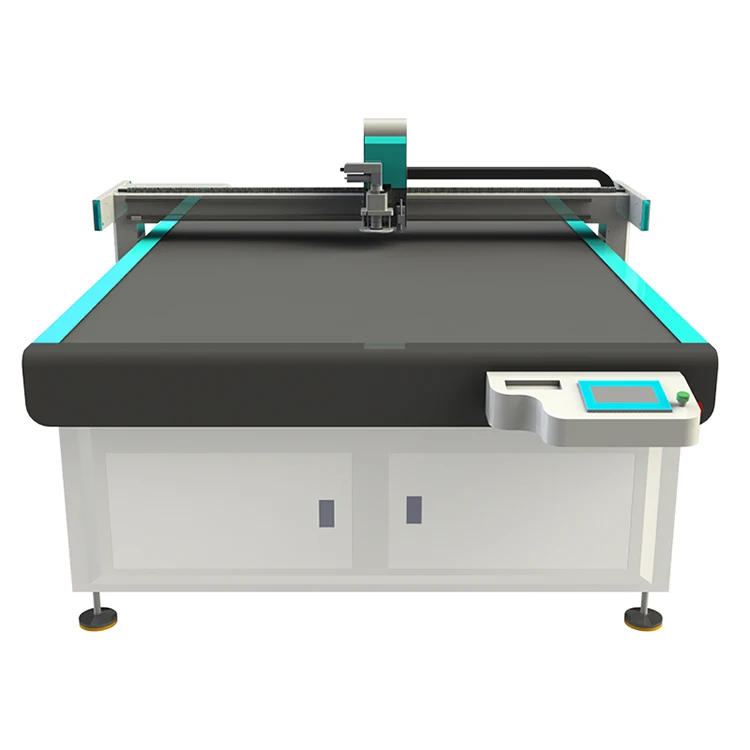
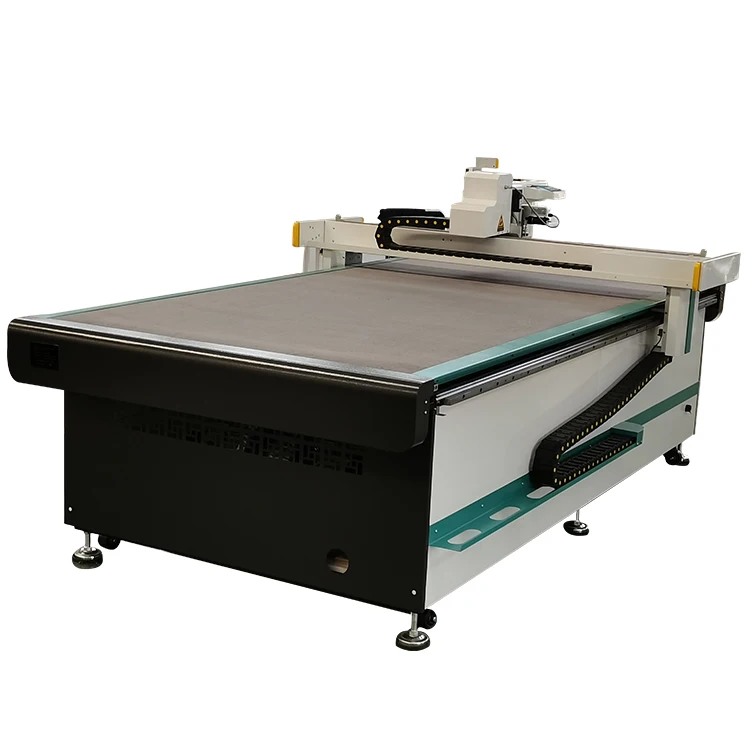
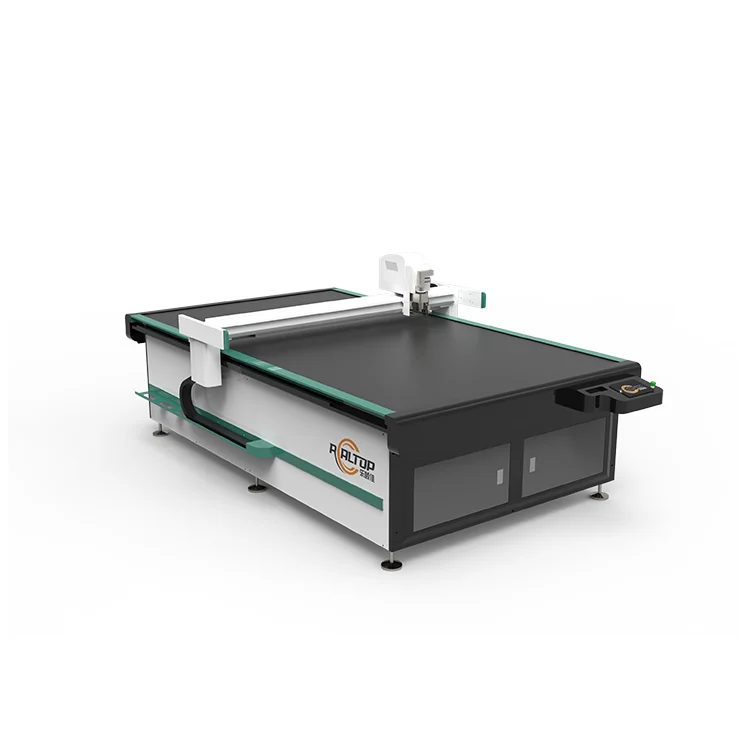
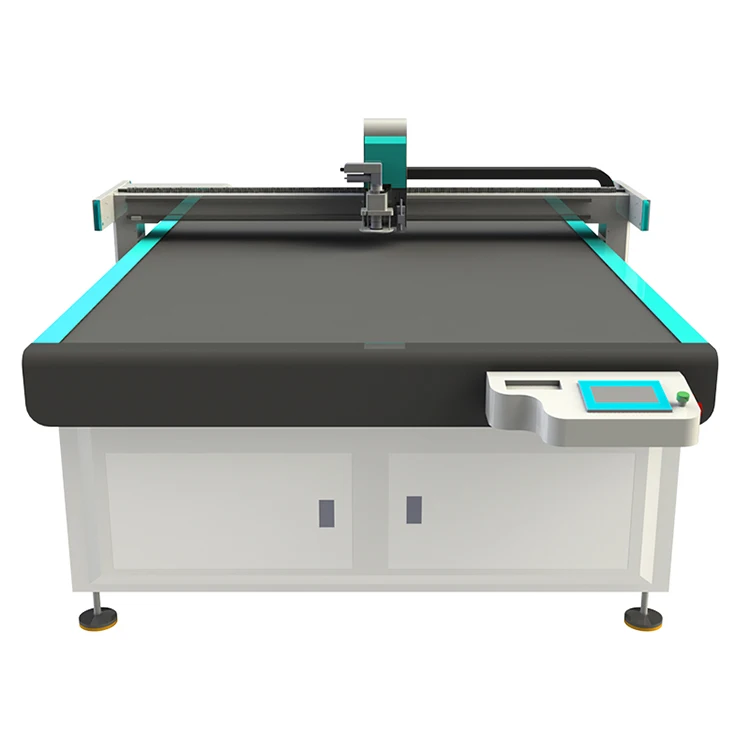
Specified per material and production volume — Every RT-D2516 and RT-S2516 leaves the factory with the tool head, vacuum zoning, and software workflow matched to the buyer’s actual stock rather than a generic default.
Technical Specifications
| Parameter | Value |
|---|---|
| Model | RT-D2516 / RT-S2516 |
| Product Type | CNC Oscillating Knife Cutting Machine |
| Working Area | 1600 × 2500 mm |
| Machine Size (L×W×H) | 3450 × 2300 × 1250 mm |
| Rated Power | 9 kW |
| Voltage | 380 V ±10% (frequency to be confirmed 50/60 Hz) |
| Transmission System | Digital servo motor, linear guide, synchronous belt, ball screw |
| Servo Motor Brand | Delta (Taiwan) |
| Linear Guide | Taiwan Hiwin rail |
| Vacuum Table | Aluminum alloy honeycomb structure with auto-follow zone adsorption |
| Vacuum Pump | 7.5 kW |
| Tool Head | Swiss imported knife — vibration full cutting, vibration half cutting, cursor location |
| Translational Velocity | 800–2000 mm/s |
| Cutting Speed | 200–800 mm/s (basis not stated in source — confirm material / thickness) |
| Cutting Thickness | ≤100 mm (varies by material) |
| Repeatability | ≤0.1 mm |
| Safety Device | Infrared sensors, emergency stop |
| Control / Instruction Format | HP-GL compatible |
| Software | Professional carton nesting software included; supports multiple file format imports; auto locate cutting, marking, creasing |
| Language Options | English, Russian, Italian, Chinese; special languages customizable |
| Assembly State | Flat working table; conveyor belt option (Germany imported belt) with auto feeding |
| Certification | CE declaration where applicable |
Application Suitability
| Application | Material or Output |
|---|---|
| Corrugated carton sample making and short-run production | Single, double and triple-wall corrugated board up to the rated thickness |
| Gift box and express packaging prototyping | Gray board, kraft paper, coated paperboard |
| Sticker and label contour cutting | Self-adhesive vinyl, PET, PP film (with optional CCD camera) |
| Advertising signage and billboard fabrication | Foam board, corrugated plastic, honeycomb paper panel |
| Leather goods and footwear upper cutting | Natural and synthetic leather, composite sponge leather |
| Garment textile and sponge cutting | Woven fabric, non-woven textile, sponge composite |
| Gasket and industrial seal cutting | Rubber, silicone, PVC, soft glass |
When Working Area Alone Is Not Enough for a CNC Oscillating Knife Cutting Machine
Matching cutting method to stock thickness prevents the most costly mistake in digital flatbed buying.
I once watched a five-layer corrugated board eat through the bearings of an under-powered oscillating head in three months. The buyer had specified the table size correctly but assumed all knife heads cut identically. On a CNC oscillating knife cutting machine, the drive train and vacuum zoning matter just as much as the working envelope [NEED_CITE: common misconfiguration causes in flatbed digital cutting]. A 1600 × 2500 mm surface that cannot hold small carton blanks flat will produce lifted edges and ragged creases regardless of how sharp the blade is.
Where the RT-D2516 / RT-S2516 Sits in the Catalogue
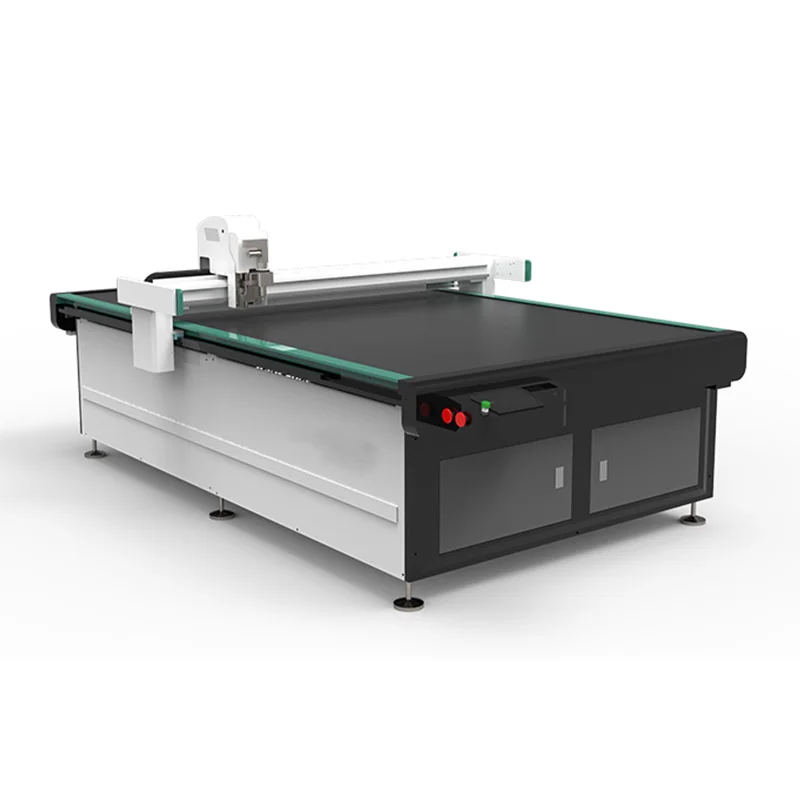
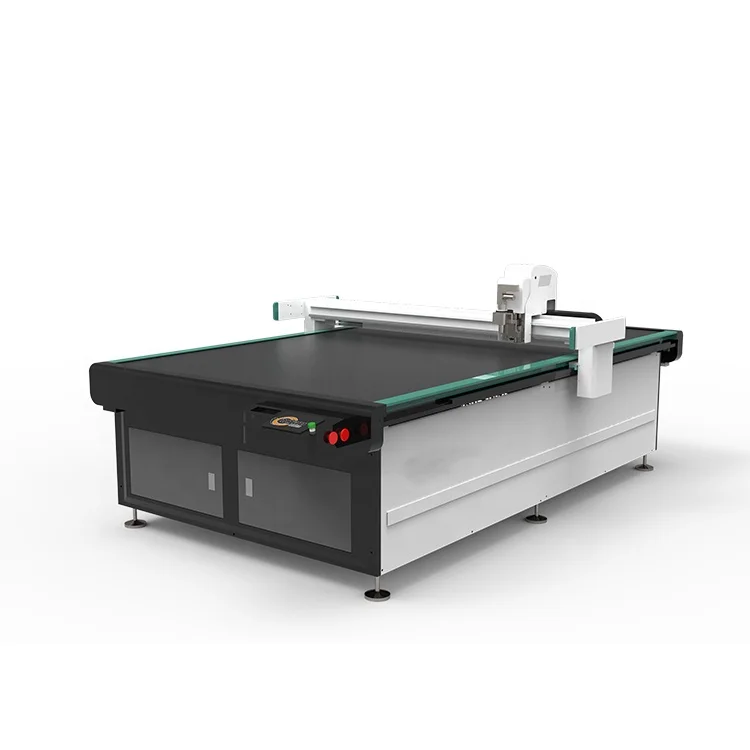
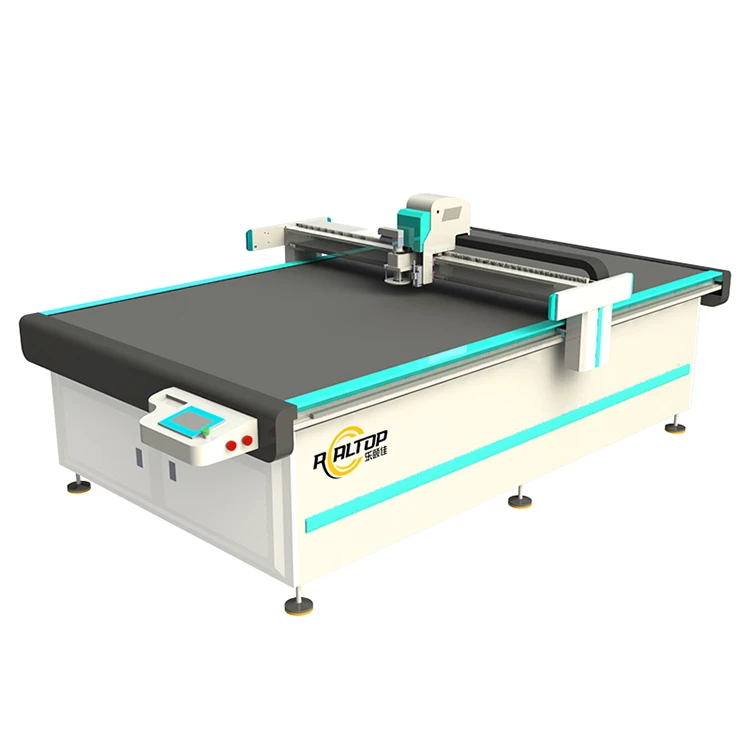
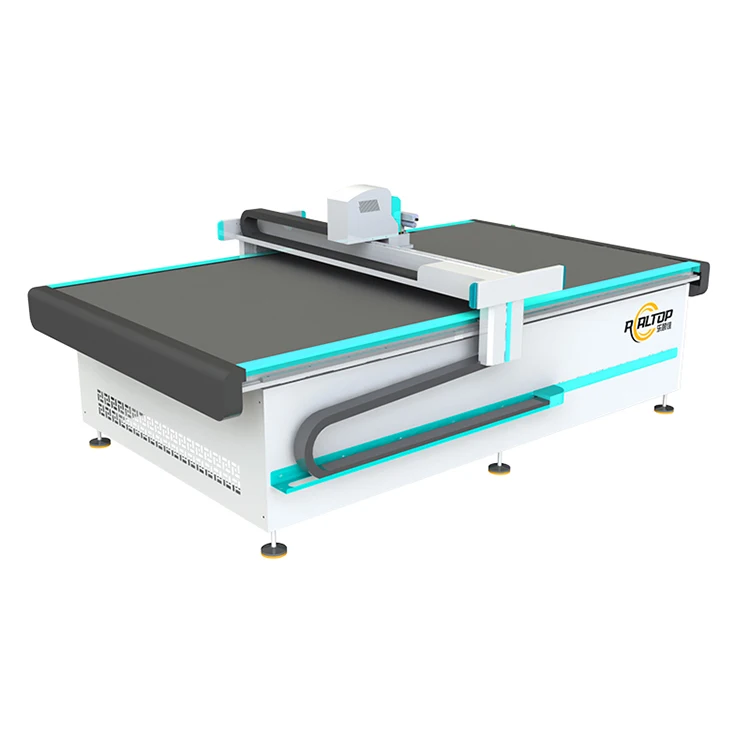
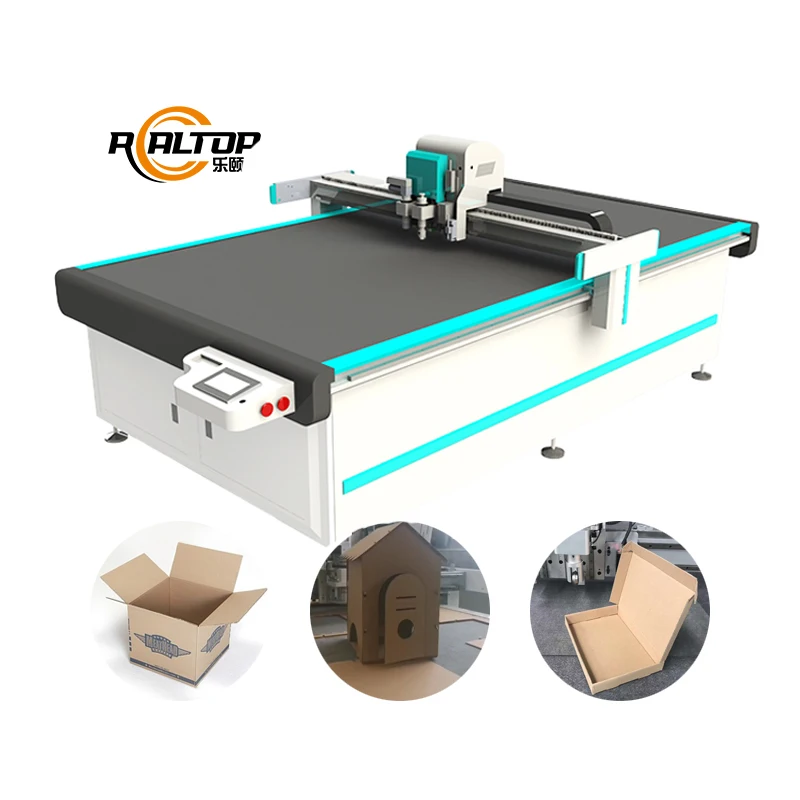
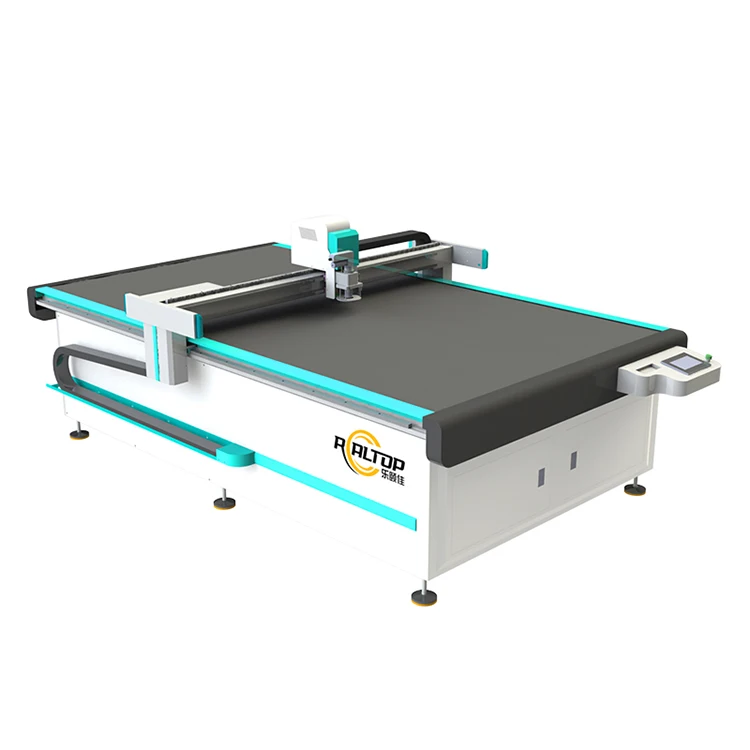
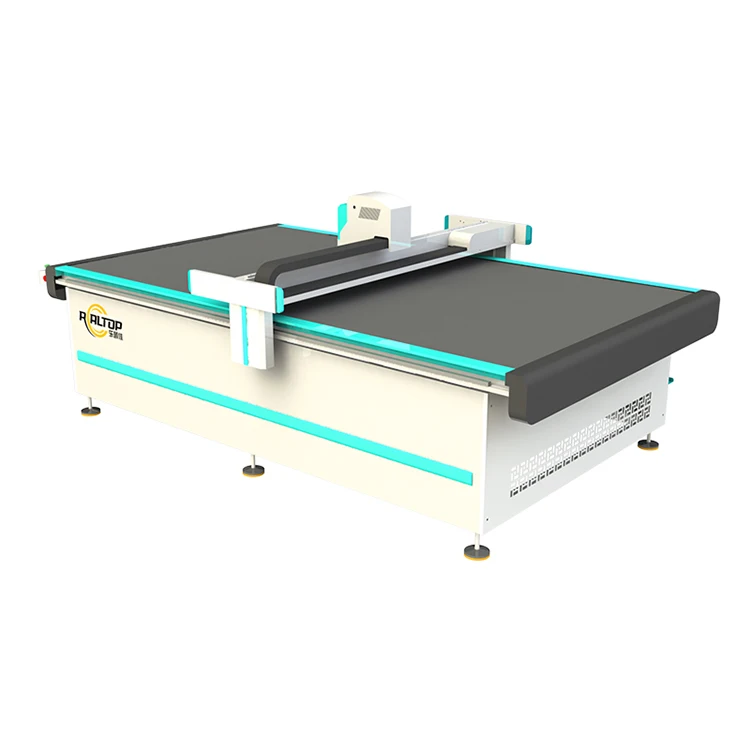
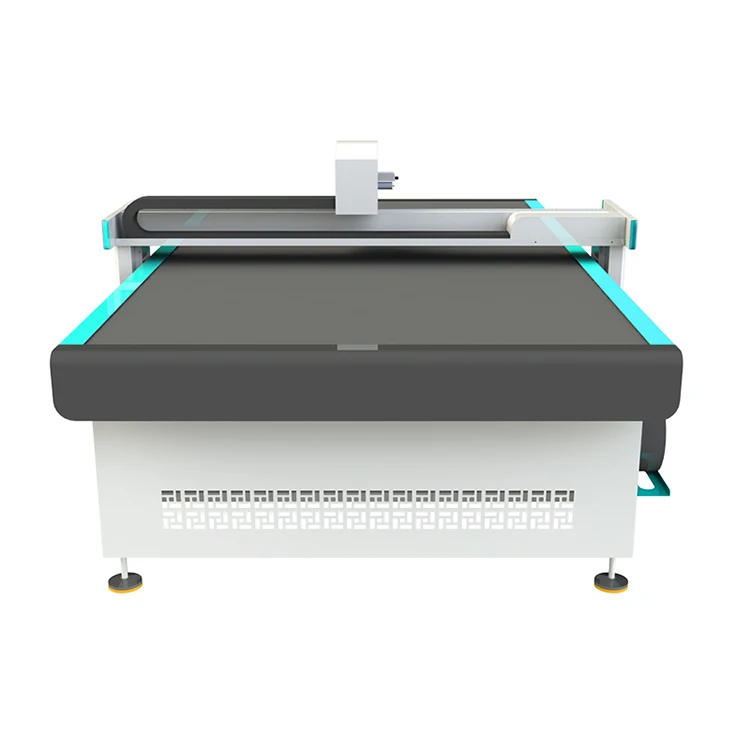
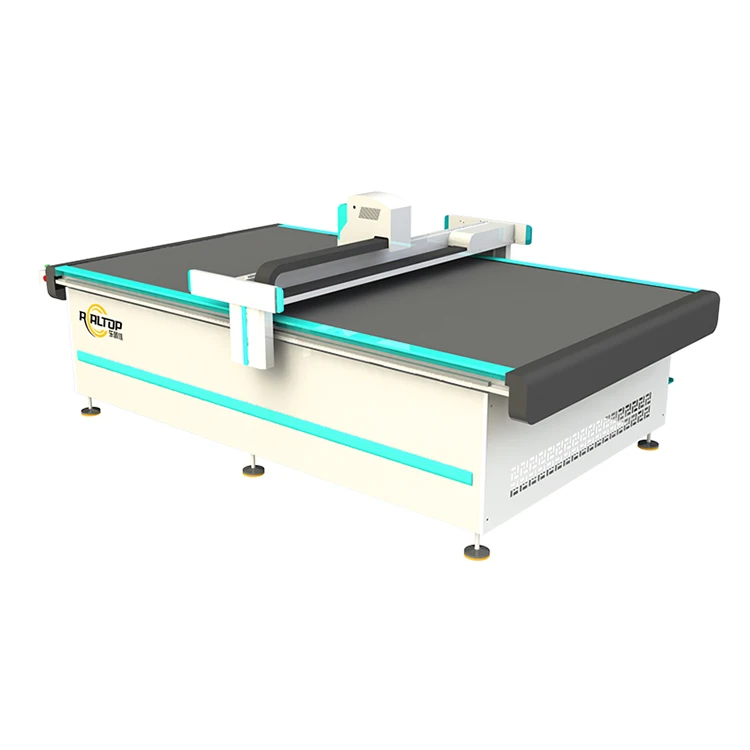
Within the full cutting equipment range, this mid-to-large format oscillating knife table fills the slot where rigid and semi-rigid sheet materials meet short-run and sample production. Buyers comparing knife versus laser will find that corrugated board, gray board and foam up to the rated thickness cut cleaner with a vibrating blade, while thin film and textile rolls may lean toward multi-layer systems or CO2 laser alternatives further up the catalogue.
How Tool Head Choice Separates This Table from Entry-Level Frames
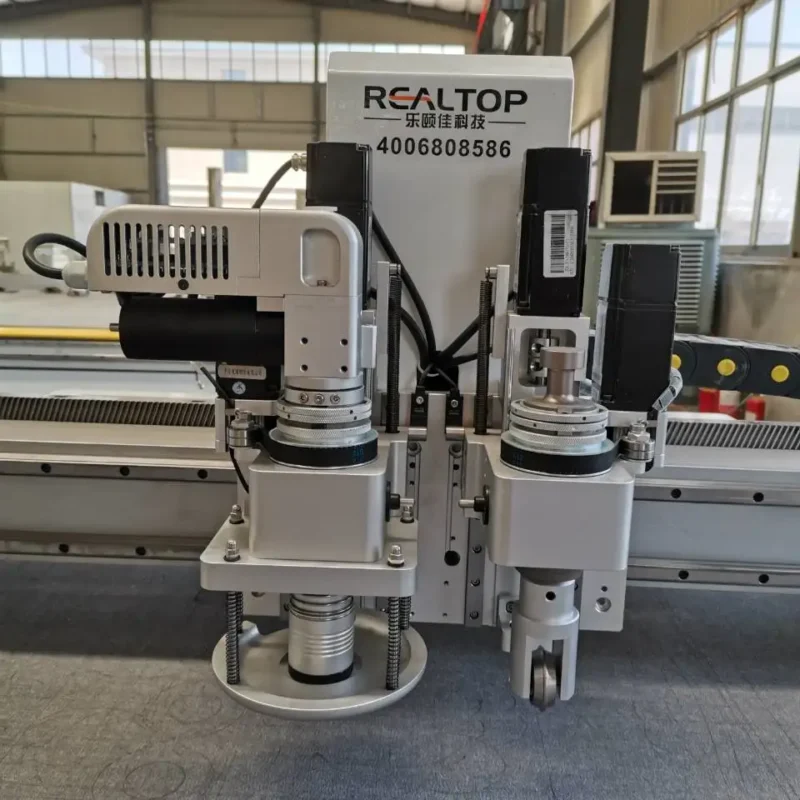
The Swiss imported knife head on this frame performs vibration full cutting, half cutting and cursor location in a single tool station. Other models in the catalogue offer drag knife, creasing wheel, milling and pen heads that can be mounted on the same or different frames. Selecting the correct head before the order is placed avoids the situation where a drag knife tears corrugated flutes or a half-cut leaves adhesive layers unseparated. The aluminium honeycomb vacuum table with auto-follow zone adsorption pairs with a 7.5 kW pump to hold small carton blanks and irregular nesting shapes flat across the full working area [NEED_CITE: vacuum zone adsorption principles for flatbed cutting tables].
Reading the Specs That Actually Shape Daily Output
The Delta servo motor and Hiwin linear guide combination determines how well the head tracks tight corners on intricate carton crease patterns, directly influencing the ≤0.1 mm repeatability figure. Translational velocity of 800–2000 mm/s governs non-cutting travel, while cutting speed between 200 and 800 mm/s depends on board density and ply count. The 9 kW rated power covers the servo drives, vacuum pump draw is separate, and the 380 V ±10% supply must be confirmed for 50 Hz or 60 Hz before the electrical cabinet is wired. HP-GL compatibility lets the included carton nesting software exchange files with common packaging CAD systems, and the creasing-marking-cutting sequence runs without manual tool changes.
What a Wrong Configuration Costs After Delivery
Choosing a vacuum pump that cannot keep up with the nesting layout means small gasket or sticker pieces lift mid-cut, producing scrap instead of saleable parts. A tool head specified for thin film will stall on five-ply corrugated, wearing bearings and forcing unplanned downtime. Language and voltage mismatches discovered at commissioning can delay first production by weeks while replacement contactors and HMI panels are sourced locally [NEED_CITE: electrical standard mismatches in exported CNC machinery].
Why Buyers Source This Range from a Single Manufacturer
In-house design covers both knife and laser cutting technologies, so a buyer evaluating corrugated carton against acrylic display stands can compare methods on one quotation rather than juggling two suppliers. Tool head and table configurations are specified per material and production volume, not sold as fixed packages. CCD camera positioning is available where printed contour work requires it, and software compatibility is verified against the buyer’s existing nesting workflow before the purchase order is signed. Sample cutting on the buyer’s own stock is performed before commitment, showing actual edge quality and crease definition on the exact board grade that will run in production.
Documentation & Verification
- Machine specification sheet listing every selected tool head and vacuum zone layout
- Electrical schematic with confirmed voltage and frequency for the destination market
- Sample cutting report on buyer-supplied corrugated or gasket stock with measured tolerances
- Tool head and table configuration list showing interchangeable heads on this frame
- Software licence and file format compatibility note matching the buyer’s CAD package
- Packing photographs of the secured machine and loose accessories before crate closure
Installation, Commissioning & Support
- Floor must sustain the 3450 × 2300 × 1250 mm footprint plus operator clearance on three sides
- Dedicated 380 V circuit sized for the 9 kW rated load plus 7.5 kW vacuum pump inrush
- Table arrives flat-packed; honeycomb panels and gantry are aligned on site during assembly
- First-power sequence includes servo tuning, vacuum zone mapping and repeatability verification
- Operator training covers nesting software import, crease-wheel offset and blade depth calibration
- Spare blade and belt kit supplied for initial production run before local consumable sourcing
Preparing Your Enquiry
Share the material type, maximum ply count or thickness, and the largest sheet size you plan to nest. Confirm your local voltage and frequency, the preferred control language, and whether your existing CAD files use DXF, PLT or another format. If daily volume targets are known, mention them so conveyor feeding and multi-head options can be evaluated against the flat table configuration.
Frequently Asked Questions
Q: How do I decide between an oscillating knife and a laser for my corrugated carton samples?
A: Oscillating knife cutting leaves uncompressed flute edges on corrugated board and handles creasing in the same cycle, making it the standard method for carton sample work. Laser cutting seals edges on synthetics and thin film but chars board surfaces. Submitting a sample of your actual stock allows a side-by-side cut report before you select the method.
Q: Where does the 1600 × 2500 mm working area fit if I need to cut full-size display stands?
A: This format covers most packaging sample and short-run carton work. For full-size pallet displays or oversized signage boards, larger tables exist further up the catalogue. Comparing nesting yield on your typical sheet layout helps determine whether stepping to a bigger frame reduces material waste enough to justify the larger footprint.
Q: Which tool heads can I mount on this frame for mixed material orders?
A: The frame accepts oscillating knife, drag knife, creasing wheel, milling and pen heads. Buyers handling both corrugated board and self-adhesive vinyl often pair the oscillating knife with a drag knife and CCD camera. The configuration list supplied with the quotation shows which heads are compatible with this specific gantry carriage.
Q: Can the voltage and control language be matched to my local workshop standards?
A: The electrical cabinet is wired to the confirmed voltage and frequency, and the HMI language is set before dispatch. Available languages include English, Russian, Italian and Chinese, with other languages customizable on request. The electrical schematic documents every component rating so local electricians can service the machine without guessing.
Q: How do I submit my material for sample cutting before placing the order?
A: Send a few sheets of the actual board, foam or gasket stock along with your cutting file. A sample cutting report is returned showing edge quality, crease depth and dimensional accuracy measured on your material. This step confirms whether the oscillating knife or an alternative method suits your production before commitment.
Specified per material and production volume — Every RT-D2516 and RT-S2516 leaves the factory with the tool head, vacuum zoning, and software workflow matched to the buyer’s actual stock rather than a generic default.
Technical Specifications
| Parameter | Value |
|---|---|
| Model | RT-D2516 / RT-S2516 |
| Product Type | CNC Oscillating Knife Cutting Machine |
| Working Area | 1600 × 2500 mm |
| Machine Size (L×W×H) | 3450 × 2300 × 1250 mm |
| Rated Power | 9 kW |
| Voltage | 380 V ±10% (frequency to be confirmed 50/60 Hz) |
| Transmission System | Digital servo motor, linear guide, synchronous belt, ball screw |
| Servo Motor Brand | Delta (Taiwan) |
| Linear Guide | Taiwan Hiwin rail |
| Vacuum Table | Aluminum alloy honeycomb structure with auto-follow zone adsorption |
| Vacuum Pump | 7.5 kW |
| Tool Head | Swiss imported knife — vibration full cutting, vibration half cutting, cursor location |
| Translational Velocity | 800–2000 mm/s |
| Cutting Speed | 200–800 mm/s (basis not stated in source — confirm material / thickness) |
| Cutting Thickness | ≤100 mm (varies by material) |
| Repeatability | ≤0.1 mm |
| Safety Device | Infrared sensors, emergency stop |
| Control / Instruction Format | HP-GL compatible |
| Software | Professional carton nesting software included; supports multiple file format imports; auto locate cutting, marking, creasing |
| Language Options | English, Russian, Italian, Chinese; special languages customizable |
| Assembly State | Flat working table; conveyor belt option (Germany imported belt) with auto feeding |
| Certification | CE declaration where applicable |
Application Suitability
| Application | Material or Output |
|---|---|
| Corrugated carton sample making and short-run production | Single, double and triple-wall corrugated board up to the rated thickness |
| Gift box and express packaging prototyping | Gray board, kraft paper, coated paperboard |
| Sticker and label contour cutting | Self-adhesive vinyl, PET, PP film (with optional CCD camera) |
| Advertising signage and billboard fabrication | Foam board, corrugated plastic, honeycomb paper panel |
| Leather goods and footwear upper cutting | Natural and synthetic leather, composite sponge leather |
| Garment textile and sponge cutting | Woven fabric, non-woven textile, sponge composite |
| Gasket and industrial seal cutting | Rubber, silicone, PVC, soft glass |
When Working Area Alone Is Not Enough for a CNC Oscillating Knife Cutting Machine
Matching cutting method to stock thickness prevents the most costly mistake in digital flatbed buying.
I once watched a five-layer corrugated board eat through the bearings of an under-powered oscillating head in three months. The buyer had specified the table size correctly but assumed all knife heads cut identically. On a CNC oscillating knife cutting machine, the drive train and vacuum zoning matter just as much as the working envelope [NEED_CITE: common misconfiguration causes in flatbed digital cutting]. A 1600 × 2500 mm surface that cannot hold small carton blanks flat will produce lifted edges and ragged creases regardless of how sharp the blade is.
Where the RT-D2516 / RT-S2516 Sits in the Catalogue
Within the full cutting equipment range, this mid-to-large format oscillating knife table fills the slot where rigid and semi-rigid sheet materials meet short-run and sample production. Buyers comparing knife versus laser will find that corrugated board, gray board and foam up to the rated thickness cut cleaner with a vibrating blade, while thin film and textile rolls may lean toward multi-layer systems or CO2 laser alternatives further up the catalogue.
How Tool Head Choice Separates This Table from Entry-Level Frames
The Swiss imported knife head on this frame performs vibration full cutting, half cutting and cursor location in a single tool station. Other models in the catalogue offer drag knife, creasing wheel, milling and pen heads that can be mounted on the same or different frames. Selecting the correct head before the order is placed avoids the situation where a drag knife tears corrugated flutes or a half-cut leaves adhesive layers unseparated. The aluminium honeycomb vacuum table with auto-follow zone adsorption pairs with a 7.5 kW pump to hold small carton blanks and irregular nesting shapes flat across the full working area [NEED_CITE: vacuum zone adsorption principles for flatbed cutting tables].
Reading the Specs That Actually Shape Daily Output
The Delta servo motor and Hiwin linear guide combination determines how well the head tracks tight corners on intricate carton crease patterns, directly influencing the ≤0.1 mm repeatability figure. Translational velocity of 800–2000 mm/s governs non-cutting travel, while cutting speed between 200 and 800 mm/s depends on board density and ply count. The 9 kW rated power covers the servo drives, vacuum pump draw is separate, and the 380 V ±10% supply must be confirmed for 50 Hz or 60 Hz before the electrical cabinet is wired. HP-GL compatibility lets the included carton nesting software exchange files with common packaging CAD systems, and the creasing-marking-cutting sequence runs without manual tool changes.
What a Wrong Configuration Costs After Delivery
Choosing a vacuum pump that cannot keep up with the nesting layout means small gasket or sticker pieces lift mid-cut, producing scrap instead of saleable parts. A tool head specified for thin film will stall on five-ply corrugated, wearing bearings and forcing unplanned downtime. Language and voltage mismatches discovered at commissioning can delay first production by weeks while replacement contactors and HMI panels are sourced locally [NEED_CITE: electrical standard mismatches in exported CNC machinery].
Why Buyers Source This Range from a Single Manufacturer
In-house design covers both knife and laser cutting technologies, so a buyer evaluating corrugated carton against acrylic display stands can compare methods on one quotation rather than juggling two suppliers. Tool head and table configurations are specified per material and production volume, not sold as fixed packages. CCD camera positioning is available where printed contour work requires it, and software compatibility is verified against the buyer’s existing nesting workflow before the purchase order is signed. Sample cutting on the buyer’s own stock is performed before commitment, showing actual edge quality and crease definition on the exact board grade that will run in production.
Documentation & Verification
- Machine specification sheet listing every selected tool head and vacuum zone layout
- Electrical schematic with confirmed voltage and frequency for the destination market
- Sample cutting report on buyer-supplied corrugated or gasket stock with measured tolerances
- Tool head and table configuration list showing interchangeable heads on this frame
- Software licence and file format compatibility note matching the buyer’s CAD package
- Packing photographs of the secured machine and loose accessories before crate closure
Installation, Commissioning & Support
- Floor must sustain the 3450 × 2300 × 1250 mm footprint plus operator clearance on three sides
- Dedicated 380 V circuit sized for the 9 kW rated load plus 7.5 kW vacuum pump inrush
- Table arrives flat-packed; honeycomb panels and gantry are aligned on site during assembly
- First-power sequence includes servo tuning, vacuum zone mapping and repeatability verification
- Operator training covers nesting software import, crease-wheel offset and blade depth calibration
- Spare blade and belt kit supplied for initial production run before local consumable sourcing
Preparing Your Enquiry
Share the material type, maximum ply count or thickness, and the largest sheet size you plan to nest. Confirm your local voltage and frequency, the preferred control language, and whether your existing CAD files use DXF, PLT or another format. If daily volume targets are known, mention them so conveyor feeding and multi-head options can be evaluated against the flat table configuration.
Frequently Asked Questions
Q: How do I decide between an oscillating knife and a laser for my corrugated carton samples?
A: Oscillating knife cutting leaves uncompressed flute edges on corrugated board and handles creasing in the same cycle, making it the standard method for carton sample work. Laser cutting seals edges on synthetics and thin film but chars board surfaces. Submitting a sample of your actual stock allows a side-by-side cut report before you select the method.
Q: Where does the 1600 × 2500 mm working area fit if I need to cut full-size display stands?
A: This format covers most packaging sample and short-run carton work. For full-size pallet displays or oversized signage boards, larger tables exist further up the catalogue. Comparing nesting yield on your typical sheet layout helps determine whether stepping to a bigger frame reduces material waste enough to justify the larger footprint.
Q: Which tool heads can I mount on this frame for mixed material orders?
A: The frame accepts oscillating knife, drag knife, creasing wheel, milling and pen heads. Buyers handling both corrugated board and self-adhesive vinyl often pair the oscillating knife with a drag knife and CCD camera. The configuration list supplied with the quotation shows which heads are compatible with this specific gantry carriage.
Q: Can the voltage and control language be matched to my local workshop standards?
A: The electrical cabinet is wired to the confirmed voltage and frequency, and the HMI language is set before dispatch. Available languages include English, Russian, Italian and Chinese, with other languages customizable on request. The electrical schematic documents every component rating so local electricians can service the machine without guessing.
Q: How do I submit my material for sample cutting before placing the order?
A: Send a few sheets of the actual board, foam or gasket stock along with your cutting file. A sample cutting report is returned showing edge quality, crease depth and dimensional accuracy measured on your material. This step confirms whether the oscillating knife or an alternative method suits your production before commitment.
商品评价
There are no reviews yet.