

Fast Delivery
Quick, reliable shipping to any location.

Free & easy returns
Return this item by mail or in store within 90 days for a full refund.
Precision Tooling Matched to Material — In-house design teams configure oscillating knife, drag knife, and laser systems per material type and production volume rather than forcing a single cutting method across every application.
Technical Specifications
| Parameter | Value |
|---|---|
| Model | RT-D2516 / RT-S2516 |
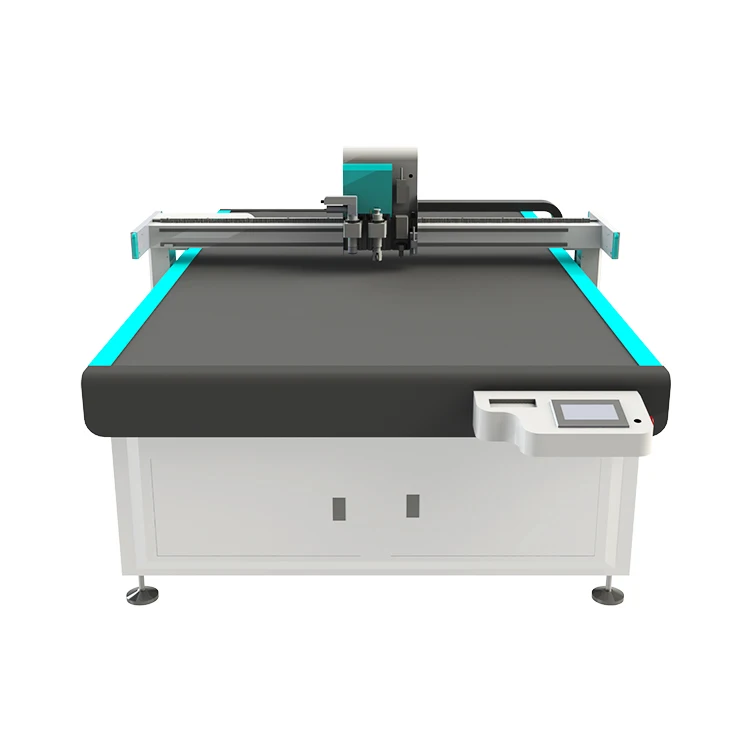
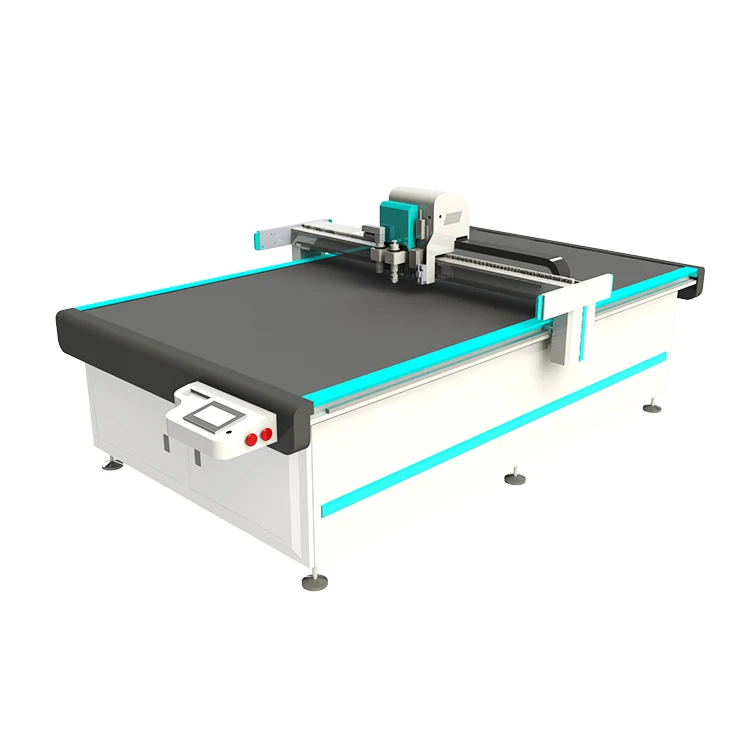
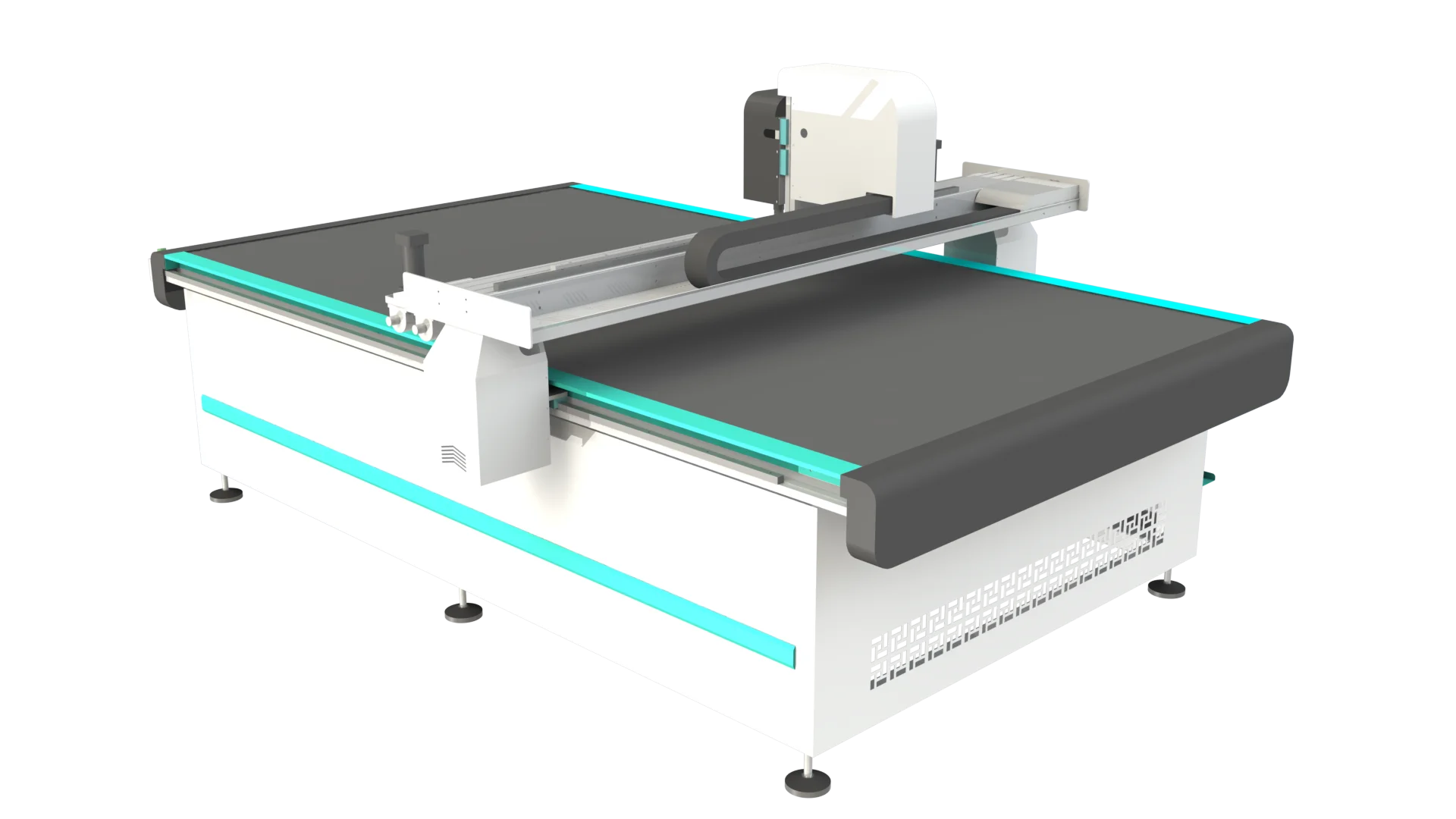
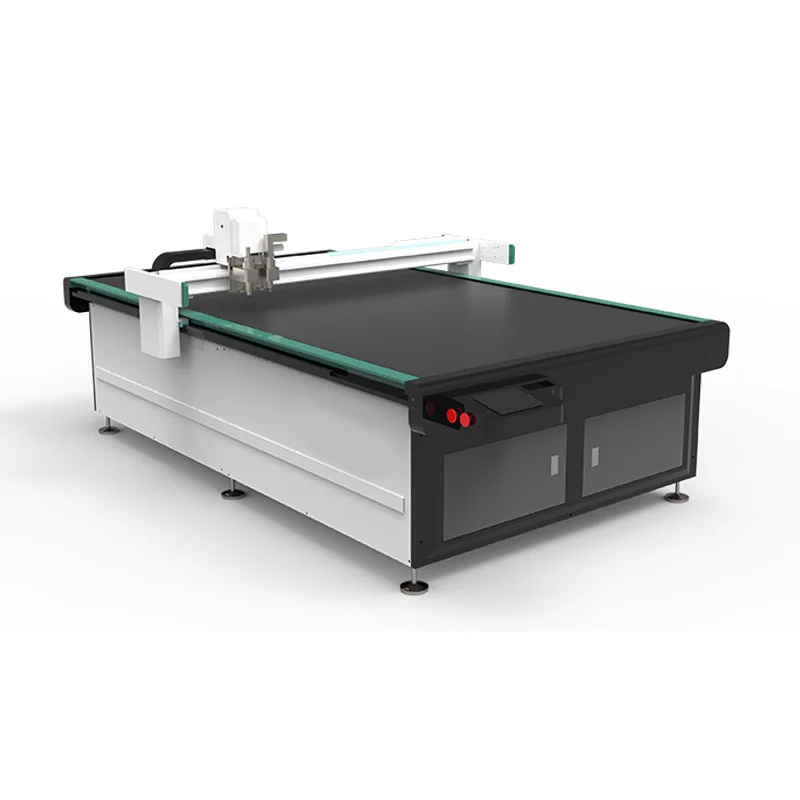
| Product Type | CNC Oscillating Knife Cutting Machine for Packaging Sample Making |
| Working Area | 1600 × 2500 mm |
| Machine Size | 3450 × 2300 × 1250 mm |
| Rated Power | 11 kW |
| Table Type | Flatbed vacuum table with auto-feeding conveyor |
| Tool Head | Swiss imported knife with vibration full cutting, vibration half cutting, and cursor location |
| Safety Device | Infrared sensors |
| Translational Speed | 800 – 1200 mm/s |
| Cutting Speed | 200 – 800 mm/s (according to different cutting materials) |
| Repeatability | ≤ 0.1 mm |
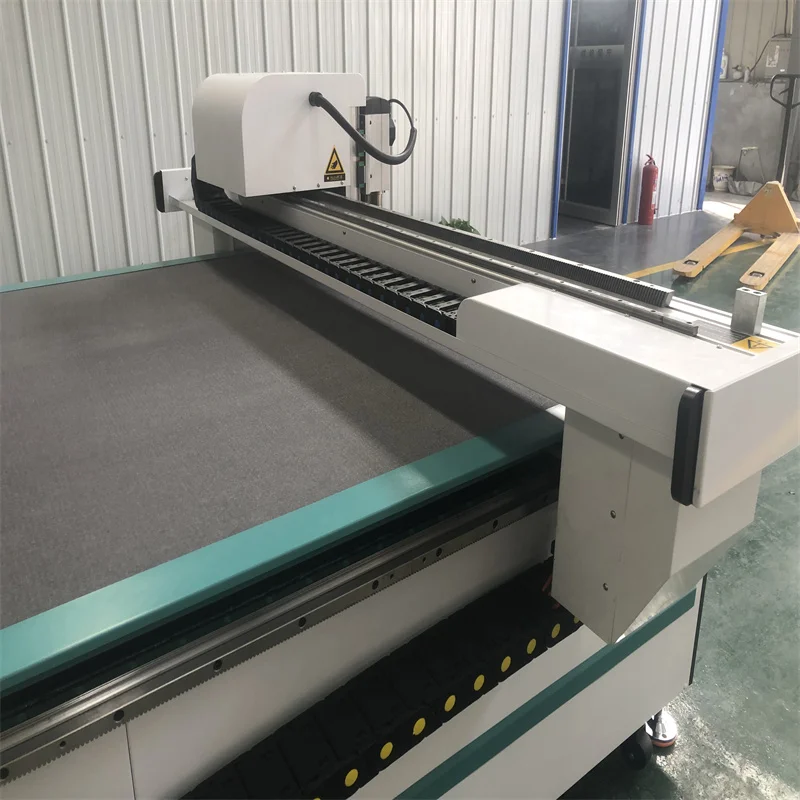
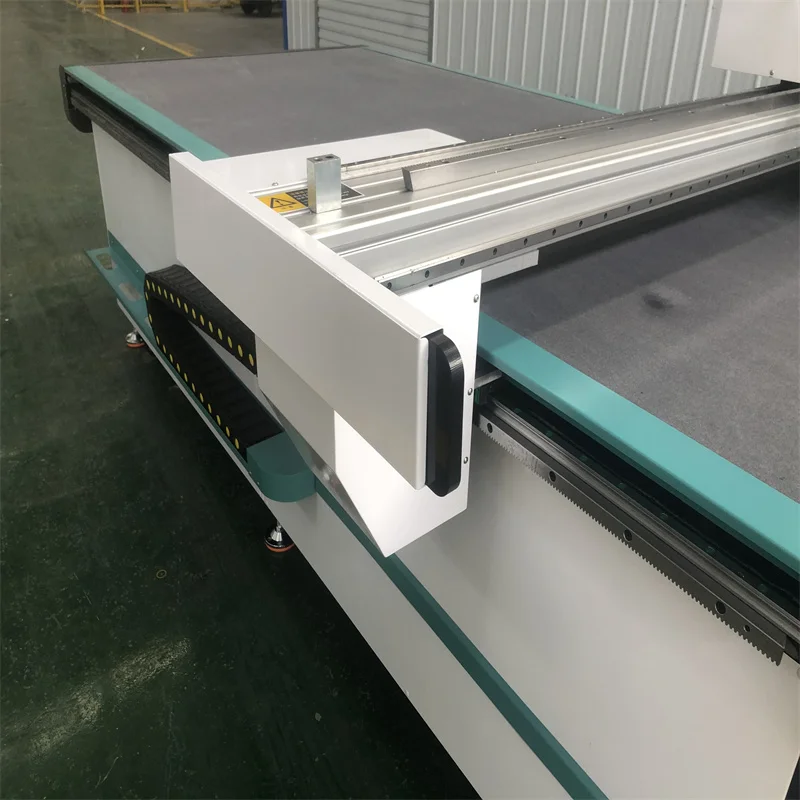
| Transmission System | Digital servo motor, linear guide, synchronous belt, imported ball screw |
| Instruction System | HP-GL compatible format |
| Voltage | 380V ± 10% |
| Servo Motor | Japanese Yaskawa |
| Guide Rail | Taiwan Hiwin |
| Vacuum Pump | 7.5 kW |
| Conveyor Belt | Germany imported |
Application Suitability
| Application | Material or Output |
|---|---|
| Packaging sample making and carton prototyping | Corrugated board, grey board, folding carton stock |
| Advertising and signage production | PVC foam board, vinyl, acrylic sheets, composite panels |
| Footwear and leather goods manufacturing | Genuine leather, synthetic PU, sponge composite leather |
| Gasket and sealing fabrication | Rubber, silicon, soft glass, non-metallic composites |
Why Working Area Alone Cannot Define a Packaging CNC Cutting Machine
A flatbed size on paper means nothing if the tool head, vacuum zoning, and drive components cannot handle the actual board grade and daily volume you run.
Many buyers filter options by bed dimensions first, assuming a 1600 × 2500 mm table automatically covers everything from thin vinyl to double-wall corrugated. In practice, a machine that cuts grey board cleanly at low speed may struggle with E-flute when throughput demands rise, producing ragged edges and premature blade wear [NEED_CITE: oscillating knife wear rates on corrugated versus solid board]. This gap between brochure specification and shop-floor reality is where most packaging sample maker for sale purchases disappoint.
Matching Cutting Method to Board Grade and Substrate
Choosing between oscillating knife and drag knife on this CNC knife cutting machine manufacturer range depends on the material stack you process daily. Oscillating action suits thicker corrugated and foam boards where a dragging blade would crush the flute structure, while a drag knife handles thinner carton and vinyl with faster cycle times. The Swiss imported tool head on the RT-D2516/RT-S2516 supports vibration full cutting and half cutting, letting operators switch between kiss-cutting crease lines and full-depth contour cuts without changing hardware.
Vacuum Hold-Down and Small-Part Stability
A 7.5 kW vacuum pump paired with a flatbed table provides the suction needed for large sheets, but small nesting parts can still lift if the table lacks adequate zoning. When cutting multiple carton samples from a single board, offcut *terial [NEED_CITE: vacuum table zoning effectiveness on nested small parts]. Confirming the vacuum zone layout against your typical nesting pattern prevents mid-cut material shift and scrapped samples.
Drive Components Behind Repeatability Tolerances
The ≤ 0.1 mm repeatability figure depends directly on the Yaskawa digital servo motors and Taiwan Hiwin linear guides specified in the transmission system. Synchronous belts and imported ball screws translate servo commands into precise gantry movement across the 1600 × 2500 mm working envelope. At translational speeds reaching 1200 mm/s, any slack in these components would compound into visible deviation on intricate carton crease patterns, which is why the imported drive specification matters beyond a simple datasheet line.
The Cost of Specifying the Wrong Tool Head
Ordering a machine configured only for thin vinyl and then attempting to cut 3 mm grey board forces the oscillating knife motor to work outside its intended load range. The knife seat loosens over repeated cycles, edge quality degrades, and production halts while waiting for replacement parts [NEED_CITE: tool head wear from cutting beyond rated material thickness]. This scenario is common when buyers skip the material-thickness conversation during the quotation stage and assume one tool head covers every substrate they might encounter.
Why Buyers Source This Range Here
The design team engineers both knife and laser platforms in-house, so a buyer comparing carton sample cutting against acrylic engraving can evaluate both methods from one manufacturer rather than juggling separate suppliers. Tool head and table configurations are specified per material, meaning the RT-D2516/RT-S2516 arrives with the oscillating knife, vacuum zoning, and conveyor setup matched to the buyer’s stated board grades. Sample cutting on the buyer’s own material is completed before order confirmation, providing a physical reference for edge quality and cutting speed. Voltage, plug type, and control language are confirmed during the specification stage to avoid on-site electrical mismatches. The HP-GL compatible instruction system integrates with common packaging design workflows, and software file format compatibility is verified before the machine ships.
Documentation & Verification
- Machine specification sheet listing working area, tool head options, and vacuum table configuration
- Electrical schematic with 380V ± 10% voltage and frequency confirmation for the destination market
- Tool head and table configuration list matching the agreed material and cutting depth
- Factory test record cut on the buyer’s own board grade before dispatch
- Software licence and HP-GL file format compatibility note included with the control system
- Spare parts list covering oscillating knife blades, belts, and vacuum consumables
Installation, Commissioning & Support
- Foundation must support the 3450 × 2300 × 1250 mm machine footprint with level floor tolerance
- Dedicated 380V ± 10% circuit required to supply the 11 kW rated power plus the 7.5 kW vacuum pump
- Machine ships in modular sections for site assembly and gantry alignment on the flatbed frame
- First-run commissioning includes servo tuning, vacuum zone calibration, and test cuts on buyer material
- Operator training covers HP-GL file import, tool head changeover, and nesting workflow setup
- Wear parts stock includes Swiss knife blades, synchronous belts, and conveyor belt segments
Before You Request a Quotation
Share the specific board grades, flute types, and maximum material thickness you intend to cut, along with typical sheet dimensions and daily sample volume. Confirm your local voltage and frequency standard so the electrical system can be configured before production. If your design team works in a specific CAD or nesting software, provide a sample file so HP-GL compatibility and workflow integration can be verified against the RT-D2516/RT-S2516 control system.
Frequently Asked Questions
Q: How do I decide between oscillating knife and drag knife for my packaging samples?
A: Oscillating knife suits corrugated and thicker boards where a dragging blade would crush the material structure. Drag knife works well on thinner carton and vinyl at faster speeds. The tool head selection should match the thickest and most abrasive material in your daily mix, not just the average.
Q: Will the vacuum table hold small nested carton parts securely during cutting?
A: Hold-down performance depends on vacuum zone layout relative to your typical nesting pattern. Small parts near cut edges can lose suction as the knife penetrates the sheet. Confirming your standard nesting files against the table zoning specification before order prevents lift and scrapped samples.
Q: Can the control system accept our existing packaging design files?
A: The instruction system supports HP-GL compatible format, which covers most packaging CAD outputs. If your workflow uses proprietary file types, a sample file exchange before order confirms import compatibility and avoids post-delivery software issues with the nesting and cutting sequence.
Q: What voltage and plug customization is available for our facility?
A: The standard configuration is 380V ± 10%, but voltage, plug type, and control interface language can be adapted to the destination market. Confirming these details during the specification stage ensures the machine arrives ready for connection without on-site transformer rentals.
Q: How do we verify cutting quality before committing to the order?
A: A sample cutting report is produced on the buyer’s own material before the order is finalized. This physical sample demonstrates edge quality, cutting depth, and crease accuracy on your actual board stock, providing a measurable benchmark for acceptance.










商品评价
There are no reviews yet.