


Fast Delivery
Quick, reliable shipping to any location.

Free & easy returns
Return this item by mail or in store within 90 days for a full refund.
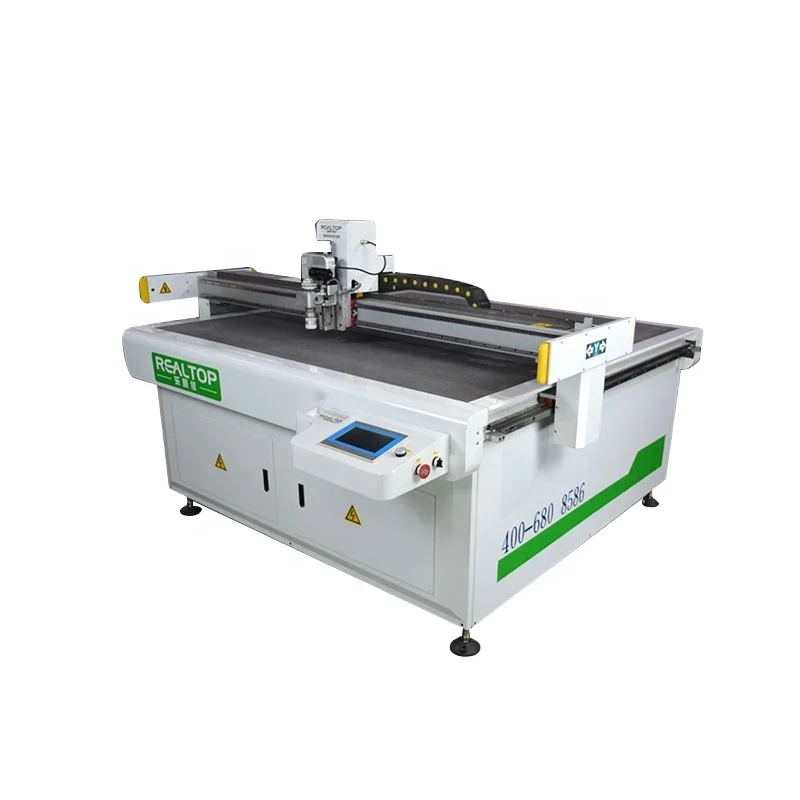
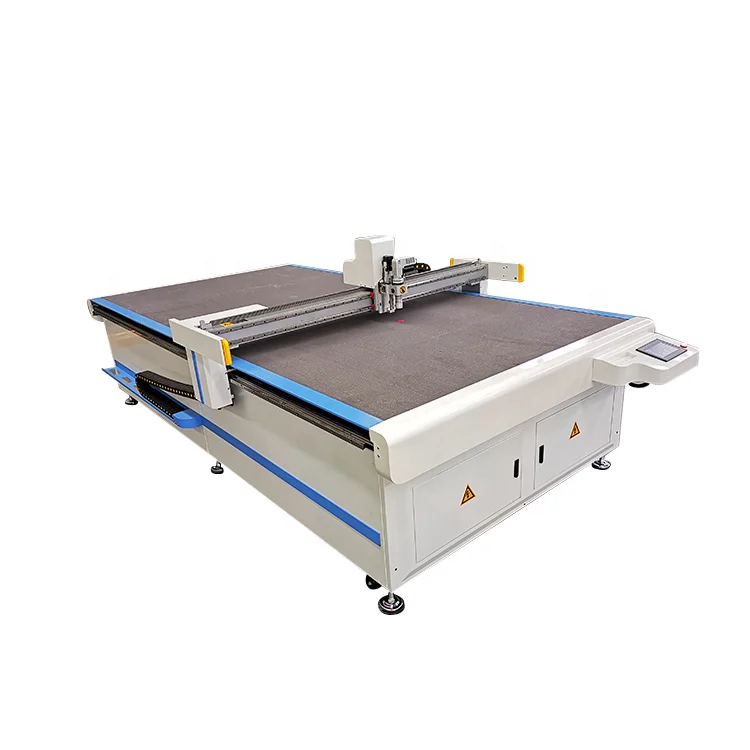
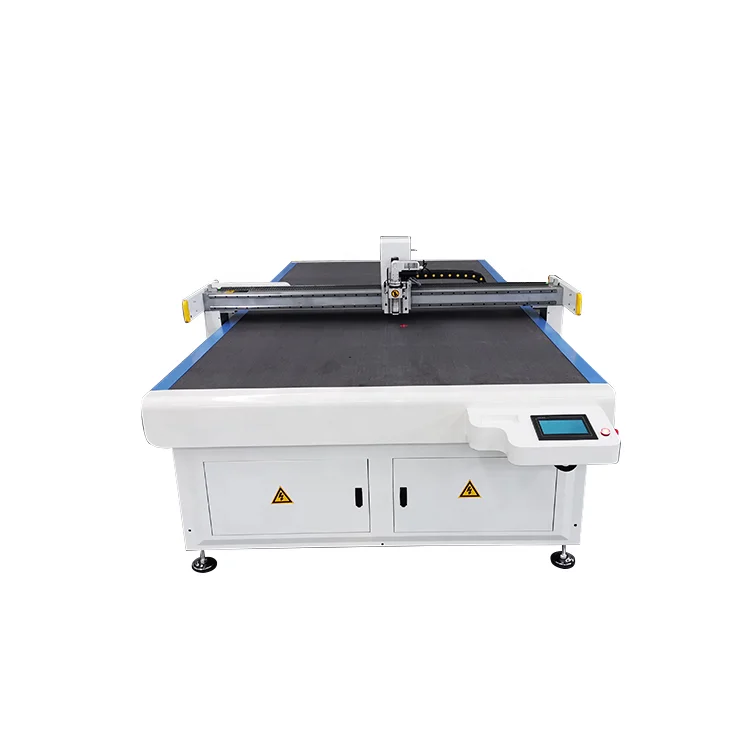
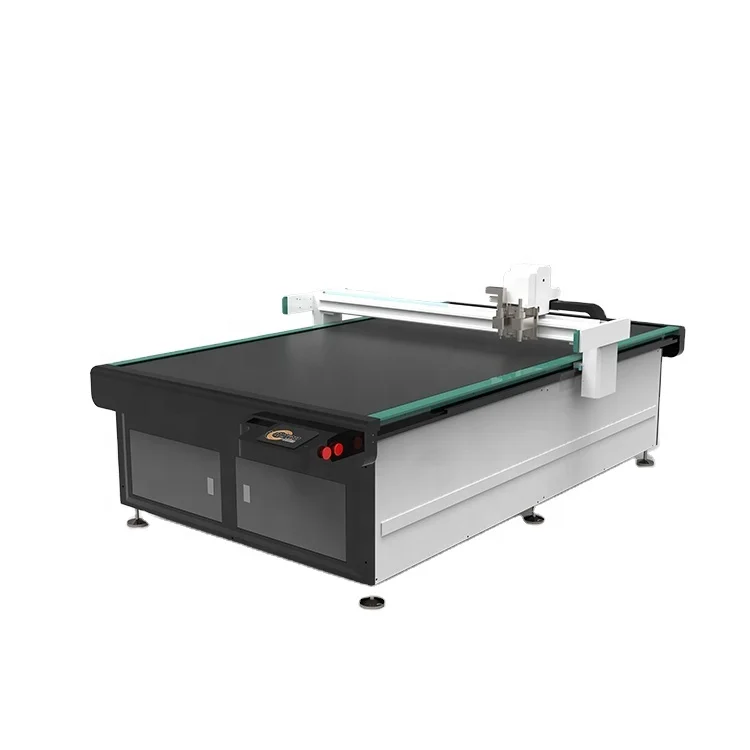
Configurable Tool Head Suite — oscillating knife, drag knife and creasing wheel options specified per corrugated grade and flute profile before order.
Technical Specifications
| Parameter | Value |
|---|---|
| Model | RT-D2516 / RT-S2516 |
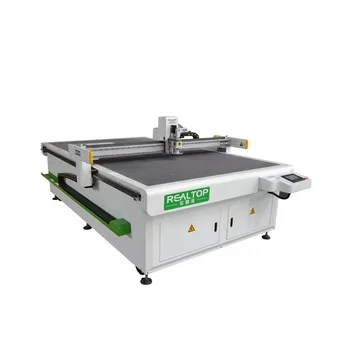
| Product Type | CNC Oscillating Knife Cutting Plotter for Cardboard and Packaging |
| Working Area | 1600 × 2500 mm |
| Machine Size | 3450 × 2300 × 1250 mm |
| Rated Power | 9 kW |
| Vacuum Pump Power | 7.5 kW |
| Table Type | Flat working table (conveyor belt variant available) |
| Tool Head | Swiss imported oscillating knife (full cutting, half cutting, cursor location) |
| Translational Velocity | 800–1200 mm/s |
| Cutting Speed | 200–800 mm/s (basis not stated in source — confirm material and thickness) |
| Repeatability | ≤0.1 mm |
| Transmission System | Digital servo motor, linear guide, synchronous belt, ball screw |
| Servo Motor | Japanese Yaskawa |
| Linear Rail | Taiwan Hiwin |
| Instruction System | HP-GL compatible format |
| Voltage | 380V ±10% |
| Safety Device | Infrared sensors |
| Certification | CE |
Application Suitability
| Application | Material or Output |
|---|---|
| Packaging sample making | Corrugated board, folding carton, chipboard, greyboard |
| Carton pattern cutting | Single-face and double-wall corrugated up to machine-rated depth |
| Advertising and signage | Foam board, PVC sheet, flexible vinyl |
| Gasket and seal production | Rubber sheet, silicone, composite sponge |
| Leather and footwear | Natural leather, synthetic PU, textile composites |
Why the Cutting Speed Number Alone Can Mislead Your Packaging Line
A quoted 800 mm/s cutting speed means nothing without the material grade, flute type and board thickness it was measured on.
I once watched a buyer in Southeast Asia commit to a CNC cardboard cutting machine plotter based on a headline speed figure, only to find his double-wall corrugated required two passes at half that pace to avoid crushing the flute. The machine was not at fault — the specification had simply been quoted on single-face board. When you source a CNC packaging sample cutting machine for sale, the speed number must be validated against your exact stock before any purchase order is signed [NEED_CITE: material-specific cutting speed validation standards for corrugated board].
Matching the Oscillating Knife to Your Corrugated Grade
The RT-D2516 / RT-S2516 uses a Swiss imported oscillating knife head that handles vibration full cutting, half cutting and cursor location within a single cycle. This matters for packaging sample makers who need to score a fold line and cut an outline without a tool change. Different flute profiles respond differently to oscillation frequency and blade angle — E-flute cuts cleanly at higher speeds while B-flute and C-flute often need reduced pace to preserve edge integrity. Requesting a sample cut on your own board stock remains the only reliable way to confirm the CNC cardboard cutting machine plotter setup works for your daily mix.
Vacuum Table Zoning and Small-Part Holding
A 1600 × 2500 mm working area accommodates most standard carton sample sheets, but the real question is whether the vacuum table zones can hold small nested parts flat during cutting. When a CNC packaging sample cutting machine for sale lists a large table without specifying zone count, small carton inserts and dividers can lift under the knife, producing ragged edges or blade damage. Confirming the vacuum zoning layout against your typical nesting pattern prevents a costly mismatch after delivery [NEED_CITE: vacuum table zoning requirements for flatbed digital cutters].
Reading the Specs That Actually Shape Your Output
The Yaskawa digital servo and Hiwin linear rail combination drives the stated ≤0.1 mm repeatability, which directly affects how tightly a crease line aligns with its corresponding cut profile. In packaging sample work, a half-millimetre misalignment between score and cut means the carton will not fold square. The HP-GL compatible instruction system requires verification against your existing CAD or nesting software — some packaging design suites export DXF or proprietary formats that need a post-processor. The 9 kW rated power covers the knife head, drives and vacuum system load, while the separate 7.5 kW vacuum pump draws its own circuit; plan your electrical panel accordingly at 380V ±10%.
What Happens When the Tool Head Is Wrong for the Board
Choosing a drag knife where an oscillating knife is needed typically shows up as crushed flute edges on thicker corrugated and frayed cuts on laminated carton stock. The damage is not cosmetic — a crushed edge compromises the compression strength of the finished box. I have seen production managers run weeks of samples before realising the edge quality issue traces back to a tool head that was never matched to their board grade [NEED_CITE: tool head selection guidelines for oscillating knife cutters].
Why Buyers Source the Full Range Here
In-house design and production across both knife and laser platforms means a packaging sample maker can evaluate which cutting method suits a specific board or laminate rather than being locked into one technology. Tool head and table configurations are specified per material and production volume, not sold from a fixed catalogue page. Sample cutting on the buyer’s own material is completed before commitment, with a written report covering actual cutting depth and edge quality at working speed. Voltage, plug type and control language are confirmed before shipment rather than assumed. The CE-declared machine range supports import documentation requirements across most export markets.
Documentation & Verification
- Machine specification sheet with confirmed tool head and table configuration
- Electrical schematic matching your local 380V or alternate voltage requirement
- Sample cutting report on your own corrugated grade and board thickness
- CE declaration supporting import clearance in regulated markets
- Software licence and file format compatibility note for your CAD workflow
- Spare parts list covering blades, vacuum cups and drive belts
Installation, Commissioning & Support
- Flat working table footprint of 3450 × 2300 mm requires level concrete floor with clearance for sheet loading on both sides
- Dedicated 380V three-phase circuit with separate breaker for the 7.5 kW vacuum pump
- Machine ships partially assembled; full alignment and belt tension check completed on site
- First-run parameter tuning covers oscillation frequency, vacuum pressure and cutting depth for your board stock
- Operator training includes tool head changeover, HP-GL file import and nesting workflow setup
- Consumable blade replacement schedule and spare parts kit dispatched with initial order
Before You Send an Inquiry
Share the exact corrugated flute profile, board thickness range and typical sheet dimensions you run daily. Specify your local voltage and frequency, preferred control language, and the CAD or nesting software you currently use. If you need sample cutting before commitment, send a representative stack of your production board so the tool head and vacuum configuration can be validated against your real output.
Frequently Asked Questions
Q: Knife cutting or laser cutting — which fits my packaging board?
A: Oscillating knife cutting produces no burn marks and no fume extraction requirement, making it the standard choice for corrugated, chipboard and folding carton where edge appearance and structural integrity matter. Laser cutting suits thin card with intricate cutouts where a blade cannot turn tight radii. A material sample test on both platforms clarifies which method fits your specific board grade and edge-quality standard.
Q: How do I confirm the working area is right for my sheet sizes?
A: The 1600 × 2500 mm table covers most standard packaging sample sheets, but you should also verify that vacuum zoning holds your smallest nested parts flat during cutting. Share your typical nesting layout and part geometry so the zone configuration can be matched before order.
Q: How do I verify real cutting capacity for my material?
A: Request a sample cutting report run on your own corrugated board at production speed, documenting actual cutting depth, edge quality and cycle time. Catalogue speed figures alone cannot account for variations in flute density, moisture content and lamination.
Q: Will this machine accept my existing design files?
A: The instruction system is HP-GL compatible, which many packaging CAD suites support natively or through a post-processor. Confirm your software export format and nesting workflow before order so any file conversion requirement is resolved in advance.
Q: When should I consider stepping up to a larger format or multi-head model?
A: If your daily volume includes full-pallet sheets exceeding 1600 × 2500 mm, or you need simultaneous cutting and creasing on separate heads to meet throughput targets, a larger format or multi-head configuration within the catalogue range may better match your production plan.
Configurable Tool Head Suite — oscillating knife, drag knife and creasing wheel options specified per corrugated grade and flute profile before order.
Technical Specifications
| Parameter | Value |
|---|---|
| Model | RT-D2516 / RT-S2516 |
| Product Type | CNC Oscillating Knife Cutting Plotter for Cardboard and Packaging |
| Working Area | 1600 × 2500 mm |
| Machine Size | 3450 × 2300 × 1250 mm |
| Rated Power | 9 kW |
| Vacuum Pump Power | 7.5 kW |
| Table Type | Flat working table (conveyor belt variant available) |
| Tool Head | Swiss imported oscillating knife (full cutting, half cutting, cursor location) |
| Translational Velocity | 800–1200 mm/s |
| Cutting Speed | 200–800 mm/s (basis not stated in source — confirm material and thickness) |
| Repeatability | ≤0.1 mm |
| Transmission System | Digital servo motor, linear guide, synchronous belt, ball screw |
| Servo Motor | Japanese Yaskawa |
| Linear Rail | Taiwan Hiwin |
| Instruction System | HP-GL compatible format |
| Voltage | 380V ±10% |
| Safety Device | Infrared sensors |
| Certification | CE |
Application Suitability
| Application | Material or Output |
|---|---|
| Packaging sample making | Corrugated board, folding carton, chipboard, greyboard |
| Carton pattern cutting | Single-face and double-wall corrugated up to machine-rated depth |
| Advertising and signage | Foam board, PVC sheet, flexible vinyl |
| Gasket and seal production | Rubber sheet, silicone, composite sponge |
| Leather and footwear | Natural leather, synthetic PU, textile composites |
Why the Cutting Speed Number Alone Can Mislead Your Packaging Line
A quoted 800 mm/s cutting speed means nothing without the material grade, flute type and board thickness it was measured on.
I once watched a buyer in Southeast Asia commit to a CNC cardboard cutting machine plotter based on a headline speed figure, only to find his double-wall corrugated required two passes at half that pace to avoid crushing the flute. The machine was not at fault — the specification had simply been quoted on single-face board. When you source a CNC packaging sample cutting machine for sale, the speed number must be validated against your exact stock before any purchase order is signed [NEED_CITE: material-specific cutting speed validation standards for corrugated board].
Matching the Oscillating Knife to Your Corrugated Grade
The RT-D2516 / RT-S2516 uses a Swiss imported oscillating knife head that handles vibration full cutting, half cutting and cursor location within a single cycle. This matters for packaging sample makers who need to score a fold line and cut an outline without a tool change. Different flute profiles respond differently to oscillation frequency and blade angle — E-flute cuts cleanly at higher speeds while B-flute and C-flute often need reduced pace to preserve edge integrity. Requesting a sample cut on your own board stock remains the only reliable way to confirm the CNC cardboard cutting machine plotter setup works for your daily mix.
Vacuum Table Zoning and Small-Part Holding
A 1600 × 2500 mm working area accommodates most standard carton sample sheets, but the real question is whether the vacuum table zones can hold small nested parts flat during cutting. When a CNC packaging sample cutting machine for sale lists a large table without specifying zone count, small carton inserts and dividers can lift under the knife, producing ragged edges or blade damage. Confirming the vacuum zoning layout against your typical nesting pattern prevents a costly mismatch after delivery [NEED_CITE: vacuum table zoning requirements for flatbed digital cutters].
Reading the Specs That Actually Shape Your Output
The Yaskawa digital servo and Hiwin linear rail combination drives the stated ≤0.1 mm repeatability, which directly affects how tightly a crease line aligns with its corresponding cut profile. In packaging sample work, a half-millimetre misalignment between score and cut means the carton will not fold square. The HP-GL compatible instruction system requires verification against your existing CAD or nesting software — some packaging design suites export DXF or proprietary formats that need a post-processor. The 9 kW rated power covers the knife head, drives and vacuum system load, while the separate 7.5 kW vacuum pump draws its own circuit; plan your electrical panel accordingly at 380V ±10%.
What Happens When the Tool Head Is Wrong for the Board
Choosing a drag knife where an oscillating knife is needed typically shows up as crushed flute edges on thicker corrugated and frayed cuts on laminated carton stock. The damage is not cosmetic — a crushed edge compromises the compression strength of the finished box. I have seen production managers run weeks of samples before realising the edge quality issue traces back to a tool head that was never matched to their board grade [NEED_CITE: tool head selection guidelines for oscillating knife cutters].
Why Buyers Source the Full Range Here
In-house design and production across both knife and laser platforms means a packaging sample maker can evaluate which cutting method suits a specific board or laminate rather than being locked into one technology. Tool head and table configurations are specified per material and production volume, not sold from a fixed catalogue page. Sample cutting on the buyer’s own material is completed before commitment, with a written report covering actual cutting depth and edge quality at working speed. Voltage, plug type and control language are confirmed before shipment rather than assumed. The CE-declared machine range supports import documentation requirements across most export markets.
Documentation & Verification
- Machine specification sheet with confirmed tool head and table configuration
- Electrical schematic matching your local 380V or alternate voltage requirement
- Sample cutting report on your own corrugated grade and board thickness
- CE declaration supporting import clearance in regulated markets
- Software licence and file format compatibility note for your CAD workflow
- Spare parts list covering blades, vacuum cups and drive belts
Installation, Commissioning & Support
- Flat working table footprint of 3450 × 2300 mm requires level concrete floor with clearance for sheet loading on both sides
- Dedicated 380V three-phase circuit with separate breaker for the 7.5 kW vacuum pump
- Machine ships partially assembled; full alignment and belt tension check completed on site
- First-run parameter tuning covers oscillation frequency, vacuum pressure and cutting depth for your board stock
- Operator training includes tool head changeover, HP-GL file import and nesting workflow setup
- Consumable blade replacement schedule and spare parts kit dispatched with initial order
Before You Send an Inquiry
Share the exact corrugated flute profile, board thickness range and typical sheet dimensions you run daily. Specify your local voltage and frequency, preferred control language, and the CAD or nesting software you currently use. If you need sample cutting before commitment, send a representative stack of your production board so the tool head and vacuum configuration can be validated against your real output.
Frequently Asked Questions
Q: Knife cutting or laser cutting — which fits my packaging board?
A: Oscillating knife cutting produces no burn marks and no fume extraction requirement, making it the standard choice for corrugated, chipboard and folding carton where edge appearance and structural integrity matter. Laser cutting suits thin card with intricate cutouts where a blade cannot turn tight radii. A material sample test on both platforms clarifies which method fits your specific board grade and edge-quality standard.
Q: How do I confirm the working area is right for my sheet sizes?
A: The 1600 × 2500 mm table covers most standard packaging sample sheets, but you should also verify that vacuum zoning holds your smallest nested parts flat during cutting. Share your typical nesting layout and part geometry so the zone configuration can be matched before order.
Q: How do I verify real cutting capacity for my material?
A: Request a sample cutting report run on your own corrugated board at production speed, documenting actual cutting depth, edge quality and cycle time. Catalogue speed figures alone cannot account for variations in flute density, moisture content and lamination.
Q: Will this machine accept my existing design files?
A: The instruction system is HP-GL compatible, which many packaging CAD suites support natively or through a post-processor. Confirm your software export format and nesting workflow before order so any file conversion requirement is resolved in advance.
Q: When should I consider stepping up to a larger format or multi-head model?
A: If your daily volume includes full-pallet sheets exceeding 1600 × 2500 mm, or you need simultaneous cutting and creasing on separate heads to meet throughput targets, a larger format or multi-head configuration within the catalogue range may better match your production plan.










商品评价
There are no reviews yet.