


Fast Delivery
Quick, reliable shipping to any location.

Free & easy returns
Return this item by mail or in store within 90 days for a full refund.
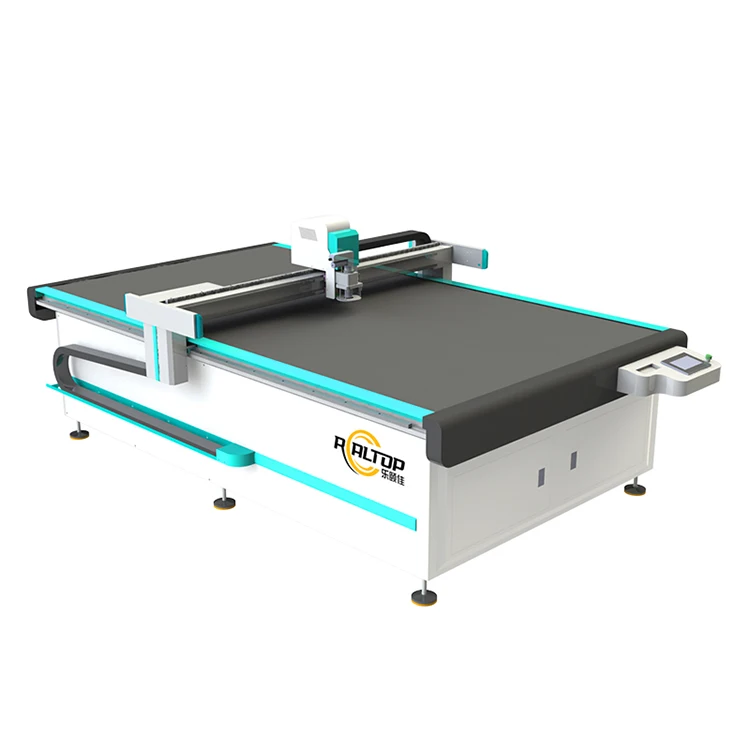
In-house knife and laser technology — a single source for oscillating knife cutting systems, so buyers match the method to the material instead of forcing one process across every fabric, foam, or composite job.
Technical Specifications
| Parameter | Value |
|---|---|
| Model | RT-D2516/RT-S2516 |
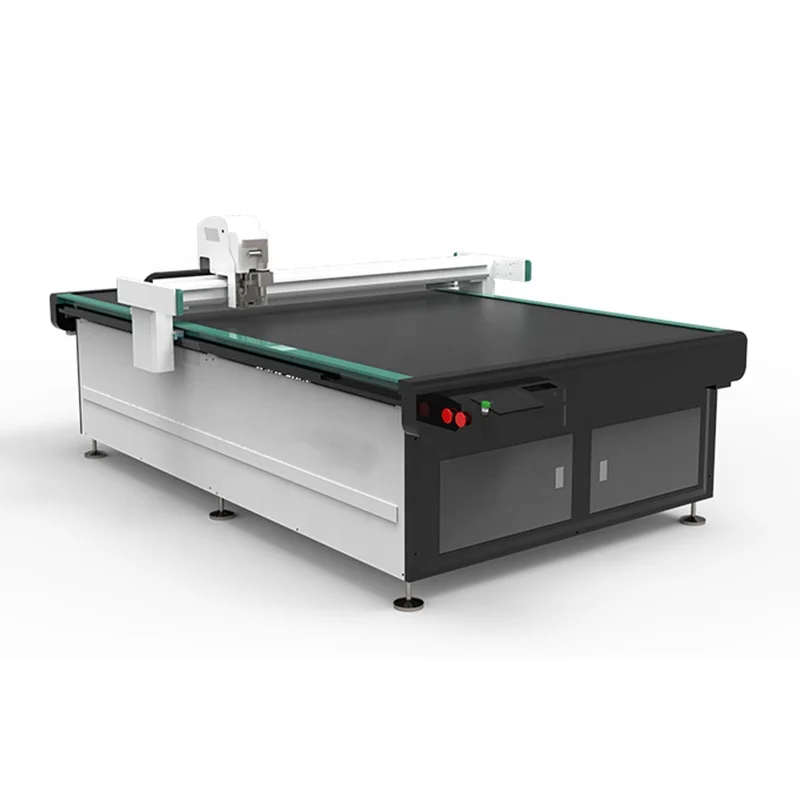
| Product Type | CNC Oscillating Knife Cutting Machine |
| Working Area | 1600 × 2500 mm |
| Machine Size | 3450 × 2300 × 1250 mm |
| Rated Power | 9 kW |
| Vacuum Pump | 7.5 kW |
| Table Type | Flat working table with vacuum and conveyor belt |
| Tool Head | Swiss imported knife with vibration full cutting, vibration half cutting and cursor location |
| Safety Device | Infrared sensors |
| Translational Velocity | 800–1200 mm/s |
| Cutting Speed | 200–800 mm/s (basis not stated in source — confirm material / thickness) |
| Repeated Accuracy | ≤0.1 mm |
| Transmission System | Digital servo motor, linear guide, synchronous belt, imported ball screw |
| Servo Motor | Japanese Yaskawa |
| Guide Rail | Taiwan Hiwin |
| Conveyor Belt | Germany imported |
| Instruction System | HP-GL compatible format |
| Voltage | 380V ± 10% |
| Assembly State | Fully assembled |
Application Suitability
| Application | Material or Output |
|---|---|
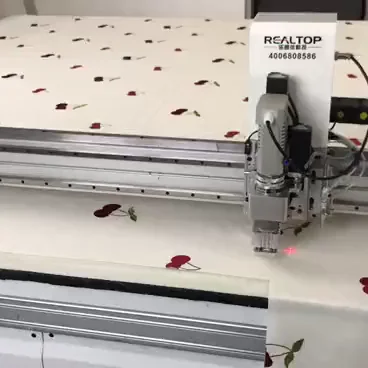
| Garment and baby clothing production | Multi-layer woven cotton, jersey, and elastic rib knit fabrics |
| Footwear and leather goods cutting | Natural leather, PU synthetic, and sponge composite leather |
| Flexible signage and soft gaskets | PVC, soft glass, silicone sheet, and rubber |
| Automotive interior trimming | Sponge composite leather and flexible foam laminates |
Why Working Area Alone Is the Wrong Starting Point
Many buyers specify a CNC oscillating knife cutting machine manufacturer by bed size first and discover later that the tool head cannot penetrate their material stack at full depth. The real question is whether the knife amplitude, vacuum zoning, and feed system together handle your specific fabric weight and layer count. I have watched a garment shop buy a large-format table for multi-layer jersey, only to find the vacuum zones too broad to hold small pattern pieces flat during high-speed traversal. The conveyor belt kept pulling the bottom ply sideways. Sorting out material behavior before locking in the table format avoids that expensive mismatch [NEED_CITE: material holding requirements for multi-layer fabric cutting].
Knife Amplitude and Fabric Edge Behavior
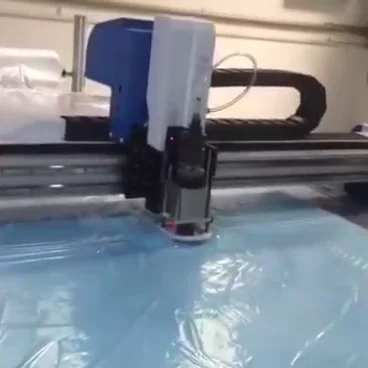
The Swiss imported oscillating knife head on the RT-D2516/RT-S2516 offers both full cutting and half cutting vibration modes. Full mode drives the blade through the entire stack for clean separation of woven and knitted fabrics. Half mode scores the surface layer without penetrating the backing, which matters when cutting sponge composite leather for automotive interiors where the foam substrate must stay intact beneath a decorative skin. The cursor location function adds a positioning reference for manual alignment when CCD contour recognition is not part of the configuration. Choosing the correct vibration mode per material prevents the ragged edges and crushed foam that result from a mismatched stroke.
Conveyor and Vacuum Table Coordination
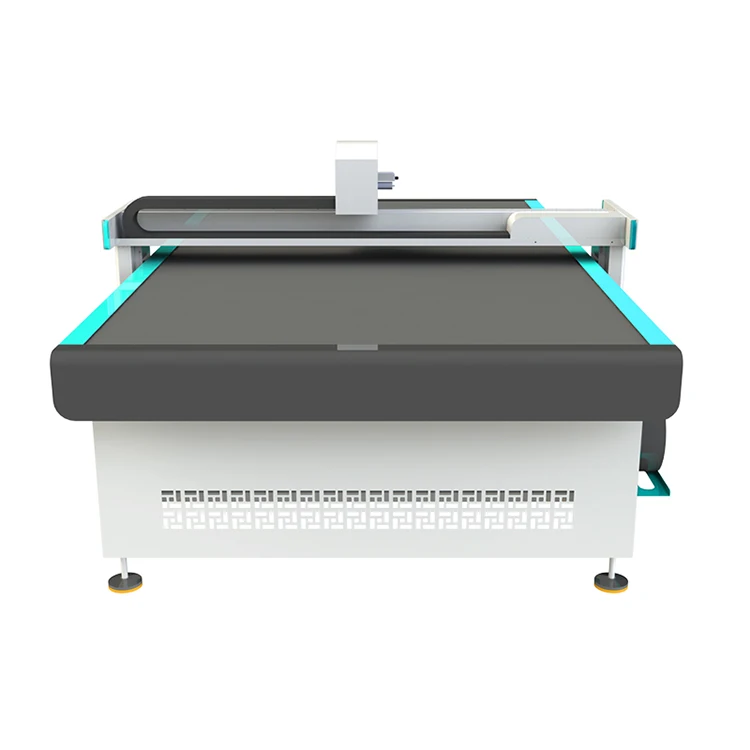
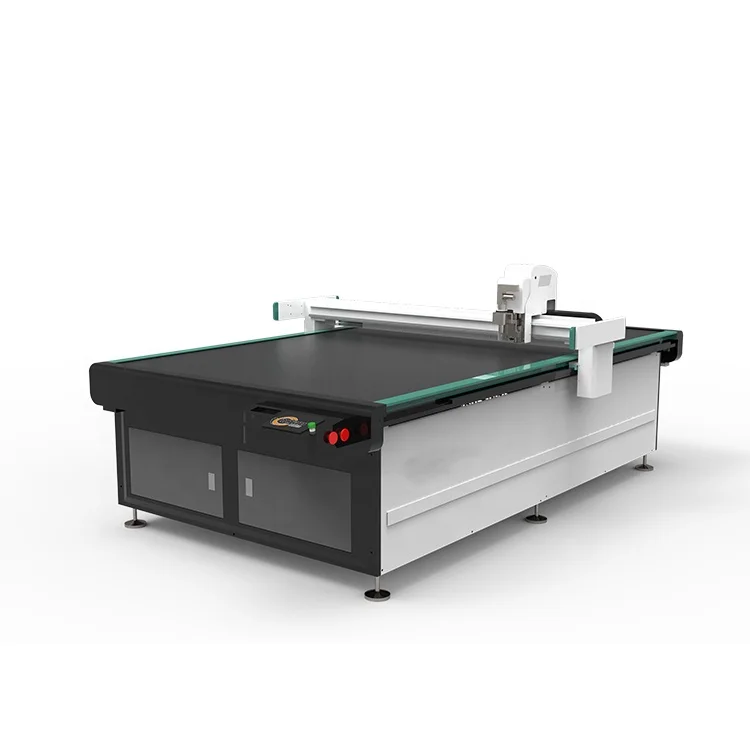
The flat working table pairs a 7.5 kW vacuum pump with a Germany-imported conveyor belt. The vacuum holds flexible materials flat against the belt surface, while the conveyor advances the fabric roll after each cutting cycle completes. This continuous feed arrangement suits high-volume garment shops running long lays of cotton or jersey where stopping to reposition sheets would interrupt throughput. On the RT-D2516/RT-S2516, the translational velocity reaches 800–1200 mm/s for rapid head movement between cut paths, while the actual cutting speed ranges from 200–800 mm/s depending on material resistance and layer count [NEED_CITE: relationship between cutting speed and fabric ply count in oscillating knife systems].
What the Drive and Guidance Components Mean for Repeat Accuracy
The repeated accuracy figure of ≤0.1 mm depends on the entire motion chain working together. Japanese Yaskawa digital servo motors deliver closed-loop positioning, while Taiwan Hiwin linear guide rails keep the gantry square across the full 1600 × 2500 mm travel. The imported ball screw converts rotary motion into linear displacement with minimal backlash. When cutting nested garment patterns where seam allowances run only a few millimeters, any accumulated positional error across a long cutting cycle pushes pieces out of tolerance. This drive specification keeps the head on its programmed path whether the machine is cutting the first piece or the fiftieth.
What Happens When the Tool Head Does Not Match the Material
Selecting a drag knife for thick sponge composite leather instead of an oscillating knife produces crushed edges that require secondary trimming. On the other side, running a high-frequency oscillating blade through thin silicone sheet at the wrong amplitude tears the material rather than slicing it. I have seen buyers commit to a machine based on working area and then spend weeks adjusting blade speed and stroke by hand because the tool head was never validated against their actual stock. A sample cutting report on the buyer’s own material removes this guesswork before the purchase order is signed [NEED_CITE: tool head selection criteria for flexible non-metallic materials].
Why Sourcing from One Technology House Matters
Realtop designs and builds both knife and laser cutting systems in-house, which means a buyer evaluating the RT-D2516/RT-S2516 can discuss whether oscillating knife is genuinely the right process or whether a CO2 laser would seal the edges of their synthetic fabric more effectively. The tool head and table configuration are specified per material and production volume rather than offered as a fixed package. Voltage, control language, and plug type are confirmed for the destination market before production starts. HP-GL software compatibility is verified against the buyer’s existing nesting workflow so file transfer happens without intermediate conversion. Sample cutting on the buyer’s actual fabric or leather is completed before commitment, so the quoted cutting speed reflects real behavior rather than a catalog figure.
Documentation & Verification
- Machine specification sheet listing tool head mode and table configuration matched to your material
- Electrical schematic confirming 380V ± 10% supply and circuit protection for your facility
- Sample cutting report produced on your fabric or leather stock with measured edge quality
- Software licence documentation with HP-GL file format compatibility confirmation
- Factory test record showing repeated accuracy verification across the full working area
- Packing photographs documenting machine condition and accessory completeness before crating
Installation, Commissioning & Support
- Fully assembled delivery of the 3450 × 2300 × 1250 mm frame requiring only utility connections
- Dedicated 380V three-phase circuit with confirmed amperage for the 9 kW rated power draw
- Vacuum pump commissioning with zone balancing across the conveyor table surface
- Servo drive calibration and repeated accuracy verification on your production material
- Operator training covering tool head changeover between full cutting and half cutting modes
- Spare parts list identifying Swiss knife blades, conveyor belt sections, and infrared sensor units
Preparing Your Inquiry
Share the exact fabric type, layer count, and maximum sheet width you plan to run so the table format and vacuum zoning can be matched to your output. Specify your local voltage and frequency along with the control language your operators need. Let us know whether your nesting software exports HP-GL or another vector format so compatibility is confirmed before the machine enters production.
Frequently Asked Questions
Q: Should I choose oscillating knife or laser cutting for my fabric production?
A: Oscillating knife suits multi-layer natural fabrics and materials where edge sealing is not required. Laser cutting seals synthetic edges automatically but produces melt residue on natural fibers. The correct choice depends on your fabric composition, layer count, and whether the finished edge needs to remain soft against skin. Submit your actual material for a comparative sample cut on both systems.
Q: How do I verify the machine can cut my material thickness?
A: Request a sample cutting report run on your own fabric or leather stock at the layer count you intend to produce. The report documents cutting speed, blade type, edge quality, and dimensional accuracy. This avoids relying on catalog figures that may reflect a different material than yours.
Q: What working area do I actually need for garment cutting?
A: Match the table width to your widest fabric roll and the length to your marker layout. The 1600 × 2500 mm area on the RT-D2516/RT-S2516 handles standard apparel lays. Oversized tables waste vacuum capacity on empty zones, while undersized tables force you to split markers and reduce yield.
Q: Will the software accept my existing nesting files?
A: The instruction system accepts HP-GL compatible format. Before ordering, send a sample file from your nesting software so the controller can import and execute it. Any required post-processor adjustment is identified at this stage rather than after delivery.
Q: How is voltage and plug configuration handled for export?
A: The standard supply is 380V ± 10%, but voltage and plug type are confirmed for your destination market before production begins. The electrical schematic included in the documentation package reflects the exact configuration shipped, so your electrician can prepare the connection point in advance.










商品评价
There are no reviews yet.