

Fast Delivery
Quick, reliable shipping to any location.

Free & easy returns
Return this item by mail or in store within 90 days for a full refund.
Match the Method to the Material — we design and build both oscillating knife and laser cutting systems in-house, so a packaging sample maker can survey the full equipment range and select the cutting method that fits corrugated flute, greyboard, or foam — rather than being forced into one technology.
Technical Specifications
| Parameter | Value |
|---|---|
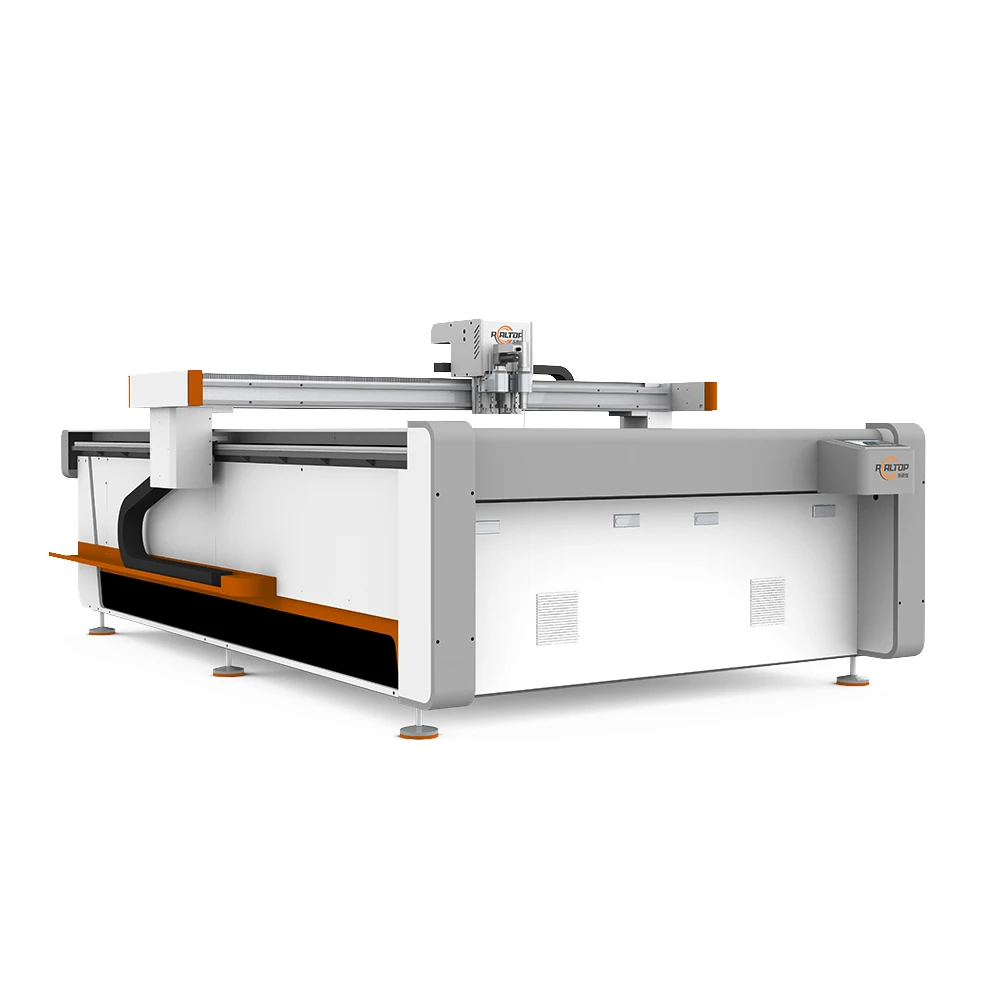
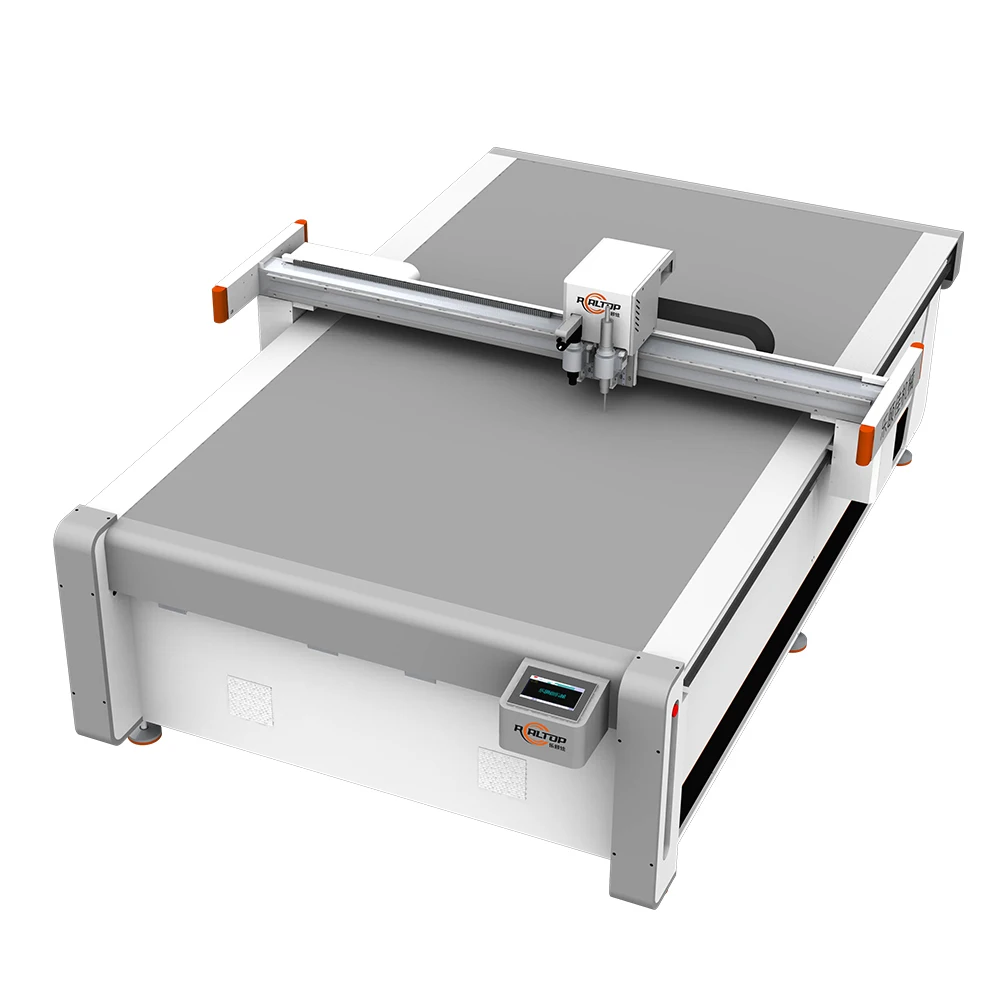
| Product Type | CNC Oscillating Knife Cutting Machine |
| Model | 1625 |
| Working Area | 1600×2500 mm |
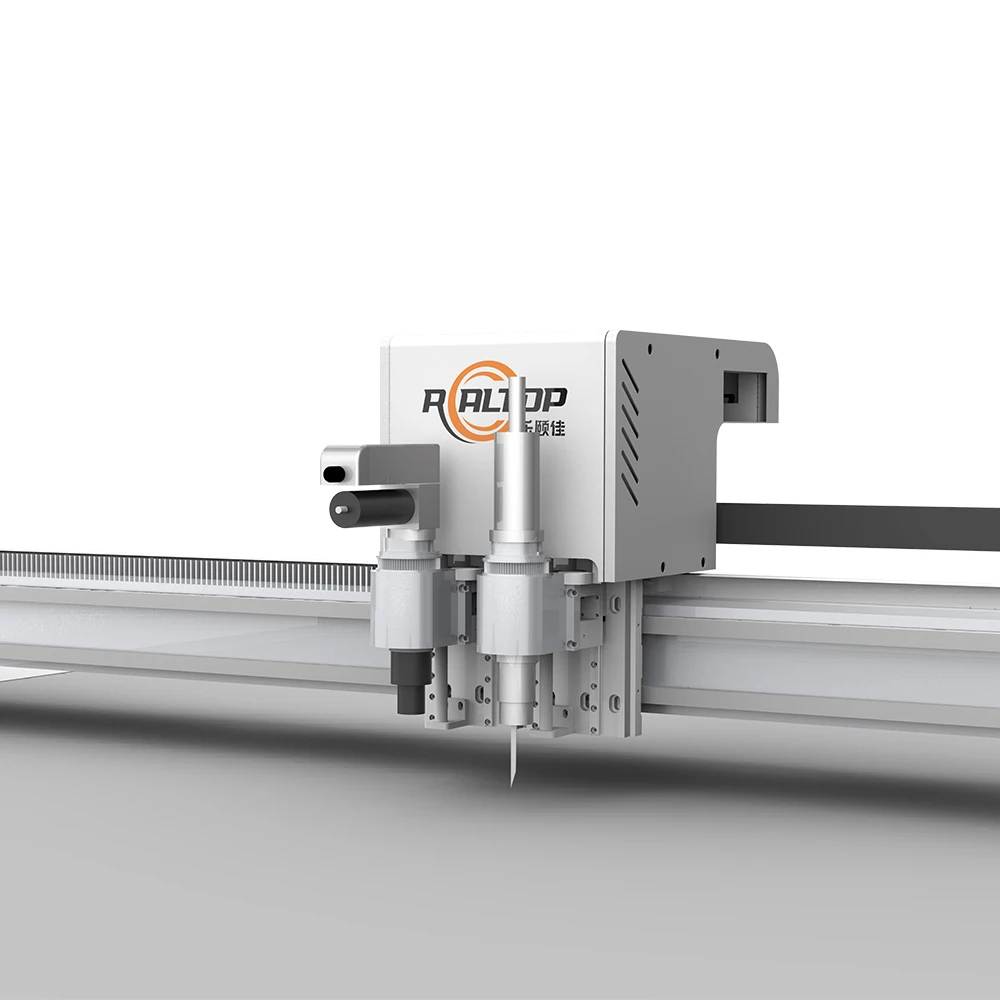
| Tool Head Options | Oscillating knife, Driven rotary knife, Creasing wheel, Kiss cutting tool, Pneumatic knife, Milling tool, V groove knife |
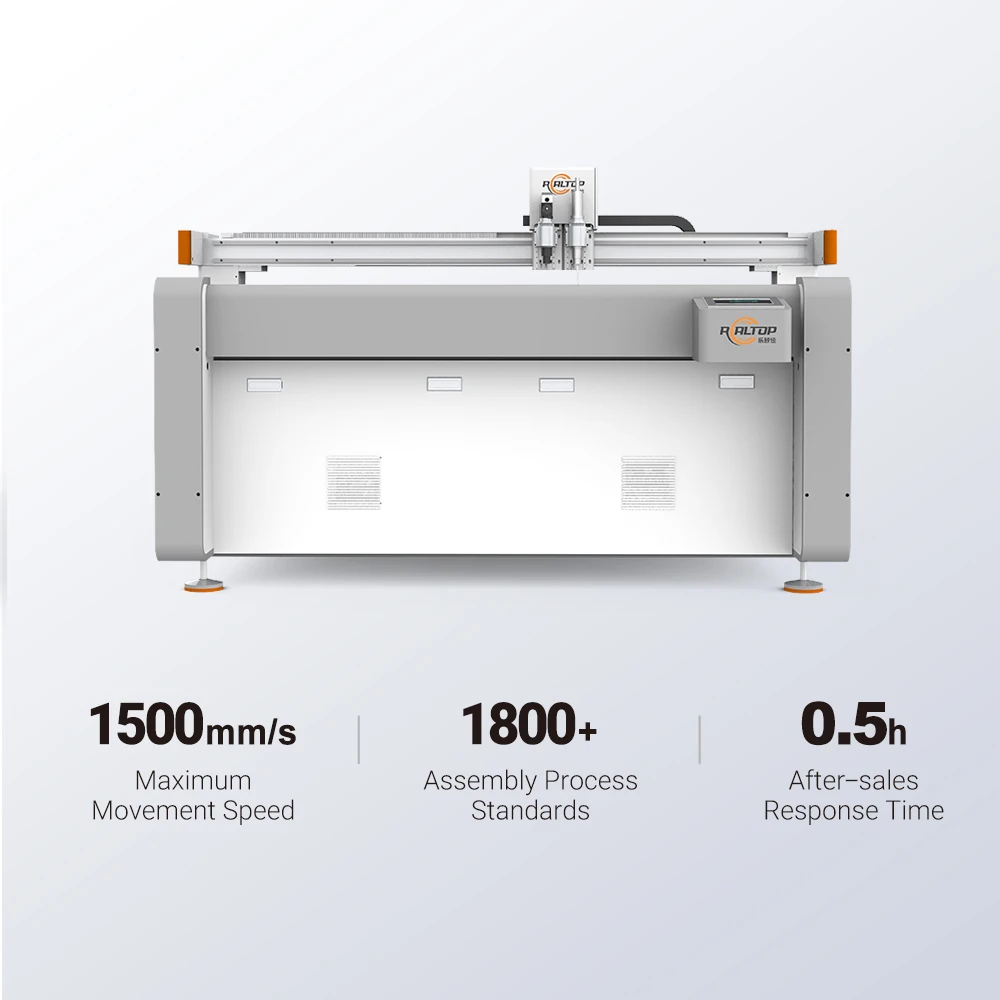
| Cutting Speed | 0-1500 mm/s |
| Cutting Thickness | ≤ 40mm (basis not stated in source — confirm material type / density) |
| Cutting Accuracy | ±0.1 mm |
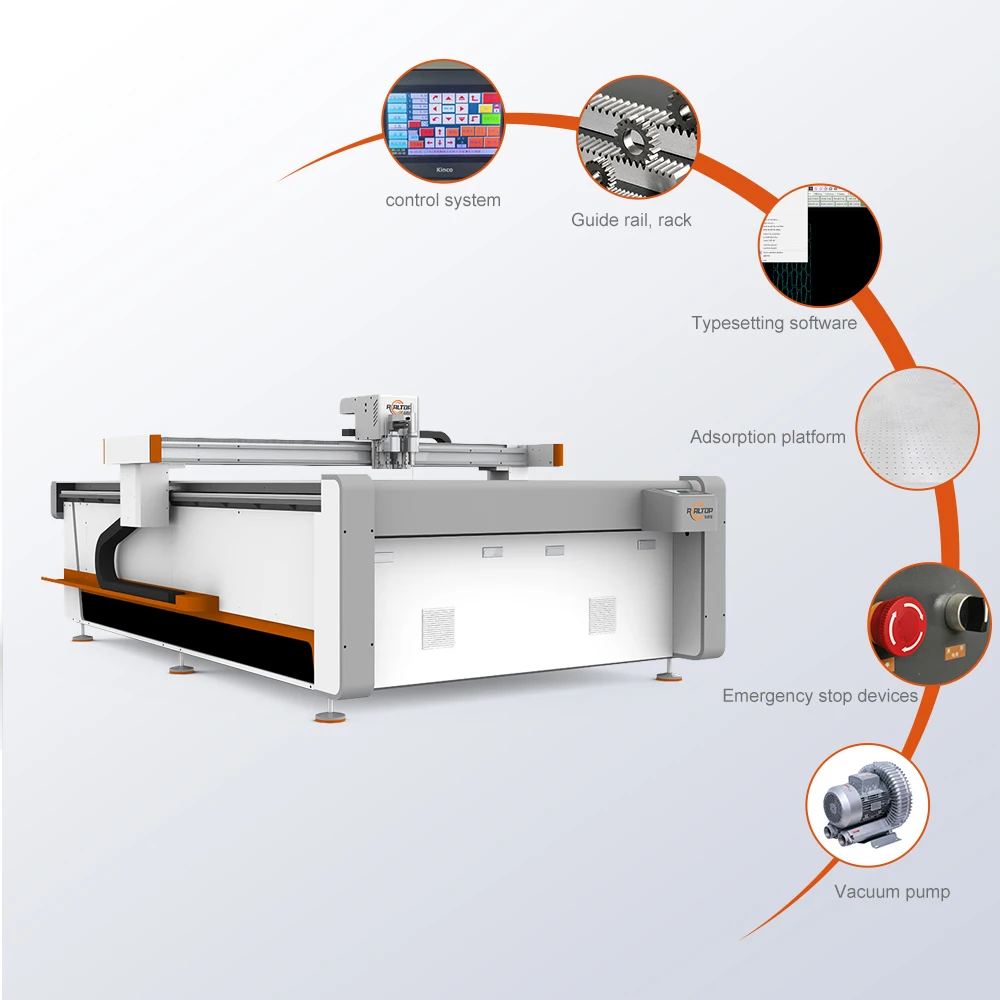
| Vacuum Table | Aluminum bellows vacuum table |
| Vacuum Pump Power | 9 kW |
| Voltage Options | 110V, 220V, 380V |
| Control System | PLC control panel (source value — verify against manufacturer catalog) |
| Servo Motor Brands | Panasonic, Delta, Dorna (source value — verify against manufacturer catalog) |
| File Formats Supported | PLT, DXF, AI, PDF |
| Safety Device | Infrared sensor device and emergency stop device |
| Machine Dimensions | 3300×2100×1350 mm |
| Language Options | English, Russian, Italian, Chinese (customizable) |
| Standards | CE (source value — verify certificate scope and validity) |
Application Suitability
| Application | Material or Output |
|---|---|
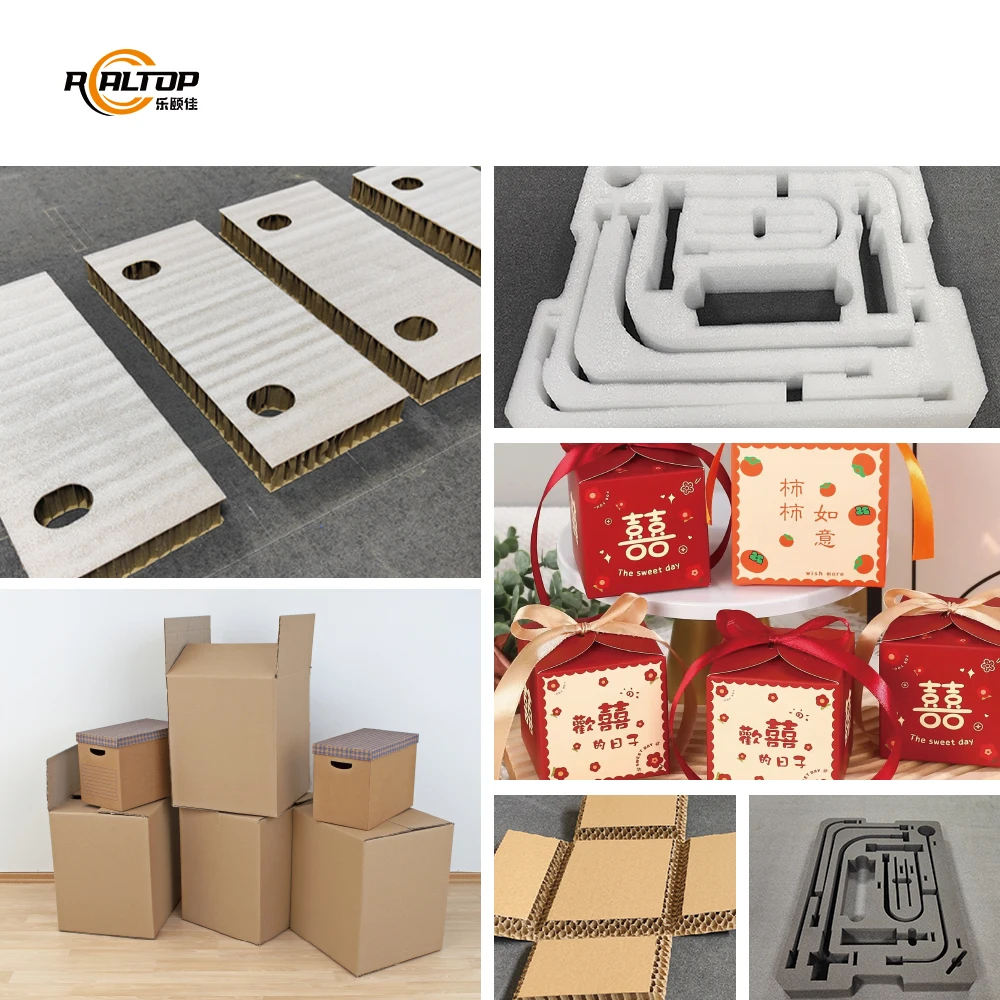
| Packaging sample making and short-run production | Corrugated cardboard (E/B/BC-flute), greyboard, cardstock, art paper |
| Foam packaging fabrication | EVA, EPE, PU foam |
| Gasket and seal cutting | Rubber, PTFE |
| Leather and synthetic leather goods prototyping | Natural and synthetic leather |
| Composite and adhesive-backed material cutting | Multi-layer composites, adhesive films |
| Signage and display board production | PVC, PET, thin plastic sheets |
Why the Tool Head Decision Comes Before the Price
A CNC oscillating knife cutting machine manufacturer must ask what you are cutting before quoting a bed size, because the wrong tool head on the wrong material produces ragged edges and crushed flutes rather than clean sample-ready output.
I have seen packaging sample makers spec a flatbed cutter on working area alone, then discover the single oscillating knife cannot crease greyboard cleanly or kiss-cut adhesive-backed labels. The result is rework, blade changes, and missed client deadlines. [NEED_CITE: flatbed digital cutting tool head selection by material type] When buyers survey the full range of cutting equipment, matching the tool to the substrate becomes the real starting point.
Knife Versus Laser: Where Each Method Sits
The choice between an oscillating knife and a laser comes down to material behavior. Corrugated cardboard and multi-layer composites generally cut cleaner under a knife because the blade shears through fibers without sealing edges that need to be folded or glued later. Foam packaging for electronics or furniture often requires knife cutting to avoid melting the cell structure.
A CNC oscillating knife cutting machine manufacturer that builds both technologies can show you side-by-side sample cuts on your own stock, so the decision rests on edge quality and downstream processing rather than catalog claims.
Surveying the Full Equipment Range
Buyers evaluating flatbed cutting systems often start with a single material but end up running a mix — corrugated for carton samples, PVC for signage, EVA for protective inserts. Having access to a complete catalogue of knife and laser systems means you can compare where each machine family sits by material stack and daily volume before committing.
This model offers seven interchangeable tool heads, from a creasing wheel for carton fold lines to a V groove knife for beveled foam edges. [NEED_CITE: CNC flatbed cutting system configuration options for mixed-material workshops] A buyer surveying options before narrowing to a method benefits from seeing the entire lineup rather than evaluating one machine in isolation.
Reading the Specs That Matter for Packaging Work
The 1600×2500 mm working area handles standard packaging sample sheets and most short-run display board formats without repositioning. The aluminum bellows vacuum table paired with a 9 kW pump secures thin cardstock and thicker BC-flute boards alike, preventing material lift that would otherwise shift cut lines off register.
The ±0.1 mm cutting accuracy, driven by PLC-controlled multi-axis servo options, matters most when creasing wheels and kiss cutting tools need to land within tight tolerances on printed registration marks. File format support for PLT, DXF, AI, and PDF means structural packaging designs from common CAD packages import without conversion steps that introduce geometry errors.
The Hidden Cost of a Misconfigured Flatbed
Selecting a vacuum table without considering part size leads to small packaging components lifting mid-cut, especially on low-density foam or thin art paper. The blade then drags the material instead of shearing it, and the edge quality drops below what a client will accept for a presentation sample. [NEED_CITE: vacuum table zoning requirements for small-part digital cutting]
Skipping the sample cutting step before commitment means discovering thickness limitations only after the machine arrives. A stated cutting depth without material density context can overstate what the knife achieves on dense greyboard versus soft EPE foam.
Why Buyers Source the Complete Range Here
In-house design and production cover both knife and laser technologies, so a buyer surveying the complete cutting equipment range gets an honest comparison rather than a single-technology pitch.
Tool head and table configuration are specified per material and production volume, with sample cutting on the buyer’s own stock validating edge quality before order confirmation.
Software compatibility is confirmed before shipment, covering the buyer’s existing nesting or structural design workflow to avoid format conversion losses.
Voltage, plug type, and control language are locked in during the specification stage, so the machine arrives ready for the installation site’s electrical standard.
Documentation & Verification
- Machine specification sheet confirming working area, tool head list, and voltage for your market
- Sample cutting report on your corrugated or foam stock before commitment
- Electrical schematic and voltage confirmation matching your site’s phase and frequency
- Software licence and file format compatibility note for your existing CAD workflow
- Tool head and table configuration list matched to your material stack
- Factory test record documenting cutting accuracy on your specified substrates
Installation, Commissioning & Support
- Floor space planning for 3300×2100 mm machine footprint plus material feed clearance
- Dedicated circuit for 9 kW vacuum pump and servo drives at confirmed voltage and phase
- Assembly and leveling of aluminum bellows vacuum table on-site after delivery
- First-run parameter tuning for oscillating knife frequency and creasing wheel pressure on your materials
- Operator training on PLC control panel with confirmed language setting
- Spare blade and creasing wheel inventory list matched to your daily cutting volume
Requesting a Configuration Recommendation
Share the material types, flute grades, and sheet thicknesses you run most often so we can map each to the correct tool head. Confirm your local voltage and frequency, the control language your operators need, and whether your existing structural design software exports to PLT, DXF, AI, or PDF. If you can send sample sheets, we cut them here and return a report covering edge quality and cycle time before you evaluate a quotation.
Frequently Asked Questions
Q: How do I decide between knife cutting and laser for my packaging materials?
A: Knife cutting suits corrugated cardboard, greyboard, and foam where fold lines and clean unsheared edges matter for downstream assembly. Laser works for acrylic displays and thin film where sealed edges are acceptable. We build both systems in-house and can run your material on each so you compare edge quality directly before choosing.
Q: What material density or flute type is the stated cutting thickness based on?
A: The published thickness figure depends on material density and structure — soft EPE foam cuts deeper than dense BC-flute corrugated board at the same setting. We verify actual cutting depth on your specific material during the sample cutting stage and document the result before you place an order.
Q: What voltage, plug, and control language options are confirmed before shipment?
A: Voltage options include 110V, 220V, and 380V, with plug type matched to your market. The PLC control panel language is set before dispatch from available options including English, Russian, Italian, and Chinese, or customized to your requirement. All electrical details are confirmed in writing before production begins.
Q: Can I compare the full machine family lineup before narrowing to one model?
A: Yes. Our catalogue covers oscillating knife, drag knife, CO2 laser, and fiber laser systems, each mapped by material type, thickness range, and production volume. Buyers surveying options before commitment can review where each machine family sits and request sample cuts on multiple systems to compare output quality.
Q: Do you provide sample cutting on my own material before I place an order?
A: We cut your actual stock — corrugated board, greyboard, foam, or composite — and return a sample cutting report covering edge quality, achievable depth, and cycle time. This step removes guesswork about whether the configured tool head handles your specific material before you commit to a purchase.
Match the Method to the Material — we design and build both oscillating knife and laser cutting systems in-house, so a packaging sample maker can survey the full equipment range and select the cutting method that fits corrugated flute, greyboard, or foam — rather than being forced into one technology.
Technical Specifications
| Parameter | Value |
|---|---|
| Product Type | CNC Oscillating Knife Cutting Machine |
| Model | 1625 |
| Working Area | 1600×2500 mm |
| Tool Head Options | Oscillating knife, Driven rotary knife, Creasing wheel, Kiss cutting tool, Pneumatic knife, Milling tool, V groove knife |
| Cutting Speed | 0-1500 mm/s |
| Cutting Thickness | ≤ 40mm (basis not stated in source — confirm material type / density) |
| Cutting Accuracy | ±0.1 mm |
| Vacuum Table | Aluminum bellows vacuum table |
| Vacuum Pump Power | 9 kW |
| Voltage Options | 110V, 220V, 380V |
| Control System | PLC control panel (source value — verify against manufacturer catalog) |
| Servo Motor Brands | Panasonic, Delta, Dorna (source value — verify against manufacturer catalog) |
| File Formats Supported | PLT, DXF, AI, PDF |
| Safety Device | Infrared sensor device and emergency stop device |
| Machine Dimensions | 3300×2100×1350 mm |
| Language Options | English, Russian, Italian, Chinese (customizable) |
| Standards | CE (source value — verify certificate scope and validity) |
Application Suitability
| Application | Material or Output |
|---|---|
| Packaging sample making and short-run production | Corrugated cardboard (E/B/BC-flute), greyboard, cardstock, art paper |
| Foam packaging fabrication | EVA, EPE, PU foam |
| Gasket and seal cutting | Rubber, PTFE |
| Leather and synthetic leather goods prototyping | Natural and synthetic leather |
| Composite and adhesive-backed material cutting | Multi-layer composites, adhesive films |
| Signage and display board production | PVC, PET, thin plastic sheets |
Why the Tool Head Decision Comes Before the Price
A CNC oscillating knife cutting machine manufacturer must ask what you are cutting before quoting a bed size, because the wrong tool head on the wrong material produces ragged edges and crushed flutes rather than clean sample-ready output.
I have seen packaging sample makers spec a flatbed cutter on working area alone, then discover the single oscillating knife cannot crease greyboard cleanly or kiss-cut adhesive-backed labels. The result is rework, blade changes, and missed client deadlines. [NEED_CITE: flatbed digital cutting tool head selection by material type] When buyers survey the full range of cutting equipment, matching the tool to the substrate becomes the real starting point.
Knife Versus Laser: Where Each Method Sits
The choice between an oscillating knife and a laser comes down to material behavior. Corrugated cardboard and multi-layer composites generally cut cleaner under a knife because the blade shears through fibers without sealing edges that need to be folded or glued later. Foam packaging for electronics or furniture often requires knife cutting to avoid melting the cell structure.
A CNC oscillating knife cutting machine manufacturer that builds both technologies can show you side-by-side sample cuts on your own stock, so the decision rests on edge quality and downstream processing rather than catalog claims.
Surveying the Full Equipment Range
Buyers evaluating flatbed cutting systems often start with a single material but end up running a mix — corrugated for carton samples, PVC for signage, EVA for protective inserts. Having access to a complete catalogue of knife and laser systems means you can compare where each machine family sits by material stack and daily volume before committing.
This model offers seven interchangeable tool heads, from a creasing wheel for carton fold lines to a V groove knife for beveled foam edges. [NEED_CITE: CNC flatbed cutting system configuration options for mixed-material workshops] A buyer surveying options before narrowing to a method benefits from seeing the entire lineup rather than evaluating one machine in isolation.
Reading the Specs That Matter for Packaging Work
The 1600×2500 mm working area handles standard packaging sample sheets and most short-run display board formats without repositioning. The aluminum bellows vacuum table paired with a 9 kW pump secures thin cardstock and thicker BC-flute boards alike, preventing material lift that would otherwise shift cut lines off register.
The ±0.1 mm cutting accuracy, driven by PLC-controlled multi-axis servo options, matters most when creasing wheels and kiss cutting tools need to land within tight tolerances on printed registration marks. File format support for PLT, DXF, AI, and PDF means structural packaging designs from common CAD packages import without conversion steps that introduce geometry errors.
The Hidden Cost of a Misconfigured Flatbed
Selecting a vacuum table without considering part size leads to small packaging components lifting mid-cut, especially on low-density foam or thin art paper. The blade then drags the material instead of shearing it, and the edge quality drops below what a client will accept for a presentation sample. [NEED_CITE: vacuum table zoning requirements for small-part digital cutting]
Skipping the sample cutting step before commitment means discovering thickness limitations only after the machine arrives. A stated cutting depth without material density context can overstate what the knife achieves on dense greyboard versus soft EPE foam.
Why Buyers Source the Complete Range Here
In-house design and production cover both knife and laser technologies, so a buyer surveying the complete cutting equipment range gets an honest comparison rather than a single-technology pitch.
Tool head and table configuration are specified per material and production volume, with sample cutting on the buyer’s own stock validating edge quality before order confirmation.
Software compatibility is confirmed before shipment, covering the buyer’s existing nesting or structural design workflow to avoid format conversion losses.
Voltage, plug type, and control language are locked in during the specification stage, so the machine arrives ready for the installation site’s electrical standard.
Documentation & Verification
- Machine specification sheet confirming working area, tool head list, and voltage for your market
- Sample cutting report on your corrugated or foam stock before commitment
- Electrical schematic and voltage confirmation matching your site’s phase and frequency
- Software licence and file format compatibility note for your existing CAD workflow
- Tool head and table configuration list matched to your material stack
- Factory test record documenting cutting accuracy on your specified substrates
Installation, Commissioning & Support
- Floor space planning for 3300×2100 mm machine footprint plus material feed clearance
- Dedicated circuit for 9 kW vacuum pump and servo drives at confirmed voltage and phase
- Assembly and leveling of aluminum bellows vacuum table on-site after delivery
- First-run parameter tuning for oscillating knife frequency and creasing wheel pressure on your materials
- Operator training on PLC control panel with confirmed language setting
- Spare blade and creasing wheel inventory list matched to your daily cutting volume
Requesting a Configuration Recommendation
Share the material types, flute grades, and sheet thicknesses you run most often so we can map each to the correct tool head. Confirm your local voltage and frequency, the control language your operators need, and whether your existing structural design software exports to PLT, DXF, AI, or PDF. If you can send sample sheets, we cut them here and return a report covering edge quality and cycle time before you evaluate a quotation.
Frequently Asked Questions
Q: How do I decide between knife cutting and laser for my packaging materials?
A: Knife cutting suits corrugated cardboard, greyboard, and foam where fold lines and clean unsheared edges matter for downstream assembly. Laser works for acrylic displays and thin film where sealed edges are acceptable. We build both systems in-house and can run your material on each so you compare edge quality directly before choosing.
Q: What material density or flute type is the stated cutting thickness based on?
A: The published thickness figure depends on material density and structure — soft EPE foam cuts deeper than dense BC-flute corrugated board at the same setting. We verify actual cutting depth on your specific material during the sample cutting stage and document the result before you place an order.
Q: What voltage, plug, and control language options are confirmed before shipment?
A: Voltage options include 110V, 220V, and 380V, with plug type matched to your market. The PLC control panel language is set before dispatch from available options including English, Russian, Italian, and Chinese, or customized to your requirement. All electrical details are confirmed in writing before production begins.
Q: Can I compare the full machine family lineup before narrowing to one model?
A: Yes. Our catalogue covers oscillating knife, drag knife, CO2 laser, and fiber laser systems, each mapped by material type, thickness range, and production volume. Buyers surveying options before commitment can review where each machine family sits and request sample cuts on multiple systems to compare output quality.
Q: Do you provide sample cutting on my own material before I place an order?
A: We cut your actual stock — corrugated board, greyboard, foam, or composite — and return a sample cutting report covering edge quality, achievable depth, and cycle time. This step removes guesswork about whether the configured tool head handles your specific material before you commit to a purchase.










商品评价
There are no reviews yet.