




Fast Delivery
Quick, reliable shipping to any location.

Free & easy returns
Return this item by mail or in store within 90 days for a full refund.
Tool head and table configuration specified per material and production volume — rather than selling one model, we match the oscillating knife type, vacuum zoning and CCD setup to your actual gasket compound and daily throughput before an order is placed.
Technical Specifications
| Parameter | Value |
|---|---|
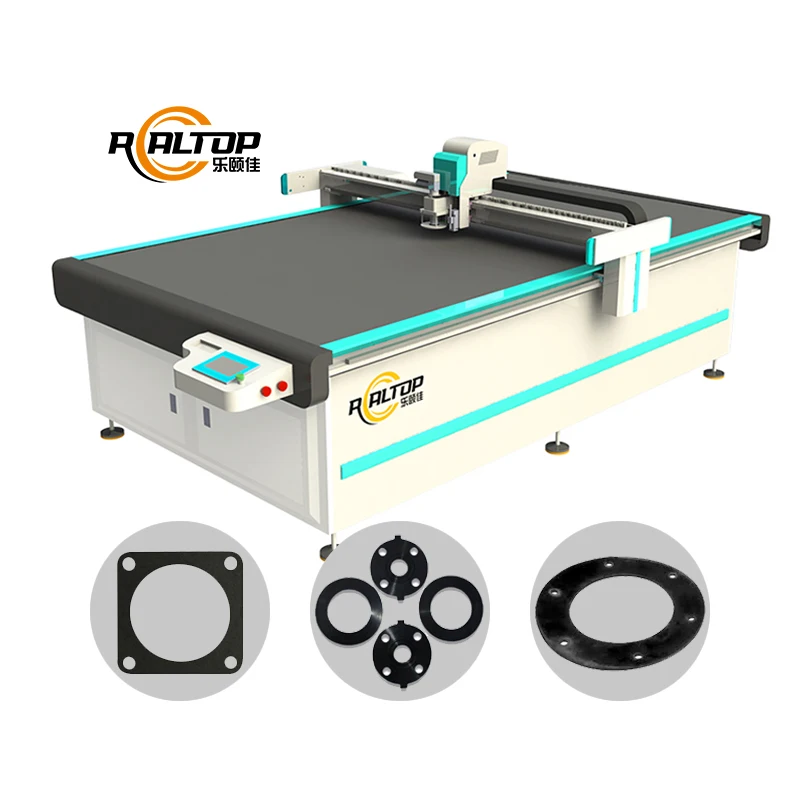
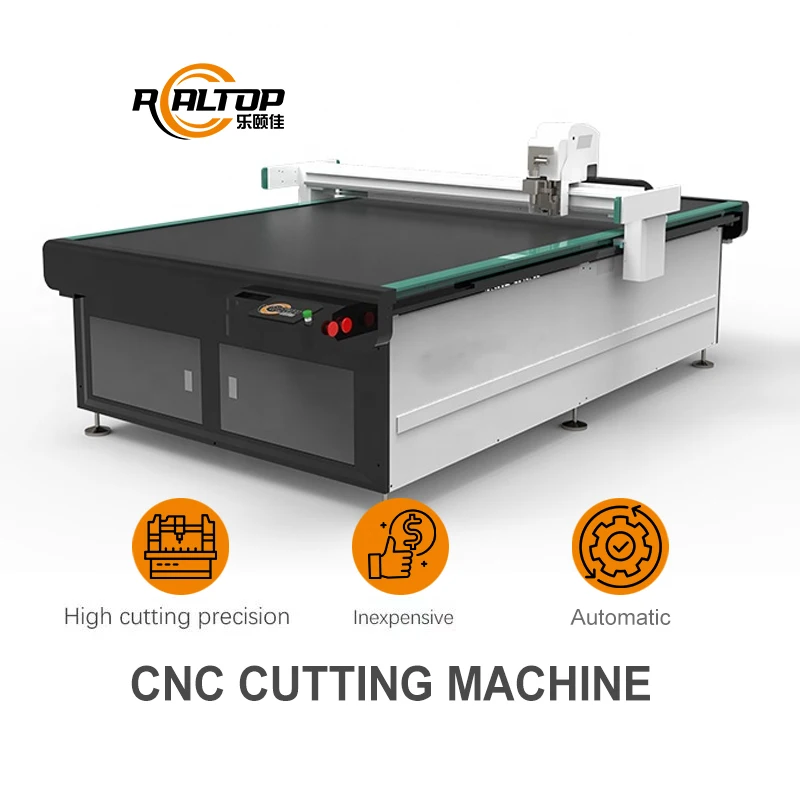
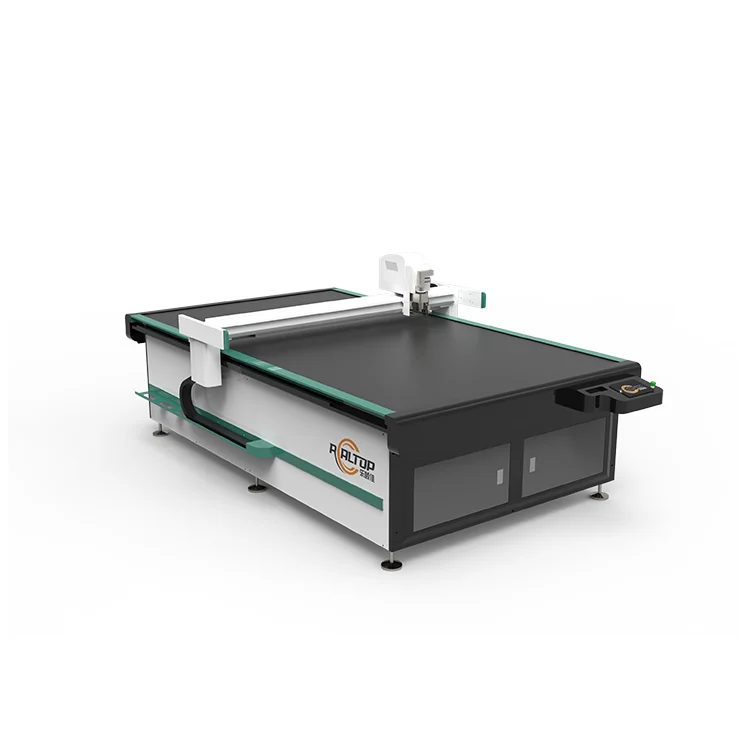
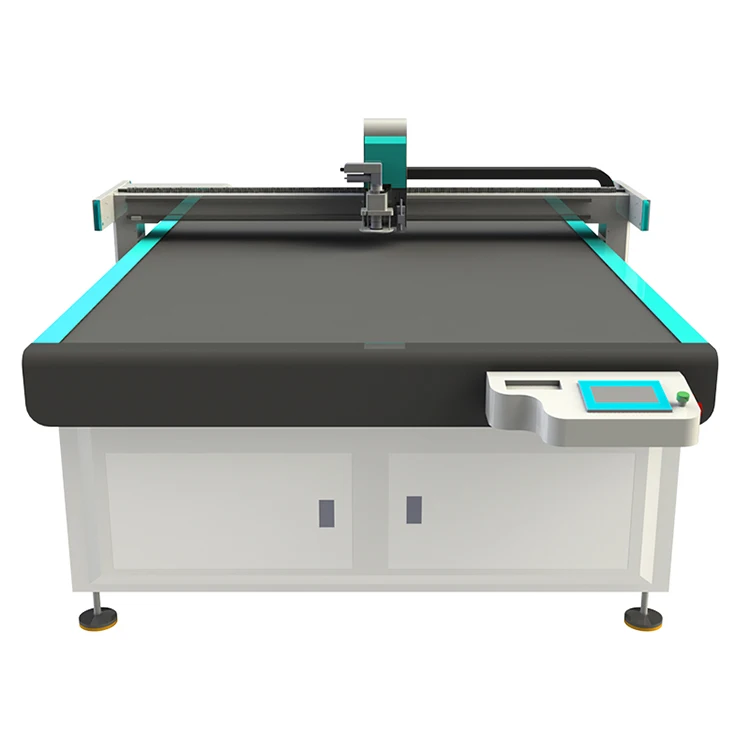
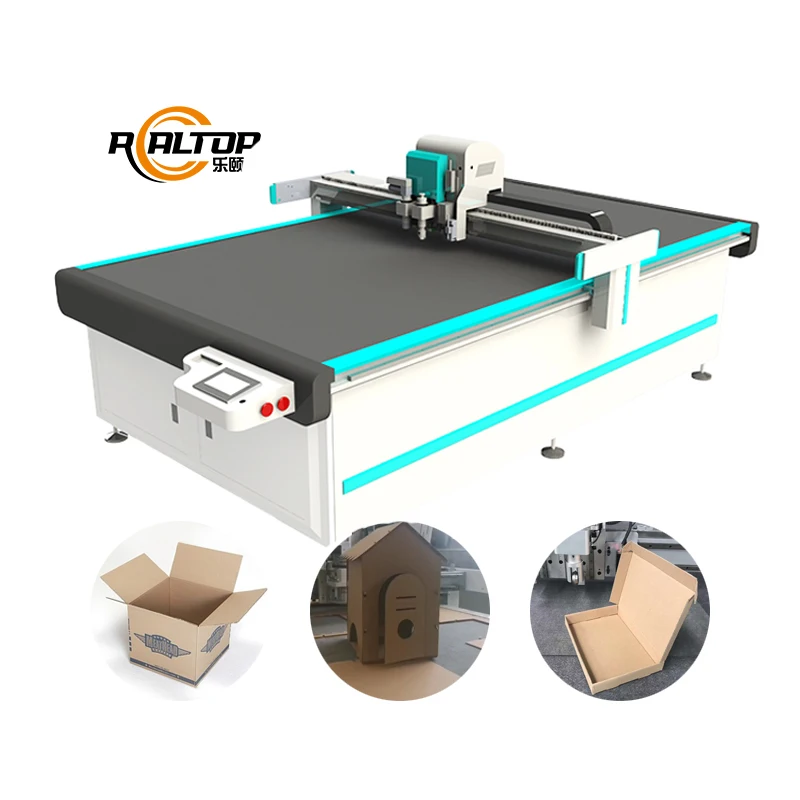
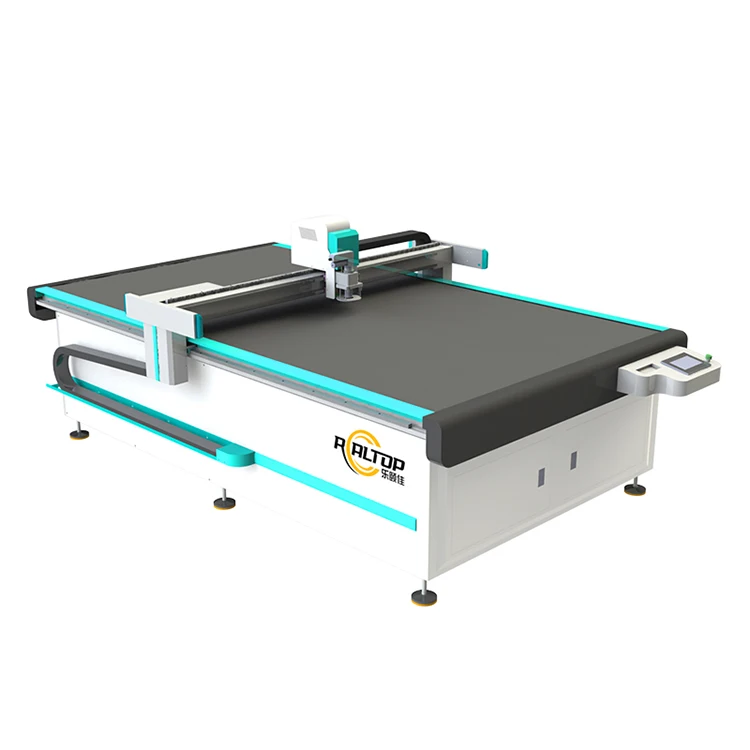
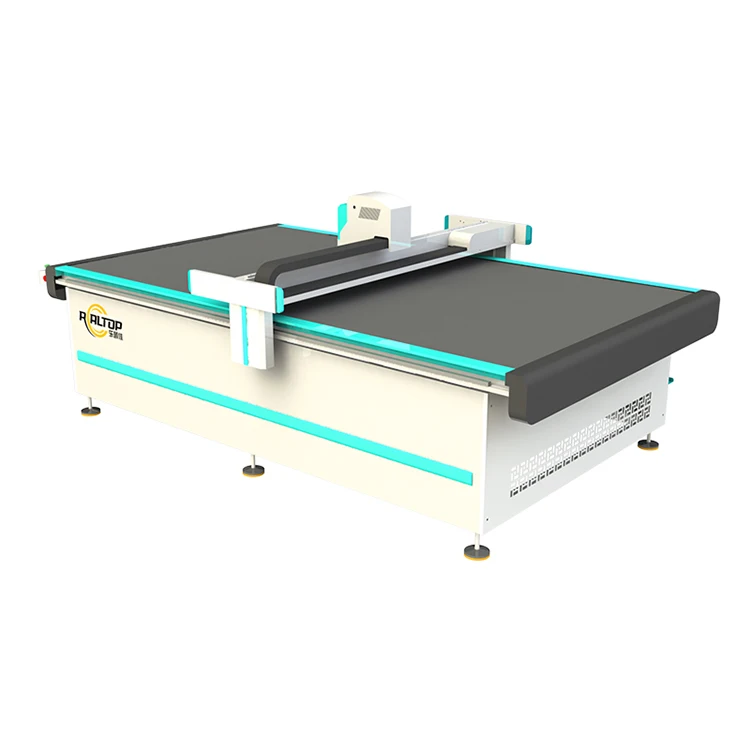
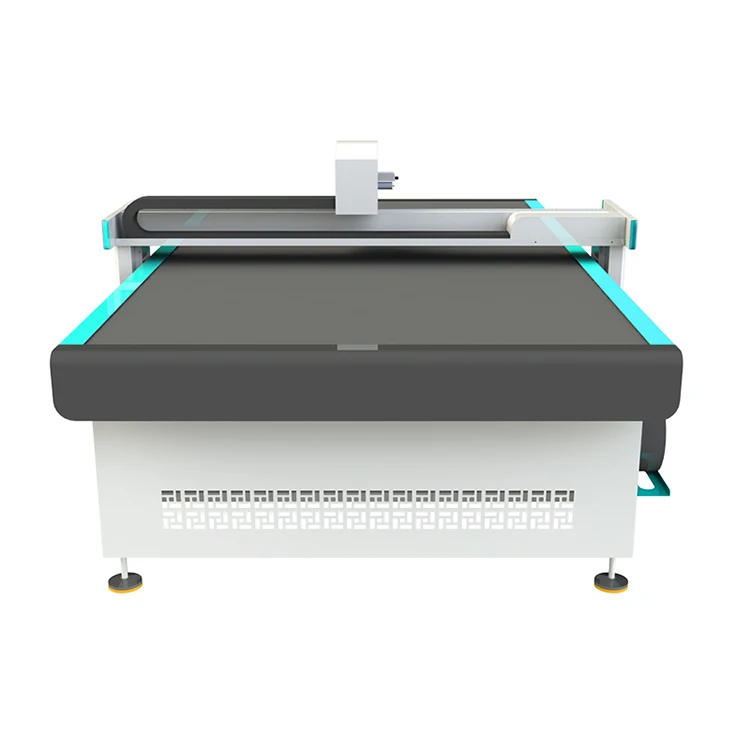
| Product Type | CNC Oscillating Knife Gasket Cutting Machine |
| Working Area | 1600 × 2500 mm |
| Machine Size | 3450 × 2300 × 1250 mm |
| Rated Power | 9 kW |
| Table Type | Magnesium-aluminum alloy vacuum adsorption, PVDF fluorocarbon sprayed, anodic and hard oxidation |
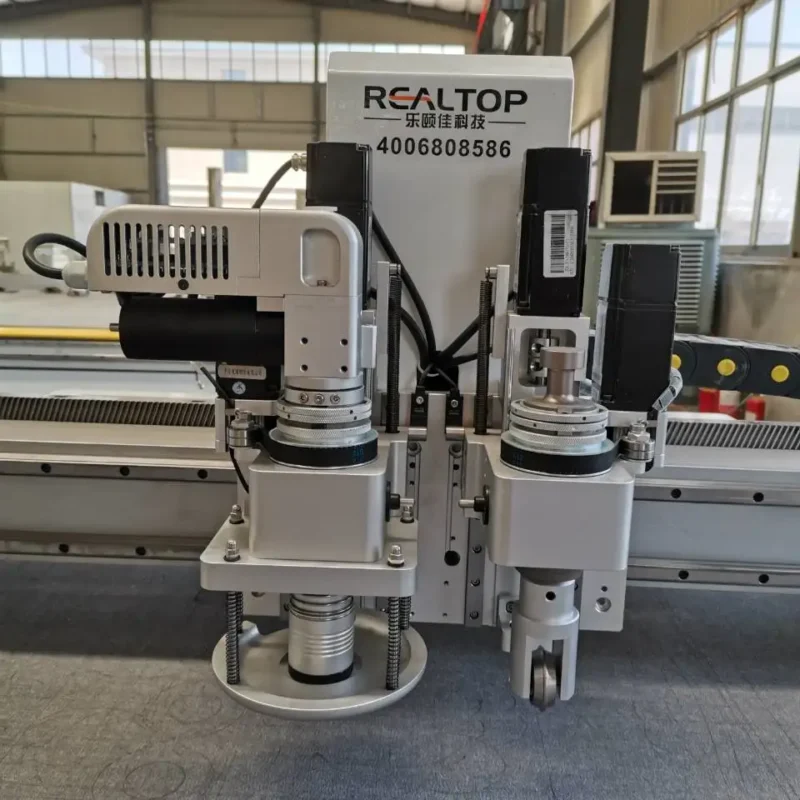
| Multifunctional Head | Swiss imported knife (full cut / half cut / cursor location); optional: pneumatic knife, high-power vibrating knife, circular knife, V-cutting knife, drag knife, creasing wheel, dotted line knife, punching, brush |
| Visual Positioning | Small CCD camera mark point positioning, panoramic camera recognition, projection positioning |
| Translational Velocity | 800–1200 mm/s |
| Cutting Thickness | 20–80 mm (material dependent) |
| Repeated Accuracy | ≤0.1 mm |
| Transmission System | Digital servo motor, linear guide, synchronous belt, imported ball screw |
| Servo Motor | Delta (optional Panasonic), IP67 waterproof, vibration suppression |
| Vacuum Pump | 7.5 kW, aviation aluminum shell, built-in silencer sponge (noise reduction 35%) |
| Guide Rail | Taiwan Hiwin |
| Frame | Thick-walled seamless steel structure, high-temperature tempering, CNC machining center finished |
| Voltage | 380V ±10% |
| Instruction System | HP-GL compatible format |
| Safety Device | Infrared sensors, beam anti-collision, emergency stop |
Application Suitability
| Application | Material or Output |
|---|---|
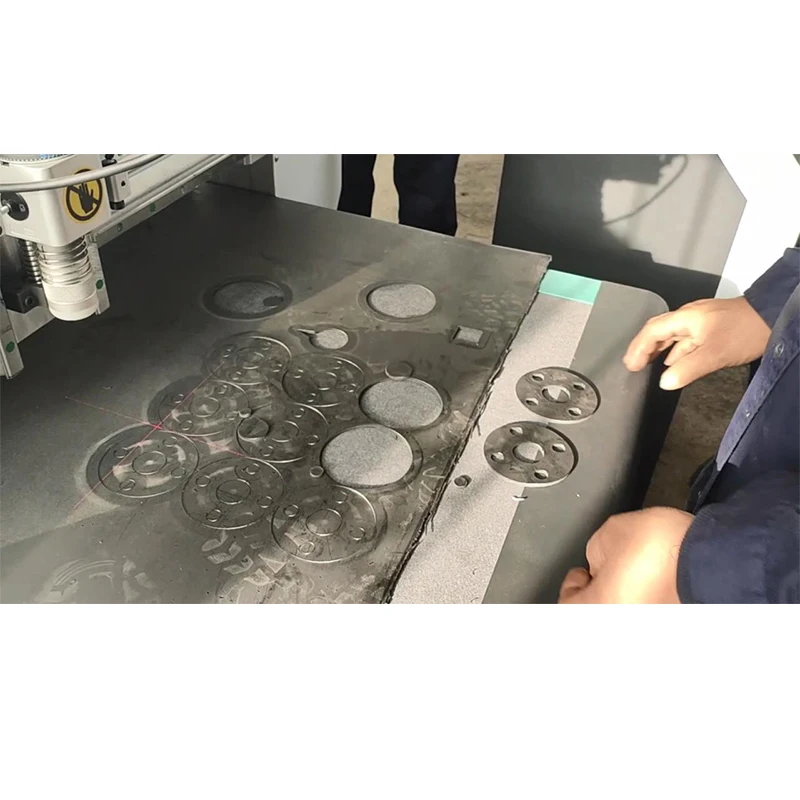
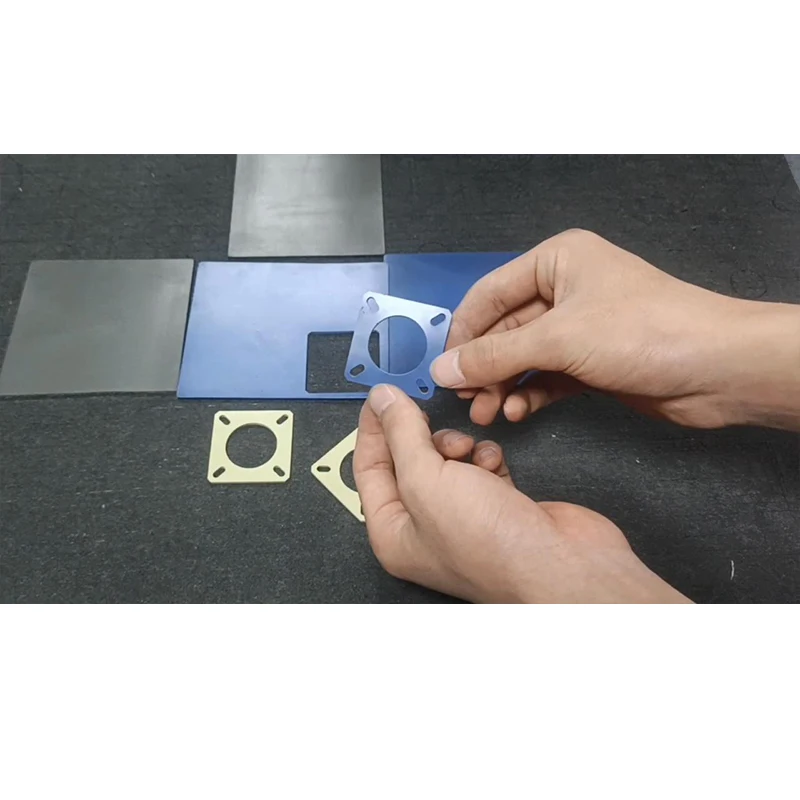
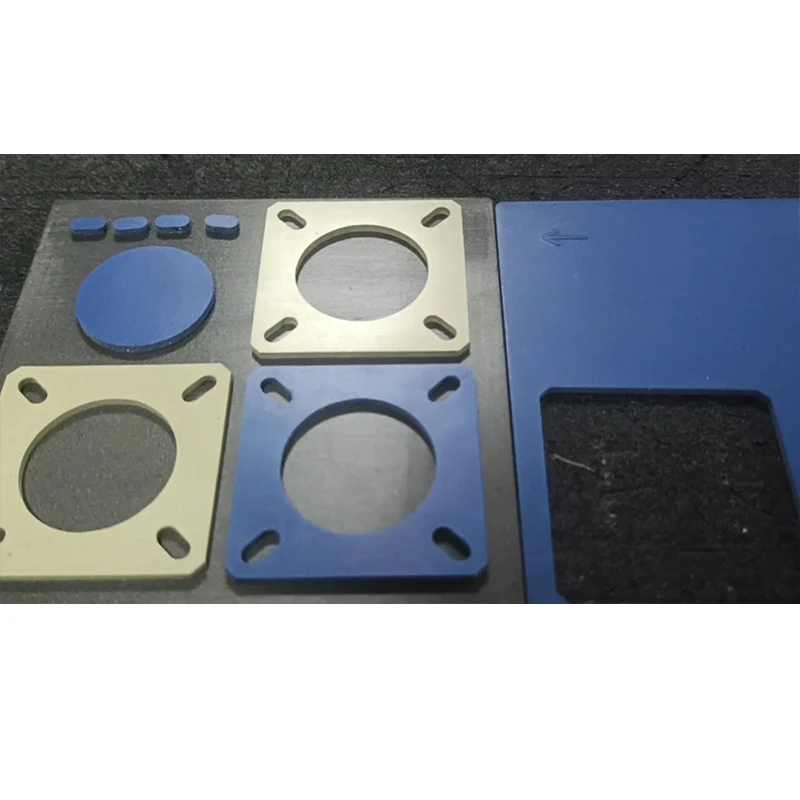
| Industrial gasket and sealing pad production | PTFE, ETFE, rubber, asbestos-free fiber, composite gasket sheets |
| Automotive interior and foam gasket cutting | Foam composites, sponge, PU, EVA, XPE for cabin seals and insulation |
| Packaging and carton sample making | Corrugated cardboard, fiberglass board, sticker film |
| Footwear and luggage component cutting | Leather, sponge composite leather, shoe material, PU, EVA |
| Textile and garment panel cutting | Fabric, non-woven fabric, carpet, cloth |
Why Material Thickness Claims Fail on the Shop Floor
A CNC gasket cutting machine manufacturer quoting cutting depth without testing your exact compound is guessing. Real cutting capacity only exists when verified on the buyer’s own stock.
I once shipped a vibrating knife unit to a customer producing asbestos-free gaskets. We had done sample cuts on standard rubber board — clean edges, full penetration, no issues. Their actual material was a high-fill PTFE composite with a completely different hardness profile. When the machine arrived on site, the blade could not get through the sheet. Every parameter had to be thrown out and rebuilt from scratch, and their production schedule slipped by over two weeks. Since then, no order leaves the factory until the buyer’s real material has been cut, measured, and signed off. [NEED_CITE: material hardness variance in composite gasket production]
Matching the Blade to the Gasket Compound
Selecting the right tool head is the first decision that determines whether a gasket edge comes out clean or crushed. The Swiss imported oscillating knife handles most standard rubber and PTFE sheets in full-cut mode, while the high-power vibrating knife is the correct choice for thicker composite fiber materials where a standard blade would stall mid-stroke. Drag knives work on thinner film and sticker gaskets, and the V-cutting knife is reserved for bevel-edge sealing profiles.
This CNC gasket cutting machine manufacturer does not lock buyers into a single head configuration. The multifunctional platform lets you swap tool heads as your material mix changes, so a shop that cuts rubber gaskets in the morning and PTFE flange pads in the afternoon does not need two machines.
Vacuum Table Zoning and Small-Part Stability
Gasket production often means cutting dozens of small seals from a single sheet. If the vacuum table is a single undivided zone, suction concentrates around the largest open area, and small parts lift off the table the moment the blade finishes a cut. The magnesium-aluminum alloy table on this unit is treated with PVDF fluorocarbon coating and hard oxidation, giving a flat surface that resists scoring from repeated blade passes. [NEED_CITE: vacuum adsorption principles for flatbed digital cutters]
Zoned vacuum channels allow operators to isolate suction to the area where cutting is happening. This keeps even small diameter gasket rings firmly in place, preventing the edge drift that turns a batch into scrap. The 7.5 kW vacuum pump with built-in silencer sponge maintains consistent suction without adding excessive noise to the workshop environment.
Reading the Specs That Actually Matter
The 800–1200 mm/s translational velocity spec tells you how fast the head moves between cuts, but the cutting speed through the material depends entirely on gasket thickness and density. A 2 mm rubber sheet cuts at a different feed rate than a 15 mm PTFE composite, and the servo system must adjust without losing positional accuracy. The ≤0.1 mm repeated accuracy, maintained by imported ball screws and Taiwan Hiwin linear guides, is what keeps bolt-hole patterns aligned across a full sheet of flange gaskets.
The IP67-rated servo motors with vibration suppression matter in environments where coolant mist or fine gasket dust is present. A servo that ingests PTFE particles will degrade in positional accuracy long before a sealed unit shows wear. The thick-walled seamless steel frame, stress-relieved through high-temperature tempering and finished on a CNC machining center, provides the mass and rigidity that prevent harmonic vibration from reaching the blade during high-frequency oscillation — a factor that directly affects edge finish on brittle composite gasket materials.
What Happens When the Wrong Configuration Ships
Choosing a machine on working area alone, without confirming the tool head against your specific gasket material, leads to ragged edges on PTFE, crushed foam on automotive seals, or blade stalls on high-density fiber composites. The cost is not just scrap material — it is the downtime spent re-programming, re-testing, and re-ordering tooling that should have been specified correctly from the start. [NEED_CITE: cost of unplanned downtime in gasket manufacturing operations]
Voltage and control language mismatches add another layer of delay. A 380V ±10% machine delivered to a facility running a different supply standard will not start without a transformer, and an operator facing a control panel in an unfamiliar language cannot run production safely. These are not problems you discover after delivery — they are problems you prevent before the order is finalized.
Why Source This Equipment Here
In-house design and production covers both knife and laser cutting technologies, so the cutting method is matched to your gasket material rather than forced into whichever machine happens to be on the floor. Every tool head and table configuration is specified per your material type and production volume, documented in a configuration list you review before production starts.
CCD camera positioning — available as small mark-point CCD or full panoramic recognition — is tested against your printed gasket sheets to confirm contour tracking at actual production speed. Software compatibility is verified before order, not after, confirming that your existing HP-GL files and nesting workflows import without manual rework. [NEED_CITE: CCD contour recognition performance on printed gasket materials]
Sample cutting on your own gasket material happens before commitment, with a report covering cutting thickness achieved, edge quality, and cycle time — giving you a realistic baseline instead of a brochure claim. Voltage, plug type, and control language are confirmed in writing before shipment, eliminating on-site surprises.
Documentation & Verification
- Machine specification sheet listing every confirmed tool head and vacuum zone layout
- Sample cutting report produced on your actual PTFE, rubber, or composite gasket stock
- Electrical schematic with voltage and frequency confirmed for your facility supply
- Software licence and HP-GL file format compatibility note signed before dispatch
- Factory test record documenting repeated accuracy and cut quality across your gasket profiles
- Spare parts list covering blades, vacuum seals, and guide rail wipers specific to your configuration
Installation, Commissioning & Support
- Floor space planning based on the 3450 × 2300 mm machine footprint plus material staging area
- Dedicated 380V ±10% circuit with rated 9 kW capacity and proper grounding for servo drives
- Machine arrives as a single assembled unit; vacuum pump and conveyor connected on site
- First-run commissioning includes blade depth calibration on your gasket material thickness range
- Operator training covers tool head changes, vacuum zone selection, and CCD camera mark-point setup
- Preventive maintenance schedule for Hiwin guide rail lubrication and ball screw inspection intervals
What to Share Before Requesting a Quote
Send a sample of your actual gasket material — the exact PTFE compound, rubber grade, or composite sheet you run in production — along with its thickness and the largest sheet dimension you need to cut. Confirm your facility voltage and frequency, the control language your operators require, and whether your current workflow uses HP-GL or another file format for nesting. If you need printed contour cutting, provide a sample printed sheet so CCD recognition can be tested before anything is built.
Frequently Asked Questions
Q: How is cutting thickness verified for different gasket materials before ordering?
A: You send a sample of your actual PTFE, rubber, or composite gasket stock to the factory. We run cuts at various thicknesses, measure edge quality and penetration depth, and produce a sample cutting report. Only after you review and approve the results does the order proceed. This eliminates the guesswork that leads to on-site rework and production delays.
Q: Which tool head is correct for my gasket material?
A: It depends on material density and thickness. Standard oscillating knives handle most rubber and PTFE sheets. High-power vibrating knives are used for thick composite fiber gaskets. Drag knives suit thin film and sticker materials. We confirm the correct head during sample cutting on your actual stock, so the choice is based on evidence rather than a catalog description.
Q: How does the CCD camera perform contour recognition on printed gasket sheets?
A: The system offers small CCD mark-point positioning and panoramic camera recognition. During sample testing, we run your printed gasket sheet through the machine to verify that the camera tracks registration marks at production speed. If your print contrast or mark placement falls outside the camera’s detection range, we adjust the setup or recommend print adjustments before the machine is built.
Q: Can voltage, plug type, and control language be confirmed before shipment?
A: Yes. The baseline is 380V ±10%, but your facility’s actual supply standard is confirmed during the quotation stage. Plug type and control panel language are documented in the electrical schematic and specification sheet before production begins. This prevents the common problem of a machine arriving on site that cannot be powered on or operated without modification.
Q: Where does this machine sit in the full CNC cutting equipment range?
A: The 1600 × 2500 mm working area covers most standard gasket sheet sizes. The full catalogue includes compact to large-format tables, single and multi-head configurations, and both knife and laser options. If your gasket material is better suited to laser cutting — for example, edge-sealed synthetic seals — the range includes CO2 and fiber laser systems configured for non-metal and sheet-metal applications respectively.
Tool head and table configuration specified per material and production volume — rather than selling one model, we match the oscillating knife type, vacuum zoning and CCD setup to your actual gasket compound and daily throughput before an order is placed.
Technical Specifications
| Parameter | Value |
|---|---|
| Product Type | CNC Oscillating Knife Gasket Cutting Machine |
| Working Area | 1600 × 2500 mm |
| Machine Size | 3450 × 2300 × 1250 mm |
| Rated Power | 9 kW |
| Table Type | Magnesium-aluminum alloy vacuum adsorption, PVDF fluorocarbon sprayed, anodic and hard oxidation |
| Multifunctional Head | Swiss imported knife (full cut / half cut / cursor location); optional: pneumatic knife, high-power vibrating knife, circular knife, V-cutting knife, drag knife, creasing wheel, dotted line knife, punching, brush |
| Visual Positioning | Small CCD camera mark point positioning, panoramic camera recognition, projection positioning |
| Translational Velocity | 800–1200 mm/s |
| Cutting Thickness | 20–80 mm (material dependent) |
| Repeated Accuracy | ≤0.1 mm |
| Transmission System | Digital servo motor, linear guide, synchronous belt, imported ball screw |
| Servo Motor | Delta (optional Panasonic), IP67 waterproof, vibration suppression |
| Vacuum Pump | 7.5 kW, aviation aluminum shell, built-in silencer sponge (noise reduction 35%) |
| Guide Rail | Taiwan Hiwin |
| Frame | Thick-walled seamless steel structure, high-temperature tempering, CNC machining center finished |
| Voltage | 380V ±10% |
| Instruction System | HP-GL compatible format |
| Safety Device | Infrared sensors, beam anti-collision, emergency stop |
Application Suitability
| Application | Material or Output |
|---|---|
| Industrial gasket and sealing pad production | PTFE, ETFE, rubber, asbestos-free fiber, composite gasket sheets |
| Automotive interior and foam gasket cutting | Foam composites, sponge, PU, EVA, XPE for cabin seals and insulation |
| Packaging and carton sample making | Corrugated cardboard, fiberglass board, sticker film |
| Footwear and luggage component cutting | Leather, sponge composite leather, shoe material, PU, EVA |
| Textile and garment panel cutting | Fabric, non-woven fabric, carpet, cloth |
Why Material Thickness Claims Fail on the Shop Floor
A CNC gasket cutting machine manufacturer quoting cutting depth without testing your exact compound is guessing. Real cutting capacity only exists when verified on the buyer’s own stock.
I once shipped a vibrating knife unit to a customer producing asbestos-free gaskets. We had done sample cuts on standard rubber board — clean edges, full penetration, no issues. Their actual material was a high-fill PTFE composite with a completely different hardness profile. When the machine arrived on site, the blade could not get through the sheet. Every parameter had to be thrown out and rebuilt from scratch, and their production schedule slipped by over two weeks. Since then, no order leaves the factory until the buyer’s real material has been cut, measured, and signed off. [NEED_CITE: material hardness variance in composite gasket production]
Matching the Blade to the Gasket Compound
Selecting the right tool head is the first decision that determines whether a gasket edge comes out clean or crushed. The Swiss imported oscillating knife handles most standard rubber and PTFE sheets in full-cut mode, while the high-power vibrating knife is the correct choice for thicker composite fiber materials where a standard blade would stall mid-stroke. Drag knives work on thinner film and sticker gaskets, and the V-cutting knife is reserved for bevel-edge sealing profiles.
This CNC gasket cutting machine manufacturer does not lock buyers into a single head configuration. The multifunctional platform lets you swap tool heads as your material mix changes, so a shop that cuts rubber gaskets in the morning and PTFE flange pads in the afternoon does not need two machines.
Vacuum Table Zoning and Small-Part Stability
Gasket production often means cutting dozens of small seals from a single sheet. If the vacuum table is a single undivided zone, suction concentrates around the largest open area, and small parts lift off the table the moment the blade finishes a cut. The magnesium-aluminum alloy table on this unit is treated with PVDF fluorocarbon coating and hard oxidation, giving a flat surface that resists scoring from repeated blade passes. [NEED_CITE: vacuum adsorption principles for flatbed digital cutters]
Zoned vacuum channels allow operators to isolate suction to the area where cutting is happening. This keeps even small diameter gasket rings firmly in place, preventing the edge drift that turns a batch into scrap. The 7.5 kW vacuum pump with built-in silencer sponge maintains consistent suction without adding excessive noise to the workshop environment.
Reading the Specs That Actually Matter
The 800–1200 mm/s translational velocity spec tells you how fast the head moves between cuts, but the cutting speed through the material depends entirely on gasket thickness and density. A 2 mm rubber sheet cuts at a different feed rate than a 15 mm PTFE composite, and the servo system must adjust without losing positional accuracy. The ≤0.1 mm repeated accuracy, maintained by imported ball screws and Taiwan Hiwin linear guides, is what keeps bolt-hole patterns aligned across a full sheet of flange gaskets.
The IP67-rated servo motors with vibration suppression matter in environments where coolant mist or fine gasket dust is present. A servo that ingests PTFE particles will degrade in positional accuracy long before a sealed unit shows wear. The thick-walled seamless steel frame, stress-relieved through high-temperature tempering and finished on a CNC machining center, provides the mass and rigidity that prevent harmonic vibration from reaching the blade during high-frequency oscillation — a factor that directly affects edge finish on brittle composite gasket materials.
What Happens When the Wrong Configuration Ships
Choosing a machine on working area alone, without confirming the tool head against your specific gasket material, leads to ragged edges on PTFE, crushed foam on automotive seals, or blade stalls on high-density fiber composites. The cost is not just scrap material — it is the downtime spent re-programming, re-testing, and re-ordering tooling that should have been specified correctly from the start. [NEED_CITE: cost of unplanned downtime in gasket manufacturing operations]
Voltage and control language mismatches add another layer of delay. A 380V ±10% machine delivered to a facility running a different supply standard will not start without a transformer, and an operator facing a control panel in an unfamiliar language cannot run production safely. These are not problems you discover after delivery — they are problems you prevent before the order is finalized.
Why Source This Equipment Here
In-house design and production covers both knife and laser cutting technologies, so the cutting method is matched to your gasket material rather than forced into whichever machine happens to be on the floor. Every tool head and table configuration is specified per your material type and production volume, documented in a configuration list you review before production starts.
CCD camera positioning — available as small mark-point CCD or full panoramic recognition — is tested against your printed gasket sheets to confirm contour tracking at actual production speed. Software compatibility is verified before order, not after, confirming that your existing HP-GL files and nesting workflows import without manual rework. [NEED_CITE: CCD contour recognition performance on printed gasket materials]
Sample cutting on your own gasket material happens before commitment, with a report covering cutting thickness achieved, edge quality, and cycle time — giving you a realistic baseline instead of a brochure claim. Voltage, plug type, and control language are confirmed in writing before shipment, eliminating on-site surprises.
Documentation & Verification
- Machine specification sheet listing every confirmed tool head and vacuum zone layout
- Sample cutting report produced on your actual PTFE, rubber, or composite gasket stock
- Electrical schematic with voltage and frequency confirmed for your facility supply
- Software licence and HP-GL file format compatibility note signed before dispatch
- Factory test record documenting repeated accuracy and cut quality across your gasket profiles
- Spare parts list covering blades, vacuum seals, and guide rail wipers specific to your configuration
Installation, Commissioning & Support
- Floor space planning based on the 3450 × 2300 mm machine footprint plus material staging area
- Dedicated 380V ±10% circuit with rated 9 kW capacity and proper grounding for servo drives
- Machine arrives as a single assembled unit; vacuum pump and conveyor connected on site
- First-run commissioning includes blade depth calibration on your gasket material thickness range
- Operator training covers tool head changes, vacuum zone selection, and CCD camera mark-point setup
- Preventive maintenance schedule for Hiwin guide rail lubrication and ball screw inspection intervals
What to Share Before Requesting a Quote
Send a sample of your actual gasket material — the exact PTFE compound, rubber grade, or composite sheet you run in production — along with its thickness and the largest sheet dimension you need to cut. Confirm your facility voltage and frequency, the control language your operators require, and whether your current workflow uses HP-GL or another file format for nesting. If you need printed contour cutting, provide a sample printed sheet so CCD recognition can be tested before anything is built.
Frequently Asked Questions
Q: How is cutting thickness verified for different gasket materials before ordering?
A: You send a sample of your actual PTFE, rubber, or composite gasket stock to the factory. We run cuts at various thicknesses, measure edge quality and penetration depth, and produce a sample cutting report. Only after you review and approve the results does the order proceed. This eliminates the guesswork that leads to on-site rework and production delays.
Q: Which tool head is correct for my gasket material?
A: It depends on material density and thickness. Standard oscillating knives handle most rubber and PTFE sheets. High-power vibrating knives are used for thick composite fiber gaskets. Drag knives suit thin film and sticker materials. We confirm the correct head during sample cutting on your actual stock, so the choice is based on evidence rather than a catalog description.
Q: How does the CCD camera perform contour recognition on printed gasket sheets?
A: The system offers small CCD mark-point positioning and panoramic camera recognition. During sample testing, we run your printed gasket sheet through the machine to verify that the camera tracks registration marks at production speed. If your print contrast or mark placement falls outside the camera’s detection range, we adjust the setup or recommend print adjustments before the machine is built.
Q: Can voltage, plug type, and control language be confirmed before shipment?
A: Yes. The baseline is 380V ±10%, but your facility’s actual supply standard is confirmed during the quotation stage. Plug type and control panel language are documented in the electrical schematic and specification sheet before production begins. This prevents the common problem of a machine arriving on site that cannot be powered on or operated without modification.
Q: Where does this machine sit in the full CNC cutting equipment range?
A: The 1600 × 2500 mm working area covers most standard gasket sheet sizes. The full catalogue includes compact to large-format tables, single and multi-head configurations, and both knife and laser options. If your gasket material is better suited to laser cutting — for example, edge-sealed synthetic seals — the range includes CO2 and fiber laser systems configured for non-metal and sheet-metal applications respectively.
商品评价
There are no reviews yet.