




Fast Delivery
Quick, reliable shipping to any location.

Free & easy returns
Return this item by mail or in store within 90 days for a full refund.
Full Tool Head Range — In-house design covering both knife and laser technologies lets you match the cutting method to your exact composite material rather than forcing one method across all jobs.
Technical Specifications
| Parameter | Value |
|---|---|
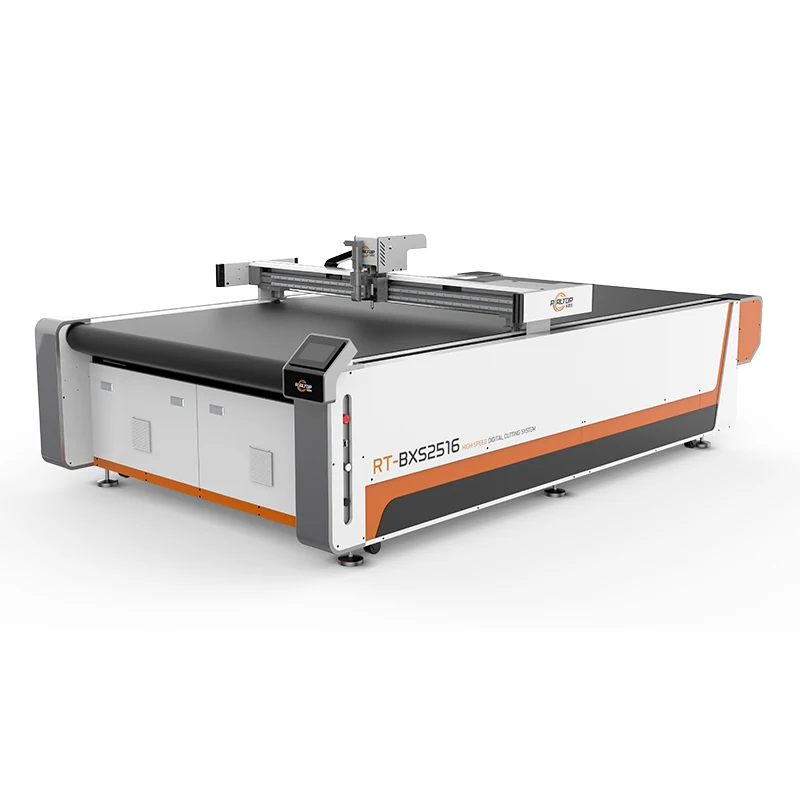
| Model | RT-D2516/RT-S2516 |
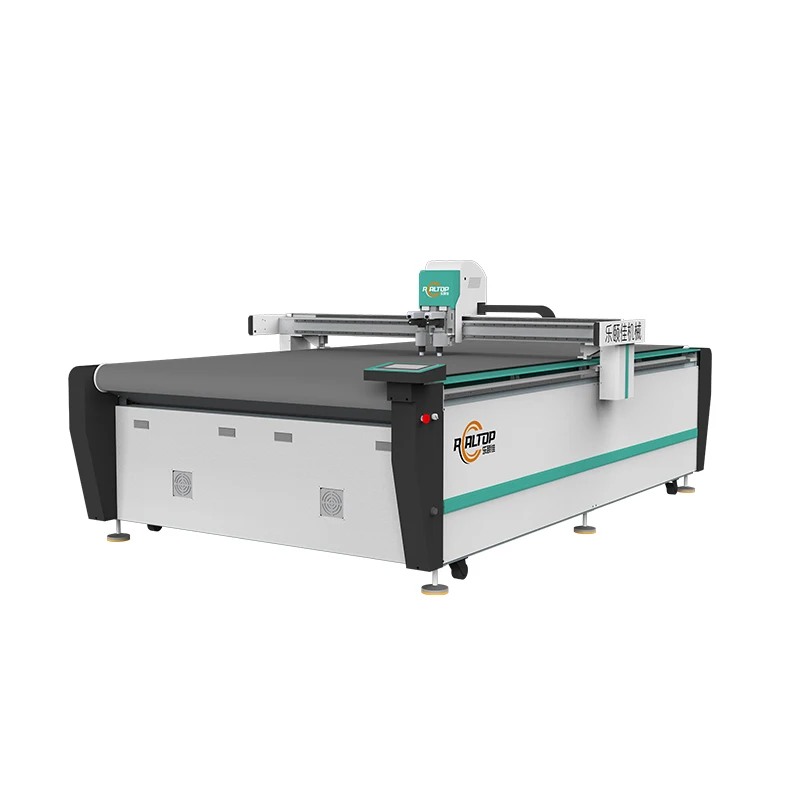
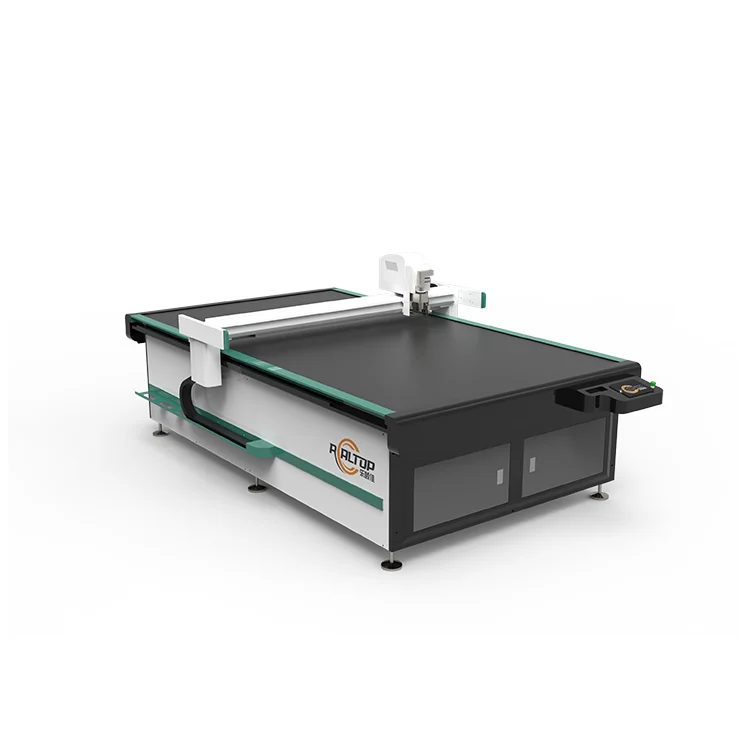
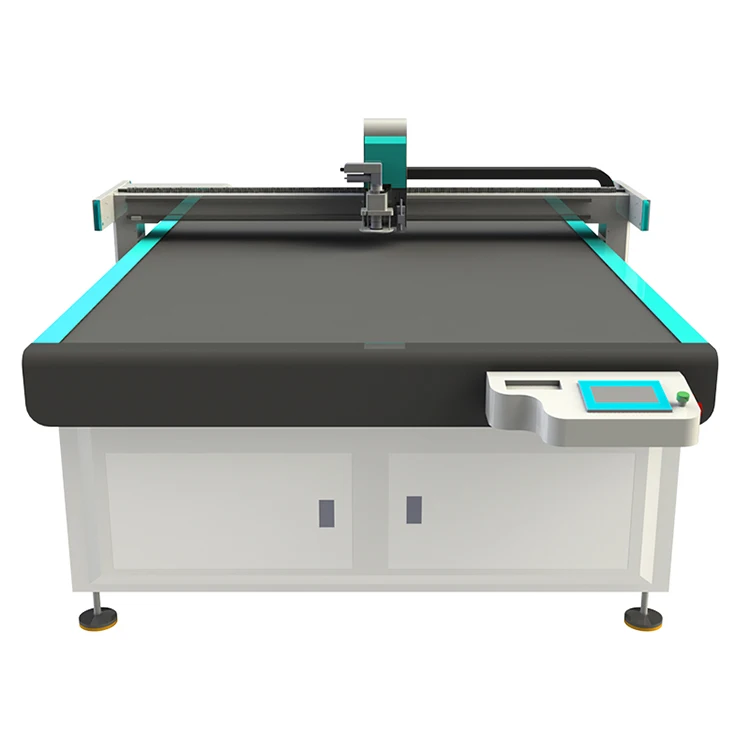
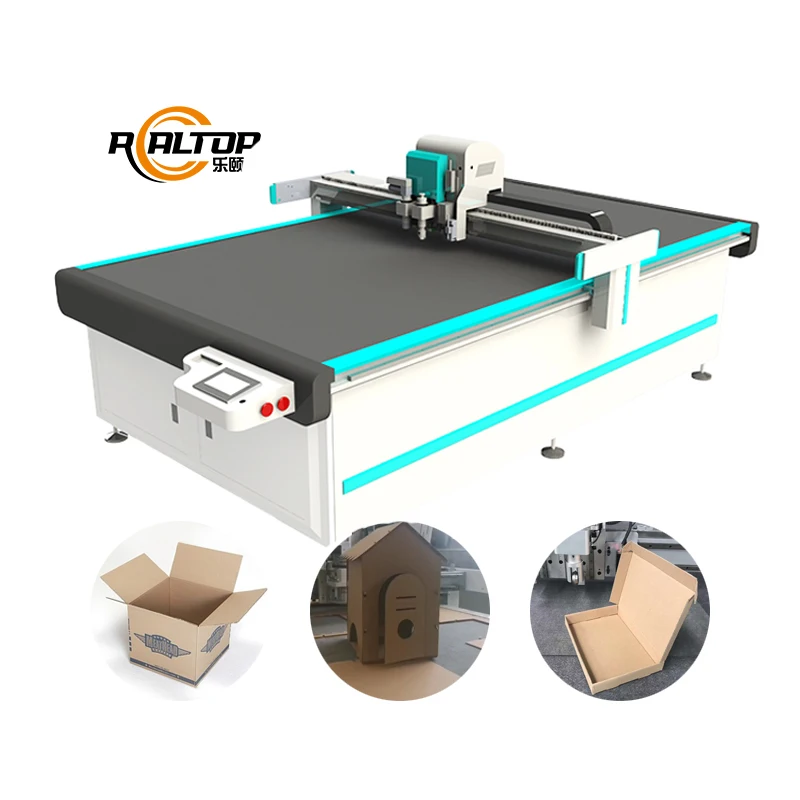
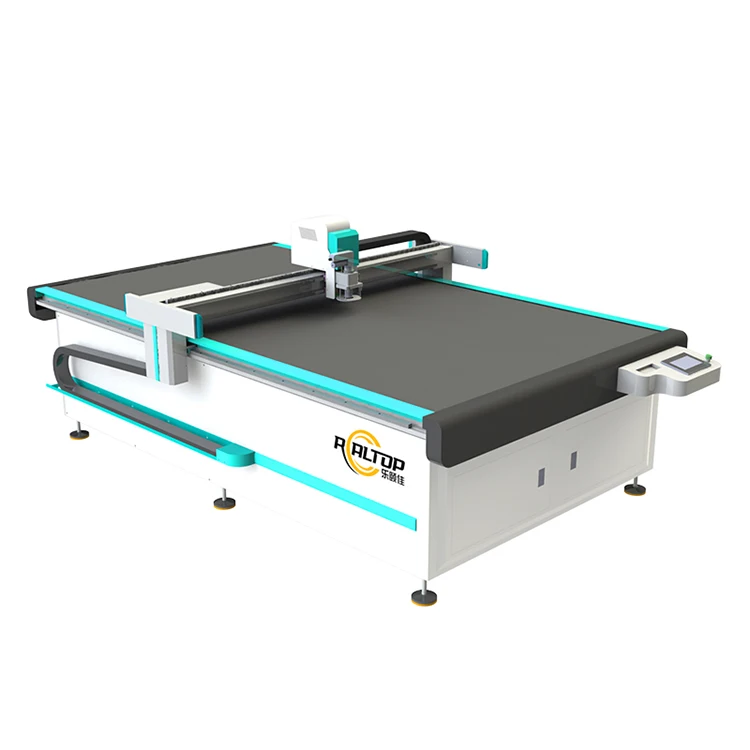
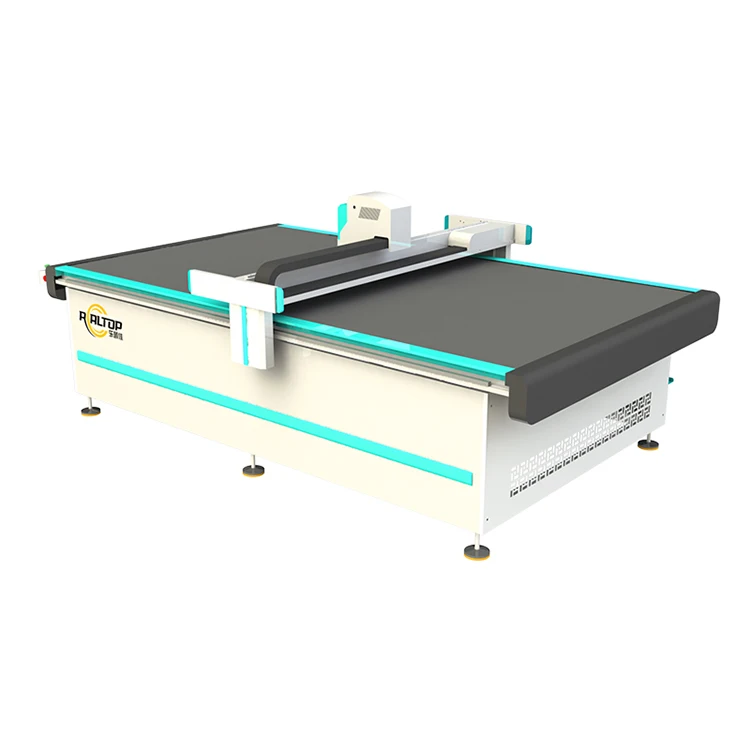
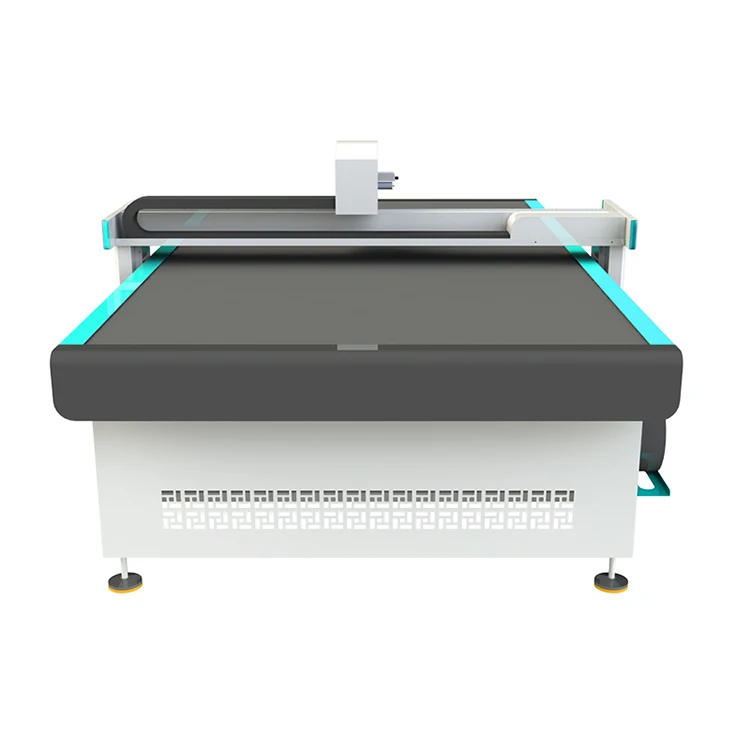
| Product Type | CNC Oscillating Knife Cutting Machine with CCD Scanner |
| Working Area | 1600 × 2500 mm |
| Overall Dimensions | 3450 × 2300 × 1250 mm |
| Rated Power | 9 kW |
| Voltage | 380V ± 10% |
| Cutting Thickness | Up to 100 mm (basis not stated in source — confirm block format / material / thickness) |
| Cutting Speed | 200–800 mm/s (according to different cutting materials) |
| Translational Velocity | 800–2000 mm/s |
| Repeated Accuracy | ≤ 0.1 mm |
| Working Table | Flat magnesium-aluminum alloy with fluorocarbon PVDF powder spraying |
| Vacuum Pump | 7.5 kW, integrated aviation aluminum shell with silencer sponge |
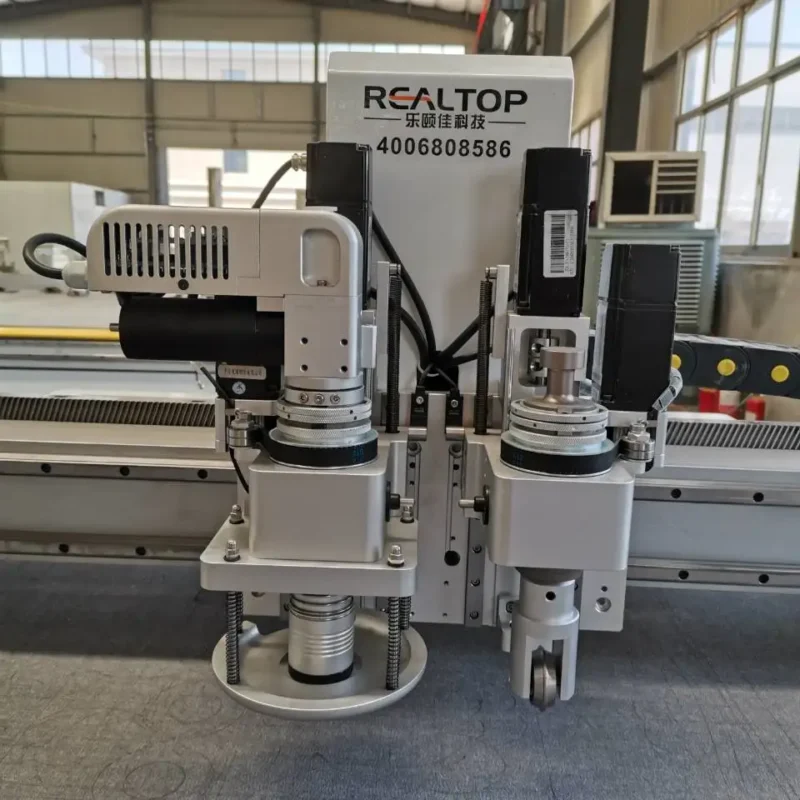
| Multifunctional Head | Swiss imported knife (vibration full cutting, vibration half cutting, cursor location) |
| Tool Head Options | Oscillating knife, pneumatic knife, high-power vibrating knife, circular knife, V cutting knife, drag knife, creasing wheel, dotted line knife, punching, brush |
| Servo Motor | Delta or Panasonic (IP67 waterproof) |
| Transmission | Digital servo motor, linear guide, synchronous belt, ball screw (imported) |
| Rail | Taiwan Hiwin |
| Conveyor Belt | Germany imported |
| Visual Positioning | Small CCD camera mark point positioning, panoramic camera recognition positioning, projection positioning |
| Safety Device | Infrared sensors (anti-collision, emergency stop) |
| Instruction System | HP-GL compatible format |
| Standards | CE declaration where applicable |
Application Suitability
| Application | Material or Output |
|---|---|
| Automotive interior trim cutting | Sponge composite leather, foam, gasket sheets |
| Garment and footwear pattern cutting | Leather, clothing flexible material, multi-layer fabric |
| Signage and soft signage production | PVC, soft glass, flexible vinyl |
| Composite panel sample making | Rubber, silicon, reinforced composite sheets |
| Carpet and floor covering cutting | Rolled carpet, carpet tiles with printed contours |
Why "Working Area" Alone Leads to Bad Cuts on Composites
The working area tells you how big a sheet fits — it says nothing about whether the tool head can actually slice through your material at production speed.
I once watched a line stall because the machine was spec’d purely on table size. The composite being run had a glass-fiber reinforcement layer that destroyed standard oscillating blades within hours, and the vacuum zoning was too coarse to hold small offcuts flat. A CNC digital cutting machine manufacturer worth talking to will ask about your exact layup before quoting a configuration [NEED_CITE: composite material cutting challenges with reinforced layers].
Matching the Knife to the Composite Stack
Choosing between an oscillating knife, a high-power vibrating knife, or a pneumatic knife depends on the composite’s density and reinforcement content. A standard oscillating head handles soft foams and single-layer fabrics cleanly, but once glass fiber or woven scrim enters the stack, the blade must punch through with higher amplitude and downward force. This unit’s Swiss imported knife assembly, combined with the high-power vibrating knife option, covers that transition without swapping the entire head. A CNC digital cutting machine manufacturer that stocks multiple tool heads from one carriage avoids the downtime of full changeovers.
Holding the Material Flat Across the Full Bed
Composite sheets tend to curl at the edges and lift at cut boundaries, especially when internal stresses release during profiling. The magnesium-aluminum alloy table with fluorocarbon PVDF coating provides a flat, low-friction surface while the 7.5 kW vacuum pump generates enough suction to keep the sheet anchored. Zoning the vacuum into segments prevents small nesting parts from drifting once the surrounding material is cut away [NEED_CITE: vacuum table zoning for CNC flatbed cutting tables].
Reading Printed Contours at Line Speed
When cutting pre-printed carpet or graphics-laid composites, the CCD scanner must track registration marks without pausing the feed. This system offers small CCD mark point positioning, panoramic camera recognition, and projection positioning — three methods that cover everything from simple dot marks to full-sheet contour maps. Panoramic recognition captures the entire print area in one shot, reducing the cumulative drift that mark-by-mark tracking can introduce over long rolls.
What the Servo and Drive Train Actually Mean for Your Parts
The Delta or Panasonic IP67 servo motors paired with Taiwan Hiwin rails and imported ball screws deliver the repeated accuracy of ≤ 0.1 mm. In practice, this matters when nesting tight-fitting automotive interior panels where a 0.5 mm gap mismatch causes assembly rework downstream. The synchronous belt and linear guide combination keeps the carriage tracking straight at translational velocities up to 2000 mm/s, so rapid moves between cut paths do not introduce positional lag.
The Cost of Skipping the Material Conversation
When a buyer orders based on bed size and discovers the standard oscillating knife cannot penetrate a 30 mm glass-fiber-reinforced composite, the fix is never quick. New tool heads arrive weeks later, the vacuum table may need rezoning, and every part cut in the meantime carries ragged edges that fail the customer’s quality check. The production manager absorbs the delay, not the sales brochure [NEED_CITE: consequences of wrong tool head selection for composite cutting].
Why Source the Full Range from One Manufacturer
The design team engineers both knife and laser cutting systems under one roof, so you compare methods against your material rather than being locked into whichever technology a single-brand supplier offers. Every tool head and table configuration is specified against the buyer’s actual composite type and daily volume. CCD camera positioning, software file format compatibility, and voltage customization are confirmed before the order enters production. Sample cutting on your own material runs before you commit, producing a documented report that shows edge quality, cycle time, and blade wear rate. Electrical schematics and voltage confirmation accompany every shipment so your facility team can plan the dedicated circuit ahead of delivery.
Documentation & Verification
- Machine specification sheet listing tool head and table configuration matched to your composite type
- Electrical schematic with voltage and frequency confirmed for your local grid standard
- Sample cutting report run on your own material showing edge quality and blade wear data
- Software licence and file format compatibility note covering your existing nesting workflow
- Factory test record documenting positional accuracy and vacuum hold-down before crating
Installation, Commissioning & Support
- Floor space planning around the 3450 × 2300 mm footprint plus operator clearance zones
- Dedicated 380V ± 10% circuit with proper earthing for the 9 kW rated power draw
- Machine arrives with flat table pre-assembled; vacuum pump and scanner require on-site mounting
- First-article cutting with your composite material to validate tool head selection and vacuum zoning
- Operator training covering HP-GL file import, CCD mark registration, and nesting workflow setup
- Spare blade inventory and wear-part schedule aligned with your daily composite cutting volume
What to Include in Your Inquiry
Tell us the composite material type, reinforcement content, and total stack thickness you run most often. Share your typical sheet or roll width, the daily linear meter target, and whether your current workflow uses DXF, PLT, or HP-GL files. Confirm your facility voltage and whether the control interface needs to operate in a language other than English.
Frequently Asked Questions
Q: How do I decide between knife cutting and laser for my composite material?
A: Knife cutting suits composites with reinforcement layers, foam cores, and materials that release toxic fumes when burned. Laser handles thin synthetics and produces sealed edges. We run your material on both methods and provide a sample report so you choose based on edge quality and cycle time rather than speculation.
Q: Why does the tool head matter more than the working area?
A: Working area determines the maximum sheet size, but the tool head determines whether the blade penetrates your material cleanly. A high-power vibrating knife handles glass-fiber-reinforced composites that would shred a standard oscillating blade, and the wrong choice shows up as ragged edges on every part.
Q: Can the CCD scanner track printed marks on textured composite surfaces?
A: Panoramic camera recognition captures the full sheet in one image, handling textured or low-contrast prints that cause mark-by-mark CCD to lose registration. We test with your actual printed material before the order is finalized.
Q: What file formats does the control software accept?
A: The system is HP-GL compatible and imports common nesting files. We confirm your existing file format and nesting software output before production so there are no surprises when your operator loads the first job.
Full Tool Head Range — In-house design covering both knife and laser technologies lets you match the cutting method to your exact composite material rather than forcing one method across all jobs.
Technical Specifications
| Parameter | Value |
|---|---|
| Model | RT-D2516/RT-S2516 |
| Product Type | CNC Oscillating Knife Cutting Machine with CCD Scanner |
| Working Area | 1600 × 2500 mm |
| Overall Dimensions | 3450 × 2300 × 1250 mm |
| Rated Power | 9 kW |
| Voltage | 380V ± 10% |
| Cutting Thickness | Up to 100 mm (basis not stated in source — confirm block format / material / thickness) |
| Cutting Speed | 200–800 mm/s (according to different cutting materials) |
| Translational Velocity | 800–2000 mm/s |
| Repeated Accuracy | ≤ 0.1 mm |
| Working Table | Flat magnesium-aluminum alloy with fluorocarbon PVDF powder spraying |
| Vacuum Pump | 7.5 kW, integrated aviation aluminum shell with silencer sponge |
| Multifunctional Head | Swiss imported knife (vibration full cutting, vibration half cutting, cursor location) |
| Tool Head Options | Oscillating knife, pneumatic knife, high-power vibrating knife, circular knife, V cutting knife, drag knife, creasing wheel, dotted line knife, punching, brush |
| Servo Motor | Delta or Panasonic (IP67 waterproof) |
| Transmission | Digital servo motor, linear guide, synchronous belt, ball screw (imported) |
| Rail | Taiwan Hiwin |
| Conveyor Belt | Germany imported |
| Visual Positioning | Small CCD camera mark point positioning, panoramic camera recognition positioning, projection positioning |
| Safety Device | Infrared sensors (anti-collision, emergency stop) |
| Instruction System | HP-GL compatible format |
| Standards | CE declaration where applicable |
Application Suitability
| Application | Material or Output |
|---|---|
| Automotive interior trim cutting | Sponge composite leather, foam, gasket sheets |
| Garment and footwear pattern cutting | Leather, clothing flexible material, multi-layer fabric |
| Signage and soft signage production | PVC, soft glass, flexible vinyl |
| Composite panel sample making | Rubber, silicon, reinforced composite sheets |
| Carpet and floor covering cutting | Rolled carpet, carpet tiles with printed contours |
Why "Working Area" Alone Leads to Bad Cuts on Composites
The working area tells you how big a sheet fits — it says nothing about whether the tool head can actually slice through your material at production speed.
I once watched a line stall because the machine was spec’d purely on table size. The composite being run had a glass-fiber reinforcement layer that destroyed standard oscillating blades within hours, and the vacuum zoning was too coarse to hold small offcuts flat. A CNC digital cutting machine manufacturer worth talking to will ask about your exact layup before quoting a configuration [NEED_CITE: composite material cutting challenges with reinforced layers].
Matching the Knife to the Composite Stack
Choosing between an oscillating knife, a high-power vibrating knife, or a pneumatic knife depends on the composite’s density and reinforcement content. A standard oscillating head handles soft foams and single-layer fabrics cleanly, but once glass fiber or woven scrim enters the stack, the blade must punch through with higher amplitude and downward force. This unit’s Swiss imported knife assembly, combined with the high-power vibrating knife option, covers that transition without swapping the entire head. A CNC digital cutting machine manufacturer that stocks multiple tool heads from one carriage avoids the downtime of full changeovers.
Holding the Material Flat Across the Full Bed
Composite sheets tend to curl at the edges and lift at cut boundaries, especially when internal stresses release during profiling. The magnesium-aluminum alloy table with fluorocarbon PVDF coating provides a flat, low-friction surface while the 7.5 kW vacuum pump generates enough suction to keep the sheet anchored. Zoning the vacuum into segments prevents small nesting parts from drifting once the surrounding material is cut away [NEED_CITE: vacuum table zoning for CNC flatbed cutting tables].
Reading Printed Contours at Line Speed
When cutting pre-printed carpet or graphics-laid composites, the CCD scanner must track registration marks without pausing the feed. This system offers small CCD mark point positioning, panoramic camera recognition, and projection positioning — three methods that cover everything from simple dot marks to full-sheet contour maps. Panoramic recognition captures the entire print area in one shot, reducing the cumulative drift that mark-by-mark tracking can introduce over long rolls.
What the Servo and Drive Train Actually Mean for Your Parts
The Delta or Panasonic IP67 servo motors paired with Taiwan Hiwin rails and imported ball screws deliver the repeated accuracy of ≤ 0.1 mm. In practice, this matters when nesting tight-fitting automotive interior panels where a 0.5 mm gap mismatch causes assembly rework downstream. The synchronous belt and linear guide combination keeps the carriage tracking straight at translational velocities up to 2000 mm/s, so rapid moves between cut paths do not introduce positional lag.
The Cost of Skipping the Material Conversation
When a buyer orders based on bed size and discovers the standard oscillating knife cannot penetrate a 30 mm glass-fiber-reinforced composite, the fix is never quick. New tool heads arrive weeks later, the vacuum table may need rezoning, and every part cut in the meantime carries ragged edges that fail the customer’s quality check. The production manager absorbs the delay, not the sales brochure [NEED_CITE: consequences of wrong tool head selection for composite cutting].
Why Source the Full Range from One Manufacturer
The design team engineers both knife and laser cutting systems under one roof, so you compare methods against your material rather than being locked into whichever technology a single-brand supplier offers. Every tool head and table configuration is specified against the buyer’s actual composite type and daily volume. CCD camera positioning, software file format compatibility, and voltage customization are confirmed before the order enters production. Sample cutting on your own material runs before you commit, producing a documented report that shows edge quality, cycle time, and blade wear rate. Electrical schematics and voltage confirmation accompany every shipment so your facility team can plan the dedicated circuit ahead of delivery.
Documentation & Verification
- Machine specification sheet listing tool head and table configuration matched to your composite type
- Electrical schematic with voltage and frequency confirmed for your local grid standard
- Sample cutting report run on your own material showing edge quality and blade wear data
- Software licence and file format compatibility note covering your existing nesting workflow
- Factory test record documenting positional accuracy and vacuum hold-down before crating
Installation, Commissioning & Support
- Floor space planning around the 3450 × 2300 mm footprint plus operator clearance zones
- Dedicated 380V ± 10% circuit with proper earthing for the 9 kW rated power draw
- Machine arrives with flat table pre-assembled; vacuum pump and scanner require on-site mounting
- First-article cutting with your composite material to validate tool head selection and vacuum zoning
- Operator training covering HP-GL file import, CCD mark registration, and nesting workflow setup
- Spare blade inventory and wear-part schedule aligned with your daily composite cutting volume
What to Include in Your Inquiry
Tell us the composite material type, reinforcement content, and total stack thickness you run most often. Share your typical sheet or roll width, the daily linear meter target, and whether your current workflow uses DXF, PLT, or HP-GL files. Confirm your facility voltage and whether the control interface needs to operate in a language other than English.
Frequently Asked Questions
Q: How do I decide between knife cutting and laser for my composite material?
A: Knife cutting suits composites with reinforcement layers, foam cores, and materials that release toxic fumes when burned. Laser handles thin synthetics and produces sealed edges. We run your material on both methods and provide a sample report so you choose based on edge quality and cycle time rather than speculation.
Q: Why does the tool head matter more than the working area?
A: Working area determines the maximum sheet size, but the tool head determines whether the blade penetrates your material cleanly. A high-power vibrating knife handles glass-fiber-reinforced composites that would shred a standard oscillating blade, and the wrong choice shows up as ragged edges on every part.
Q: Can the CCD scanner track printed marks on textured composite surfaces?
A: Panoramic camera recognition captures the full sheet in one image, handling textured or low-contrast prints that cause mark-by-mark CCD to lose registration. We test with your actual printed material before the order is finalized.
Q: What file formats does the control software accept?
A: The system is HP-GL compatible and imports common nesting files. We confirm your existing file format and nesting software output before production so there are no surprises when your operator loads the first job.
商品评价
There are no reviews yet.