




Fast Delivery
Quick, reliable shipping to any location.

Free & easy returns
Return this item by mail or in store within 90 days for a full refund.
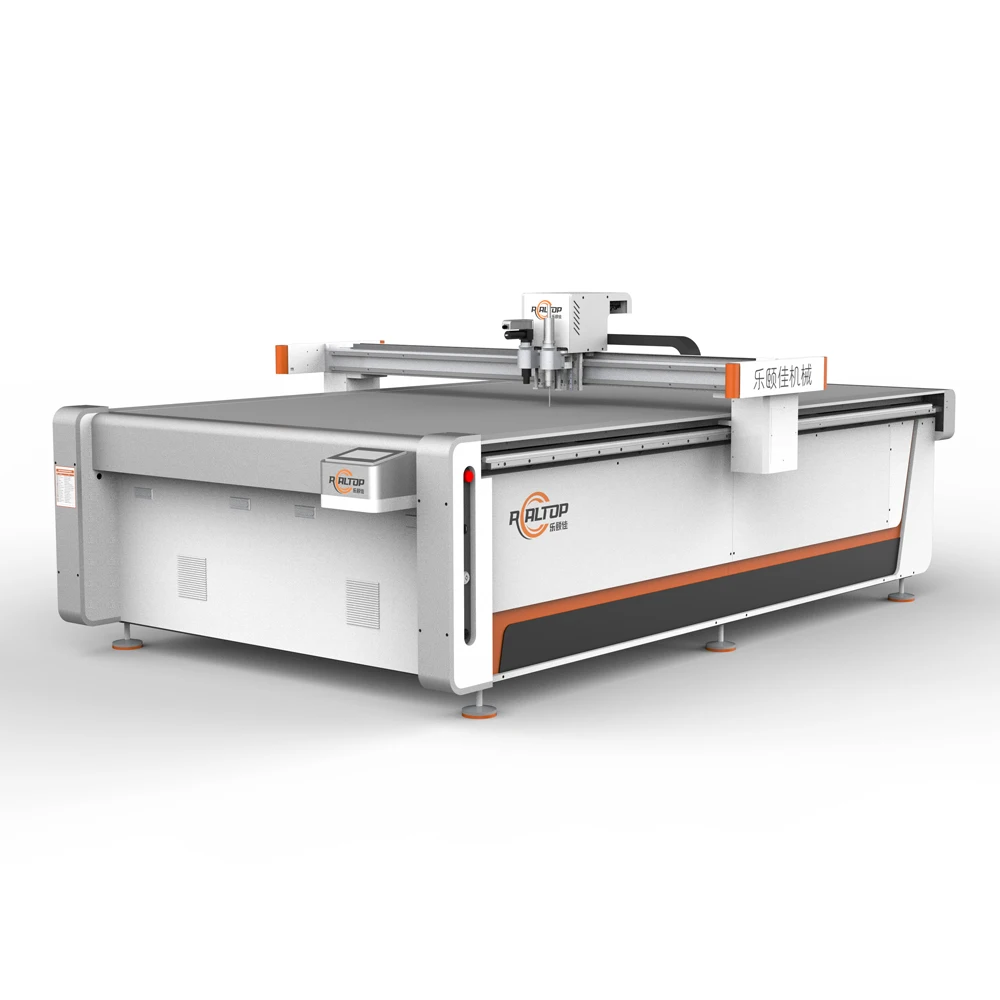
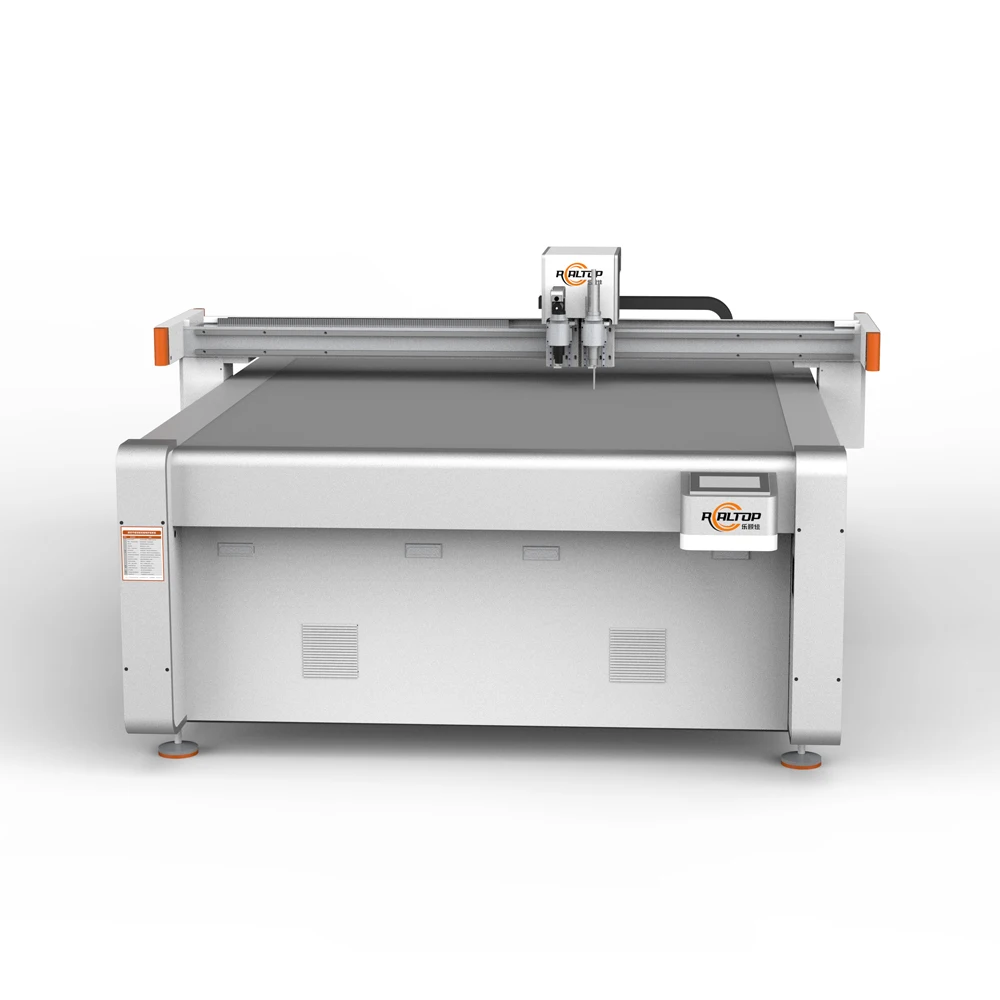
Configurable tool head and table combinations — A packaging converter can specify oscillating knife, creasing wheel and CCD camera in one machine instead of forcing a single cutting method across every substrate.
Technical Specifications
| Parameter | Value |
|---|---|
| Product Type | CNC Oscillating Knife Cutting Machine |
| Working Area | 1600 × 2500 mm |
| Machine Overall Dimensions | 3450 × 2300 × 1250 mm |
| Rated Power | 9 kW |
| Voltage | 380V ±10% (frequency to be confirmed per destination market) |
| Table Structure | Aluminum alloy honeycomb vacuum adsorption platform |
| Cutting Tool Head | Swiss imported oscillating knife with full-cut, half-cut and cursor location |
| Translational Velocity | 800–2000 mm/s |
| Cutting Speed | 200–800 mm/s (according to different cutting materials) |
| Repeated Accuracy | ≤ 0.1 mm |
| Transmission System | Digital servo motor, linear guide, synchronous belt, ball screw |
| Linear Guide | Taiwan Hiwin rail |
| Servo Motor & Driver | Taiwan Delta |
| Vacuum Pump | 7.5 kW |
| Conveyor Belt | Germany imported |
| Instruction System | HP-GL compatible format |
| Safety Devices | Infrared sensors and emergency stop |
| Software | Professional carton nesting software included; multi-format file import |
| Language Options | English, Russian, Italian, Chinese; special languages customizable |
| Cutting Thickness | ≤ 100 mm (varies with material; basis to be confirmed) |
| Compatible Materials | Leather, sponge composite, PVC, soft glass, silicon, rubber, cardboard, sticker, paper |
Application Suitability
| Application | Material or Output |
|---|---|
| Packaging carton and box sample making | Corrugated board, cardstock, grey board |
| Sticker and label contour cutting | Self-adhesive vinyl, coated paper |
| Point-of-sale display production | Fluted board, foam board, honeycomb paper |
| Business card and hang tag cutting | Coated cardstock, specialty paper |
| Corrugated and folding carton short-run production | Single and double wall corrugated, folding box board |
What Happens When Working Area Is the Only Spec That Gets Checked
A 1600 × 2500 mm bed does not guarantee clean crease lines on every board weight you run.
I visited a packaging sample room where the operator was re-running half the jobs because the crease wheel was crushing the flute structure on double-wall corrugated. The machine had the right footprint but the wrong tool head configuration for that substrate. Buyers who focus on working area alone often discover after delivery that the vacuum zoning cannot hold small carton blanks flat, or that the oscillating knife leaves ragged edges on laminated board. A CNC digital cutting machine manufacturer worth working with will ask for your thickest substrate and your smallest die-cut shape before writing the quotation [NEED_CITE: packaging substrate density and tool head matching guidelines].
Matching the Knife Head to the Board Grade
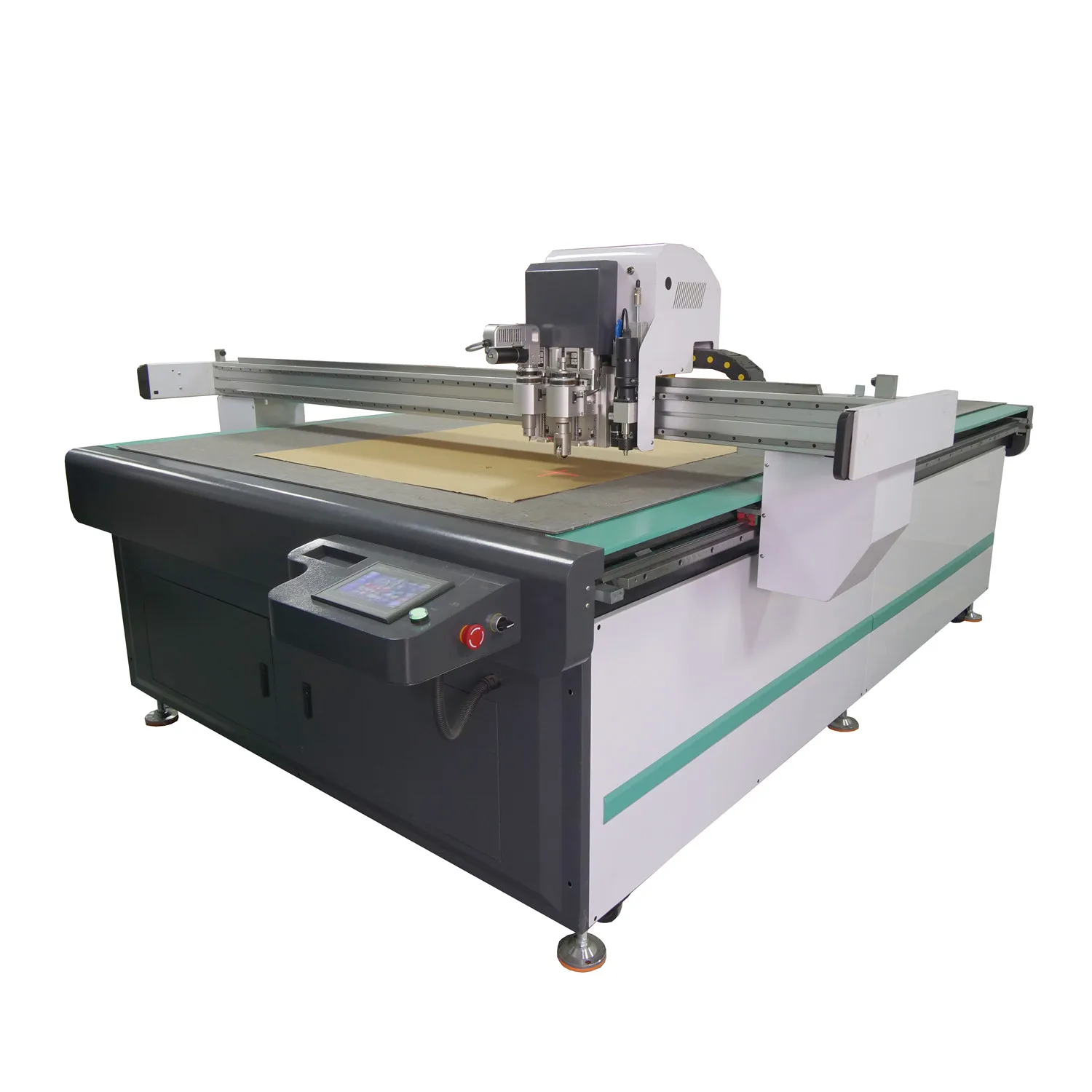
The Swiss imported oscillating knife on the RT-D2516/RT-S2516 performs full-cut, half-cut and cursor location from a single tool station. For folding carton work on 300–400 gsm cardstock, the high-frequency vibration produces a clean edge without delaminating the coated surface. When the job shifts to creasing corrugated board, swapping to the creasing wheel — specified as an option at order stage — prevents flute collapse that a drag knife would cause.
Software Workflow from CAD File to Finished Sample
The HP-GL compatible instruction system accepts files from most packaging CAD packages, and the included professional carton nesting software lets sample makers arrange multiple box formats on a single sheet to minimize board waste. Multi-format file import means the operator does not have to re-draw a client’s artwork from scratch. System language is configurable before shipment, so a Russian-speaking sample room in Eastern Europe or an Italian design studio can run the interface in their own language without translation workarounds.
Vacuum Zoning, Drive Components and Cutting Precision
The 7.5 kW vacuum pump feeds an aluminum honeycomb table with zoned adsorption, so when a small hang tag is being cut the vacuum concentrates on that sector rather than bleeding across the full bed — a detail that matters when the part is lighter than the air pressure from the oscillating head. Taiwan Delta servo motors driving Hiwin linear guides maintain ≤ 0.1 mm repeatability across the full 1600 × 2500 mm envelope, keeping registration tight when a kiss-cut sticker sheet contains hundreds of individual labels. The German imported conveyor belt allows continuous feeding for short-run production, moving cut sheets off the bed while the next section of material is positioned.
The Cost of Skipping Configuration Checks Before the Order
A converter running thick corrugated prototypes may find the standard oscillating knife frequency too low to shear through the liner and flute cleanly, leaving compressed edges that require manual trimming. If the vacuum zones were not sized for the smallest piece in the carton library, parts lift during the final cut and drift out of tolerance. When the instruction system is not verified against the buyer’s existing nesting software, operators spend hours converting files instead of cutting samples [NEED_CITE: vacuum adsorption adequacy for small die-cut packaging components].
Why Packaging Converters Source This Equipment Here
Realtop designs and builds both knife and laser cutting systems in-house, so a buyer comparing methods for a mixed substrate library — cardstock, corrugated, sticker vinyl — gets a recommendation based on the material rather than the only technology one factory happens to produce. Tool head and table configuration is specified per production volume and substrate thickness before the order goes to the shop floor. CCD camera positioning is available for printed contour work on packaging prototypes. Software compatibility with the buyer’s CAD format is confirmed at quotation stage, not at commissioning. Sample cutting on the buyer’s own material is offered before commitment, with a written report documenting edge quality and dimensional accuracy.
Documentation & Verification
- Machine specification sheet listing confirmed tool head options and vacuum table zoning layout
- Electrical schematic with voltage and frequency matched to buyer’s facility supply
- Sample cutting report on buyer’s own cardstock or corrugated board with dimensional data
- Factory test record showing repeatability measurements across the full working envelope
- Software licence documentation with confirmed file format compatibility list
- Spare parts list identifying oscillating knife blades, creasing wheels and conveyor belt segments
Installation, Commissioning & Support
- The 3450 × 2300 × 1250 mm footprint requires clear floor space plus rear and side access for belt maintenance
- A dedicated 380V ±10% circuit with appropriate breaker rating must be installed before delivery, frequency confirmed at order
- Machine ships fully assembled; vacuum pump and conveyor belt connections are completed on site
- First-run parameter setting covers knife oscillation frequency, vacuum zone mapping and servo tuning per substrate
- Operator training includes nesting software workflow, file import procedure and tool head changeover sequence
- First year replacement parts provided at no charge with buyer covering shipping; engineer dispatch available with buyer covering travel
Before You Send the Inquiry
Share the specific board grades and thicknesses you run most often, along with the smallest die-cut shape in your current carton library. If your sample room already uses a nesting or CAD package, name the software and file export format so compatibility can be verified at quotation stage. Confirm your facility voltage and frequency, and note the interface language your operators need.
Frequently Asked Questions
Q: How do I decide between oscillating knife and laser for my packaging substrates?
A: Knife cutting handles corrugated board, cardstock and foam board without burning the edges, making it suitable for structural carton samples. Laser cutting seals edges on synthetic films and thin sticker materials. A CNC digital cutting machine manufacturer offering both technologies can match the method to each substrate in your library rather than forcing one process across everything.
Q: What working area and tool head configuration fits my carton format range?
A: The 1600 × 2500 mm bed covers most standard packaging sample sizes. Tool head selection — oscillating knife, creasing wheel, drag knife — depends on the board grade and whether crease lines are needed. Confirm your thickest substrate and smallest part so vacuum zoning and knife frequency are specified correctly at order stage.
Q: Which electrical and language details need confirming before shipment?
A: Voltage, frequency and plug type must match the destination facility. The control interface supports English, Russian, Italian and Chinese as standard, with special languages configurable. Providing these details at quotation stage prevents rewiring or software rework after the machine arrives.
Q: Does CCD contour recognition work at production speed on printed packaging?
A: CCD camera positioning reads printed registration marks to align contour cuts on pre-printed cardstock and sticker sheets. Performance depends on mark size, contrast and print consistency. Request a sample cutting report on your own printed material to verify tracking accuracy before committing to the purchase.
Q: Where does this machine sit within the full catalogue range?
A: The RT-D2516/RT-S2516 targets packaging sample rooms and short-run carton converters needing both cut and crease capability. Other machine families in the catalogue address higher-volume fabric cutting with multi-layer systems, and non-metal engraving with CO2 laser platforms, so buyers can match equipment to their specific material and throughput requirements.










商品评价
There are no reviews yet.