

Fast Delivery
Quick, reliable shipping to any location.

Free & easy returns
Return this item by mail or in store within 90 days for a full refund.
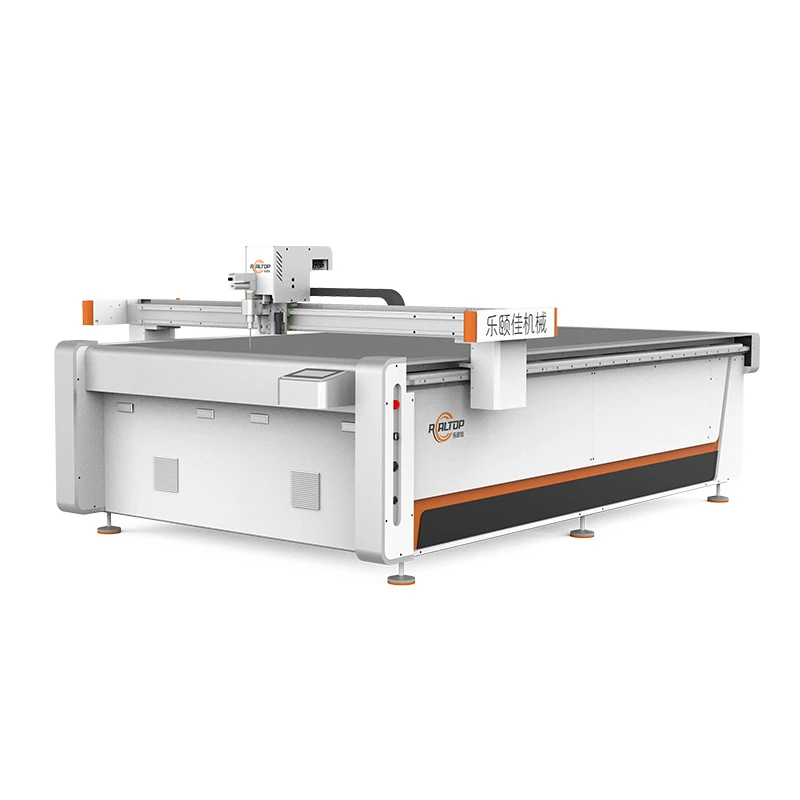
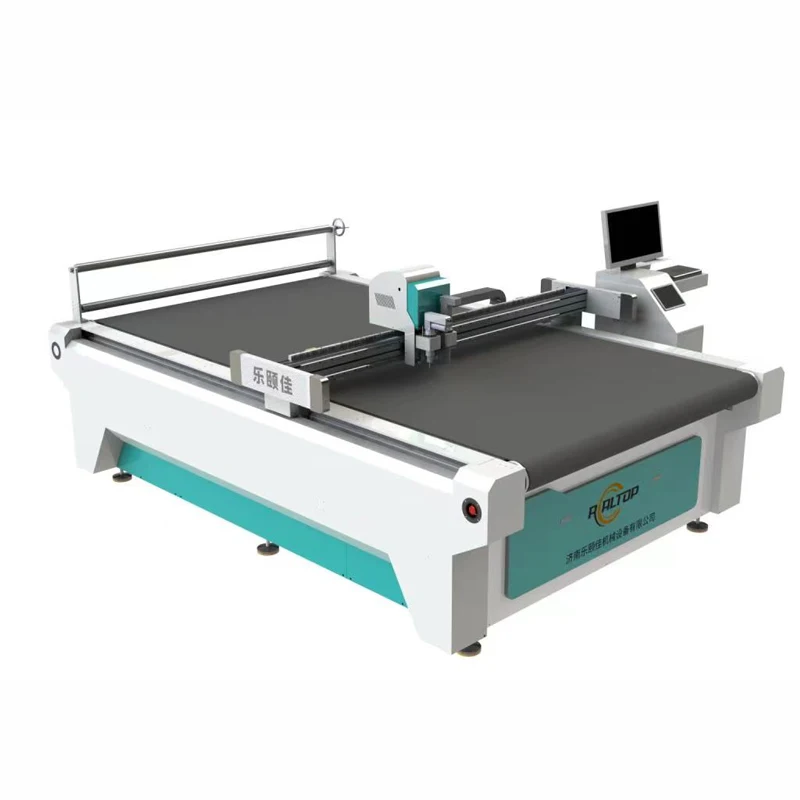
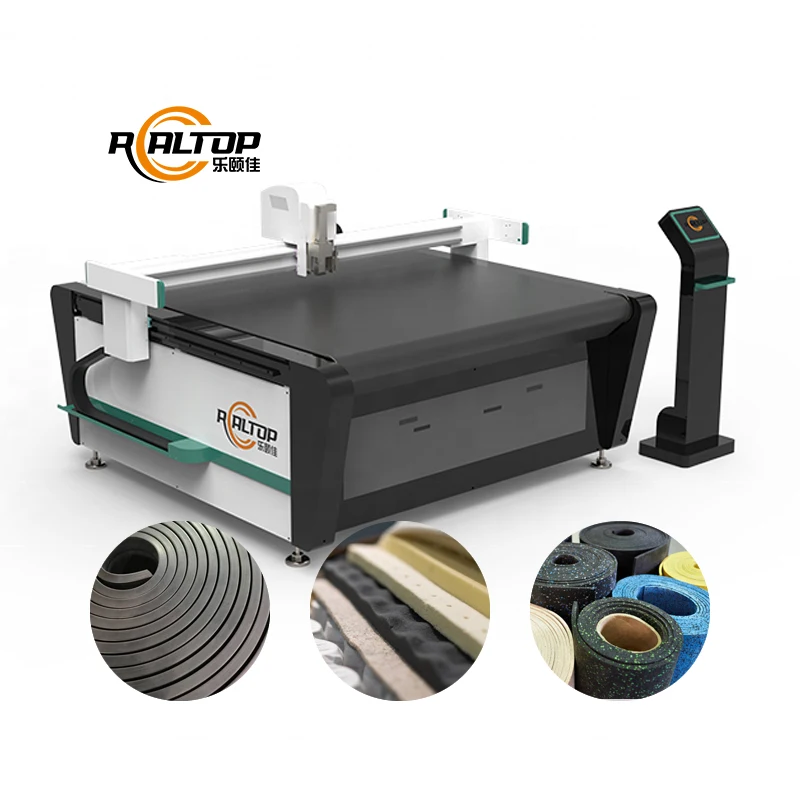
Oscillating knife and laser cutting range — tool head and table configuration specified per material and production volume, not sold as a generic flatbed.
Technical Specifications
| Parameter | Value |
|---|---|
| Model | RT-D2516 / RT-S2516 |
| Product Type | CNC Oscillating Knife Cutting Machine |
| Working Area | 1600 × 2500 mm |
| Machine Size (Overall) | 3450 × 2300 × 1250 mm |
| Rated Power | 9 kW |
| Voltage | 380V ±10% (50/60 Hz to be confirmed per market) |
| Table Type | Magnesium-aluminum alloy vacuum adsorption table, PVDF powder sprayed, anodic oxidation, hard oxidation |
| Vacuum Pump | 7.5 kW, integrated aviation aluminum shell with built-in silencer sponge |
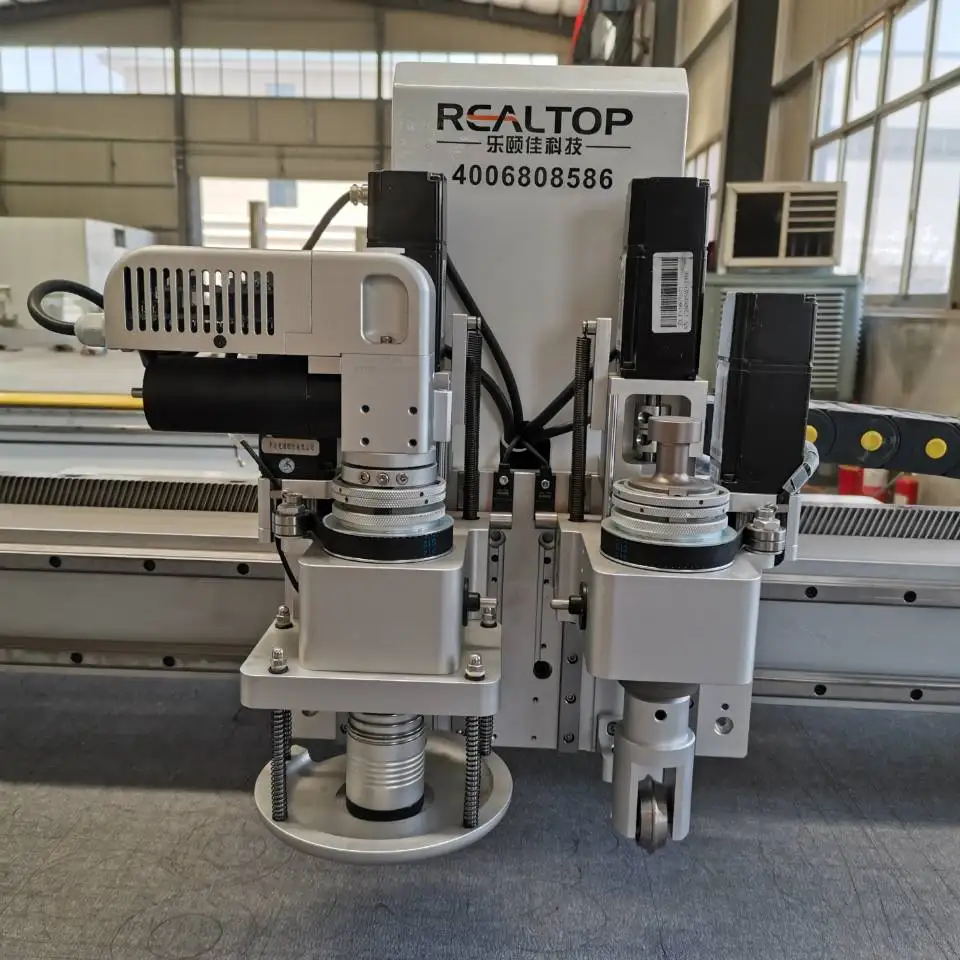
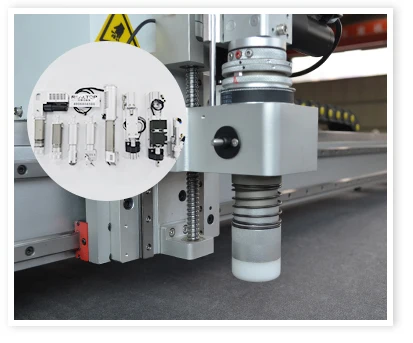
| Multifunctional Tool Head | Swiss imported knife (vibration full cutting, half cutting, cursor location); optional pneumatic knife, high-power vibrating knife, circular knife, V cutting knife, drag knife, creasing wheel, dotted line knife, punching, brush |
| Visual Positioning | Small CCD camera mark-point positioning, panoramic camera recognition positioning, projection positioning |
| Translational Velocity | 800–1200 mm/s |
| Cutting Speed | 200–800 mm/s (varies according to different cutting materials) |
| Cutting Thickness | ≤100 mm (varies with material) |
| Repeated Accuracy | ≤0.1 mm |
| Transmission System | Digital servo motor (Delta, optional Panasonic), linear guide, synchronous belt, ball screw; Taiwan Hiwin rail |
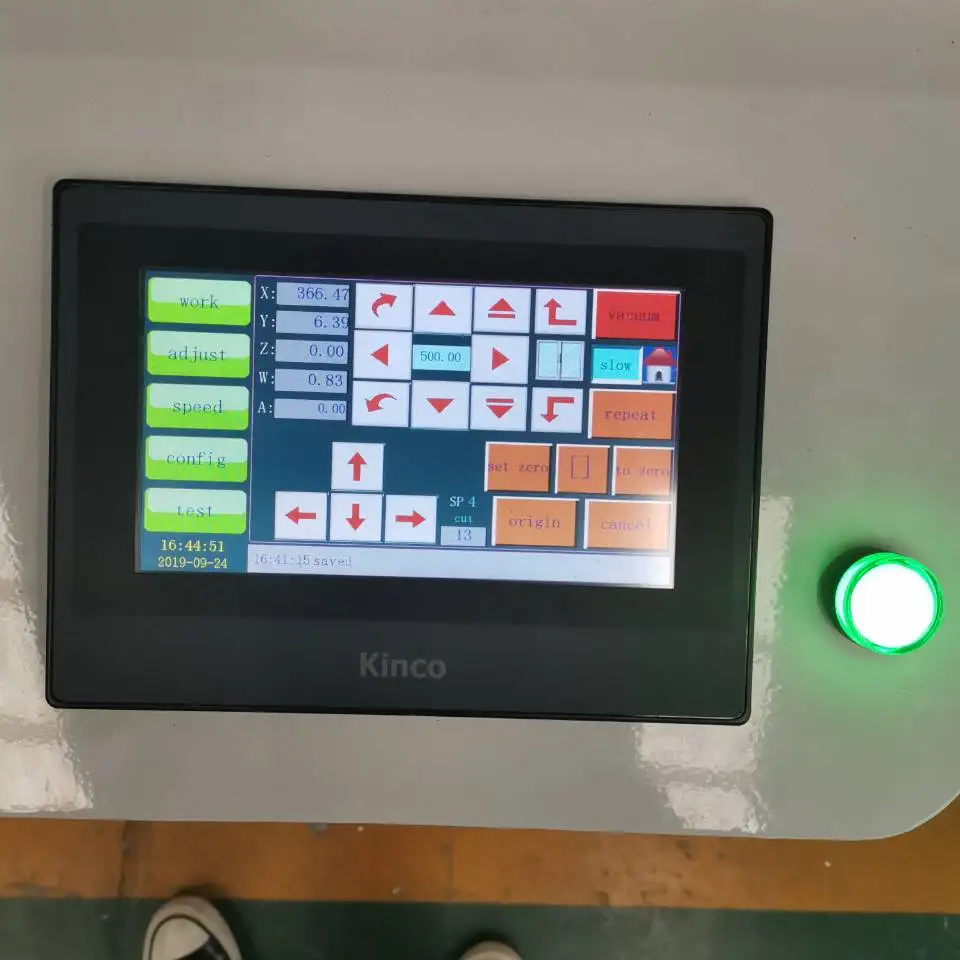
| Instruction System | HP-GL compatible format |
| Safety Device | Infrared sensors, anti-collision on both sides of beam, emergency stop button with in-situ resume |
| Servo Motor Protection Level | IP67 |
| Conveyor Belt | Germany imported (optional auto feeding) |
| Software Language Options | English, Russian, Italian, Chinese (special languages customizable) |
| Assembly State | Fully assembled |
Application Suitability
| Application | Material or Output |
|---|---|
| Gasket and sealing pad production | Rubber, silicon, PTFE, ETFE across thickness ranges |
| Automotive interior trimming | Carpets, floor mats, composite materials |
| Leather and footwear manufacturing | Shoe material, luggage material |
| Packaging and carton sample making | Corrugated cardboard, plastic box |
| Textile and garment cutting | Fabric, cloth, non-woven fabric |
| Advertising and signage | Sticker, film, PVC, soft glass |
| Foam and composite fabrication | Sponge, PU, EVA, XPE, foam board, fiberglass |
Why Material Thickness Changes the Machine You Actually Need
A cutting table rated for 100 mm on soft foam may stall on 8 mm fiber-reinforced graphite composite.
I spent two weeks on a video call with a sealing plant in Mexico after their CNC oscillating knife cutting machine manufacturer sold them a unit based purely on bed size. The gasket material they ran daily — a fiber-reinforced graphite composite board — was far denser than the rubber samples the machine had been tested on. Blade wear accelerated, cutting speed dropped, and the vacuum zones could not hold the smaller offcuts flat. The machine was not wrong; the specification conversation was incomplete. [NEED_CITE: material density effects on oscillating knife cutting performance]
Mapping Every Model to Material, Not Just Table Size
This catalogue exists because buyers often start with working area and stop there. The RT-D2516 and RT-S2516 share the 1600 × 2500 mm bed, but the tool head configuration, vacuum zoning strategy, and blade selection determine whether you get clean edges on PTFE gaskets or crushed foam on automotive mats. Each CNC oscillating knife cutting machine manufacturer in this range is matched to material type, thickness range, and daily volume rather than sold as a one-size flatbed.
The Difference Between Peak Ratings and Real Cutting Depth
Laser power quoted at peak rather than continuous output is a recurring issue across the industry, and knife cutting has its own version of the same problem. Cutting speed on the RT-D2516 and RT-S2516 is listed at 200–800 mm/s, but that range depends entirely on the material being processed. Dense composite gasket stock will sit at the lower end, while soft foam and textile layers can run near the upper boundary. The oscillating frequency of the Swiss imported knife head must also be tuned to material hardness — a setting that works for silicone will tear through non-woven fabric. [NEED_CITE: oscillating knife frequency tuning for composite gasket materials]
Reading the Specs That Actually Affect Your Production Floor
The 7.5 kW vacuum pump with integrated aviation aluminum shell is not just a power number. On gasket production runs with many small parts, vacuum table zoning determines whether those parts stay flat or lift during the final cuts. The magnesium-aluminum alloy table with PVDF powder coating and hard oxidation resists the scoring and chemical exposure common in sealing material fabrication. The Taiwan Hiwin linear guides and digital servo motors — Delta standard, Panasonic optional — deliver the repeated accuracy of ≤0.1 mm that gasket tolerances demand. HP-GL instruction system compatibility means your existing nesting software and file formats carry over without re-engineering the workflow. The CCD camera mark-point and panoramic camera positioning options handle printed contour recognition, but performance at full production speed should be verified on your specific print quality before the order is confirmed.
What Happens When the Wrong Tool Head Meets Your Material
A drag knife on fiber-reinforced gasket material produces frayed edges and forces secondary trimming. A standard oscillating knife on thick EVA foam compresses the material before the blade penetrates, leaving dimensional inaccuracy on the finished part. Pneumatic knife options exist for tougher composites, and the high-power vibrating knife head addresses denser stacks. Selecting the wrong configuration at the order stage means living with ragged edges, accelerated blade consumption, and production speeds well below what the machine frame is capable of delivering. [NEED_CITE: tool head selection consequences on gasket edge quality]
Why Procurement Verification Matters Before Shipment
Every RT-D2516 and RT-S2516 leaves the factory with in-house design and production covering both knife and laser cutting technologies, so the cutting method is matched to the material rather than forced into one approach. Tool head and table configuration are specified per your material sample and daily production volume. CCD camera positioning capability is tested on your printed stock, not demonstrated on ideal laboratory targets. Software compatibility with your existing nesting workflow and file formats is confirmed before the order is placed. Voltage, plug type, and control language are verified for your market — a 380V ±10% machine running on a 60 Hz supply needs that confirmed in writing before the electrical schematic is finalized.
Documentation & Verification
- Machine specification sheet confirming working area, tool head list, and cutting thickness per your target gasket material
- Sample cutting report on your own composite or rubber stock with edge quality and dimensional notes
- Electrical schematic with voltage and 50/60 Hz frequency confirmation for your local grid
- Tool head and table configuration list matching your material type and production volume
- Software licence and HP-GL file format compatibility note for your nesting workflow
- Factory test record with photos before crating
Installation, Commissioning & Support
- Fully assembled 3450 × 2300 × 1250 mm frame requires floor space planning and level concrete substrate
- 9 kW rated power plus 7.5 kW vacuum pump demands a dedicated circuit at confirmed 380V ±10%
- Delta or Panasonic servo motors arrive pre-calibrated; first-run accuracy verification on your material
- Operator training covers Swiss knife head frequency tuning and vacuum zone assignment for small gasket parts
- Spare parts list includes oscillating knife blades, vacuum table seals, and CCD camera replacement modules
- Software language set to English, Russian, Italian, Chinese, or customized before dispatch
Before You Request a Quote
Send us the specific gasket or sealing material you run — including type, thickness, and sheet dimensions — along with your daily cutting volume. Confirm your local voltage and frequency, the control language your operators need, and whether your existing nesting software outputs in HP-GL or requires format conversion. If your production includes printed contour work, provide a sample of the printed stock so we can verify CCD camera recognition at your target speed before configuration is finalized.
Frequently Asked Questions
Q: How do I choose between oscillating knife, drag knife, and laser for my gasket material?
A: Oscillating knife handles most rubber, PTFE, and composite gasket stock with clean edges and no heat-affected zone. Drag knife suits thinner, softer materials where speed matters more than edge finish. Laser cuts complex contours on non-metallic gaskets but leaves a sealed or charred edge that may not suit sealing applications. Material samples determine the correct method.
Q: Will the CCD camera track my printed marks at full production speed?
A: The small CCD mark-point and panoramic camera positioning systems are both available, but tracking reliability depends on your print contrast, mark size, and cutting speed. Request a sample cutting test on your actual printed stock before confirming the order so recognition performance is verified under real conditions.
Q: How does vacuum table zoning handle small gasket parts that tend to lift?
A: The magnesium-aluminum alloy vacuum table supports multi-zone suction. For gasket runs producing many small parts, specific zones activate only under the cutting area to maintain hold-down force. Zone configuration is set during commissioning based on your typical part geometry and nesting layout.
Q: Can voltage, plug type, and control language be customized before shipment?
A: Yes. The machine operates at 380V ±10%, and frequency must be confirmed as 50 or 60 Hz for your market. Plug type is matched to your local standard. Control language options include English, Russian, Italian, and Chinese, with special languages customizable during production.
Q: How does sample cutting on my material work before I commit?
A: Ship a representative sample of your gasket material to the factory. The engineering team runs cutting tests with multiple tool head configurations, documents edge quality, dimensional accuracy, and blade wear rates, then sends a full report. This report determines the final machine configuration before your order enters production.










商品评价
There are no reviews yet.