

Fast Delivery
Quick, reliable shipping to any location.

Free & easy returns
Return this item by mail or in store within 90 days for a full refund.
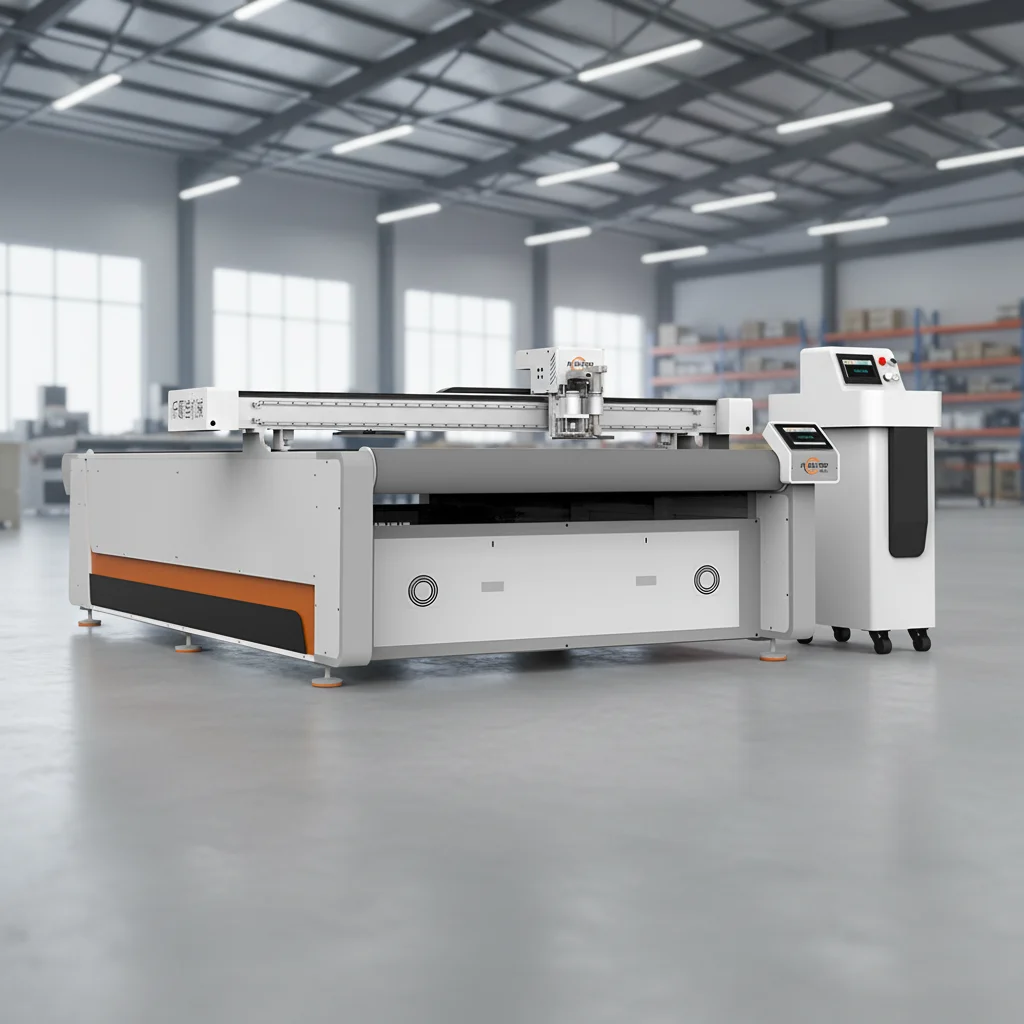
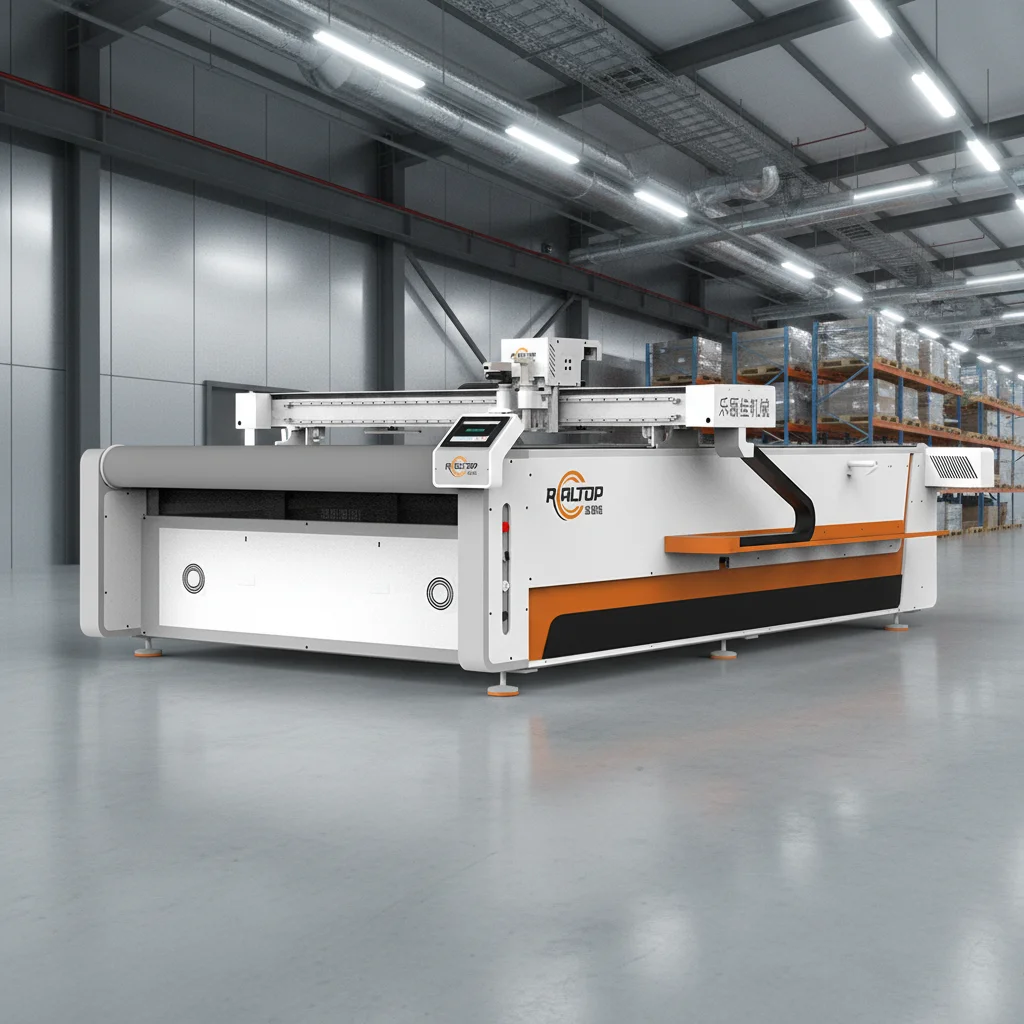
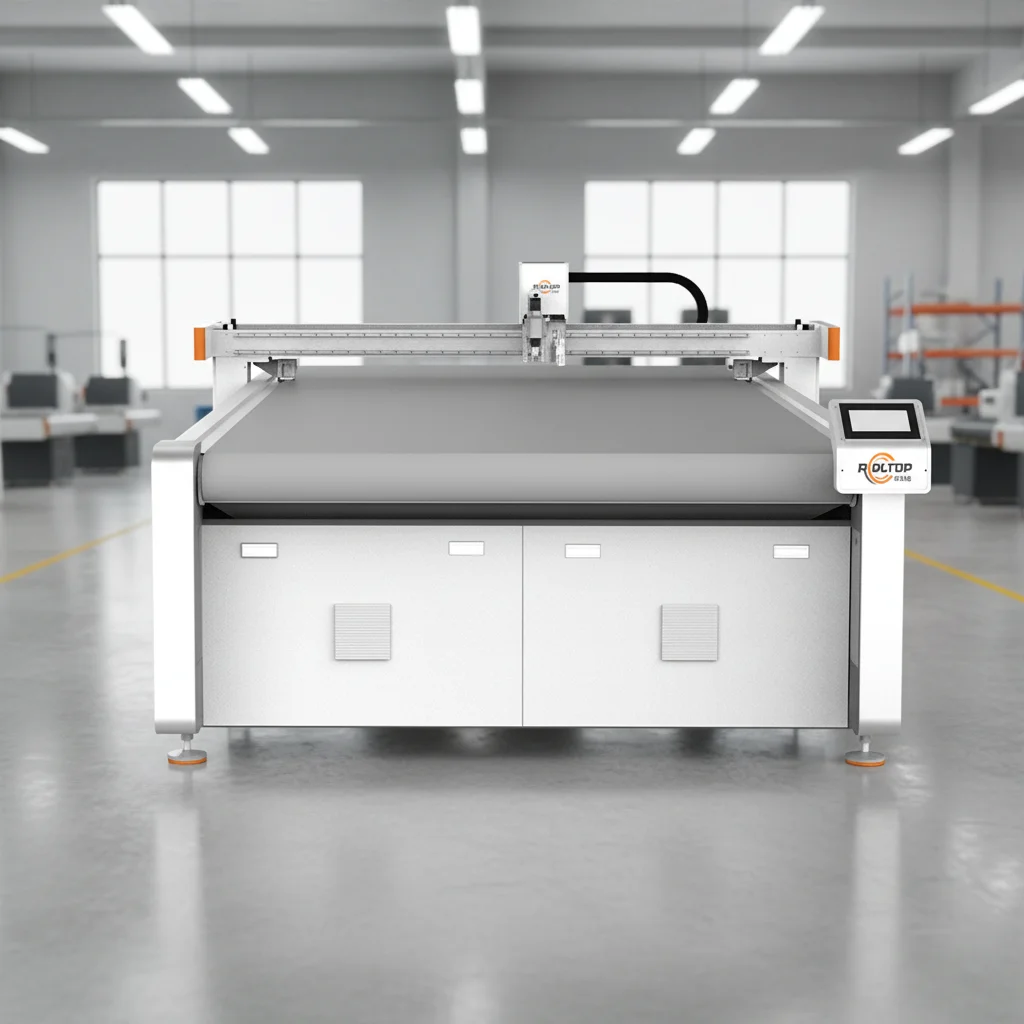
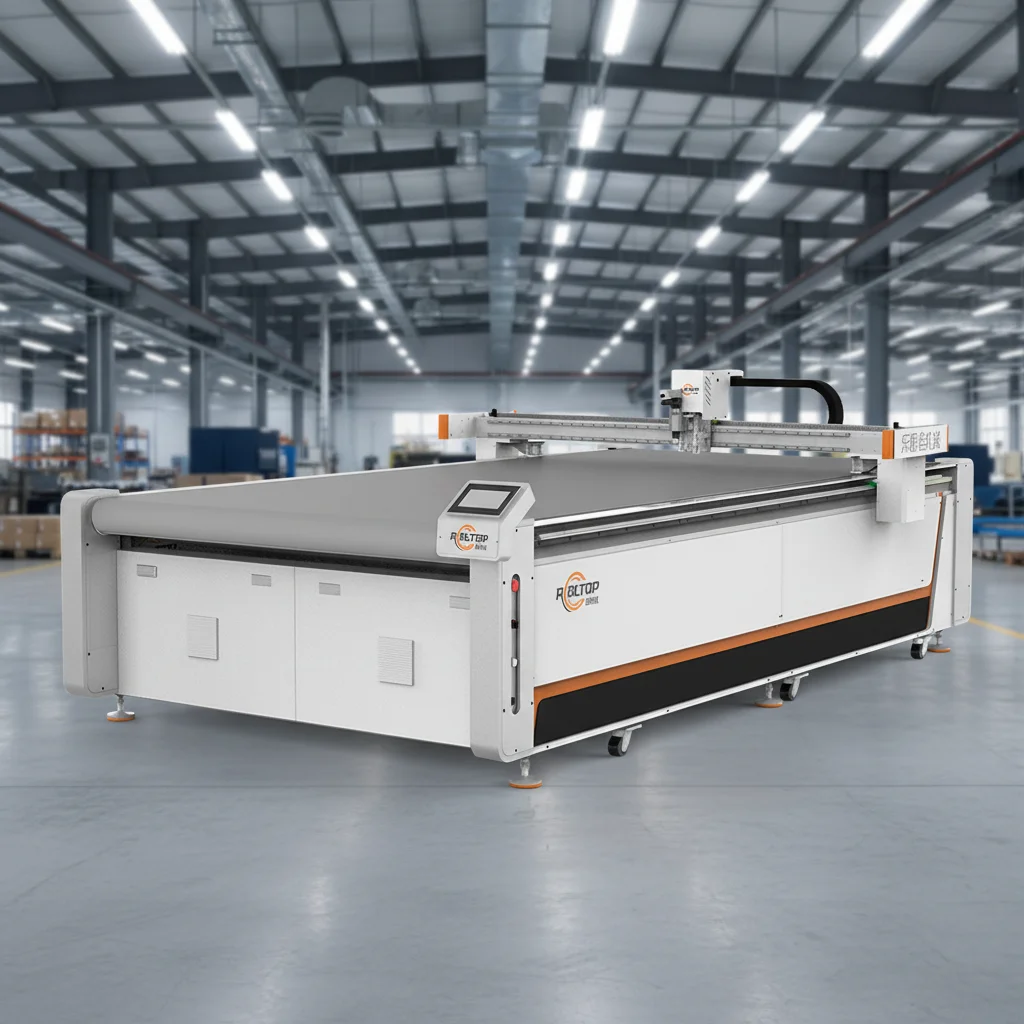
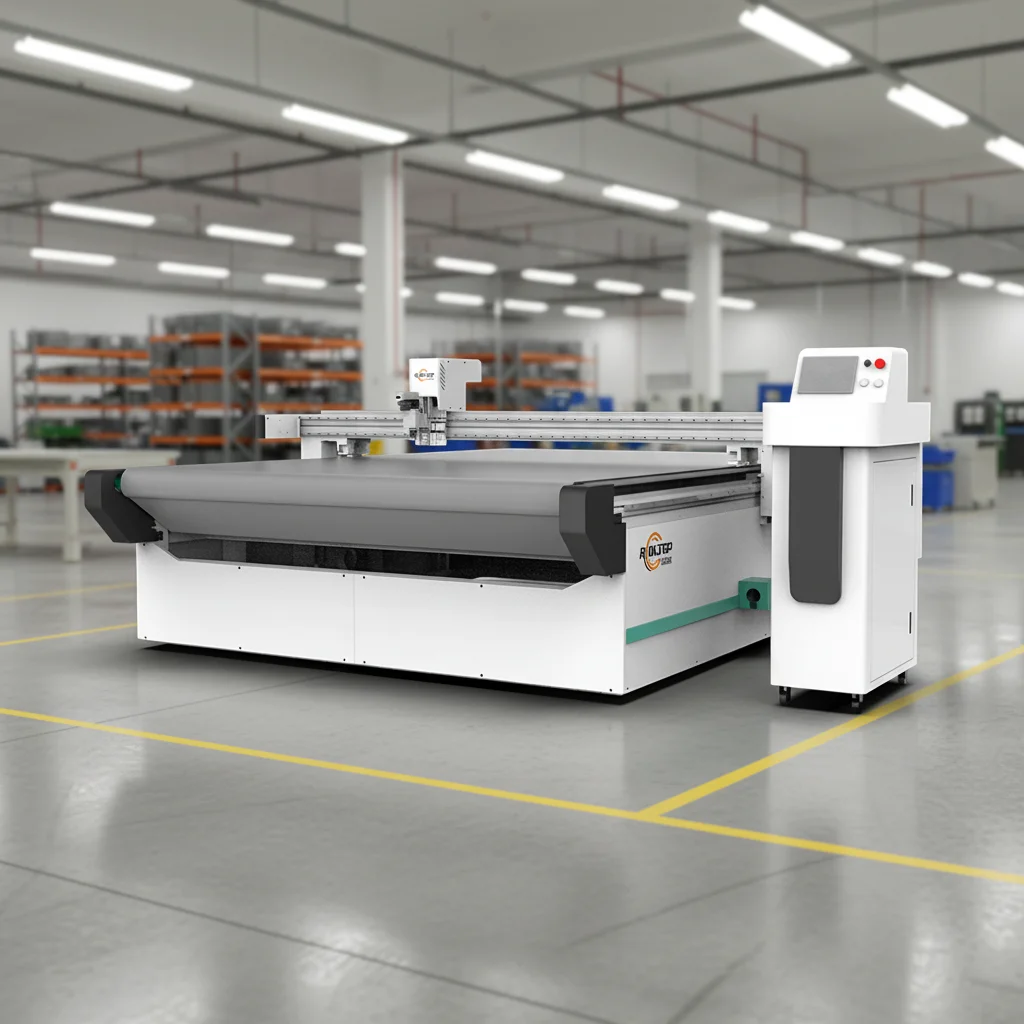
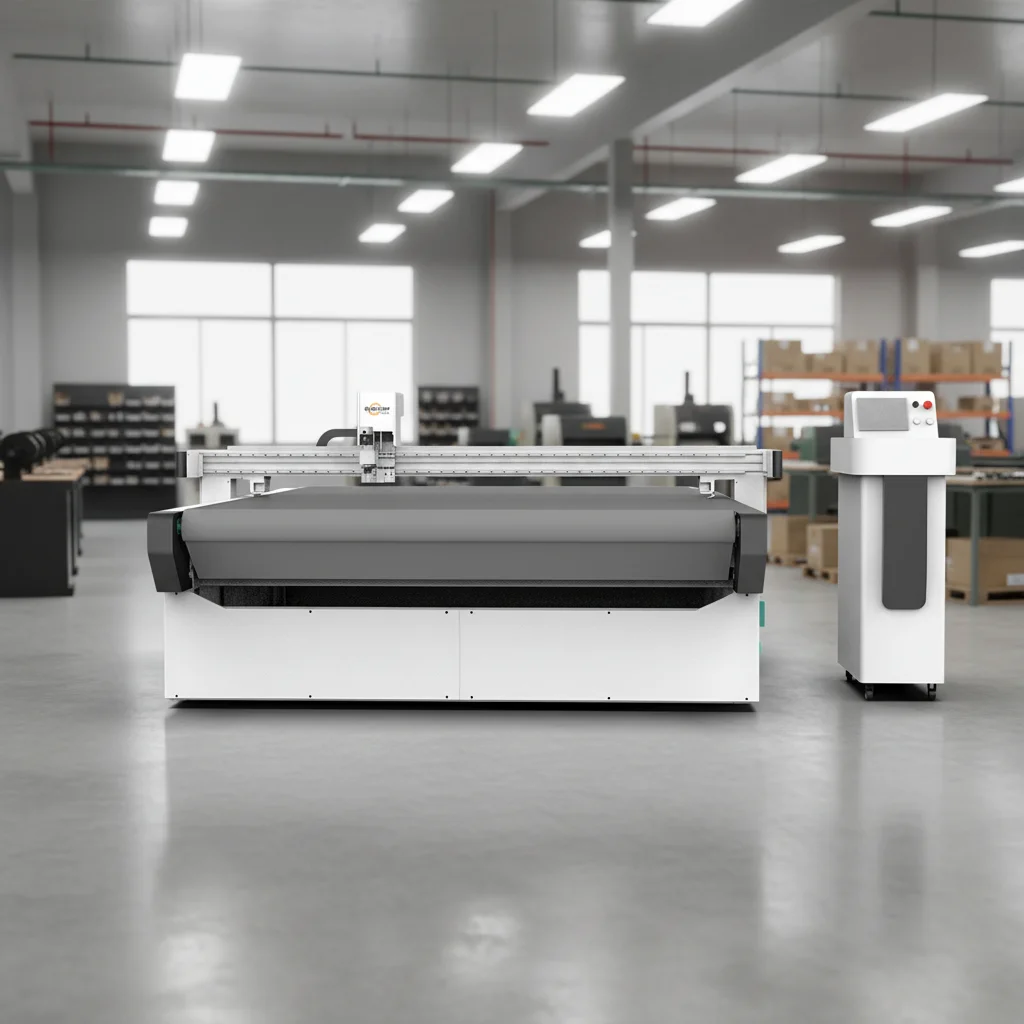
Voltage and Specification Customization — Every RT-D2516/RT-S2516 ships with confirmed electrical schematics and control language matched to the buyer’s target market before production begins.
Technical Specifications
| Parameter | Value |
|---|---|
| Model | RT-D2516 / RT-S2516 |
| Product Type | CNC Oscillating Knife Cutting Machine |
| Working Area | 1600 × 2500 mm |
| Machine Size | 3450 × 2300 × 1250 mm |
| Rated Power | 9 kW |
| Table Configuration | Flat working table or Auto feeding table (selectable) |
| Translational Velocity | 800–2000 mm/s |
| Cutting Speed | 200–800 mm/s (varies by material type and thickness) |
| Cutting Thickness | Up to 100 mm (depends on material density and tool head selected) |
| Repeated Accuracy | ≤ 0.1 mm |
| Multifunctional Head | Swiss imported knife (vibration full/half cutting, cursor location); optional heads: oscillating, pneumatic, high-power vibrating, circular, V-cutting, drag knife, creasing wheel, dotted line, punching, brush |
| Transmission System | Digital servo motor (Delta, optional Panasonic), Taiwan Hiwin linear rail, synchronous belt, imported ball screw |
| Vacuum Table | Magnesium-aluminum alloy with PVDF coating, anodic oxidation; 7.5 kW vacuum pump |
| Conveyor Belt | Germany imported |
| Visual Positioning | Small CCD camera mark point positioning, panoramic camera recognition, projection positioning |
| Software | Auto typesetting, supports PLT, DXF, AI formats |
| Control Panel | Touch screen with multi-language support (English, Russian, Italian, Chinese; others customizable) |
| Voltage | 380V ± 10% |
| Safety Device | Infrared sensors, anti-collision, emergency stop |
| Instruction System | HP-GL compatible format |
Application Suitability
| Application | Material or Output |
|---|---|
| Garment and footwear cutting | Multi-layer clothing cloth, shoe material, luggage leather, non-woven fabric |
| Automotive interior trimming | Sponge composite leather, PU, EVA, XPE, carpet, floor mat material |
| Packaging and carton sampling | Corrugated cardboard, sticker, film, plastic box stock |
| Soft home furnishings | Fabric, textile, carpet, sponge, foam board |
| Gasket and sealing production | Rubber, PTFE, ETFE, PVC, PP, PE gasket material |
| Graphic advertising and printing | Vinyl, board, sticker, film contour cutting |
| Composite materials fabrication | Fiberglass, PU, EVA, XPE, multi-layer laminates |
| Sports and outdoor products | Foam, rubber, textile, synthetic leather |
What Material Thickness Really Means on a Specification Sheet
A cutting depth claim without the material name beside it tells you nothing about what the machine will actually do in your workshop.
When I was on the assembly floor, we would get calls from buyers who looked at a 100 mm maximum cutting thickness figure and assumed their five-layer composite automotive leather would slice clean through at full speed. That figure comes from low-density foam or sponge under ideal conditions. A dense multi-layer PU stack behaves differently, demanding a high-power vibrating knife head and a slower feed rate to avoid ragged edges or incomplete cuts. Choosing a CNC oscillating knife cutting machine manufacturer that tests your exact material before quoting is what separates a clean production start from a two-week delay swapping tool heads on site. [NEED_CITE: material density effect on oscillating knife cutting depth]
Matching the Tool Head to Your Material Stack
The RT-D2516/RT-S2516 offers a wide range of tool head options because no single blade handles everything. A Swiss imported oscillating knife cuts clean through woven fabric and textile layers, while a pneumatic knife works better on thicker, denser leather hides. For corrugated cardboard and carton sample making, a creasing wheel paired with a drag knife gives you scored fold lines and cut outlines in the same pass. A high-power vibrating head is necessary when you are working through dense composite foam or multi-layer automotive interior material where a standard oscillating head would stall or crush the stack rather than slice it.
How Visual Positioning Changes Contour Work
When printed graphics on vinyl, fabric, or sticker stock need contour trimming, the operator cannot afford to align each sheet by hand. The small CCD camera handles mark point positioning for standard printed patterns, while the panoramic camera recognition system covers full-field contour matching on larger sheets where multiple printed pieces sit at varying angles. This matters at production speed, where even a slight misalignment between the printed edge and the cut path means wasted material or rejected parts. The projection positioning option gives operators a visual overlay of the cut path on the material surface before the knife engages, reducing setup errors on expensive composite fabrics. [NEED_CITE: CCD contour recognition accuracy at production speed]
Reading the Specs That Actually Affect Your Floor
The 1600 × 2500 mm working area covers most standard fabric rolls and leather hides used in garment, footwear, and automotive interior production, but the real question is whether you need a flat table or the auto feeding table. Flat tables suit batch cutting of rigid or semi-rigid sheets like corrugated board or gasket rubber. Auto feeding tables handle continuous roll goods like textile, non-woven fabric, and carpet, pulling material forward as the cutting area clears. The Taiwan Hiwin linear rail and imported ball screw deliver the ≤ 0.1 mm repeatability that keeps cut pieces consistent across a long production run. The 7.5 kW vacuum pump paired with the magnesium-aluminum PVDF-coated table holds material flat, but vacuum zoning determines whether small parts stay put or lift during high-speed passes.
The Hidden Cost of Underspecifying Your Configuration
A buyer who selects a standard oscillating head for dense composite foam will discover the problem only after the machine is installed and the first test cut shows crushed edges instead of clean slices. Retrofitting a high-power vibrating head after delivery adds lead time and cost that could have been avoided with a material sample test before the order was locked. Similarly, a vacuum table without adequate zoning for small gasket parts means those pieces shift during cutting, producing dimensional errors that only show up during assembly downstream. [NEED_CITE: cost impact of post-delivery tool head retrofit]
Why Buyers Source This Range Here
REALTOP designs and produces both knife and laser cutting systems in-house, which means the cutting method is matched to the material rather than forced into whatever single technology a supplier happens to offer. Tool head and table configurations are specified per material type and daily production volume, not picked from a default list. Software compatibility with PLT, DXF, and AI files is confirmed before the order is finalized, so there are no surprises when the buyer’s existing nesting workflow meets the machine’s control panel. Voltage, control language, and plug type are verified against the destination market’s electrical standards before shipment. Every machine goes through a factory test using the buyer’s own material, and the sample cutting report is shared before the crate is sealed.
Documentation & Verification
- Machine specification sheet confirming RT-D2516/RT-S2516 working area and tool head configuration
- Electrical schematic with voltage and frequency matched to buyer’s local supply standard
- Sample cutting report on buyer’s own fabric, leather, or composite material before dispatch
- Tool head and table configuration list tied to specified material type and thickness
- Software licence with PLT, DXF, AI file format compatibility confirmation note
- Operation and maintenance manual in selected control language with spare parts list
Installation, Commissioning & Support
- Requires a level floor area accommodating 3450 × 2300 mm machine footprint plus operator clearance
- 380V ± 10% three-phase supply with dedicated circuit rated for 9 kW total machine load
- 7.5 kW vacuum pump needs separate ventilation or exhaust routing per workshop layout
- First commissioning includes tool head calibration against buyer’s material thickness range
- Touch screen control panel configured in selected language before operator training begins
- Spare parts list covers Swiss knife blades, vacuum table seals, and conveyor belt sections
What We Need to Specify Your Configuration
Before we can recommend the right tool head and table combination, we need your material type, maximum thickness, and typical sheet or roll width. Tell us your daily cutting volume and whether you run single-layer or multi-layer stacks so we can size the feeding system and vacuum zoning accordingly. Confirming your workshop voltage, frequency, and preferred control language at this stage avoids rewiring or panel swaps after delivery.
Frequently Asked Questions
Q: Should I choose an oscillating knife or a laser for cutting fabric and leather?
A: Oscillating knives cut without burning or sealing edges, which is important for garment fabric, leather, and multi-layer textile where fused edges cause problems in downstream sewing. Lasers suit synthetic materials where edge sealing is beneficial, like acrylic or certain technical textiles. The choice depends on your specific material and the post-cutting process.
Q: Which tool head handles thick composite automotive interior material?
A: Dense multi-layer composites like sponge-backed PU or EVA typically require a high-power vibrating knife head rather than a standard oscillating knife. The higher frequency and stroke force push through dense stacks without crushing the material. We confirm the right head by running a sample cut on your actual material before quoting.
Q: Can the CCD camera track printed marks on fabric at full production speed?
A: The panoramic camera recognition system is designed for full-field contour matching at working speed, tracking printed registration marks across the cutting area. However, mark contrast, print quality, and material surface texture all affect recognition reliability. We verify tracking performance on your printed material during the pre-order sample test.
Q: Will the vacuum table hold small gasket parts without them lifting during cutting?
A: The 7.5 kW vacuum pump provides strong hold-down across the magnesium-aluminum table surface, but small parts require proper table zoning to concentrate suction where it is needed. We configure vacuum zones based on the typical part size in your gasket or sealing pad production to prevent lift and shifting at high cutting speeds.
Q: Can I import my existing nesting files directly into the machine software?
A: The control software supports PLT, DXF, and AI file formats with auto typesetting. Before the order is finalized, we confirm compatibility with your specific nesting workflow and file export settings to ensure clean import without manual rework. This avoids production delays after the machine arrives on your floor.
Voltage and Specification Customization — Every RT-D2516/RT-S2516 ships with confirmed electrical schematics and control language matched to the buyer’s target market before production begins.
Technical Specifications
| Parameter | Value |
|---|---|
| Model | RT-D2516 / RT-S2516 |
| Product Type | CNC Oscillating Knife Cutting Machine |
| Working Area | 1600 × 2500 mm |
| Machine Size | 3450 × 2300 × 1250 mm |
| Rated Power | 9 kW |
| Table Configuration | Flat working table or Auto feeding table (selectable) |
| Translational Velocity | 800–2000 mm/s |
| Cutting Speed | 200–800 mm/s (varies by material type and thickness) |
| Cutting Thickness | Up to 100 mm (depends on material density and tool head selected) |
| Repeated Accuracy | ≤ 0.1 mm |
| Multifunctional Head | Swiss imported knife (vibration full/half cutting, cursor location); optional heads: oscillating, pneumatic, high-power vibrating, circular, V-cutting, drag knife, creasing wheel, dotted line, punching, brush |
| Transmission System | Digital servo motor (Delta, optional Panasonic), Taiwan Hiwin linear rail, synchronous belt, imported ball screw |
| Vacuum Table | Magnesium-aluminum alloy with PVDF coating, anodic oxidation; 7.5 kW vacuum pump |
| Conveyor Belt | Germany imported |
| Visual Positioning | Small CCD camera mark point positioning, panoramic camera recognition, projection positioning |
| Software | Auto typesetting, supports PLT, DXF, AI formats |
| Control Panel | Touch screen with multi-language support (English, Russian, Italian, Chinese; others customizable) |
| Voltage | 380V ± 10% |
| Safety Device | Infrared sensors, anti-collision, emergency stop |
| Instruction System | HP-GL compatible format |
Application Suitability
| Application | Material or Output |
|---|---|
| Garment and footwear cutting | Multi-layer clothing cloth, shoe material, luggage leather, non-woven fabric |
| Automotive interior trimming | Sponge composite leather, PU, EVA, XPE, carpet, floor mat material |
| Packaging and carton sampling | Corrugated cardboard, sticker, film, plastic box stock |
| Soft home furnishings | Fabric, textile, carpet, sponge, foam board |
| Gasket and sealing production | Rubber, PTFE, ETFE, PVC, PP, PE gasket material |
| Graphic advertising and printing | Vinyl, board, sticker, film contour cutting |
| Composite materials fabrication | Fiberglass, PU, EVA, XPE, multi-layer laminates |
| Sports and outdoor products | Foam, rubber, textile, synthetic leather |
What Material Thickness Really Means on a Specification Sheet
A cutting depth claim without the material name beside it tells you nothing about what the machine will actually do in your workshop.
When I was on the assembly floor, we would get calls from buyers who looked at a 100 mm maximum cutting thickness figure and assumed their five-layer composite automotive leather would slice clean through at full speed. That figure comes from low-density foam or sponge under ideal conditions. A dense multi-layer PU stack behaves differently, demanding a high-power vibrating knife head and a slower feed rate to avoid ragged edges or incomplete cuts. Choosing a CNC oscillating knife cutting machine manufacturer that tests your exact material before quoting is what separates a clean production start from a two-week delay swapping tool heads on site. [NEED_CITE: material density effect on oscillating knife cutting depth]
Matching the Tool Head to Your Material Stack
The RT-D2516/RT-S2516 offers a wide range of tool head options because no single blade handles everything. A Swiss imported oscillating knife cuts clean through woven fabric and textile layers, while a pneumatic knife works better on thicker, denser leather hides. For corrugated cardboard and carton sample making, a creasing wheel paired with a drag knife gives you scored fold lines and cut outlines in the same pass. A high-power vibrating head is necessary when you are working through dense composite foam or multi-layer automotive interior material where a standard oscillating head would stall or crush the stack rather than slice it.
How Visual Positioning Changes Contour Work
When printed graphics on vinyl, fabric, or sticker stock need contour trimming, the operator cannot afford to align each sheet by hand. The small CCD camera handles mark point positioning for standard printed patterns, while the panoramic camera recognition system covers full-field contour matching on larger sheets where multiple printed pieces sit at varying angles. This matters at production speed, where even a slight misalignment between the printed edge and the cut path means wasted material or rejected parts. The projection positioning option gives operators a visual overlay of the cut path on the material surface before the knife engages, reducing setup errors on expensive composite fabrics. [NEED_CITE: CCD contour recognition accuracy at production speed]
Reading the Specs That Actually Affect Your Floor
The 1600 × 2500 mm working area covers most standard fabric rolls and leather hides used in garment, footwear, and automotive interior production, but the real question is whether you need a flat table or the auto feeding table. Flat tables suit batch cutting of rigid or semi-rigid sheets like corrugated board or gasket rubber. Auto feeding tables handle continuous roll goods like textile, non-woven fabric, and carpet, pulling material forward as the cutting area clears. The Taiwan Hiwin linear rail and imported ball screw deliver the ≤ 0.1 mm repeatability that keeps cut pieces consistent across a long production run. The 7.5 kW vacuum pump paired with the magnesium-aluminum PVDF-coated table holds material flat, but vacuum zoning determines whether small parts stay put or lift during high-speed passes.
The Hidden Cost of Underspecifying Your Configuration
A buyer who selects a standard oscillating head for dense composite foam will discover the problem only after the machine is installed and the first test cut shows crushed edges instead of clean slices. Retrofitting a high-power vibrating head after delivery adds lead time and cost that could have been avoided with a material sample test before the order was locked. Similarly, a vacuum table without adequate zoning for small gasket parts means those pieces shift during cutting, producing dimensional errors that only show up during assembly downstream. [NEED_CITE: cost impact of post-delivery tool head retrofit]
Why Buyers Source This Range Here
REALTOP designs and produces both knife and laser cutting systems in-house, which means the cutting method is matched to the material rather than forced into whatever single technology a supplier happens to offer. Tool head and table configurations are specified per material type and daily production volume, not picked from a default list. Software compatibility with PLT, DXF, and AI files is confirmed before the order is finalized, so there are no surprises when the buyer’s existing nesting workflow meets the machine’s control panel. Voltage, control language, and plug type are verified against the destination market’s electrical standards before shipment. Every machine goes through a factory test using the buyer’s own material, and the sample cutting report is shared before the crate is sealed.
Documentation & Verification
- Machine specification sheet confirming RT-D2516/RT-S2516 working area and tool head configuration
- Electrical schematic with voltage and frequency matched to buyer’s local supply standard
- Sample cutting report on buyer’s own fabric, leather, or composite material before dispatch
- Tool head and table configuration list tied to specified material type and thickness
- Software licence with PLT, DXF, AI file format compatibility confirmation note
- Operation and maintenance manual in selected control language with spare parts list
Installation, Commissioning & Support
- Requires a level floor area accommodating 3450 × 2300 mm machine footprint plus operator clearance
- 380V ± 10% three-phase supply with dedicated circuit rated for 9 kW total machine load
- 7.5 kW vacuum pump needs separate ventilation or exhaust routing per workshop layout
- First commissioning includes tool head calibration against buyer’s material thickness range
- Touch screen control panel configured in selected language before operator training begins
- Spare parts list covers Swiss knife blades, vacuum table seals, and conveyor belt sections
What We Need to Specify Your Configuration
Before we can recommend the right tool head and table combination, we need your material type, maximum thickness, and typical sheet or roll width. Tell us your daily cutting volume and whether you run single-layer or multi-layer stacks so we can size the feeding system and vacuum zoning accordingly. Confirming your workshop voltage, frequency, and preferred control language at this stage avoids rewiring or panel swaps after delivery.
Frequently Asked Questions
Q: Should I choose an oscillating knife or a laser for cutting fabric and leather?
A: Oscillating knives cut without burning or sealing edges, which is important for garment fabric, leather, and multi-layer textile where fused edges cause problems in downstream sewing. Lasers suit synthetic materials where edge sealing is beneficial, like acrylic or certain technical textiles. The choice depends on your specific material and the post-cutting process.
Q: Which tool head handles thick composite automotive interior material?
A: Dense multi-layer composites like sponge-backed PU or EVA typically require a high-power vibrating knife head rather than a standard oscillating knife. The higher frequency and stroke force push through dense stacks without crushing the material. We confirm the right head by running a sample cut on your actual material before quoting.
Q: Can the CCD camera track printed marks on fabric at full production speed?
A: The panoramic camera recognition system is designed for full-field contour matching at working speed, tracking printed registration marks across the cutting area. However, mark contrast, print quality, and material surface texture all affect recognition reliability. We verify tracking performance on your printed material during the pre-order sample test.
Q: Will the vacuum table hold small gasket parts without them lifting during cutting?
A: The 7.5 kW vacuum pump provides strong hold-down across the magnesium-aluminum table surface, but small parts require proper table zoning to concentrate suction where it is needed. We configure vacuum zones based on the typical part size in your gasket or sealing pad production to prevent lift and shifting at high cutting speeds.
Q: Can I import my existing nesting files directly into the machine software?
A: The control software supports PLT, DXF, and AI file formats with auto typesetting. Before the order is finalized, we confirm compatibility with your specific nesting workflow and file export settings to ensure clean import without manual rework. This avoids production delays after the machine arrives on your floor.










商品评价
There are no reviews yet.