

Fast Delivery
Quick, reliable shipping to any location.

Free & easy returns
Return this item by mail or in store within 90 days for a full refund.
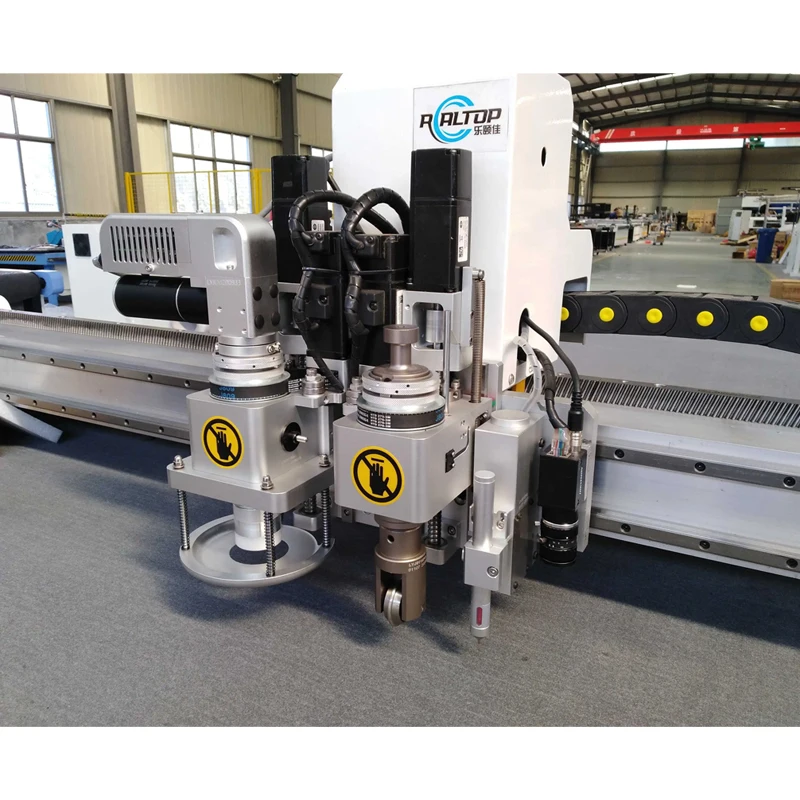
Tool head and table configuration specified per material and production volume — we match the cutting method to the actual corrugated flute profile and sticker stock rather than forcing one setup across every job.
Technical Specifications
| Parameter | Value |
|---|---|
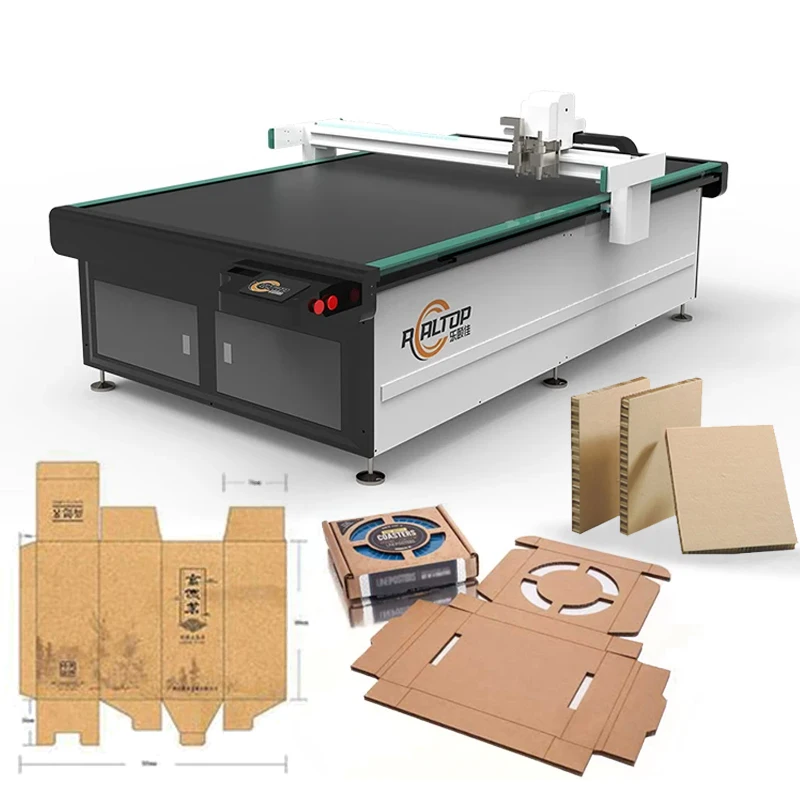
| Product Type | CNC Oscillating Knife Cutting Machine for Corrugated Cardboard & Packaging |
| Model | RT–R2513 / RT-D2516 / RT-S2516 |
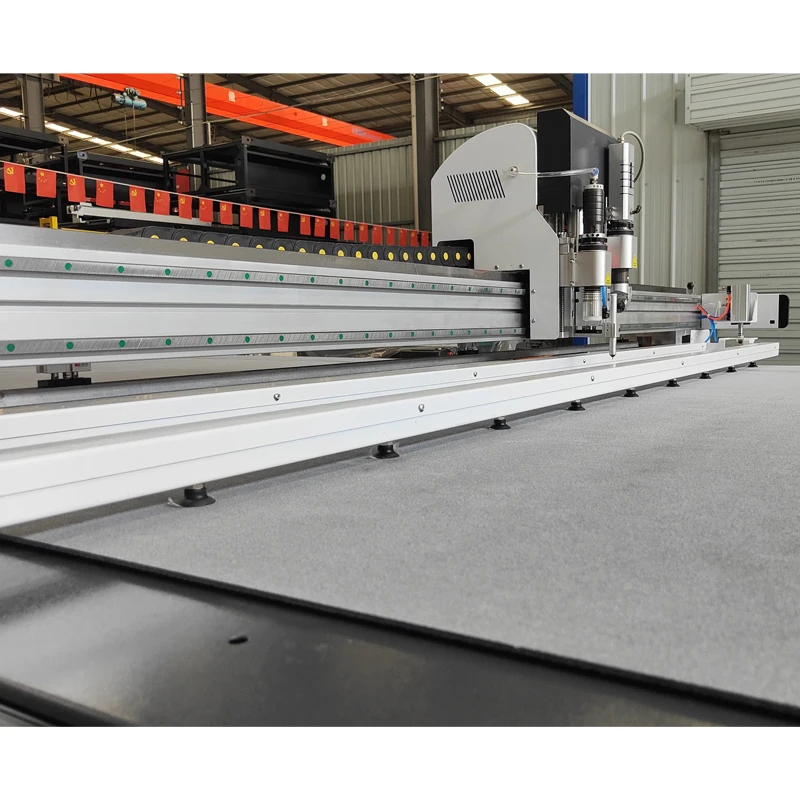
| Working Area | 2500×1300 mm (RT–R2513) / 1600×2500 mm (RT-D2516 / RT-S2516) |
| Machine Size | 3550×1910×1400 mm (RT–R2513) / 3450×2300×1250 mm (RT-D2516 / RT-S2516) |
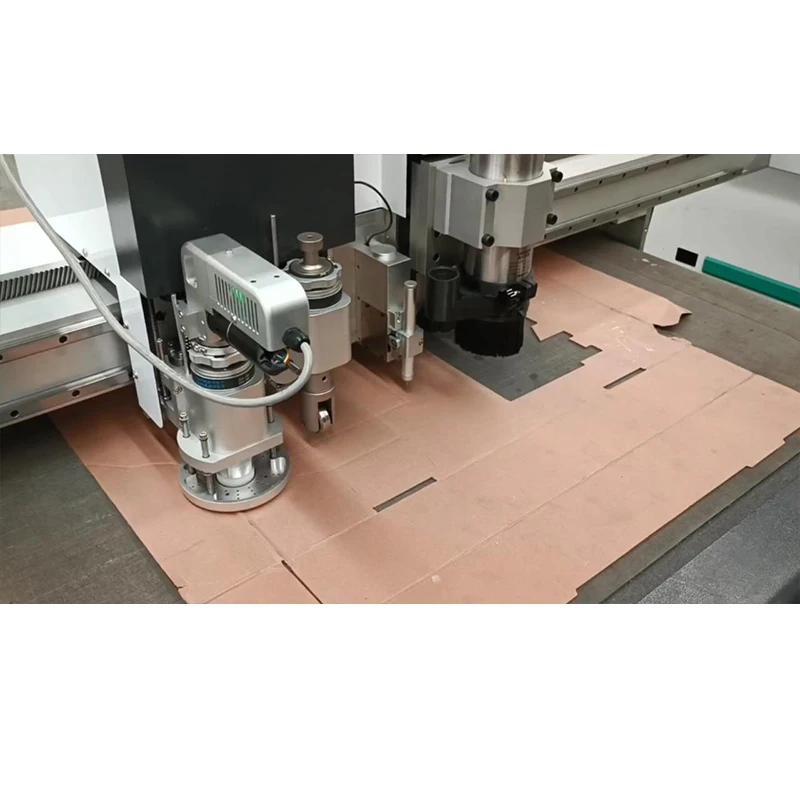
| Cutting Tools | Oscillating knife, Creasing tool, Kiss-Cut Knife Tool, Round punch |
| Cutting Thickness | ≤18 mm (basis not stated in source — confirm material / flute type / density) |
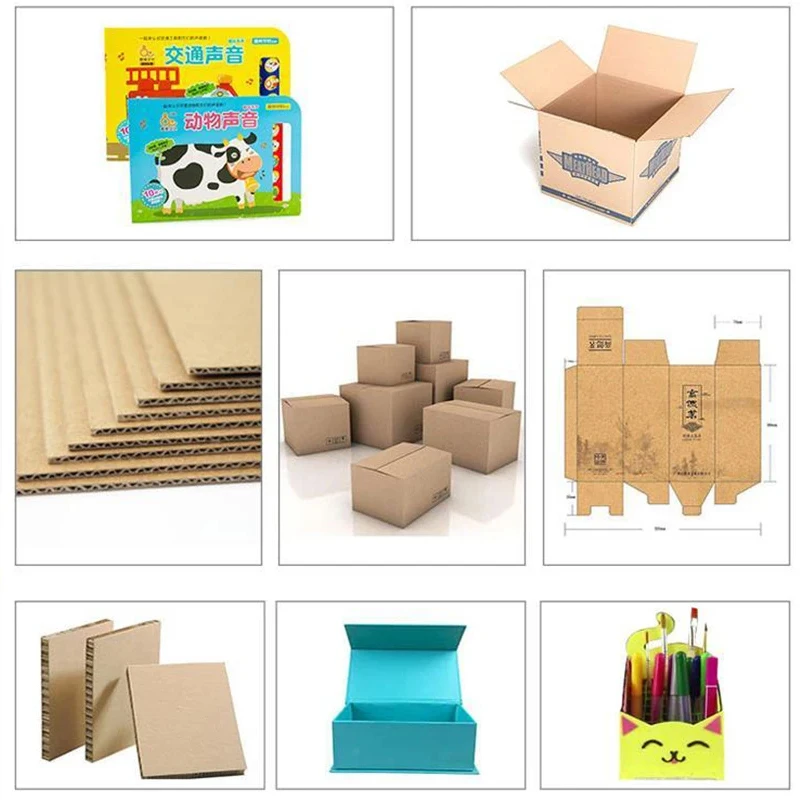
| Cutting Materials | Leather, Labels, Cardboard Boxes, Paper, Stickers, PP Paper |
| Fixing Method | Vacuum system (aluminum alloy honeycomb structure platform) |
| Rated Power | 9 kW |
| Vacuum Pump | 7.5 kW |
| Voltage | 380 V (frequency not specified in source) |
| Drive System | Dongling servo / Delta servo motor (verify which applies to quoted build) |
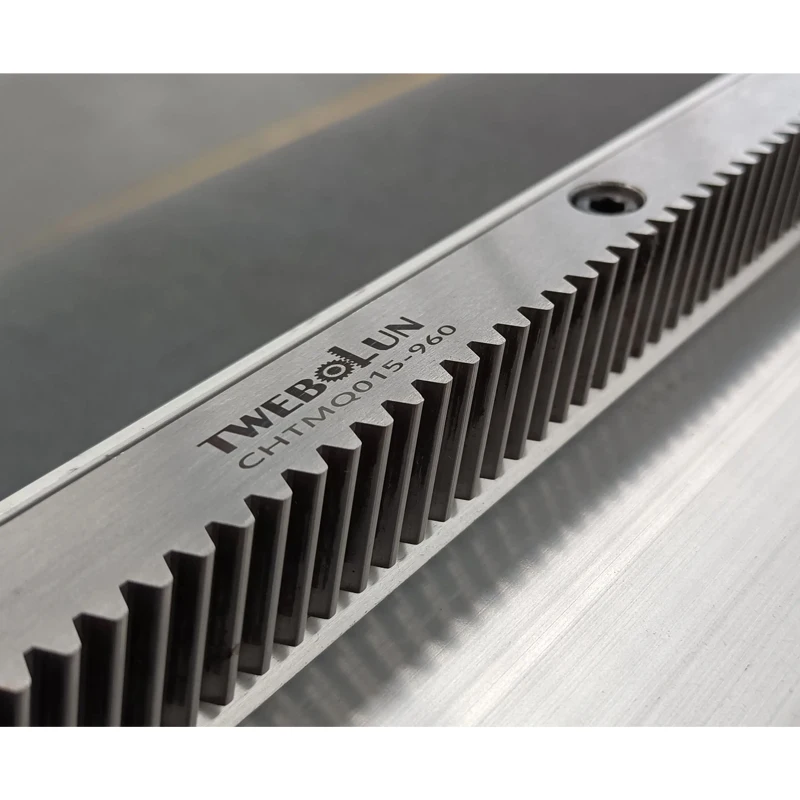
| Guide Rail | Taiwan Hiwin rail |
| Repeated Accuracy | <0.05 mm |
| Transmission Method | Ethernet port |
| Profile Format | DXF, OLT, PDF, AI |
| Safety Device | Infrared sensors, emergency stop |
| Conveyor Belt | Germany imported conveyor belt |
| Auto Feeding | Available |
| Software | Professional carton cutting design software (free, language customizable) |
| Frame | Welded thick square seamless steel structure, high temperature treated |
| Blade Supply | 10 pieces of oscillating blades included |
| Warranty | 1 year (excluding felt and knife blades) |
| Delivery Time | <30 working days |
Application Suitability
| Application | Material or Output |
|---|---|
| Packaging carton and corrugated box sample making | Single, double and triple wall corrugated board up to 18 mm |
| Short-run corrugated box production | Standard flute profiles (B, C, E, BC) at production volumes |
| Sticker and label contour cutting | Self-adhesive vinyl, paper labels and PP sticker stock |
| Advertising signage and billboard cutting | Foam board, corrugated plastic and rigid signage substrates |
| Business card, tag and card production | Coated paper, card stock and laminated sheets |
| Leather and PP paper cutting | Garment leather, synthetic leather and PP paper for accessories |
What "Faster Than Laser 5-8 Times" Actually Means on the Shop Floor
Speed claims collapse the moment the material changes from the test sample to your real production stock.
I have watched packaging shops buy an oscillating knife cutter based on a headline throughput number, only to find their specific double-wall corrugated board required multiple passes that erased the promised advantage. The comparison between knife and laser speed depends entirely on the material type, thickness and pattern complexity you run daily [NEED_CITE: cutting speed comparison methodology for flatbed digital cutting systems]. A CNC oscillating knife cutting machine manufacturer should provide a sample cutting report on your actual board grade before you sign the purchase order, not after the machine arrives and misses its daily target.
Knife Versus Laser: Matching the Method to the Board
Corrugated cardboard responds poorly to CO2 laser cutting at production speeds. The beam burns through the flute structure, leaving charred edges that fail visual inspection on retail packaging. An oscillating knife cutter handles the same board cleanly, and with the creasing tool and round punch in the same work cycle, you complete the full box blank without moving the sheet to a second machine. This is where a CNC oscillating knife cutting machine manufacturer earns trust — by showing you a finished sample on your own stock, not a generic demo piece.
Vacuum Zoning and the Small-Part Problem
Sticker contour cutting and small label jobs expose a weakness that large-format buyers overlook. A full-sheet vacuum hold-down works fine for A1 signage, but when you nest fifty small labels across the table, the suction between the parts drops and individual pieces lift during the kiss-cut pass [NEED_CITE: vacuum table zoning requirements for small-format digital cutting]. The aluminum alloy honeycomb platform on these machines is designed to distribute suction across zoned areas, but the zoning must be confirmed against your typical nesting pattern before the build goes to the factory floor.
Decoding the Specs That Matter for Corrugated Work
The repeated accuracy figure of <0.05 mm matters most when you are running crease lines that must align with printed fold marks on a box blank. Even a slight drift compounds across a full sheet of nested carton designs, and by the twentieth sheet in a short run the register is visibly off. The 7.5 kW vacuum pump pairs with the honeycomb platform to hold dense double-wall board flat, but the real test is whether the suction holds when you cut small tabs and the remaining skeleton tries to pull the sheet up. Hiwin guide rails keep the carriage tracking true across the full 2500 mm travel on the RT-D2516, which is the format most packaging sample makers need for standard box blanks.
The Cost of Choosing the Wrong Tool Head Configuration
A buyer who specifies an oscillating knife alone, then tries to run crease lines for folding cartons, will crush the flute instead of scoring it cleanly. The creasing tool and kiss-cut knife are not optional extras for packaging work — they are the difference between a box that folds on the score line and one that cracks through the top liner [NEED_CITE: creasing tool requirements for corrugated folding carton production]. I have seen sample makers spend weeks blaming the board supplier when the real problem was a missing tool head that the quotation never included.
Why Buyers Source This Range Here
In-house design and production covers both knife and laser cutting technologies, so when your product mix includes both corrugated board and acrylic signage, you get an honest recommendation on which machine handles which job. Tool head and table configuration is specified per material and production volume — the quotation lists exactly which heads are mounted and which zones are active. Software compatibility is confirmed before the order ships, with file format checks across DXF, OLT, PDF and AI to match your existing packaging design workflow. Voltage, plug type and control language are locked in before production starts, eliminating the arrival-day surprise of a machine that will not power up on local supply. Sample cutting on your own corrugated board, sticker stock or label material happens before you commit, not after.
Documentation & Verification
- Machine specification sheet listing confirmed tool heads and table zones for your material
- Electrical schematic and voltage confirmation matching your local frequency standard
- Sample cutting report on your corrugated board grade and sticker stock
- Software licence and file format compatibility note for DXF, OLT, PDF and AI workflows
- Factory test record showing repeated accuracy and cutting depth on your specified materials
- Operation and maintenance manual with system language matching your operator requirement
Installation, Commissioning & Support
- 3550×1910 mm footprint requires clear floor space with level concrete slab for the RT–R2513
- Dedicated 380 V circuit rated for 9 kW total draw plus 7.5 kW vacuum pump on separate breaker
- Machine ships as single assembly with vacuum platform pre-mounted and calibrated at factory
- First-run commissioning includes tool head pressure calibration on your corrugated flute profile
- Operator training covers Ethernet file transfer, nesting setup and tool change procedures
- Ten oscillating blades included; reorder schedule depends on board density and daily volume
What We Need to Quote the Right Configuration
Send us the corrugated flute type and board density you run most often, along with your typical sheet size and the maximum box blank dimension. Let us know your local voltage and frequency, the control language your operators need, and whether your design team works in DXF, AI or another format. If you have sticker or label stock in the mix, include the liner type so we can confirm the kiss-cut setup before the build starts.
Frequently Asked Questions
Q: When should I choose an oscillating knife cutter over a CO2 laser for cardboard and sticker work?
A: Corrugated cardboard burns and chars under a laser beam, producing edges that fail visual quality checks on retail packaging. An oscillating knife cuts the same board cleanly and handles creasing and punching in the same cycle. For sticker contour cutting, the kiss-cut knife leaves the liner intact, which a laser cannot reliably do at production speed. Laser is better suited to acrylic, wood and textile work.
Q: How do I match the working area to my sheet format and nesting strategy?
A: The RT–R2513 covers 2500×1300 mm and suits standard carton sample blanks. The RT-D2516 and RT-S2516 offer 1600×2500 mm for larger box designs or high-density nesting of small sticker sheets. Choose based on your largest blank plus nesting margin, not just the maximum single piece you cut.
Q: Which tool head combination fits a product mix of cartons, stickers and signage?
A: A full setup includes the oscillating knife for through-cuts, the creasing tool for fold lines on corrugated board, the kiss-cut knife for sticker contour work, and the round punch for registration holes or ventilation slots. This combination covers all three product families without stopping for tool changes during a production run.
Q: What flute profiles does the 18 mm cutting thickness rating actually cover?
A: The rating is a maximum that depends on flute type and board density. Single-wall B and C flute cuts cleanly in a single pass. Double-wall BC flute may require adjusted knife pressure and speed. Always request a sample cutting report on your specific board grade before finalizing the order.
Q: Can I import my existing CAD files directly into the cutting software?
A: The software accepts DXF, OLT, PDF and AI file formats. Before the order is confirmed, we run a file format compatibility check using your actual design files to verify that crease lines, cut lines and punch marks transfer correctly into the cutting workflow without manual redraw.
Tool head and table configuration specified per material and production volume — we match the cutting method to the actual corrugated flute profile and sticker stock rather than forcing one setup across every job.
Technical Specifications
| Parameter | Value |
|---|---|
| Product Type | CNC Oscillating Knife Cutting Machine for Corrugated Cardboard & Packaging |
| Model | RT–R2513 / RT-D2516 / RT-S2516 |
| Working Area | 2500×1300 mm (RT–R2513) / 1600×2500 mm (RT-D2516 / RT-S2516) |
| Machine Size | 3550×1910×1400 mm (RT–R2513) / 3450×2300×1250 mm (RT-D2516 / RT-S2516) |
| Cutting Tools | Oscillating knife, Creasing tool, Kiss-Cut Knife Tool, Round punch |
| Cutting Thickness | ≤18 mm (basis not stated in source — confirm material / flute type / density) |
| Cutting Materials | Leather, Labels, Cardboard Boxes, Paper, Stickers, PP Paper |
| Fixing Method | Vacuum system (aluminum alloy honeycomb structure platform) |
| Rated Power | 9 kW |
| Vacuum Pump | 7.5 kW |
| Voltage | 380 V (frequency not specified in source) |
| Drive System | Dongling servo / Delta servo motor (verify which applies to quoted build) |
| Guide Rail | Taiwan Hiwin rail |
| Repeated Accuracy | <0.05 mm |
| Transmission Method | Ethernet port |
| Profile Format | DXF, OLT, PDF, AI |
| Safety Device | Infrared sensors, emergency stop |
| Conveyor Belt | Germany imported conveyor belt |
| Auto Feeding | Available |
| Software | Professional carton cutting design software (free, language customizable) |
| Frame | Welded thick square seamless steel structure, high temperature treated |
| Blade Supply | 10 pieces of oscillating blades included |
| Warranty | 1 year (excluding felt and knife blades) |
| Delivery Time | <30 working days |
Application Suitability
| Application | Material or Output |
|---|---|
| Packaging carton and corrugated box sample making | Single, double and triple wall corrugated board up to 18 mm |
| Short-run corrugated box production | Standard flute profiles (B, C, E, BC) at production volumes |
| Sticker and label contour cutting | Self-adhesive vinyl, paper labels and PP sticker stock |
| Advertising signage and billboard cutting | Foam board, corrugated plastic and rigid signage substrates |
| Business card, tag and card production | Coated paper, card stock and laminated sheets |
| Leather and PP paper cutting | Garment leather, synthetic leather and PP paper for accessories |
What "Faster Than Laser 5-8 Times" Actually Means on the Shop Floor
Speed claims collapse the moment the material changes from the test sample to your real production stock.
I have watched packaging shops buy an oscillating knife cutter based on a headline throughput number, only to find their specific double-wall corrugated board required multiple passes that erased the promised advantage. The comparison between knife and laser speed depends entirely on the material type, thickness and pattern complexity you run daily [NEED_CITE: cutting speed comparison methodology for flatbed digital cutting systems]. A CNC oscillating knife cutting machine manufacturer should provide a sample cutting report on your actual board grade before you sign the purchase order, not after the machine arrives and misses its daily target.
Knife Versus Laser: Matching the Method to the Board
Corrugated cardboard responds poorly to CO2 laser cutting at production speeds. The beam burns through the flute structure, leaving charred edges that fail visual inspection on retail packaging. An oscillating knife cutter handles the same board cleanly, and with the creasing tool and round punch in the same work cycle, you complete the full box blank without moving the sheet to a second machine. This is where a CNC oscillating knife cutting machine manufacturer earns trust — by showing you a finished sample on your own stock, not a generic demo piece.
Vacuum Zoning and the Small-Part Problem
Sticker contour cutting and small label jobs expose a weakness that large-format buyers overlook. A full-sheet vacuum hold-down works fine for A1 signage, but when you nest fifty small labels across the table, the suction between the parts drops and individual pieces lift during the kiss-cut pass [NEED_CITE: vacuum table zoning requirements for small-format digital cutting]. The aluminum alloy honeycomb platform on these machines is designed to distribute suction across zoned areas, but the zoning must be confirmed against your typical nesting pattern before the build goes to the factory floor.
Decoding the Specs That Matter for Corrugated Work
The repeated accuracy figure of <0.05 mm matters most when you are running crease lines that must align with printed fold marks on a box blank. Even a slight drift compounds across a full sheet of nested carton designs, and by the twentieth sheet in a short run the register is visibly off. The 7.5 kW vacuum pump pairs with the honeycomb platform to hold dense double-wall board flat, but the real test is whether the suction holds when you cut small tabs and the remaining skeleton tries to pull the sheet up. Hiwin guide rails keep the carriage tracking true across the full 2500 mm travel on the RT-D2516, which is the format most packaging sample makers need for standard box blanks.
The Cost of Choosing the Wrong Tool Head Configuration
A buyer who specifies an oscillating knife alone, then tries to run crease lines for folding cartons, will crush the flute instead of scoring it cleanly. The creasing tool and kiss-cut knife are not optional extras for packaging work — they are the difference between a box that folds on the score line and one that cracks through the top liner [NEED_CITE: creasing tool requirements for corrugated folding carton production]. I have seen sample makers spend weeks blaming the board supplier when the real problem was a missing tool head that the quotation never included.
Why Buyers Source This Range Here
In-house design and production covers both knife and laser cutting technologies, so when your product mix includes both corrugated board and acrylic signage, you get an honest recommendation on which machine handles which job. Tool head and table configuration is specified per material and production volume — the quotation lists exactly which heads are mounted and which zones are active. Software compatibility is confirmed before the order ships, with file format checks across DXF, OLT, PDF and AI to match your existing packaging design workflow. Voltage, plug type and control language are locked in before production starts, eliminating the arrival-day surprise of a machine that will not power up on local supply. Sample cutting on your own corrugated board, sticker stock or label material happens before you commit, not after.
Documentation & Verification
- Machine specification sheet listing confirmed tool heads and table zones for your material
- Electrical schematic and voltage confirmation matching your local frequency standard
- Sample cutting report on your corrugated board grade and sticker stock
- Software licence and file format compatibility note for DXF, OLT, PDF and AI workflows
- Factory test record showing repeated accuracy and cutting depth on your specified materials
- Operation and maintenance manual with system language matching your operator requirement
Installation, Commissioning & Support
- 3550×1910 mm footprint requires clear floor space with level concrete slab for the RT–R2513
- Dedicated 380 V circuit rated for 9 kW total draw plus 7.5 kW vacuum pump on separate breaker
- Machine ships as single assembly with vacuum platform pre-mounted and calibrated at factory
- First-run commissioning includes tool head pressure calibration on your corrugated flute profile
- Operator training covers Ethernet file transfer, nesting setup and tool change procedures
- Ten oscillating blades included; reorder schedule depends on board density and daily volume
What We Need to Quote the Right Configuration
Send us the corrugated flute type and board density you run most often, along with your typical sheet size and the maximum box blank dimension. Let us know your local voltage and frequency, the control language your operators need, and whether your design team works in DXF, AI or another format. If you have sticker or label stock in the mix, include the liner type so we can confirm the kiss-cut setup before the build starts.
Frequently Asked Questions
Q: When should I choose an oscillating knife cutter over a CO2 laser for cardboard and sticker work?
A: Corrugated cardboard burns and chars under a laser beam, producing edges that fail visual quality checks on retail packaging. An oscillating knife cuts the same board cleanly and handles creasing and punching in the same cycle. For sticker contour cutting, the kiss-cut knife leaves the liner intact, which a laser cannot reliably do at production speed. Laser is better suited to acrylic, wood and textile work.
Q: How do I match the working area to my sheet format and nesting strategy?
A: The RT–R2513 covers 2500×1300 mm and suits standard carton sample blanks. The RT-D2516 and RT-S2516 offer 1600×2500 mm for larger box designs or high-density nesting of small sticker sheets. Choose based on your largest blank plus nesting margin, not just the maximum single piece you cut.
Q: Which tool head combination fits a product mix of cartons, stickers and signage?
A: A full setup includes the oscillating knife for through-cuts, the creasing tool for fold lines on corrugated board, the kiss-cut knife for sticker contour work, and the round punch for registration holes or ventilation slots. This combination covers all three product families without stopping for tool changes during a production run.
Q: What flute profiles does the 18 mm cutting thickness rating actually cover?
A: The rating is a maximum that depends on flute type and board density. Single-wall B and C flute cuts cleanly in a single pass. Double-wall BC flute may require adjusted knife pressure and speed. Always request a sample cutting report on your specific board grade before finalizing the order.
Q: Can I import my existing CAD files directly into the cutting software?
A: The software accepts DXF, OLT, PDF and AI file formats. Before the order is confirmed, we run a file format compatibility check using your actual design files to verify that crease lines, cut lines and punch marks transfer correctly into the cutting workflow without manual redraw.










商品评价
There are no reviews yet.