

Fast Delivery
Quick, reliable shipping to any location.

Free & easy returns
Return this item by mail or in store within 90 days for a full refund.
Complete cutting range — In-house design covering both knife and laser methods means packaging buyers select the technology matched to board grade rather than forcing one approach.
Technical Specifications
| Parameter | Value |
|---|---|
| Model | RT-D2516/RT-S2516 |
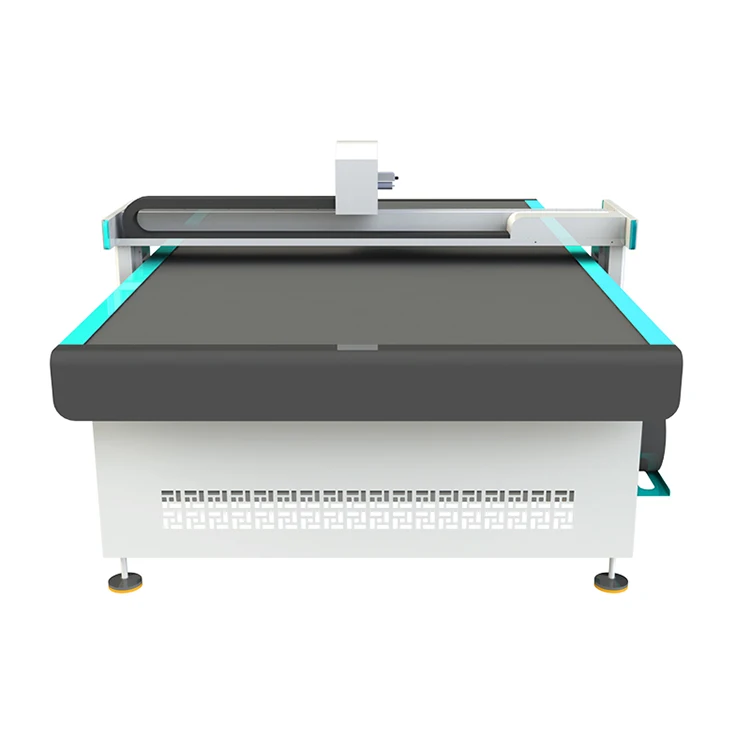
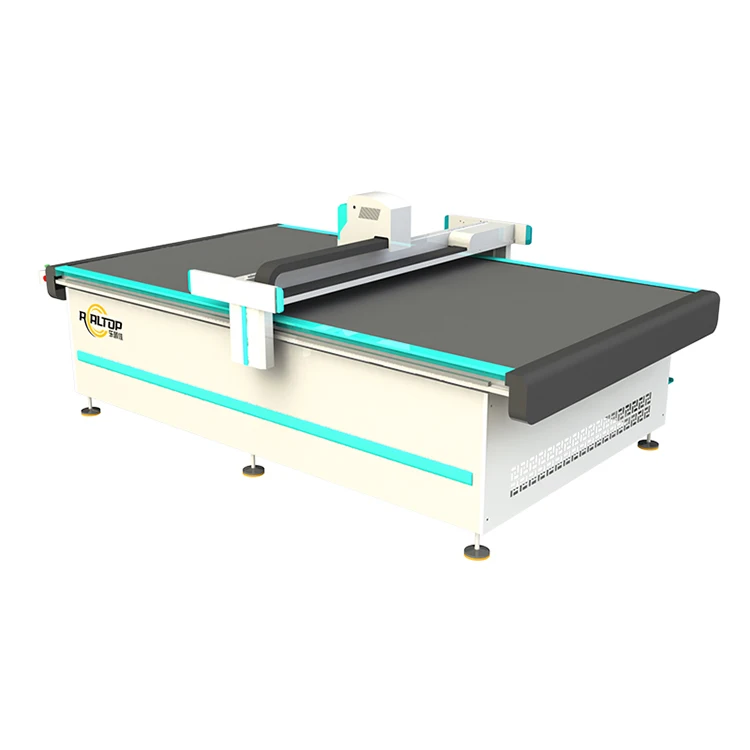
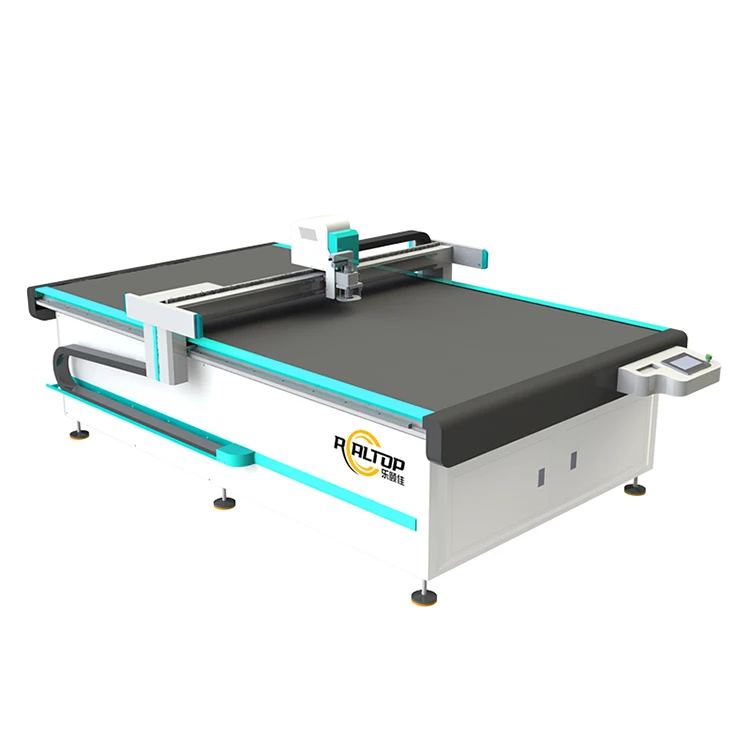
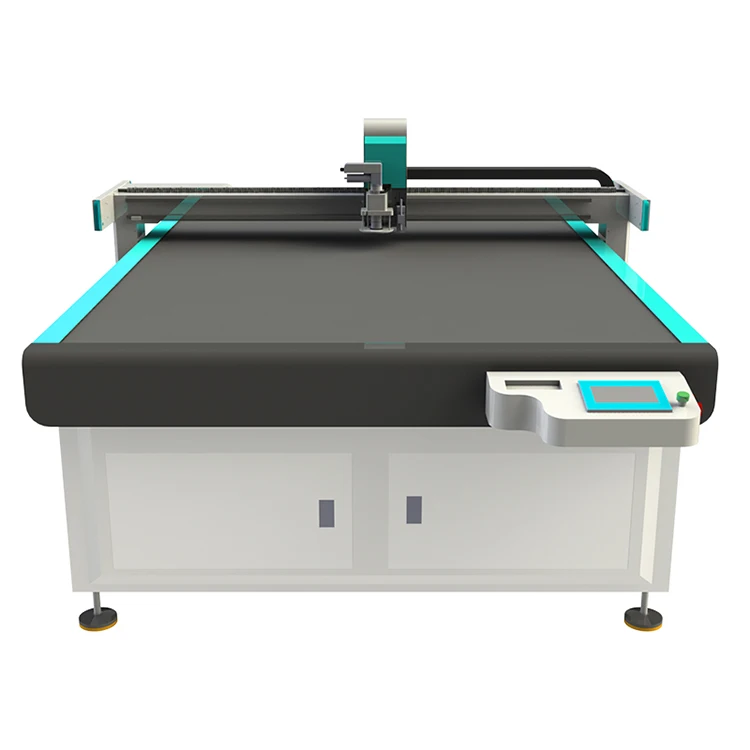
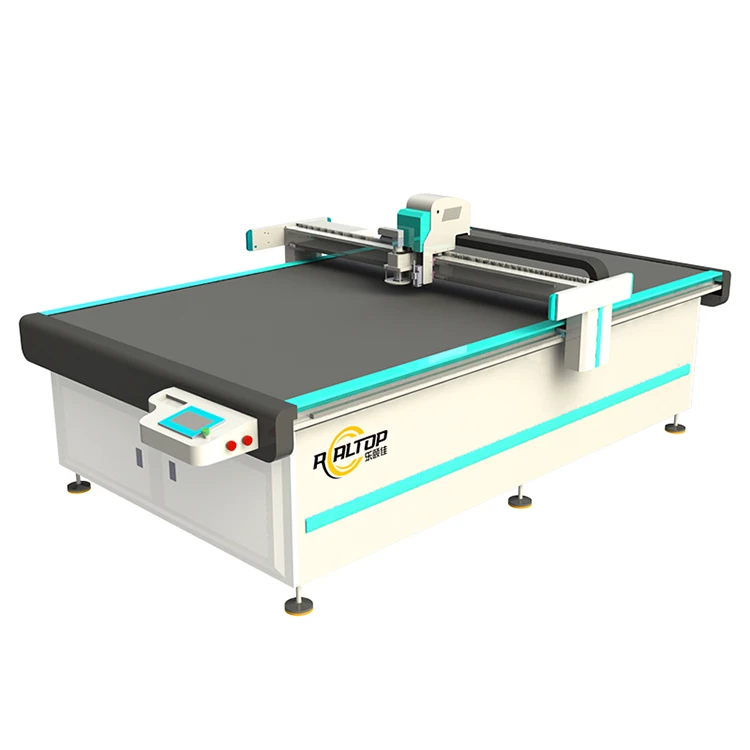
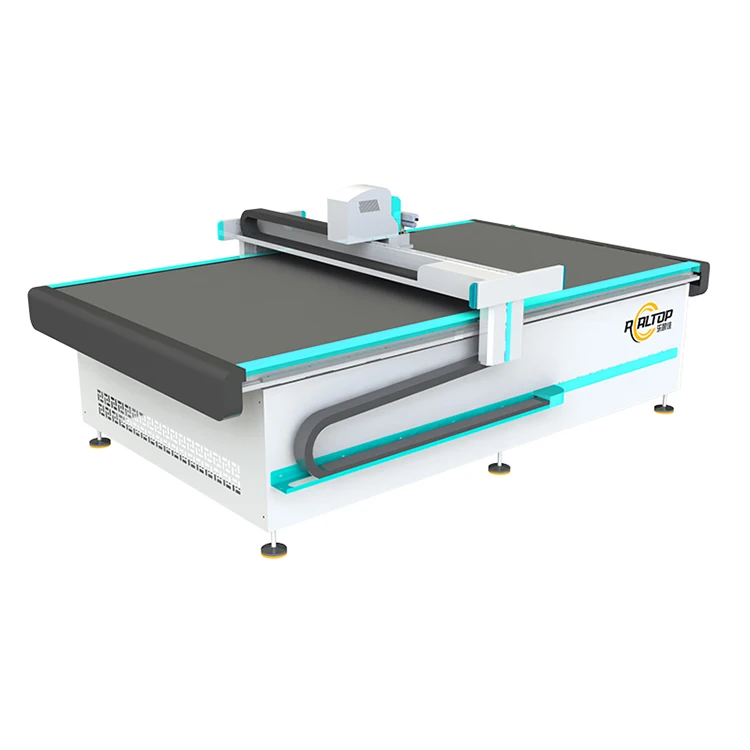
| Product Type | CNC Oscillating Knife Cutting Machine for Packaging |
| Working Area | 1600 × 2500 mm |
| Machine Footprint | 3450 × 2300 × 1250 mm |
| Rated Power | 9 kW |
| Translational Velocity | 800–1200 mm/s |
| Repeated Accuracy | ≤ 0.1 mm |
| Cutting Speed | 200–800 mm/s (basis not stated in source) |
| Tool Head | Swiss imported knife with vibration full cutting, half cutting, cursor location |
| Work Table | Flatbed with vacuum hold-down and auto feeding |
| Vacuum Pump | 7.5 kW |
| Drive System | Digital servo motor (Yaskawa), ball screw, synchronous belt, Taiwan Hiwin linear rail |
| Conveyor Belt | German imported belt |
| Instruction System | HP-GL compatible format |
| Voltage | 380V ± 10% |
| Safety Device | Infrared sensors |
| Certification | CE |
Application Suitability
| Application | Material or Output |
|---|---|
| Corrugated box prototyping | Single, double and triple wall corrugated board across common flute profiles |
| Packaging sample making | Greyboard, folding carton stock and composite packaging materials |
| Cardboard puzzle cutting | Laminated chipboard and printed carton stock |
| Flexible material cutting | Leather, sponge composite leather, PVC, soft glass, silicon, rubber |
| Short-run carton production | Corrugated and solid fibre board for limited-quantity packaging runs |
Why Board Thickness Alone Won’t Tell You If the Machine Fits
Working area, tool head pressure and vacuum zoning must be specified as a system, not picked from a brochure table.
A common mistake in packaging equipment procurement is narrowing the search to table size, then discovering the knife head cannot generate enough downward force for the actual flute profile on the shop floor. An E-flute sheet behaves very differently from a double-wall BC-flute board under oscillating vibration, and the vacuum zoning that holds a full sheet flat may leave small die-cut shapes lifting at the edges. Choosing a CNC Oscillating Knife Cutting Machine manufacturer that confirms tool head selection against your specific board grade and cut pattern — before the order is placed — avoids the situation where a machine arrives and fails the first sample run. [NEED_CITE: material hold-down requirements for corrugated board digital cutting]
Knife Versus Laser for Packaging Board
The RT-D2516/RT-S2516 uses an oscillating knife head, which handles corrugated flutes without burning or discolouring the cut edge — a requirement for packaging that will be seen by the end consumer or printed on the reverse side. Laser cutting excels on thin cardstock where sealed edges prevent fraying, but it chars thicker flute profiles and cannot produce crease lines. Because both knife and laser platforms are designed and built in the same facility, the decision comes down to which method suits the material, not which machine happens to be in stock.
How the Swiss Knife Head Handles Crease and Perforation
The multifunctional tool head carries a Swiss imported knife capable of full cutting, half cutting and cursor location in one pass. Full cutting scores through the board for clean part removal, while half cutting compresses the flute structure to produce fold lines without penetrating the liner — essential for carton sample makers who need a folded prototype that mirrors production tooling behaviour. Creasing performed on the same table eliminates a secondary station, and the cursor location function references printed marks for contour work. [NEED_CITE: half-cut creasing technique on oscillating knife cutting tables]
Reading the Specs That Actually Matter for Packaging Work
The 1600 × 2500 mm working area accommodates standard packaging board sheets, but area alone is not the full picture. The 7.5 kW vacuum pump paired with the flatbed table generates the hold-down force needed to prevent sheet drift during high-speed oscillation at translational velocities up to 1200 mm/s. Repeated accuracy of ≤ 0.1 mm keeps registration tight when cutting nested parts with shared cut lines. The HP-GL compatible instruction system integrates with packaging CAD software already in use at most carton design studios, avoiding the cost and disruption of switching design platforms. Japanese Yaskawa servo motors on the drive train and Taiwan Hiwin linear rails contribute to the positional stability needed when cutting intricate puzzle shapes or small carton locking tabs. The auto-feeding system with German imported conveyor belt supports continuous sheet loading for short-run production volume beyond single prototype cuts.
What Happens When Vacuum Zoning Is Undersized
Small packaging parts — think locking tabs, ventilation slots, or puzzle pieces under a few centimetres — sit between vacuum zones where hold-down force drops sharply. During high-speed oscillation these parts lift, producing ragged edges or shifting mid-cut and ruining the sheet. The consequence is material waste on expensive printed stock and repeated manual intervention to clear mis-cut pieces from the table. Buyers cutting a mix of large carton blanks and small components need vacuum zoning confirmed per part size, not just per sheet area. [NEED_CITE: vacuum hold-down zoning specifications for small-part digital cutting]
Why Procurement Through This Facility Works for Packaging Buyers
Both knife and laser cutting platforms are designed and manufactured under one roof, so the cutting method is selected to match the packaging material rather than forced toward whichever technology is available. The tool head and table configuration is specified per board type and production volume before the order is confirmed. Sample cutting on the buyer’s own corrugated or carton material is completed before commitment, providing a physical reference for edge quality and crease behaviour. Software compatibility with HP-GL and the buyer’s existing workflow is verified during the specification stage. Voltage, plug type and control language are confirmed to match the installation site before the machine leaves the factory.
Documentation & Verification
- Machine specification sheet listing tool head options matched to your board flute profile
- Sample cutting report produced on your own corrugated or carton stock
- Electrical schematic with voltage and frequency confirmed for your installation market
- Software licence and HP-GL file format compatibility note for your design workflow
- Factory test record showing cut accuracy and crease depth before dispatch
- Spare parts list covering knives, vacuum seals and conveyor belt segments
Installation, Commissioning & Support
- Foundation must be level to within tolerance across the 3450 × 2300 mm machine footprint
- Dedicated 380V ± 10% circuit with sufficient capacity for the 9 kW rated load plus vacuum pump
- Machine ships in sections; reassembly requires overhead clearance above the 1250 mm frame height
- Commissioning includes calibration of the ≤ 0.1 mm repeated accuracy on your board stock
- Operator training covers tool head changeover between full cut, half cut and crease modes
- Spare knife blades and vacuum seals included in the initial parts kit for early production
What to Send with Your Inquiry
Provide the specific flute profile and board gsm you run most often, along with maximum sheet size and whether your workflow includes contour cutting on pre-printed stock. Confirm your facility voltage and frequency, the control language your operators need, and whether your current design software outputs in HP-GL format. If you want sample cuts evaluated before committing, send a representative sheet of your actual production material.
Frequently Asked Questions
Q: Should I choose oscillating knife or laser for corrugated packaging board?
A: Oscillating knife cuts corrugated flutes without burning the edge or discolouring the liner, which matters for printed packaging. Laser seals edges on thin cardstock but chars thicker flute profiles and cannot produce crease lines. Both methods are available from the same manufacturing facility, so the choice depends on board thickness and edge requirements rather than machine availability.
Q: Does working area alone determine if the machine fits my packaging line?
A: No. Working area must be matched with vacuum zoning for the smallest part you cut, tool head pressure for your heaviest board grade, and auto-feeding capability for your production volume. Specifying size alone risks receiving a table that holds large sheets but cannot secure small die-cut shapes or lacks the downward force for thicker flute profiles.
Q: Can the machine handle contour cutting on pre-printed packaging samples?
A: The cursor location function on the multifunctional tool head references printed marks for contour alignment. CCD camera positioning is available as a configuration option for higher-speed contour tracking. Confirm your print mark size and contrast during the specification stage so the positioning system is matched to your actual printed stock before the machine is built.
Q: Will the software work with my existing packaging design system?
A: The instruction system accepts HP-GL compatible format, which covers most packaging CAD platforms used for carton and corrugated board design. File format compatibility is confirmed with your specific software during the specification stage, and a written note is provided with the documentation to verify the workflow before shipment.
Q: What configuration differences exist between sampling and short-run production?
A: Sampling typically runs single sheets with manual loading, so a standard flatbed with vacuum hold-down is sufficient. Short-run production benefits from the auto-feeding system with German imported conveyor belt for continuous sheet loading, reducing operator intervention between cuts. The tool head specification remains the same; the difference lies in material handling configuration.










商品评价
There are no reviews yet.