



Fast Delivery
Quick, reliable shipping to any location.

Free & easy returns
Return this item by mail or in store within 90 days for a full refund.
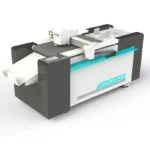
Compact Format Advantage — The RTT-4060 Pro occupies the small-footprint knife cutting slot where sheet-fed signage and packaging sample shops need precision without paying for unused bed area.
Technical Specifications
| Parameter | Value |
|---|---|
| Model | RTT-4060 Pro |
| Product Type | CNC Flatbed Knife Cutting Plotter |
| Working Area | 400 × 600 mm |
| Rated Power | 2.5 kW |
| Tool Head Configuration | Knife cutting plotter (head type to be confirmed per material) |
| Voltage & Frequency | Configurable to target market (basis to be confirmed) |
| Control System | CNC (details to be confirmed) |
| Warranty | One year for whole machine |
Application Suitability
| Application | Material or Output |
|---|---|
| Advertising and signage production | PVC board, acrylic sheet, self-adhesive vinyl, foam board |
| Packaging and carton sample making | Corrugated board, folding carton stock, grey board |
| Paper converting and processing | Card stock, specialty paper, laminated sheets |
| Leather and textile sampling | Genuine leather, synthetic leather, woven fabric sheets |
Why Working Area Alone Is the Wrong Starting Point for a CNC Flatbed Knife Cutting Plotter for Sale
Material thickness and tool head selection determine real cutting capability, not just bed dimensions.
I have watched buyers focus entirely on whether a machine fits their sheet size, only to discover on delivery that the standard knife head cannot penetrate their material cleanly. A compact-format CNC flatbed knife cutting plotter for sale might handle 2 mm PVC board effortlessly while struggling with 5 mm high-density foam if the wrong tooling is specified. The RTT-4060 Pro covers a 400 × 600 mm working envelope, but what matters is whether the oscillating knife, drag knife, or creasing wheel matches the buyer’s actual stock [NEED_CITE: tool head selection criteria for non-metal cutting]. Getting this wrong means ragged edges, crushed material cores, or incomplete cuts that require secondary trimming.
Matching the Knife Method to the Material Stack
The full-catalogue approach means evaluating whether knife cutting or laser cutting serves the material better before committing to a platform. For advertising shops running thin PVC and vinyl, a knife plotter avoids the edge melting and fume extraction requirements that CO2 laser cutting introduces. The RTT-4060 Pro sits in the catalogue as the compact knife option, suitable where sheet sizes stay within its working area and where clean mechanical cuts are preferred over thermal sealing.
Where Compact Format Earns Its Floor Space
Short-run packaging sample makers and signage producers often work with pre-cut sheets rather than roll-fed material. A 400 × 600 mm bed handles standard sample sizes and prototype cartons without consuming the floor area a large-format table demands. The key is confirming that the buyer’s typical sheet dimensions and nesting patterns actually fit within this envelope before ordering, since re-specifying to a larger machine after installation disrupts production planning [NEED_CITE: compact CNC cutting table footprint considerations for sample shops].
Reading the Specs That Actually Matter
The 2.5 kW rated power gives the drive system enough reserve for dense materials, but power alone does not guarantee clean cuts through thick stock. What determines cutting quality is the combination of knife oscillation frequency, downward stroke, and feed rate — parameters that must be tuned to each material type. The working area of 400 × 600 mm defines the maximum single-piece footprint, while nesting software compatibility determines how efficiently multiple parts fill that area. Voltage configuration must be locked down before shipment, since a 220 V machine delivered to a 110 V market requires a transformer that adds cost and potential failure points.
The Cost of Skipping the Sample Cut
When a buyer commits without testing their specific material on the machine, the consequences show up on the production floor. I spec’d a standard oscillating knife head for a customer I assumed was cutting EVA foam, only to learn they were running high-density acoustic felt. The edges came out shredded, their line sat idle two days while I flew out to swap to a drag knife and dial in the feed rate. That mistake is why sample cutting on the buyer’s actual material is non-negotiable before any purchase order is signed [NEED_CITE: material testing protocol for CNC knife cutting equipment].
Why Source This Platform Here
In-house design covers both knife and laser technologies, so the RTT-4060 Pro is recommended only when knife cutting genuinely suits the buyer’s material rather than forcing one method across all applications. Tool head and table configuration are specified per material type and production volume, not sold as a fixed package. Voltage, plug type, and control language are confirmed before the machine enters production. Software compatibility with the buyer’s existing file formats and nesting workflow is verified at the quotation stage. Sample cutting on the buyer’s own material provides a cutting report before commitment, showing edge quality, achievable thickness, and cycle times on the actual stock.
Documentation & Verification
- Machine specification sheet confirming RTT-4060 Pro working area and rated power
- Electrical schematic with voltage and plug type matched to your facility
- Tool head and table configuration list matched to your material and thickness
- Sample cutting report produced on your actual sheet stock before order
- Software licence and file format compatibility note for your design workflow
- Operation and maintenance manual with spare parts list included at shipment
Installation, Commissioning & Support
- Dedicated circuit required for the 2.5 kW rated power draw with proper grounding
- Confirm workshop doorway clearance for the RTT-4060 Pro overall dimensions before delivery
- Voltage and frequency verified against your local supply before the machine is energized
- Control language set to your operator preference during commissioning
- First-article sample cut run on your material to confirm tool head and parameter settings
- Wear parts and blade inventory reviewed to establish your reorder schedule
What to Include With Your Inquiry
Provide the specific material types, thicknesses, and sheet dimensions you plan to cut on the RTT-4060 Pro, along with your typical daily volume and nesting patterns. Include your facility voltage, frequency, and plug standard so the electrical configuration is locked before production. Specify the design software and file formats in your current workflow so software compatibility is confirmed at the quotation stage.
Frequently Asked Questions
Q: How do I confirm what material thickness the RTT-4060 Pro can actually cut?
A: Thickness capacity varies by material density and the tool head selected. Request a sample cutting test on your own sheet stock, which produces a cutting report documenting edge quality, maximum clean-cut thickness, and recommended feed parameters for your specific material before you commit to an order.
Q: Which tool head should I specify for my material?
A: Oscillating knife heads suit thicker foam and gasket materials, drag knives work well on vinyl and thin flexible sheets, and creasing wheels handle carton scoring. The correct choice depends on your material type and thickness, confirmed through sample testing rather than assumed from general guidelines.
Q: How is voltage and plug configuration handled before shipment?
A: Your facility voltage, frequency, and plug type are confirmed during the quotation stage and documented on the electrical schematic. The machine is built to your local supply standard so no external transformer is needed on arrival, eliminating a common source of field failures.
Q: Will the software work with my existing design files?
A: File format compatibility and nesting workflow integration are verified before order confirmation. Provide your design software name and typical export formats during inquiry so the control system is configured to accept your files without requiring intermediate conversion steps.
Q: What does the one-year warranty cover on the RTT-4060 Pro?
A: The warranty covers the whole machine for one year from commissioning. Spare parts availability and wear-item replacement schedules are documented in the maintenance manual provided at shipment, along with a recommended spare parts list specific to your configured tool head setup.










商品评价
There are no reviews yet.