

Fast Delivery
Quick, reliable shipping to any location.

Free & easy returns
Return this item by mail or in store within 90 days for a full refund.
Cutting Method Matched to Material — We specify oscillating knife or laser based on your composite’s coating, thickness and layer structure, not just working area, confirmed by sample cutting before shipment.
Technical Specifications
| Parameter | Value |
|---|---|
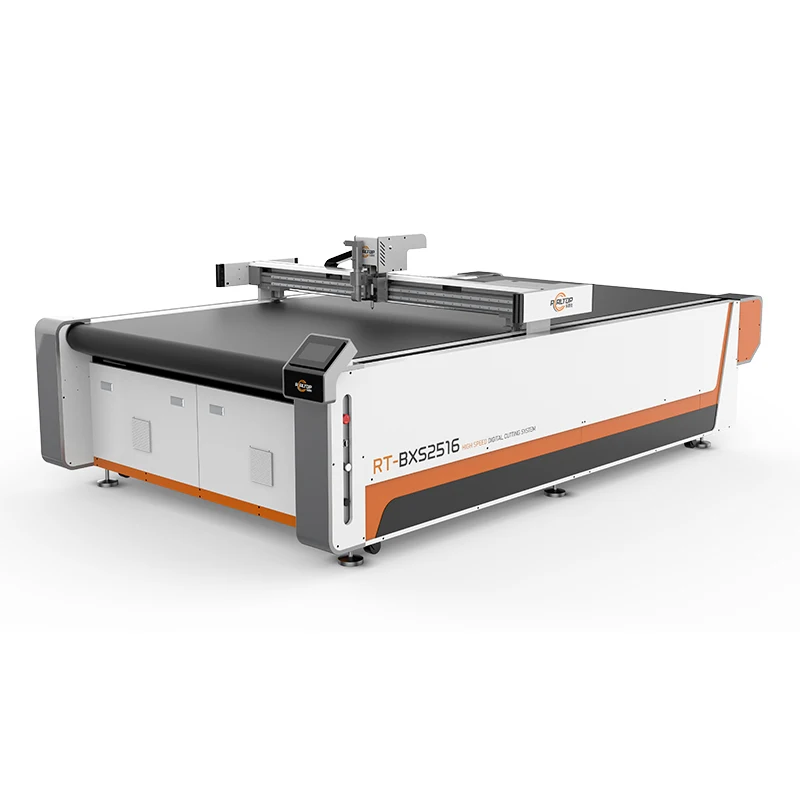
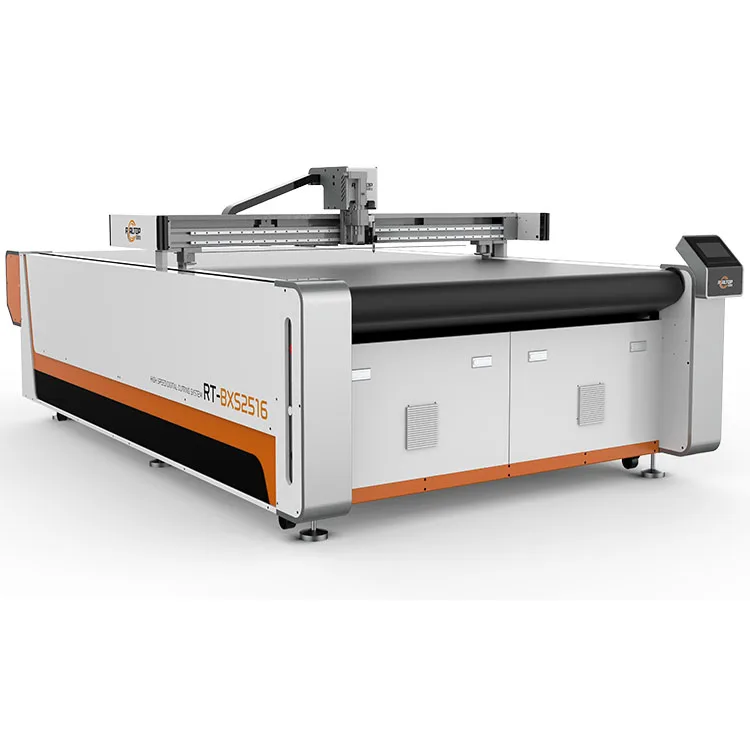
| Model | RT-D2516/RT-S2516 |
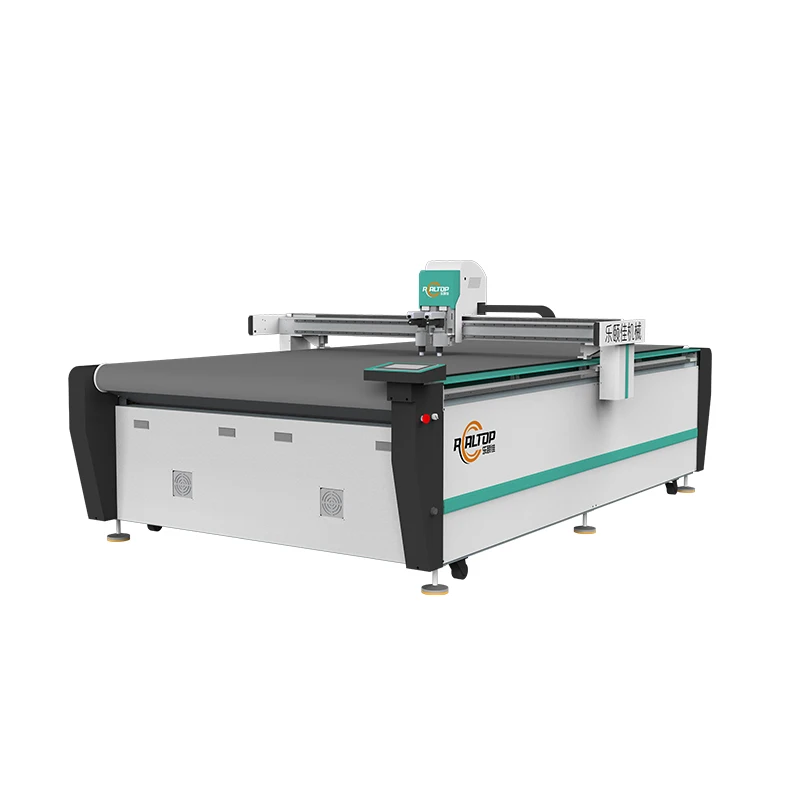
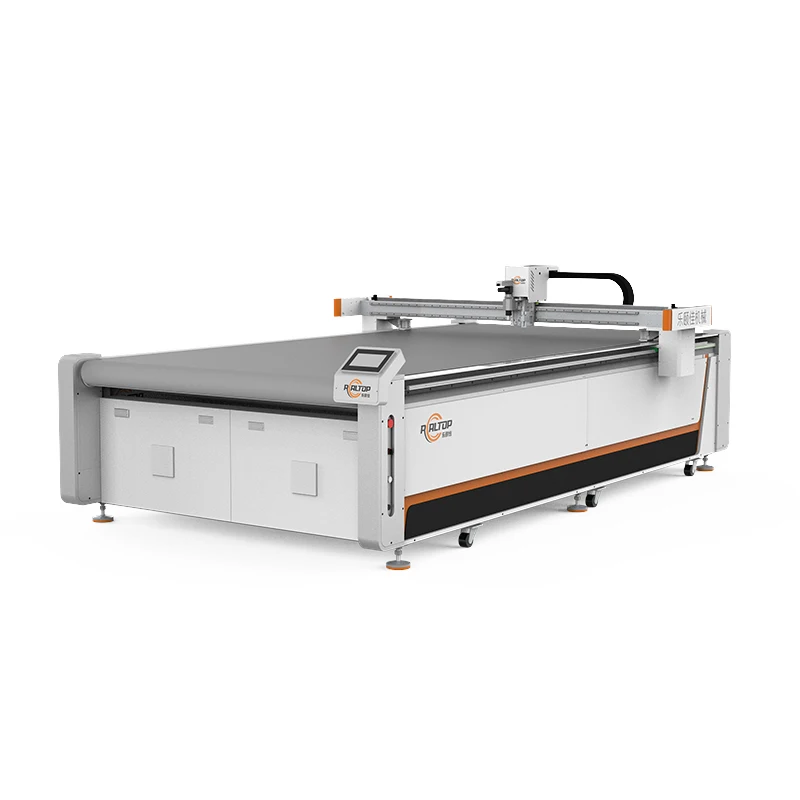
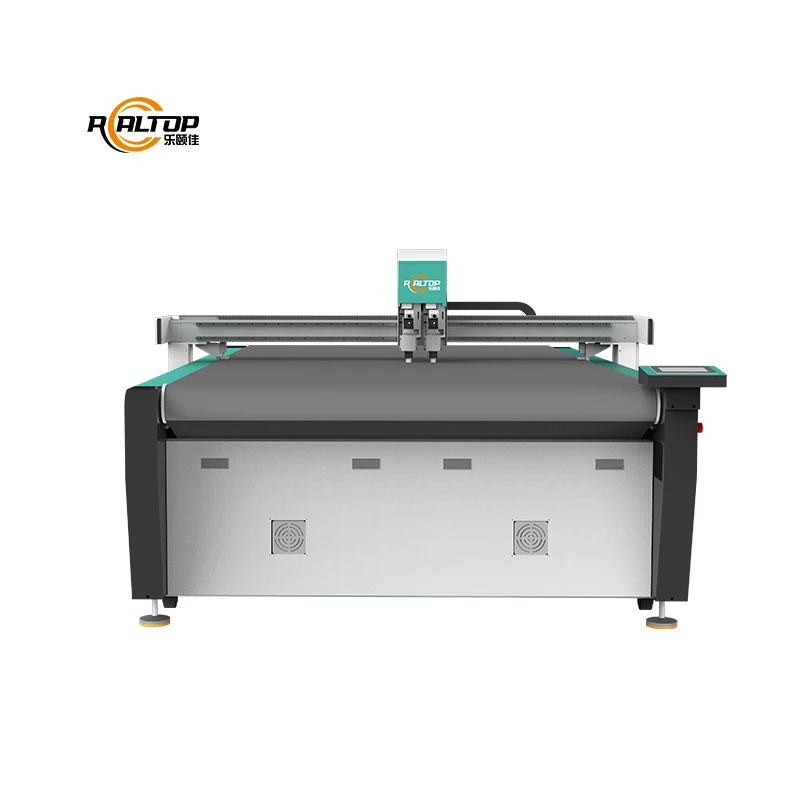
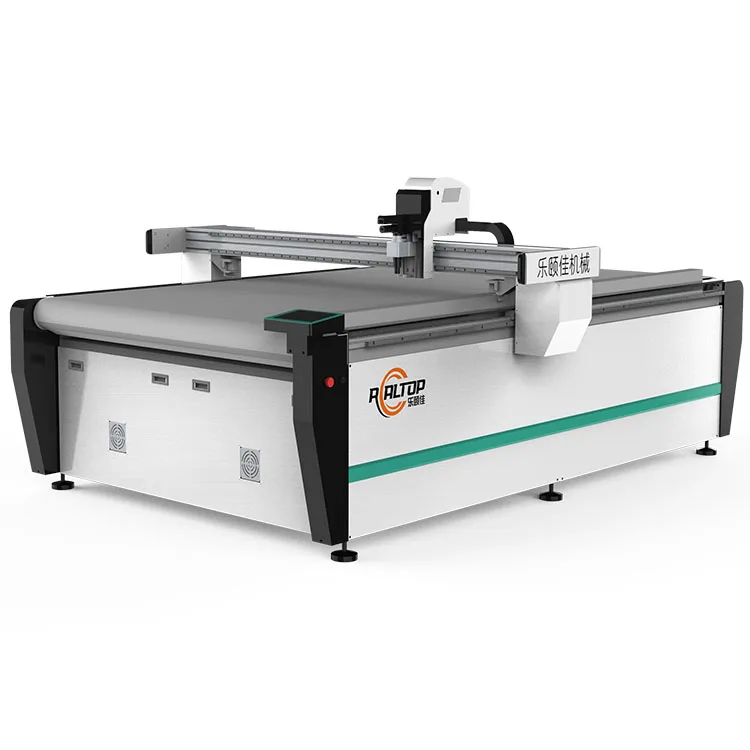
| Product Type | CNC Oscillating Knife Cutting Machine |
| Working Area | 1600 × 2500 mm |
| Machine Dimensions | 3450 × 2300 × 1250 mm |
| Rated Power | 9 kW |
| Table Type | Flatbed vacuum working table |
| Tool Head | Swiss imported knife: vibration full cutting, vibration half cutting, cursor location |
| Safety Device | Infrared sensors, responsive shutdown |
| Translational Velocity | 800–2000 mm/s |
| Cutting Speed | 200–800 mm/s (varies with material type and thickness) |
| Cutting Thickness | Up to 100 mm (basis to be confirmed per specific material stack) |
| Repeated Accuracy | ≤ 0.1 mm |
| Transmission System | Digital servo motor, linear guide, synchronous belt, ball screw (imported) |
| Servo Motor | Delta servo motor |
| Guide Rail | Taiwan Hiwin rail |
| Conveyor Belt | Germany imported conveyor belt |
| Vacuum Pump | 7.5 kW |
| Instruction System | HP-GL compatible format |
| Voltage | 380V ± 10% |
Application Suitability
| Application | Material or Output |
|---|---|
| Surfboard and paddle board shell cutting | TPU film and coated fabric composites |
| Inflatable tent and awning panel cutting | PVC-coated polyester and multi-layer tent cloth |
| Footwear upper and insole blanking | Leather, sponge composite leather, synthetic uppers |
| Garment and flexible textile cutting | Clothing flexible materials, multi-layer fabric stacks |
| Gasket and seal cutting | Rubber, silicone, soft glass, PVC sheet |
| Automotive interior trimming | Composite leather, foam-backed textiles |
Why "Working Area" Alone Fails on Coated Composites
A 1600 × 2500 mm table is only useful if the tool head and vacuum zoning match what you are actually cutting. [NEED_CITE: CNC cutting method selection criteria for coated composite materials]
I spent years flying to Latin America for on-site installations. One trip to Colombia stands out — the customer ordered based on table size, we arrived with standard test material, and the machine ran beautifully. Then they loaded their actual production roll: TPU-coated inflatable tent cloth with a tacky surface layer. The knife dragged, the coating melted onto the blade edge, and the cut contour frayed within centimeters. The whole sample batch was unusable.
That failure had nothing to do with the CNC flatbed digital cutting table for sale. It had everything to do with skipping the material-to-tool-head conversation. Coated composites behave completely differently from bare fabric or foam. The oscillating knife frequency, the blade geometry and the vacuum hold-down pressure all need to be tuned to the specific coating chemistry and laminate structure before the machine leaves the factory [NEED_CITE: vacuum hold-down requirements for flexible coated composites].
Full Catalogue Approach: Knife Versus Laser for Composites
Choosing between oscillating knife and laser cutting depends on what the composite contains and what the edge must look like. For TPU inflatable tent cloth and layered surfboard fabrics, oscillating knife cutting avoids the heat-affected zone that a laser would produce, keeping the coating intact at the cut edge. This CNC oscillating knife cutting machine manufacturer builds both knife and laser platforms in the same factory, so the cutting method is chosen to match the material — not forced into whichever machine happens to be available.
Configuration Depth Beyond the Brochure
The RT-D2516/RT-S2516 comes with a Swiss imported knife head offering vibration full cutting, vibration half cutting and cursor location functions in one tool station. For multi-layer composite stacks where only the top ply follows a printed contour, this matters: the half-cutting mode scores the surface layer without penetrating the backing, while full cutting handles through-cuts on the same sheet. The Germany imported conveyor belt feeds material continuously for long runs, and the 7.5 kW vacuum pump generates the hold-down force needed to keep flexible coated fabrics flat during high-speed traversal [NEED_CITE: conveyor-fed CNC cutting advantages for roll-based composite materials].
Reading the Spec Sheet Against Your Material
The 200–800 mm/s cutting speed range reflects a real variable: denser composites like multi-layer sponge composite leather require slower passes to prevent blade deflection, while single-ply T*n linear guide and Delta servo motor combination holds repeated accuracy within 0.1 mm across the full 1600 × 2500 mm working envelope — critical when nesting tight gasket profiles or footwear uppers where a tenth of a millimeter accumulates across dozens of parts. The HP-GL compatible instruction system accepts standard CAD output, but software compatibility with your specific nesting workflow should be confirmed before order placement.
The Cost of Skipping Material Testing
When a buyer specifies a machine on working area alone and the tool head is wrong for the coating, the consequences compound. Ragged edges on inflatable tent panels mean heat-sealing failures downstream. Crushed foam layers in automotive interior composites create visible surface defects after lamination. Insufficient vacuum zoning lets small gasket parts lift off the table mid-cut, ruining the entire nest. These are not warranty claims — they are production losses that no amount of remote troubleshooting can fix after the machine has shipped [NEED_CITE: downstream defects caused by incorrect cutting tool selection].
Why Source This Range Here
In-house design covers both oscillating knife and laser cutting technology under one roof, so you evaluate the full catalogue against your material rather than being sold whatever one factory happens to make. Tool head and table configuration are specified per material type and production volume, not chosen from a fixed menu. Sample cutting on your actual TPU, tent cloth or composite laminate is completed before commitment — I have run these trials myself and know the difference between a clean edge and a coated fabric that needs a different blade angle. Voltage, control language and plug type are confirmed in writing before production starts. Software file format compatibility with your nesting system is verified at the quotation stage.
Documentation & Verification
- Machine specification sheet confirming RT-D2516/RT-S2516 working area, tool head and table build
- Sample cutting report on your TPU or inflatable tent cloth with edge quality photographs
- Electrical schematic with 380V ± 10% circuit diagram and voltage confirmation record
- Tool head and vacuum table configuration list matched to your material stack
- HP-GL software licence and file format compatibility note for your nesting workflow
- Factory test record on buyer-supplied material before dispatch
Installation, Commissioning & Support
- 3450 × 2300 mm footprint requires level concrete floor with clearance for conveyor belt infeed and outfeed
- 9 kW rated power plus 7.5 kW vacuum pump need dedicated circuits at confirmed 380V ± 10% supply
- Delta servo motors and Taiwan Hiwin rails are calibrated at factory and verified during on-site commissioning
- First-run parameter setting for your specific composite thickness, coating type and cutting speed range
- Operator training covering tool head changeover between full cut, half cut and cursor location modes
- Spare parts list including Swiss knife blades, conveyor belt segments and vacuum table seals
Before You Request a Quote
Send us your material type — TPU film, coated tent cloth, sponge composite leather or whatever you run — along with maximum thickness and daily cutting volume. Tell us your local voltage and frequency, preferred control language, and whether your current nesting software outputs HP-GL or another format. If possible, ship a roll of your actual production material so we can run sample cuts and confirm edge quality, tool head selection and vacuum hold-down before we quote the CNC flatbed digital cutting table for sale configuration that fits your line.
Frequently Asked Questions
Q: Should I choose oscillating knife or laser cutting for my TPU and coated composite materials?
A: Oscillating knife cutting is generally preferred for TPU, PVC-coated polyester and multi-layer tent cloth because it avoids heat-affected edges that compromise coating adhesion and heat-seal integrity. Laser cutting suits acrylic, wood and uncoated textiles where edge sealing is beneficial. Our full catalogue covers both methods, and sample cutting on your specific material determines the correct choice before order.
Q: How do I match the working area and tool head to my composite thickness and daily volume?
A: Working area should accommodate your largest sheet or roll width with margin for nesting efficiency. Tool head selection depends on material density and coating type — harder composites need specific blade geometries and oscillation frequencies. Daily volume determines whether a fixed flatbed table or a conveyor-fed system suits your workflow better. We configure both based on your production data.
Q: Where do different machine families fit across material types and production volumes?
A: Compact fixed-table models handle short-run sampling and low-volume gasket or footwear cutting. Conveyor-fed systems with larger working areas serve high-volume fabric and composite panel production. Multi-head configurations double throughput for repeating patterns. Our catalogue maps each family to material type and daily output range so you can compare before narrowing your choice.
Q: How can I confirm my nesting software works with this machine before ordering?
A: The instruction system accepts HP-GL compatible format. We verify file import, nesting layout and cut path generation using your actual production files during the quotation stage. If your software outputs a different format, we confirm compatibility or identify the required conversion step before you commit to a purchase order.
Q: Can I request sample cutting on my own material before placing an order?
A: Yes. Ship a representative sample of your TPU inflatable tent cloth, composite leather or flexible laminate. We run cutting trials covering full cut, half cut and contour accuracy, then send you a sample cutting report with edge quality photographs and the confirmed tool head and vacuum configuration for your material.
Cutting Method Matched to Material — We specify oscillating knife or laser based on your composite’s coating, thickness and layer structure, not just working area, confirmed by sample cutting before shipment.
Technical Specifications
| Parameter | Value |
|---|---|
| Model | RT-D2516/RT-S2516 |
| Product Type | CNC Oscillating Knife Cutting Machine |
| Working Area | 1600 × 2500 mm |
| Machine Dimensions | 3450 × 2300 × 1250 mm |
| Rated Power | 9 kW |
| Table Type | Flatbed vacuum working table |
| Tool Head | Swiss imported knife: vibration full cutting, vibration half cutting, cursor location |
| Safety Device | Infrared sensors, responsive shutdown |
| Translational Velocity | 800–2000 mm/s |
| Cutting Speed | 200–800 mm/s (varies with material type and thickness) |
| Cutting Thickness | Up to 100 mm (basis to be confirmed per specific material stack) |
| Repeated Accuracy | ≤ 0.1 mm |
| Transmission System | Digital servo motor, linear guide, synchronous belt, ball screw (imported) |
| Servo Motor | Delta servo motor |
| Guide Rail | Taiwan Hiwin rail |
| Conveyor Belt | Germany imported conveyor belt |
| Vacuum Pump | 7.5 kW |
| Instruction System | HP-GL compatible format |
| Voltage | 380V ± 10% |
Application Suitability
| Application | Material or Output |
|---|---|
| Surfboard and paddle board shell cutting | TPU film and coated fabric composites |
| Inflatable tent and awning panel cutting | PVC-coated polyester and multi-layer tent cloth |
| Footwear upper and insole blanking | Leather, sponge composite leather, synthetic uppers |
| Garment and flexible textile cutting | Clothing flexible materials, multi-layer fabric stacks |
| Gasket and seal cutting | Rubber, silicone, soft glass, PVC sheet |
| Automotive interior trimming | Composite leather, foam-backed textiles |
Why "Working Area" Alone Fails on Coated Composites
A 1600 × 2500 mm table is only useful if the tool head and vacuum zoning match what you are actually cutting. [NEED_CITE: CNC cutting method selection criteria for coated composite materials]
I spent years flying to Latin America for on-site installations. One trip to Colombia stands out — the customer ordered based on table size, we arrived with standard test material, and the machine ran beautifully. Then they loaded their actual production roll: TPU-coated inflatable tent cloth with a tacky surface layer. The knife dragged, the coating melted onto the blade edge, and the cut contour frayed within centimeters. The whole sample batch was unusable.
That failure had nothing to do with the CNC flatbed digital cutting table for sale. It had everything to do with skipping the material-to-tool-head conversation. Coated composites behave completely differently from bare fabric or foam. The oscillating knife frequency, the blade geometry and the vacuum hold-down pressure all need to be tuned to the specific coating chemistry and laminate structure before the machine leaves the factory [NEED_CITE: vacuum hold-down requirements for flexible coated composites].
Full Catalogue Approach: Knife Versus Laser for Composites
Choosing between oscillating knife and laser cutting depends on what the composite contains and what the edge must look like. For TPU inflatable tent cloth and layered surfboard fabrics, oscillating knife cutting avoids the heat-affected zone that a laser would produce, keeping the coating intact at the cut edge. This CNC oscillating knife cutting machine manufacturer builds both knife and laser platforms in the same factory, so the cutting method is chosen to match the material — not forced into whichever machine happens to be available.
Configuration Depth Beyond the Brochure
The RT-D2516/RT-S2516 comes with a Swiss imported knife head offering vibration full cutting, vibration half cutting and cursor location functions in one tool station. For multi-layer composite stacks where only the top ply follows a printed contour, this matters: the half-cutting mode scores the surface layer without penetrating the backing, while full cutting handles through-cuts on the same sheet. The Germany imported conveyor belt feeds material continuously for long runs, and the 7.5 kW vacuum pump generates the hold-down force needed to keep flexible coated fabrics flat during high-speed traversal [NEED_CITE: conveyor-fed CNC cutting advantages for roll-based composite materials].
Reading the Spec Sheet Against Your Material
The 200–800 mm/s cutting speed range reflects a real variable: denser composites like multi-layer sponge composite leather require slower passes to prevent blade deflection, while single-ply T*n linear guide and Delta servo motor combination holds repeated accuracy within 0.1 mm across the full 1600 × 2500 mm working envelope — critical when nesting tight gasket profiles or footwear uppers where a tenth of a millimeter accumulates across dozens of parts. The HP-GL compatible instruction system accepts standard CAD output, but software compatibility with your specific nesting workflow should be confirmed before order placement.
The Cost of Skipping Material Testing
When a buyer specifies a machine on working area alone and the tool head is wrong for the coating, the consequences compound. Ragged edges on inflatable tent panels mean heat-sealing failures downstream. Crushed foam layers in automotive interior composites create visible surface defects after lamination. Insufficient vacuum zoning lets small gasket parts lift off the table mid-cut, ruining the entire nest. These are not warranty claims — they are production losses that no amount of remote troubleshooting can fix after the machine has shipped [NEED_CITE: downstream defects caused by incorrect cutting tool selection].
Why Source This Range Here
In-house design covers both oscillating knife and laser cutting technology under one roof, so you evaluate the full catalogue against your material rather than being sold whatever one factory happens to make. Tool head and table configuration are specified per material type and production volume, not chosen from a fixed menu. Sample cutting on your actual TPU, tent cloth or composite laminate is completed before commitment — I have run these trials myself and know the difference between a clean edge and a coated fabric that needs a different blade angle. Voltage, control language and plug type are confirmed in writing before production starts. Software file format compatibility with your nesting system is verified at the quotation stage.
Documentation & Verification
- Machine specification sheet confirming RT-D2516/RT-S2516 working area, tool head and table build
- Sample cutting report on your TPU or inflatable tent cloth with edge quality photographs
- Electrical schematic with 380V ± 10% circuit diagram and voltage confirmation record
- Tool head and vacuum table configuration list matched to your material stack
- HP-GL software licence and file format compatibility note for your nesting workflow
- Factory test record on buyer-supplied material before dispatch
Installation, Commissioning & Support
- 3450 × 2300 mm footprint requires level concrete floor with clearance for conveyor belt infeed and outfeed
- 9 kW rated power plus 7.5 kW vacuum pump need dedicated circuits at confirmed 380V ± 10% supply
- Delta servo motors and Taiwan Hiwin rails are calibrated at factory and verified during on-site commissioning
- First-run parameter setting for your specific composite thickness, coating type and cutting speed range
- Operator training covering tool head changeover between full cut, half cut and cursor location modes
- Spare parts list including Swiss knife blades, conveyor belt segments and vacuum table seals
Before You Request a Quote
Send us your material type — TPU film, coated tent cloth, sponge composite leather or whatever you run — along with maximum thickness and daily cutting volume. Tell us your local voltage and frequency, preferred control language, and whether your current nesting software outputs HP-GL or another format. If possible, ship a roll of your actual production material so we can run sample cuts and confirm edge quality, tool head selection and vacuum hold-down before we quote the CNC flatbed digital cutting table for sale configuration that fits your line.
Frequently Asked Questions
Q: Should I choose oscillating knife or laser cutting for my TPU and coated composite materials?
A: Oscillating knife cutting is generally preferred for TPU, PVC-coated polyester and multi-layer tent cloth because it avoids heat-affected edges that compromise coating adhesion and heat-seal integrity. Laser cutting suits acrylic, wood and uncoated textiles where edge sealing is beneficial. Our full catalogue covers both methods, and sample cutting on your specific material determines the correct choice before order.
Q: How do I match the working area and tool head to my composite thickness and daily volume?
A: Working area should accommodate your largest sheet or roll width with margin for nesting efficiency. Tool head selection depends on material density and coating type — harder composites need specific blade geometries and oscillation frequencies. Daily volume determines whether a fixed flatbed table or a conveyor-fed system suits your workflow better. We configure both based on your production data.
Q: Where do different machine families fit across material types and production volumes?
A: Compact fixed-table models handle short-run sampling and low-volume gasket or footwear cutting. Conveyor-fed systems with larger working areas serve high-volume fabric and composite panel production. Multi-head configurations double throughput for repeating patterns. Our catalogue maps each family to material type and daily output range so you can compare before narrowing your choice.
Q: How can I confirm my nesting software works with this machine before ordering?
A: The instruction system accepts HP-GL compatible format. We verify file import, nesting layout and cut path generation using your actual production files during the quotation stage. If your software outputs a different format, we confirm compatibility or identify the required conversion step before you commit to a purchase order.
Q: Can I request sample cutting on my own material before placing an order?
A: Yes. Ship a representative sample of your TPU inflatable tent cloth, composite leather or flexible laminate. We run cutting trials covering full cut, half cut and contour accuracy, then send you a sample cutting report with edge quality photographs and the confirmed tool head and vacuum configuration for your material.










商品评价
There are no reviews yet.