



Fast Delivery
Quick, reliable shipping to any location.

Free & easy returns
Return this item by mail or in store within 90 days for a full refund.
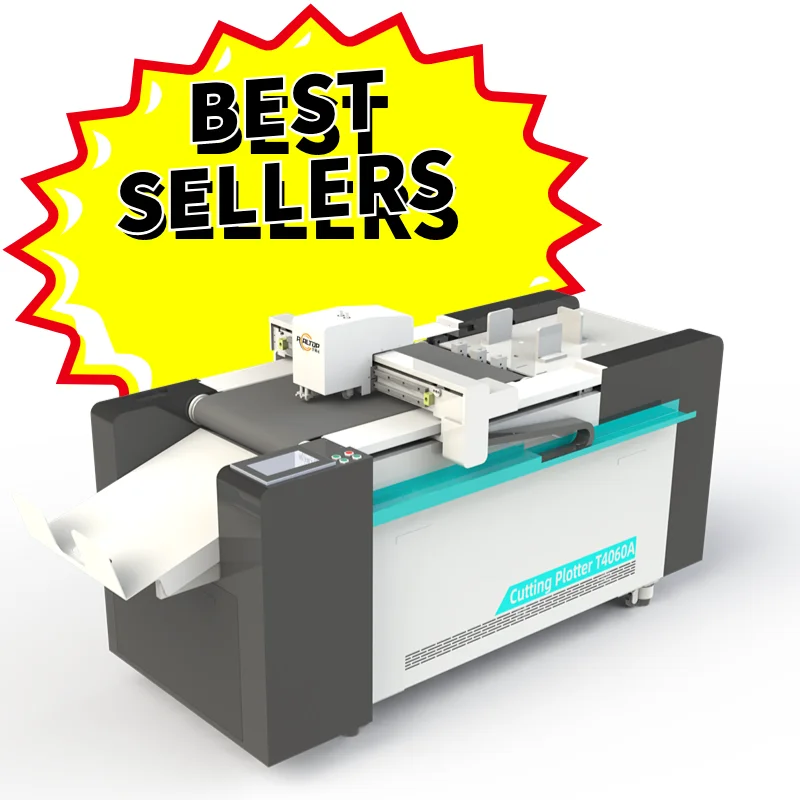
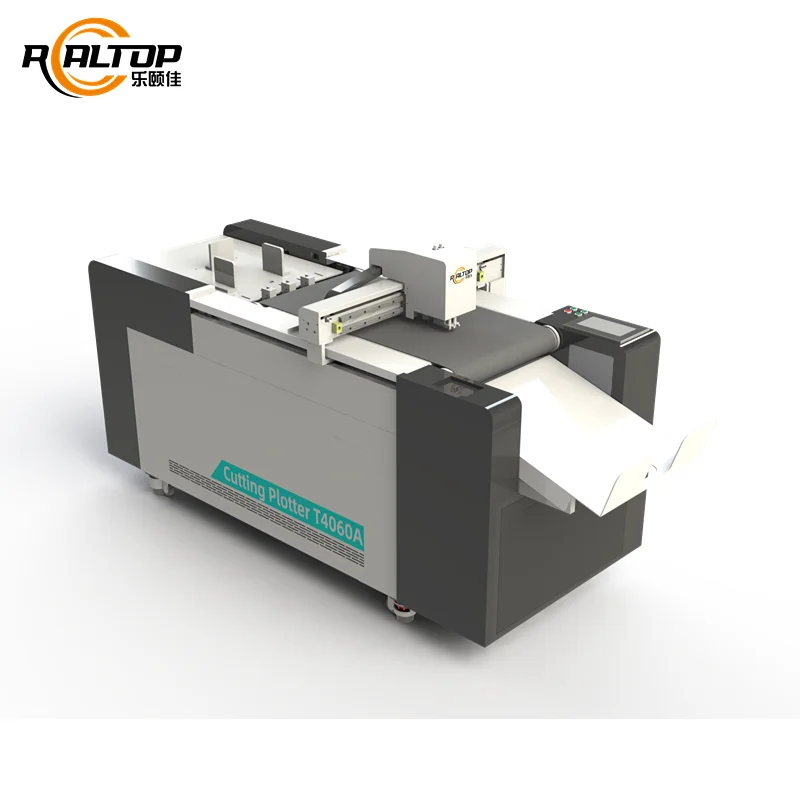
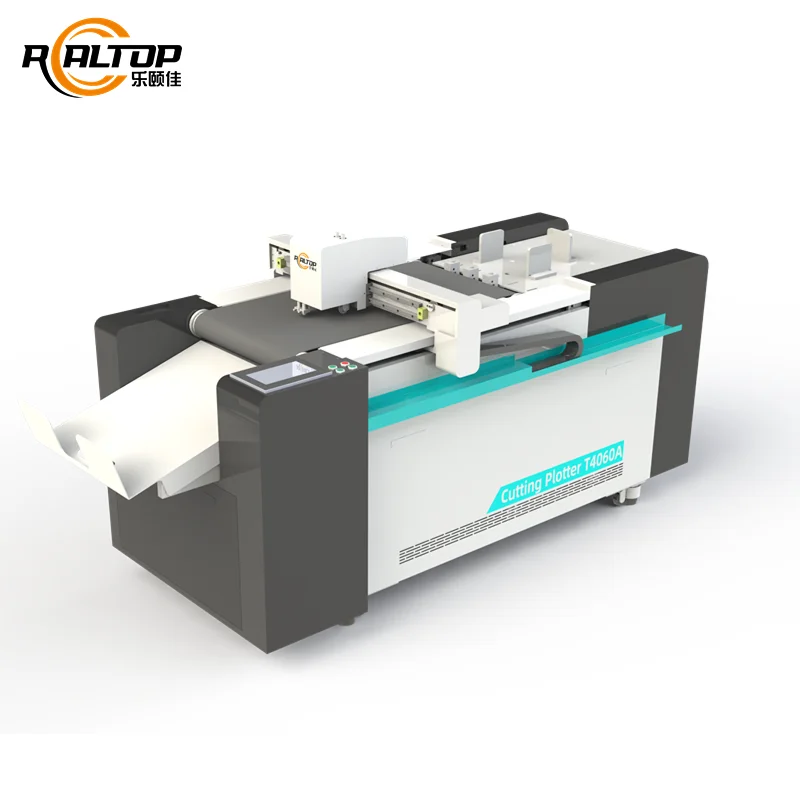
Material-matched configuration — the Realtop-6040 CNC digital knife cutting machine manufacturer pairs tool head and vacuum zoning to your specific vinyl or composite sheet rather than selling a generic cutting bed.
Technical Specifications
| Parameter | Value |
|---|---|
| Model | Realtop-6040 |
| Product Type | CNC Digital Knife Cutting Machine / Vinyl Cutter Plotter |
| Working Area | 600 × 400 mm |
| Tool Head Options | Oscillating knife, drag knife, creasing wheel, pen |
| Control System | CNC with software and file format confirmation |
| CCD Camera | Available for printed contour positioning |
| Table Type | Vacuum table with zoning |
| Voltage & Frequency | Configurable to target market |
| Software | CD software included; file formats confirmed before order |
| Machine Warranty | One year for the whole machine |
| Standards | CE |
Application Suitability
| Application | Material or Output |
|---|---|
| Advertising and signage production | Vinyl, adhesive film, and magnetic sheet for short to medium runs |
| Gasket and foam fabrication | Non-metallic gasket materials, EVA foam, and closed-cell sponge |
| Packaging prototype development | Corrugated board, folding carton stock, and honeycomb paper |
| Small-format textile cutting | Apparel patterns, leather hides, and synthetic fabric sheets |
Why Working Area Alone Does Not Guarantee a Clean Edge on Vinyl
Specifying a plotter only by its footprint leaves out the tool head, blade angle, and vacuum zoning that actually determine cut quality.
Many buyers compare machines based on the 600 × 400 mm bed and assume any compact plotter will handle their roll stock. In practice, a drag knife that performs well on standard adhesive vinyl may crush a multi-layer composite or leave ragged edges on thick sandblast resist. When the vacuum table lacks adjustable zoning, small cutouts lift during the final passes, ruining the nest. This is why a vinyl cutter plotter for sale listing must clarify the tooling matched to your exact film thickness and backing paper type. [NEED_CITE: material holding requirements for precision digital cutting]
Matching the Cutting Method to the Sheet Material
The complete cutting equipment range exists so buyers can choose knife or laser based on the material rather than forcing one method across every job. A CNC digital knife cutting machine manufacturer typically recommends oscillating knife for thicker foam and gasket stock, while a drag knife suits thin vinyl films and adhesive sheets. The laser option handles edge sealing on synthetic textiles where a blade would leave frayed fibers.
Contour Accuracy for Printed Signage Jobs
When a print shop runs contour cuts on digitally printed vinyl, the CCD camera must track registration marks at production speed without losing the corner reference points. This machine family supports camera positioning for contour recognition, which is essential for die-cut decals and window graphics. If your workflow relies on nesting software to maximize material yield, the software license and file format compatibility must be confirmed before the order is finalized. [NEED_CITE: CCD registration requirements for wide format print finishing]
Blade, Vacuum, and Control Parameters Explained
The oscillating knife head cuts by vibrating the blade at high frequency, which prevents the material from dragging and bunching under the blade tip — a common issue when cutting thick foam or corrugated board on a standard drag knife plotter. Vacuum table zoning divides the 600 × 400 mm bed into independent suction zones, so a small gasket prototype does not lose hold-down force just because the rest of the table is empty. CNC control paired with confirmed file format support means your existing DXF or PLT nesting files import directly without manual node editing. Blade angle and downforce are adjusted based on the material sample you send before purchase, not guessed from a generic parameter chart.
The Hidden Cost of Skipping the Sample Cut
A plotter that slices through 2 mm PVC in the factory demo may stall on your 3 mm reinforced vinyl if the blade oscillation frequency and downforce are not recalibrated. Buyers who skip the sample cutting report often discover mid-run that small interior cutouts fail to eject, or the backing paper scores through, making weeding impossible. These issues are inexpensive to fix before shipment but costly once the machine sits on your production floor. [NEED_CITE: material variation challenges in digital knife cutting]
Why Source the Complete Cutting Equipment Range Here
In-house design and production cover both knife and laser cutting technologies, allowing the buyer to match the cutting method to the material rather than force a single approach. Tool head and table configuration are specified per material and production volume, so the 600 × 400 mm bed arrives with the correct knife holder and vacuum zoning. CCD camera positioning is tested on your printed contour sheets before dispatch. Software compatibility is confirmed before the order, not after the crate arrives. Voltage, control language, and plug type are customized to your workshop, and sample cutting on your own material is completed before commitment.
Documentation & Verification
- Machine specification sheet confirming the 600 × 400 mm working area and tool head assignment
- Electrical schematic and voltage confirmation matched to your local power supply
- Tool head and table configuration list for your specified vinyl or gasket thickness
- Sample cutting report on your own material with edge quality and weeding notes
- Software license and file format compatibility note before shipment
- CE declaration documentation where applicable for your import market
Installation, Commissioning & Support
- Level floor with dedicated circuit matching the confirmed voltage and frequency rating
- Machine arrives assembled; table leveling and vacuum seal check on site
- First-run parameter tuning for blade depth and vacuum zoning on your actual stock
- Operator training covers file import, nesting, and tool head changeover procedures
- Spare blades and vacuum seals included with a recommended reorder interval
What to Share Before Requesting a Quotation
Send the material type, maximum sheet thickness, and typical daily volume so the tool head and vacuum zoning can be matched before production. Confirm your workshop voltage, frequency, and preferred control language. If you run printed contour work, provide a sample file so CCD tracking can be verified on your registration mark style.
Frequently Asked Questions
Q: How do I decide between knife and laser for my vinyl and fabric work?
A: Knife cutting suits most adhesive vinyl, gasket, and foam materials without producing fumes or melting edges. Laser cutting seals edges on synthetic textiles and handles intricate engraving. The full range lets you choose based on your primary material rather than forcing one method across all jobs.
Q: When is the 600 × 400 mm working area sufficient?
A: This format handles sheet-fed vinyl, small gasket runs, and packaging prototypes cut from standard corrugated or carton stock. If your typical material comes in wide rolls or full-size sign panels, a larger table in the same machine family accommodates those dimensions with the same tool head options.
Q: How is the tool head selected for my material?
A: The oscillating knife handles thicker foam and dense gasket stock, while the drag knife is better for thin vinyl films and adhesive sheets. The selection is confirmed after a sample cutting test on your actual material, adjusting blade angle and downforce.
Q: Will my existing nesting files import without issues?
A: The software license and supported file formats are confirmed before the order is placed. You send a sample file during the pre-order stage so compatibility with your current design or nesting workflow is verified before the machine enters production.
Q: What electrical and language setup arrives with the machine?
A: Voltage, frequency, plug type, and control language are configured to your workshop specifications. The electrical schematic and voltage confirmation document ships with the machine for your local electrician and compliance records.
Material-matched configuration — the Realtop-6040 CNC digital knife cutting machine manufacturer pairs tool head and vacuum zoning to your specific vinyl or composite sheet rather than selling a generic cutting bed.
Technical Specifications
| Parameter | Value |
|---|---|
| Model | Realtop-6040 |
| Product Type | CNC Digital Knife Cutting Machine / Vinyl Cutter Plotter |
| Working Area | 600 × 400 mm |
| Tool Head Options | Oscillating knife, drag knife, creasing wheel, pen |
| Control System | CNC with software and file format confirmation |
| CCD Camera | Available for printed contour positioning |
| Table Type | Vacuum table with zoning |
| Voltage & Frequency | Configurable to target market |
| Software | CD software included; file formats confirmed before order |
| Machine Warranty | One year for the whole machine |
| Standards | CE |
Application Suitability
| Application | Material or Output |
|---|---|
| Advertising and signage production | Vinyl, adhesive film, and magnetic sheet for short to medium runs |
| Gasket and foam fabrication | Non-metallic gasket materials, EVA foam, and closed-cell sponge |
| Packaging prototype development | Corrugated board, folding carton stock, and honeycomb paper |
| Small-format textile cutting | Apparel patterns, leather hides, and synthetic fabric sheets |
Why Working Area Alone Does Not Guarantee a Clean Edge on Vinyl
Specifying a plotter only by its footprint leaves out the tool head, blade angle, and vacuum zoning that actually determine cut quality.
Many buyers compare machines based on the 600 × 400 mm bed and assume any compact plotter will handle their roll stock. In practice, a drag knife that performs well on standard adhesive vinyl may crush a multi-layer composite or leave ragged edges on thick sandblast resist. When the vacuum table lacks adjustable zoning, small cutouts lift during the final passes, ruining the nest. This is why a vinyl cutter plotter for sale listing must clarify the tooling matched to your exact film thickness and backing paper type. [NEED_CITE: material holding requirements for precision digital cutting]
Matching the Cutting Method to the Sheet Material
The complete cutting equipment range exists so buyers can choose knife or laser based on the material rather than forcing one method across every job. A CNC digital knife cutting machine manufacturer typically recommends oscillating knife for thicker foam and gasket stock, while a drag knife suits thin vinyl films and adhesive sheets. The laser option handles edge sealing on synthetic textiles where a blade would leave frayed fibers.
Contour Accuracy for Printed Signage Jobs
When a print shop runs contour cuts on digitally printed vinyl, the CCD camera must track registration marks at production speed without losing the corner reference points. This machine family supports camera positioning for contour recognition, which is essential for die-cut decals and window graphics. If your workflow relies on nesting software to maximize material yield, the software license and file format compatibility must be confirmed before the order is finalized. [NEED_CITE: CCD registration requirements for wide format print finishing]
Blade, Vacuum, and Control Parameters Explained
The oscillating knife head cuts by vibrating the blade at high frequency, which prevents the material from dragging and bunching under the blade tip — a common issue when cutting thick foam or corrugated board on a standard drag knife plotter. Vacuum table zoning divides the 600 × 400 mm bed into independent suction zones, so a small gasket prototype does not lose hold-down force just because the rest of the table is empty. CNC control paired with confirmed file format support means your existing DXF or PLT nesting files import directly without manual node editing. Blade angle and downforce are adjusted based on the material sample you send before purchase, not guessed from a generic parameter chart.
The Hidden Cost of Skipping the Sample Cut
A plotter that slices through 2 mm PVC in the factory demo may stall on your 3 mm reinforced vinyl if the blade oscillation frequency and downforce are not recalibrated. Buyers who skip the sample cutting report often discover mid-run that small interior cutouts fail to eject, or the backing paper scores through, making weeding impossible. These issues are inexpensive to fix before shipment but costly once the machine sits on your production floor. [NEED_CITE: material variation challenges in digital knife cutting]
Why Source the Complete Cutting Equipment Range Here
In-house design and production cover both knife and laser cutting technologies, allowing the buyer to match the cutting method to the material rather than force a single approach. Tool head and table configuration are specified per material and production volume, so the 600 × 400 mm bed arrives with the correct knife holder and vacuum zoning. CCD camera positioning is tested on your printed contour sheets before dispatch. Software compatibility is confirmed before the order, not after the crate arrives. Voltage, control language, and plug type are customized to your workshop, and sample cutting on your own material is completed before commitment.
Documentation & Verification
- Machine specification sheet confirming the 600 × 400 mm working area and tool head assignment
- Electrical schematic and voltage confirmation matched to your local power supply
- Tool head and table configuration list for your specified vinyl or gasket thickness
- Sample cutting report on your own material with edge quality and weeding notes
- Software license and file format compatibility note before shipment
- CE declaration documentation where applicable for your import market
Installation, Commissioning & Support
- Level floor with dedicated circuit matching the confirmed voltage and frequency rating
- Machine arrives assembled; table leveling and vacuum seal check on site
- First-run parameter tuning for blade depth and vacuum zoning on your actual stock
- Operator training covers file import, nesting, and tool head changeover procedures
- Spare blades and vacuum seals included with a recommended reorder interval
What to Share Before Requesting a Quotation
Send the material type, maximum sheet thickness, and typical daily volume so the tool head and vacuum zoning can be matched before production. Confirm your workshop voltage, frequency, and preferred control language. If you run printed contour work, provide a sample file so CCD tracking can be verified on your registration mark style.
Frequently Asked Questions
Q: How do I decide between knife and laser for my vinyl and fabric work?
A: Knife cutting suits most adhesive vinyl, gasket, and foam materials without producing fumes or melting edges. Laser cutting seals edges on synthetic textiles and handles intricate engraving. The full range lets you choose based on your primary material rather than forcing one method across all jobs.
Q: When is the 600 × 400 mm working area sufficient?
A: This format handles sheet-fed vinyl, small gasket runs, and packaging prototypes cut from standard corrugated or carton stock. If your typical material comes in wide rolls or full-size sign panels, a larger table in the same machine family accommodates those dimensions with the same tool head options.
Q: How is the tool head selected for my material?
A: The oscillating knife handles thicker foam and dense gasket stock, while the drag knife is better for thin vinyl films and adhesive sheets. The selection is confirmed after a sample cutting test on your actual material, adjusting blade angle and downforce.
Q: Will my existing nesting files import without issues?
A: The software license and supported file formats are confirmed before the order is placed. You send a sample file during the pre-order stage so compatibility with your current design or nesting workflow is verified before the machine enters production.
Q: What electrical and language setup arrives with the machine?
A: Voltage, frequency, plug type, and control language are configured to your workshop specifications. The electrical schematic and voltage confirmation document ships with the machine for your local electrician and compliance records.










商品评价
There are no reviews yet.