





Fast Delivery
Quick, reliable shipping to any location.

Free & easy returns
Return this item by mail or in store within 90 days for a full refund.
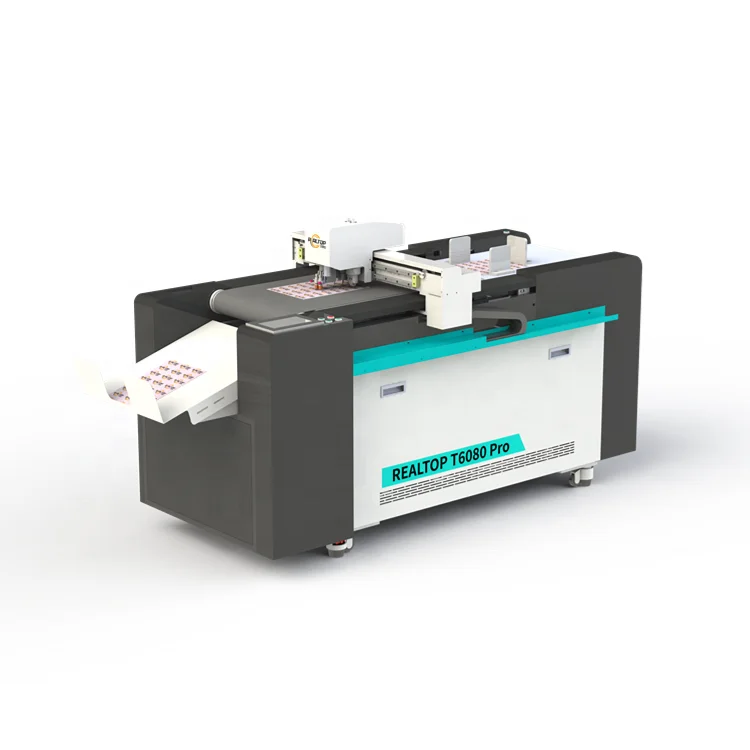
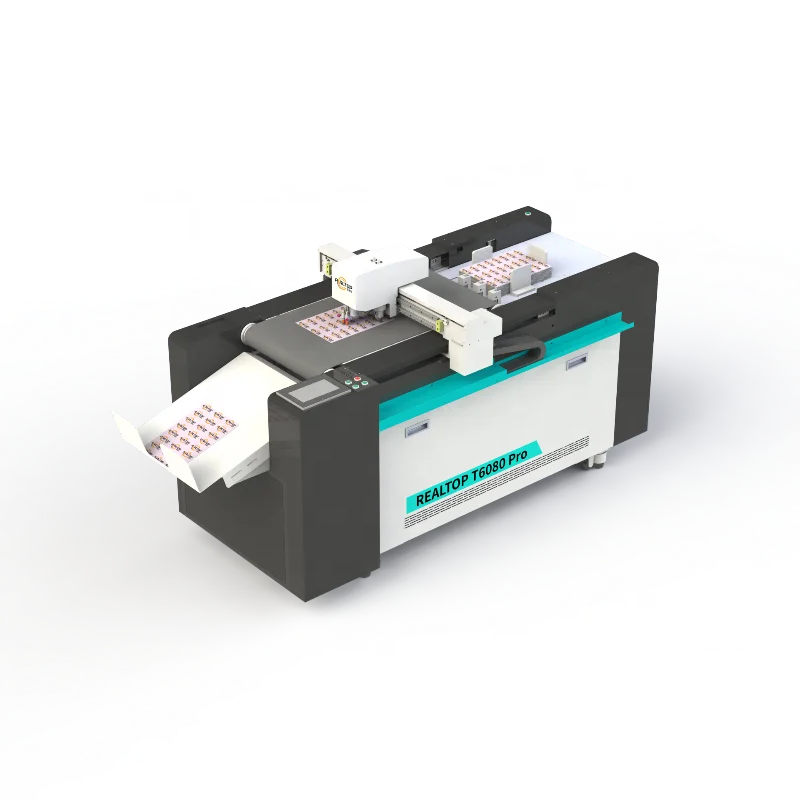
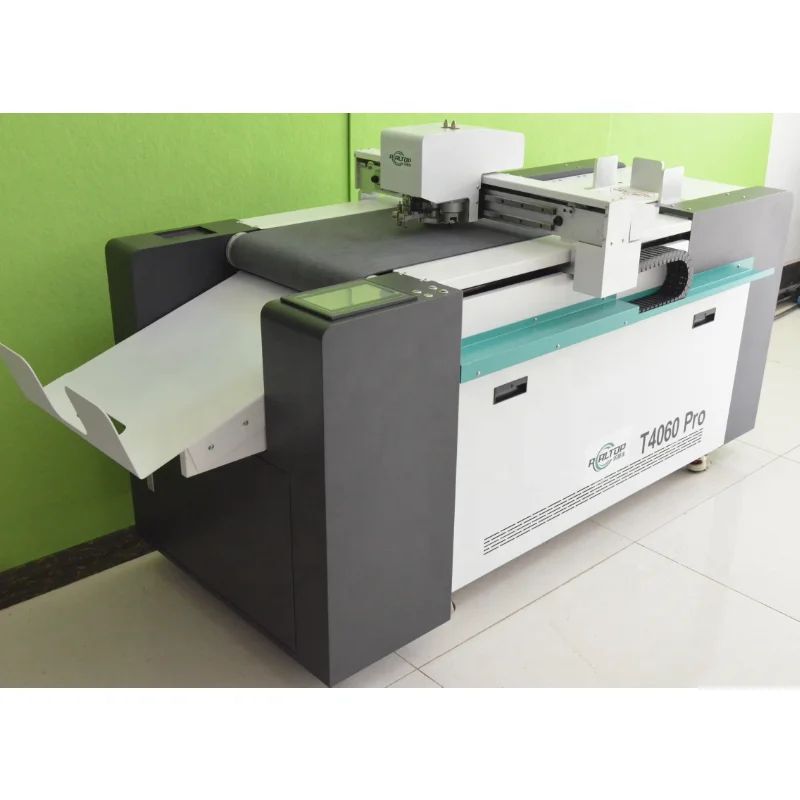
Compact dual-model knife cutting — The RTT6080 and RTT6080 Pro offer distinct cutting depth limits matched to specific tool head configurations, so buyers select based on actual material thickness rather than a generic working area figure.
Technical Specifications
| Parameter | Value |
|---|---|
| Model | RTT6080 / RTT6080 Pro |
| Product Type | CNC Knife Cutting Plotter Machine |
| Max Working Area | 600mm × 800mm |
| Tool Group | Cutting tool, kiss cutting tool, creasing tool, CCD camera; high speed oscillating knife (RTT6080 Pro only) |
| Max Cutting Speed | 1500mm/s (basis not stated in source — confirm material / thickness) |
| Cutting Thickness | ≤2mm (RTT6080); ≤5mm (RTT6080 Pro) |
| Positioning Accuracy | 0.05mm |
| File Format | DXF, PLT, PDF, AI |
| Transfer Method | Ethernet port |
| Rated Power | 3.2KW |
| Voltage & Frequency | 220V/380V, 50Hz |
| Control System | CNC |
| Warranty | One year for whole machine |
Application Suitability
| Application | Material or Output |
|---|---|
| Sticker and label contour cutting | Pre-printed adhesive vinyl, self-adhesive paper, PET label stock |
| Kiss cutting for decals | Adhesive-backed films and composite sticker materials on liner |
| Packaging sample prototyping | Thin card stock, folding carton board, corrugated sample sheets |
| Short-run flexible material cutting | PVC film, thin foam sheets, gasket material up to 5mm |
Why "600 × 800" Tells You Nothing About Cut Quality
A CNC Knife Cutting Machine manufacturer who specifies working area without material thickness limits is selling empty space.
I learned this the hard way setting up a vibrating knife cutter for a label producer in the Yangtze Delta. The machine ran perfectly on standard PVC test stock at the factory, but the moment we loaded their actual adhesive-backed composite stickers on the shop floor, the knife pressure and feed speed needed complete recalibration. Delivery stalled until day two before production ran smoothly. Compact-format machines like the RTT-6080/6080 Pro address this by splitting into two thickness-rated variants, but the buyer still needs to verify against real material [NEED_CITE: sample testing protocols for digital cutting equipment]. A machine rated for 2mm cannot handle 4mm foam board simply because the table is the same size.
Mapping Tool Heads to Real Production Materials
The base RTT6080 carries a cutting tool, kiss cutting tool, creasing tool and CCD camera, covering most sticker and thin label workflows where through-cutting and liner-preserving kiss cuts alternate within the same job. The CNC Knife Cutting Machine in this configuration handles adhesive vinyl, self-adhesive paper and thin PET stocks within its 2mm depth limit.
The Pro variant adds a high speed oscillating knife, shifting the capability range toward denser substrates such as thin foam, gasket sheets and composite packaging materials up to 5mm. This oscillating action slices through fibrous or layered stock that a static drag knife would crush or drag. For buyers surveying the full cutting equipment range, this dual-model structure provides a clear decision point: identify the thickest material in your daily mix and match the variant accordingly.
CCD Contour Recognition Across Print Variations
The integrated CCD camera reads printed registration marks on pre-printed sticker and label sheets, compensating for minor stretch, skew and print offset that occur during the printing process. This matters for short-run label jobs where each sheet may carry slight dimensional variation from the digital or screen printing stage [NEED_CITE: CCD positioning tolerance standards in digital finishing].
The 0.05mm positioning accuracy specification indicates the mechanical repeatability of the gantry and drive system, which forms the baseline before optical compensation is applied. For intricate label shapes with tight outline tolerances, this combined mechanical and optical alignment determines whether the finished contour matches the printed graphic or drifts visibly at the edges.
Reading the Specifications Against Your Material Stack
The cutting thickness split between the two models — 2mm for the RTT6080 and 5mm for the RTT6080 Pro — directly reflects the tool head configuration rather than motor power alone. Oscillating knife action requires a stiffer tool mount and different Z-axis control than static drag or kiss cutting tools, which explains why the Pro variant carries the higher depth rating.
The 0.05mm positioning accuracy is meaningful primarily when combined with the CCD camera for contour work; on unprinted material where contour tracking is irrelevant, the practical cutting precision depends more on blade deflection and material holding. The 3.2KW rated power covers the vacuum pump, servo drives and spindle requirements for this working area. Ethernet transfer replaces older USB-based file loading, allowing the machine to sit on a workshop network where nesting files are generated on a separate workstation running DXF, PLT, PDF or AI design formats.
The Hidden Cost of Skipping Material Trials
When a buyer specifies a compact CNC Knife Cutting Machine based on price and working area without testing actual production material, the problems surface after delivery. Adhesive-backed composite stickers behave differently from plain PVC film — the adhesive layer creates drag on the blade, the liner thickness affects kiss cut depth consistency, and composite constructions may delaminate under incorrect vacuum hold-down [NEED_CITE: adhesive material behavior in digital knife cutting].
Vacuum table zoning on compact-format machines also differs from full-size production tables. Small sticker parts with insufficient surface area may lift during high-speed contour cutting if the vacuum zones are too broad. Selecting the wrong tool head for the material produces ragged edges on vinyl or crushed edges on foam, and these defects only become visible during sustained production runs, not during a brief factory demonstration.
Why Source This Machine Here
In-house design covering both knife and laser cutting technologies means a buyer can discuss whether knife cutting is actually the right method for their material before committing to a CNC Knife Cutting Machine order, rather than forcing every application onto one technology.
Tool head and table configuration are specified per material type and production volume, so the RTT6080 or RTT6080 Pro ships with the correct tool group documented in the order specification rather than a generic default configuration. CCD camera positioning parameters are tuned for the buyer’s printed mark style before the machine leaves the factory, reducing on-site calibration time. Software compatibility is confirmed against the buyer’s existing DXF, PLT, PDF or AI file workflows before the order is placed. Voltage and control language are set for the destination market, covering 220V or 380V at 50Hz with the operator interface in the required language. Sample cutting on the buyer’s own material produces a cutting report that documents edge quality and achievable depth before the commitment is made.
Documentation & Verification
- Machine specification sheet confirming tool head configuration for the selected RTT6080 or RTT6080 Pro variant
- Sample cutting report produced on your actual sticker, label or packaging material with edge quality documentation
- Electrical schematic and voltage confirmation for 220V or 380V 50Hz target market compliance
- Software licence and file format compatibility note covering DXF, PLT, PDF and AI import verification
- Factory test record documenting positioning accuracy and CCD tracking performance before dispatch
Installation, Commissioning & Support
- Requires a dedicated 220V or 380V circuit matching the confirmed 3.2KW rated power and 50Hz frequency specification
- Ethernet port enables network connection to your existing design workstation running nesting or layout software
- CCD camera calibration performed on-site using your actual printed registration mark format and stock
- Vacuum table zoning adjusted during commissioning to match your typical sticker and label part sizes
- Oscillating knife tool head on the RTT6080 Pro calibrated for your specific material thickness up to 5mm
- Operator training covers tool head changeover between cutting, kiss cutting and creasing tools within the configured tool group
What to Share When Requesting a Quote
Provide your typical material type, maximum thickness and whether the stock is plain, printed or adhesive-backed so the correct model variant and tool head group can be specified. Include a sample of your standard print file format and nesting workflow so software compatibility is verified before the order is confirmed. State your local voltage, frequency and preferred operator interface language to ensure the electrical configuration and control system match your workshop from day one.
Frequently Asked Questions
Q: How do I choose between the RTT6080 base model and the Pro variant?
A: Identify the thickest material in your regular production mix. The base RTT6080 handles up to 2mm with its cutting, kiss cutting and creasing tool group, which covers most sticker and label applications. The Pro variant adds a high speed oscillating knife and extends the depth limit to 5mm, making it suitable for thin foam, gasket sheets and denser composite materials that a static knife would crush.
Q: Can the CCD camera track printed marks at production speed?
A: The CCD camera reads registration marks for contour compensation, but tracking reliability depends on mark contrast, size and placement relative to the printed graphic. Request a sample cutting test using your actual printed material so the system can be evaluated against your specific mark design and print quality before confirming the order.
Q: What file formats does the control software accept?
A: The system accepts DXF, PLT, PDF and AI files via Ethernet transfer. Before ordering, share a sample of your typical production file so compatibility is confirmed in writing, including any nesting or layout software you currently use in your workflow.
Q: What voltage and language options are available for my market?
A: The machine supports 220V or 380V at 50Hz. Voltage, plug type and control interface language are configured before shipment based on your destination market requirements. Confirm your local electrical standards and preferred operator language during the specification stage to avoid on-site adaptation.
Q: How does this compact machine fit within the broader cutting equipment range?
A: The RTT-6080/6080 Pro sits at the compact end of the knife cutting lineup, suited for short batches, sample making and prototyping. When production volume scales and larger sheet formats become standard, full-format oscillating knife cutting tables with multi-zone vacuum and automated material feeding take over the same cutting method at higher throughput.










商品评价
There are no reviews yet.