

Fast Delivery
Quick, reliable shipping to any location.

Free & easy returns
Return this item by mail or in store within 90 days for a full refund.
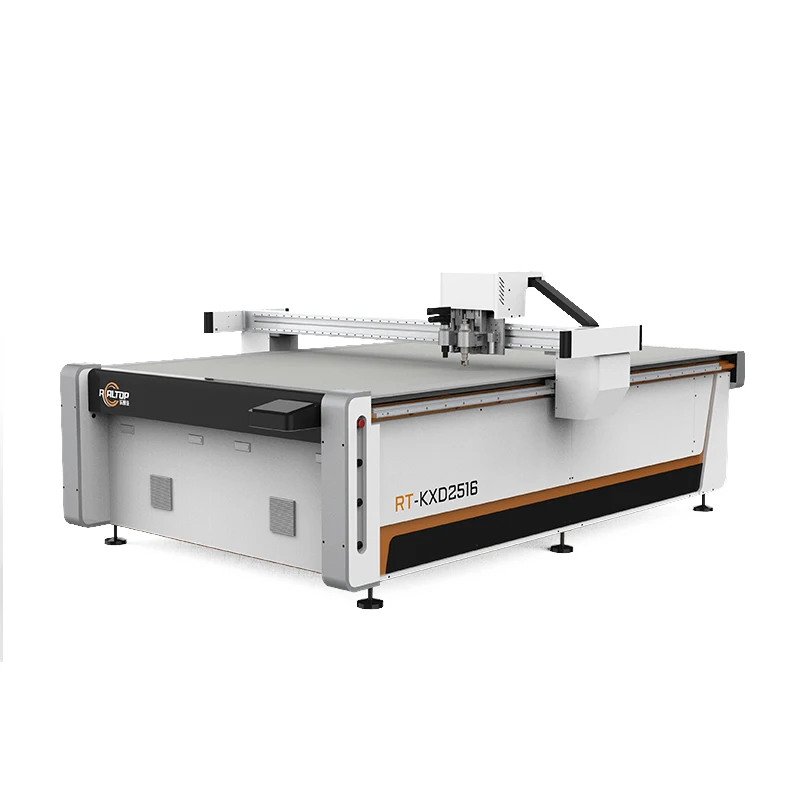
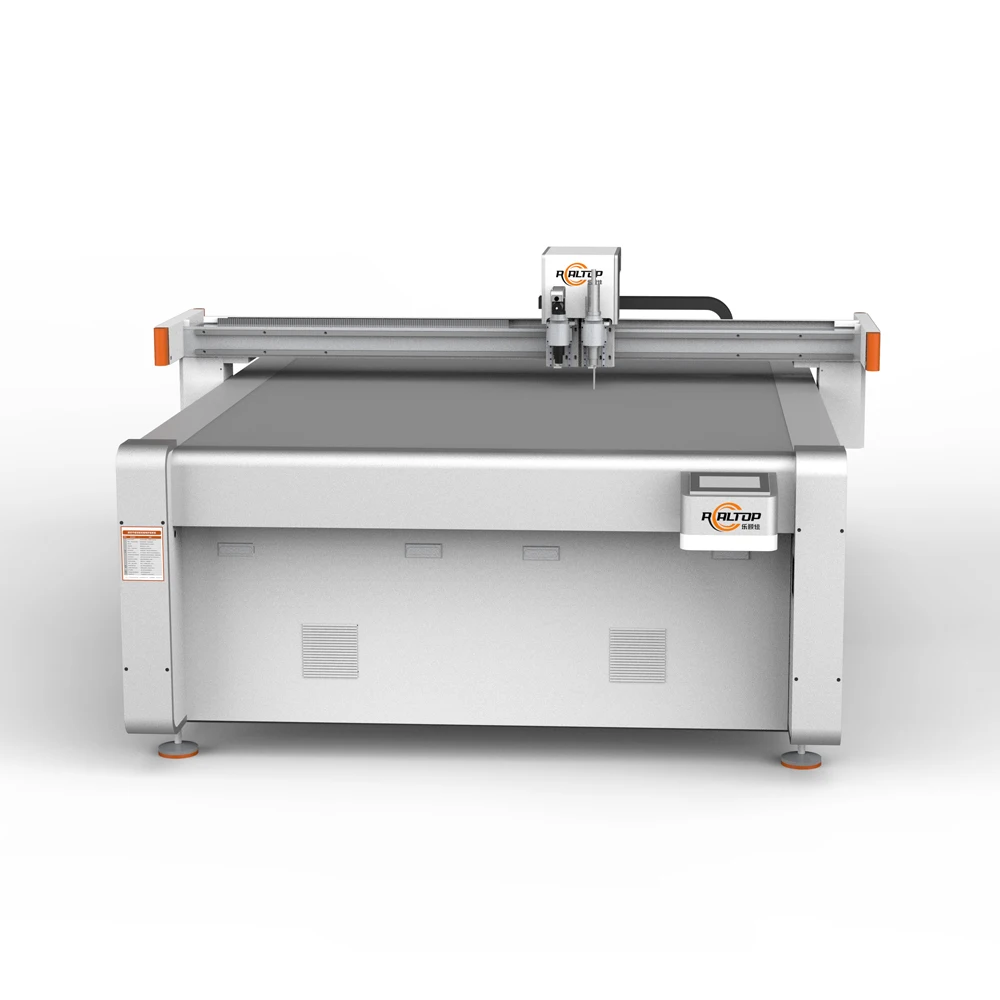
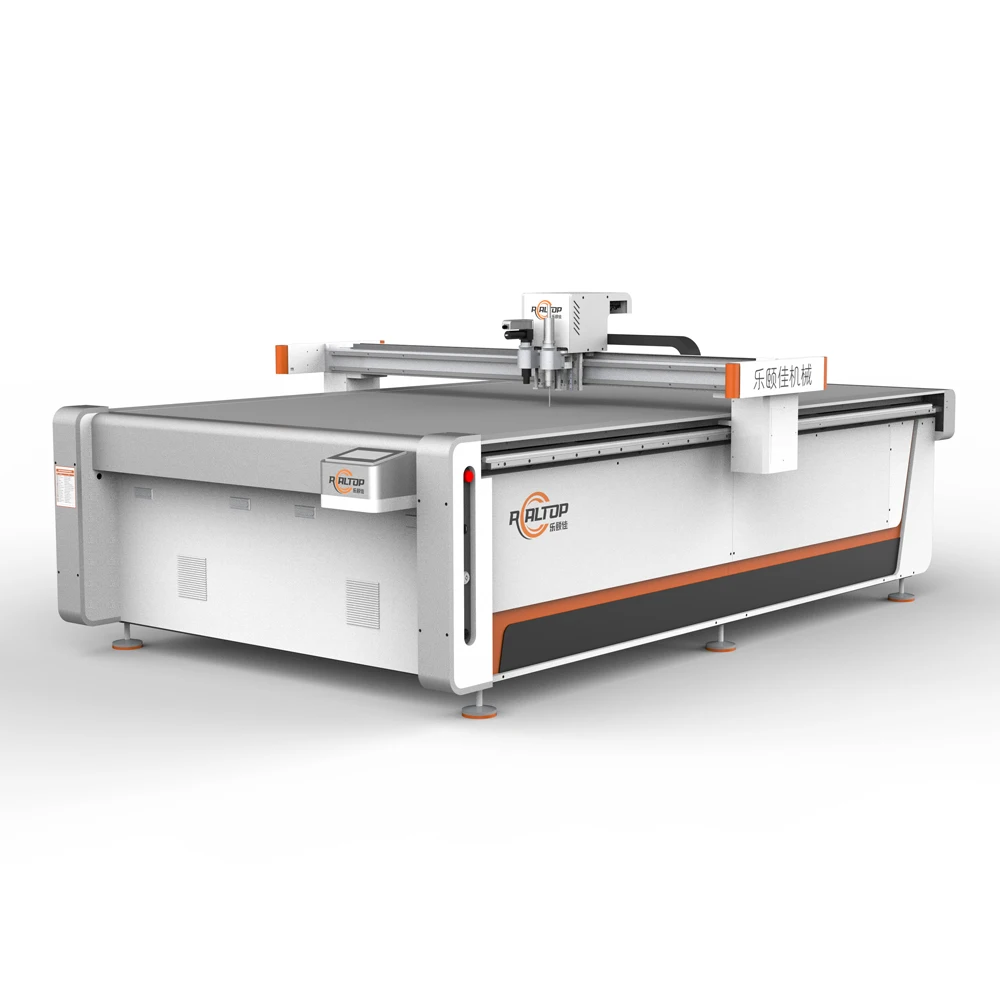
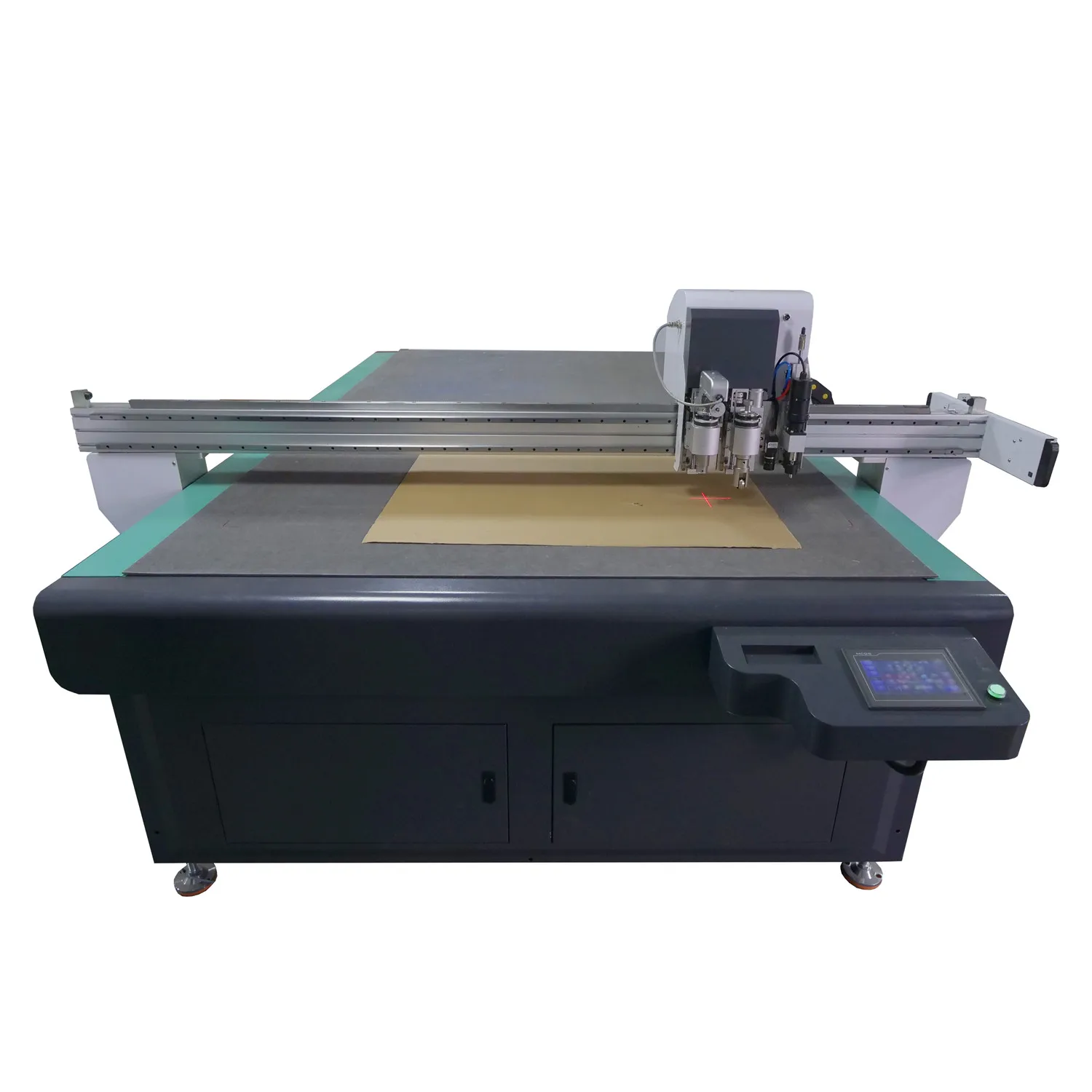
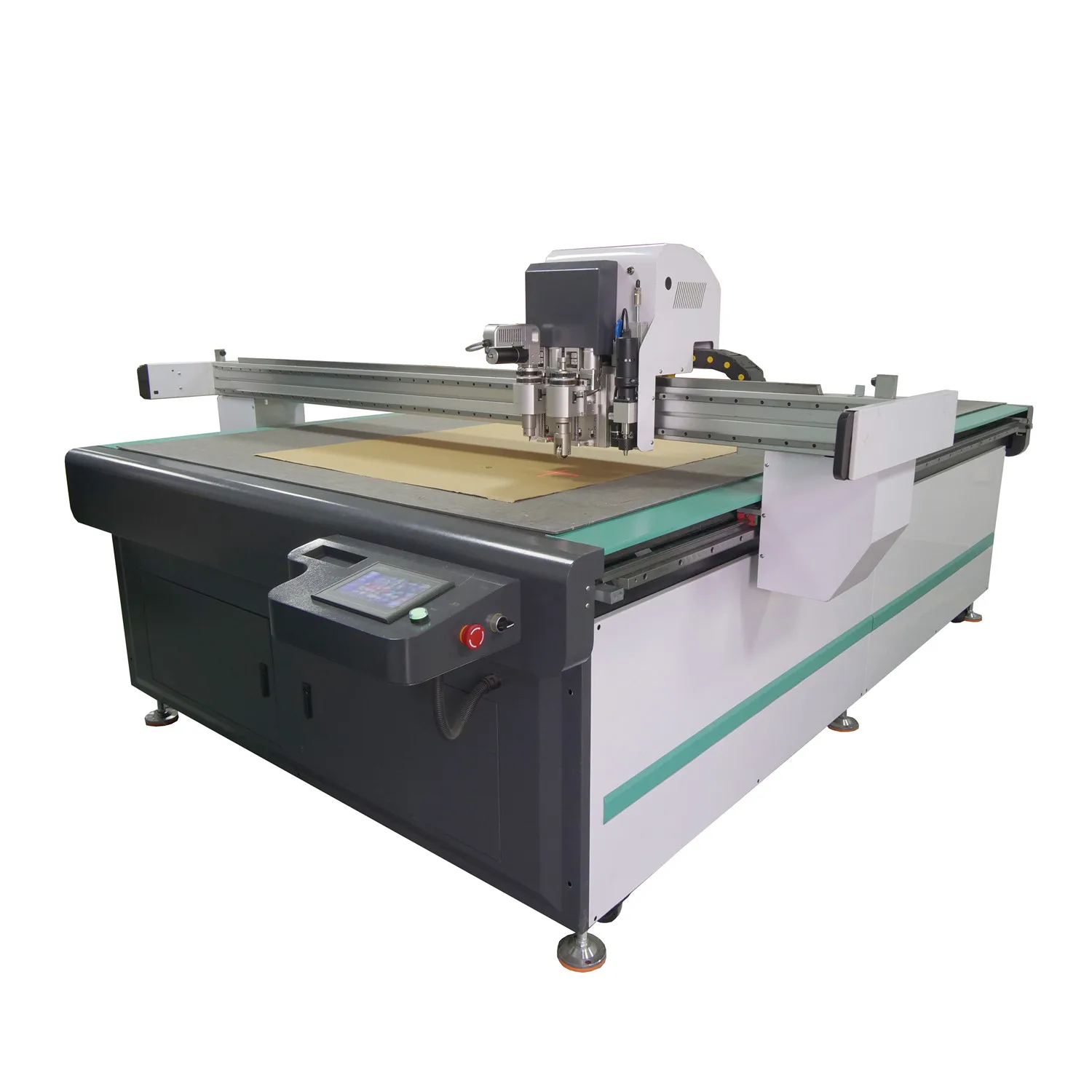
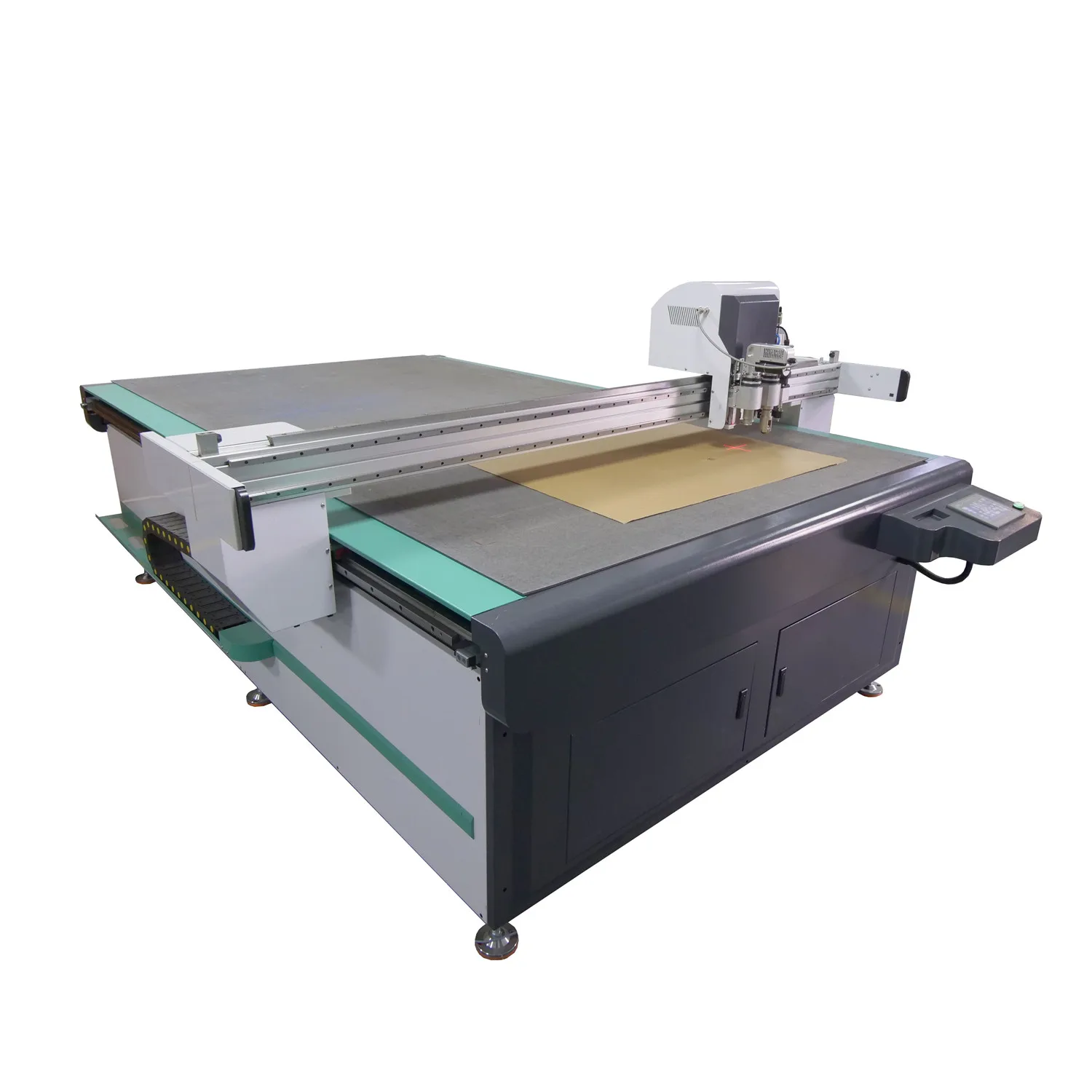
Swiss Knife Meets Honeycomb Vacuum — a 1600×2500 mm flatbed cutter configured to match oscillating tool geometry to corrugated, greyboard and sticker stock rather than forcing one blade through every packaging job.
Technical Specifications
| Parameter | Value |
|---|---|
| Product Type | CNC Oscillating Knife Digital Cutting Machine |
| Model | RT-D2516 / RT-S2516 |
| Working Area | 1600×2500 mm |
| Machine Size (L×W×H) | 3450×2300×1250 mm |
| Rated Power | 9 kW |
| Table Type | Aluminum alloy honeycomb vacuum adsorption platform |
| Multifunctional Tool Head | Swiss imported knife with vibration full cut, half cut, and cursor location |
| Translational Velocity | 800–2000 mm/s |
| Cutting Speed | 200–800 mm/s (basis not stated in source) |
| Cutting Thickness | ≤100 mm (varies with material) |
| Repeatability | ≤0.1 mm |
| Transmission System | Taiwan Hiwin linear guide, Delta servo motor, synchronous belt, ball screw |
| Vacuum Pump | 7.5 kW |
| Safety Device | Infrared sensors and emergency stop |
| Instruction System | HP-GL compatible format |
| Voltage | 380V ±10% |
| Software | Professional carton nesting software included; multi-language interface available |
| Optional Configuration | Germany imported conveyor belt, auto feeding system |
Application Suitability
| Application | Material or Output |
|---|---|
| Carton and packaging sample making | Corrugated board, greyboard, folding carton, pizza box stock, high-end gift box material |
| Sticker and label contour cutting | Self-adhesive vinyl, printed label sheets, reflective film |
| Billboard and signage production | PVC foam board, acrylic sheet, corrugated plastic, cardboard |
| Business card and tag cutting | Coated card stock, laminated paper, synthetic paper |
| Flexible material processing | Leather, sponge composite leather, soft glass, silicone, rubber |
Why "Cutting Thickness ≤100 mm" Is Not the Whole Story When Choosing a CNC Oscillating Knife Cutting Machine Manufacturer
Blade stroke, oscillation frequency, and vacuum hold-down together determine whether a rated thickness actually produces a clean edge or a crushed, delaminated mess.
I spent years on the assembly floor before moving into technical sales, and I have watched packaging shops order a flatbed based on the headline thickness number alone. When the material arrives — high-glue corrugated, dense greyboard, or multi-layer sticker sheets — the knife either fails to penetrate or tears the top ply while the bottom stays bonded. Half the workshop ends up stacked with scrap [NEED_CITE: oscillating knife penetration limits by material density and adhesive content]. A honest CNC oscillating knife cutting machine manufacturer will ask for your actual sheet stock and run a sample cut before locking in the configuration, because the same machine can handle 15 mm corrugated easily while struggling on 8 mm high-density foam if the wrong tool head is chosen.
Matching Tool Head Geometry to Packaging Stock
The Swiss imported oscillating knife on the RT-D2516 and RT-S2516 supports full cut, half cut, and cursor location in a single tool head set-up. Full cut handles through-cutting of corrugated and folding carton, while half cut scores greyboard for folding without severing the sheet. Cursor location pairs with printed registration marks for contour work on sticker and label stock. Switching between these modes avoids the need for a second machine or a mid-run tool change, which matters when a packaging sample shop handles short runs across varied materials throughout the day.
Honeycomb Vacuum and Small-Part Hold-Down
The aluminum alloy honeycomb vacuum adsorption platform paired with a 7.5 kW pump delivers uniform suction across the 1600×2500 mm bed. In packaging sample making, small die-cut shapes — business cards, tags, intricate carton flaps — tend to lift at the edges when vacuum zoning is too coarse. A honeycomb structure distributes negative pressure across thousands of micro-cells, keeping thin card stock and sticker sheets flat even at translational velocities approaching 2000 mm/s [NEED_CITE: vacuum hold-down requirements for small-format flatbed cutting].
Reading the Specs That Actually Affect Edge Quality
Repeatability rated at ≤0.1 mm, driven by Taiwan Hiwin linear guides and Delta servo motors, controls how closely the knife follows the programmed path on successive passes. In carton sample making, a deviation beyond this tolerance means scored fold lines drift from their intended position, and finished boxes do not close square. The 9 kW rated power covers both the servo drives and the oscillation motor simultaneously; under-sizing the power supply leads to torque drop at the knife head, which shows up as ragged edges on dense material. The HP-GL compatible instruction system accepts files from standard carton design software, and the included nesting program reduces sheet waste when cutting multiple sample pieces from a single board.
The Hidden Cost of Skipping a Material Trial
A buyer once sent us a spec sheet requesting a standard oscillating knife configuration for corrugated board. We ran their sample and found the material had a high adhesive content between plies that the standard blade could not shear cleanly. Without that trial, the machine would have arrived, the first production run would have produced crushed edges, and the buyer would have blamed the equipment [NEED_CITE: material adhesive content effect on oscillating knife cut quality]. Running a sample cut on the buyer’s own stock before shipment eliminates this failure mode and lets the tool head and vacuum settings be tuned to the actual material.
Why Source Packaging Cutting Equipment Through This Range
In-house design covers both knife and laser cutting technologies within one catalogue, so a packaging producer can match the cutting method to the material — oscillating knife for corrugated and greyboard, laser for acrylic signage — without forcing one platform across every job. Tool head and table configuration are specified per material type and production volume rather than sold as a one-size-fits-all package. CCD camera positioning is available for printed contour work on sticker and label stock. Software compatibility is confirmed against the buyer’s existing file formats before the order is placed. Voltage, control language, and plug type are customized to the destination market and documented on the electrical schematic before the machine leaves the factory.
Documentation & Verification
- Machine specification sheet listing working area, tool head type, voltage and cutting thickness per material
- Electrical schematic confirming voltage, frequency and plug type for destination market
- Sample cutting report on buyer’s own corrugated or sticker stock before dispatch
- Tool head and table configuration list matched to specified material range
- Software licence and file format compatibility note for carton nesting program
- Operation and maintenance manual with spare parts list in specified language
Installation, Commissioning & Support
- 3450×2300 mm footprint requires level concrete floor with clearance for optional auto feeding system
- 380V ±10% dedicated circuit with separate breaker for the 7.5 kW vacuum pump
- Machine ships fully assembled; requires vacuum line connection and software language configuration on site
- First-run calibration includes vacuum zone mapping and oscillation frequency tuning for specified material
- Operator training covers half-cut depth adjustment and nesting software workflow for carton sample production
- Spare oscillating knife blades and vacuum table seals included in initial parts kit
What to Share When Requesting a Quotation
Send the exact material type, thickness and sheet dimensions you plan to run, along with your typical daily sample volume. Confirm the voltage and frequency at your facility so the electrical system can be built to match. Let us know which carton design software you currently use so we can verify file format compatibility with the nesting program before production starts.
Frequently Asked Questions
Q: How do I choose between an oscillating knife and a laser for my packaging material?
A: Oscillating knife cutting suits fibrous and layered materials like corrugated board, greyboard, and sticker sheets where a blade produces a clean mechanical shear. Laser cutting works better on acrylic, wood, and certain synthetics where heat seals the edge. The choice depends on material composition and edge finish requirement, not machine price.
Q: Which machine configuration fits my daily carton sample volume?
A: Low-volume sample shops producing dozens of unique cartons per day typically use the standard flatbed with manual sheet loading. Higher-volume operations benefit from the optional Germany imported conveyor belt and auto feeding system, which reduces loading time between sheets and maintains continuous cutting cycles.
Q: What tool head options handle different packaging materials?
A: The Swiss imported oscillating knife supports full cut for through-cutting corrugated and folding carton, half cut for scoring greyboard fold lines, and cursor location for contour tracing on printed sticker stock. The right mode depends on whether the job requires separation, creasing, or registration-based cutting.
Q: What voltage and language details are confirmed before shipment?
A: Voltage, frequency, plug type, and control interface language are confirmed against the buyer’s facility specifications and documented on the electrical schematic. The standard configuration is 380V ±10%, with multi-language software options including English, Russian, Italian, and Chinese available.
Q: Can I see sample cuts on my own material before ordering?
A: Yes. Send your actual corrugated board, greyboard, or sticker sheet stock and we run a sample cut to verify edge quality, cutting depth, and vacuum hold-down performance. The sample report is shared before you commit, so configuration is matched to real material rather than generic specifications.
Swiss Knife Meets Honeycomb Vacuum — a 1600×2500 mm flatbed cutter configured to match oscillating tool geometry to corrugated, greyboard and sticker stock rather than forcing one blade through every packaging job.
Technical Specifications
| Parameter | Value |
|---|---|
| Product Type | CNC Oscillating Knife Digital Cutting Machine |
| Model | RT-D2516 / RT-S2516 |
| Working Area | 1600×2500 mm |
| Machine Size (L×W×H) | 3450×2300×1250 mm |
| Rated Power | 9 kW |
| Table Type | Aluminum alloy honeycomb vacuum adsorption platform |
| Multifunctional Tool Head | Swiss imported knife with vibration full cut, half cut, and cursor location |
| Translational Velocity | 800–2000 mm/s |
| Cutting Speed | 200–800 mm/s (basis not stated in source) |
| Cutting Thickness | ≤100 mm (varies with material) |
| Repeatability | ≤0.1 mm |
| Transmission System | Taiwan Hiwin linear guide, Delta servo motor, synchronous belt, ball screw |
| Vacuum Pump | 7.5 kW |
| Safety Device | Infrared sensors and emergency stop |
| Instruction System | HP-GL compatible format |
| Voltage | 380V ±10% |
| Software | Professional carton nesting software included; multi-language interface available |
| Optional Configuration | Germany imported conveyor belt, auto feeding system |
Application Suitability
| Application | Material or Output |
|---|---|
| Carton and packaging sample making | Corrugated board, greyboard, folding carton, pizza box stock, high-end gift box material |
| Sticker and label contour cutting | Self-adhesive vinyl, printed label sheets, reflective film |
| Billboard and signage production | PVC foam board, acrylic sheet, corrugated plastic, cardboard |
| Business card and tag cutting | Coated card stock, laminated paper, synthetic paper |
| Flexible material processing | Leather, sponge composite leather, soft glass, silicone, rubber |
Why "Cutting Thickness ≤100 mm" Is Not the Whole Story When Choosing a CNC Oscillating Knife Cutting Machine Manufacturer
Blade stroke, oscillation frequency, and vacuum hold-down together determine whether a rated thickness actually produces a clean edge or a crushed, delaminated mess.
I spent years on the assembly floor before moving into technical sales, and I have watched packaging shops order a flatbed based on the headline thickness number alone. When the material arrives — high-glue corrugated, dense greyboard, or multi-layer sticker sheets — the knife either fails to penetrate or tears the top ply while the bottom stays bonded. Half the workshop ends up stacked with scrap [NEED_CITE: oscillating knife penetration limits by material density and adhesive content]. A honest CNC oscillating knife cutting machine manufacturer will ask for your actual sheet stock and run a sample cut before locking in the configuration, because the same machine can handle 15 mm corrugated easily while struggling on 8 mm high-density foam if the wrong tool head is chosen.
Matching Tool Head Geometry to Packaging Stock
The Swiss imported oscillating knife on the RT-D2516 and RT-S2516 supports full cut, half cut, and cursor location in a single tool head set-up. Full cut handles through-cutting of corrugated and folding carton, while half cut scores greyboard for folding without severing the sheet. Cursor location pairs with printed registration marks for contour work on sticker and label stock. Switching between these modes avoids the need for a second machine or a mid-run tool change, which matters when a packaging sample shop handles short runs across varied materials throughout the day.
Honeycomb Vacuum and Small-Part Hold-Down
The aluminum alloy honeycomb vacuum adsorption platform paired with a 7.5 kW pump delivers uniform suction across the 1600×2500 mm bed. In packaging sample making, small die-cut shapes — business cards, tags, intricate carton flaps — tend to lift at the edges when vacuum zoning is too coarse. A honeycomb structure distributes negative pressure across thousands of micro-cells, keeping thin card stock and sticker sheets flat even at translational velocities approaching 2000 mm/s [NEED_CITE: vacuum hold-down requirements for small-format flatbed cutting].
Reading the Specs That Actually Affect Edge Quality
Repeatability rated at ≤0.1 mm, driven by Taiwan Hiwin linear guides and Delta servo motors, controls how closely the knife follows the programmed path on successive passes. In carton sample making, a deviation beyond this tolerance means scored fold lines drift from their intended position, and finished boxes do not close square. The 9 kW rated power covers both the servo drives and the oscillation motor simultaneously; under-sizing the power supply leads to torque drop at the knife head, which shows up as ragged edges on dense material. The HP-GL compatible instruction system accepts files from standard carton design software, and the included nesting program reduces sheet waste when cutting multiple sample pieces from a single board.
The Hidden Cost of Skipping a Material Trial
A buyer once sent us a spec sheet requesting a standard oscillating knife configuration for corrugated board. We ran their sample and found the material had a high adhesive content between plies that the standard blade could not shear cleanly. Without that trial, the machine would have arrived, the first production run would have produced crushed edges, and the buyer would have blamed the equipment [NEED_CITE: material adhesive content effect on oscillating knife cut quality]. Running a sample cut on the buyer’s own stock before shipment eliminates this failure mode and lets the tool head and vacuum settings be tuned to the actual material.
Why Source Packaging Cutting Equipment Through This Range
In-house design covers both knife and laser cutting technologies within one catalogue, so a packaging producer can match the cutting method to the material — oscillating knife for corrugated and greyboard, laser for acrylic signage — without forcing one platform across every job. Tool head and table configuration are specified per material type and production volume rather than sold as a one-size-fits-all package. CCD camera positioning is available for printed contour work on sticker and label stock. Software compatibility is confirmed against the buyer’s existing file formats before the order is placed. Voltage, control language, and plug type are customized to the destination market and documented on the electrical schematic before the machine leaves the factory.
Documentation & Verification
- Machine specification sheet listing working area, tool head type, voltage and cutting thickness per material
- Electrical schematic confirming voltage, frequency and plug type for destination market
- Sample cutting report on buyer’s own corrugated or sticker stock before dispatch
- Tool head and table configuration list matched to specified material range
- Software licence and file format compatibility note for carton nesting program
- Operation and maintenance manual with spare parts list in specified language
Installation, Commissioning & Support
- 3450×2300 mm footprint requires level concrete floor with clearance for optional auto feeding system
- 380V ±10% dedicated circuit with separate breaker for the 7.5 kW vacuum pump
- Machine ships fully assembled; requires vacuum line connection and software language configuration on site
- First-run calibration includes vacuum zone mapping and oscillation frequency tuning for specified material
- Operator training covers half-cut depth adjustment and nesting software workflow for carton sample production
- Spare oscillating knife blades and vacuum table seals included in initial parts kit
What to Share When Requesting a Quotation
Send the exact material type, thickness and sheet dimensions you plan to run, along with your typical daily sample volume. Confirm the voltage and frequency at your facility so the electrical system can be built to match. Let us know which carton design software you currently use so we can verify file format compatibility with the nesting program before production starts.
Frequently Asked Questions
Q: How do I choose between an oscillating knife and a laser for my packaging material?
A: Oscillating knife cutting suits fibrous and layered materials like corrugated board, greyboard, and sticker sheets where a blade produces a clean mechanical shear. Laser cutting works better on acrylic, wood, and certain synthetics where heat seals the edge. The choice depends on material composition and edge finish requirement, not machine price.
Q: Which machine configuration fits my daily carton sample volume?
A: Low-volume sample shops producing dozens of unique cartons per day typically use the standard flatbed with manual sheet loading. Higher-volume operations benefit from the optional Germany imported conveyor belt and auto feeding system, which reduces loading time between sheets and maintains continuous cutting cycles.
Q: What tool head options handle different packaging materials?
A: The Swiss imported oscillating knife supports full cut for through-cutting corrugated and folding carton, half cut for scoring greyboard fold lines, and cursor location for contour tracing on printed sticker stock. The right mode depends on whether the job requires separation, creasing, or registration-based cutting.
Q: What voltage and language details are confirmed before shipment?
A: Voltage, frequency, plug type, and control interface language are confirmed against the buyer’s facility specifications and documented on the electrical schematic. The standard configuration is 380V ±10%, with multi-language software options including English, Russian, Italian, and Chinese available.
Q: Can I see sample cuts on my own material before ordering?
A: Yes. Send your actual corrugated board, greyboard, or sticker sheet stock and we run a sample cut to verify edge quality, cutting depth, and vacuum hold-down performance. The sample report is shared before you commit, so configuration is matched to real material rather than generic specifications.










商品评价
There are no reviews yet.