


Fast Delivery
Quick, reliable shipping to any location.

Free & easy returns
Return this item by mail or in store within 90 days for a full refund.
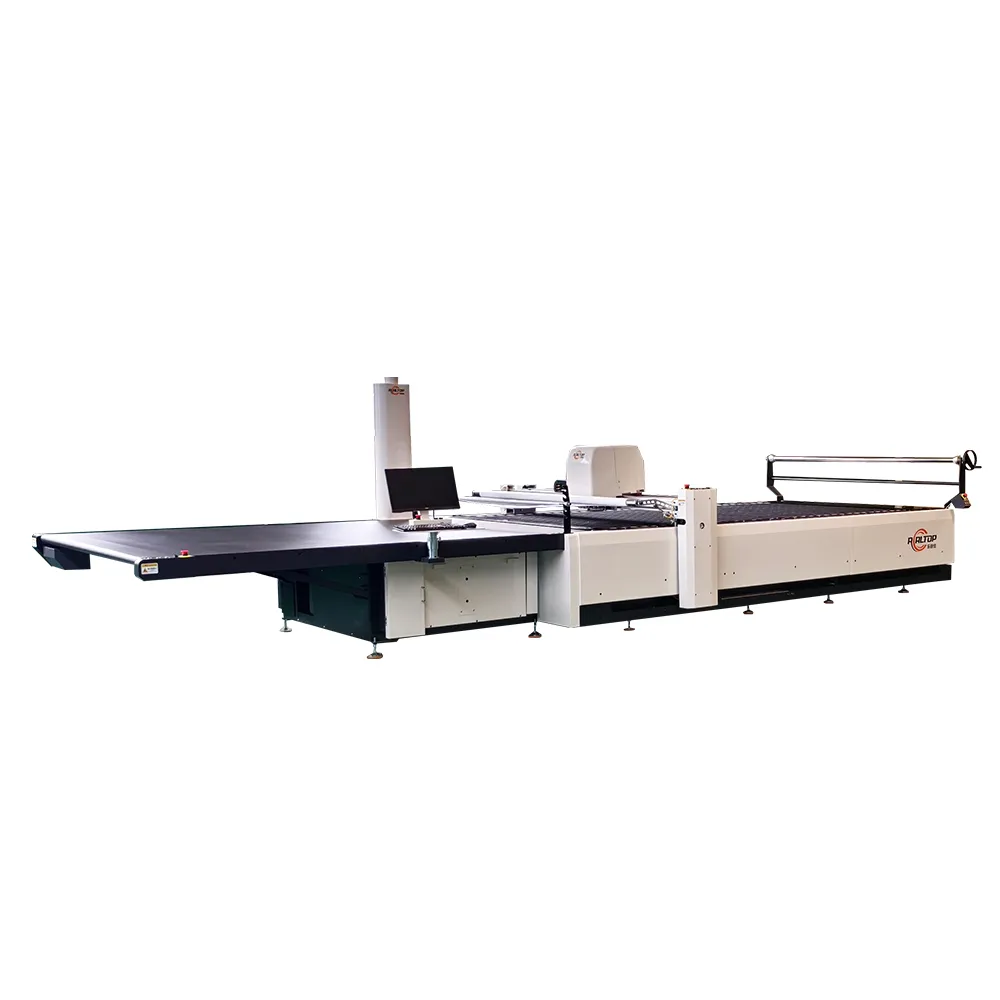
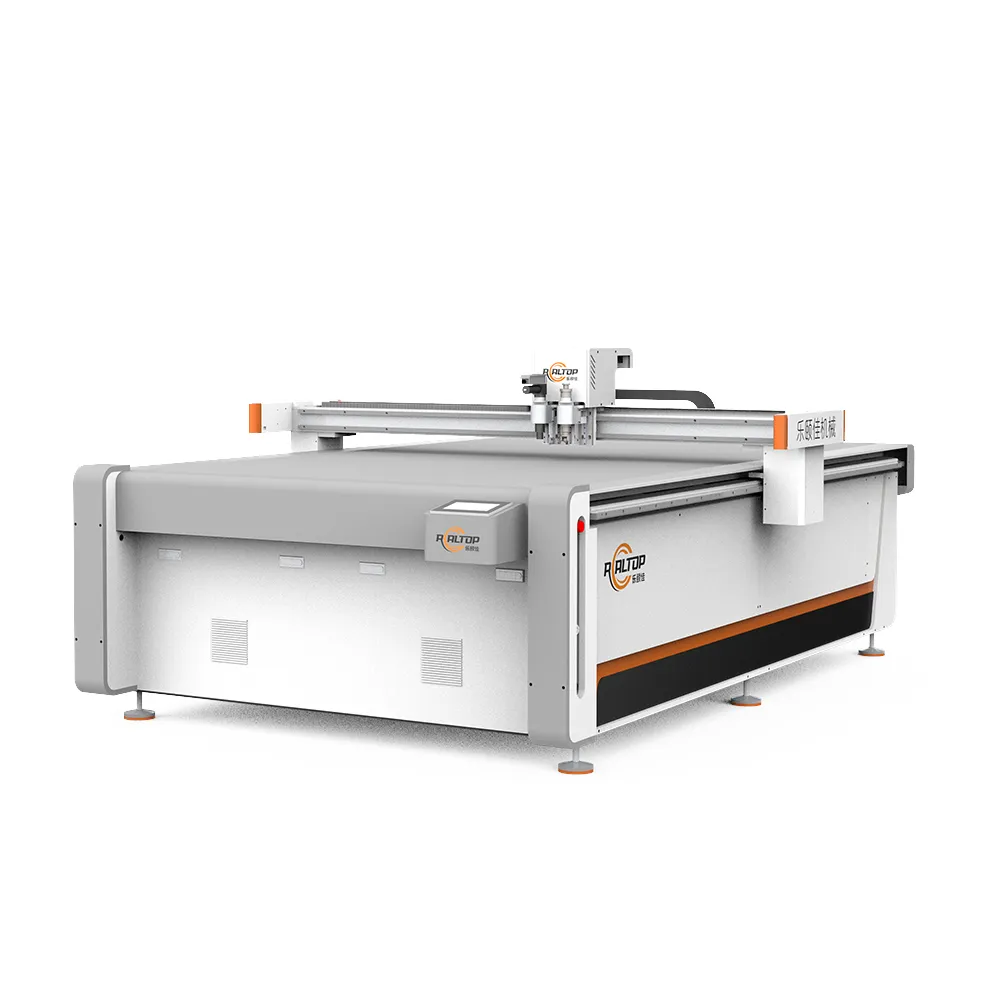
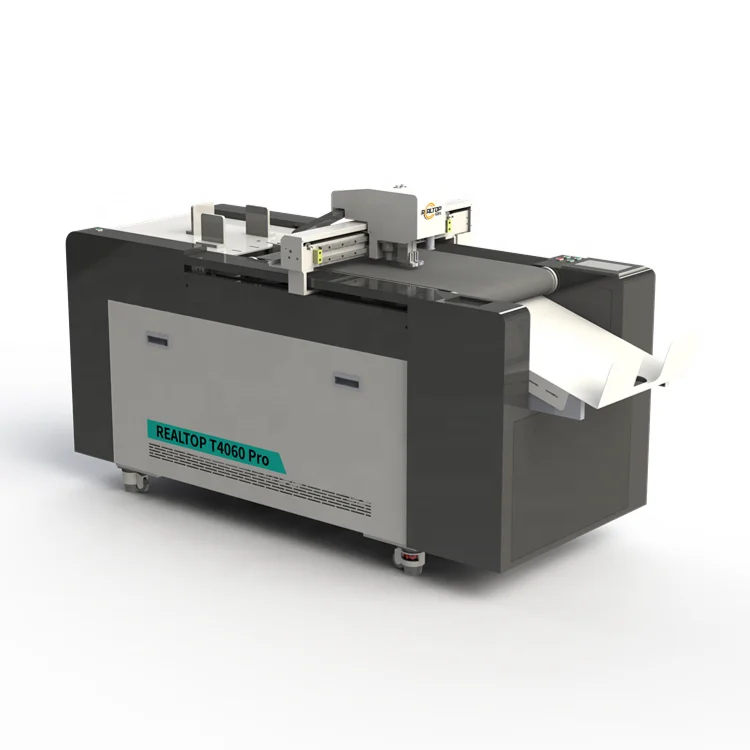
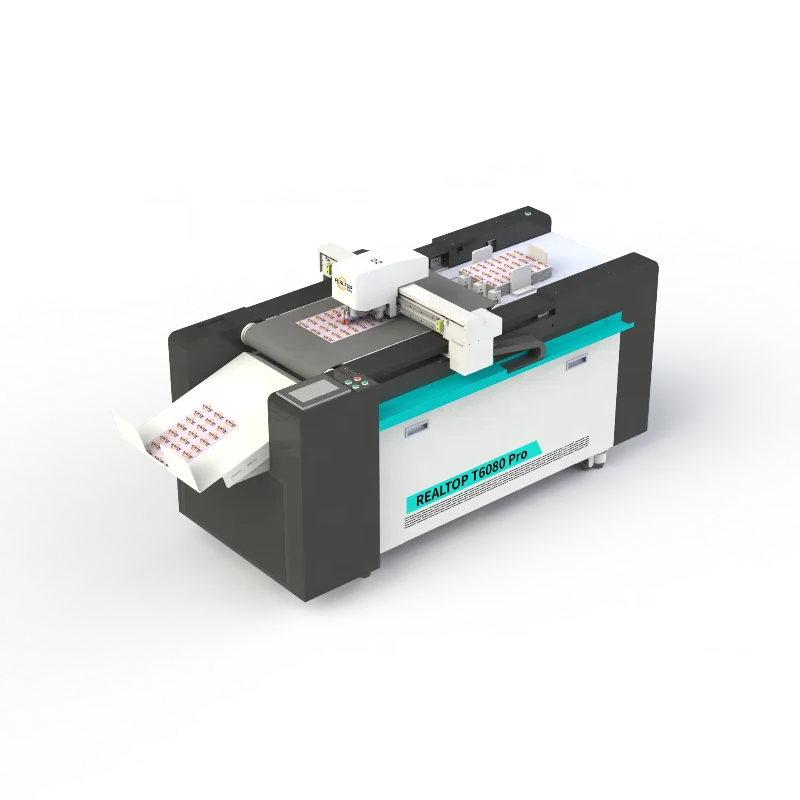
Complete Cutting Catalogue — in-house design covering both knife and laser methods so buyers match the technology to the material rather than forcing one approach.
Technical Specifications
| Parameter | Value |
|---|---|
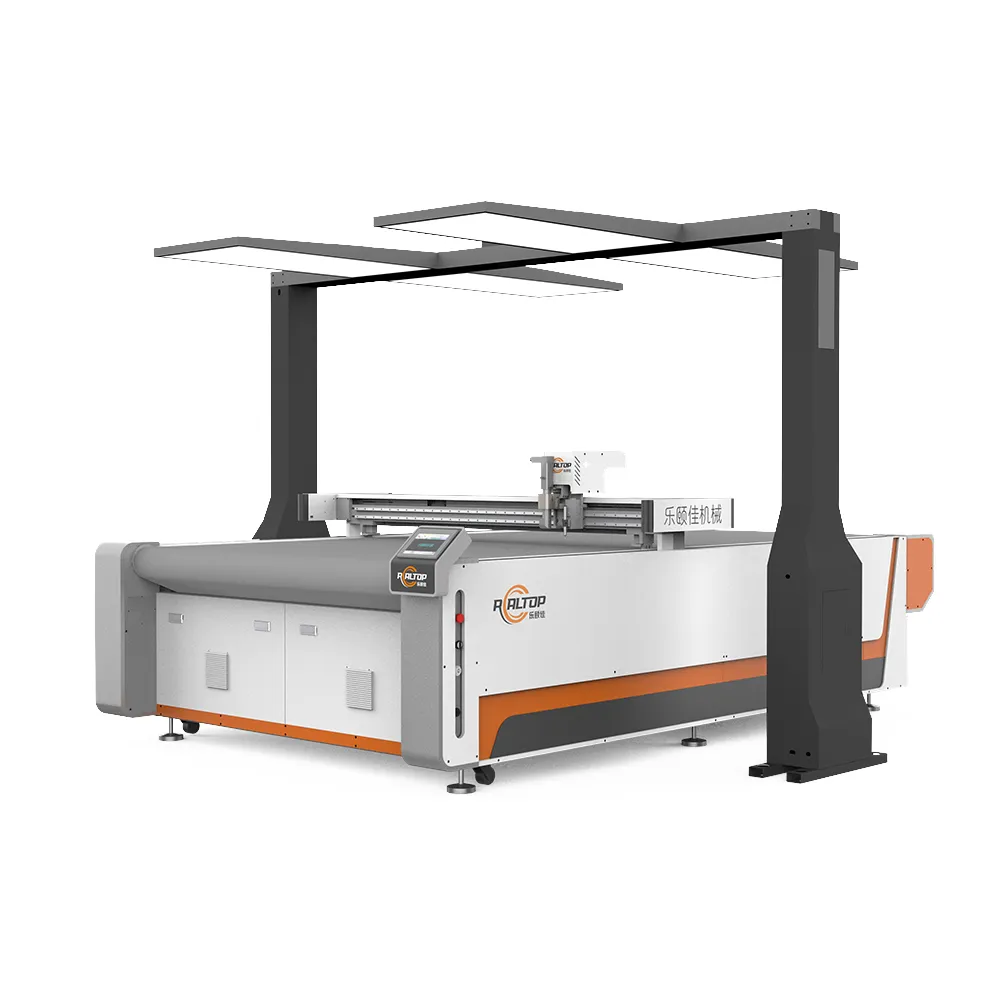
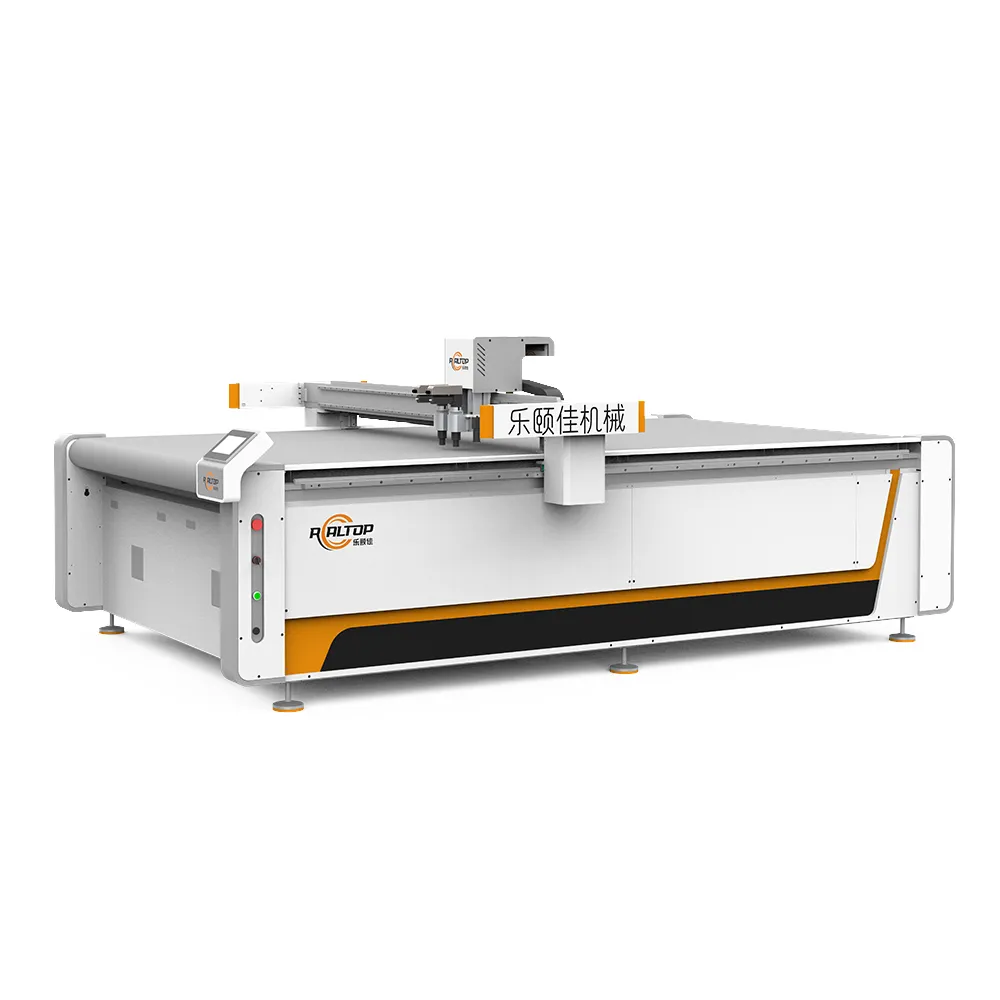
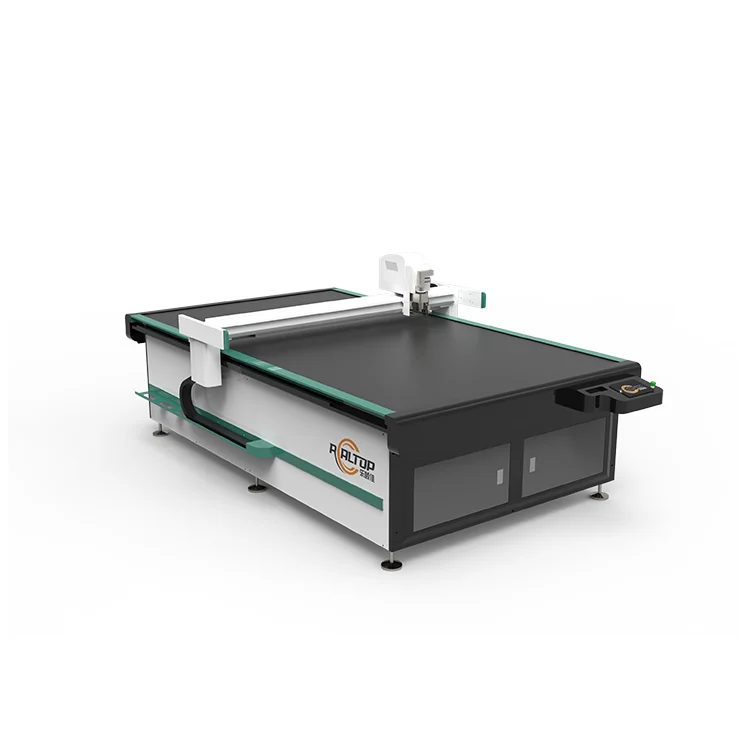
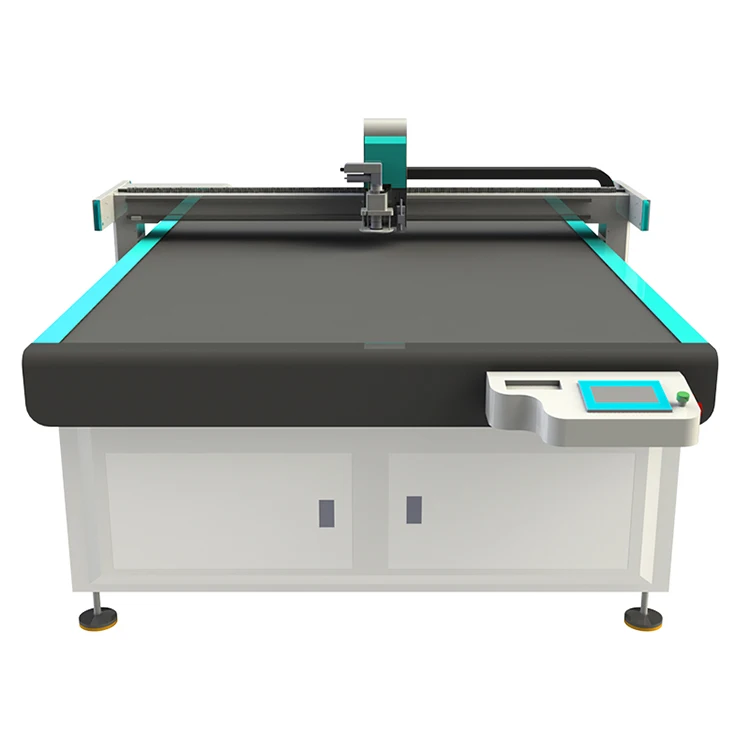
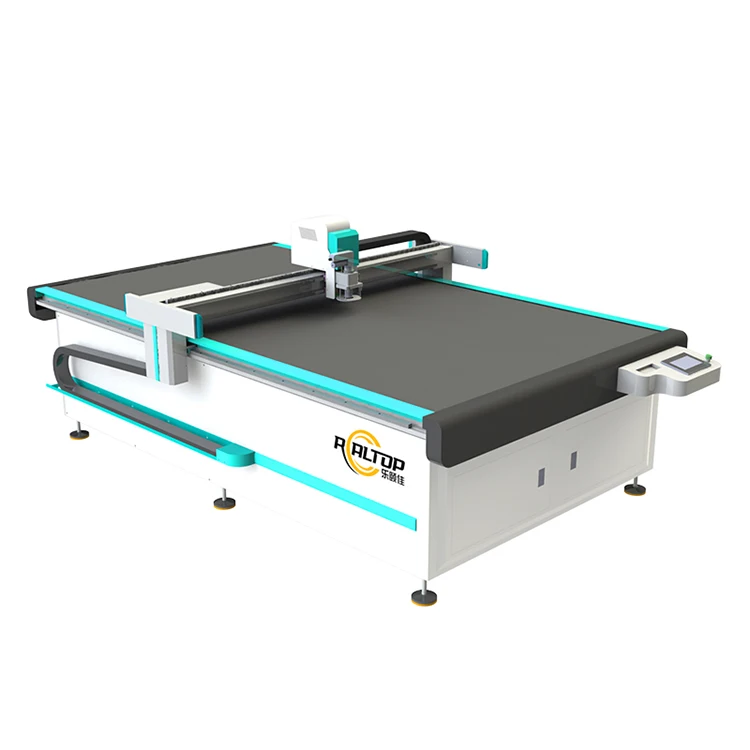
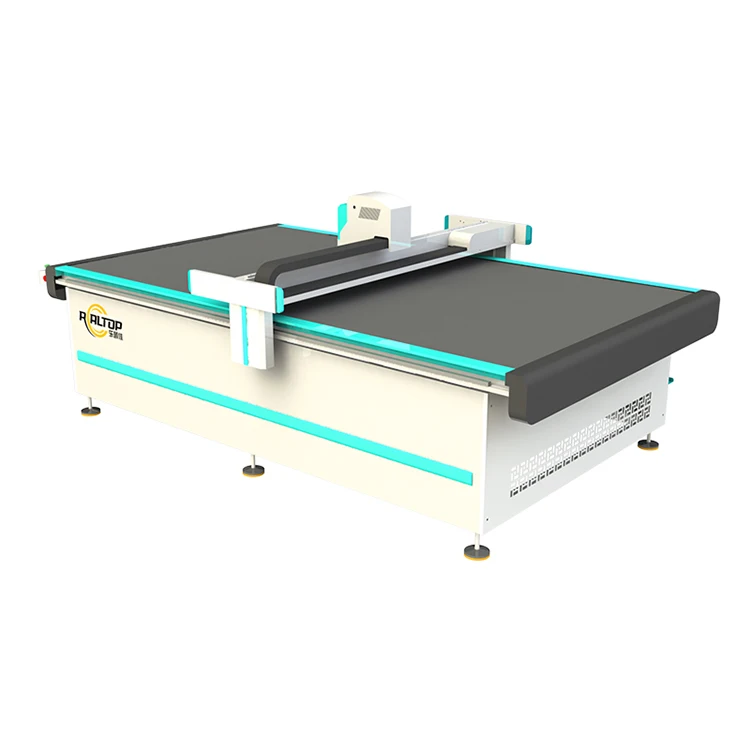
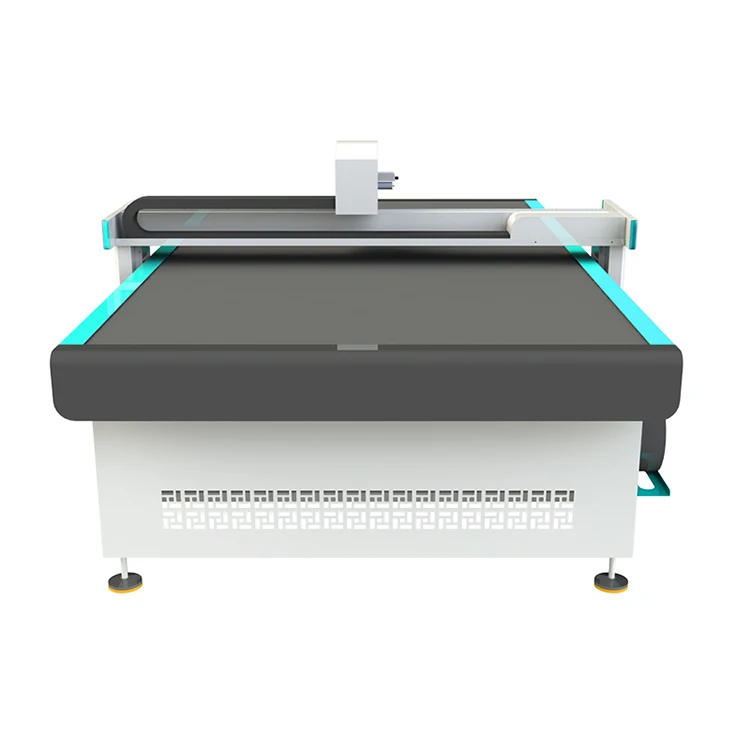
| Product Type | CNC Oscillating Knife Cutting Machine with CCD Visual Positioning |
| Effective Cutting Area | 2500×1600mm / 2500×2200mm / 3000×2200mm |
| Maximum Speed | 2000mm/s (basis to be confirmed by material type, thickness and tool head) |
| Reset Accuracy | ±0.1mm |
| Cutting Thickness | ≤40mm (basis to be confirmed by material type and density) |
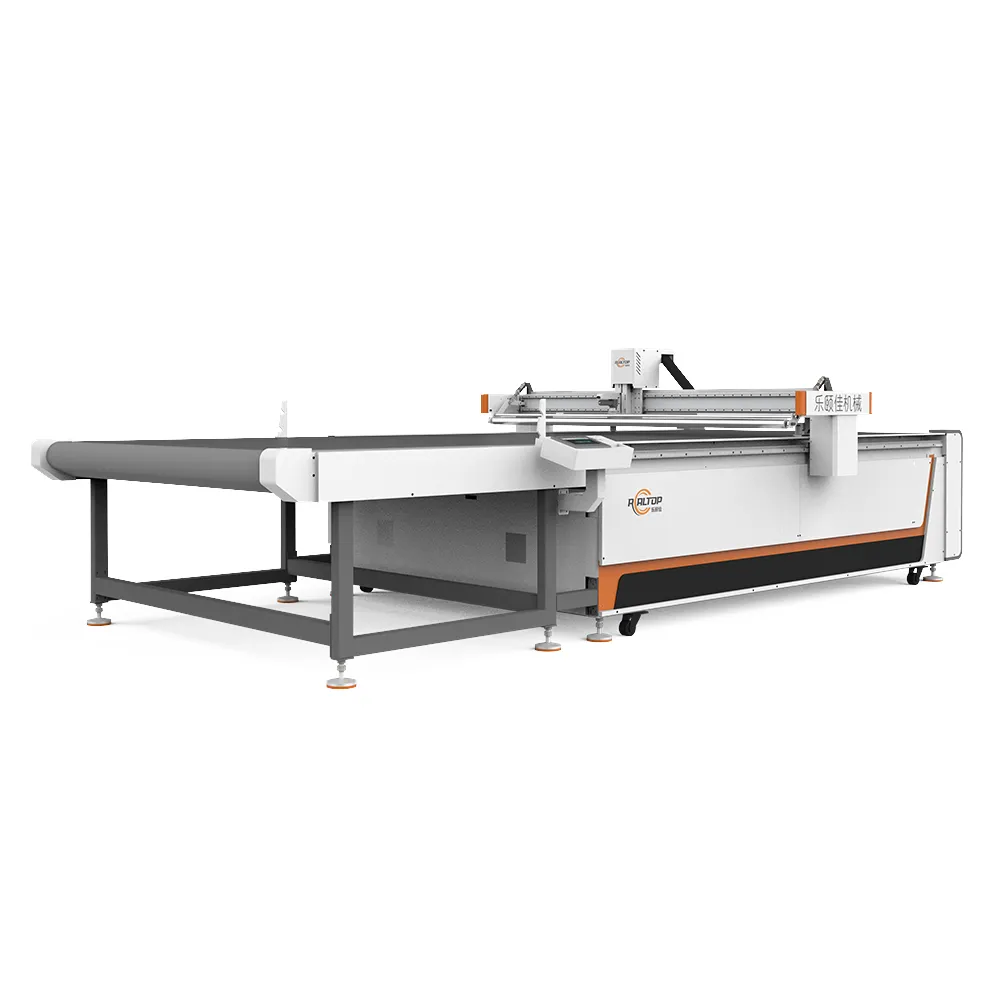
| Table Type | Automatic feeding with industrial belt |
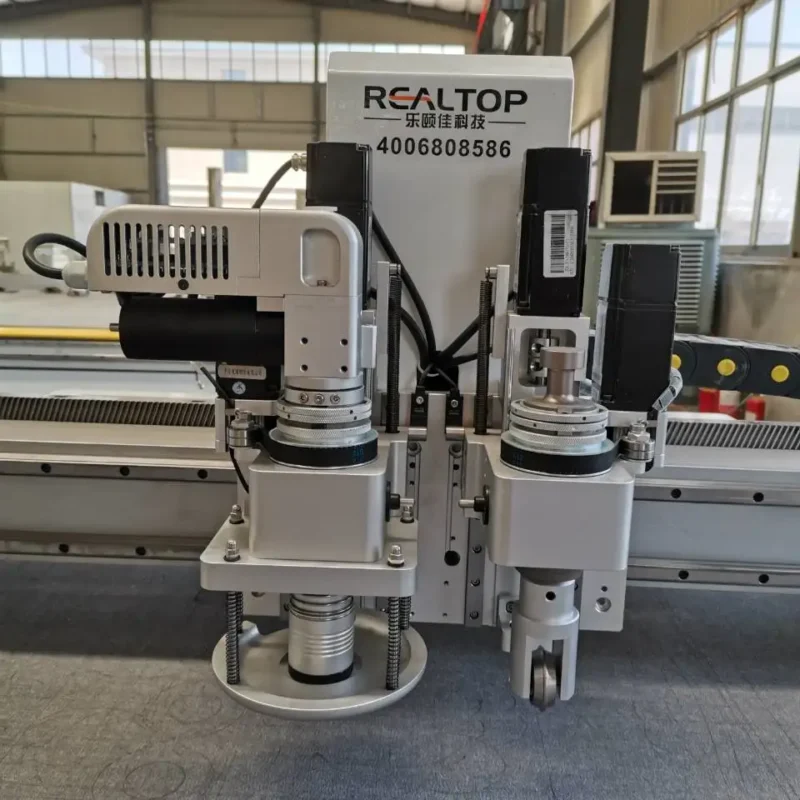
| Tool Head Options | Conventional vibrating knife, servo vibrating knife, pneumatic knife, circular knife, marking pen |
| Visual Positioning | Panoramic CCD — supports automatic edge cutting and template cutting |
| Data Format | dxf, plt, ai, pdf |
| Control System | REALTOP customized high-speed control system |
| Voltage | 380V / 220V (frequency to be confirmed by target market) |
| Safety Device | Infrared blocking stop and anti-collision protection |
| Belt Material | Special glass fiber tension cord |
| Bed Treatment | Quenched to eliminate internal stress |
| Wiring | Oxygen-free copper shielded wire |
| Noise Design | Exclusive silent design |
| Assembly State | Fully assembled |
Application Suitability
| Application | Material or Output |
|---|---|
| Leather goods and footwear production | Natural hides, synthetic leather, PU and PVC sheets for uppers, linings and insoles |
| Garment and fabric cutting | Multi-layer woven and knitted textiles, nonwovens and technical fabrics |
| Advertising and signage | Printed vinyl, self-adhesive film, reflective sheeting and flexible board |
| Automotive interior trim | Leather and synthetic leather for seat covers, door panels and headliners |
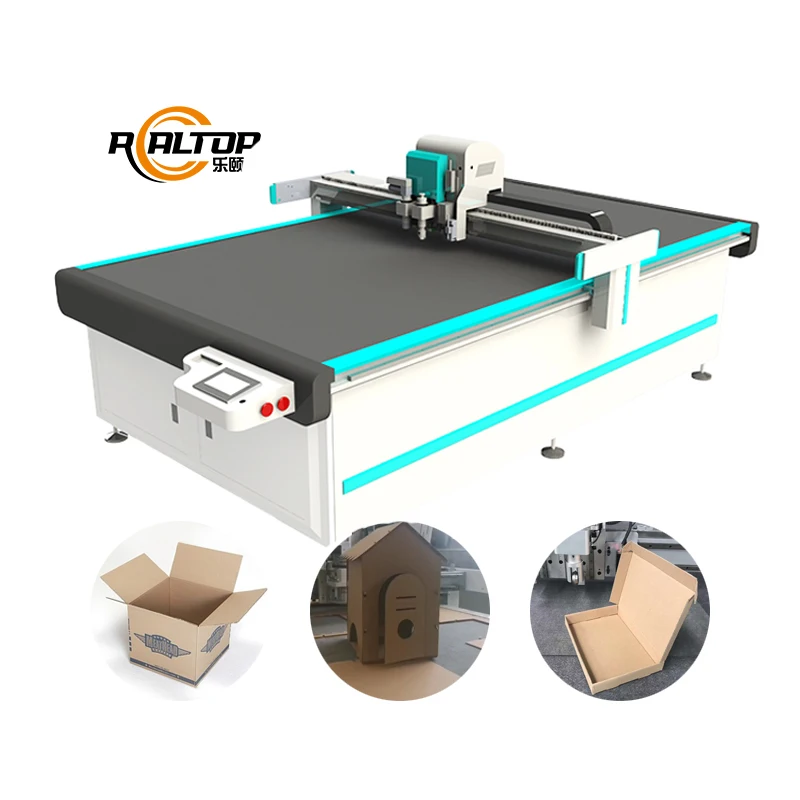
| Packaging sample making | Cardboard, corrugated board and folding carton stock |
What "Maximum Cutting Thickness" Really Means When Sourcing a CNC Oscillating Knife Cutting Machine Manufacturer
Spec sheets quote a single number, but the usable depth depends entirely on material density and the tool head selected.
I once worked with an automotive floor mat producer who tested a sample on standard PVC-foam composite and approved the machine immediately. Their actual production material was a high-density foam three millimeters thicker. The vibrating knife could not penetrate cleanly, leaving ragged edges across every piece [NEED_CITE: material density effects on oscillating knife penetration]. It took a full week on-site swapping tool heads, adjusting vacuum zoning and re-tuning oscillation frequency before output met their standard. Now I insist on receiving the buyer’s actual production material before confirming any configuration. A CNC oscillating knife cutting machine manufacturer that skips this step is asking you to absorb the risk.
Matching the Full Range to Your Material Stream
The equipment line spans three working area formats — 2516, 2522 and 3022 — covering everything from small-batch leather hide cutting to high-volume roll-fed fabric production. Each frame size can be paired with the appropriate tool head configuration, whether that means a servo vibrating knife for dense leather or a circular knife for continuous fabric rolls. Panoramic CCD visual positioning sits across the entire range, reading printed registration marks for contour cutting on pre-printed advertising films and template-matching on irregular leather hides.
Why Automatic Feeding Changes the Throughput Conversation
The industrial belt feeding system uses a glass fiber tension cord rated for high-temperature and corrosion-resistant performance, which matters when cutting synthetic leather with plasticizer residue or adhesive-backed vinyl [NEED_CITE: belt degradation in synthetic leather processing]. Automatic feeding allows continuous roll-to-roll cutting without manual repositioning between sheets, keeping the CCD camera tracking printed marks across long production runs. The quenched machine bed eliminates internal stress so the flatness tolerance holds over extended operation, preventing the drift that causes contour misalignment on multi-hour jobs.
Reading the Spec Sheet Like a Production Engineer
The reset accuracy of ±0.1mm governs how tightly the CCD system can track printed contours on leather and vinyl — critical for automotive seat covers where pattern pieces must align within tight tolerances before stitching. Cutting thickness capability depends on both material density and tool head selection: a pneumatic knife handles denser leather hides that would crush under a conventional vibrating knife, while the servo variant gives finer control on thin synthetic materials. The REALTOP customized high-speed control system processes dxf, plt, ai and pdf files directly, eliminating the file conversion step that often introduces contour errors in nesting workflows. Voltage options of 380V and 220V require confirmation of local frequency before the electrical cabinet is built, since running a 50Hz motor on 60Hz power alters the oscillation frequency and affects edge quality.
The Hidden Cost of Wrong Tool Head Selection
Buyers often focus on working area and price, leaving tool head choice to the supplier’s default configuration. When the default vibrating knife meets a material it was not selected for — dense gasket rubber or multi-layer bonded leather — the result is crushed edges, incomplete cuts and material waste that accumulates shift after shift [NEED_CITE: edge quality defects from mismatched oscillating knife tooling]. Vacuum table zoning compounds the problem: if the zones are too large for small pattern pieces, insufficient hold-down causes material lift during cutting, shifting the piece off the CCD tracking path. Correcting these issues after shipment means ordering replacement tool heads, re-commissioning the vacuum system and absorbing the downtime on your production floor.
Why Buyers Source the Full Range Here
In-house design and production cover both knife and laser cutting technologies, so a buyer processing leather alongside acrylic signage can select the correct method for each material from one manufacturer. Tool head and table configuration are specified per material and production volume rather than offered as a fixed package. Sample cutting runs on the buyer’s own material confirm edge quality and throughput before the order is placed. Software file format compatibility — dxf, plt, ai, pdf — is verified against the buyer’s existing nesting workflow during the specification stage. Voltage, plug type and control language are confirmed in writing before the electrical cabinet is assembled.
Documentation & Verification
- Machine specification sheet listing confirmed working area, cutting thickness by material and tool head assignment
- Sample cutting report produced on your leather or fabric stock before order confirmation
- Electrical schematic with voltage, frequency and plug type locked to your facility supply
- Tool head and vacuum table configuration list matched to your material density range
- Software licence and file format compatibility note for your existing nesting workflow
- Factory test record documenting positioning accuracy and CCD tracking on your print marks
Installation, Commissioning & Support
- Foundation must support the full machine weight across the 2516, 2522 or 3022 footprint with level tolerance
- Dedicated electrical circuit matching confirmed 380V or 220V supply with correct frequency and phase
- Machine arrives fully assembled; belt tension and vacuum zone mapping verified during on-site commissioning
- CCD camera calibration performed against your printed templates and registration mark contrast levels
- Operator training covers tool head changeover, nesting file import and vacuum zone adjustment
- Spare parts list includes oscillating knife blades, circular knife discs, vacuum seals and belt segments
What We Need to Specify Your Configuration
Send your material type, typical thickness range, maximum sheet or roll width and your daily cutting volume. Confirm your local voltage, frequency and whether your nesting software exports dxf, plt, ai or pdf. If your production involves printed contour work, provide a sample of the printed material so we can verify CCD mark recognition before locking the specification.
Frequently Asked Questions
Q: How do I decide between knife cutting and laser cutting for leather?
A: Knife cutting suits thicker hides and synthetic leather where a sealed edge is not required, preserving the natural material character. Laser cutting seals edges on synthetics but can discolor natural leather. The correct choice depends on your material type, thickness and the edge finish your downstream process demands. We run sample cuts on your stock to confirm before recommending a method.
Q: What print mark quality does the CCD system need for reliable contour tracking?
A: The panoramic CCD reads printed registration marks and contrast boundaries to align cut paths. Marks need sufficient contrast against the substrate and must be placed outside the cutting boundary. Low-contrast prints or marks obscured by lamination can cause tracking errors at production speed. Send a printed sample so we can test recognition reliability before finalizing the configuration.
Q: Should I choose a single-head flatbed or an automatic feeding system?
A: Single-head flatbed tables suit sheet-fed materials like leather hides and rigid signage board where each piece requires individual placement. Automatic feeding with the industrial belt system suits roll-fed fabrics and continuous vinyl production where uninterrupted cutting maximizes output. The decision depends on your material format and shift volume.
Q: What electrical and software details must be confirmed before shipment?
A: Voltage, frequency, plug type and control language are locked during the specification stage to match your facility. File format compatibility with your existing nesting software — dxf, plt, ai or pdf — is verified by processing your actual production files. Changing these after the electrical cabinet is built causes delays and rework costs.
Q: Can the frame size and tool head layout be modified for a specific production line?
A: The in-house design team can adjust working area dimensions, add or reposition tool heads, and integrate conveyor infeed or outfeed to match your line layout. These modifications are scoped during the sample cutting and specification phase, with revised drawings confirmed before production begins.
Complete Cutting Catalogue — in-house design covering both knife and laser methods so buyers match the technology to the material rather than forcing one approach.
Technical Specifications
| Parameter | Value |
|---|---|
| Product Type | CNC Oscillating Knife Cutting Machine with CCD Visual Positioning |
| Effective Cutting Area | 2500×1600mm / 2500×2200mm / 3000×2200mm |
| Maximum Speed | 2000mm/s (basis to be confirmed by material type, thickness and tool head) |
| Reset Accuracy | ±0.1mm |
| Cutting Thickness | ≤40mm (basis to be confirmed by material type and density) |
| Table Type | Automatic feeding with industrial belt |
| Tool Head Options | Conventional vibrating knife, servo vibrating knife, pneumatic knife, circular knife, marking pen |
| Visual Positioning | Panoramic CCD — supports automatic edge cutting and template cutting |
| Data Format | dxf, plt, ai, pdf |
| Control System | REALTOP customized high-speed control system |
| Voltage | 380V / 220V (frequency to be confirmed by target market) |
| Safety Device | Infrared blocking stop and anti-collision protection |
| Belt Material | Special glass fiber tension cord |
| Bed Treatment | Quenched to eliminate internal stress |
| Wiring | Oxygen-free copper shielded wire |
| Noise Design | Exclusive silent design |
| Assembly State | Fully assembled |
Application Suitability
| Application | Material or Output |
|---|---|
| Leather goods and footwear production | Natural hides, synthetic leather, PU and PVC sheets for uppers, linings and insoles |
| Garment and fabric cutting | Multi-layer woven and knitted textiles, nonwovens and technical fabrics |
| Advertising and signage | Printed vinyl, self-adhesive film, reflective sheeting and flexible board |
| Automotive interior trim | Leather and synthetic leather for seat covers, door panels and headliners |
| Packaging sample making | Cardboard, corrugated board and folding carton stock |
What "Maximum Cutting Thickness" Really Means When Sourcing a CNC Oscillating Knife Cutting Machine Manufacturer
Spec sheets quote a single number, but the usable depth depends entirely on material density and the tool head selected.
I once worked with an automotive floor mat producer who tested a sample on standard PVC-foam composite and approved the machine immediately. Their actual production material was a high-density foam three millimeters thicker. The vibrating knife could not penetrate cleanly, leaving ragged edges across every piece [NEED_CITE: material density effects on oscillating knife penetration]. It took a full week on-site swapping tool heads, adjusting vacuum zoning and re-tuning oscillation frequency before output met their standard. Now I insist on receiving the buyer’s actual production material before confirming any configuration. A CNC oscillating knife cutting machine manufacturer that skips this step is asking you to absorb the risk.
Matching the Full Range to Your Material Stream
The equipment line spans three working area formats — 2516, 2522 and 3022 — covering everything from small-batch leather hide cutting to high-volume roll-fed fabric production. Each frame size can be paired with the appropriate tool head configuration, whether that means a servo vibrating knife for dense leather or a circular knife for continuous fabric rolls. Panoramic CCD visual positioning sits across the entire range, reading printed registration marks for contour cutting on pre-printed advertising films and template-matching on irregular leather hides.
Why Automatic Feeding Changes the Throughput Conversation
The industrial belt feeding system uses a glass fiber tension cord rated for high-temperature and corrosion-resistant performance, which matters when cutting synthetic leather with plasticizer residue or adhesive-backed vinyl [NEED_CITE: belt degradation in synthetic leather processing]. Automatic feeding allows continuous roll-to-roll cutting without manual repositioning between sheets, keeping the CCD camera tracking printed marks across long production runs. The quenched machine bed eliminates internal stress so the flatness tolerance holds over extended operation, preventing the drift that causes contour misalignment on multi-hour jobs.
Reading the Spec Sheet Like a Production Engineer
The reset accuracy of ±0.1mm governs how tightly the CCD system can track printed contours on leather and vinyl — critical for automotive seat covers where pattern pieces must align within tight tolerances before stitching. Cutting thickness capability depends on both material density and tool head selection: a pneumatic knife handles denser leather hides that would crush under a conventional vibrating knife, while the servo variant gives finer control on thin synthetic materials. The REALTOP customized high-speed control system processes dxf, plt, ai and pdf files directly, eliminating the file conversion step that often introduces contour errors in nesting workflows. Voltage options of 380V and 220V require confirmation of local frequency before the electrical cabinet is built, since running a 50Hz motor on 60Hz power alters the oscillation frequency and affects edge quality.
The Hidden Cost of Wrong Tool Head Selection
Buyers often focus on working area and price, leaving tool head choice to the supplier’s default configuration. When the default vibrating knife meets a material it was not selected for — dense gasket rubber or multi-layer bonded leather — the result is crushed edges, incomplete cuts and material waste that accumulates shift after shift [NEED_CITE: edge quality defects from mismatched oscillating knife tooling]. Vacuum table zoning compounds the problem: if the zones are too large for small pattern pieces, insufficient hold-down causes material lift during cutting, shifting the piece off the CCD tracking path. Correcting these issues after shipment means ordering replacement tool heads, re-commissioning the vacuum system and absorbing the downtime on your production floor.
Why Buyers Source the Full Range Here
In-house design and production cover both knife and laser cutting technologies, so a buyer processing leather alongside acrylic signage can select the correct method for each material from one manufacturer. Tool head and table configuration are specified per material and production volume rather than offered as a fixed package. Sample cutting runs on the buyer’s own material confirm edge quality and throughput before the order is placed. Software file format compatibility — dxf, plt, ai, pdf — is verified against the buyer’s existing nesting workflow during the specification stage. Voltage, plug type and control language are confirmed in writing before the electrical cabinet is assembled.
Documentation & Verification
- Machine specification sheet listing confirmed working area, cutting thickness by material and tool head assignment
- Sample cutting report produced on your leather or fabric stock before order confirmation
- Electrical schematic with voltage, frequency and plug type locked to your facility supply
- Tool head and vacuum table configuration list matched to your material density range
- Software licence and file format compatibility note for your existing nesting workflow
- Factory test record documenting positioning accuracy and CCD tracking on your print marks
Installation, Commissioning & Support
- Foundation must support the full machine weight across the 2516, 2522 or 3022 footprint with level tolerance
- Dedicated electrical circuit matching confirmed 380V or 220V supply with correct frequency and phase
- Machine arrives fully assembled; belt tension and vacuum zone mapping verified during on-site commissioning
- CCD camera calibration performed against your printed templates and registration mark contrast levels
- Operator training covers tool head changeover, nesting file import and vacuum zone adjustment
- Spare parts list includes oscillating knife blades, circular knife discs, vacuum seals and belt segments
What We Need to Specify Your Configuration
Send your material type, typical thickness range, maximum sheet or roll width and your daily cutting volume. Confirm your local voltage, frequency and whether your nesting software exports dxf, plt, ai or pdf. If your production involves printed contour work, provide a sample of the printed material so we can verify CCD mark recognition before locking the specification.
Frequently Asked Questions
Q: How do I decide between knife cutting and laser cutting for leather?
A: Knife cutting suits thicker hides and synthetic leather where a sealed edge is not required, preserving the natural material character. Laser cutting seals edges on synthetics but can discolor natural leather. The correct choice depends on your material type, thickness and the edge finish your downstream process demands. We run sample cuts on your stock to confirm before recommending a method.
Q: What print mark quality does the CCD system need for reliable contour tracking?
A: The panoramic CCD reads printed registration marks and contrast boundaries to align cut paths. Marks need sufficient contrast against the substrate and must be placed outside the cutting boundary. Low-contrast prints or marks obscured by lamination can cause tracking errors at production speed. Send a printed sample so we can test recognition reliability before finalizing the configuration.
Q: Should I choose a single-head flatbed or an automatic feeding system?
A: Single-head flatbed tables suit sheet-fed materials like leather hides and rigid signage board where each piece requires individual placement. Automatic feeding with the industrial belt system suits roll-fed fabrics and continuous vinyl production where uninterrupted cutting maximizes output. The decision depends on your material format and shift volume.
Q: What electrical and software details must be confirmed before shipment?
A: Voltage, frequency, plug type and control language are locked during the specification stage to match your facility. File format compatibility with your existing nesting software — dxf, plt, ai or pdf — is verified by processing your actual production files. Changing these after the electrical cabinet is built causes delays and rework costs.
Q: Can the frame size and tool head layout be modified for a specific production line?
A: The in-house design team can adjust working area dimensions, add or reposition tool heads, and integrate conveyor infeed or outfeed to match your line layout. These modifications are scoped during the sample cutting and specification phase, with revised drawings confirmed before production begins.
商品评价
There are no reviews yet.