



Fast Delivery
Quick, reliable shipping to any location.

Free & easy returns
Return this item by mail or in store within 90 days for a full refund.
Material-matched cutting solutions — Every configuration is specified against actual hide thickness and tanning type, not just working area dimensions.
Technical Specifications
| Parameter | Value |
|---|---|
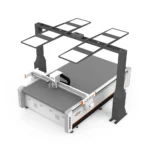
| Product Type | CNC Oscillating Knife Cutting Machine |
| Working Area | 1600×2500 mm |
| Tool Head Options | Oscillating knife, Driven rotary knife, Creasing wheel, Kiss cutting, Pneumatic knife, Milling, V-groove |
| Cutting Thickness Capacity | Up to 30 mm |
| Cutting Speed | 0–2000 mm/s |
| Dimensional Accuracy | ±0.1 mm |
| Vacuum Pump | 9 kW |
| Control Interface | PLC control panel |
| Servo Drive Options | Panasonic, Delta, Dorna |
| Voltage Configuration | 110V, 220V, 380V (selectable) |
| File Format Support | PLT, DXF, AI, PDF |
| Machine Dimensions | 3300×2100×1350 mm |
| Safety Features | Infrared sensor, emergency stop |
| Control Language | English, Russian, Italian, Chinese (customizable) |
Application Suitability
| Application | Material or Output |
|---|---|
| Shoe upper and leather goods production | Genuine leather (chrome-tanned and vegetable-tanned), synthetic leather, suede |
| Automotive seat cover and interior trimming | Automotive upholstery leather, composite fabrics, foam-backed materials |
| Bag and luggage manufacturing | Full-grain and split leather, PU and PVC leatherette, lining fabrics |
| Sofa and upholstered furniture cutting | Heavy-weight upholstery leather, bonded leather, textile composites |
| Gasket and technical part blanking | PTFE, rubber, EVA foam, non-metallic sheet stock |
Why Leather Thickness Alone Is Not Enough to Specify a CNC Knife Cutting Machine
The knife frequency and vacuum zoning must match the tanning chemistry and hide density, not just the stated millimeter gauge.
I learned this the hard way in a workshop outside León, Mexico. The sample runs on vegetable-tanned saddle leather came out perfectly — clean edges, no fraying, fast cycle times. The buyer signed off, and we shipped. Two weeks later they switched production runs to chrome-tanned garment-weight leather, and the oscillating knife frequency was wrong for that softer, more pliable material. The vacuum table zoning could not hold the lighter hides flat, and an entire batch of premium leather came off the bed with ragged, unusable edges. The machine was not at fault; the specification was. A CNC knife cutting machine manufacturer must verify tool head and vacuum configuration against every material the buyer intends to run, not just the first sample provided. [NEED_CITE: material hold-down requirements for knife cutting on flexible substrates]
Matching Tool Heads to Hide Behavior
The seven tool options on this flatbed system exist because no single blade geometry works across every leather type. Oscillating knives handle dense, fibrous chrome-tanned hides where a straight drag knife would deflect. Driven rotary tools suit long continuous cuts on rolled synthetic leather where edge sealing matters. A creasing wheel scores fold lines on bag panels without severing the material. Selecting the right head before the machine ships eliminates the most common cause of rejected leather cut parts — edge distortion at the blade exit point.
Vacuum Zoning and Hide Stability
The 9 kW vacuum pump paired with an aluminum bellows table addresses the second most common failure in leather cutting: material lift during high-speed passes. Full-bed vacuum works for large panels, but small leather components — shoe vamp pieces, strap blanks, wallet panels — require zoned suction to prevent edge creep. A manufacturer evaluating this CNC knife cutting machine manufacturer should confirm which vacuum zones are active for their typical nest layout, because a zone configuration designed for automotive seat covers will not hold a batch of small handbag fittings in place. [NEED_CITE: vacuum table zoning standards for flatbed digital cutting]
Reading the Specification Sheet Against Your Production Reality
Cutting speed rated at 2000 mm/s represents the mechanical travel limit under ideal conditions. Actual leather cutting speed depends on hide thickness, fiber density, and the number of directional changes in the cut path. The ±0.1 mm accuracy figure reflects servo positioning repeatability — achievable with Panasonic, Delta, or Dorna drives — but only if the material does not shift under the knife. The 30 mm maximum cutting thickness applies to rigid foam and gasket materials; most garment leathers cut at a fraction of that depth. Voltage selection (110V, 220V, or 380V) must be confirmed against the buyer’s workshop supply before production begins, as incorrect motor winding causes premature servo failure that is not covered under standard warranty terms.
The Cost of Shipping Before the Material Test
When a leather cutting system leaves the factory without a documented sample run on the buyer’s actual chrome-tanned or vegetable-tanned hides, the first production batch becomes the test. Ragged edges on genuine leather cannot be re-cut — the hide is wasted. Incorrect vacuum zoning reveals itself only when small parts lift mid-cycle, producing scrap that shows up as a yield loss the buyer traces back to the machine. A CNC knife cutting machine manufacturer that skips pre-shipment material testing transfers all configuration risk onto the production floor. [NEED_CITE: cost of material waste in leather cutting operations]
Why Buyers Specify From This Range
The design team covers both knife and laser cutting technology under one roof, so a buyer working with leather can compare edge quality between oscillating knife and CO2 laser on the same hide before committing. Tool head and vacuum table configuration are locked to the buyer’s material profile, not selected from a default list. CCD camera contour recognition is available for printed leather and synthetic materials requiring positional accuracy around pre-printed designs. Software compatibility with PLT, DXF, AI, and PDF formats is verified before the order enters production. Sample cutting on the buyer’s own leather stock — including multiple tanning types — is completed and documented before shipment authorization.
Documentation & Verification
- Machine specification sheet listing configured tool heads and active vacuum zones for your hide types
- Sample cutting report on your leather stock with edge quality photographs and dimensional measurements
- Electrical schematic confirming voltage, phase, and plug type for your workshop supply
- Tool head and table configuration list matched to your stated material range and thickness
- Software license and file format compatibility note for PLT, DXF, AI, and PDF workflows
- Factory test record documenting servo tuning parameters and cutting accuracy on your materials
Installation, Commissioning & Support
- Foundation must support 3300×2100 mm footprint with level tolerance across the aluminum bellows table surface
- Dedicated circuit required matching confirmed voltage (110V, 220V, or 380V) and the 9 kW vacuum pump draw
- Machine ships partially assembled; final bed leveling and gantry alignment completed on-site
- First-run parameter tuning performed on your leather stock to set oscillating knife frequency and vacuum zone mapping
- Operator training covers PLC panel use in your selected language (English, Russian, Italian, Chinese, or custom)
- Spare parts list identifies consumable blades, knife holders, and vacuum seals specific to your tool configuration
What to Include With Your Inquiry
Send the specific leather types you cut — including tanning method, typical thickness range, and whether you run full hides or split pieces — along with your daily cutting volume and the file formats your design team currently uses. Confirm your workshop voltage and frequency so the servo and vacuum motors are wound correctly before assembly.
Frequently Asked Questions
Q: How do I choose between oscillating knife and laser for leather?
A: Oscillating knife cuts genuine leather without the burnt edge or odor that CO2 laser produces on chrome-tanned hides. Laser suits synthetic leather and textile where edge sealing is desired. This CNC knife cutting machine manufacturer offers both methods, and sample cutting on your specific leather type determines which produces the edge quality your product requires.
Q: What working area sizes are available across the machine families?
A: The 1600×2500 mm bed accommodates most full and split hides used in footwear, bags, and automotive interiors. Compact and larger format options exist across the range. Selection depends on your typical hide dimensions and whether you nest multiple patterns per cycle to optimize material yield.
Q: How does each tool head match different leather edge quality requirements?
A: Oscillating knives suit dense chrome-tanned hides; driven rotary tools handle long continuous cuts on synthetic rolls; kiss cutting scores without penetrating backing material. The right head eliminates fraying and edge compression. Your material samples determine the correct configuration before the machine is built.
Q: Can voltage, control language, and plug type be customized before shipment?
A: Yes. Voltage is configurable across 110V, 220V, and 380V to match your workshop supply. The PLC control panel language is set to English, Russian, Italian, Chinese, or a custom option. Plug type and electrical certification documentation are confirmed during the specification phase, not after production.
Q: What is the process for testing my leather before I commit?
A: You send representative samples of each leather type and thickness you intend to cut. The configured tool head and vacuum zones are tested against those materials. A cutting report with edge quality photographs and dimensional accuracy measurements is returned for your review before the order is finalized.










商品评价
There are no reviews yet.