

Fast Delivery
Quick, reliable shipping to any location.

Free & easy returns
Return this item by mail or in store within 90 days for a full refund.
Integrated Knife and Laser Solutions — We configure oscillating knife and laser cutting in a single sourcing channel, allowing buyers to match the cutting method strictly to their fabric, foam or composite rather than forcing one technology across all materials.
Technical Specifications
| Parameter | Value |
|---|---|
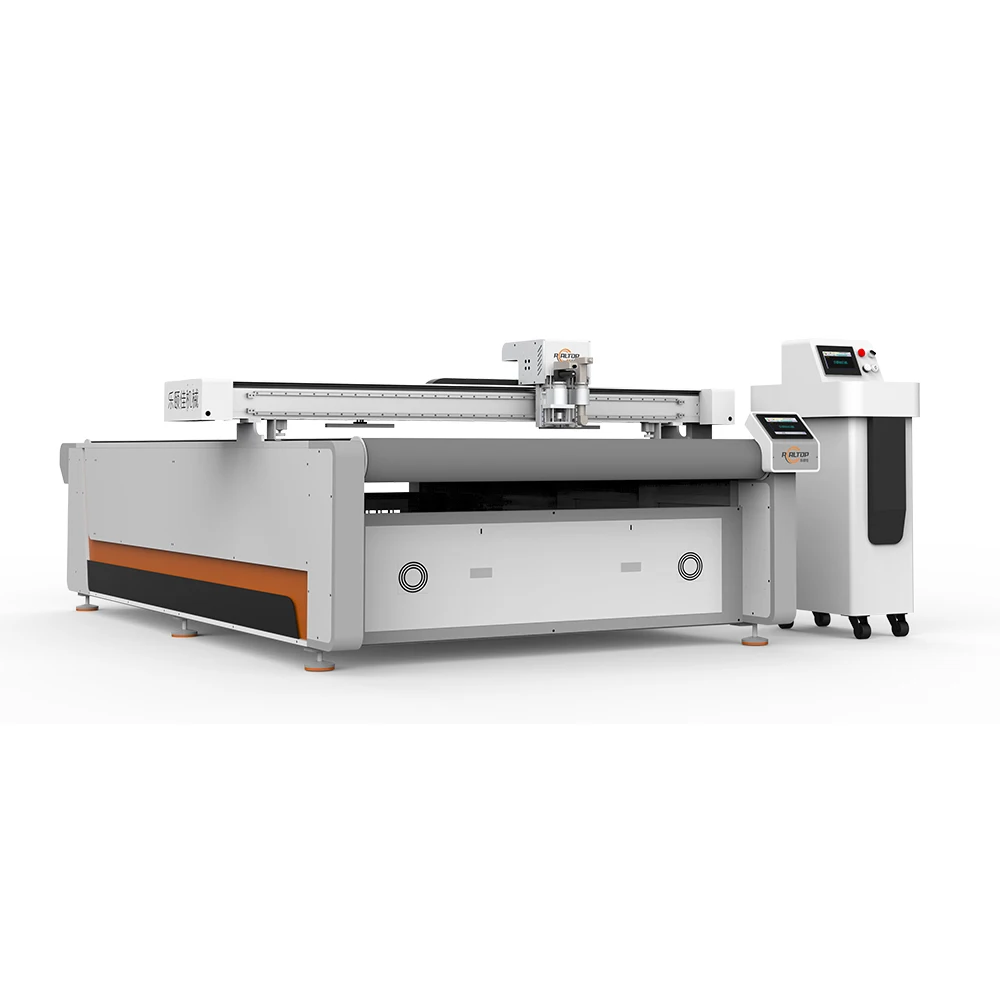
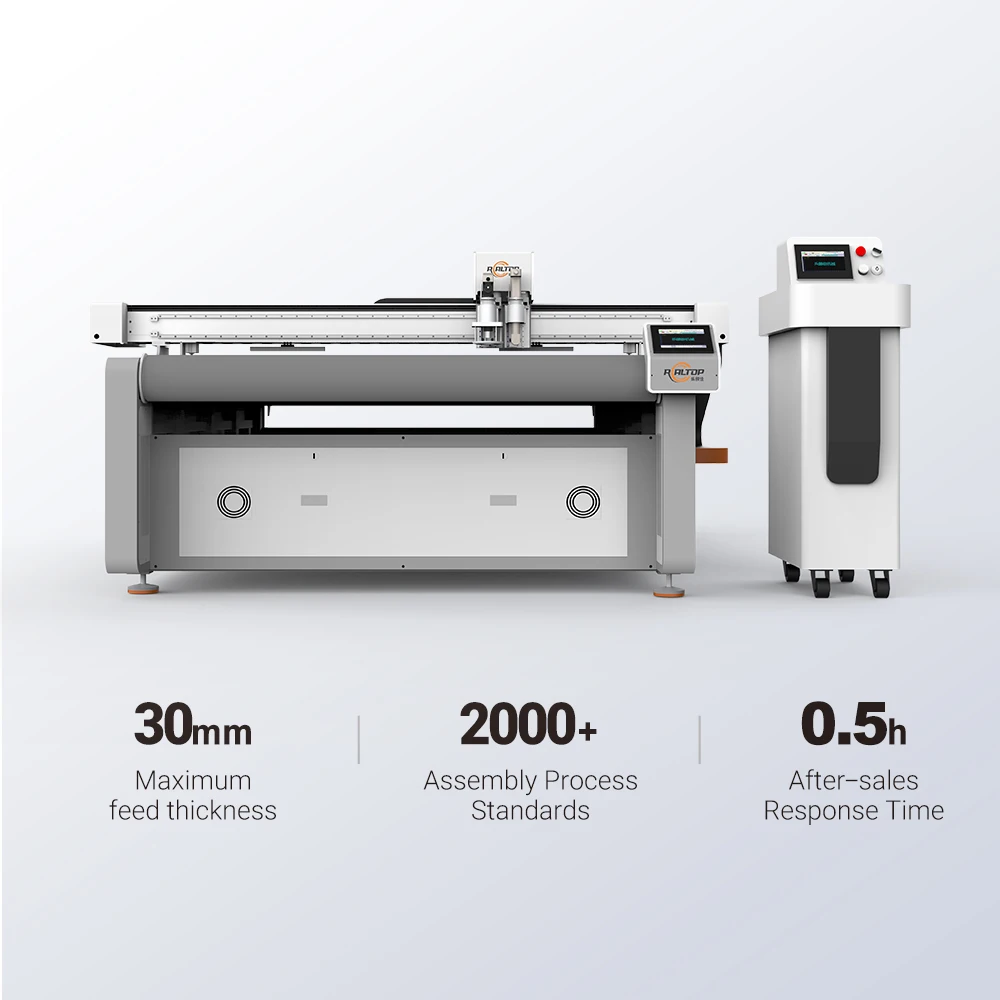
| Product Type | CNC Oscillating Knife Cutting Machine |
| Working Area | 2500×2200 mm |
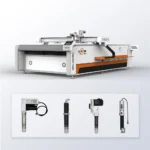
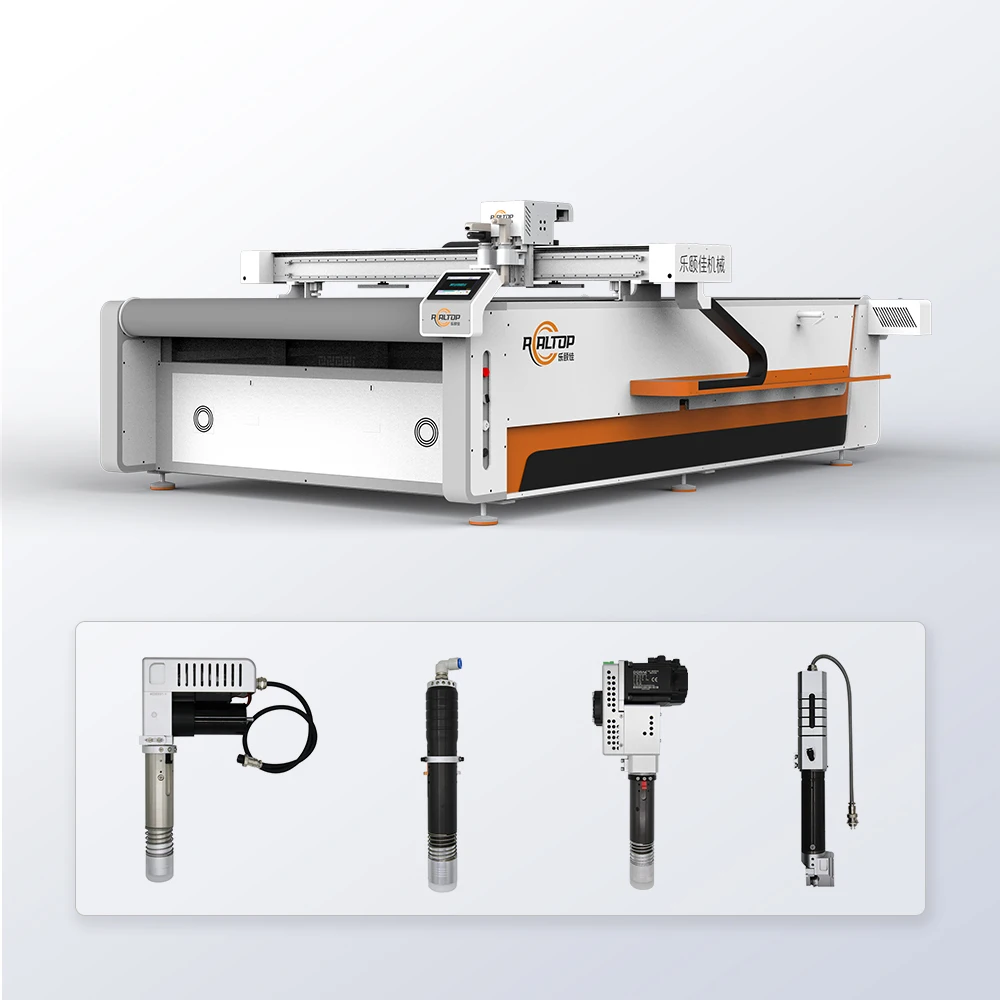
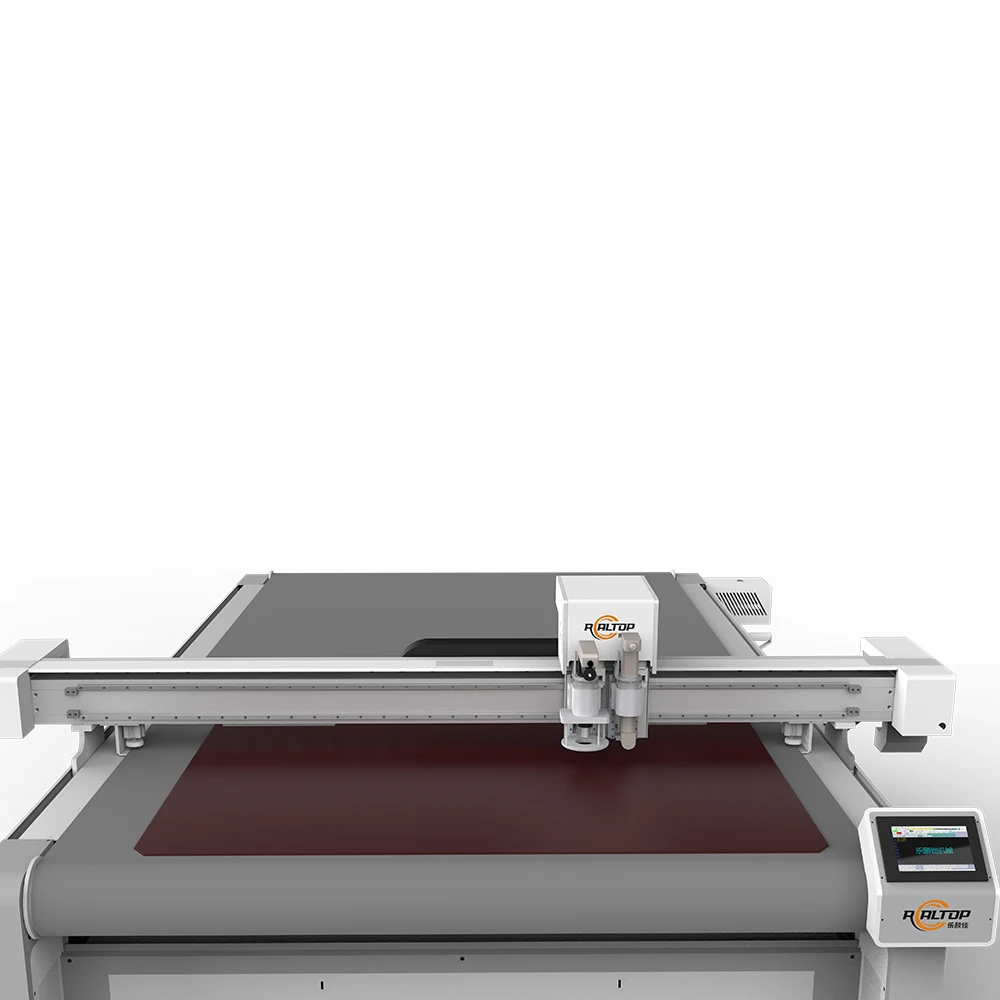
| Tool Head Options | Oscillating knife, Driven rotary knife, Creasing wheel, Kiss cutting tool, Pneumatic knife, Milling tool, V groove knife |
| Cutting Speed | 0–1500 mm/s |
| Cutting Thickness | ≤30 mm (basis not stated in source) |
| Cutting Accuracy | ±0.1 mm |
| Vacuum Pump | 9 kW |
| Voltage Options | 110V / 220V / 380V |
| Control System | PLC control panel with multi-language display |
| Vacuum Table | Aluminum bellows vacuum table |
| Servo Drive Options | Panasonic, Delta, Dorna |
| File Formats | PLT, DXF, AI, PDF |
| Safety Devices | Infrared sensor device, emergency stop |
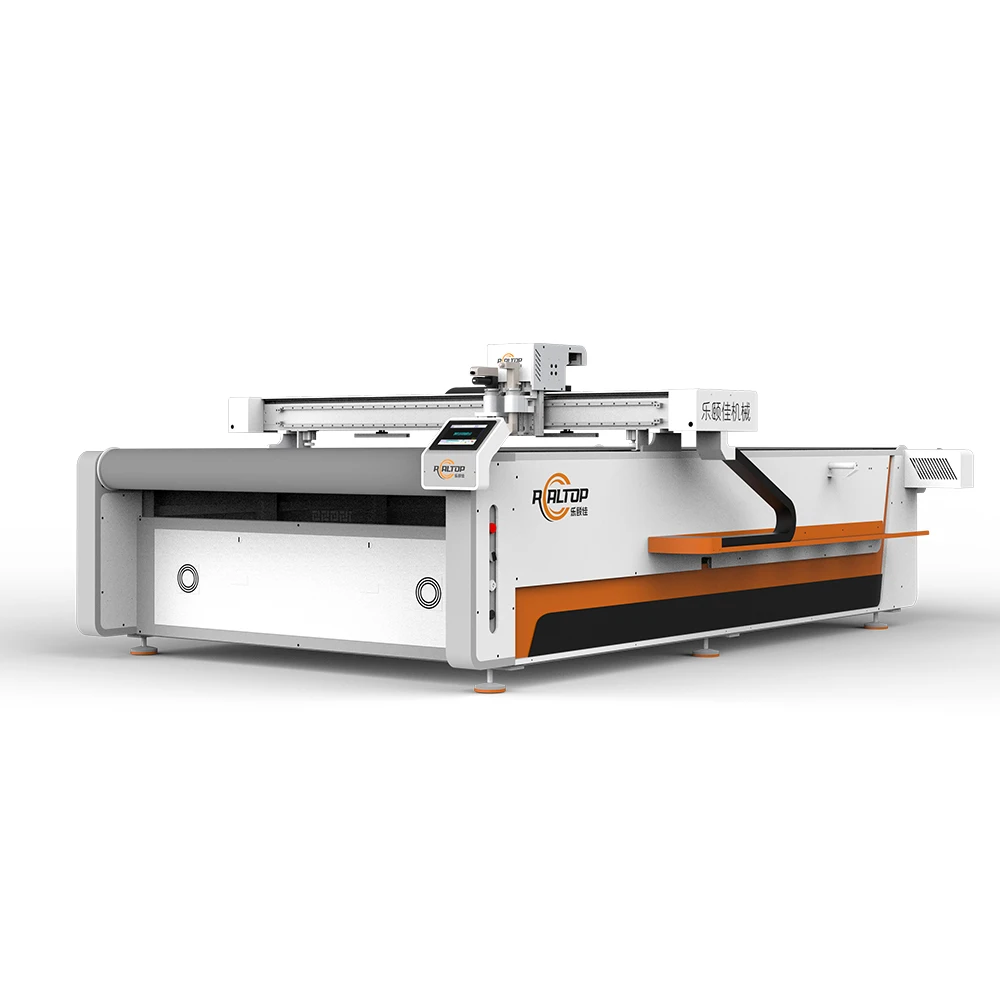
| Machine Size | 3300×2700×1350 mm |
Application Suitability
| Application | Material or Output |
|---|---|
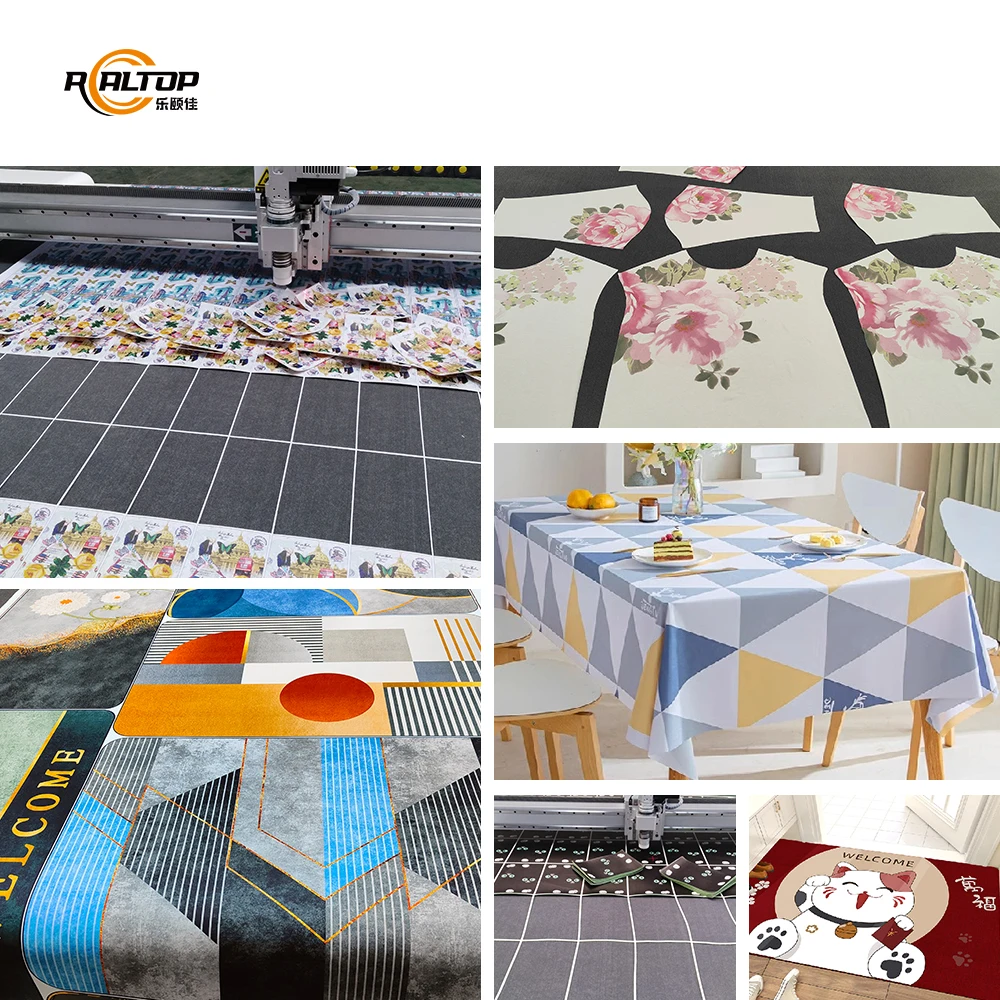
| Automotive Interiors | Full-coverage car mats, loop mats |
| Home Furnishings | Coral fleece carpets, PVC geometric mats, non-slip pads |
| Sports and Leisure | Custom-shaped yoga mats, wave edges, cut-out designs |
| Apparel and Footwear | Fabric layers, leather, synthetic composites |
| Packaging | Cardboard, carton sample making |
Why Material Thickness Matters More Than Working Area
A large-format CNC oscillating knife cutting machine for sale is only as capable as the material thickness it can actually hold down and slice through without fraying. Buyers often select a 2500×2200 mm table expecting it to handle any soft sheet, only to discover that a 9 kW vacuum pump struggles with dense, multi-layer foam or heavy loop mats. When the vacuum zoning is insufficient, small parts lift during high-speed oscillation, resulting in ragged edges or crushed cores [NEED_CITE: vacuum adsorption requirements for multi-layer fabric cutting]. Matching the vacuum pump rating to the specific porosity of your material is a critical step often overlooked in favor of simply looking at the bed size.
Comparing Knife and Laser Methods Across the Catalogue
Our full catalogue view allows production managers to survey oscillating knife, driven rotary knife, and laser options side-by-side. A buyer processing acrylic signage will immediately see that laser sealing provides the required edge finish, while a footwear manufacturer cutting stacked leather will lean toward the pneumatic knife tool head for its sheer mechanical force.
This approach prevents the common mistake of buying a machine based solely on its footprint. By mapping every model to its proven material envelope, you can drill down from a general requirement to the exact tool head configuration needed for your daily volume of fabric, mats, or composites.
Matching Tool Heads to the Material Envelope
The selection of tool heads on this CNC oscillating knife cutting machine for sale is not a simple drop-down menu; it is the core of the cutting process. An oscillating knife is standard for many fabrics, but a driven rotary knife is often necessary for heavily woven materials to prevent pulling. For packaging sample makers requiring both cuts and fold lines, the creasing wheel is integrated into the same gantry, eliminating the need for secondary processing.
Choosing the wrong tool head is a primary cause of rejected batches in soft material processing. The milling tool and V-groove knife options further extend the range into thicker foam and composite boards, ensuring that the edge quality remains within tolerance [NEED_CITE: edge quality standards in composite fabric cutting].
Interpreting the Specifications for Production Reality
The 2500×2200 mm working area is sized for large-format fabric rolls and full-size automotive mats, but the cutting accuracy of ±0.1 mm is what defines the final assembly quality. In high-volume apparel or composite fabrication, this tolerance ensures that nested parts fit perfectly without manual trimming. The aluminum bellows vacuum table provides the high flatness required to maintain this precision across the entire bed, preventing the slight undulations that occur on cheaper welded tables.
The 9 kW vacuum pump is the engine of this holding system. Its capacity determines whether the machine can cut single layers of silk or multi-layer blocks of EVA foam. Furthermore, the PLC control system supports DXF, PLT, AI, and PDF imports, meaning the nesting software can integrate directly with your existing CAD workflow without requiring file conversion that might distort complex contours.
The Cost of Ignoring Voltage and Software Compatibility
A machine specified correctly for material but incorrectly for the local grid will fail its first week in production. Confirming whether the destination requires 110V, 220V, or 380V—and the specific phase and frequency—is a mandatory step before the build begins. Similarly, if the nesting software cannot accept the buyer’s existing AI or PDF files, the machine becomes a bottleneck rather than an asset [NEED_CITE: common software integration failures in imported CNC equipment]. These "hidden" specifications are where the actual value of a professional equipment supplier is found.
Sourcing from a Unified Equipment Range
We maintain in-house design and production covering both knife and laser technologies, so a buyer is never forced into one method. Every CNC oscillating knife cutting machine for sale is configured with the tool head and table zoning specified per material and production volume. We confirm CCD camera positioning requirements for printed contour work before the order is finalized.
Software compatibility is verified against your file formats. Voltage, language, and physical specifications are customized to the destination market. Most importantly, we provide sample cutting on the buyer’s own material before commitment, ensuring the machine performs exactly as required in your specific workflow.
Documentation & Verification
- Machine specification sheet listing every tool head option and its material suitability.
- Electrical schematic and voltage confirmation matched to destination market frequency.
- Sample cutting report on the buyer’s own fabric or mat material before commitment.
- Software licence and file format compatibility note confirming nesting workflow integration.
- Factory test record on the specific working area and thickness range.
Installation, Commissioning & Support
- Foundation must support 3300×2700×1350 mm footprint and dynamic gantry movement.
- Dedicated circuit required for the 9 kW vacuum pump and main spindle servo drives.
- PLC control panel initialized with selected language (English, Russian, Italian, or custom).
- Vacuum table zoning calibrated for specific small-part stability requirements.
- Operator training on tool head interchangeability and intelligent nesting software.
Moving to the Specification Phase
To narrow down the correct configuration from our full catalogue, we need the specific material type, maximum thickness, and standard sheet dimensions you intend to process. Please also provide your local voltage and frequency requirements to ensure the electrical cabinet is built correctly for your facility.
Frequently Asked Questions
Q: How do I choose between oscillating knife and laser for my specific material?
A: Knife cutting is mechanical and ideal for fabrics, foams, and composites where edge sealing is not required. Laser cutting is thermal, best for acrylics and synthetics that benefit from a sealed edge. Our catalogue maps each method to specific material families so you can match the process to your product requirements rather than forcing a single technology.
Q: What working area and tool head configuration fits my sheet size?
A: The 2500×2200 mm area is designed for large-format mats and fabric rolls. The configuration depends on the material; for example, a driven rotary knife is used for woven textiles, while a pneumatic knife handles denser foams. We review your sheet size and material samples to recommend the exact tool head and vacuum zoning.
Q: Which models support CCD camera contour recognition?
A: CCD positioning is available for models processing printed materials, such as signage and apparel. It is critical to confirm that the camera system can track your specific printed marks at your target production speed. We verify this capability during the sample cutting phase using your actual printed sheets.
Q: Can I see sample cuts on my own material before placing an order?
A: Yes, we require sample cutting on the buyer’s own material before commitment. This test verifies the cutting depth, edge quality, and vacuum hold-down performance. The results are provided in a sample cutting report, ensuring the CNC oscillating knife cutting machine for sale meets your production standards before shipment.
Integrated Knife and Laser Solutions — We configure oscillating knife and laser cutting in a single sourcing channel, allowing buyers to match the cutting method strictly to their fabric, foam or composite rather than forcing one technology across all materials.
Technical Specifications
| Parameter | Value |
|---|---|
| Product Type | CNC Oscillating Knife Cutting Machine |
| Working Area | 2500×2200 mm |
| Tool Head Options | Oscillating knife, Driven rotary knife, Creasing wheel, Kiss cutting tool, Pneumatic knife, Milling tool, V groove knife |
| Cutting Speed | 0–1500 mm/s |
| Cutting Thickness | ≤30 mm (basis not stated in source) |
| Cutting Accuracy | ±0.1 mm |
| Vacuum Pump | 9 kW |
| Voltage Options | 110V / 220V / 380V |
| Control System | PLC control panel with multi-language display |
| Vacuum Table | Aluminum bellows vacuum table |
| Servo Drive Options | Panasonic, Delta, Dorna |
| File Formats | PLT, DXF, AI, PDF |
| Safety Devices | Infrared sensor device, emergency stop |
| Machine Size | 3300×2700×1350 mm |
Application Suitability
| Application | Material or Output |
|---|---|
| Automotive Interiors | Full-coverage car mats, loop mats |
| Home Furnishings | Coral fleece carpets, PVC geometric mats, non-slip pads |
| Sports and Leisure | Custom-shaped yoga mats, wave edges, cut-out designs |
| Apparel and Footwear | Fabric layers, leather, synthetic composites |
| Packaging | Cardboard, carton sample making |
Why Material Thickness Matters More Than Working Area
A large-format CNC oscillating knife cutting machine for sale is only as capable as the material thickness it can actually hold down and slice through without fraying. Buyers often select a 2500×2200 mm table expecting it to handle any soft sheet, only to discover that a 9 kW vacuum pump struggles with dense, multi-layer foam or heavy loop mats. When the vacuum zoning is insufficient, small parts lift during high-speed oscillation, resulting in ragged edges or crushed cores [NEED_CITE: vacuum adsorption requirements for multi-layer fabric cutting]. Matching the vacuum pump rating to the specific porosity of your material is a critical step often overlooked in favor of simply looking at the bed size.
Comparing Knife and Laser Methods Across the Catalogue
Our full catalogue view allows production managers to survey oscillating knife, driven rotary knife, and laser options side-by-side. A buyer processing acrylic signage will immediately see that laser sealing provides the required edge finish, while a footwear manufacturer cutting stacked leather will lean toward the pneumatic knife tool head for its sheer mechanical force.
This approach prevents the common mistake of buying a machine based solely on its footprint. By mapping every model to its proven material envelope, you can drill down from a general requirement to the exact tool head configuration needed for your daily volume of fabric, mats, or composites.
Matching Tool Heads to the Material Envelope
The selection of tool heads on this CNC oscillating knife cutting machine for sale is not a simple drop-down menu; it is the core of the cutting process. An oscillating knife is standard for many fabrics, but a driven rotary knife is often necessary for heavily woven materials to prevent pulling. For packaging sample makers requiring both cuts and fold lines, the creasing wheel is integrated into the same gantry, eliminating the need for secondary processing.
Choosing the wrong tool head is a primary cause of rejected batches in soft material processing. The milling tool and V-groove knife options further extend the range into thicker foam and composite boards, ensuring that the edge quality remains within tolerance [NEED_CITE: edge quality standards in composite fabric cutting].
Interpreting the Specifications for Production Reality
The 2500×2200 mm working area is sized for large-format fabric rolls and full-size automotive mats, but the cutting accuracy of ±0.1 mm is what defines the final assembly quality. In high-volume apparel or composite fabrication, this tolerance ensures that nested parts fit perfectly without manual trimming. The aluminum bellows vacuum table provides the high flatness required to maintain this precision across the entire bed, preventing the slight undulations that occur on cheaper welded tables.
The 9 kW vacuum pump is the engine of this holding system. Its capacity determines whether the machine can cut single layers of silk or multi-layer blocks of EVA foam. Furthermore, the PLC control system supports DXF, PLT, AI, and PDF imports, meaning the nesting software can integrate directly with your existing CAD workflow without requiring file conversion that might distort complex contours.
The Cost of Ignoring Voltage and Software Compatibility
A machine specified correctly for material but incorrectly for the local grid will fail its first week in production. Confirming whether the destination requires 110V, 220V, or 380V—and the specific phase and frequency—is a mandatory step before the build begins. Similarly, if the nesting software cannot accept the buyer’s existing AI or PDF files, the machine becomes a bottleneck rather than an asset [NEED_CITE: common software integration failures in imported CNC equipment]. These "hidden" specifications are where the actual value of a professional equipment supplier is found.
Sourcing from a Unified Equipment Range
We maintain in-house design and production covering both knife and laser technologies, so a buyer is never forced into one method. Every CNC oscillating knife cutting machine for sale is configured with the tool head and table zoning specified per material and production volume. We confirm CCD camera positioning requirements for printed contour work before the order is finalized.
Software compatibility is verified against your file formats. Voltage, language, and physical specifications are customized to the destination market. Most importantly, we provide sample cutting on the buyer’s own material before commitment, ensuring the machine performs exactly as required in your specific workflow.
Documentation & Verification
- Machine specification sheet listing every tool head option and its material suitability.
- Electrical schematic and voltage confirmation matched to destination market frequency.
- Sample cutting report on the buyer’s own fabric or mat material before commitment.
- Software licence and file format compatibility note confirming nesting workflow integration.
- Factory test record on the specific working area and thickness range.
Installation, Commissioning & Support
- Foundation must support 3300×2700×1350 mm footprint and dynamic gantry movement.
- Dedicated circuit required for the 9 kW vacuum pump and main spindle servo drives.
- PLC control panel initialized with selected language (English, Russian, Italian, or custom).
- Vacuum table zoning calibrated for specific small-part stability requirements.
- Operator training on tool head interchangeability and intelligent nesting software.
Moving to the Specification Phase
To narrow down the correct configuration from our full catalogue, we need the specific material type, maximum thickness, and standard sheet dimensions you intend to process. Please also provide your local voltage and frequency requirements to ensure the electrical cabinet is built correctly for your facility.
Frequently Asked Questions
Q: How do I choose between oscillating knife and laser for my specific material?
A: Knife cutting is mechanical and ideal for fabrics, foams, and composites where edge sealing is not required. Laser cutting is thermal, best for acrylics and synthetics that benefit from a sealed edge. Our catalogue maps each method to specific material families so you can match the process to your product requirements rather than forcing a single technology.
Q: What working area and tool head configuration fits my sheet size?
A: The 2500×2200 mm area is designed for large-format mats and fabric rolls. The configuration depends on the material; for example, a driven rotary knife is used for woven textiles, while a pneumatic knife handles denser foams. We review your sheet size and material samples to recommend the exact tool head and vacuum zoning.
Q: Which models support CCD camera contour recognition?
A: CCD positioning is available for models processing printed materials, such as signage and apparel. It is critical to confirm that the camera system can track your specific printed marks at your target production speed. We verify this capability during the sample cutting phase using your actual printed sheets.
Q: Can I see sample cuts on my own material before placing an order?
A: Yes, we require sample cutting on the buyer’s own material before commitment. This test verifies the cutting depth, edge quality, and vacuum hold-down performance. The results are provided in a sample cutting report, ensuring the CNC oscillating knife cutting machine for sale meets your production standards before shipment.










商品评价
There are no reviews yet.