

Fast Delivery
Quick, reliable shipping to any location.

Free & easy returns
Return this item by mail or in store within 90 days for a full refund.
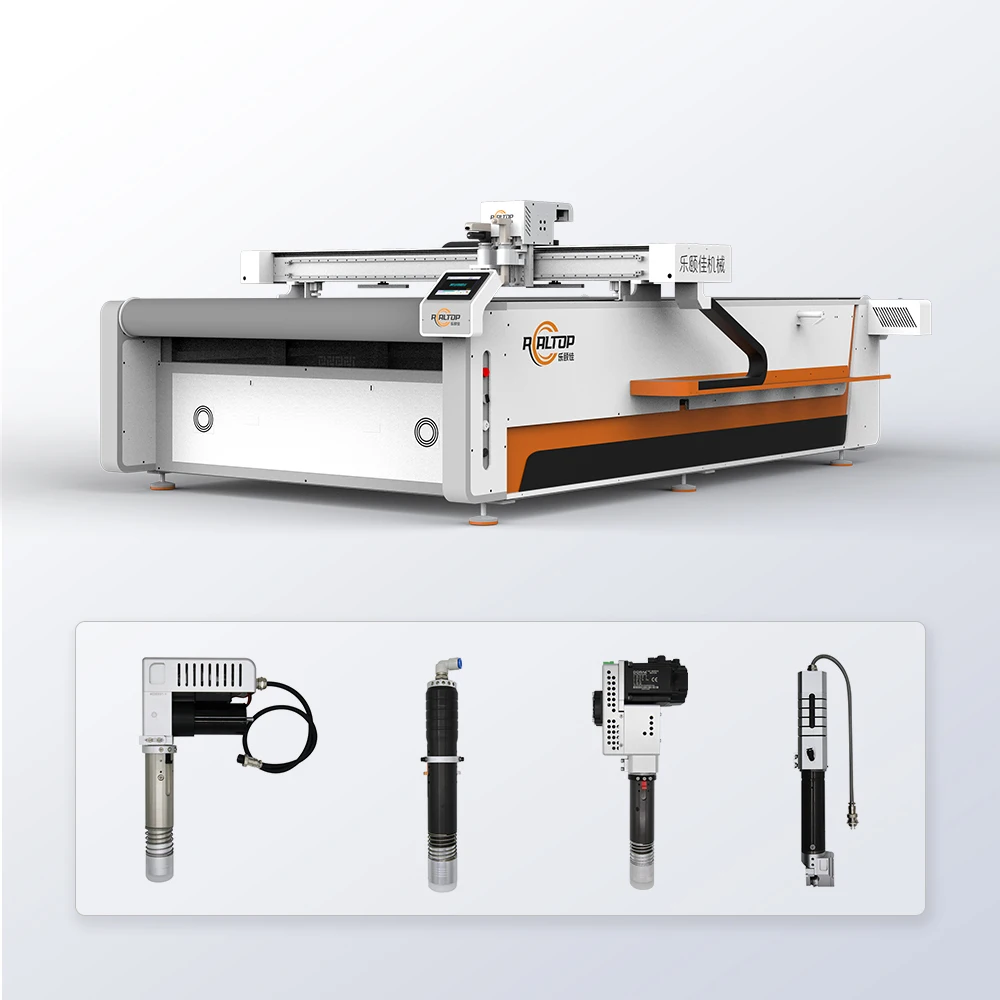
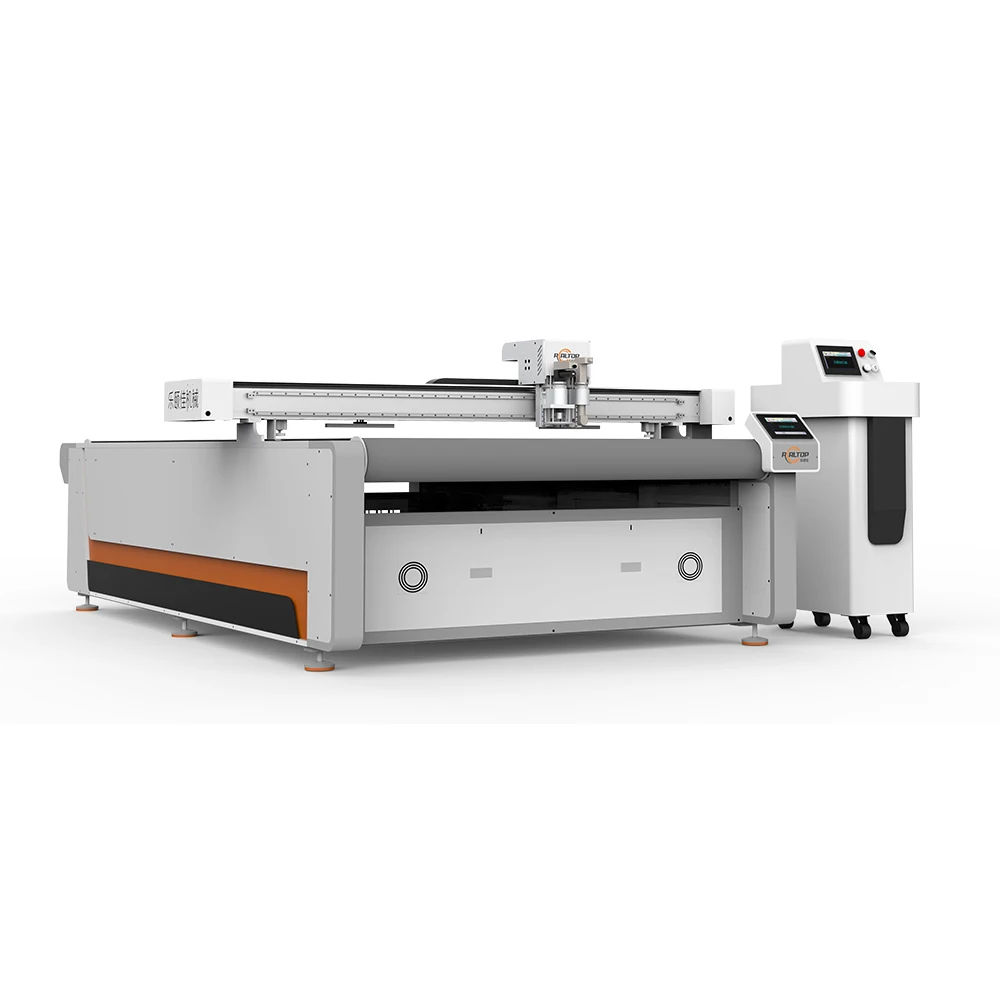
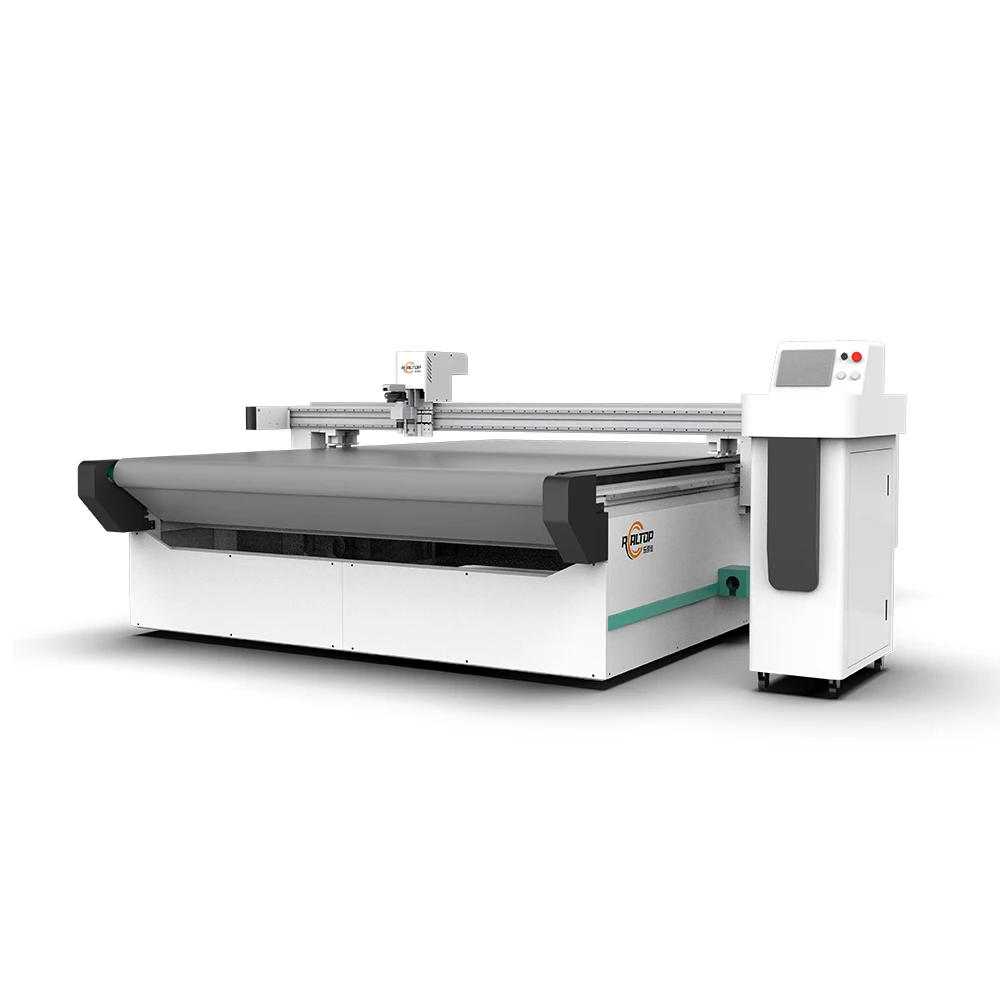
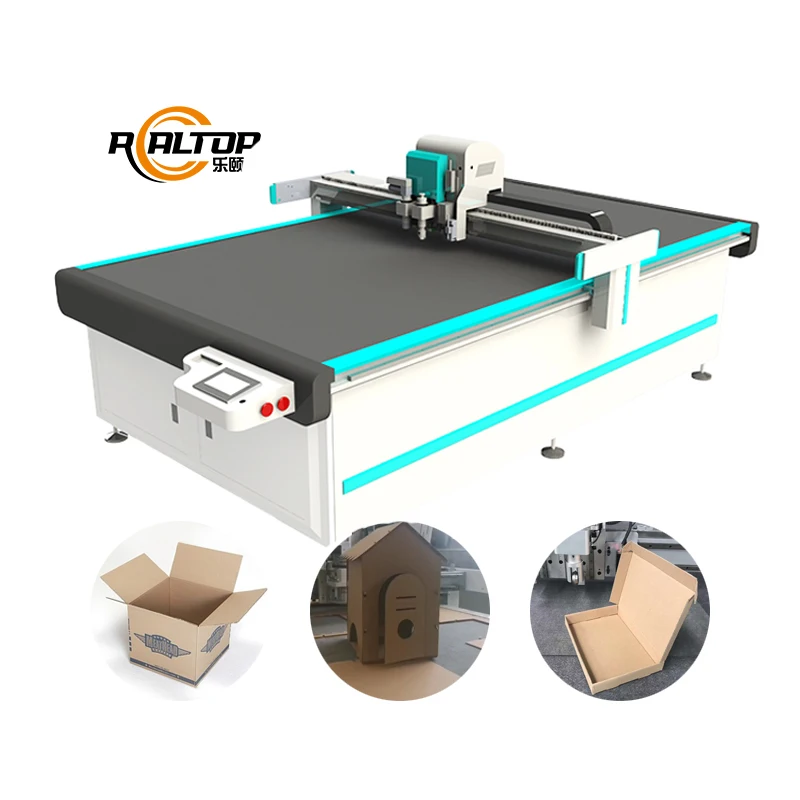
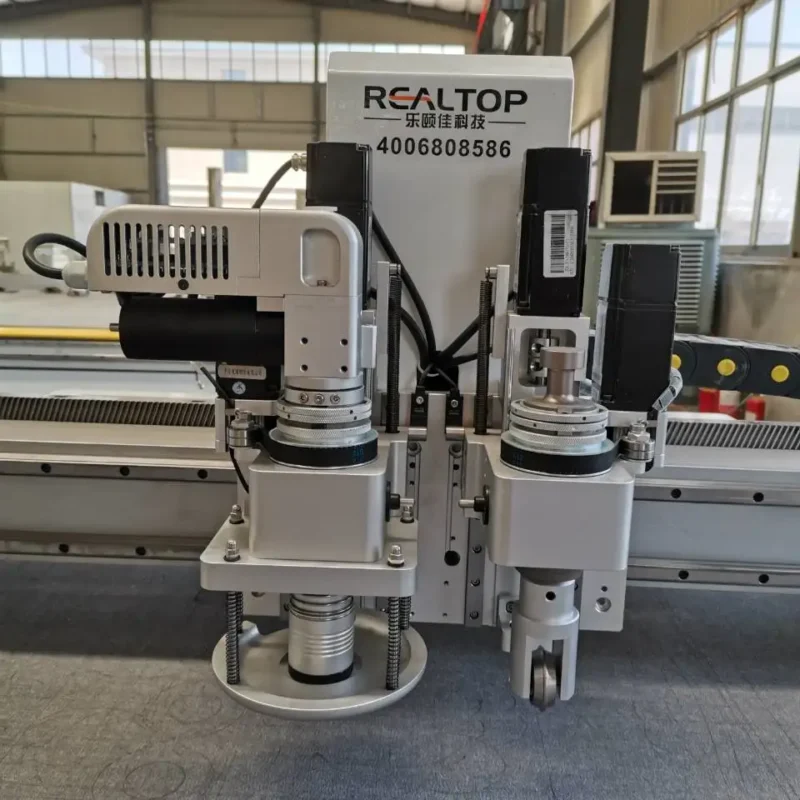
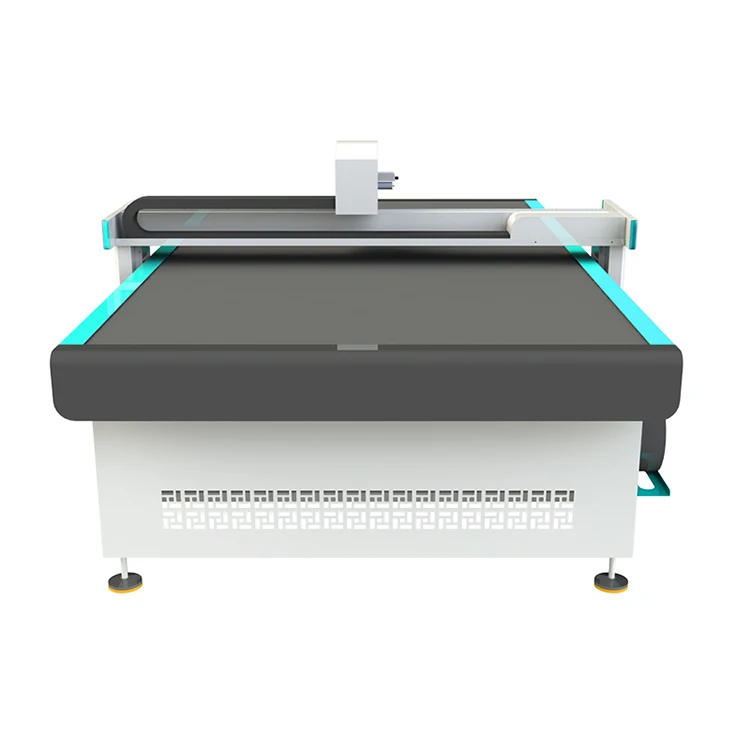
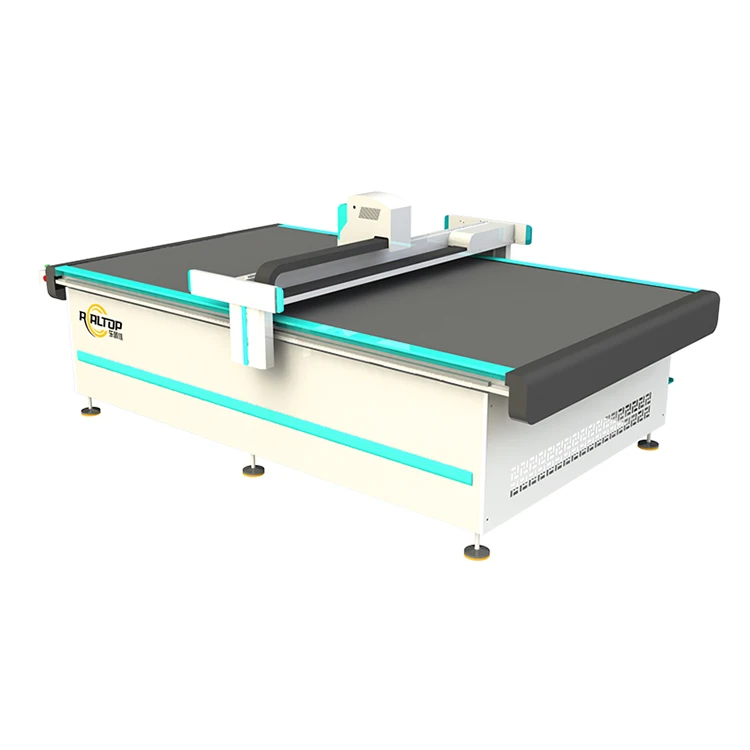
Tool Head Versatility — Seven interchangeable cutting tools on a single gantry allow buyers to match the knife type to each fabric density rather than forcing one blade through incompatible layers.
Technical Specifications
| Parameter | Value |
|---|---|
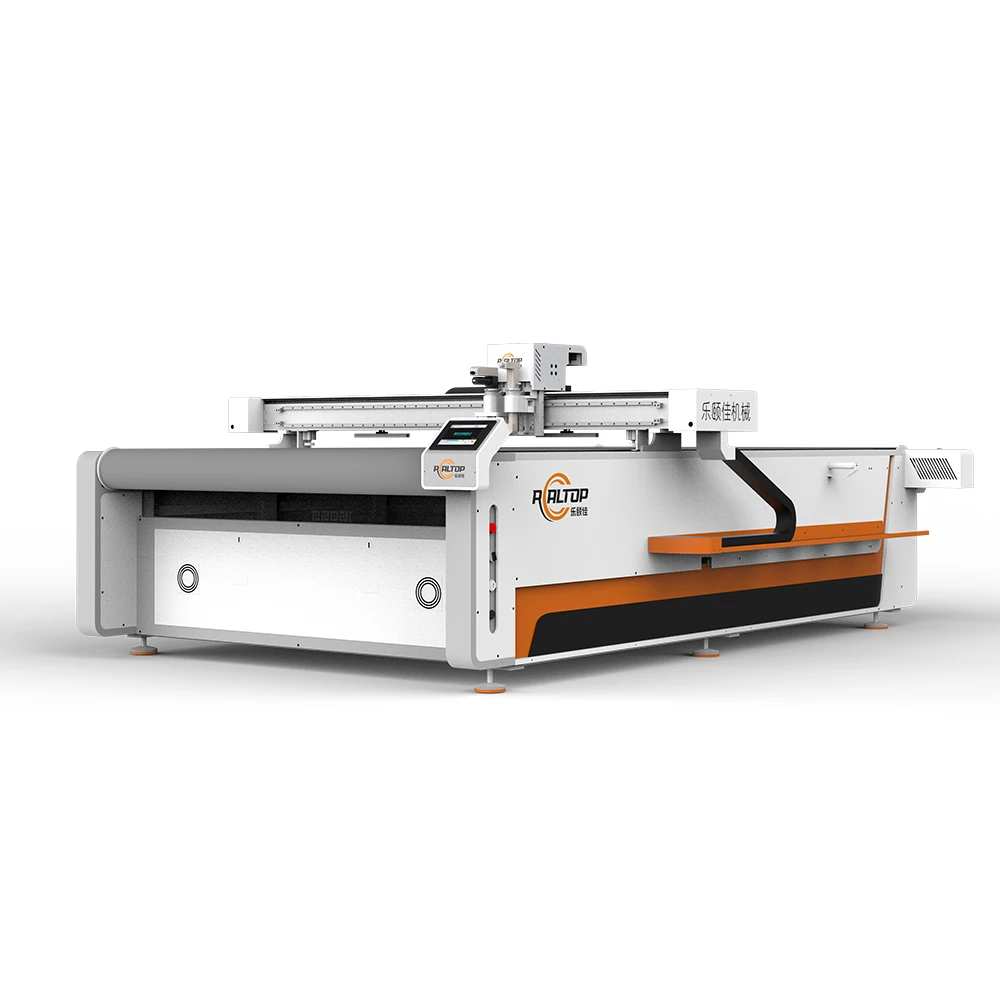
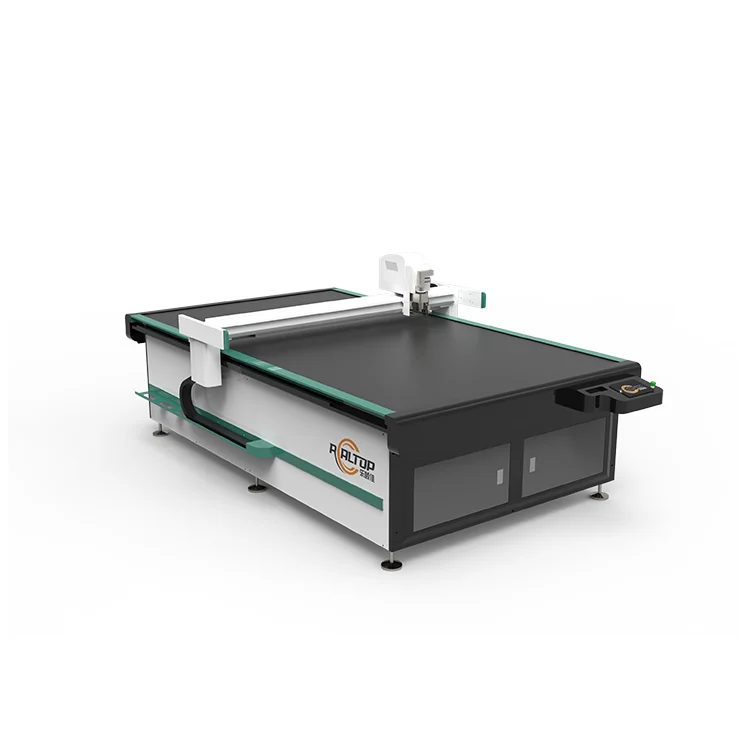
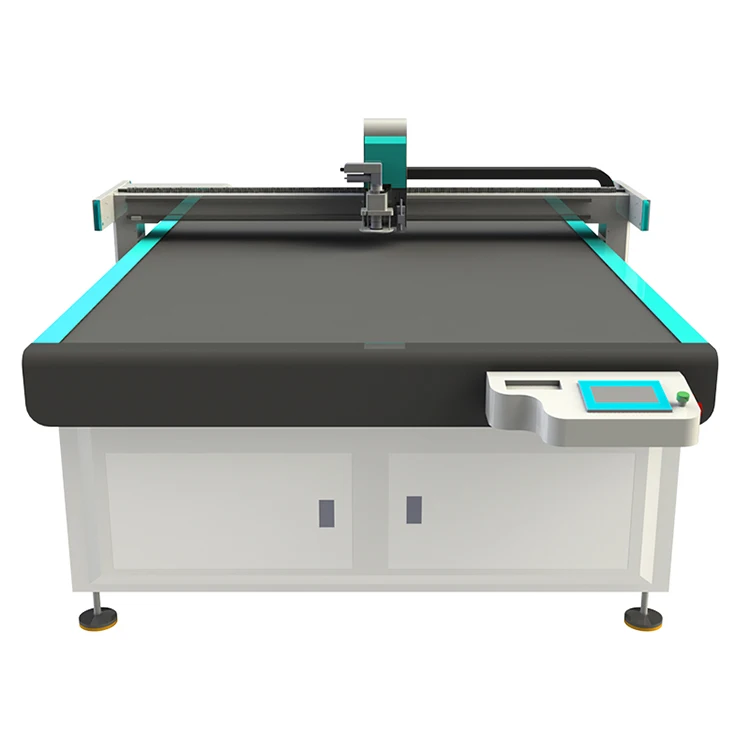
| Product Type | CNC Oscillating Knife Cutting Machine |
| Working Area | 1600×2500 mm |
| Available Tool Heads | Oscillating knife, Driven rotary knife, Creasing wheel, Kiss cutting tool, Pneumatic knife, Milling tool, V-groove knife |
| Cutting Speed | 0–2000 mm/s |
| Cutting Thickness | ≤ 30 mm (basis not stated in source — confirm material type and density with supplier) |
| Repeatability Accuracy | ±0.1 mm |
| Vacuum Pump | 9 kW |
| Vacuum Table | Aluminum bellows with full-surface adsorption |
| Servo Motors | Panasonic, Delta, or Dorna options |
| Control System | PLC panel with display |
| Supported File Formats | PLT, DXF, AI, PDF |
| Voltage Options | 110V / 220V / 380V |
| Machine Dimensions | 3300×2100×1350 mm |
| Safety Devices | Infrared sensor and emergency stop |
Application Suitability
| Application | Material or Output |
|---|---|
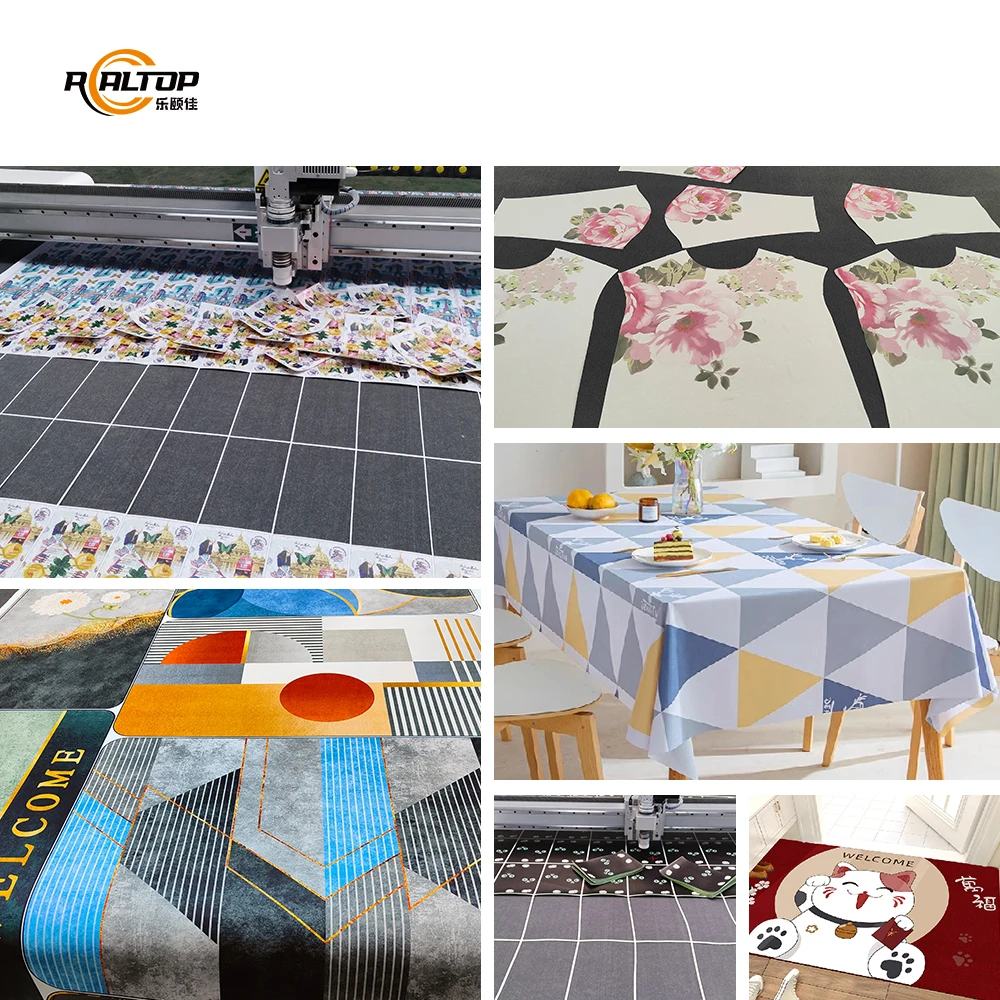
| Apparel manufacturing | Suits, knitwear, lace, and complex multi-layer fabrics |
| Automotive interiors | Seat fabrics, carpets, and PVC floor mats |
| Home textiles | Sofa upholstery fabrics, curtains, and woven rugs |
| Composite processing | Carbon fiber prepreg and aramid sheets without delamination |
What Material Density Means for Your Cutting Thickness Limit
A stated 30 mm maximum is only the starting point — the actual usable depth depends entirely on what you are cutting and how many layers you stack.
When a buyer sees a thickness rating on a spec sheet, the assumption is often that any material up to that number will cut cleanly. In practice, a 30 mm stack of loosely woven cotton behaves completely differently from 30 mm of compressed automotive insulation foam. The oscillating knife meets different resistance, the vacuum table must hold a heavier, stiffer stack, and the edge quality degrades if the configuration was never validated against the actual production material [NEED_CITE: material density and compressibility effects on knife cutting depth]. I have watched fabricators run into trouble because they specified a CNC textile cutting machine for sale based on the thickest single sheet they planned to cut, only to find the machine struggled when they switched to a denser composite the following quarter.
Matching the Catalogue to Your Material Stream
The range covered here spans oscillating knife and laser systems because no single cutting method handles every material a production facility encounters. Fabric and leather respond well to high-frequency knife oscillation, which severs fibers cleanly without thermal damage. Acrylic and wood, on the other hand, benefit from the sealed edge that a CO2 laser produces. A CNC oscillating knife cutting machine manufacturer that builds both technologies under one roof allows a buyer to evaluate each job on its own requirements rather than adapting every task to whichever machine already sits on the floor.
Why Full-Surface Vacuum Matters at Production Speed
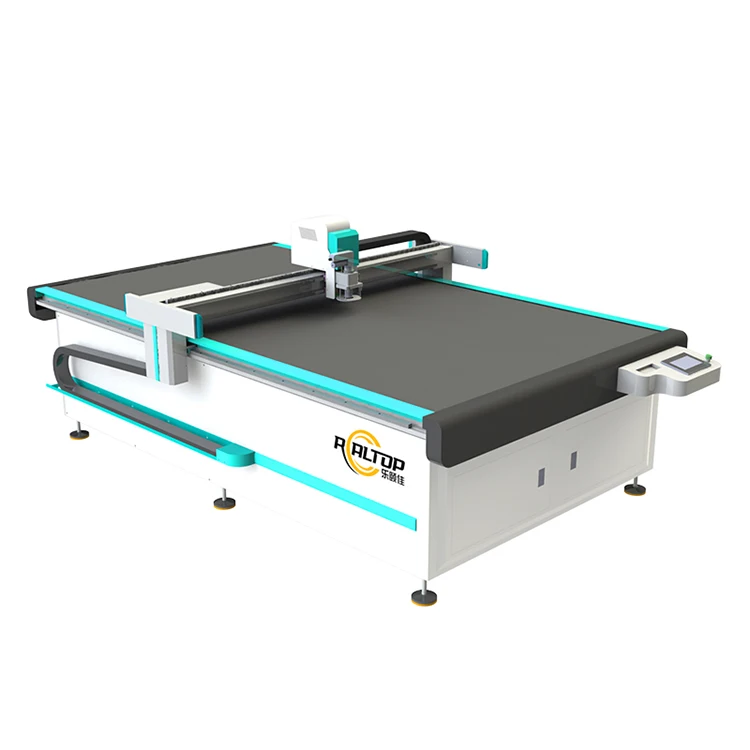
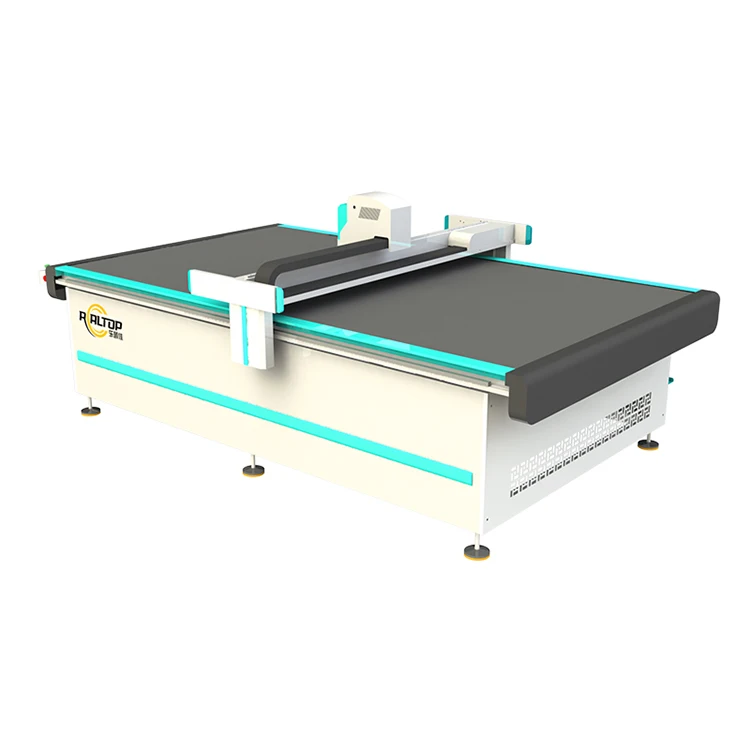
At the upper end of the 0–2000 mm/s speed range, the lateral force on a multi-layer fabric stack increases substantially. The aluminum bellows vacuum table with a 9 kW pump provides full-surface adsorption across the 1600×2500 mm bed, which keeps lighter textiles from shifting during rapid directional changes [NEED_CITE: vacuum hold-down requirements for high-speed textile cutting]. When cutting smaller nested parts — collar pieces, gussets, or gasket profiles — localized lift is a common cause of rejected pieces. A table that maintains even negative pressure across its entire area reduces that rejection rate without requiring the operator to slow the feed rate down manually.
How the Seven Tool Heads Cover a Production Floor
Each tool head in the available set addresses a distinct material behavior. The oscillating knife handles woven and non-woven fabrics with a clean severed edge. The driven rotary knife suits continuous long cuts on softer rolls where a dragging blade would pull the material. The creasing wheel scores carton and packaging board without cutting through. The kiss cutting tool penetrates vinyl or adhesive layers while leaving the backing intact. The pneumatic knife drives through denser foam and rubber that a standard oscillating blade would compress rather than cut. Selecting the correct head before production starts is what separates a smooth run from a batch of ragged-edge rejects.
The Cost of Skipping the Material Trial
Buyers who commit to a configuration without sending production material for a test cut absorb all the downstream risk. The vacuum zoning may prove insufficient for small parts, causing lift mid-cycle. The chosen tool head may crush foam instead of slicing it. The software nesting workflow may not import the buyer’s existing DXF or PLT files without manual rework [NEED_CITE: common CNC cutting file compatibility issues across production workflows]. Each of these problems surfaces only after the machine arrives, when changes mean retrofitting rather than specifying correctly at the order stage.
Why Source the Full Range from One Manufacturer
In-house design covering both knife and laser platforms means the cutting method is matched to the material, not forced into a single technology. Tool head and table configurations are specified per material type and daily production volume rather than sold as a default package. CCD camera positioning is available for printed contour work where registration accuracy matters. Software compatibility is confirmed against the buyer’s existing file formats before the order enters production. Voltage, plug type, and control language are verified to match the destination market so the machine runs on arrival without electrical modifications.
Documentation & Verification
- Machine specification sheet listing all selected tool heads and table zones
- Electrical schematic with confirmed voltage, frequency, and plug type for destination
- Tool head and vacuum table configuration list matched to your material profile
- Sample cutting report produced on your own fabric or composite before shipment
- Software licence and file format compatibility note for your nesting workflow
- Spare parts list covering blades, belts, and vacuum seals with part numbers
Installation, Commissioning & Support
- Floor space planning for the 3300×2100 mm footprint plus operator clearance on all sides
- Dedicated electrical circuit matching the confirmed 110V, 220V, or 380V supply with proper grounding
- Vacuum pump commissioning to verify full-surface adsorption across the 1600×2500 mm table
- PLC control panel language set to operator preference during on-site training session
- Servo motor calibration on the selected drive option — Panasonic, Delta, or Dorna
- Scheduled blade and vacuum seal replacement intervals documented in the maintenance manual
What We Need to Configure Your Machine Correctly
To recommend the right tool head and vacuum setup, share the material type, maximum single-layer thickness, and the number of layers you plan to stack in production. Let us know your target daily cut volume and the largest sheet format you feed. Confirm your workshop voltage and frequency, the control language your operators need, and whether your nesting files are currently in DXF, PLT, AI, or PDF format.
Frequently Asked Questions
Q: How do I choose between oscillating knife and laser cutting for my material?
A: Knife cutting works best for fabrics, leather, foam, and composites where thermal damage or edge melting would compromise the part. Laser cutting suits acrylic, wood, and textiles where a sealed edge is desirable. The decision depends on your material’s response to heat and the edge finish your product requires — share a sample and both methods can be evaluated.
Q: Can the machine handle my existing DXF and AI nesting files?
A: The control system imports PLT, DXF, AI, and PDF profiles for path generation and nesting. Before the order is finalized, your actual production files are tested for compatibility so that any translation issues are resolved in advance rather than on the shop floor after delivery.
Q: What voltage and language options are available for my market?
A: The system is configurable for 110V, 220V, or 380V supply with the appropriate plug type. The PLC control panel supports English, Russian, Italian, and Chinese as standard, with additional languages available on request. Voltage and language are confirmed before production so the machine matches local electrical standards and operator requirements on arrival.
Q: How do I know which tool head to select for my material?
A: The seven available heads — oscillating knife, driven rotary knife, creasing wheel, kiss cutting, pneumatic knife, milling, and V-groove — each address different material behaviors. Selection is based on your material type, thickness, and edge quality requirement. A test cut on your production material confirms the right head before the configuration is locked in.
Q: What is included in the sample cutting process before I commit?
A: You send your actual production material — including the specific fabric weight, foam density, or composite layup you run. The sample is cut using the proposed tool head and vacuum configuration, and a report documents edge quality, cutting speed, and any adjustments made. This ensures the machine is specified for what you actually produce, not a generic material assumption.
Tool Head Versatility — Seven interchangeable cutting tools on a single gantry allow buyers to match the knife type to each fabric density rather than forcing one blade through incompatible layers.
Technical Specifications
| Parameter | Value |
|---|---|
| Product Type | CNC Oscillating Knife Cutting Machine |
| Working Area | 1600×2500 mm |
| Available Tool Heads | Oscillating knife, Driven rotary knife, Creasing wheel, Kiss cutting tool, Pneumatic knife, Milling tool, V-groove knife |
| Cutting Speed | 0–2000 mm/s |
| Cutting Thickness | ≤ 30 mm (basis not stated in source — confirm material type and density with supplier) |
| Repeatability Accuracy | ±0.1 mm |
| Vacuum Pump | 9 kW |
| Vacuum Table | Aluminum bellows with full-surface adsorption |
| Servo Motors | Panasonic, Delta, or Dorna options |
| Control System | PLC panel with display |
| Supported File Formats | PLT, DXF, AI, PDF |
| Voltage Options | 110V / 220V / 380V |
| Machine Dimensions | 3300×2100×1350 mm |
| Safety Devices | Infrared sensor and emergency stop |
Application Suitability
| Application | Material or Output |
|---|---|
| Apparel manufacturing | Suits, knitwear, lace, and complex multi-layer fabrics |
| Automotive interiors | Seat fabrics, carpets, and PVC floor mats |
| Home textiles | Sofa upholstery fabrics, curtains, and woven rugs |
| Composite processing | Carbon fiber prepreg and aramid sheets without delamination |
What Material Density Means for Your Cutting Thickness Limit
A stated 30 mm maximum is only the starting point — the actual usable depth depends entirely on what you are cutting and how many layers you stack.
When a buyer sees a thickness rating on a spec sheet, the assumption is often that any material up to that number will cut cleanly. In practice, a 30 mm stack of loosely woven cotton behaves completely differently from 30 mm of compressed automotive insulation foam. The oscillating knife meets different resistance, the vacuum table must hold a heavier, stiffer stack, and the edge quality degrades if the configuration was never validated against the actual production material [NEED_CITE: material density and compressibility effects on knife cutting depth]. I have watched fabricators run into trouble because they specified a CNC textile cutting machine for sale based on the thickest single sheet they planned to cut, only to find the machine struggled when they switched to a denser composite the following quarter.
Matching the Catalogue to Your Material Stream
The range covered here spans oscillating knife and laser systems because no single cutting method handles every material a production facility encounters. Fabric and leather respond well to high-frequency knife oscillation, which severs fibers cleanly without thermal damage. Acrylic and wood, on the other hand, benefit from the sealed edge that a CO2 laser produces. A CNC oscillating knife cutting machine manufacturer that builds both technologies under one roof allows a buyer to evaluate each job on its own requirements rather than adapting every task to whichever machine already sits on the floor.
Why Full-Surface Vacuum Matters at Production Speed
At the upper end of the 0–2000 mm/s speed range, the lateral force on a multi-layer fabric stack increases substantially. The aluminum bellows vacuum table with a 9 kW pump provides full-surface adsorption across the 1600×2500 mm bed, which keeps lighter textiles from shifting during rapid directional changes [NEED_CITE: vacuum hold-down requirements for high-speed textile cutting]. When cutting smaller nested parts — collar pieces, gussets, or gasket profiles — localized lift is a common cause of rejected pieces. A table that maintains even negative pressure across its entire area reduces that rejection rate without requiring the operator to slow the feed rate down manually.
How the Seven Tool Heads Cover a Production Floor
Each tool head in the available set addresses a distinct material behavior. The oscillating knife handles woven and non-woven fabrics with a clean severed edge. The driven rotary knife suits continuous long cuts on softer rolls where a dragging blade would pull the material. The creasing wheel scores carton and packaging board without cutting through. The kiss cutting tool penetrates vinyl or adhesive layers while leaving the backing intact. The pneumatic knife drives through denser foam and rubber that a standard oscillating blade would compress rather than cut. Selecting the correct head before production starts is what separates a smooth run from a batch of ragged-edge rejects.
The Cost of Skipping the Material Trial
Buyers who commit to a configuration without sending production material for a test cut absorb all the downstream risk. The vacuum zoning may prove insufficient for small parts, causing lift mid-cycle. The chosen tool head may crush foam instead of slicing it. The software nesting workflow may not import the buyer’s existing DXF or PLT files without manual rework [NEED_CITE: common CNC cutting file compatibility issues across production workflows]. Each of these problems surfaces only after the machine arrives, when changes mean retrofitting rather than specifying correctly at the order stage.
Why Source the Full Range from One Manufacturer
In-house design covering both knife and laser platforms means the cutting method is matched to the material, not forced into a single technology. Tool head and table configurations are specified per material type and daily production volume rather than sold as a default package. CCD camera positioning is available for printed contour work where registration accuracy matters. Software compatibility is confirmed against the buyer’s existing file formats before the order enters production. Voltage, plug type, and control language are verified to match the destination market so the machine runs on arrival without electrical modifications.
Documentation & Verification
- Machine specification sheet listing all selected tool heads and table zones
- Electrical schematic with confirmed voltage, frequency, and plug type for destination
- Tool head and vacuum table configuration list matched to your material profile
- Sample cutting report produced on your own fabric or composite before shipment
- Software licence and file format compatibility note for your nesting workflow
- Spare parts list covering blades, belts, and vacuum seals with part numbers
Installation, Commissioning & Support
- Floor space planning for the 3300×2100 mm footprint plus operator clearance on all sides
- Dedicated electrical circuit matching the confirmed 110V, 220V, or 380V supply with proper grounding
- Vacuum pump commissioning to verify full-surface adsorption across the 1600×2500 mm table
- PLC control panel language set to operator preference during on-site training session
- Servo motor calibration on the selected drive option — Panasonic, Delta, or Dorna
- Scheduled blade and vacuum seal replacement intervals documented in the maintenance manual
What We Need to Configure Your Machine Correctly
To recommend the right tool head and vacuum setup, share the material type, maximum single-layer thickness, and the number of layers you plan to stack in production. Let us know your target daily cut volume and the largest sheet format you feed. Confirm your workshop voltage and frequency, the control language your operators need, and whether your nesting files are currently in DXF, PLT, AI, or PDF format.
Frequently Asked Questions
Q: How do I choose between oscillating knife and laser cutting for my material?
A: Knife cutting works best for fabrics, leather, foam, and composites where thermal damage or edge melting would compromise the part. Laser cutting suits acrylic, wood, and textiles where a sealed edge is desirable. The decision depends on your material’s response to heat and the edge finish your product requires — share a sample and both methods can be evaluated.
Q: Can the machine handle my existing DXF and AI nesting files?
A: The control system imports PLT, DXF, AI, and PDF profiles for path generation and nesting. Before the order is finalized, your actual production files are tested for compatibility so that any translation issues are resolved in advance rather than on the shop floor after delivery.
Q: What voltage and language options are available for my market?
A: The system is configurable for 110V, 220V, or 380V supply with the appropriate plug type. The PLC control panel supports English, Russian, Italian, and Chinese as standard, with additional languages available on request. Voltage and language are confirmed before production so the machine matches local electrical standards and operator requirements on arrival.
Q: How do I know which tool head to select for my material?
A: The seven available heads — oscillating knife, driven rotary knife, creasing wheel, kiss cutting, pneumatic knife, milling, and V-groove — each address different material behaviors. Selection is based on your material type, thickness, and edge quality requirement. A test cut on your production material confirms the right head before the configuration is locked in.
Q: What is included in the sample cutting process before I commit?
A: You send your actual production material — including the specific fabric weight, foam density, or composite layup you run. The sample is cut using the proposed tool head and vacuum configuration, and a report documents edge quality, cutting speed, and any adjustments made. This ensures the machine is specified for what you actually produce, not a generic material assumption.
商品评价
There are no reviews yet.