

Fast Delivery
Quick, reliable shipping to any location.

Free & easy returns
Return this item by mail or in store within 90 days for a full refund.
Configurable Cutting Methods — Our in-house design covers both knife and laser technologies, allowing you to match the cutting method to your material rather than forcing one approach.
Technical Specifications
| Parameter | Value |
|---|---|
| Model | RT-D2516/RT-S2516 |
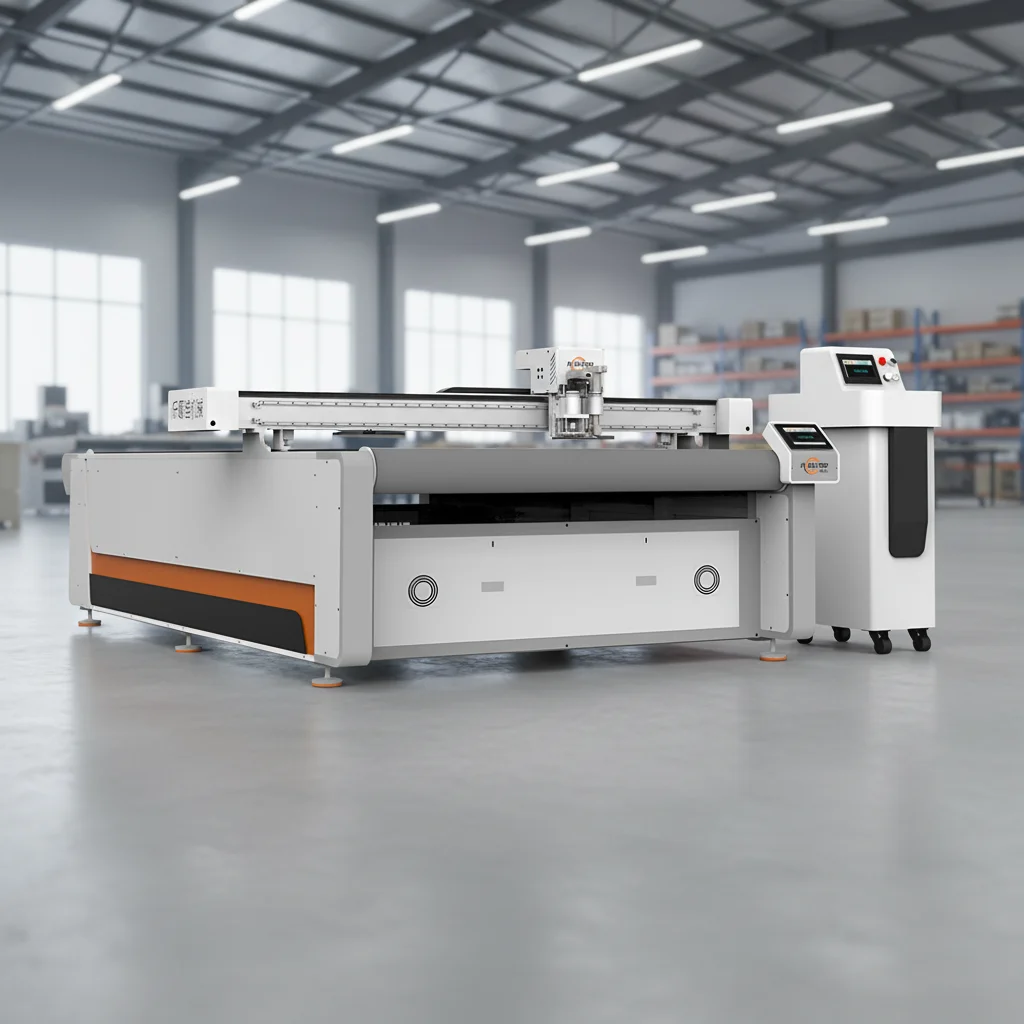
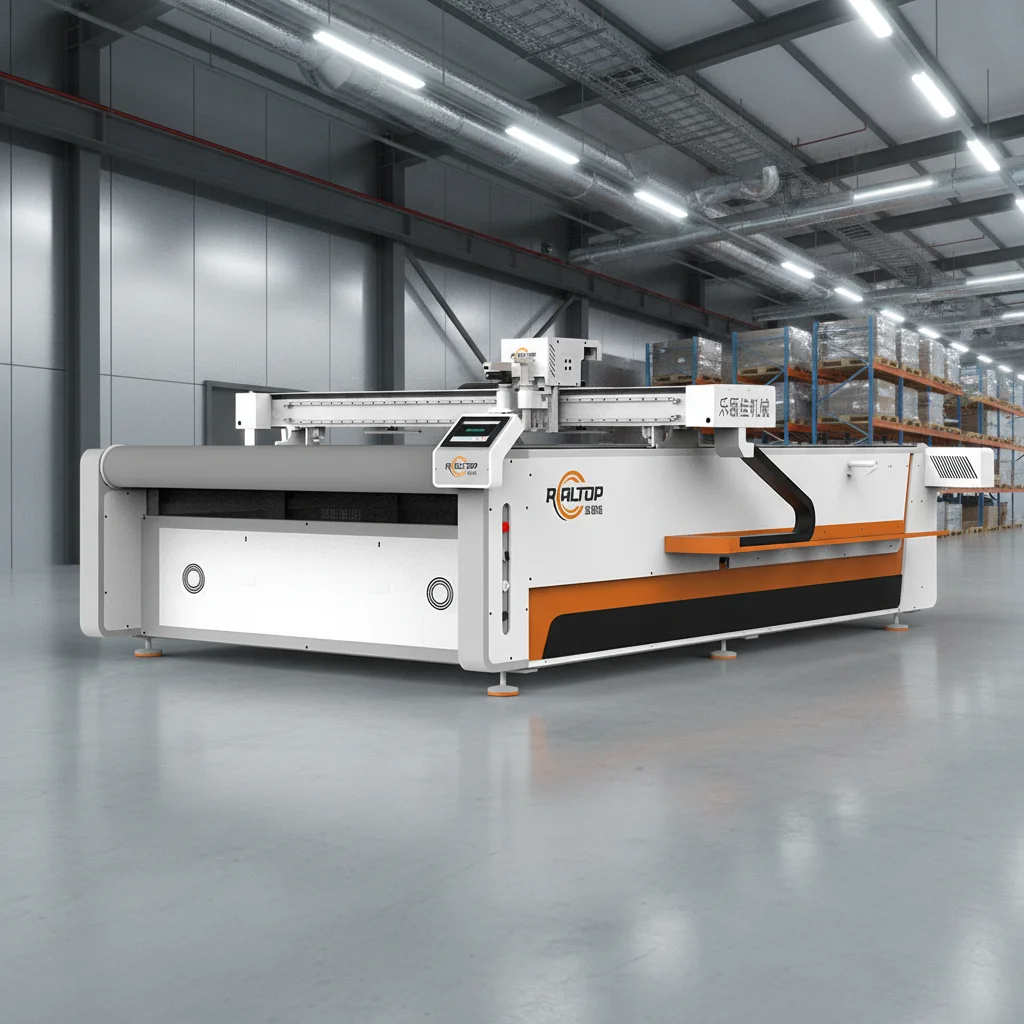
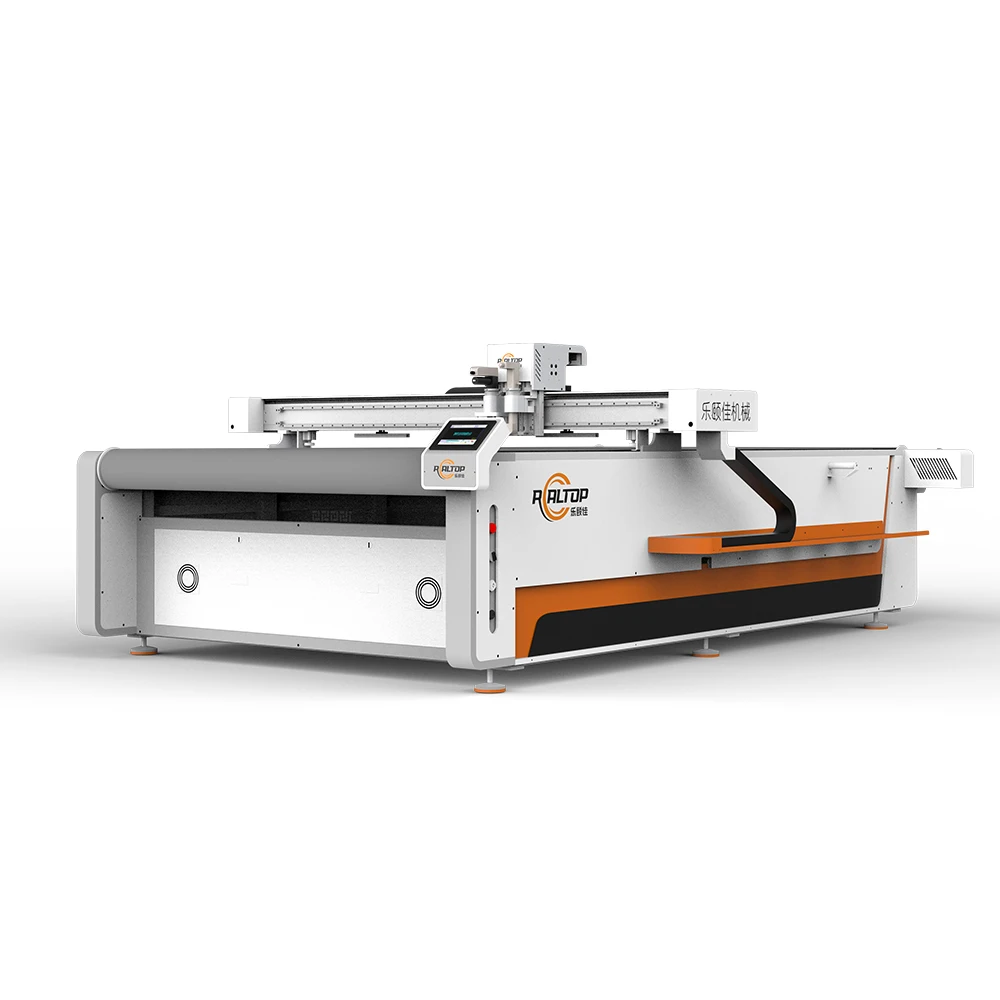
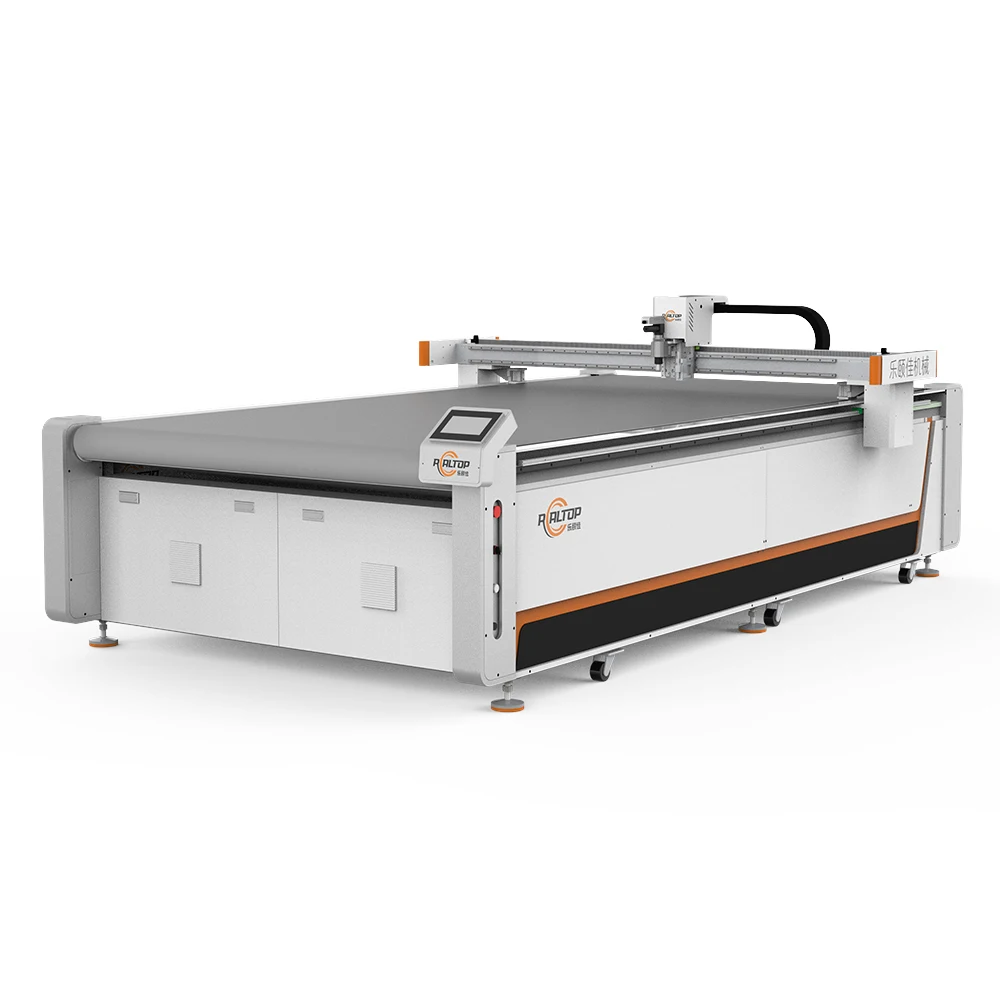
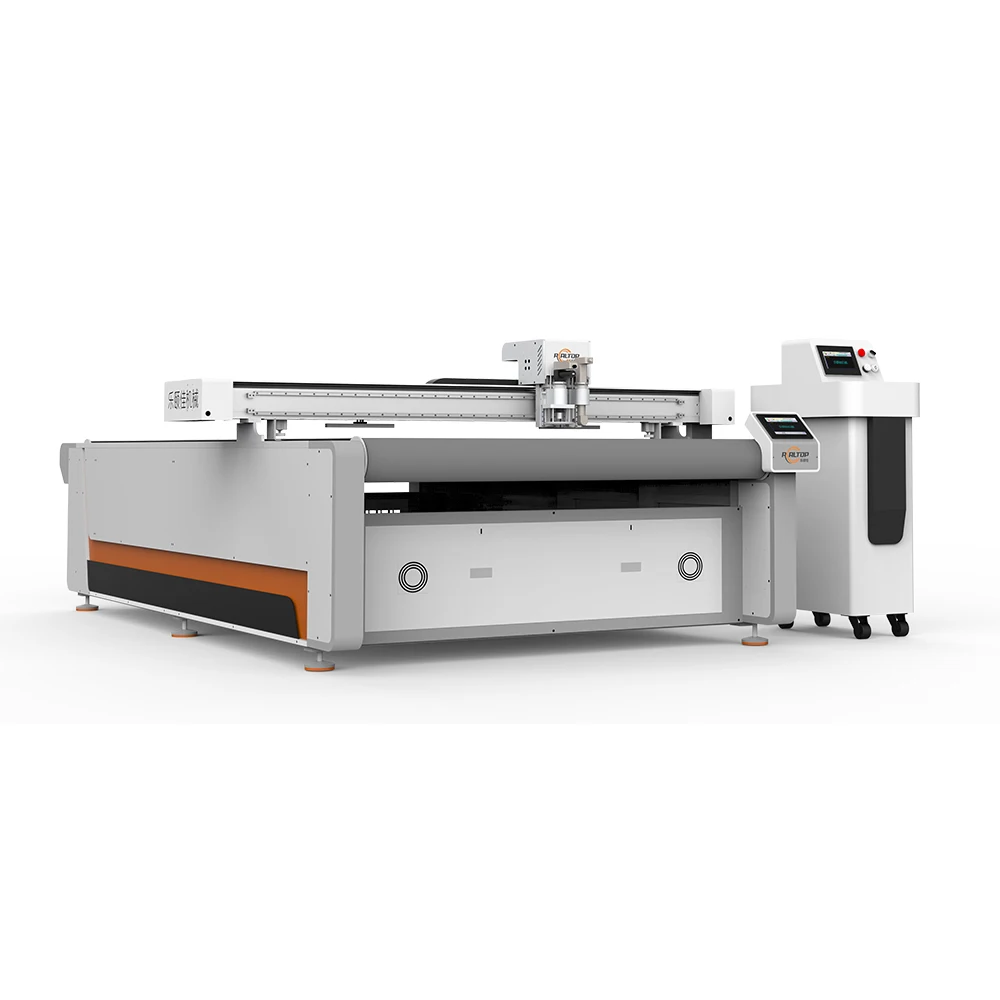
| Product Type | CNC Oscillating Knife Cutting Machine |
| Working Area | 1600×2500 mm |
| Machine Size | 3450×2300×1250 mm |
| Rated Power | 9 kW |
| Voltage | 380V±10% |
| Repeatability | ≤0.1 mm |
| Translational Velocity | 800-2000 mm/s |
| Cutting Speed | 200-800 mm/s (basis to be confirmed) |
| Vacuum Pump | 7.5 kW |
| Table Type | Flat working table or auto-feeding table (magnesium-aluminum alloy vacuum adsorption) |
| Transmission | Imported digital servo motor (Delta optional), linear guide, synchronous belt, ball screw |
| Rail | Taiwan Hiwin |
| Conveyor Belt | Germany imported |
| Servo Motor Options | Made in China or Japan (Panasonic available) |
| Control System | HP-GL compatible format |
| Positioning Options | Small CCD camera mark point, panoramic camera recognition, projection positioning |
| Tool Head Options | Oscillating knife, pneumatic knife, high-power vibrating knife, circular knife, V-cutting knife, drag knife, creasing wheel, dotted line knife, punching, brush |
| Safety Features | Infrared sensor blocking, anti-collision, emergency stop |
| Supported File Formats | PLT, DXF, AI |
Application Suitability
| Application | Material or Output |
|---|---|
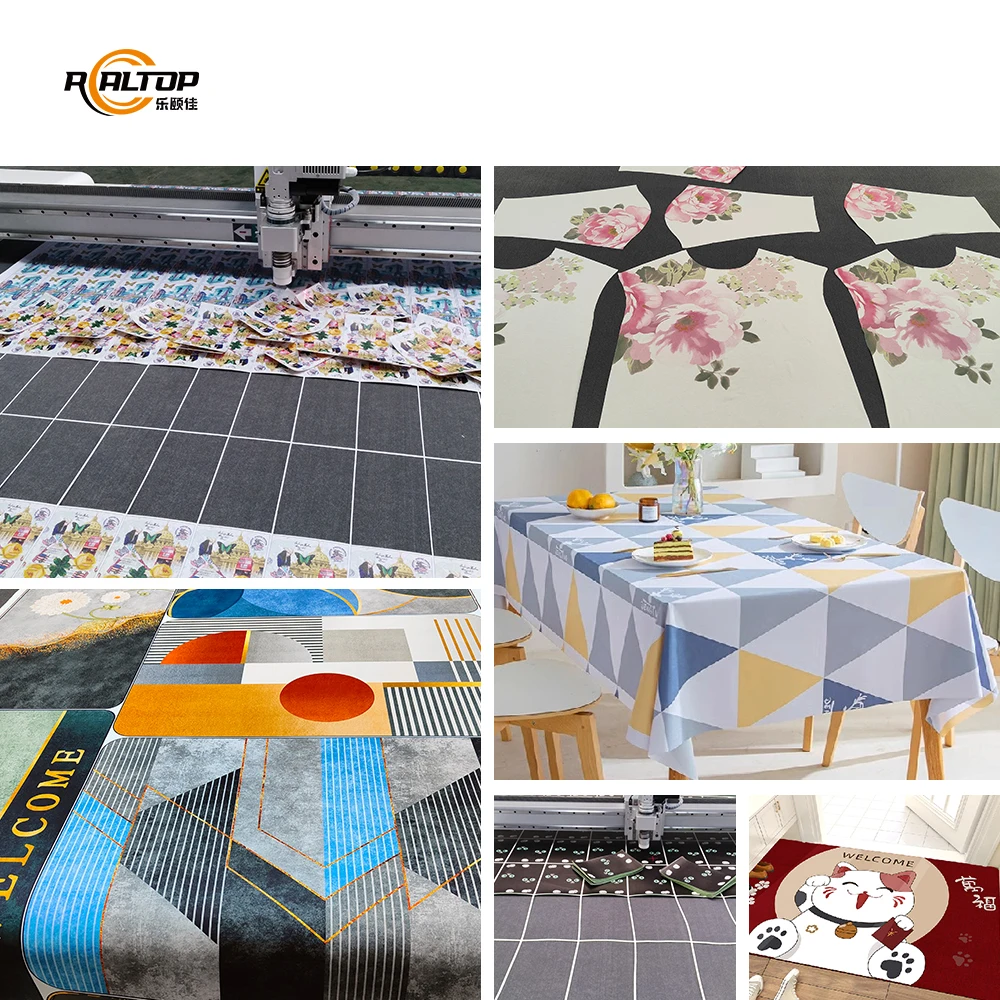
| Garment and shirt production | Cotton, polyester, silk, blended fabrics, non-woven fabric |
| Necktie and accessory cutting | Silk, satin, delicate woven textiles |
| Footwear and leather goods | Leather, PU, EVA, shoe materials |
| Automotive interior components | Composite materials, foam, sponge, carpet |
| Soft home furnishings | Curtain fabric, upholstery textile, carpet |
| Packaging and sample making | Corrugated cardboard, sticker, film |
| Gasket and sealing production | Rubber, PTFE, silicone, gasket material |
Why Working Area Alone Won’t Tell You If This Machine Fits Your Material
A 1600×2500 mm table handles the sheet size, but material thickness, fabric composition, and tool head selection determine whether you get a clean edge or a ruined batch.
I have watched buyers focus entirely on table dimensions, sign the order, then discover that the vibration frequency suited their sample fabric but tears through their actual production roll. One necktie manufacturer sent us silk samples that cut perfectly. When the full shipment arrived, the blend ratio was different, and the oscillating knife left frayed edges across every piece. We spent two weeks re-mapping the tool head configuration and knife amplitude. The delay cost them a full season window [NEED_CITE: fabric composition variation between sample and bulk production lots]. A CNC Oscillating Knife Cutting Machine for sale should be specified against your real production material, not just the footprint you need on the shop floor.
Matching Tool Head Selection to Fabric Type and Ply Count
The RT-D2516/RT-S2516 offers a full tool head range — from the Swiss-imported vibration knife for full and half cuts to the circular knife, drag knife, and creasing wheel. Each head serves a distinct material behavior. A high-power vibrating knife handles dense composite layers that would stall a standard oscillating blade, while a drag knife suits thin vinyl or sticker films where you need kiss-cut precision without penetrating the backing. When you run multi-ply garment fabric, the oscillating frequency and blade amplitude must match the total stack height, or the bottom ply shifts and skews the cut. This is where a CNC Oscillating Knife Cutting Machine for sale either earns its place or becomes a source of daily frustration.
Positioning Systems That Keep Up With Printed Contours
Garment producers increasingly cut pre-printed fabric where the pattern must align with the weave or a printed motif. The panoramic camera recognition option scans the full cutting area and adjusts the cut path to the actual printed position, compensating for stretch or skew introduced during printing or feeding. The small CCD camera mark point system works differently — it locates fiducial marks and aligns to them, which suits sheet-fed work where registration marks are consistent [NEED_CITE: CCD camera positioning methods in digital flatbed cutting]. For roll-fed garment fabric on the auto-feeding table, projection positioning gives the operator a visual overlay to verify alignment before the blade drops. Choosing the wrong positioning method for your workflow means either constant manual correction or unacceptable rejection rates.
What the Core Parameters Mean on the Shop Floor
The 9 kW rated power drives the vacuum pump, servo motors, and oscillating head simultaneously — this is not a machine you plug into a standard workshop outlet without checking your supply capacity first. The 7.5 kW vacuum pump paired with the magnesium-aluminum alloy table generates the suction needed to hold lightweight fabrics flat, and the integrated box adsorption zones mean you can isolate suction to the active cutting area rather than trying to pull vacuum across the entire 1600×2500 mm surface when cutting small pieces. Repeatability at ≤0.1 mm matters when you are cutting pattern pieces that must sew together without easing one ply against another. The Taiwan Hiwin linear rails and ball screw transmission maintain that tolerance across the full travel, which is where cheaper guide systems drift after a few months of continuous operation. Translational velocity up to 2000 mm/s determines how fast the head repositions between cuts, while the actual cutting speed of 200-800 mm/s depends entirely on your material density and ply count.
What Happens When Configuration Choices Are Skipped
A buyer who skips the sample cutting step often discovers the problem on day one of production. The vacuum table zoning might not cover the small pattern pieces you run most frequently, so edges lift during the cut and produce uneven margins [NEED_CITE: vacuum hold-down requirements for small-part digital cutting]. The software might not import your existing nesting files, forcing operators to redraw patterns and lose the yield optimization your team already built. Voltage, plug type, and control language seem minor until the machine arrives and the local electrician cannot connect it, or the operator cannot read the interface.
Why Buyers Source This Equipment Here
In-house design and production across both knife and laser technologies means you are not locked into one cutting method by the supplier’s limitations — if your garment fabric seals better with a CO2 laser edge, that conversation happens honestly before the order. Tool head and table configuration are specified per your actual material and production volume, not picked from a default list. Software compatibility with PLT, DXF, and AI formats is confirmed against your nesting workflow before commitment. Voltage, plug, and control language customization are documented before the machine ships, not discovered at the dock. Sample cutting on your own fabric — from that specific roll or batch — happens before you sign anything, so the parameters are proven on your material.
Documentation & Verification
- Machine specification sheet confirming working area, tool head, and table type matched to your fabric
- Electrical schematic with 380V±10% supply requirement and circuit protection detail
- Sample cutting report generated on your actual garment fabric before order confirmation
- Software licence and file format compatibility note covering PLT, DXF, and AI import paths
- Factory test record documenting repeatability and cut quality across your specified materials
- Operation and maintenance manual in your selected control language
Installation, Commissioning & Support
- 3450×2300 mm footprint requires level concrete floor with clearance for the auto-feeding conveyor at the rear
- 9 kW total load plus 7.5 kW vacuum pump demands a dedicated 380V three-phase circuit with proper isolation
- Machine ships partially assembled; rail alignment and belt tensioning completed during on-site commissioning
- First-run calibration includes vacuum zone mapping, tool head offset setting, and camera positioning alignment
- Operator training covers file import, nesting workflow, tool change procedure, and blade replacement intervals
- Spare parts list includes oscillating blades, vacuum seals, and conveyor belt sections specific to your configuration
What We Need to Move Your Inquiry Forward
Send us the fabric type, weight per square meter, and whether you run single-ply or multi-ply stacks. Confirm your local voltage and frequency, plus the control language your operators need. If you use nesting software already, tell us the platform so we verify file compatibility before anything else. And if your production material varies by season or supplier, send us samples from each source — we will cut them all and show you the difference.
Frequently Asked Questions
Q: How do I decide between knife cutting and laser cutting for my garment fabric?
A: It depends on the material composition and edge requirement. Natural fibers like cotton cut cleanly with an oscillating knife and leave no sealed edge, which is preferred for sewing. Synthetic fabrics often benefit from a laser cut that seals the edge and prevents fraying. We evaluate your specific fabric on both methods before recommending one, so the decision is based on your actual material behavior rather than a general rule.
Q: Which tool head should I use for different fabric weights and ply counts?
A: Light single-ply fabrics typically suit the standard oscillating knife with a fine blade. Heavier woven textiles or multi-ply stacks need the high-power vibrating knife to maintain edge quality through the full depth. For kiss-cutting on sticker or transfer films, the drag knife gives precise depth control. We configure the tool head based on your material sample test, not a generic chart.
Q: How is the vacuum table zoned to hold small garment pattern pieces?
A: The magnesium-aluminum alloy table uses integrated box adsorption zones that can be activated independently. When cutting small pieces like collar stays or cuff components, you isolate vacuum to the active cutting area so suction is concentrated rather than spread across the full 1600×2500 mm surface. This prevents edge lift and keeps the fabric flat under the blade throughout the cut path.
Q: Can the camera positioning system handle stretch in printed fabric?
A: The panoramic camera recognition option scans the entire cutting area and maps the actual printed position, compensating for stretch or skew that occurs during printing or roll feeding. This works well for continuous printed patterns on garment fabric. For sheet-fed work with consistent registration marks, the small CCD mark point system is faster and simpler to set up. The right choice depends on your feeding method.
Q: What file formats does the software support for my existing nesting workflow?
A: The control system imports PLT, DXF, and AI formats directly. Before your order, we verify compatibility with your specific nesting software output and confirm that kerf compensation, tool path order, and layer assignment translate correctly. If your workflow uses a format outside these three, we identify the conversion path during the inquiry stage so there are no surprises at installation.










商品评价
There are no reviews yet.