

Fast Delivery
Quick, reliable shipping to any location.

Free & easy returns
Return this item by mail or in store within 90 days for a full refund.
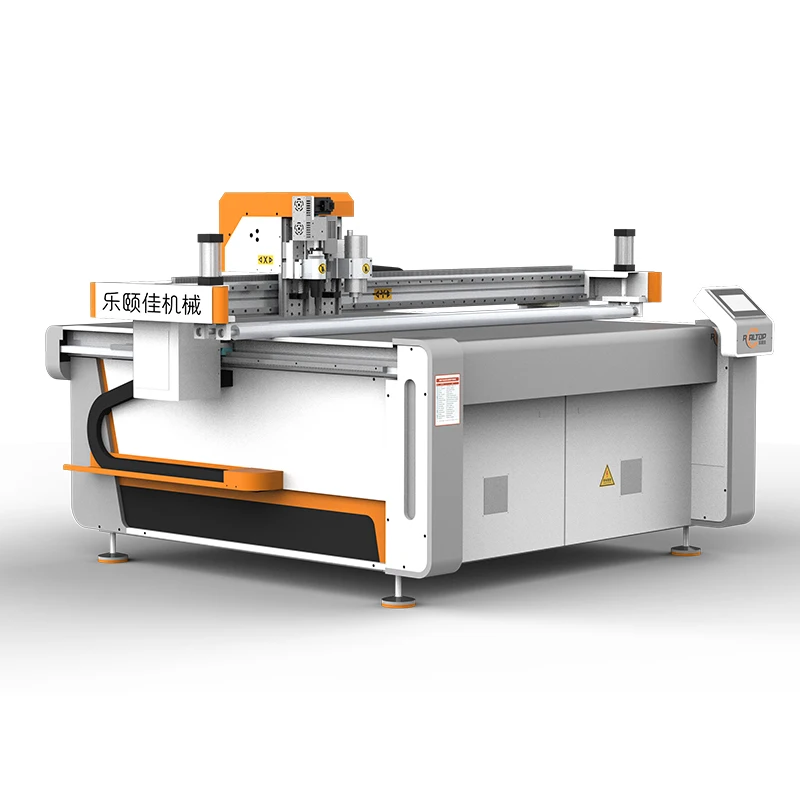
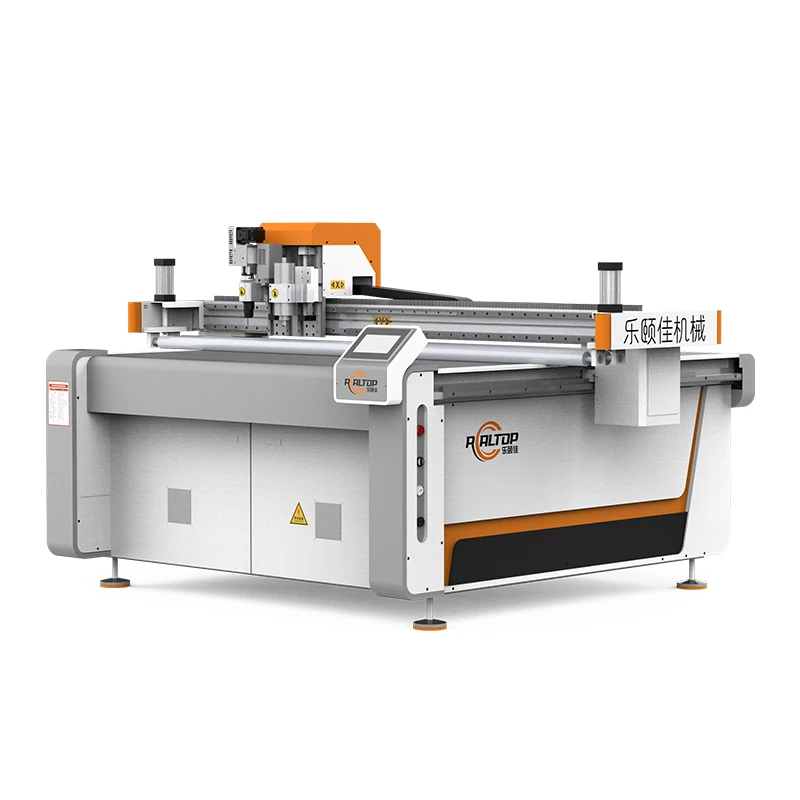
Configurable Knife Tooling — our oscillating and drag knife heads are matched to composite density and thickness, not forced onto every material by default.
Technical Specifications
| Parameter | Value |
|---|---|
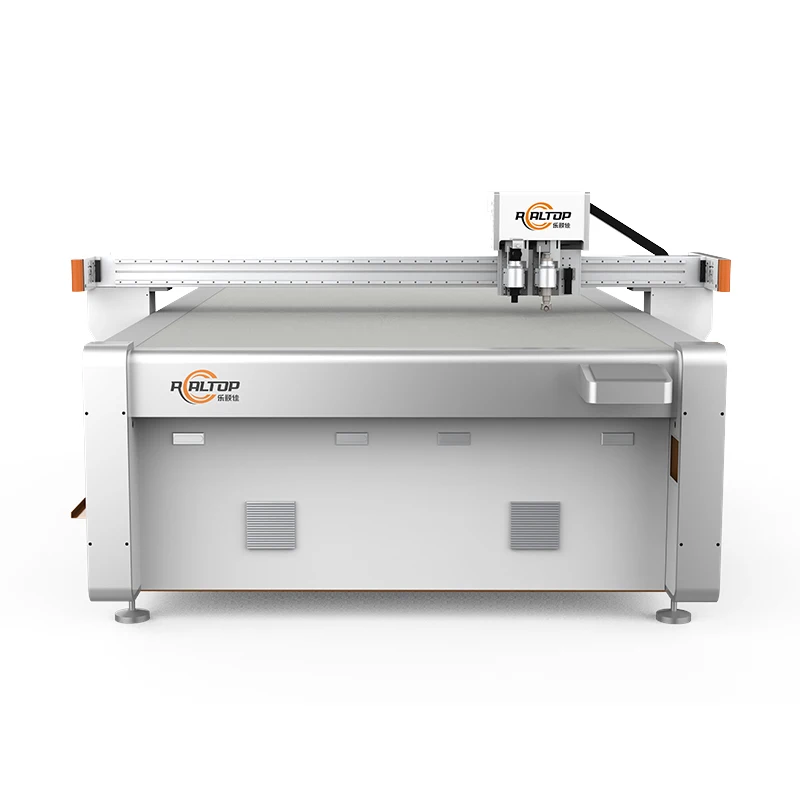
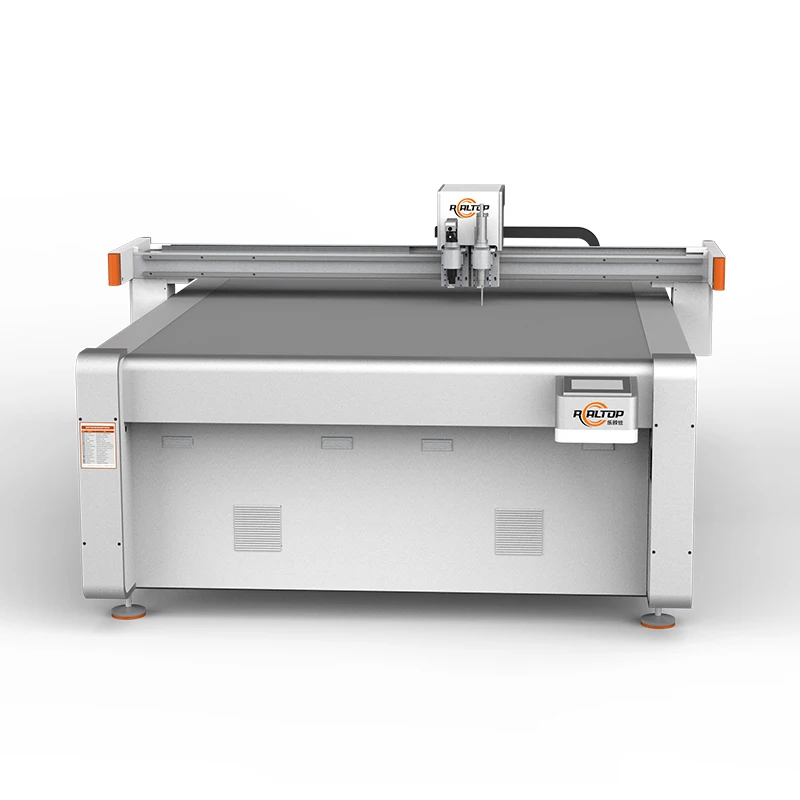
| Product Type | CNC Oscillating Knife Cutting Machine |
| Model | RT-D2516/RT-S2516 |
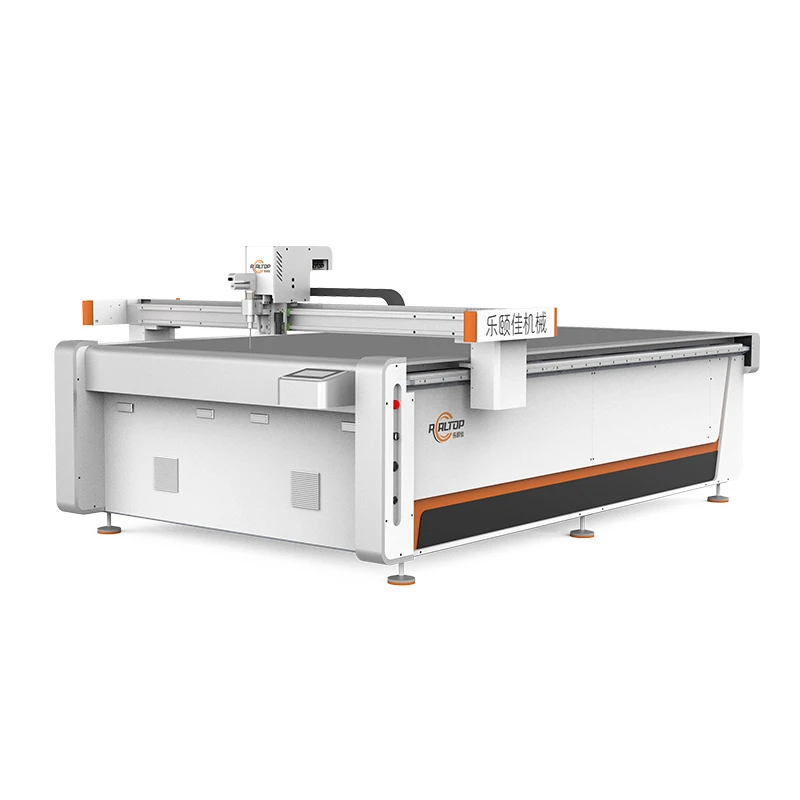
| Working Area | 1600×2500 mm |
| Overall Dimensions (L×W×H) | 3450×2300×1250 mm |
| Rated Power | 9 kW |
| Voltage | 380V±10% (frequency to be confirmed: 50/60 Hz) |
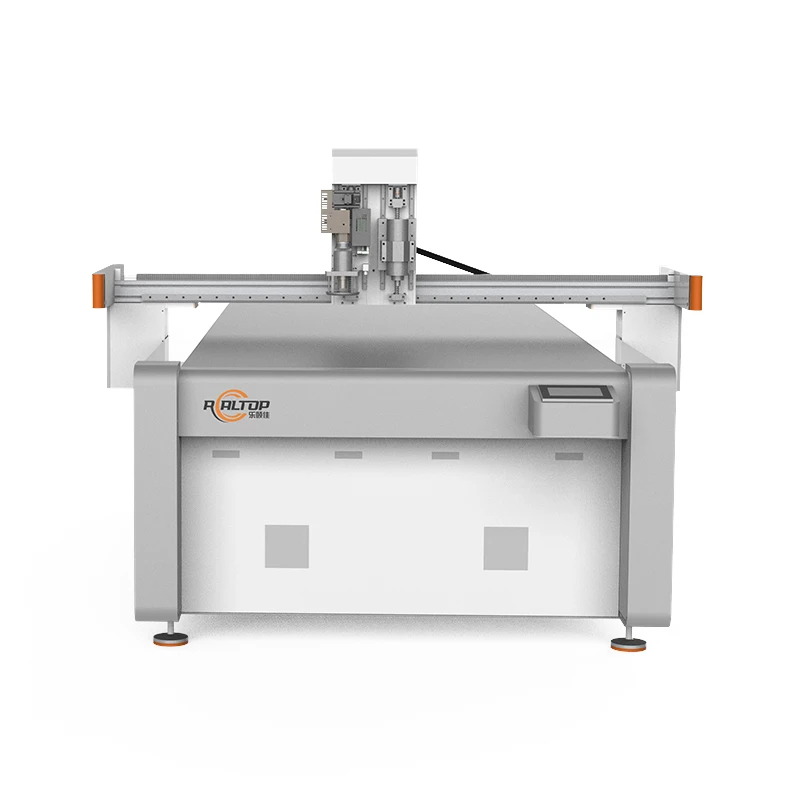
| Tool Head | Multifunctional head with Swiss imported knife, vibration full and half cutting, cursor location |
| Translational Velocity | 800–2000 mm/s |
| Material Cutting Speed | 200–800 mm/s (varies by material type and thickness) |
| Maximum Cutting Thickness | ≤100 mm (material dependent) |
| Repeatability | ≤0.1 mm |
| Transmission | Digital servo motor (Delta, Panasonic optional), linear guide, synchronous belt, imported ball screw |
| Vacuum Table | Magnesium-aluminum alloy, PVDF powder spraying, anodic and hard oxidation |
| Vacuum Pump | 7.5 kW, integrated aviation aluminum shell, built-in silencer sponge |
| Control System | CNC, HP-GL compatible format |
| Safety Devices | Infrared induction blocking, dual-side anti-collision sensors, emergency stop |
| Table Type | Flat working table (Germany imported conveyor belt optional) |
| Optional Configurations | Auto feeding, CCD camera mark point positioning, panoramic camera recognition, projection positioning, additional tool heads (pneumatic knife, high-power vibrating knife, circular knife, V cutting knife, drag knife, creasing wheel, dotted line knife, punching, brush) |
Application Suitability
| Application | Material or Output |
|---|---|
| Automotive acoustic insulation | Felt sound absorption boards, fiberglass composite panels, multi-layer damping sheets |
| Vehicle interior trim | Sponge composite leather, EVA foam, non-woven fabric laminates |
| Gasket and seal fabrication | Silicone sheets, rubber compounds, cork-rubber composites |
| Upholstery and home furnishings | Multi-layer fabric stacks, PVC soft glass, flexible synthetic leather |
| Packaging prototyping | Corrugated board, honeycomb paper, carton sample making without die tooling |
Why Working Area Alone Is the Wrong Starting Point for a CNC Oscillating Knife Cutting Machine Manufacturer
Tool head selection and vacuum zoning determine what a machine can actually cut, not just the size of the table.
I once worked with a buyer who specified a large-format flatbed purely based on sheet dimensions. The machine arrived, and their fiberglass-reinforced acoustic felt shredded standard oscillating blades within two shifts. The cutting speed dropped to a fraction of the rated range because the wrong knife profile was fighting material that needed a high-power vibrating head and a different blade geometry [NEED_CITE: composite material hardness versus blade wear rates]. A CNC oscillating knife cutting machine manufacturer should ask for your material sample before quoting a configuration, not after.
Knife Head Matching for Composites and Flexible Laminates
The multifunctional head on the RT-D2516/RT-S2516 supports vibration full cutting, half cutting, and cursor location using a Swiss imported knife. For dense composites like fiberglass-reinforced felt or high-density acoustic boards, the oscillation frequency and blade profile must be matched to the material’s shear resistance. A drag knife works for thin vinyl but will crush multi-layer foam stacks.
Vacuum Table Engineering for Irregular Sheet Behavior
The magnesium-aluminum alloy table with PVDF coating and hard oxidation resists the resin dust and fiber debris common in composite cutting. Uniform suction across the 1600×2500 mm surface keeps porous felt and springy foam flat during high-speed traversal. When cutting small gasket parts from large sheets, zoned vacuum control prevents edge lift that would otherwise ruin dimensional accuracy [NEED_CITE: vacuum hold-down requirements for porous composite materials].
Drive System Precision and Its Effect on Edge Quality
Repeatability of ≤0.1 mm depends on the combination of Delta digital servo motors, linear guides, and imported ball screws. In composite cutting, any backlash in the transmission shows up as frayed edges on layered materials or misaligned contour cuts on printed felt panels. The translational velocity range of 800–2000 mm/s is achievable on straight paths, but actual cutting speed drops to 200–800 mm/s depending on material density and thickness.
Reading the Spec Sheet Beyond Surface Numbers
The 9 kW rated power covers the servo drives, control system, and vacuum generation at the spindle. The separate 7.5 kW vacuum pump is sized to maintain suction on porous materials like felt and open-cell foam. A buyer cutting thin leather on the same table uses a fraction of that vacuum capacity, which is why zoning matters — running full vacuum on small parts wastes energy and can pull thin materials into the table grooves. The HP-GL compatible control system accepts standard vector files, but nesting software compatibility should be confirmed before order to avoid workflow bottlenecks.
The Cost of Skipping Material Trials
A machine configured for soft PVC will struggle with fiberglass composite board, producing ragged edges and consuming blades at an unsustainable rate. Without a sample cutting test on the buyer’s actual production material, there is no way to confirm that the chosen tool head, blade type, and cutting parameters will deliver acceptable edge quality at the required throughput [NEED_CITE: blade consumption rates on abrasive composite materials]. Wrong vacuum zoning leaves small parts lifting during the final cuts in a nest, scraming entire sheets. These problems only appear after the machine is installed, when returning it is not a realistic option.
Why Source This CNC Oscillating Knife Cutting Machine Manufacturer
Realtop designs and builds both knife and laser cutting systems in-house, so a buyer working with composites can choose the correct cutting method rather than being forced into one technology. The RT-D2516/RT-S2516 configuration — tool head, vacuum table, and servo package — is specified per material type and daily production volume, not pulled from a standard catalog page. CCD camera positioning is available as an option for printed contour work on felt and composite panels. Voltage, plug type, and control interface language are confirmed before the machine enters production, not discovered at commissioning. Every unit goes through a factory test with the buyer’s material before dispatch.
Documentation & Verification
- Machine specification sheet confirming RT-D2516/RT-S2516 tool head and table configuration
- Electrical schematic with 380V±10% supply and frequency confirmation for destination market
- Sample cutting report on buyer’s felt or composite material showing edge quality and achievable speed
- Software licence and HP-GL file format compatibility note matched to buyer’s CAD workflow
- Factory test record with dimensional accuracy verification on production material
- Packing photographs documenting machine condition and accessory completeness before crating
Installation, Commissioning & Support
- Foundation must accommodate 3450×2300×1250 mm overall footprint with clearance for beam travel and maintenance access
- Dedicated 380V±10% circuit required, sized for combined 9 kW machine and 7.5 kW vacuum pump draw
- Machine ships fully assembled; repositioning requires forklift access to full length on both sides
- First-run calibration covers servo tuning, vacuum zoning setup, and tool head offset on buyer’s material
- Operator training includes blade change procedure, HP-GL file import, and nesting workflow setup
- Spare parts list covers Swiss knives, oscillating blades, vacuum seals, and drive belt replacements
- Routine maintenance schedule for linear guide lubrication, ball screw inspection, and vacuum filter cleaning
What to Prepare Before Requesting a Quotation
Send a sample of your actual production material — including any laminated layers — along with the maximum sheet size you process and your target daily output. Specify your local voltage and frequency, the plug standard in your facility, and the control interface language your operators need. If you cut printed contours, let us know your registration mark format so we can confirm CCD camera compatibility before building your machine.
Frequently Asked Questions
Q: How do I decide between an oscillating knife, drag knife, or laser system for my composite material?
A: The choice depends on material composition, thickness, and edge quality requirements. Oscillating knives handle dense composites and multi-layer stacks without thermal damage. Drag knives suit thin flexible sheets. Lasers seal synthetic edges but burn organic fibers. We run sample cuts on your material to determine which method produces the required edge finish and throughput before recommending a configuration.
Q: Which tool head options are available for cutting fiberglass-reinforced acoustic felt?
A: The standard multifunctional head with Swiss imported knife handles most felt and foam composites. For abrasive fiberglass-reinforced materials, a high-power vibrating knife with a reinforced blade profile extends blade life and maintains edge quality. We confirm the correct head and blade combination through sample cutting on your actual production material before finalizing the order.
Q: What working area sizes and multi-head options exist across this machine family?
A: The RT-D2516/RT-S2516 provides a 1600×2500 mm working area suited to standard composite sheet sizes. Larger and smaller format tables are available across the range, along with single and multi-head configurations for higher volume operations. Conveyor belt feeding systems can be added for continuous roll material processing in felt and fabric applications.
Q: What electrical and interface details must be confirmed before the machine ships?
A: Voltage rating, frequency (50 or 60 Hz), plug type, and control interface language must all match your facility before production begins. The standard supply is 380V±10%, with the vacuum pump and servo drives configured accordingly. Confirming these details upfront avoids costly rewiring or component replacement after the machine arrives at your workshop.
Q: How does optional CCD camera positioning support printed contour cutting on composites?
A: The CCD camera reads printed registration marks on pre-printed felt or composite sheets, allowing the knife to follow contours that shift due to material stretch or print registration variance. This is essential for automotive interior trim with printed patterns. We verify mark detection speed and accuracy on your printed samples before confirming the camera option for your workflow.
Configurable Knife Tooling — our oscillating and drag knife heads are matched to composite density and thickness, not forced onto every material by default.
Technical Specifications
| Parameter | Value |
|---|---|
| Product Type | CNC Oscillating Knife Cutting Machine |
| Model | RT-D2516/RT-S2516 |
| Working Area | 1600×2500 mm |
| Overall Dimensions (L×W×H) | 3450×2300×1250 mm |
| Rated Power | 9 kW |
| Voltage | 380V±10% (frequency to be confirmed: 50/60 Hz) |
| Tool Head | Multifunctional head with Swiss imported knife, vibration full and half cutting, cursor location |
| Translational Velocity | 800–2000 mm/s |
| Material Cutting Speed | 200–800 mm/s (varies by material type and thickness) |
| Maximum Cutting Thickness | ≤100 mm (material dependent) |
| Repeatability | ≤0.1 mm |
| Transmission | Digital servo motor (Delta, Panasonic optional), linear guide, synchronous belt, imported ball screw |
| Vacuum Table | Magnesium-aluminum alloy, PVDF powder spraying, anodic and hard oxidation |
| Vacuum Pump | 7.5 kW, integrated aviation aluminum shell, built-in silencer sponge |
| Control System | CNC, HP-GL compatible format |
| Safety Devices | Infrared induction blocking, dual-side anti-collision sensors, emergency stop |
| Table Type | Flat working table (Germany imported conveyor belt optional) |
| Optional Configurations | Auto feeding, CCD camera mark point positioning, panoramic camera recognition, projection positioning, additional tool heads (pneumatic knife, high-power vibrating knife, circular knife, V cutting knife, drag knife, creasing wheel, dotted line knife, punching, brush) |
Application Suitability
| Application | Material or Output |
|---|---|
| Automotive acoustic insulation | Felt sound absorption boards, fiberglass composite panels, multi-layer damping sheets |
| Vehicle interior trim | Sponge composite leather, EVA foam, non-woven fabric laminates |
| Gasket and seal fabrication | Silicone sheets, rubber compounds, cork-rubber composites |
| Upholstery and home furnishings | Multi-layer fabric stacks, PVC soft glass, flexible synthetic leather |
| Packaging prototyping | Corrugated board, honeycomb paper, carton sample making without die tooling |
Why Working Area Alone Is the Wrong Starting Point for a CNC Oscillating Knife Cutting Machine Manufacturer
Tool head selection and vacuum zoning determine what a machine can actually cut, not just the size of the table.
I once worked with a buyer who specified a large-format flatbed purely based on sheet dimensions. The machine arrived, and their fiberglass-reinforced acoustic felt shredded standard oscillating blades within two shifts. The cutting speed dropped to a fraction of the rated range because the wrong knife profile was fighting material that needed a high-power vibrating head and a different blade geometry [NEED_CITE: composite material hardness versus blade wear rates]. A CNC oscillating knife cutting machine manufacturer should ask for your material sample before quoting a configuration, not after.
Knife Head Matching for Composites and Flexible Laminates
The multifunctional head on the RT-D2516/RT-S2516 supports vibration full cutting, half cutting, and cursor location using a Swiss imported knife. For dense composites like fiberglass-reinforced felt or high-density acoustic boards, the oscillation frequency and blade profile must be matched to the material’s shear resistance. A drag knife works for thin vinyl but will crush multi-layer foam stacks.
Vacuum Table Engineering for Irregular Sheet Behavior
The magnesium-aluminum alloy table with PVDF coating and hard oxidation resists the resin dust and fiber debris common in composite cutting. Uniform suction across the 1600×2500 mm surface keeps porous felt and springy foam flat during high-speed traversal. When cutting small gasket parts from large sheets, zoned vacuum control prevents edge lift that would otherwise ruin dimensional accuracy [NEED_CITE: vacuum hold-down requirements for porous composite materials].
Drive System Precision and Its Effect on Edge Quality
Repeatability of ≤0.1 mm depends on the combination of Delta digital servo motors, linear guides, and imported ball screws. In composite cutting, any backlash in the transmission shows up as frayed edges on layered materials or misaligned contour cuts on printed felt panels. The translational velocity range of 800–2000 mm/s is achievable on straight paths, but actual cutting speed drops to 200–800 mm/s depending on material density and thickness.
Reading the Spec Sheet Beyond Surface Numbers
The 9 kW rated power covers the servo drives, control system, and vacuum generation at the spindle. The separate 7.5 kW vacuum pump is sized to maintain suction on porous materials like felt and open-cell foam. A buyer cutting thin leather on the same table uses a fraction of that vacuum capacity, which is why zoning matters — running full vacuum on small parts wastes energy and can pull thin materials into the table grooves. The HP-GL compatible control system accepts standard vector files, but nesting software compatibility should be confirmed before order to avoid workflow bottlenecks.
The Cost of Skipping Material Trials
A machine configured for soft PVC will struggle with fiberglass composite board, producing ragged edges and consuming blades at an unsustainable rate. Without a sample cutting test on the buyer’s actual production material, there is no way to confirm that the chosen tool head, blade type, and cutting parameters will deliver acceptable edge quality at the required throughput [NEED_CITE: blade consumption rates on abrasive composite materials]. Wrong vacuum zoning leaves small parts lifting during the final cuts in a nest, scraming entire sheets. These problems only appear after the machine is installed, when returning it is not a realistic option.
Why Source This CNC Oscillating Knife Cutting Machine Manufacturer
Realtop designs and builds both knife and laser cutting systems in-house, so a buyer working with composites can choose the correct cutting method rather than being forced into one technology. The RT-D2516/RT-S2516 configuration — tool head, vacuum table, and servo package — is specified per material type and daily production volume, not pulled from a standard catalog page. CCD camera positioning is available as an option for printed contour work on felt and composite panels. Voltage, plug type, and control interface language are confirmed before the machine enters production, not discovered at commissioning. Every unit goes through a factory test with the buyer’s material before dispatch.
Documentation & Verification
- Machine specification sheet confirming RT-D2516/RT-S2516 tool head and table configuration
- Electrical schematic with 380V±10% supply and frequency confirmation for destination market
- Sample cutting report on buyer’s felt or composite material showing edge quality and achievable speed
- Software licence and HP-GL file format compatibility note matched to buyer’s CAD workflow
- Factory test record with dimensional accuracy verification on production material
- Packing photographs documenting machine condition and accessory completeness before crating
Installation, Commissioning & Support
- Foundation must accommodate 3450×2300×1250 mm overall footprint with clearance for beam travel and maintenance access
- Dedicated 380V±10% circuit required, sized for combined 9 kW machine and 7.5 kW vacuum pump draw
- Machine ships fully assembled; repositioning requires forklift access to full length on both sides
- First-run calibration covers servo tuning, vacuum zoning setup, and tool head offset on buyer’s material
- Operator training includes blade change procedure, HP-GL file import, and nesting workflow setup
- Spare parts list covers Swiss knives, oscillating blades, vacuum seals, and drive belt replacements
- Routine maintenance schedule for linear guide lubrication, ball screw inspection, and vacuum filter cleaning
What to Prepare Before Requesting a Quotation
Send a sample of your actual production material — including any laminated layers — along with the maximum sheet size you process and your target daily output. Specify your local voltage and frequency, the plug standard in your facility, and the control interface language your operators need. If you cut printed contours, let us know your registration mark format so we can confirm CCD camera compatibility before building your machine.
Frequently Asked Questions
Q: How do I decide between an oscillating knife, drag knife, or laser system for my composite material?
A: The choice depends on material composition, thickness, and edge quality requirements. Oscillating knives handle dense composites and multi-layer stacks without thermal damage. Drag knives suit thin flexible sheets. Lasers seal synthetic edges but burn organic fibers. We run sample cuts on your material to determine which method produces the required edge finish and throughput before recommending a configuration.
Q: Which tool head options are available for cutting fiberglass-reinforced acoustic felt?
A: The standard multifunctional head with Swiss imported knife handles most felt and foam composites. For abrasive fiberglass-reinforced materials, a high-power vibrating knife with a reinforced blade profile extends blade life and maintains edge quality. We confirm the correct head and blade combination through sample cutting on your actual production material before finalizing the order.
Q: What working area sizes and multi-head options exist across this machine family?
A: The RT-D2516/RT-S2516 provides a 1600×2500 mm working area suited to standard composite sheet sizes. Larger and smaller format tables are available across the range, along with single and multi-head configurations for higher volume operations. Conveyor belt feeding systems can be added for continuous roll material processing in felt and fabric applications.
Q: What electrical and interface details must be confirmed before the machine ships?
A: Voltage rating, frequency (50 or 60 Hz), plug type, and control interface language must all match your facility before production begins. The standard supply is 380V±10%, with the vacuum pump and servo drives configured accordingly. Confirming these details upfront avoids costly rewiring or component replacement after the machine arrives at your workshop.
Q: How does optional CCD camera positioning support printed contour cutting on composites?
A: The CCD camera reads printed registration marks on pre-printed felt or composite sheets, allowing the knife to follow contours that shift due to material stretch or print registration variance. This is essential for automotive interior trim with printed patterns. We verify mark detection speed and accuracy on your printed samples before confirming the camera option for your workflow.










商品评价
There are no reviews yet.