



Fast Delivery
Quick, reliable shipping to any location.

Free & easy returns
Return this item by mail or in store within 90 days for a full refund.
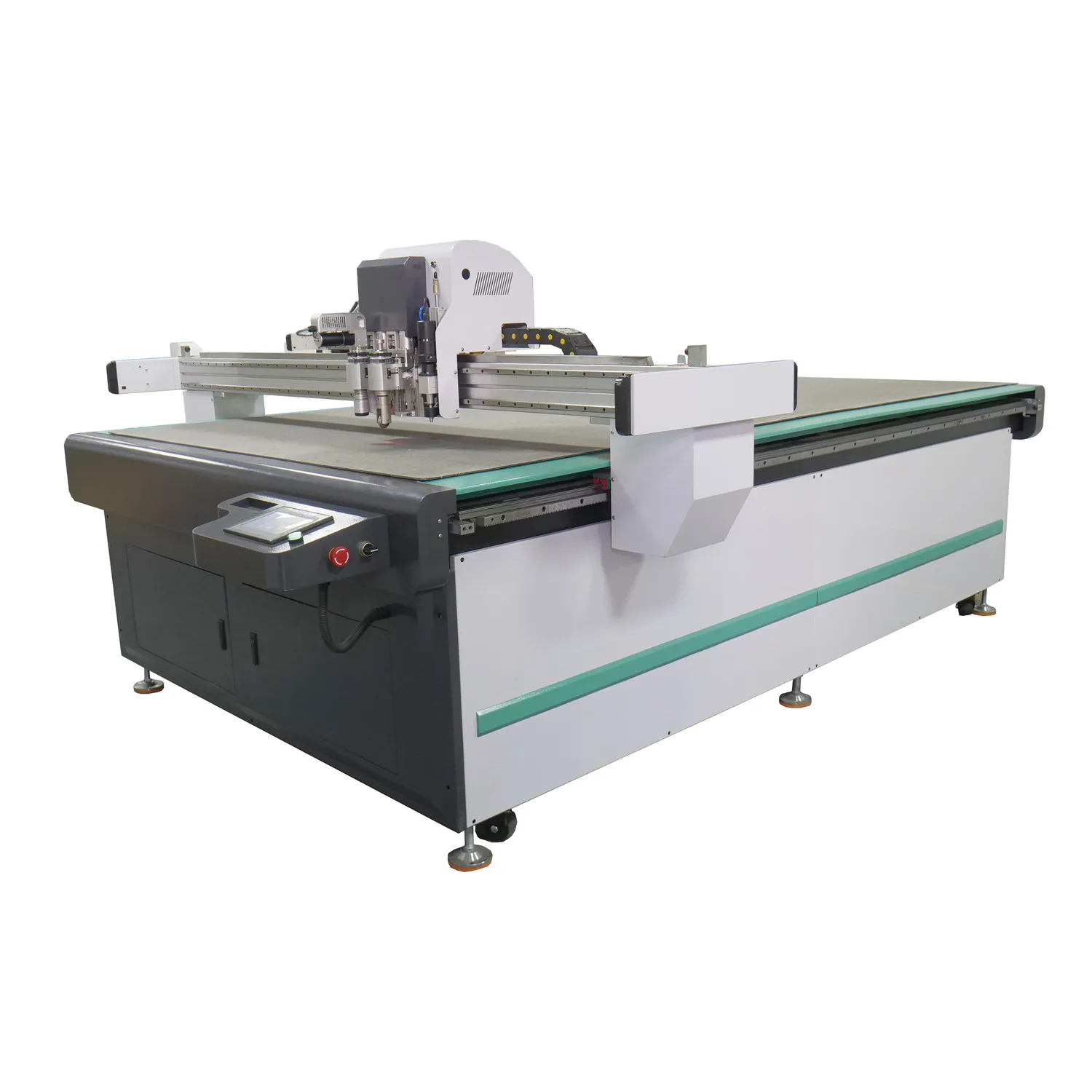
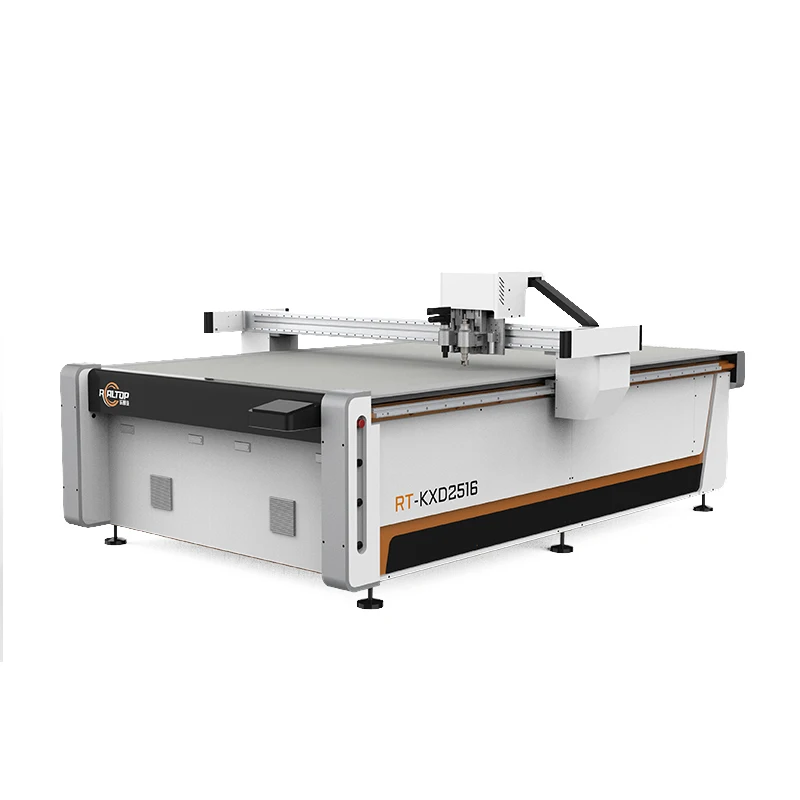
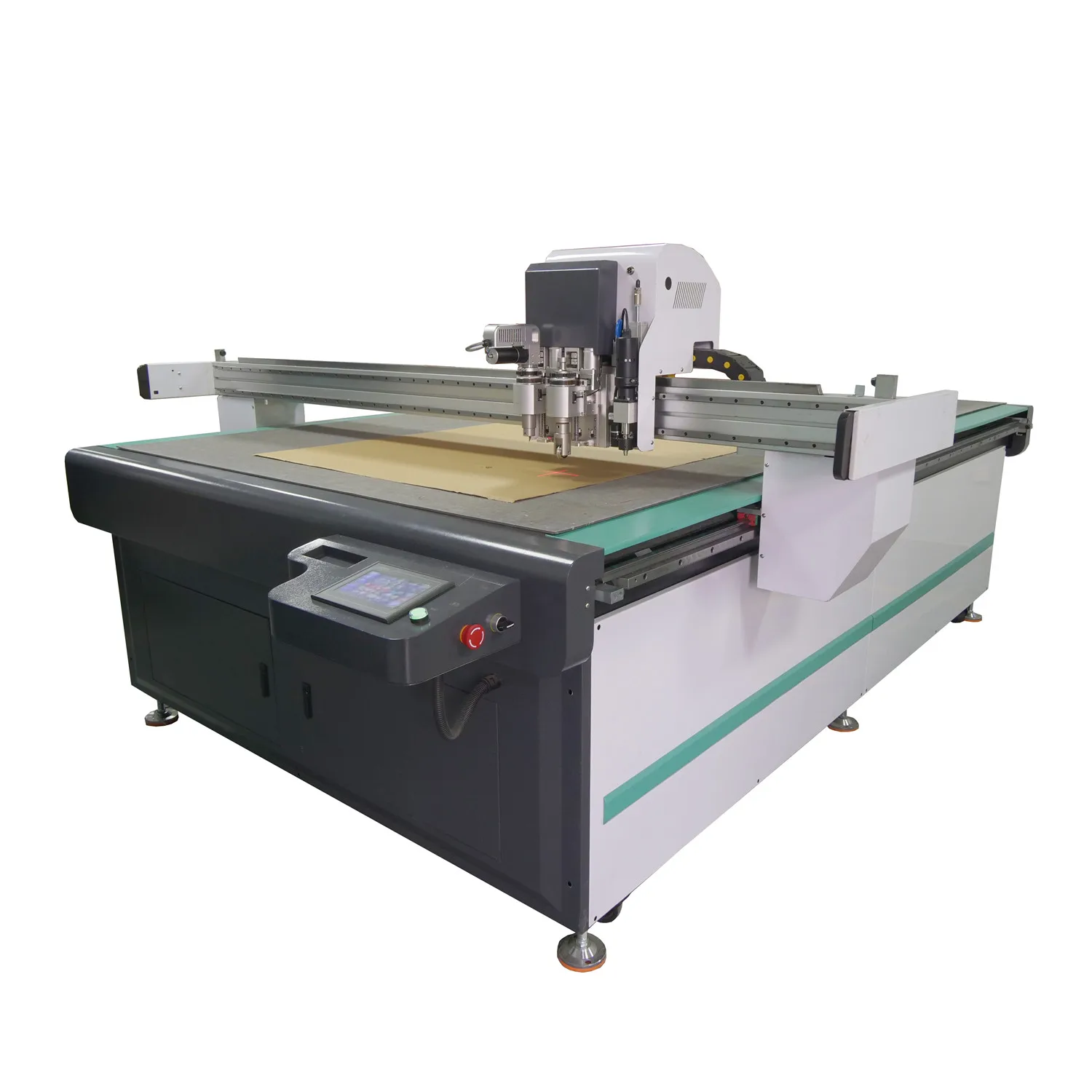
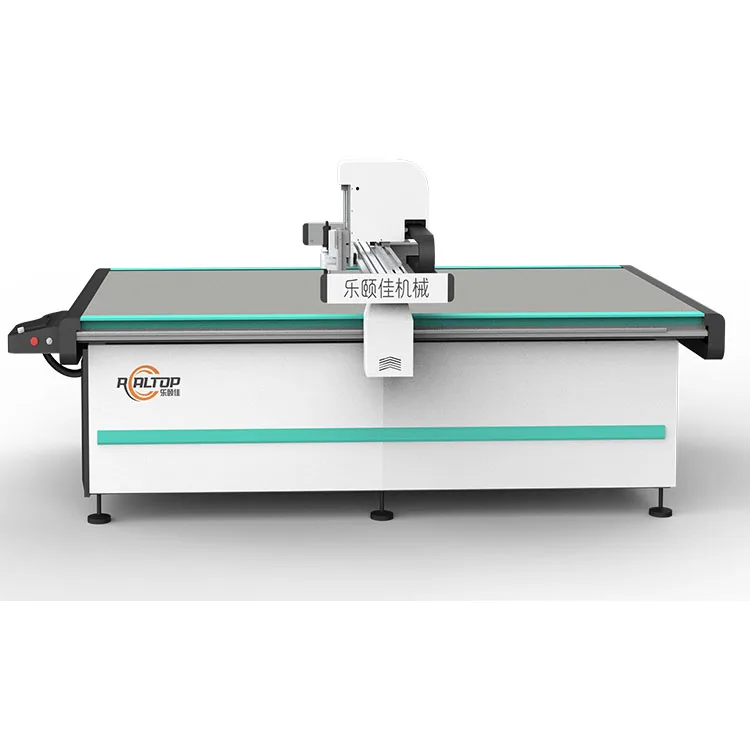
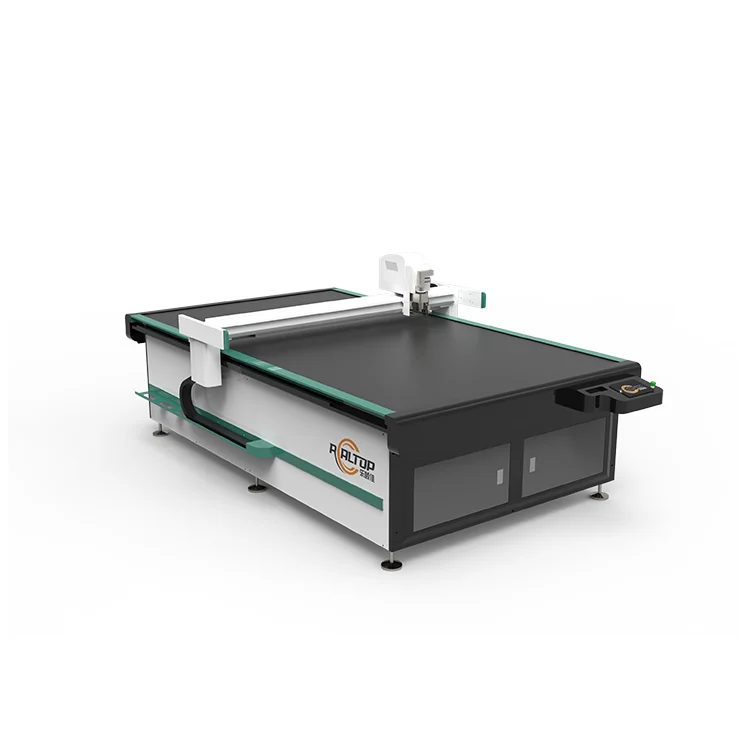
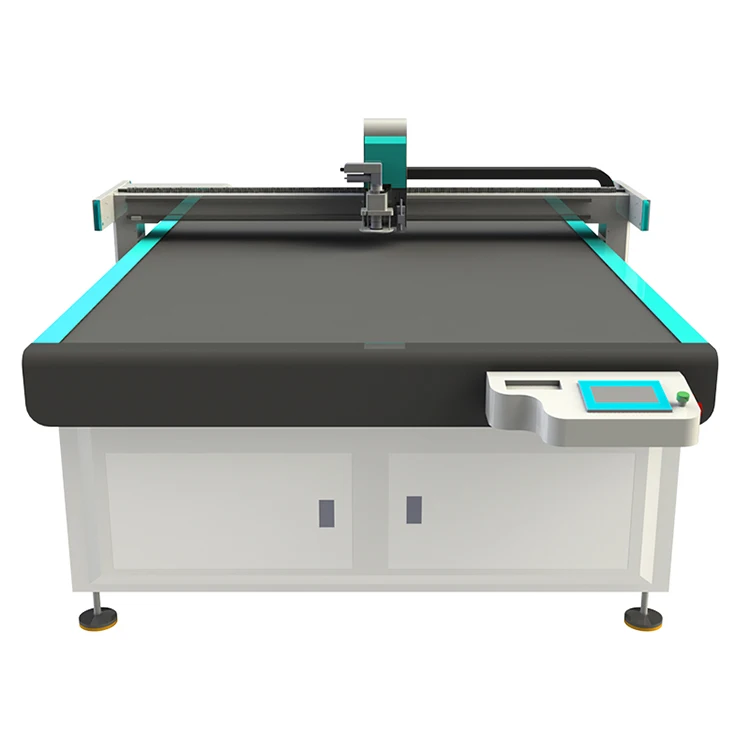
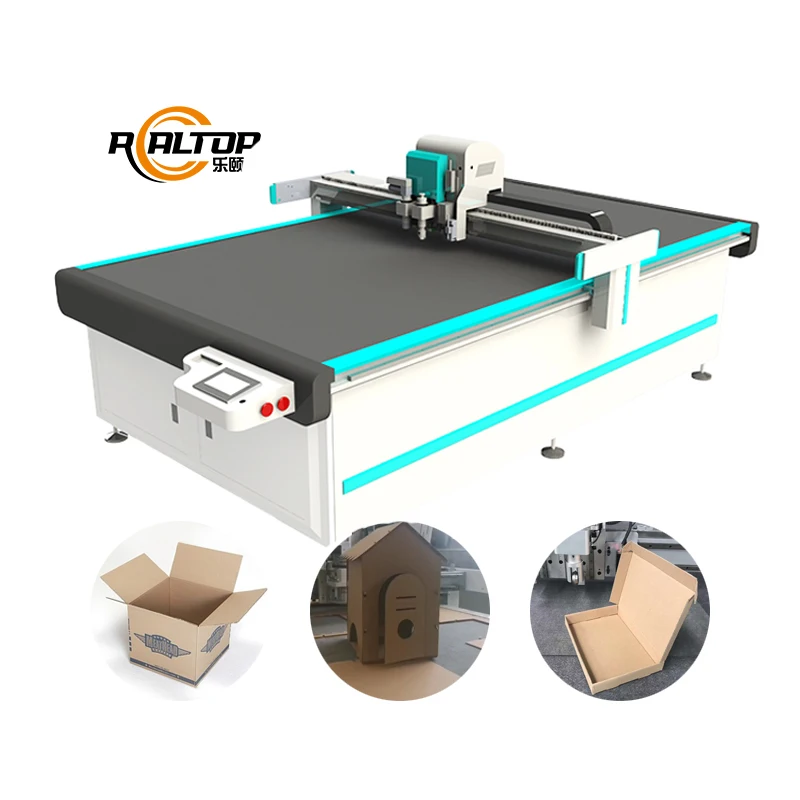
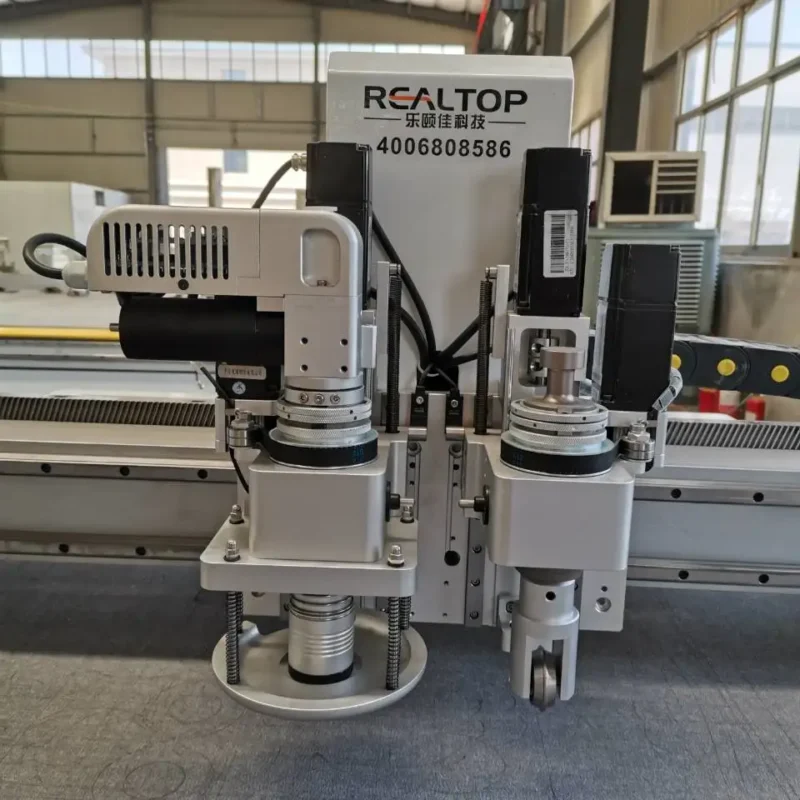
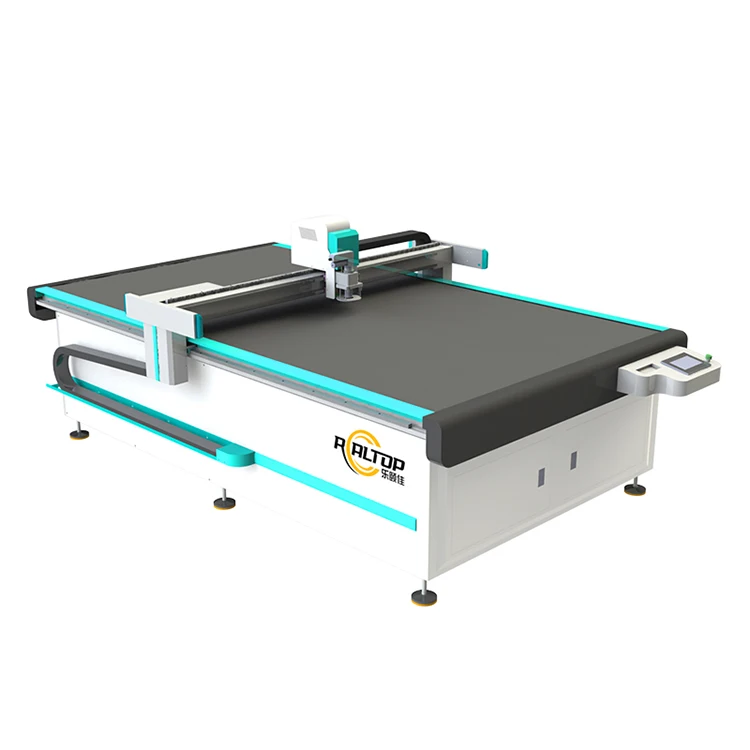
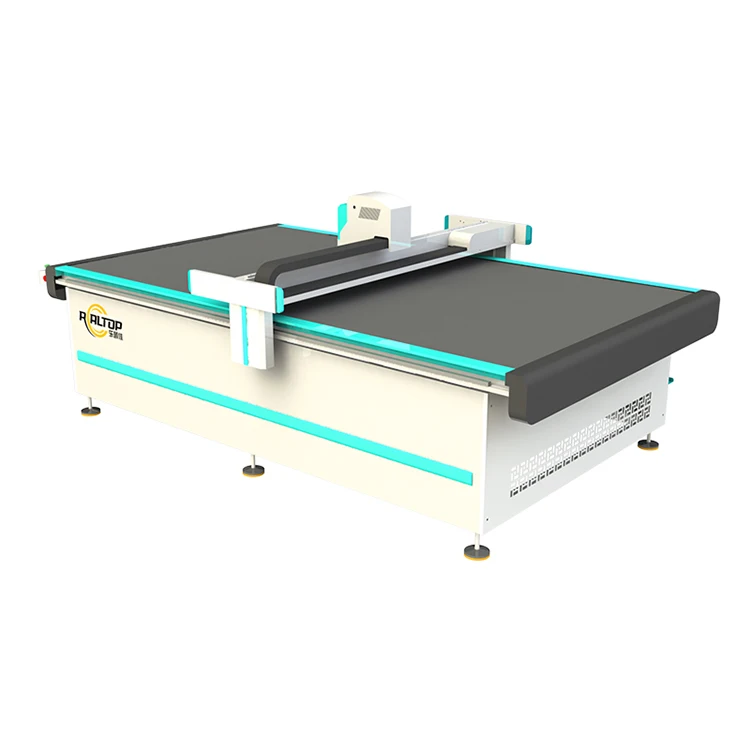
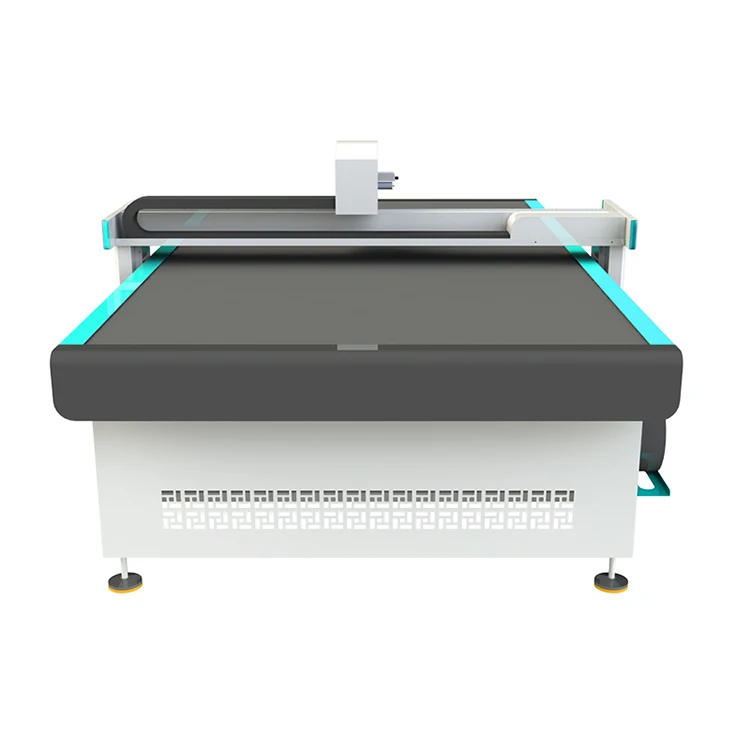
Swiss-Imported Oscillating Knife Integration — One multifunctional head executes full cut, half cut and cursor location on corrugated and flexible stock without tool changeovers between passes.
Technical Specifications
| Parameter | Value |
|---|---|
| Model | RT-D2516/RT-S2516 |
| Product Type | CNC Oscillating Knife Cutting Machine |
| Working Area | 1600 × 2500 mm |
| Machine Size | 3450 × 2300 × 1250 mm |
| Rated Power | 9 kW |
| Translational Velocity | 800 – 2000 mm/s |
| Cutting Speed | 200 – 800 mm/s (according to different cutting materials) |
| Cutting Thickness | ≤ 100 mm (varies with material) |
| Repeated Accuracy | ≤ 0.1 mm |
| Vacuum Table | Aluminum alloy honeycomb structure with 7.5 kW vacuum pump |
| Transmission System | Digital servo motor, linear guide, synchronous belt, ball screw |
| Guide Rail | Taiwan Hiwin rail |
| Servo Motor | Delta servo motor |
| Multifunctional Head | Swiss imported knife with vibration full cut, half cut and cursor location |
| Safety Device | Infrared sensors |
| Instruction System | HP-GL compatible format |
| Software | Professional carton nesting software, multi-format file import |
| Voltage | 380V ± 10% |
| Language Options | English, Russian, Italian, Chinese (special languages can be customized) |
Application Suitability
| Application | Material or Output |
|---|---|
| Corrugated carton and cardboard packaging | Single and double-wall corrugated board, grey board |
| Packaging sample making | Folding carton stock, gift box board, express paper box |
| Sticker and label contour cutting | Adhesive vinyl, printed label sheets |
| Flexible material cutting | Leather, PVC, sponge composite leather, soft glass, silicone, rubber |
| Signage and billboard production | Foam board, PVC board, corrugated plastic |
| Business card and tag cutting | Coated card stock, synthetic paper |
Why the Voltage Question Should Come Before the Quotation
A CNC oscillating knife cutting machine manufacturer must confirm site voltage before building the electrical cabinet, not after the crate arrives at the dock.
Matching the motor winding to local three-phase supply avoids weeks of idle floor space while a transformer ships overseas.
I once watched a corrugated carton sample line in Southeast Asia sit dead for over two weeks because the buyer’s facility ran on a 220V three-phase supply and the machine had been built for 380V. The vacuum pump, the servo drives, the control transformer — every component expected a different potential. That kind of oversight does not show up in a spec sheet comparison; it shows up on the production floor as missed delivery deadlines [NEED_CITE: voltage and frequency standards by export market]. Packaging houses running short batch samples cannot afford a machine that waits on a custom transformer while orders stack up.
Knife Method Matched to Board Grade and Ply
Choosing between a vibrating knife and a drag knife depends on the flute profile and the number of plies being processed. The oscillating action of the Swiss-imported blade on the RT-D2516/RT-S2516 allows it to slice through multi-wall corrugated without crushing the flute structure, preserving the compression strength that packaging engineers specify. A drag knife on the same material tends to tear the top liner and leave ragged edges at the flute boundary, which becomes visible on printed carton samples presented to brand clients.
Vacuum Hold-Down Across the Full Bed Area
Lightweight card stock and thin corrugated sheets lift easily when the oscillating knife changes direction at high translational speed. The aluminum alloy honeycomb table paired with the 7.5 kW vacuum pump provides zoned adsorption so that even small offcuts remain flat during the final passes. Without adequate hold-down, a half-cut crease line drifts from its intended position and the finished carton folds off-square, creating assembly problems on the packing line downstream.
Reading the Spec Sheet Beyond Working Area
The 1600 × 2500 mm bed determines the maximum sheet footprint, but the usable cutting depth of up to 100 mm depends on material density and the knife stroke configuration. Taiwan Hiwin linear guides and Delta servo motors maintain the ≤ 0.1 mm repeatability across the full travel, which matters when a nesting layout places dozens of carton blanks within millimeters of each other. The professional carton nesting software included with the system supports HP-GL compatible file import, so existing design workflows transfer without manual redrawing [NEED_CITE: file format interoperability in packaging CAD systems]. When evaluating any CNC oscillating knife cutting machine manufacturer, verifying that the software accepts your native file format avoids costly conversion steps after installation.
What Happens When Configuration Is Left to Default
Ordering a cutting table by bed size alone and accepting the factory’s default tool head is one of the most common reasons packaging sample rooms see poor edge quality on their first run. A machine set up with a drag knife for thin vinyl will crush a double-wall corrugated sheet and leave compressed flute edges that compromise the sample’s structural appearance. Zoning on the vacuum table also matters — running a small label sheet on a fully open vacuum zone means insufficient hold-down pressure, and the material shifts mid-cut [NEED_CITE: vacuum adsorption requirements for thin flexible substrates]. These are not defects in the machine; they are configuration mismatches that could have been caught before shipment.
Why Procurement Flows Through This Manufacturer
Realtop designs and builds both knife and laser cutting systems in-house, so the buyer is not pushed toward one method when the material demands another. Tool head selection, table configuration and vacuum zoning are specified against the buyer’s actual stock, not assigned from a default build list. Every machine ships with a factory test record run on the buyer’s own material, providing a documented baseline of edge quality and achievable thickness. Voltage, plug type and control language are confirmed on the electrical schematic before production starts, so the unit that arrives matches the facility it enters. The carton nesting software license and file format compatibility are verified during this stage as well.
Documentation & Verification
- Electrical schematic with 380V ± 10% or adapted voltage confirmed before cabinet assembly
- Tool head and vacuum table configuration list matched to your corrugated and flexible materials
- Software license with HP-GL and multi-format import compatibility verified against your CAD files
- Factory test record showing cut quality on your own board grade and thickness range
- Operation and maintenance manual in your selected control language
Installation, Commissioning & Support
- Floor space of at least 4000 × 3000 mm accounts for the 3450 × 2300 mm machine footprint plus operator access
- Dedicated three-phase circuit rated for the 9 kW total load plus the 7.5 kW vacuum pump
- Machine arrives assembled; level and anchor the frame before powering the servo drives
- First-run parameter tuning includes vacuum zone calibration and knife stroke adjustment for your board stock
- Hiwin guide rails and synchronous belts require scheduled lubrication per the included maintenance manual
- Spare oscillating knives and vacuum seals listed in the shipped parts inventory
Preparing Your Inquiry
When requesting a configuration and quotation, share the specific corrugated flute type and board thickness you process most frequently, along with your typical daily sample volume. Include your facility’s exact three-phase voltage and frequency, and note whether your design team works in DXF, PLT or another format. If your workflow involves printed contour cutting, describe the mark registration method so that the correct positioning hardware can be quoted.
Frequently Asked Questions
Q: How do I decide between oscillating knife and laser cutting for my packaging materials?
A: Oscillating knife is preferred for corrugated board and thick card where a clean mechanical cut preserves flute structure without thermal discoloration. Laser suits thin film, adhesive layers and detailed engraving on wood or acrylic. Because Realtop manufactures both technologies, the recommendation is based on your material test rather than a single-product limitation.
Q: What working area should I choose for carton sample production?
A: The 1600 × 2500 mm bed accommodates most standard corrugated sheet sizes used in sample making. Consider your nesting strategy — if you gang multiple carton blanks per sheet, a larger format reduces loading cycles. Confirm the maximum sheet dimensions your suppliers deliver before finalizing the table size.
Q: Which tool head options apply to corrugated and flexible materials?
A: The oscillating knife handles corrugated board, foam and composite materials with clean edge results. A drag knife suits thin vinyl and sticker contour work. A creasing wheel produces fold lines on carton stock. The multifunctional head on this model integrates vibration full cut and half cut in one setup.
Q: What electrical details must be confirmed before the machine ships?
A: Three-phase voltage, frequency, plug type and control panel language must all be locked on the electrical schematic before the cabinet is wired. Providing a photo of your facility’s main distribution board helps verify compatibility and prevents transformer delays upon arrival.
Q: How is software compatibility verified before delivery?
A: The included carton nesting software supports HP-GL and multiple import formats. During the specification stage, you send sample design files in your native CAD format, and the factory confirms successful import, nesting output and toolpath generation before the control system is finalized.
Swiss-Imported Oscillating Knife Integration — One multifunctional head executes full cut, half cut and cursor location on corrugated and flexible stock without tool changeovers between passes.
Technical Specifications
| Parameter | Value |
|---|---|
| Model | RT-D2516/RT-S2516 |
| Product Type | CNC Oscillating Knife Cutting Machine |
| Working Area | 1600 × 2500 mm |
| Machine Size | 3450 × 2300 × 1250 mm |
| Rated Power | 9 kW |
| Translational Velocity | 800 – 2000 mm/s |
| Cutting Speed | 200 – 800 mm/s (according to different cutting materials) |
| Cutting Thickness | ≤ 100 mm (varies with material) |
| Repeated Accuracy | ≤ 0.1 mm |
| Vacuum Table | Aluminum alloy honeycomb structure with 7.5 kW vacuum pump |
| Transmission System | Digital servo motor, linear guide, synchronous belt, ball screw |
| Guide Rail | Taiwan Hiwin rail |
| Servo Motor | Delta servo motor |
| Multifunctional Head | Swiss imported knife with vibration full cut, half cut and cursor location |
| Safety Device | Infrared sensors |
| Instruction System | HP-GL compatible format |
| Software | Professional carton nesting software, multi-format file import |
| Voltage | 380V ± 10% |
| Language Options | English, Russian, Italian, Chinese (special languages can be customized) |
Application Suitability
| Application | Material or Output |
|---|---|
| Corrugated carton and cardboard packaging | Single and double-wall corrugated board, grey board |
| Packaging sample making | Folding carton stock, gift box board, express paper box |
| Sticker and label contour cutting | Adhesive vinyl, printed label sheets |
| Flexible material cutting | Leather, PVC, sponge composite leather, soft glass, silicone, rubber |
| Signage and billboard production | Foam board, PVC board, corrugated plastic |
| Business card and tag cutting | Coated card stock, synthetic paper |
Why the Voltage Question Should Come Before the Quotation
A CNC oscillating knife cutting machine manufacturer must confirm site voltage before building the electrical cabinet, not after the crate arrives at the dock.
Matching the motor winding to local three-phase supply avoids weeks of idle floor space while a transformer ships overseas.
I once watched a corrugated carton sample line in Southeast Asia sit dead for over two weeks because the buyer’s facility ran on a 220V three-phase supply and the machine had been built for 380V. The vacuum pump, the servo drives, the control transformer — every component expected a different potential. That kind of oversight does not show up in a spec sheet comparison; it shows up on the production floor as missed delivery deadlines [NEED_CITE: voltage and frequency standards by export market]. Packaging houses running short batch samples cannot afford a machine that waits on a custom transformer while orders stack up.
Knife Method Matched to Board Grade and Ply
Choosing between a vibrating knife and a drag knife depends on the flute profile and the number of plies being processed. The oscillating action of the Swiss-imported blade on the RT-D2516/RT-S2516 allows it to slice through multi-wall corrugated without crushing the flute structure, preserving the compression strength that packaging engineers specify. A drag knife on the same material tends to tear the top liner and leave ragged edges at the flute boundary, which becomes visible on printed carton samples presented to brand clients.
Vacuum Hold-Down Across the Full Bed Area
Lightweight card stock and thin corrugated sheets lift easily when the oscillating knife changes direction at high translational speed. The aluminum alloy honeycomb table paired with the 7.5 kW vacuum pump provides zoned adsorption so that even small offcuts remain flat during the final passes. Without adequate hold-down, a half-cut crease line drifts from its intended position and the finished carton folds off-square, creating assembly problems on the packing line downstream.
Reading the Spec Sheet Beyond Working Area
The 1600 × 2500 mm bed determines the maximum sheet footprint, but the usable cutting depth of up to 100 mm depends on material density and the knife stroke configuration. Taiwan Hiwin linear guides and Delta servo motors maintain the ≤ 0.1 mm repeatability across the full travel, which matters when a nesting layout places dozens of carton blanks within millimeters of each other. The professional carton nesting software included with the system supports HP-GL compatible file import, so existing design workflows transfer without manual redrawing [NEED_CITE: file format interoperability in packaging CAD systems]. When evaluating any CNC oscillating knife cutting machine manufacturer, verifying that the software accepts your native file format avoids costly conversion steps after installation.
What Happens When Configuration Is Left to Default
Ordering a cutting table by bed size alone and accepting the factory’s default tool head is one of the most common reasons packaging sample rooms see poor edge quality on their first run. A machine set up with a drag knife for thin vinyl will crush a double-wall corrugated sheet and leave compressed flute edges that compromise the sample’s structural appearance. Zoning on the vacuum table also matters — running a small label sheet on a fully open vacuum zone means insufficient hold-down pressure, and the material shifts mid-cut [NEED_CITE: vacuum adsorption requirements for thin flexible substrates]. These are not defects in the machine; they are configuration mismatches that could have been caught before shipment.
Why Procurement Flows Through This Manufacturer
Realtop designs and builds both knife and laser cutting systems in-house, so the buyer is not pushed toward one method when the material demands another. Tool head selection, table configuration and vacuum zoning are specified against the buyer’s actual stock, not assigned from a default build list. Every machine ships with a factory test record run on the buyer’s own material, providing a documented baseline of edge quality and achievable thickness. Voltage, plug type and control language are confirmed on the electrical schematic before production starts, so the unit that arrives matches the facility it enters. The carton nesting software license and file format compatibility are verified during this stage as well.
Documentation & Verification
- Electrical schematic with 380V ± 10% or adapted voltage confirmed before cabinet assembly
- Tool head and vacuum table configuration list matched to your corrugated and flexible materials
- Software license with HP-GL and multi-format import compatibility verified against your CAD files
- Factory test record showing cut quality on your own board grade and thickness range
- Operation and maintenance manual in your selected control language
Installation, Commissioning & Support
- Floor space of at least 4000 × 3000 mm accounts for the 3450 × 2300 mm machine footprint plus operator access
- Dedicated three-phase circuit rated for the 9 kW total load plus the 7.5 kW vacuum pump
- Machine arrives assembled; level and anchor the frame before powering the servo drives
- First-run parameter tuning includes vacuum zone calibration and knife stroke adjustment for your board stock
- Hiwin guide rails and synchronous belts require scheduled lubrication per the included maintenance manual
- Spare oscillating knives and vacuum seals listed in the shipped parts inventory
Preparing Your Inquiry
When requesting a configuration and quotation, share the specific corrugated flute type and board thickness you process most frequently, along with your typical daily sample volume. Include your facility’s exact three-phase voltage and frequency, and note whether your design team works in DXF, PLT or another format. If your workflow involves printed contour cutting, describe the mark registration method so that the correct positioning hardware can be quoted.
Frequently Asked Questions
Q: How do I decide between oscillating knife and laser cutting for my packaging materials?
A: Oscillating knife is preferred for corrugated board and thick card where a clean mechanical cut preserves flute structure without thermal discoloration. Laser suits thin film, adhesive layers and detailed engraving on wood or acrylic. Because Realtop manufactures both technologies, the recommendation is based on your material test rather than a single-product limitation.
Q: What working area should I choose for carton sample production?
A: The 1600 × 2500 mm bed accommodates most standard corrugated sheet sizes used in sample making. Consider your nesting strategy — if you gang multiple carton blanks per sheet, a larger format reduces loading cycles. Confirm the maximum sheet dimensions your suppliers deliver before finalizing the table size.
Q: Which tool head options apply to corrugated and flexible materials?
A: The oscillating knife handles corrugated board, foam and composite materials with clean edge results. A drag knife suits thin vinyl and sticker contour work. A creasing wheel produces fold lines on carton stock. The multifunctional head on this model integrates vibration full cut and half cut in one setup.
Q: What electrical details must be confirmed before the machine ships?
A: Three-phase voltage, frequency, plug type and control panel language must all be locked on the electrical schematic before the cabinet is wired. Providing a photo of your facility’s main distribution board helps verify compatibility and prevents transformer delays upon arrival.
Q: How is software compatibility verified before delivery?
A: The included carton nesting software supports HP-GL and multiple import formats. During the specification stage, you send sample design files in your native CAD format, and the factory confirms successful import, nesting output and toolpath generation before the control system is finalized.
商品评价
There are no reviews yet.