

Fast Delivery
Quick, reliable shipping to any location.

Free & easy returns
Return this item by mail or in store within 90 days for a full refund.
Precision tooling matched to material — We specify knife geometry, vacuum zoning and oscillation frequency against your actual corrugated grade and flute profile before order confirmation, not just working area.
Technical Specifications
| Parameter | Value |
|---|---|
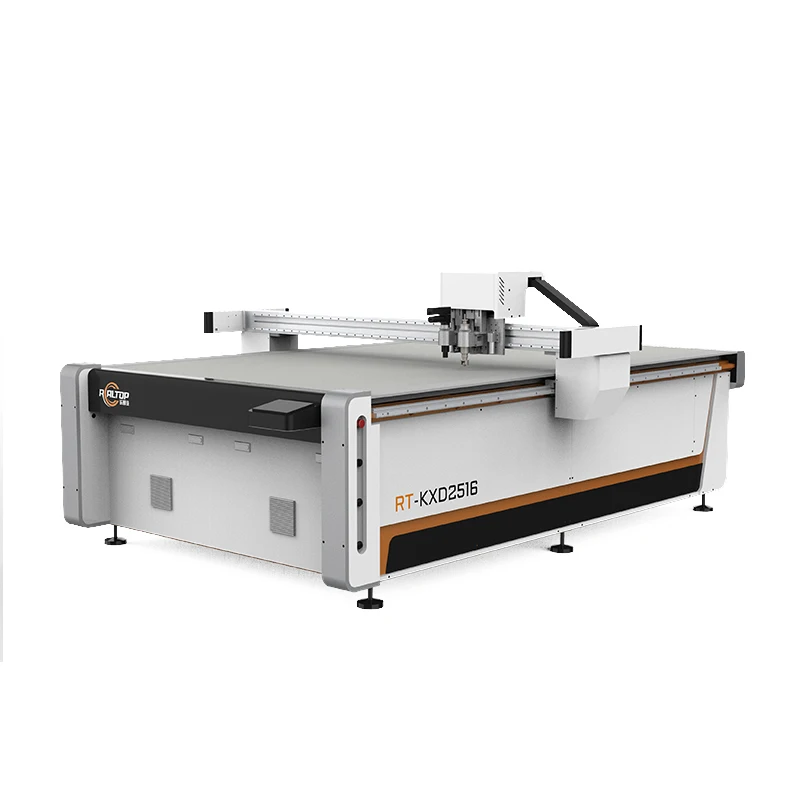
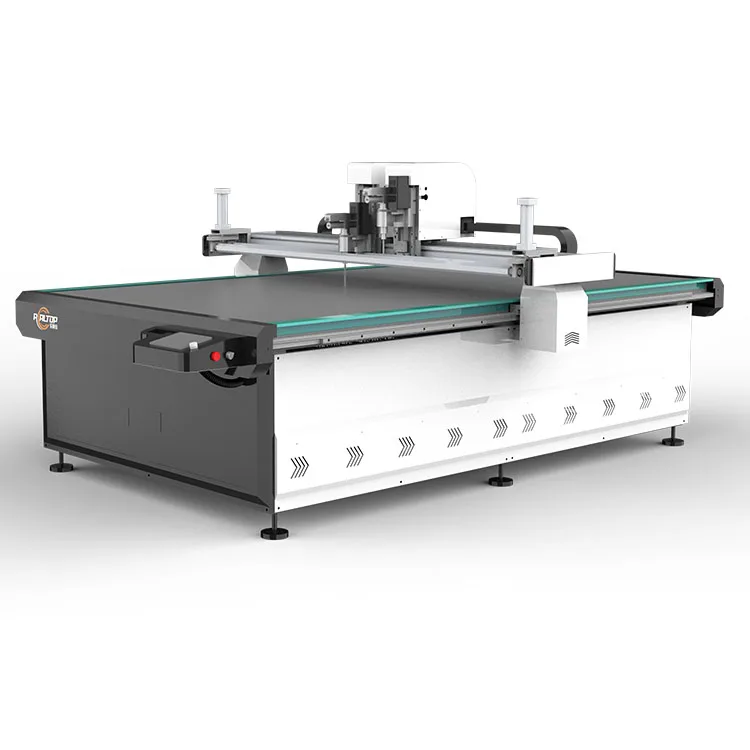
| Model | RT-D2516 / RT-S2516 |
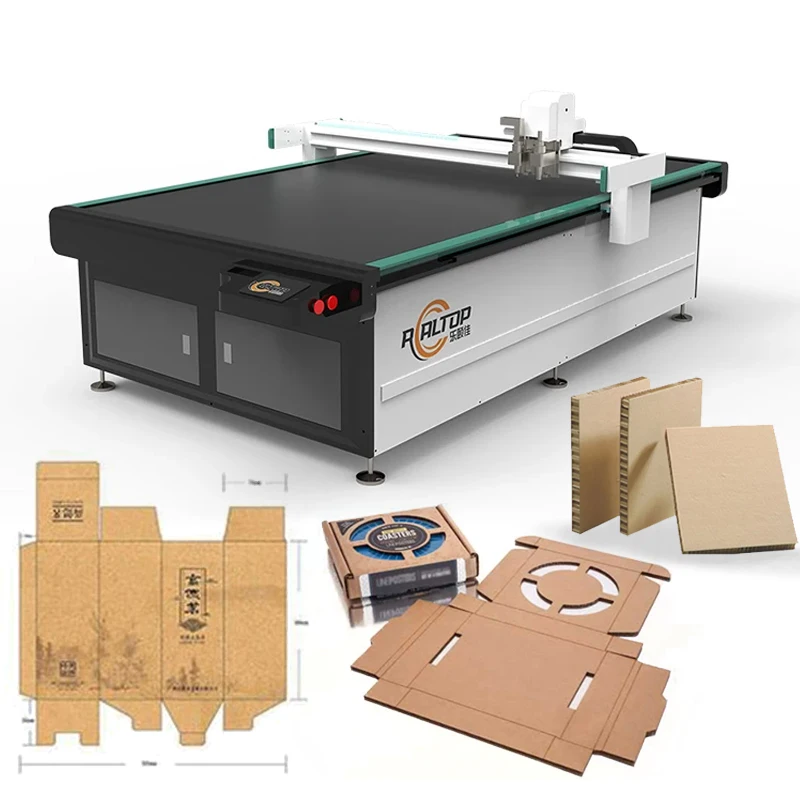
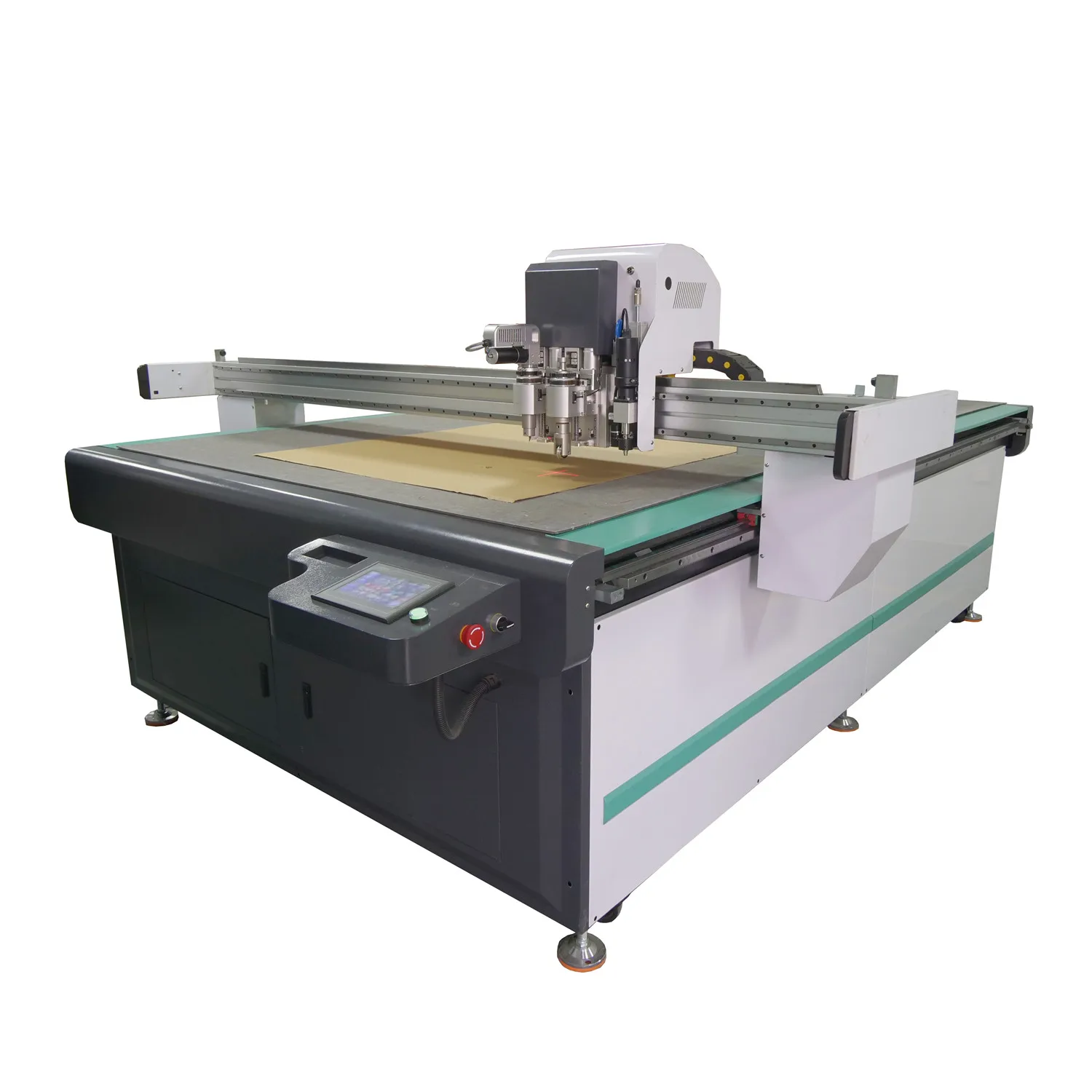
| Working Area | 1600 × 2500 mm |
| Machine Dimensions | 3450 × 2300 × 1250 mm |
| Rated Power | 9 kW |
| Vacuum Pump | 7.5 kW |
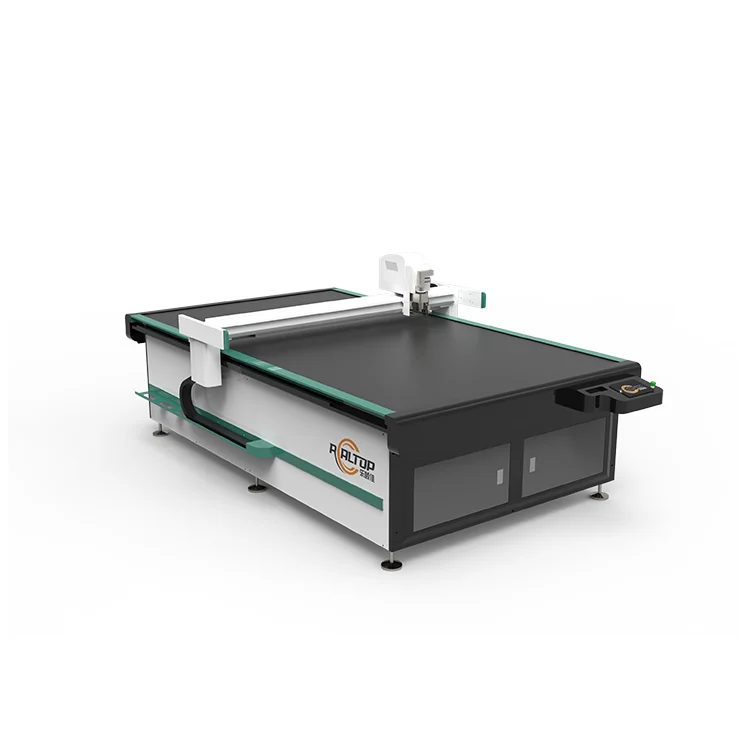
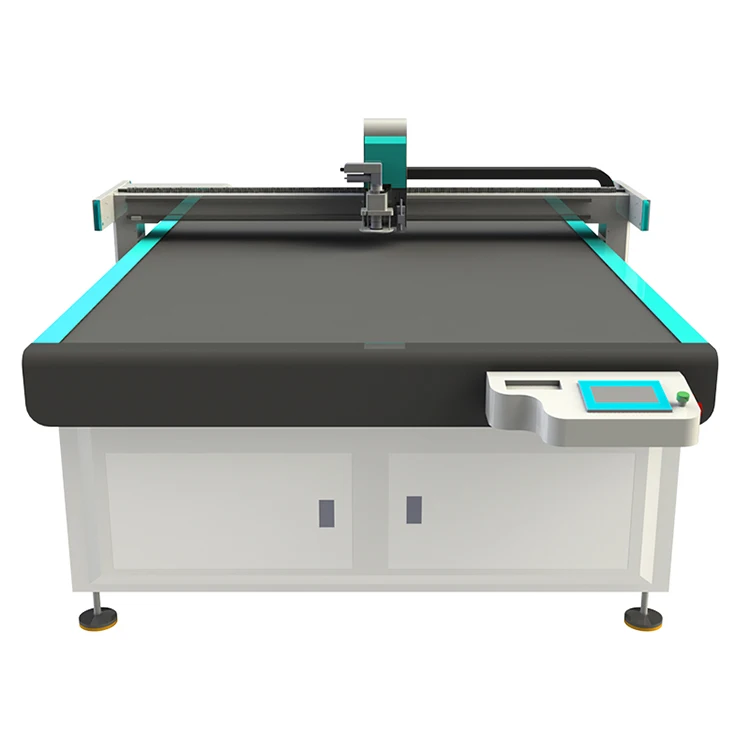
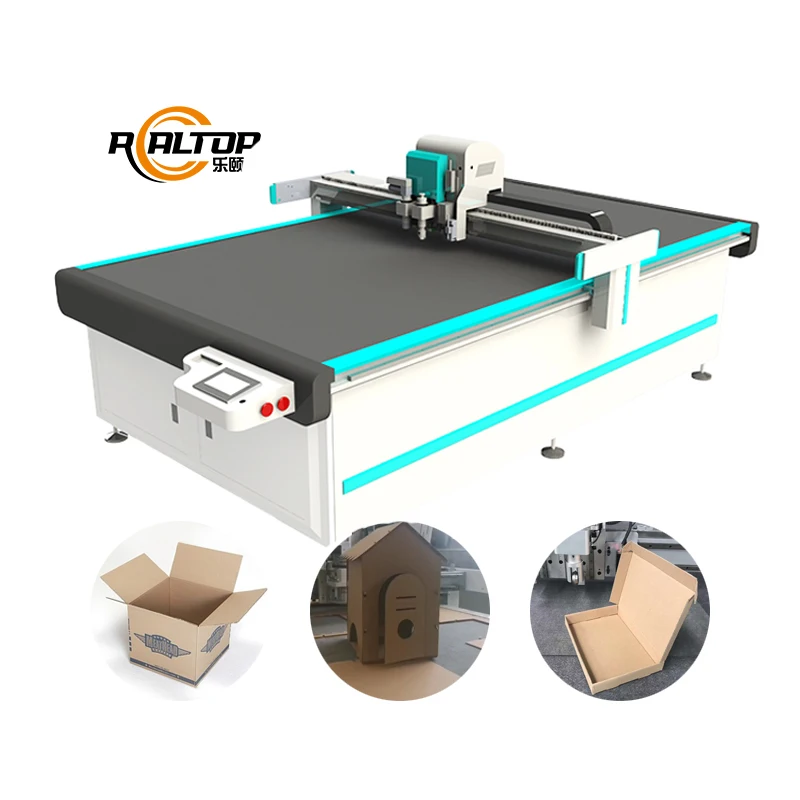
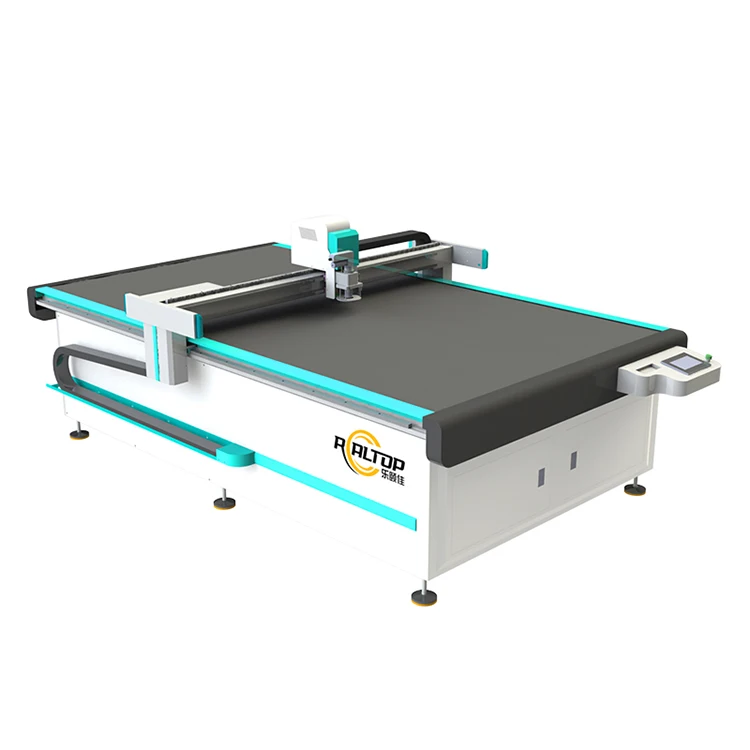
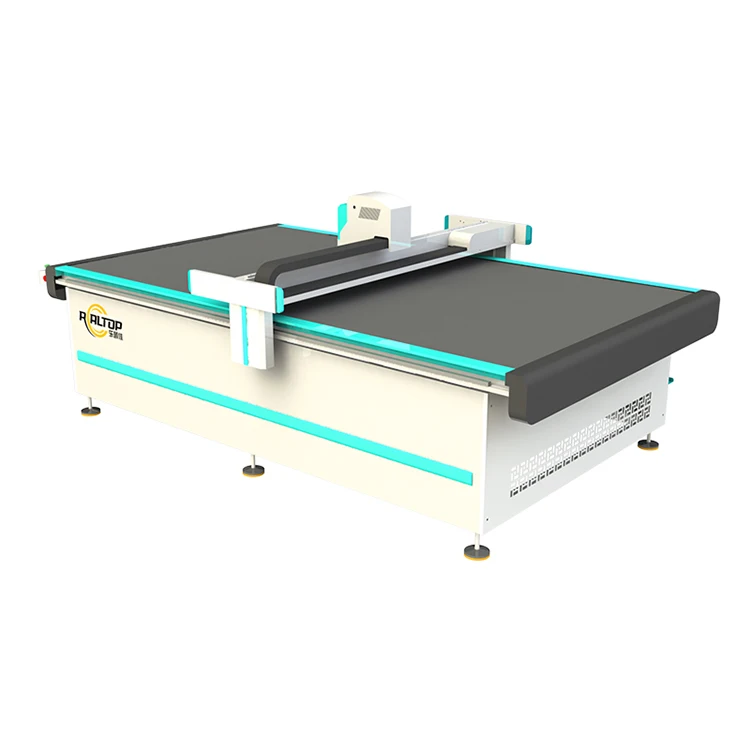
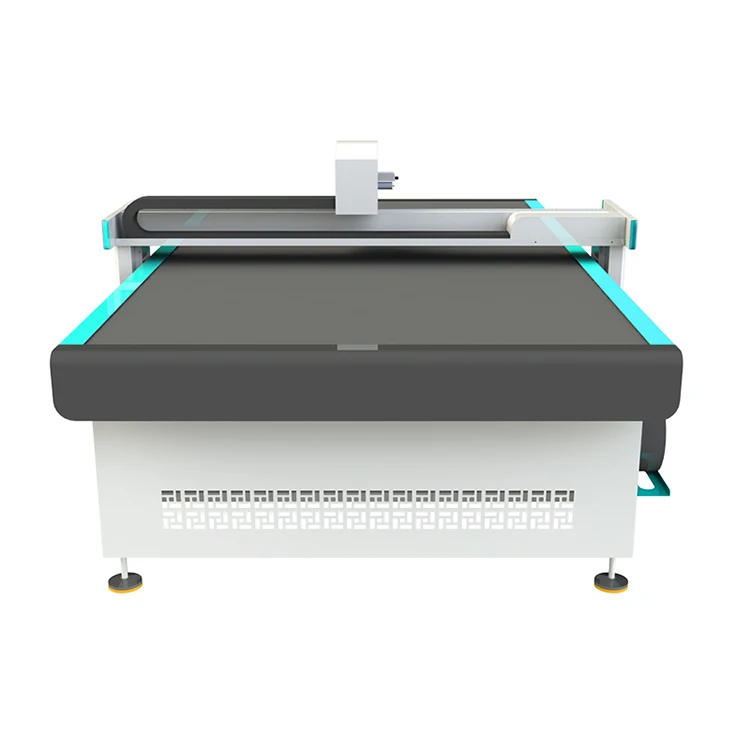
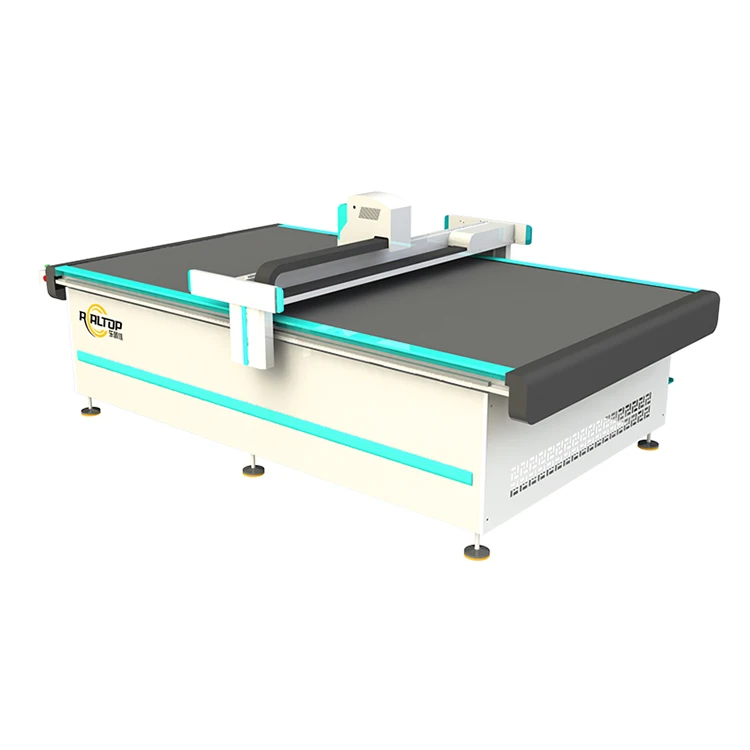
| Table Construction | Aluminum alloy honeycomb vacuum adsorption platform |
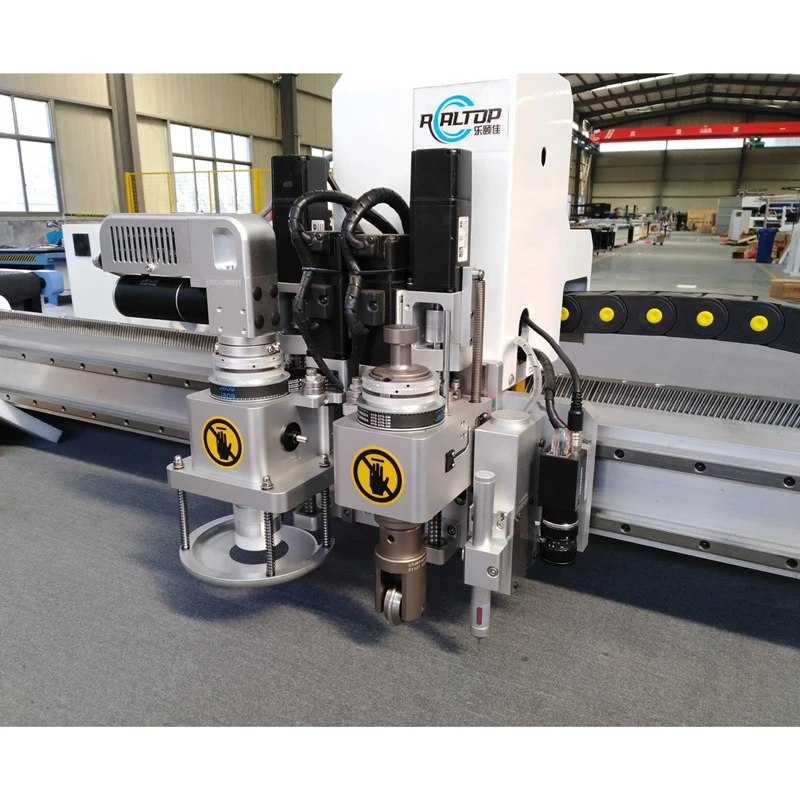
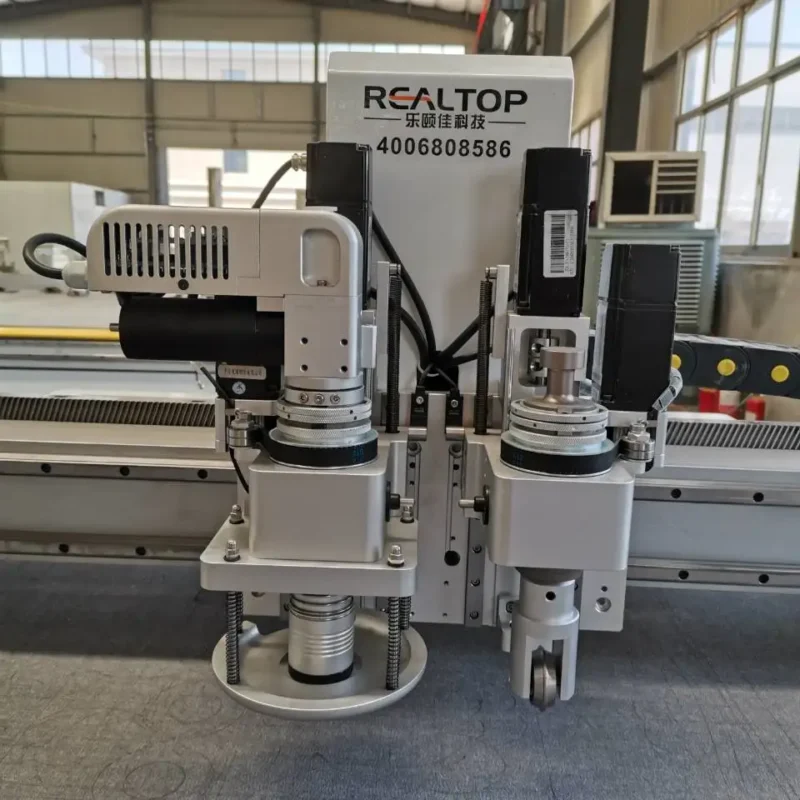
| Tool Head | Swiss imported oscillating knife with full cut, half cut and cursor location |
| Transmission | Taiwan Delta digital servo motors, Taiwan Hiwin linear guides, synchronous belt and ball screw |
| Repeated Accuracy | ≤0.1 mm |
| Translational Velocity | 800–2000 mm/s |
| Cutting Speed | 200–800 mm/s (basis not stated in source — confirm material and thickness) |
| Cutting Thickness | Up to 100 mm depending on material density and flute structure |
| Safety System | Infrared sensors |
| Voltage | 380V ±10% |
| Instruction Format | HP-GL compatible |
| Software | Professional carton cutting design package, multi-language and multi-format support |
Application Suitability
| Application | Material or Output |
|---|---|
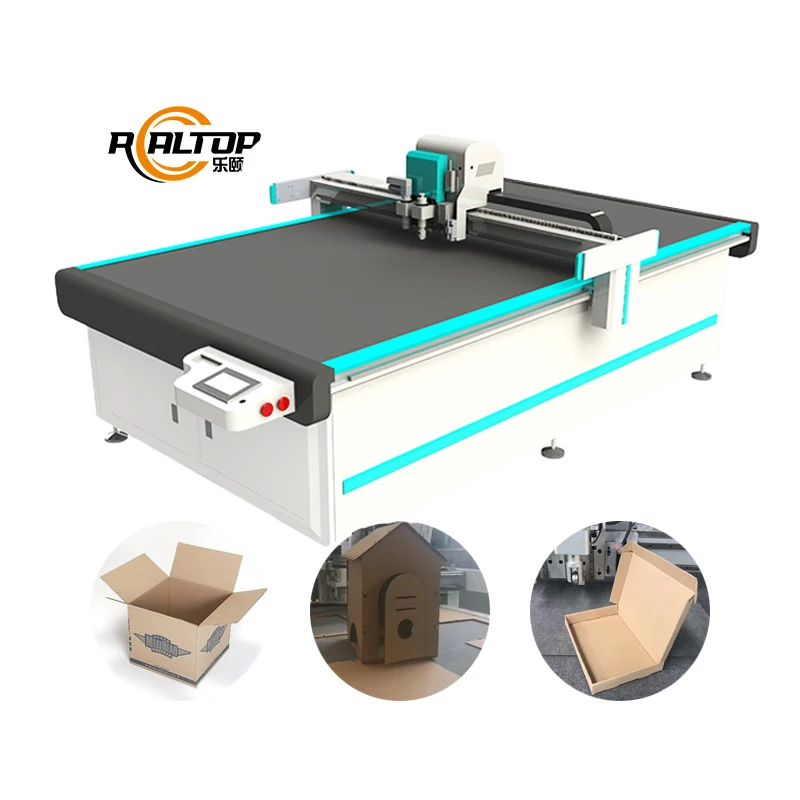
| Corrugated box prototyping and short-run production | Single, double and triple-wall corrugated cardboard up to 100 mm |
| Carton sample making and structural packaging design | Kraft liner, test liner and recycled corrugated board |
| Sticker and label contour cutting | Self-adhesive vinyl, paper stickers, printed label stock |
| Paper box and gift box production | Cardboard, grey board, coated art paper |
| Signage and point-of-sale display fabrication | Coroplast, foam PVC, honeycomb paper board |
| Flexible non-metallic material cutting | Leather, PVC, soft glass, silicon, rubber, sponge composite |
Why Board Thickness Alone Should Not Dictate Your Packaging CNC Cutting Machine Choice
Flute structure and recycled fibre content change cutting behaviour more than caliper measurement ever will.
I spent three days in a Nairobi workshop swapping blades and rewriting oscillation parameters because the customer’s actual five-layer recycled board was far harder than the standard three-layer test stock we had used at the factory. A packaging CNC cutting machine manufacturer that only asks for sheet thickness will miss the density variable entirely, leaving you with ragged edges on the first production run [NEED_CITE: material hardness variation in recycled corrugated fibre]. Specifying the tool head, oscillation frequency and hold-down pressure against your real board grade removes this risk before the machine leaves the factory.
Matching Oscillation Frequency to Flute Density
The Swiss imported knife head on the RT-D2516 and RT-S2516 delivers vibration full cutting, half cutting and cursor location from a single tool station. Higher oscillation frequency suits dense recycled board where the blade must penetrate compressed fibre without tearing the top liner, while lower frequency prevents crush damage on open-flute virgin stock. Selecting the right frequency band per job is the difference between a clean crease line and a fractured surface that fails the customer’s print quality check.
Vacuum Zoning Across the Full Cutting Bed
The aluminum alloy honeycomb platform pairs with a 7.5 kW vacuum pump to hold corrugated sheets flat without mechanical clamps. Zoning matters when you nest small carton blanks alongside large display panels on the same sheet — insufficient suction on the small zones lets offcuts lift into the knife path, producing miscuts and blade damage [NEED_CITE: vacuum adsorption principles for CNC flatbed cutting tables]. Confirming zone layout against your typical nesting pattern prevents this class of failure.
Reading the Drivetrain for Long-Term Accuracy
Taiwan Delta servo motors drive the gantry through Hiwin linear guides and ball screws, holding repeated accuracy at ≤0.1 mm across the 1600 × 2500 mm working envelope. In packaging sample making, a drift of even a few tenths of a millimetre misaligns crease lines with cut lines, and the prototype fails the fold test. The synchronous belt and ball screw combination keeps the carriage stable at translational speeds up to 2000 mm/s, so rapid moves between cut paths do not introduce positional lag.
The Cost of Skipping a Material Trial
Choosing a packaging CNC cutting machine on paper specifications alone leaves several failure modes undiscovered until installation day. Wrong oscillation amplitude on heavy recycled board produces burrs along the cut edge that require secondary trimming. Inadequate vacuum zoning allows thin sticker sheets to shift during contour cuts, destroying registration on printed graphics. Software that cannot open the buyer’s native DXF or AI files forces a manual redraw of every carton dieline, adding hours to each sample [NEED_CITE: file format compatibility in CAD-based cutting workflows].
Why Packaging Producers Source This Range Here
Realtop operates in-house design and production for both knife and laser cutting, so a packaging buyer selects the cutting method that fits the material rather than adapting the material to one technology. Tool head and table configuration are specified against documented material samples, not generic catalogue defaults. Every RT-D2516 and RT-S2516 ships with a factory test record cut on the buyer’s actual board stock. Software language, voltage and plug type are confirmed before production begins. CCD camera positioning is available for printed contour work where registration marks must be tracked at production speed.
Documentation & Verification
- Machine specification sheet listing confirmed tool head and vacuum zone configuration
- Electrical schematic showing 380V wiring, breaker ratings and servo driver parameters
- Factory test record cut on buyer’s corrugated board grade with measured accuracy data
- Sample cutting report documenting edge quality and crease integrity on supplied material
- Software licence with confirmed file format compatibility list and language setting
- Spare parts list covering blades, collets and vacuum seals with part numbers
Installation, Commissioning & Support
- Floor must support 3450 × 2300 mm footprint plus operator clearance on three sides
- Dedicated 380V ±10% circuit with isolated earth for the 9 kW spindle and 7.5 kW pump
- Machine ships in single assembly; vacuum pump connects via supplied hose and coupling
- First-day commissioning verifies cut accuracy across the full 1600 × 2500 mm bed travel
- Operator training covers tool change, vacuum zone mapping and software nesting workflow
- Blade and collet replacement schedule provided based on your confirmed board grade
What to Include in Your Enquiry
Send the exact corrugated flute profile and board grade you run most often, along with a typical nesting layout showing the mix of carton blanks and display panels. Confirm your workshop voltage and frequency, the language your operators will use for the control interface, and whether you need sample cutting on your own material before committing to the order.
Frequently Asked Questions
Q: How is cutting capacity verified before the machine ships?
A: We run a full test cycle on your actual corrugated board or flexible material, measuring edge quality, crease integrity and dimensional accuracy across the 1600 × 2500 mm bed. The factory test record and sample cutting report ship with the machine so you can compare results against your production standard.
Q: Knife cutting versus laser — which suits corrugated cardboard and stickers?
A: Oscillating knife cutting produces clean edges on corrugated board without the burn marks or smoke discolouration that a CO2 laser leaves on kraft liner and recycled fibre. For sticker and vinyl contour work, the knife avoids melted adhesive edges. Laser is reserved for acrylic and wood where edge sealing is beneficial.
Q: How do I choose the correct tool head for my material mix?
A: The Swiss imported head on the RT-D2516 and RT-S2516 handles full cut, half cut and cursor location. For dense five-layer recycled board we adjust oscillation amplitude and downward pressure; for thin sticker stock we reduce frequency to prevent vinyl tearing. Configuration is finalised after sample cutting on your materials.
Q: What voltage and control language options are available?
A: The standard supply is 380V ±10%, configurable for local grid conditions. The carton cutting software supports English, Russian, Italian, Chinese and other languages on request. Voltage, plug type and interface language are confirmed in writing before production begins.
Q: Which file formats does the carton cutting software accept?
A: The bundled software is HP-GL compatible and imports standard vector formats used in packaging design workflows. We confirm file format compatibility against your existing CAD output before order placement, and nesting capability is demonstrated during the sample cutting stage.
Precision tooling matched to material — We specify knife geometry, vacuum zoning and oscillation frequency against your actual corrugated grade and flute profile before order confirmation, not just working area.
Technical Specifications
| Parameter | Value |
|---|---|
| Model | RT-D2516 / RT-S2516 |
| Working Area | 1600 × 2500 mm |
| Machine Dimensions | 3450 × 2300 × 1250 mm |
| Rated Power | 9 kW |
| Vacuum Pump | 7.5 kW |
| Table Construction | Aluminum alloy honeycomb vacuum adsorption platform |
| Tool Head | Swiss imported oscillating knife with full cut, half cut and cursor location |
| Transmission | Taiwan Delta digital servo motors, Taiwan Hiwin linear guides, synchronous belt and ball screw |
| Repeated Accuracy | ≤0.1 mm |
| Translational Velocity | 800–2000 mm/s |
| Cutting Speed | 200–800 mm/s (basis not stated in source — confirm material and thickness) |
| Cutting Thickness | Up to 100 mm depending on material density and flute structure |
| Safety System | Infrared sensors |
| Voltage | 380V ±10% |
| Instruction Format | HP-GL compatible |
| Software | Professional carton cutting design package, multi-language and multi-format support |
Application Suitability
| Application | Material or Output |
|---|---|
| Corrugated box prototyping and short-run production | Single, double and triple-wall corrugated cardboard up to 100 mm |
| Carton sample making and structural packaging design | Kraft liner, test liner and recycled corrugated board |
| Sticker and label contour cutting | Self-adhesive vinyl, paper stickers, printed label stock |
| Paper box and gift box production | Cardboard, grey board, coated art paper |
| Signage and point-of-sale display fabrication | Coroplast, foam PVC, honeycomb paper board |
| Flexible non-metallic material cutting | Leather, PVC, soft glass, silicon, rubber, sponge composite |
Why Board Thickness Alone Should Not Dictate Your Packaging CNC Cutting Machine Choice
Flute structure and recycled fibre content change cutting behaviour more than caliper measurement ever will.
I spent three days in a Nairobi workshop swapping blades and rewriting oscillation parameters because the customer’s actual five-layer recycled board was far harder than the standard three-layer test stock we had used at the factory. A packaging CNC cutting machine manufacturer that only asks for sheet thickness will miss the density variable entirely, leaving you with ragged edges on the first production run [NEED_CITE: material hardness variation in recycled corrugated fibre]. Specifying the tool head, oscillation frequency and hold-down pressure against your real board grade removes this risk before the machine leaves the factory.
Matching Oscillation Frequency to Flute Density
The Swiss imported knife head on the RT-D2516 and RT-S2516 delivers vibration full cutting, half cutting and cursor location from a single tool station. Higher oscillation frequency suits dense recycled board where the blade must penetrate compressed fibre without tearing the top liner, while lower frequency prevents crush damage on open-flute virgin stock. Selecting the right frequency band per job is the difference between a clean crease line and a fractured surface that fails the customer’s print quality check.
Vacuum Zoning Across the Full Cutting Bed
The aluminum alloy honeycomb platform pairs with a 7.5 kW vacuum pump to hold corrugated sheets flat without mechanical clamps. Zoning matters when you nest small carton blanks alongside large display panels on the same sheet — insufficient suction on the small zones lets offcuts lift into the knife path, producing miscuts and blade damage [NEED_CITE: vacuum adsorption principles for CNC flatbed cutting tables]. Confirming zone layout against your typical nesting pattern prevents this class of failure.
Reading the Drivetrain for Long-Term Accuracy
Taiwan Delta servo motors drive the gantry through Hiwin linear guides and ball screws, holding repeated accuracy at ≤0.1 mm across the 1600 × 2500 mm working envelope. In packaging sample making, a drift of even a few tenths of a millimetre misaligns crease lines with cut lines, and the prototype fails the fold test. The synchronous belt and ball screw combination keeps the carriage stable at translational speeds up to 2000 mm/s, so rapid moves between cut paths do not introduce positional lag.
The Cost of Skipping a Material Trial
Choosing a packaging CNC cutting machine on paper specifications alone leaves several failure modes undiscovered until installation day. Wrong oscillation amplitude on heavy recycled board produces burrs along the cut edge that require secondary trimming. Inadequate vacuum zoning allows thin sticker sheets to shift during contour cuts, destroying registration on printed graphics. Software that cannot open the buyer’s native DXF or AI files forces a manual redraw of every carton dieline, adding hours to each sample [NEED_CITE: file format compatibility in CAD-based cutting workflows].
Why Packaging Producers Source This Range Here
Realtop operates in-house design and production for both knife and laser cutting, so a packaging buyer selects the cutting method that fits the material rather than adapting the material to one technology. Tool head and table configuration are specified against documented material samples, not generic catalogue defaults. Every RT-D2516 and RT-S2516 ships with a factory test record cut on the buyer’s actual board stock. Software language, voltage and plug type are confirmed before production begins. CCD camera positioning is available for printed contour work where registration marks must be tracked at production speed.
Documentation & Verification
- Machine specification sheet listing confirmed tool head and vacuum zone configuration
- Electrical schematic showing 380V wiring, breaker ratings and servo driver parameters
- Factory test record cut on buyer’s corrugated board grade with measured accuracy data
- Sample cutting report documenting edge quality and crease integrity on supplied material
- Software licence with confirmed file format compatibility list and language setting
- Spare parts list covering blades, collets and vacuum seals with part numbers
Installation, Commissioning & Support
- Floor must support 3450 × 2300 mm footprint plus operator clearance on three sides
- Dedicated 380V ±10% circuit with isolated earth for the 9 kW spindle and 7.5 kW pump
- Machine ships in single assembly; vacuum pump connects via supplied hose and coupling
- First-day commissioning verifies cut accuracy across the full 1600 × 2500 mm bed travel
- Operator training covers tool change, vacuum zone mapping and software nesting workflow
- Blade and collet replacement schedule provided based on your confirmed board grade
What to Include in Your Enquiry
Send the exact corrugated flute profile and board grade you run most often, along with a typical nesting layout showing the mix of carton blanks and display panels. Confirm your workshop voltage and frequency, the language your operators will use for the control interface, and whether you need sample cutting on your own material before committing to the order.
Frequently Asked Questions
Q: How is cutting capacity verified before the machine ships?
A: We run a full test cycle on your actual corrugated board or flexible material, measuring edge quality, crease integrity and dimensional accuracy across the 1600 × 2500 mm bed. The factory test record and sample cutting report ship with the machine so you can compare results against your production standard.
Q: Knife cutting versus laser — which suits corrugated cardboard and stickers?
A: Oscillating knife cutting produces clean edges on corrugated board without the burn marks or smoke discolouration that a CO2 laser leaves on kraft liner and recycled fibre. For sticker and vinyl contour work, the knife avoids melted adhesive edges. Laser is reserved for acrylic and wood where edge sealing is beneficial.
Q: How do I choose the correct tool head for my material mix?
A: The Swiss imported head on the RT-D2516 and RT-S2516 handles full cut, half cut and cursor location. For dense five-layer recycled board we adjust oscillation amplitude and downward pressure; for thin sticker stock we reduce frequency to prevent vinyl tearing. Configuration is finalised after sample cutting on your materials.
Q: What voltage and control language options are available?
A: The standard supply is 380V ±10%, configurable for local grid conditions. The carton cutting software supports English, Russian, Italian, Chinese and other languages on request. Voltage, plug type and interface language are confirmed in writing before production begins.
Q: Which file formats does the carton cutting software accept?
A: The bundled software is HP-GL compatible and imports standard vector formats used in packaging design workflows. We confirm file format compatibility against your existing CAD output before order placement, and nesting capability is demonstrated during the sample cutting stage.
商品评价
There are no reviews yet.