

Fast Delivery
Quick, reliable shipping to any location.

Free & easy returns
Return this item by mail or in store within 90 days for a full refund.
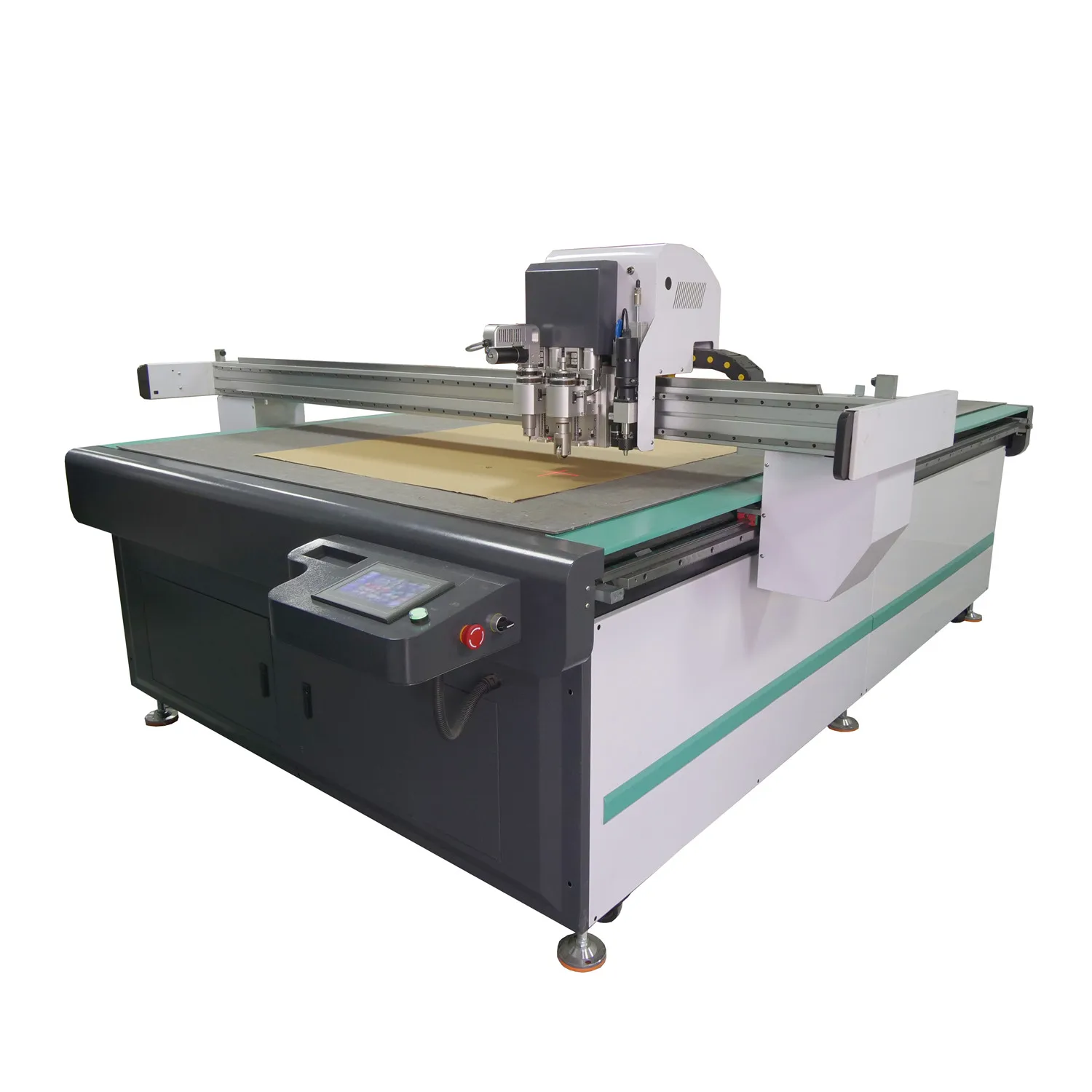
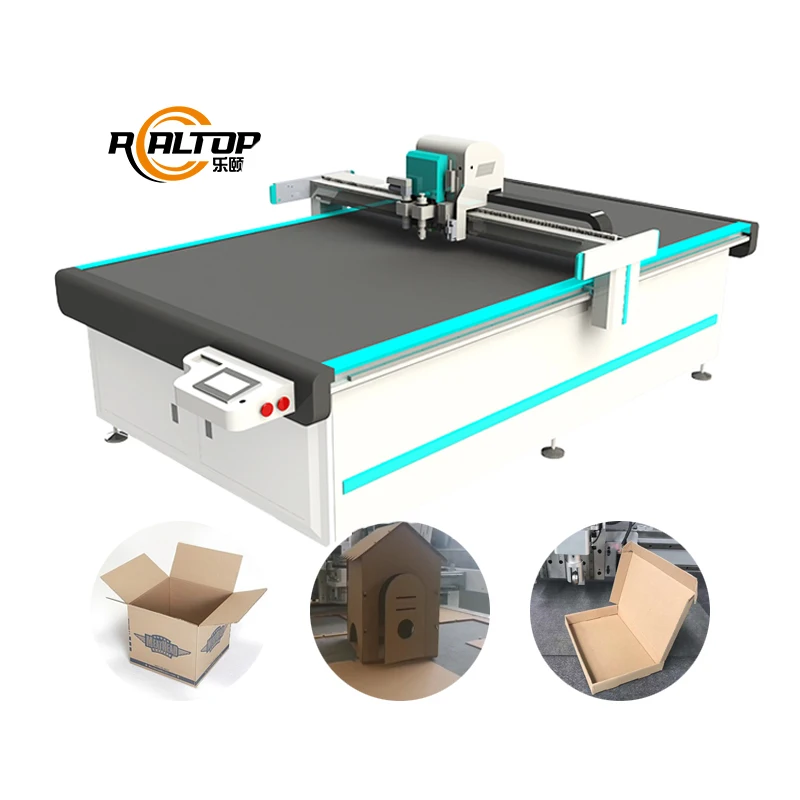
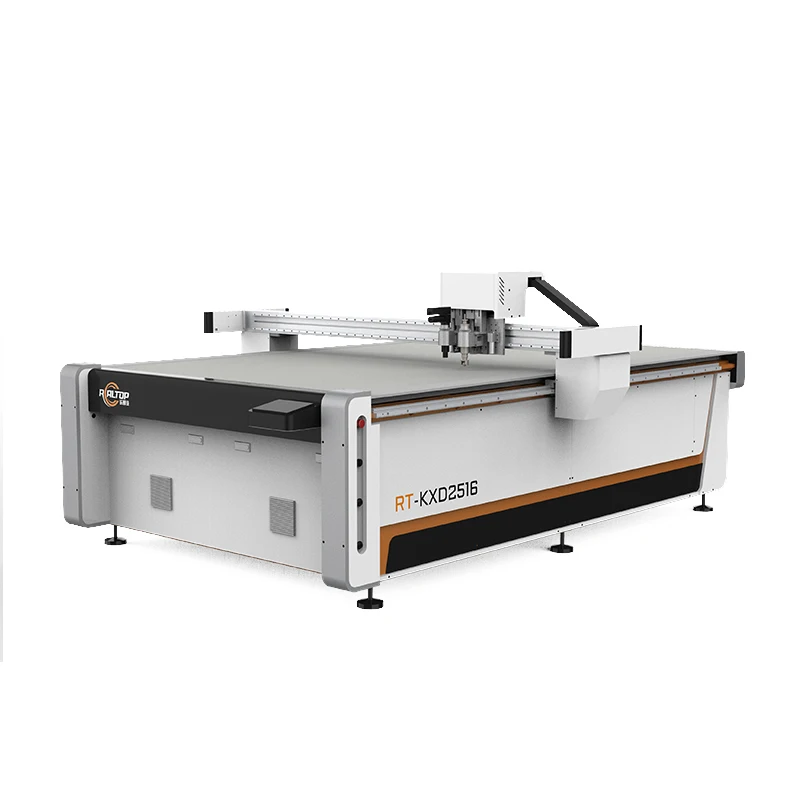
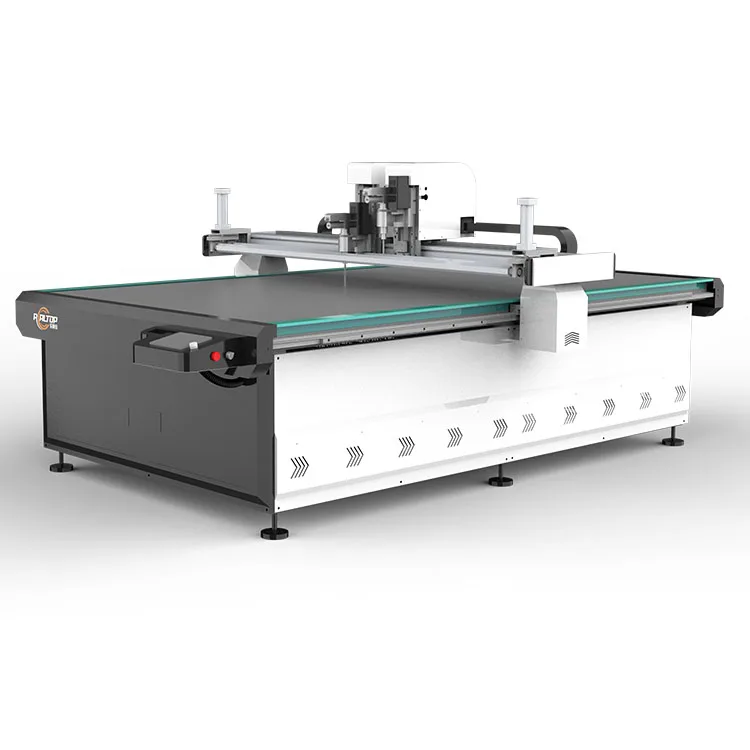
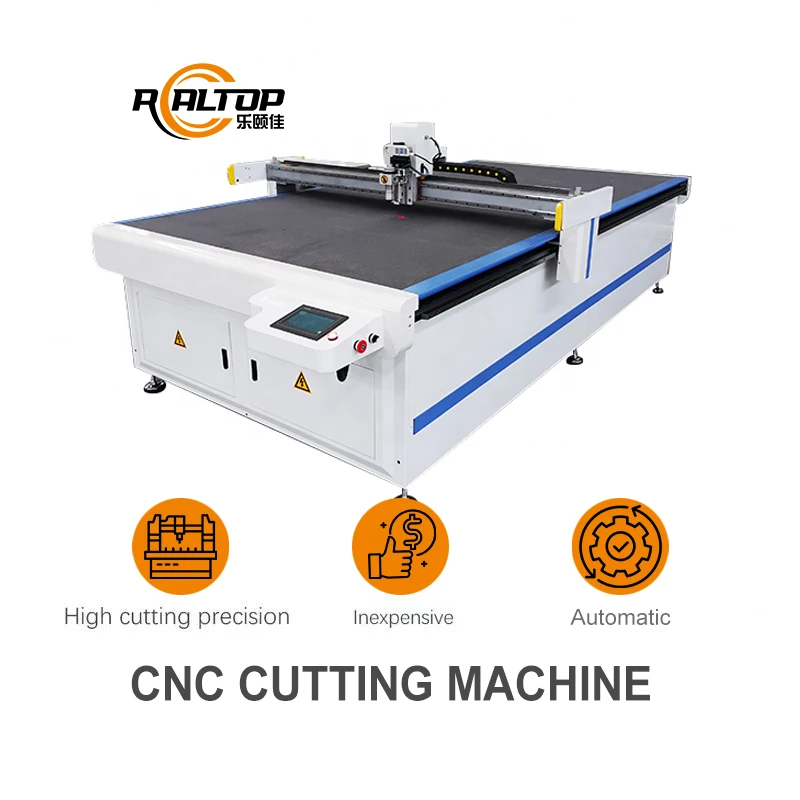
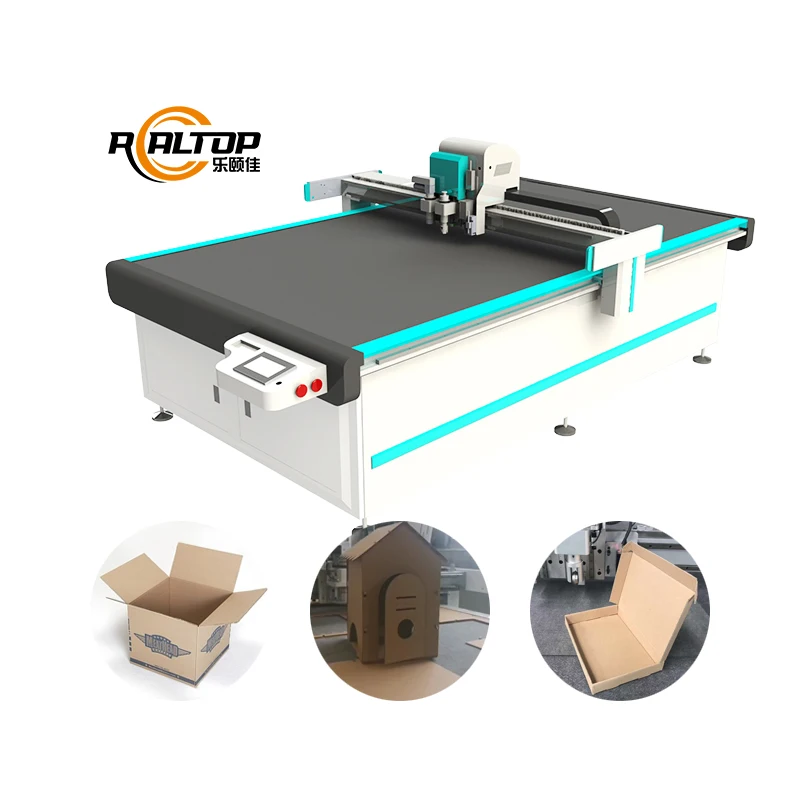
Swiss Knife Versatility — The RT-D2516/RT-S2516 bundles full cutting, half cutting and cursor location into one multi-function head, eliminating tool changes when switching between corrugated board and sticker stock.
Technical Specifications
| Parameter | Value |
|---|---|
| Model | RT-D2516/RT-S2516 |
| Product Type | CNC Oscillating Knife Cutting Machine |
| Working Area | 1600×2500 mm |
| Machine Size | 3450×2300×1250 mm |
| Rated Power | 9 kW |
| Vacuum Pump | 7.5 kW |
| Voltage | 380V±10% (50/60 Hz to be confirmed per destination) |
| Translational Velocity | 800–2000 mm/s |
| Cutting Speed | 200–800 mm/s (according to different cutting materials) |
| Cutting Thickness | ≤100 mm (varies with material) (basis to be confirmed) |
| Repeated Accuracy | ≤0.1 mm |
| Servo System | Taiwan Delta servo motors and drivers |
| Guide Rail | Taiwan Hiwin linear rail |
| Transmission | Synchronous belt and ball screw |
| Table Type | Aluminum alloy honeycomb vacuum platform with zoned suction |
| Tool Head | Swiss imported knife with vibration full/half cut and cursor location |
| Instruction System | HP-GL compatible format |
| Software | Professional carton nesting software included |
| Feeding Option | Auto feeding with Germany imported conveyor belt (configuration option) |
| Safety | Infrared sensors and emergency stop |
| Language Options | English, Russian, Italian, Chinese; special languages customizable |
Application Suitability
| Application | Material or Output |
|---|---|
| Carton sample making | Corrugated cardboard for electrical goods packaging |
| Express logistics boxes | Multi-layer corrugated board for shipping containers |
| High-end gift packaging | Thick corrugated and card stock for premium boxes |
| Sticker and label cutting | Vinyl and adhesive films with contour following |
| Billboard and card production | Card tag, business card and signage board |
| Flexible material processing | Leather, garment fabric, sponge composite leather, PVC, soft glass, silicon, rubber |
Why a Working Area Figure Is Never Enough
A machine specified on working area alone, then found unable to handle the material thickness, costs more than a wrong cut — it costs production time, material waste and missed shipment windows. The CNC knife cutting machine manufacturer market is full of spec sheets that stop at table size.
Clean edge quality on corrugated board depends on matching oscillation frequency and vacuum zoning to the specific flute profile and ply count.
I have watched a packaging shop run five-layer board on a machine set for three-layer, only to see the knife drag and leave ragged edges down every fold line. The machine was not broken. The configuration was wrong for that board grade. Before any commitment, the actual board must be on the table and under the knife [NEED_CITE: corrugated flute profile classification standards]. Cutting speed at 200–800 mm/s is a range, not a promise — where you sit within it depends on density, moisture content and whether you need a crease line beside the cut.
Knife Head Configuration by Material Type
The Swiss imported multifunctional head on the RT-D2516/RT-S2516 performs vibration full cutting, half cutting and cursor location without manual tool swaps. Full cutting suits corrugated cardboard through its full thickness, while half cutting handles sticker and vinyl where the backing must remain intact. Cursor location lets the operator set reference points for registration work, which matters when a printed sheet needs contour-following cuts. As a CNC knife cutting machine manufacturer, Realtop configures the head based on the material sample the buyer sends in, rather than shipping a default setup and hoping it fits.
Vacuum Zoning for Small-Part Hold-Down
The aluminum honeycomb table is divided into suction zones that follow the cutting head across the 1600×2500 mm working area. This matters when cutting small carton components or card tags: a full-table vacuum draws air through zones where no material sits, losing suction where it counts. Zoned adsorption concentrates hold-down force under the active cutting path [NEED_CITE: vacuum table zoning principles for CNC flatbed cutting]. The 7.5 kW vacuum pump provides the pressure differential needed to keep corrugated sheets flat even when the knife exits a cut and the board wants to spring back.
Servo and Rail Specifications in Practice
The Taiwan Delta servo motors paired with Hiwin linear guides deliver ≤0.1 mm repeated accuracy. On a 2500 mm travel axis, that tolerance means the start and end of a fold line meet precisely, so carton corners close square without gap or overlap. The digital servo drives the translational velocity up to 2000 mm/s for rapid positioning between cuts, while actual cutting speed is governed by material resistance. The synchronous belt and ball screw transmission converts motor torque into linear motion with minimal backlash, keeping cut paths true over long production runs.
What Happens When the Tool Head Does Not Match the Board
A buyer once sourced a cutter based on table size and price, then discovered the standard drag knife left crushed flutes on double-wall corrugated. The edge was not cut — it was compressed, and the downstream folding machine jammed on every third box. Retrofitting an oscillating head later cost more than specifying it at order. On sticker work, a wrong blade angle causes the vinyl to lift at corners instead of peeling cleanly from the backing [NEED_CITE: oscillating versus drag knife selection for flexible materials]. These are not warranty claims. They are configuration errors that surface only when production speed reveals what the sample cut hid.
What This Manufacturer Puts on the Table
In-house design covers both knife and laser cutting technologies, so a buyer evaluating corrugated board versus acrylic signage can get an honest recommendation on which method fits. Tool head and table configuration are specified per material and production volume, not shipped as a default package. The software compatibility is confirmed against the buyer’s existing CAD workflow before the order goes to production. Voltage, plug type and control language are locked in writing for the destination market. Sample cutting on the buyer’s own material happens before commitment, with a written report documenting edge quality, cutting speed achieved and tool wear observed.
Documentation & Verification
- Factory test record on your corrugated board grade and thickness range before dispatch
- Electrical schematic confirming 380V±10% supply and 50/60 Hz frequency for destination market
- Tool head and vacuum zone configuration list matched to your material sample
- Software licence and file format compatibility note verified against your CAD system
- Sample cutting report on your own sticker or board material with edge quality assessment
- Spare parts list covering knife blades, belts and vacuum seals
Installation, Commissioning & Support
- 3450×2300 mm machine footprint plus operator clearance, level concrete floor required
- Dedicated 380V circuit rated for 9 kW cutting load plus 7.5 kW vacuum pump start-up surge
- Machine ships fully assembled; confirm fork-lift capacity and door clearance before delivery
- First-run calibration of servo zero points and vacuum zone mapping on your production material
- Operator training covers nesting software, tool head changes and HP-GL file import workflow
- Scheduled maintenance intervals for Hiwin rail lubrication and belt tension verification
What to Prepare Before Requesting a Quote
Send the exact corrugated board specification — flute type, ply count, gram weight and whether it is single-face or double-wall. State your daily sheet volume and the largest sheet size you run, so the flat table versus conveyor-fed option can be evaluated honestly. Confirm your workshop voltage and frequency, along with the control language your operators need.
Frequently Asked Questions
Q: How is cutting thickness verified for corrugated cardboard, and what backs the ≤100 mm claim?
A: The ≤100 mm figure varies with material density and flute structure. Before order, we run your actual board on the RT-D2516/RT-S2516 and document achievable thickness, edge quality and cutting speed in a sample report. This prevents a spec-sheet number from replacing real production data.
Q: Which voltage, plug type and control language are confirmed before shipment?
A: We lock 380V±10% tolerance along with 50 Hz or 60 Hz frequency, plug standard and panel language for your destination market in writing before production starts. The electrical schematic is included in the documentation package so your electrician can prepare the workshop supply.
Q: How do I choose between flat table and conveyor-fed configuration?
A: Flat table suits batch cutting of varied sheet sizes typical in carton sample making. Conveyor feeding with the Germany imported belt suits repetitive high-volume runs where sheets feed continuously. Your daily volume and sheet size range determine which option matches your workflow.
Q: What file formats does the nesting software accept?
A: The HP-GL compatible instruction system imports common vector formats used in packaging design. Before order, we verify compatibility with your existing CAD files and nesting workflow, and document supported formats in the software licence note.
Q: Can I send my own material for sample cutting before placing the order?
A: Yes. Send your corrugated board, sticker stock or flexible material and we cut it on the RT-D2516/RT-S2516 at production speed. The sample report covers edge quality, achievable speed and tool configuration used, so you evaluate the machine on your real production job.










商品评价
There are no reviews yet.