


Fast Delivery
Quick, reliable shipping to any location.

Free & easy returns
Return this item by mail or in store within 90 days for a full refund.
Knife and laser capability under one roof — matching carbon fiber prepreg, apparel fabrics and PVC to the correct cutting method rather than forcing a single technology across incompatible materials.
Technical Specifications
| Parameter | Value |
|---|---|
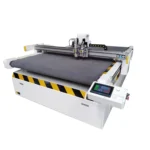
| Product Type | CNC Oscillating Knife Flatbed Cutting Machine |
| Working Area | 1600×2500 mm |
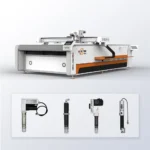
| Tool Head Options | Oscillating knife, driven rotary knife, creasing wheel, kiss cutting tool, pneumatic knife, milling tool, V-groove knife |
| Cutting Speed | 0–2000 mm/s |
| Cutting Thickness | Up to 30 mm (basis not stated in source — depends on material type and density) |
| Cutting Accuracy | ±0.1 mm |
| Vacuum Pump Power | 9 kW |
| Vacuum Table | Aluminum bellows vacuum table |
| Control System | PLC control panel with multi-language display |
| File Format Compatibility | PLT, DXF, AI, PDF |
| Servo Motor Options | Panasonic, Delta, Dorna |
| Voltage Options | 110V / 220V / 380V (frequency to be confirmed) |
| Safety Device | Infrared sensor and emergency stop |
| Machine Size (L×W×H) | 3300×2100×1350 mm |
| Machine Frame | Heavy-duty frame with precision-ground surface |
| Language Options | English, Russian, Italian, Chinese; special languages customizable |
| Software | Dedicated packaging box structure design software included |
Application Suitability
| Application | Material or Output |
|---|---|
| Apparel pattern cutting | Suits, knitwear, lace, complex woven fabrics with pattern-matching nesting |
| Automotive interior trimming | Seat fabrics, carpets, PVC floor mats cut to burr-free edge standards |
| Composite layup preparation | Carbon fiber prepreg, aramid and specialty reinforcement fabrics via cold cutting |
| Home textile production | Sofa fabrics, curtains, rugs, multi-layer upholstery materials |
| Flexible industrial materials | PVC, EVA, leather, foam, PTFE, rubber, acrylic sheets, cardboard and carton |
What "Cutting Speed 2000 mm/s" Actually Means on Prepreg and Woven Fabric
The headline speed only holds when the tool head, vacuum zoning and material clamping are matched to the specific sheet being processed.
A machine running at maximum traverse on a rigid sign board will behave very differently when the same program is sent to a sticky carbon fiber prepreg roll. The oscillating knife may pull fibers instead of shearing them, and insufficient vacuum hold-down allows the prepreg to shift mid-cut, ruining nesting yield. Buyers who specify only on working area and top speed often discover these mismatches during commissioning, when the production material arrives and behaves nothing like the sample used at the factory. [NEED_CITE: material-specific cutting parameters for composite prepreg]
Matching the Tool Head to the Material Behaviour
The available tool heads on this CNC flatbed cutting machine manufacturer range cover fundamentally different cutting mechanics. An oscillating knife shears through fibrous and foam materials with a high-frequency vertical stroke, keeping edges clean on prepreg and woven textiles. A driven rotary knife suits continuous long cuts on thin fabric rolls where the blade must follow tight curves without lifting the material. A kiss cutting tool scores adhesive-backed vinyl or gasket sheets without penetrating the release liner, a requirement that neither oscillating nor rotary blades can meet.
Vacuum Adsorption and Small-Part Stability
The 9 kW vacuum pump feeding the aluminum bellows table provides full-surface suction, which is necessary when cutting small nested parts from flexible materials. Carbon fiber prepreg and lace both have low mass and tend to lift when the knife exits the cut, especially at higher speeds. Zoned vacuum control — confirmed at the quotation stage — directs suction only to active cutting areas, maintaining hold-down force where the tool head is currently working rather than wasting airflow across empty table space. [NEED_CITE: vacuum table zoning principles for flexible material cutting]
Reading the Specifications Against Your Production Reality
The 1600×2500 mm working area accommodates standard fabric roll widths and most automotive interior panel sizes, but buyers cutting oversized marine or aerospace composite panels need to verify sheet dimensions against the table before ordering. The ±0.1 mm cutting accuracy is achievable on stable, flat materials; thick foam or multi-layer fabric stacks introduce compression variables that shift practical tolerances. The PLC control panel accepts PLT, DXF, AI and PDF files, which covers most CAD and nesting software exports, yet buyers running proprietary format workflows should confirm import compatibility before the order is placed. Voltage options span 110V, 220V and 380V, but the local supply frequency must be stated explicitly to avoid motor and pump mismatches on arrival.
The Hidden Cost of Skipping the Sample Cut
When a buyer skips the material sample test and orders on specification alone, the first sign of trouble appears during installation. The knife may leave ragged edges on prepreg, the vacuum table may fail to hold small gasket pieces flat, or the CCD contour function — if assumed but not specified — may not track printed registration marks at line speed. Resolving these issues after shipment means flying in a technician, ordering different tool heads and losing production days. [NEED_CITE: common commissioning issues with CNC cutting equipment]
Why Source This Range Here
In-house design covers both oscillating knife and laser cutting technologies, so the correct method is selected for each material rather than forcing one approach across incompatible applications. Tool head and vacuum table configuration is specified per material type and daily volume, not offered as a generic package. Sample cutting runs on the buyer’s actual prepreg, fabric or PVC stock before the order is confirmed, producing a cutting report that documents edge quality and cycle behavior. Voltage, plug type and control language are verified against the destination market before production begins, preventing on-site electrical rework. The dedicated packaging structure design software ships with the machine, reducing the need for third-party licensing in carton and sample-making workflows.
Documentation & Verification
- Machine specification sheet listing the confirmed tool head and vacuum table configuration for your material
- Sample cutting report produced on your own prepreg or fabric stock before order confirmation
- Electrical schematic and voltage confirmation matched to your facility’s supply frequency
- Software licence and file format compatibility note covering PLT, DXF, AI and PDF import
- Factory test record documenting cutting accuracy and vacuum performance before dispatch
- Operation and maintenance manual in the confirmed control language with spare parts list
Installation, Commissioning & Support
- Heavy-duty frame requires a level concrete floor capable of supporting the 3300×2100×1350 mm footprint without deflection
- Dedicated electrical circuit matching the confirmed voltage and the 9 kW vacuum pump load plus servo motors
- Machine ships in modular sections for site assembly; overhead clearance must exceed 1350 mm plus lifting gear height
- First-run commissioning includes vacuum zoning calibration and tool head offset setting on your actual material
- Operator training covers PLC panel navigation, file import from your existing CAD workflow and knife replacement
- Spare parts list provided at shipment covering oscillating knife blades, vacuum seals and drive belts
Before You Send the Inquiry
Specify the material type, thickness, maximum sheet size and daily cutting volume so the correct tool head and vacuum configuration can be recommended. Confirm the local voltage and frequency at your facility, along with the preferred control panel language. If you are cutting printed materials that require contour recognition, state this requirement explicitly so the correct positioning system is included in the quotation.
Frequently Asked Questions
Q: How do I choose between an oscillating knife and a rotary knife for my material?
A: Oscillating knives use a high-frequency vertical stroke suited to fibrous, foam and composite materials like prepreg and felt, producing clean sheared edges. Rotary knives excel on thin, flexible fabrics where continuous curved cuts are required without lifting the sheet. The choice depends on your material thickness, density and the geometry of your nesting layout.
Q: Can the same machine handle both carbon fiber prepreg and PVC mats?
A: Yes, because the tool head is interchangeable. Prepreg typically requires an oscillating knife for cold cutting without thermal damage, while thicker PVC mats may need a pneumatic knife or adjusted oscillating stroke. The vacuum table holds both material types, but zoning configuration should be confirmed for your specific part sizes.
Q: What voltage and frequency options are available before shipment?
A: The machine is configurable for 110V, 220V or 380V supplies. The exact frequency must be confirmed for your market, as motor and vacuum pump winding specifications differ between 50 Hz and 60 Hz systems. Voltage and plug type are documented in the electrical schematic before production begins.
Q: Is CCD camera contour recognition available for printed fabric cutting?
A: CCD camera positioning is available across the range for printed contour work. If your application involves cutting around printed registration marks on textiles or signage vinyl, this requirement must be specified during the quotation stage so the correct camera and software module are configured on your machine.










商品评价
There are no reviews yet.