



Fast Delivery
Quick, reliable shipping to any location.

Free & easy returns
Return this item by mail or in store within 90 days for a full refund.
Multi-Method Cutting Capability — In-house knife and laser technology development lets advertising producers select the cutting method that suits their specific board, vinyl or composite stock rather than forcing one process across every material.
Technical Specifications
| Parameter | Value |
|---|---|
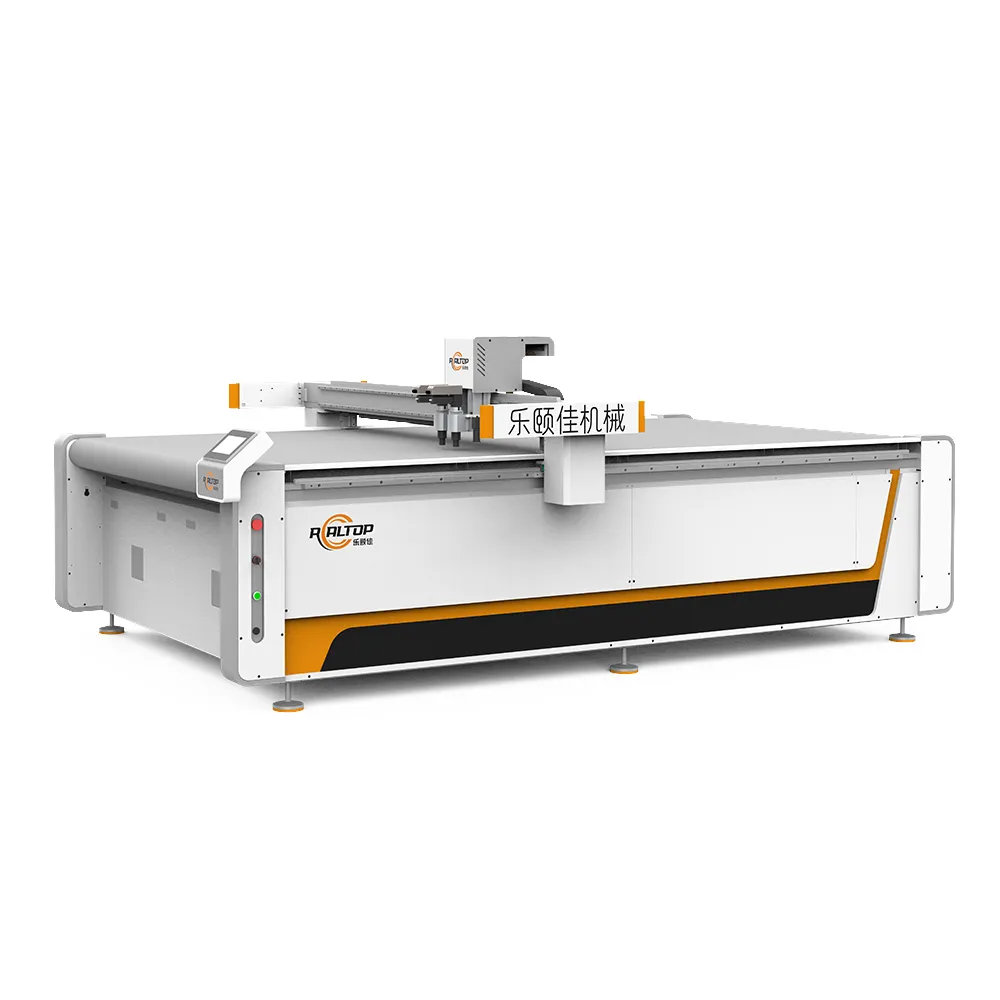
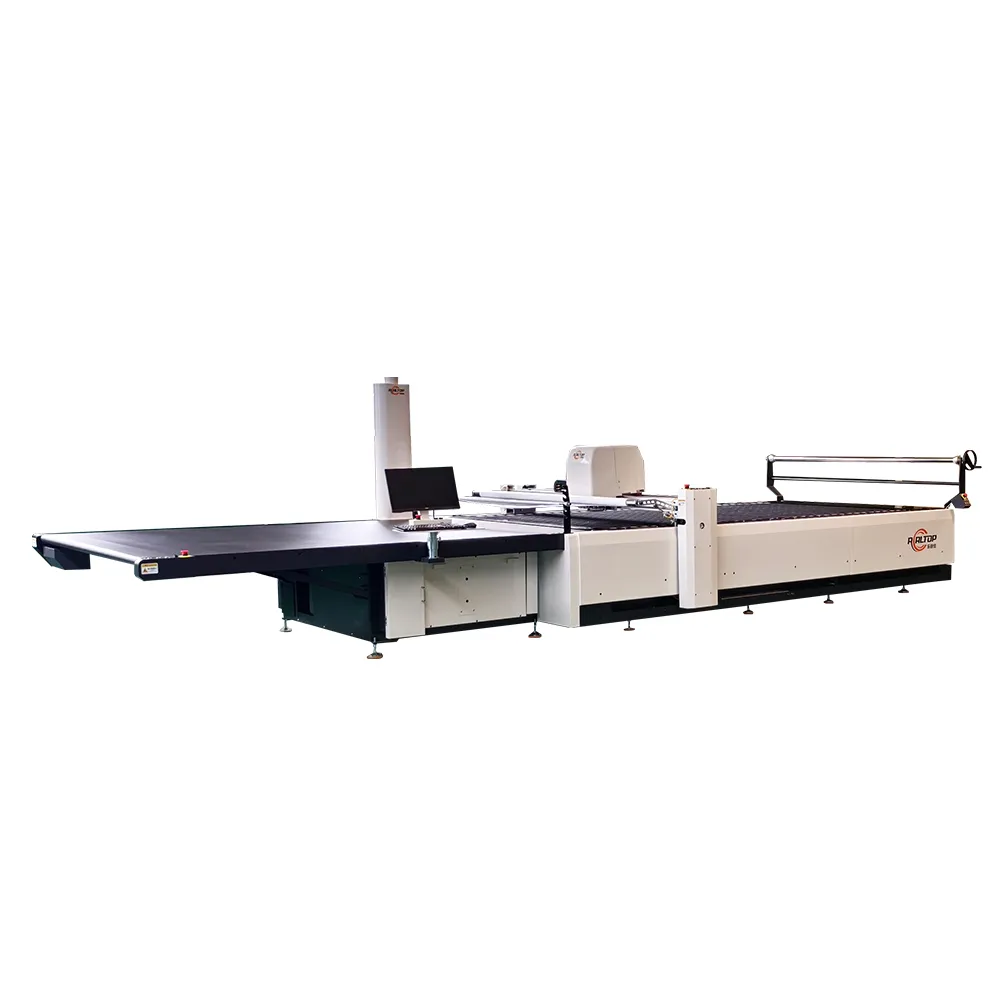
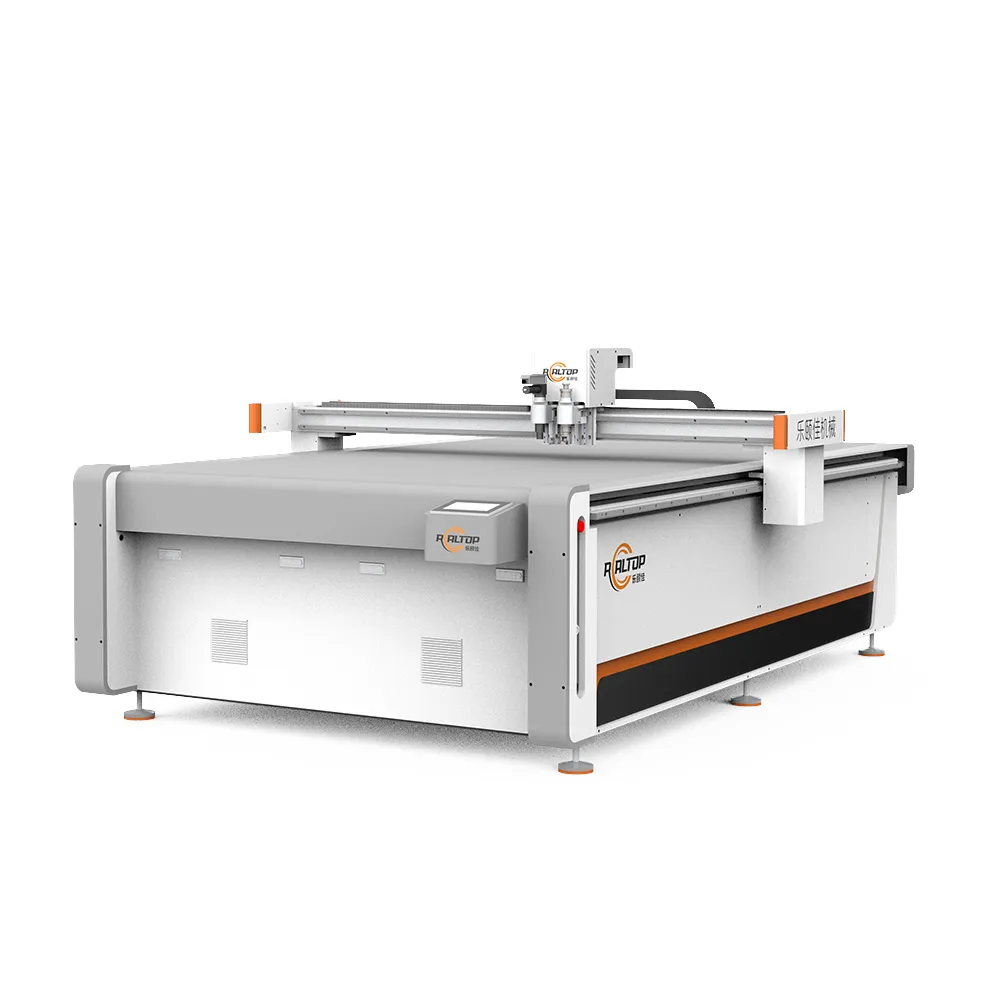
| Product Type | CNC Oscillating Knife Cutting Machine |
| Effective Cutting Area | 2500×1600mm / 2500×2200mm / 3000×2200mm |
| Maximum Speed | 2000mm/s |
| Reset Accuracy | ±0.1mm |
| Cutting Thickness | ≤40mm |
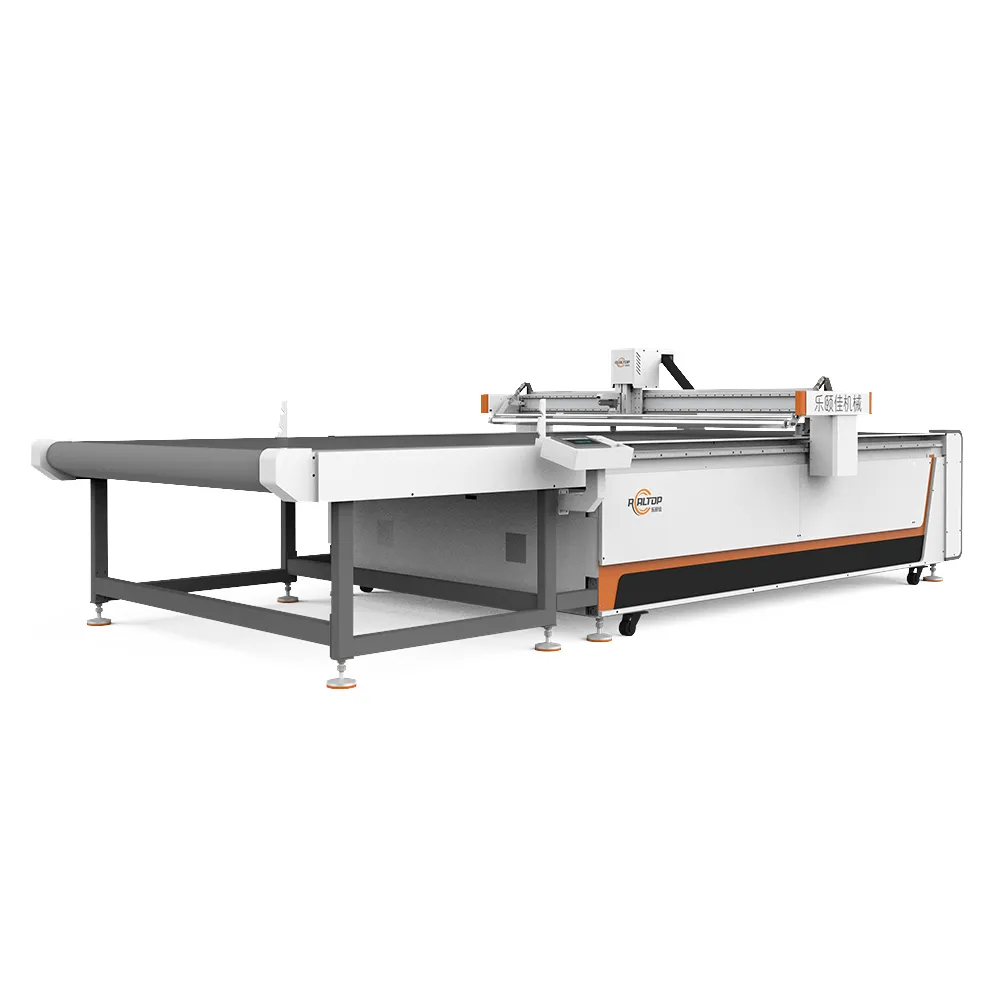
| Table Type | Automatic feeding |
| Optional Tool Heads | Round knife, oscillating knife, marking pen |
| Visual Positioning | Panoramic CCD for automatic edge and template cutting |
| Data Format Compatibility | dxf, plt, ai, pdf |
| Safety Device | Infrared blocking stop and anti-collision protection |
| Voltage | 380V / 220V |
| Control System | REALTOP customized high-speed control system |
| Industrial Belt | Glass fiber tension cord, low noise, high temperature resistant |
| Wiring | Oxygen-free copper shielded wire |
| Bed Treatment | Quenched to eliminate internal stress |
Application Suitability
| Application | Material or Output |
|---|---|
| Large-format signage contour cutting | Printed PVC foam board, acrylic sheets, corrugated plastic |
| Vehicle wrap and fleet graphic finishing | Cast and calendered vinyl, reflective sheeting |
| Display and POS stand production | Honeycomb board, Re-board, composite panels |
| Template and stencil fabrication | Mylar, polyester film, thin gasket material |
| Short-run packaging sample making | Cardstock, folding carton board, corrugated inserts |
Why the Vacuum Table Layout Matters More Than the Working Area
A CNC oscillating knife cutting machine manufacturer that only quotes working area dimensions is leaving out half the conversation. When an advertising producer cuts small acrylic lettering or narrow vinyl decals, a single-zone vacuum table cannot hold those pieces flat, and the oscillating knife catches the lifted edge.
I worked with a signage shop in Shandong that invested in a large-format digital cutting table for sale, only to discover their 100mm-wide channel letters kept shifting during the final pass. The vacuum zone was sized for full 1220×2440mm sheets, not nested small parts. We reconfigured the table into multiple independent vacuum zones, and the problem disappeared on the next test run [NEED_CITE: vacuum zoning requirements for small-part CNC cutting].
Matching the Tool Head to the Advertising Substrate
The oscillating knife handles rigid and semi-rigid boards up to 40mm thick — PVC foam, acrylic, honeycomb composites — where a clean vertical edge is required for assembled signage. A round knife suits roll-fed vinyl and banner material where the cut edge is sealed or hidden in a frame channel. The marking pen supports template trace lines on substrates that will be routed or bent downstream.
Choosing between these tool heads before the machine ships avoids the situation where a producer tries to force a round knife through 10mm foam board and gets a crushed, ragged profile. Each tool option mounts on the same carriage, so a shop cutting both rigid board and flexible vinyl can switch within a single job.
Panoramic CCD Positioning for Print-to-Cut Registration
Advertising print finishing relies on accurate contour cutting around digitally printed graphics. The panoramic visual positioning system scans registration marks across the full cutting area and adjusts the cut path in real time, compensating for slight stretch or skew introduced during printing or lamination [NEED_CITE: CCD registration accuracy in digital print finishing].
This matters most on jobs where a wide-format printer lays down a full-bleed image on PVC board, and the cutting table must trim precisely along the printed edge. If the CCD system cannot track marks at the machine’s 2000mm/s travel speed, the operator slows the machine down manually, losing throughput on long production runs.
Reading the Specs That Actually Affect Signage Output
The ±0.1mm reset accuracy determines how well the machine returns to a home reference after tool changes — critical when a single signage panel requires both oscillating knife cuts and marking pen traces. The quenched bed construction eliminates internal stress from welding, so the gantry reference plane stays flat across years of continuous operation rather than drifting and throwing off contour alignment.
The automatic feeding table with its glass fiber tension belt handles roll-fed vinyl without stretching or slipping, which is a common failure point on cheaper belt materials when the shop runs thin cast vinyl for vehicle wraps. Oxygen-free copper shielded wiring reduces signal interference in the servo drives, keeping motion smooth at high traverse speeds.
The Cost of Overlooking Configuration Details Before Shipment
A buyer who specifies working area without confirming cutting thickness capacity may receive a machine whose Z-axis stroke and knife oscillation amplitude cannot penetrate the thickest board on the shop floor. A shop cutting 15mm PVC foam needs a different tool head setup than one processing 2mm vinyl, and swapping after delivery means downtime and extra parts cost.
Voltage mismatch is another common gap. A 380V three-phase machine shipped to a facility wired only for 220V single-phase requires an external transformer or a rewound motor [NEED_CITE: industrial voltage compatibility for CNC equipment exports]. Software file format compatibility — confirming the control system accepts the buyer’s native dxf, plt, ai or pdf output — should be verified before production starts, not after the first file fails to load.
Why Sourcing This Range Here Makes Sense
In-house design covers both knife and laser cutting, so an advertising producer evaluating materials can compare knife-cut edges on foam board against laser-sealed edges on acrylic within the same supplier conversation. Tool head and vacuum table zoning are configured per the buyer’s material list and part size distribution, not left as a default that may not suit small signage components.
Sample cutting on the buyer’s own printed material happens before commitment, verifying CCD tracking accuracy and edge quality at production speed. Voltage, control language and plug type are confirmed on the electrical schematic before the machine leaves the factory. Software licence and file format notes travel with the machine so the operator can match the nesting workflow from day one.
Documentation & Verification
- Machine specification sheet confirming cutting area, thickness capacity and tool head configuration per unit
- Sample cutting report on buyer-supplied printed board or vinyl, showing CCD tracking and edge quality
- Electrical schematic with voltage and frequency matched to buyer facility before dispatch
- Software licence document and file format compatibility note for dxf, plt, ai and pdf workflows
- Factory test record covering full travel range and tool head change cycles
- Packing photographs documenting machine condition at crating stage
Installation, Commissioning & Support
- Foundation must be level within tolerance to preserve the quenched bed alignment across the 3000×2200mm maximum cutting area
- Dedicated circuit matching confirmed 380V or 220V rating with correct breaker sizing for the high-speed control system
- Gantry and tool carriage assembled on-site with full-axis calibration before first production run
- CCD panoramic positioning calibrated using buyer’s actual printed registration marks and file formats
- Operator training covers tool head changeover between oscillating knife, round knife and marking pen
- Spare parts list includes knife blades, belt segments and CCD calibration targets
What We Need to Size the Right Machine
Send the material types and thicknesses you cut most often — rigid PVC foam, acrylic, vinyl rolls, honeycomb board — along with typical sheet dimensions and daily volume. Confirm your facility voltage and phase, and whether your design software outputs dxf, plt, ai or pdf. If you have printed samples, we can run a contour-cutting test before you commit to a configuration.
Frequently Asked Questions
Q: How do I choose between the 2516, 2522 and 3022 cutting area options?
A: Match the effective cutting area to your most common sheet size and nesting pattern. A shop cutting standard 1220×2440mm boards with minimal waste benefits from the 2516 format, while producers handling oversized display panels or nesting multiple signage jobs per sheet need the 3022 area. Consider both current jobs and anticipated growth in panel size.
Q: Should I use the oscillating knife or round knife for my advertising materials?
A: The oscillating knife suits rigid and semi-rigid boards like PVC foam and acrylic up to 40mm thick, producing a clean vertical edge for assembled signage. The round knife handles roll-fed vinyl and banner material where the edge is concealed in a frame. Many advertising shops run both tool heads on the same machine for mixed-material jobs.
Q: How does the CCD panoramic positioning handle printed contour jobs?
A: The system scans registration marks across the full working area and adjusts the cut path in real time, compensating for print stretch or skew. We recommend a sample cutting test on your actual printed material to verify tracking accuracy at production speed before finalizing the machine configuration.
Q: What voltage and control language options are available before shipment?
A: Machines are configurable for 380V or 220V supply with matching plug type, confirmed on the electrical schematic before production. Control system language is set to the operator’s preference. Both specifications should be locked in during the quotation stage to avoid delays at installation.
Q: What documentation comes with the machine?
A: Each unit ships with a specification sheet, sample cutting report, electrical schematic, software licence with file format compatibility note, factory test record, operation manual and spare parts list. CE documentation is provided where applicable to the destination market.










商品评价
There are no reviews yet.