


Fast Delivery
Quick, reliable shipping to any location.

Free & easy returns
Return this item by mail or in store within 90 days for a full refund.
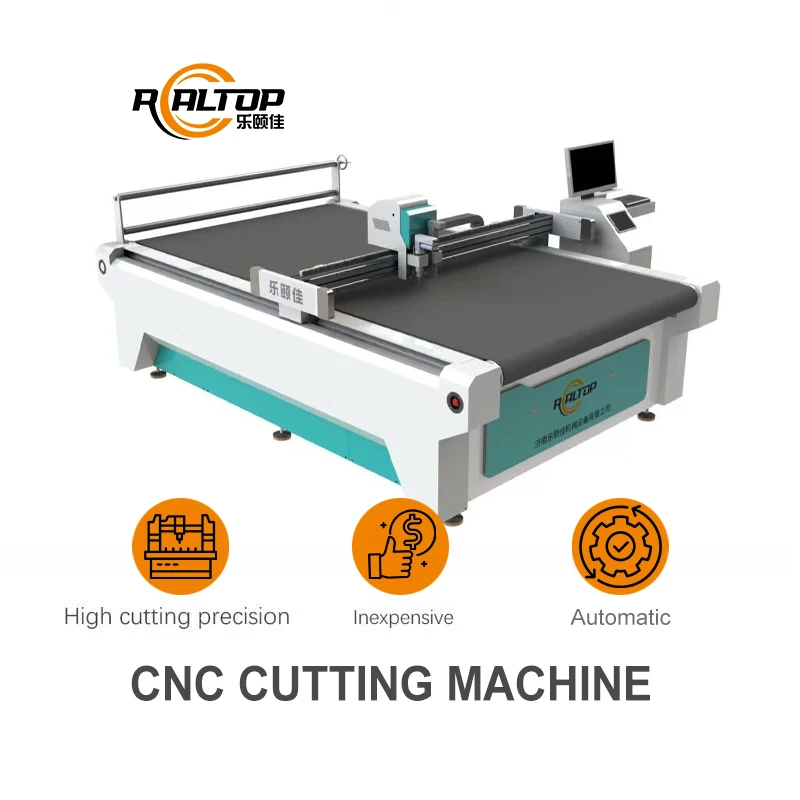
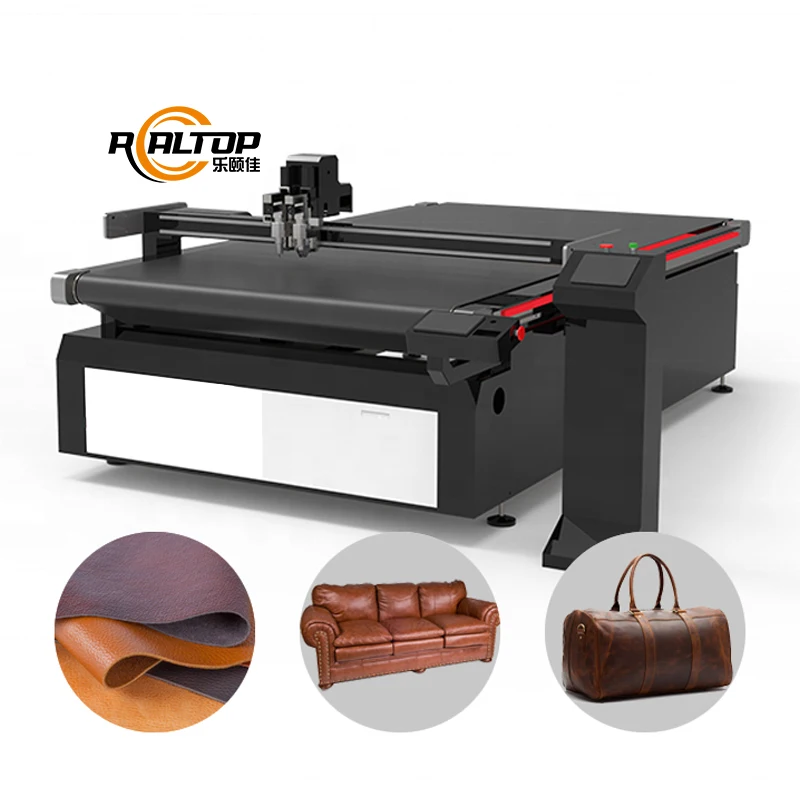
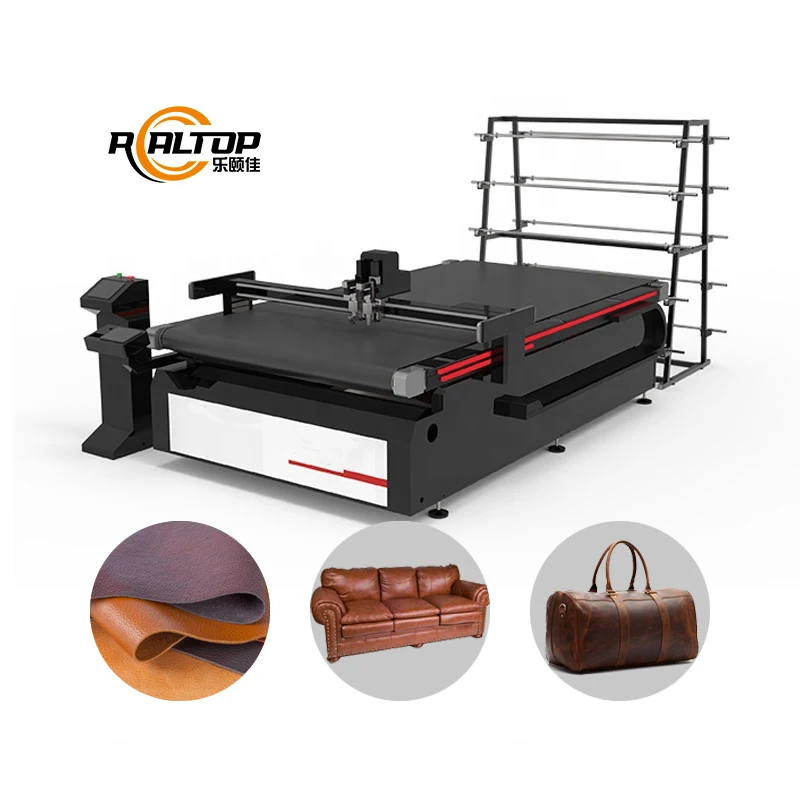
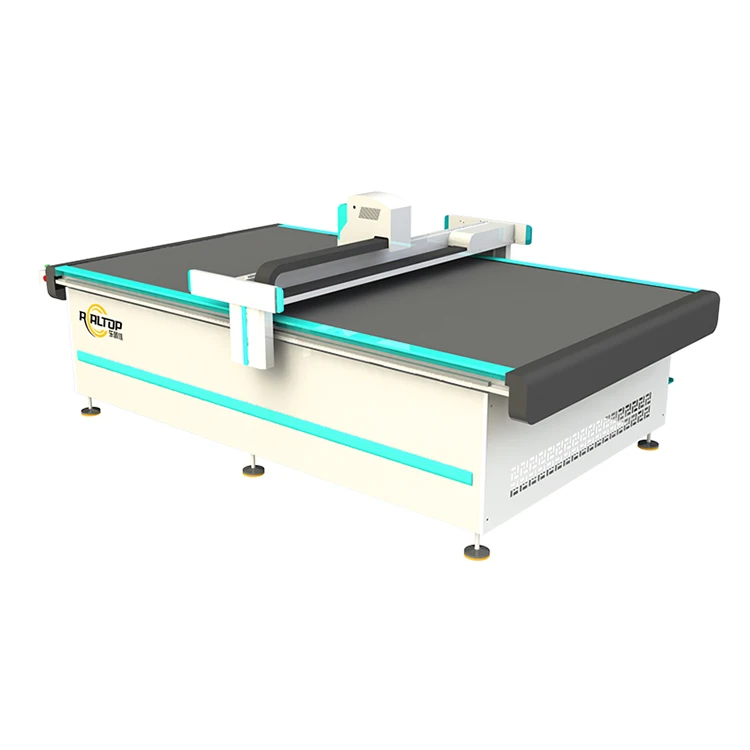
Complete catalogue coverage — The Realtop-2516 sits within a full range of oscillating knife and laser cutting systems, letting buyers match the process to the material rather than forcing one method across every job.
Technical Specifications
| Parameter | Value |
|---|---|
| Model | RT-D2516 / RT-S2516 |
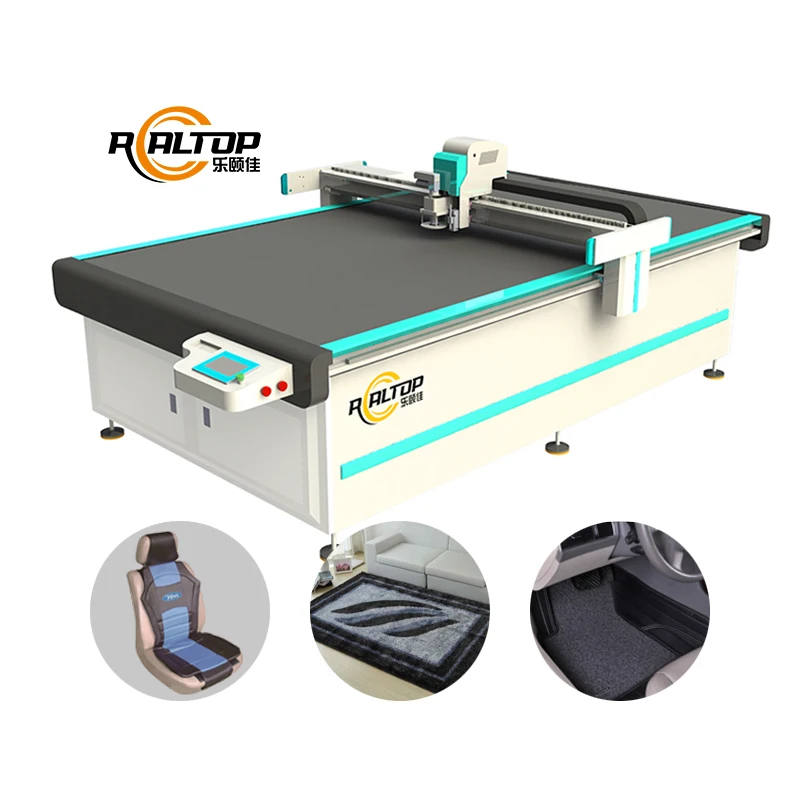
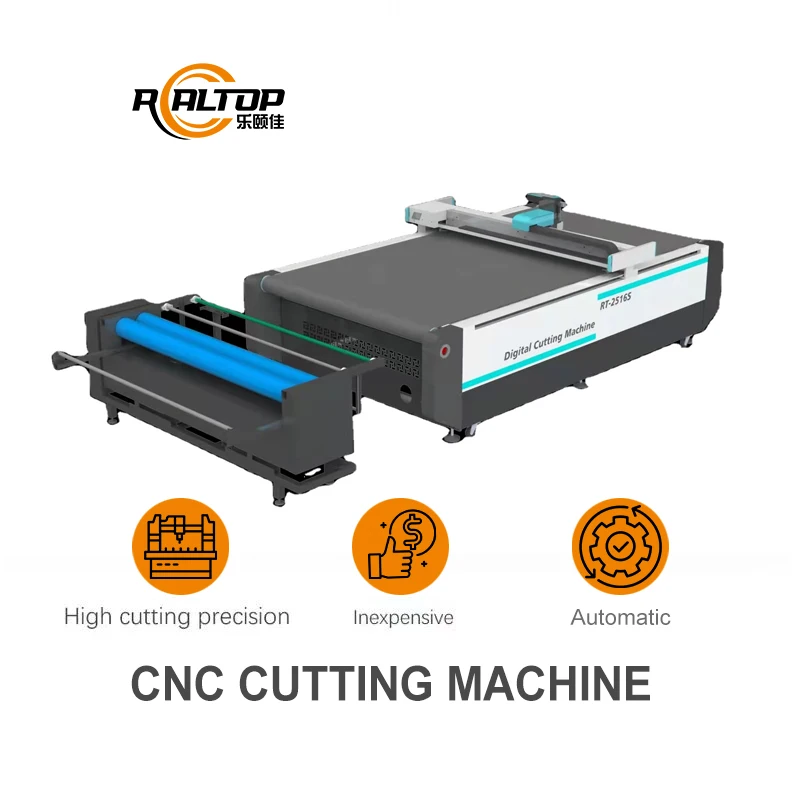
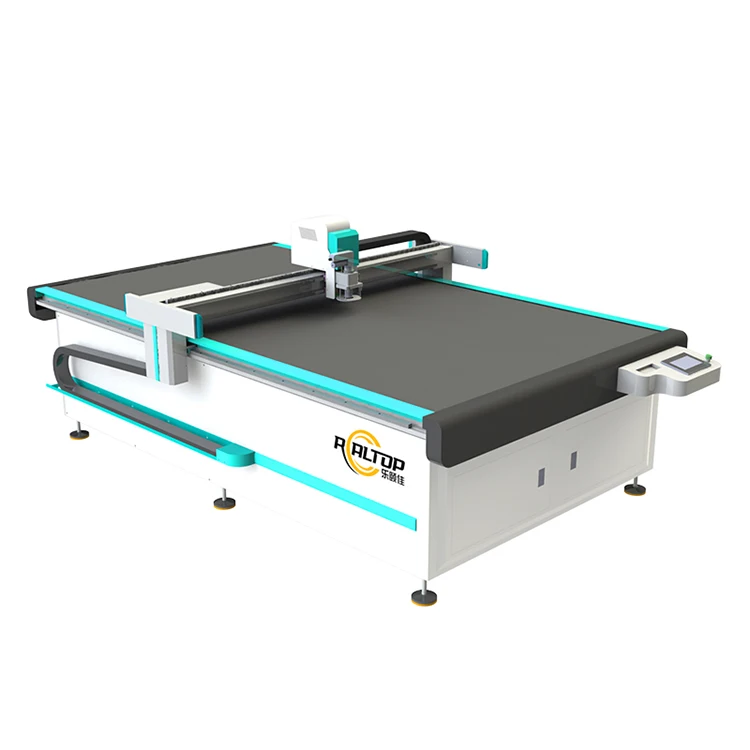
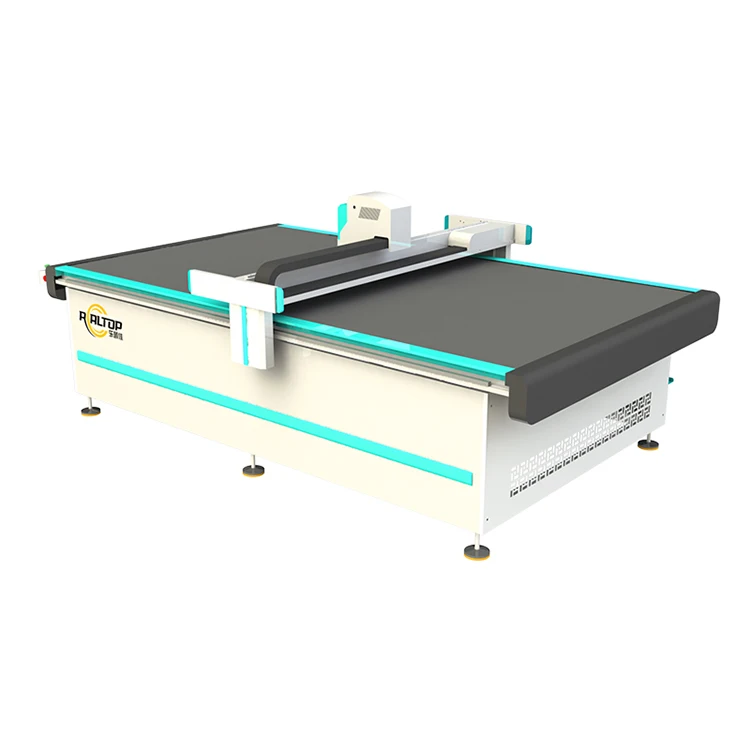
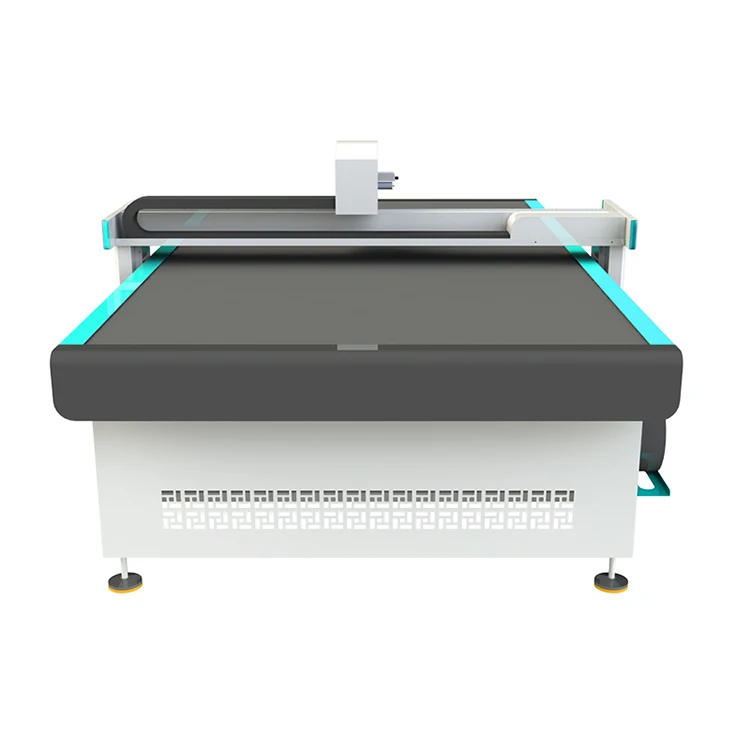
| Product Type | CNC Digital Flatbed Leather Cutting Machine |
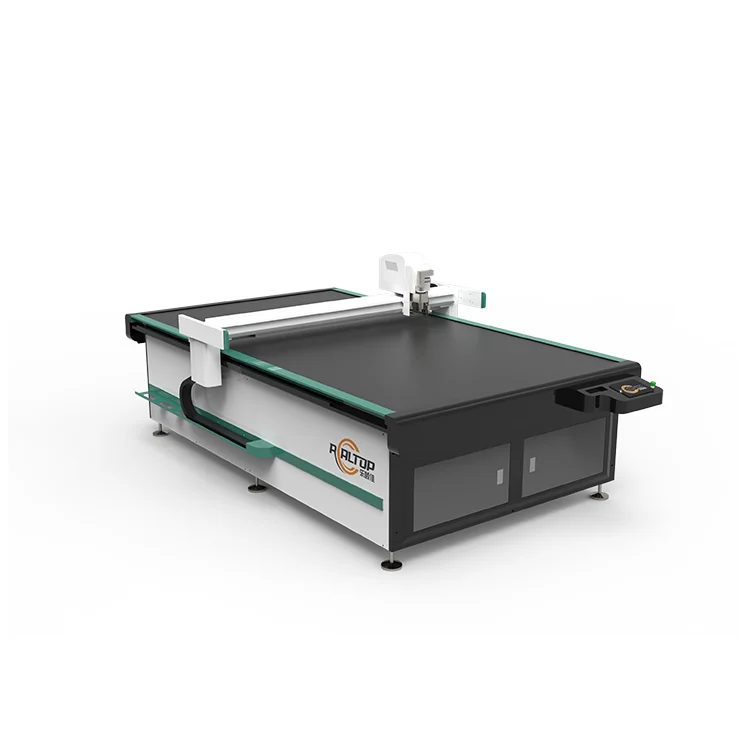
| Working Area | 1600 × 2500 mm |
| Overall Dimensions (L × W × H) | 3450 × 2300 × 1250 mm |
| Rated Power | 9 kW |
| Voltage | 380V ±10% |
| Transmission System | Digital servo motor, linear guide, synchronous belt, ball screw |
| Servo Motor Brand | Delta (Panasonic optional) |
| Repeated Accuracy | ≤ 0.1 mm |
| Translational Velocity | 800 – 1200 mm/s |
| Cutting Thickness | 20 – 80 mm (basis not stated in source — varies by material and tool head) |
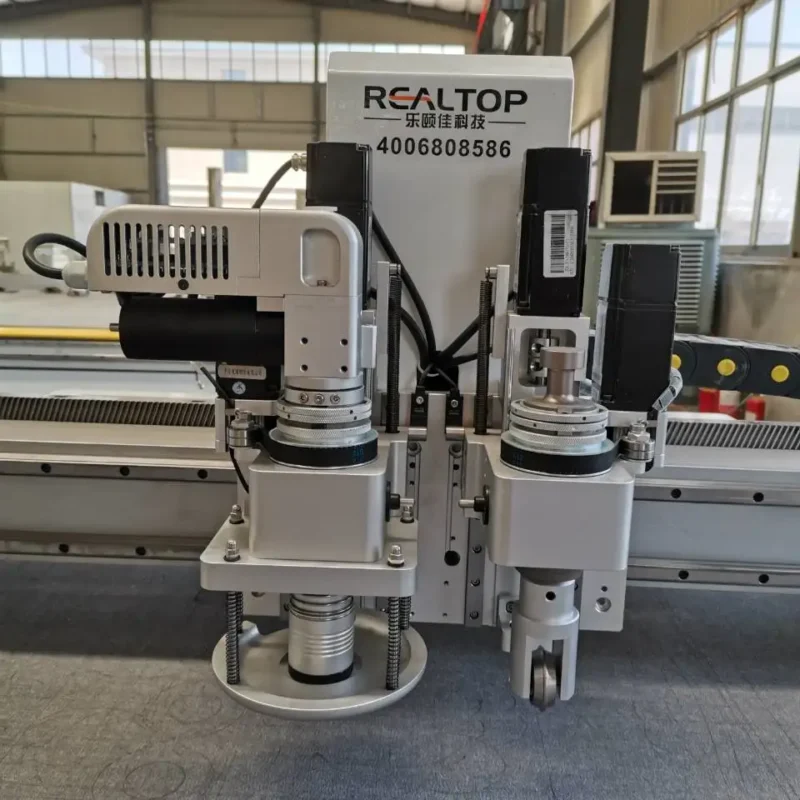
| Tool Head Options | Swiss imported knife, oscillating knife, pneumatic knife, high-power vibrating knife, circular knife, V-cutting knife, drag knife, creasing wheel, dotted line knife, punching, brush |
| Visual Positioning | Small CCD camera mark point positioning, panoramic camera recognition, projection positioning |
| Working Table | Magnesium-aluminum alloy vacuum adsorption table (fluorocarbon PVDF powder spraying, anodic oxidation, hard oxidation) |
| Vacuum Pump | 7.5 kW, aviation aluminum shell, built-in silencer sponge |
| Safety Device | Infrared induction blocking, anti-collision, emergency stop |
| Fixed Model | Flat working table (conveyor belt optional) |
| Instruction System | HP-GL compatible format |
| Language Options | English, Russian, Italian, Chinese (special languages customizable) |
| Assembly State | Fully assembled |
| Warranty | 1 year |
Application Suitability
| Application | Material or Output |
|---|---|
| Shoe upper and leather bag production | Natural leather, synthetic PU and PVC leather with irregular contour nesting |
| Automotive seat and interior trimming | Sponge composite leather, foam, rubber gasket stock |
| Garment and footwear sample making | Multi-layer flexible textiles and bonded leather panels |
| Signage and packaging prototyping | PVC soft sheet, soft glass, silicone rubber |
What Vacuum Zoning Gets Wrong on Small Leather Panels
Specifying a CNC digital flatbed leather cutting machine for sale by working area alone misses the factor that ruins small-part yields: vacuum table zoning.
I watched a batch of automotive seat covers go to scrap because the vacuum zones on the table were too coarse. The moment the knife released tension on a narrow tongue-shaped panel, the remaining strip lifted off the bed and the blade drifted into the next piece. The machine was not at fault — the zoning was. Buyers running mixed-size leather patterns need to confirm how many independent suction zones sit under that 1600 × 2500 mm bed and whether each zone can hold a piece as small as a shoe strap without the rest of the hide lifting [NEED_CITE: vacuum zone count and part-size retention on flatbed cutting tables].
Matching Tool Heads to Leather Grade and Ply Count
A natural full-grain hide reacts differently under an oscillating knife than a bonded PU laminate does. The Realtop-2516 offers Swiss imported knife, high-power vibrating knife, pneumatic knife, and drag knife among its tool head options, so the buyer selects the blade geometry that suits the actual material on the table. A CNC digital flatbed leather cutting machine for sale should always ship with the tool head validated against the buyer’s own sample, not a generic swatch.
CCD Camera Positioning for Printed Leather Contours
When leather panels carry printed grain patterns or dyed registration marks, the cutting path must follow the print — not the theoretical CAD outline. The small CCD camera and panoramic camera options on this CNC digital flatbed leather cutting machine for sale track printed marks at production speed, but only if the print contrast and mark size fall within the camera’s recognition threshold [NEED_CITE: CCD camera mark recognition reliability at high translational speeds]. Ask for a contour-cutting test on your printed stock before the order is locked.
Reading the Specs That Actually Affect Your Floor
The 7.5 kW vacuum pump paired with the magnesium-aluminum alloy table matters more than the headline cutting speed. A pump this size, combined with multi-zone valving, generates enough negative pressure to pin thin synthetic leather that would otherwise skate across a weaker bed. The Delta servo motors on linear guides deliver ≤ 0.1 mm repeated accuracy, which keeps nested shoe uppers inside their tolerance band across a full 2500 mm stroke. Translational velocity of 800 – 1200 mm/s is usable only when the vacuum holds; without adequate suction, the machine must slow down to prevent material shift. The 9 kW rated power figure tells the electrical team what dedicated circuit to pull, and the 380V ±10% supply must match the factory bus — a detail that causes costly rewiring if overlooked at the quotation stage.
The Cost of a Mis-specified Flatbed
A buyer who confirms working area but skips the tool head conversation ends up with ragged edges on sponge composite leather or crushed foam cores that fail downstream inspection. Wrong voltage documentation means the machine sits idle while an electrician sources a step-up transformer. Skipping the sample cutting test leaves edge quality and contour accuracy to chance [NEED_CITE: rework costs from mis-specified cutting tool heads on flexible materials]. These problems surface only after the container arrives, when returns are impractical.
Why Source This Machine Through the Full-Range Catalogue
The catalogue covers both oscillating knife and laser cutting routes, so a buyer processing leather alongside acrylic signage can consolidate under one supplier and one service relationship. Tool head and table configurations are specified per material and production volume rather than offered as a single default build. CCD camera positioning is confirmed on the buyer’s printed material before order. Voltage, plug type, and control language are locked in the specification document, not left to assumption. A sample cutting report on the buyer’s own leather stock accompanies every pre-shipment file set.
Documentation & Verification
- Machine specification sheet listing every tool head and table option selected for your configuration
- Electrical schematic and voltage confirmation matched to your facility supply
- Sample cutting report on your leather grade and thickness before dispatch
- Tool head and vacuum table configuration list signed off at order
- Software licence key and HP-GL file format compatibility note included
- Packing photographs of the fully assembled machine before crating
Installation, Commissioning & Support
- The 3450 × 2300 × 1250 mm footprint requires a level concrete pad with clearance for material loading on three sides
- A dedicated 380V circuit rated for the 9 kW total draw must be in place before the machine is uncrated
- Unit ships fully assembled; commissioning covers vacuum zone balancing and servo calibration on site
- Delta servo parameters and CCD camera thresholds are tuned during first-run using your actual leather stock
- Spare parts list covers consumable blades, vacuum pump silencer sponge, and drive belt replacements
- Daily maintenance focuses on vacuum filter cleaning and linear guide inspection across the 2500 mm rail span
Before You Send the Inquiry
Tell the supplier the exact leather types you cut — natural hide, PU laminate, or sponge composite — along with the thickness range and typical panel dimensions. Confirm your facility voltage and frequency, the control language your operators need, and whether your existing nesting software outputs HP-GL. If you run printed leather with registration marks, send a sample so the CCD camera threshold can be set before the quotation is finalized.
Frequently Asked Questions
Q: How do I choose the right tool head for different leather grades?
A: Natural full-grain hides usually require the Swiss imported knife or oscillating knife for clean edge release, while bonded PU and sponge composite leather respond better to a high-power vibrating knife or circular knife. The correct choice depends on material density and ply count. Request a sample cutting test on your actual stock before the tool head is finalized in the order specification.
Q: Can the CCD camera reliably track printed marks at full translational speed?
A: The small CCD and panoramic camera options both track registration marks, but reliability depends on print contrast, mark size, and ambient lighting over the bed. A pre-order contour-cutting test on your printed leather at 800 – 1200 mm/s translational velocity confirms whether the camera holds the path within tolerance before production begins.
Q: What voltage options are available and how is electrical compatibility confirmed?
A: The standard supply is 380V ±10%, with frequency and plug type confirmed at order to match your local grid. An electrical schematic and voltage confirmation document are issued before shipment. Buyers in regions with 220V or 440V industrial supply should raise this during the quotation stage so the correct transformer or motor winding is specified.
Q: Which file formats does the system accept from nesting software?
A: The instruction system is HP-GL compatible, covering output from most mainstream nesting and CAD platforms. A software licence and file format compatibility note ship with the machine. If your workflow uses a proprietary format, send sample files during the inquiry stage so conversion or compatibility can be verified before the order is placed.
Q: What working area and head configurations are available across the range?
A: The Realtop-2516 provides a 1600 × 2500 mm flatbed with single-head configuration as standard, and the broader catalogue includes compact and large-format sizes with multi-head options. Selection depends on your sheet size, daily volume, and whether you process leather alongside other flexible or rigid materials on the same line.
Complete catalogue coverage — The Realtop-2516 sits within a full range of oscillating knife and laser cutting systems, letting buyers match the process to the material rather than forcing one method across every job.
Technical Specifications
| Parameter | Value |
|---|---|
| Model | RT-D2516 / RT-S2516 |
| Product Type | CNC Digital Flatbed Leather Cutting Machine |
| Working Area | 1600 × 2500 mm |
| Overall Dimensions (L × W × H) | 3450 × 2300 × 1250 mm |
| Rated Power | 9 kW |
| Voltage | 380V ±10% |
| Transmission System | Digital servo motor, linear guide, synchronous belt, ball screw |
| Servo Motor Brand | Delta (Panasonic optional) |
| Repeated Accuracy | ≤ 0.1 mm |
| Translational Velocity | 800 – 1200 mm/s |
| Cutting Thickness | 20 – 80 mm (basis not stated in source — varies by material and tool head) |
| Tool Head Options | Swiss imported knife, oscillating knife, pneumatic knife, high-power vibrating knife, circular knife, V-cutting knife, drag knife, creasing wheel, dotted line knife, punching, brush |
| Visual Positioning | Small CCD camera mark point positioning, panoramic camera recognition, projection positioning |
| Working Table | Magnesium-aluminum alloy vacuum adsorption table (fluorocarbon PVDF powder spraying, anodic oxidation, hard oxidation) |
| Vacuum Pump | 7.5 kW, aviation aluminum shell, built-in silencer sponge |
| Safety Device | Infrared induction blocking, anti-collision, emergency stop |
| Fixed Model | Flat working table (conveyor belt optional) |
| Instruction System | HP-GL compatible format |
| Language Options | English, Russian, Italian, Chinese (special languages customizable) |
| Assembly State | Fully assembled |
| Warranty | 1 year |
Application Suitability
| Application | Material or Output |
|---|---|
| Shoe upper and leather bag production | Natural leather, synthetic PU and PVC leather with irregular contour nesting |
| Automotive seat and interior trimming | Sponge composite leather, foam, rubber gasket stock |
| Garment and footwear sample making | Multi-layer flexible textiles and bonded leather panels |
| Signage and packaging prototyping | PVC soft sheet, soft glass, silicone rubber |
What Vacuum Zoning Gets Wrong on Small Leather Panels
Specifying a CNC digital flatbed leather cutting machine for sale by working area alone misses the factor that ruins small-part yields: vacuum table zoning.
I watched a batch of automotive seat covers go to scrap because the vacuum zones on the table were too coarse. The moment the knife released tension on a narrow tongue-shaped panel, the remaining strip lifted off the bed and the blade drifted into the next piece. The machine was not at fault — the zoning was. Buyers running mixed-size leather patterns need to confirm how many independent suction zones sit under that 1600 × 2500 mm bed and whether each zone can hold a piece as small as a shoe strap without the rest of the hide lifting [NEED_CITE: vacuum zone count and part-size retention on flatbed cutting tables].
Matching Tool Heads to Leather Grade and Ply Count
A natural full-grain hide reacts differently under an oscillating knife than a bonded PU laminate does. The Realtop-2516 offers Swiss imported knife, high-power vibrating knife, pneumatic knife, and drag knife among its tool head options, so the buyer selects the blade geometry that suits the actual material on the table. A CNC digital flatbed leather cutting machine for sale should always ship with the tool head validated against the buyer’s own sample, not a generic swatch.
CCD Camera Positioning for Printed Leather Contours
When leather panels carry printed grain patterns or dyed registration marks, the cutting path must follow the print — not the theoretical CAD outline. The small CCD camera and panoramic camera options on this CNC digital flatbed leather cutting machine for sale track printed marks at production speed, but only if the print contrast and mark size fall within the camera’s recognition threshold [NEED_CITE: CCD camera mark recognition reliability at high translational speeds]. Ask for a contour-cutting test on your printed stock before the order is locked.
Reading the Specs That Actually Affect Your Floor
The 7.5 kW vacuum pump paired with the magnesium-aluminum alloy table matters more than the headline cutting speed. A pump this size, combined with multi-zone valving, generates enough negative pressure to pin thin synthetic leather that would otherwise skate across a weaker bed. The Delta servo motors on linear guides deliver ≤ 0.1 mm repeated accuracy, which keeps nested shoe uppers inside their tolerance band across a full 2500 mm stroke. Translational velocity of 800 – 1200 mm/s is usable only when the vacuum holds; without adequate suction, the machine must slow down to prevent material shift. The 9 kW rated power figure tells the electrical team what dedicated circuit to pull, and the 380V ±10% supply must match the factory bus — a detail that causes costly rewiring if overlooked at the quotation stage.
The Cost of a Mis-specified Flatbed
A buyer who confirms working area but skips the tool head conversation ends up with ragged edges on sponge composite leather or crushed foam cores that fail downstream inspection. Wrong voltage documentation means the machine sits idle while an electrician sources a step-up transformer. Skipping the sample cutting test leaves edge quality and contour accuracy to chance [NEED_CITE: rework costs from mis-specified cutting tool heads on flexible materials]. These problems surface only after the container arrives, when returns are impractical.
Why Source This Machine Through the Full-Range Catalogue
The catalogue covers both oscillating knife and laser cutting routes, so a buyer processing leather alongside acrylic signage can consolidate under one supplier and one service relationship. Tool head and table configurations are specified per material and production volume rather than offered as a single default build. CCD camera positioning is confirmed on the buyer’s printed material before order. Voltage, plug type, and control language are locked in the specification document, not left to assumption. A sample cutting report on the buyer’s own leather stock accompanies every pre-shipment file set.
Documentation & Verification
- Machine specification sheet listing every tool head and table option selected for your configuration
- Electrical schematic and voltage confirmation matched to your facility supply
- Sample cutting report on your leather grade and thickness before dispatch
- Tool head and vacuum table configuration list signed off at order
- Software licence key and HP-GL file format compatibility note included
- Packing photographs of the fully assembled machine before crating
Installation, Commissioning & Support
- The 3450 × 2300 × 1250 mm footprint requires a level concrete pad with clearance for material loading on three sides
- A dedicated 380V circuit rated for the 9 kW total draw must be in place before the machine is uncrated
- Unit ships fully assembled; commissioning covers vacuum zone balancing and servo calibration on site
- Delta servo parameters and CCD camera thresholds are tuned during first-run using your actual leather stock
- Spare parts list covers consumable blades, vacuum pump silencer sponge, and drive belt replacements
- Daily maintenance focuses on vacuum filter cleaning and linear guide inspection across the 2500 mm rail span
Before You Send the Inquiry
Tell the supplier the exact leather types you cut — natural hide, PU laminate, or sponge composite — along with the thickness range and typical panel dimensions. Confirm your facility voltage and frequency, the control language your operators need, and whether your existing nesting software outputs HP-GL. If you run printed leather with registration marks, send a sample so the CCD camera threshold can be set before the quotation is finalized.
Frequently Asked Questions
Q: How do I choose the right tool head for different leather grades?
A: Natural full-grain hides usually require the Swiss imported knife or oscillating knife for clean edge release, while bonded PU and sponge composite leather respond better to a high-power vibrating knife or circular knife. The correct choice depends on material density and ply count. Request a sample cutting test on your actual stock before the tool head is finalized in the order specification.
Q: Can the CCD camera reliably track printed marks at full translational speed?
A: The small CCD and panoramic camera options both track registration marks, but reliability depends on print contrast, mark size, and ambient lighting over the bed. A pre-order contour-cutting test on your printed leather at 800 – 1200 mm/s translational velocity confirms whether the camera holds the path within tolerance before production begins.
Q: What voltage options are available and how is electrical compatibility confirmed?
A: The standard supply is 380V ±10%, with frequency and plug type confirmed at order to match your local grid. An electrical schematic and voltage confirmation document are issued before shipment. Buyers in regions with 220V or 440V industrial supply should raise this during the quotation stage so the correct transformer or motor winding is specified.
Q: Which file formats does the system accept from nesting software?
A: The instruction system is HP-GL compatible, covering output from most mainstream nesting and CAD platforms. A software licence and file format compatibility note ship with the machine. If your workflow uses a proprietary format, send sample files during the inquiry stage so conversion or compatibility can be verified before the order is placed.
Q: What working area and head configurations are available across the range?
A: The Realtop-2516 provides a 1600 × 2500 mm flatbed with single-head configuration as standard, and the broader catalogue includes compact and large-format sizes with multi-head options. Selection depends on your sheet size, daily volume, and whether you process leather alongside other flexible or rigid materials on the same line.
商品评价
There are no reviews yet.