

CNC Cutting Machine for Corrugated Honeycomb Paper Board – Full Range
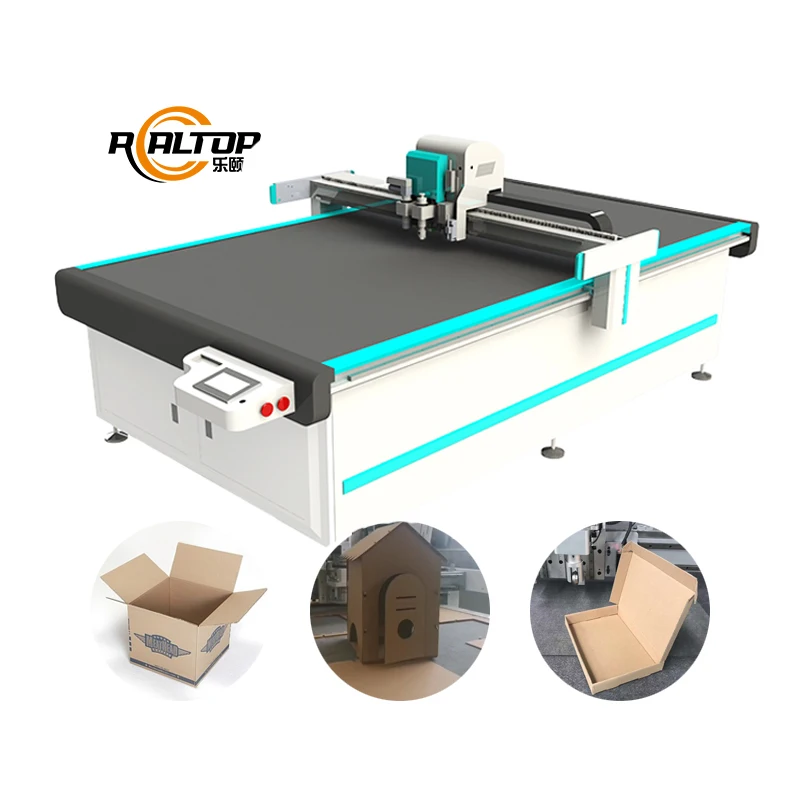
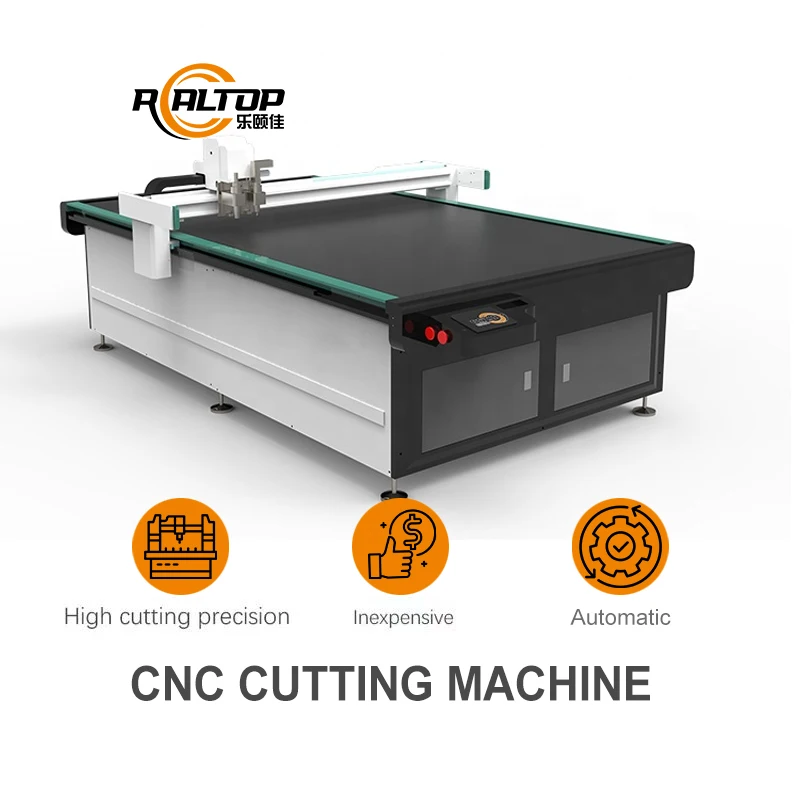
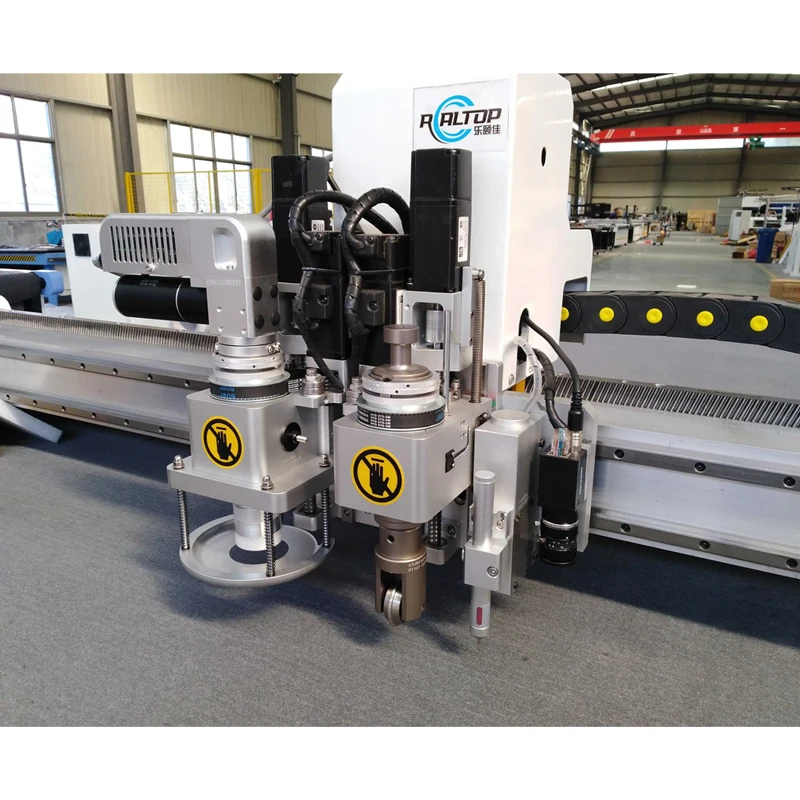
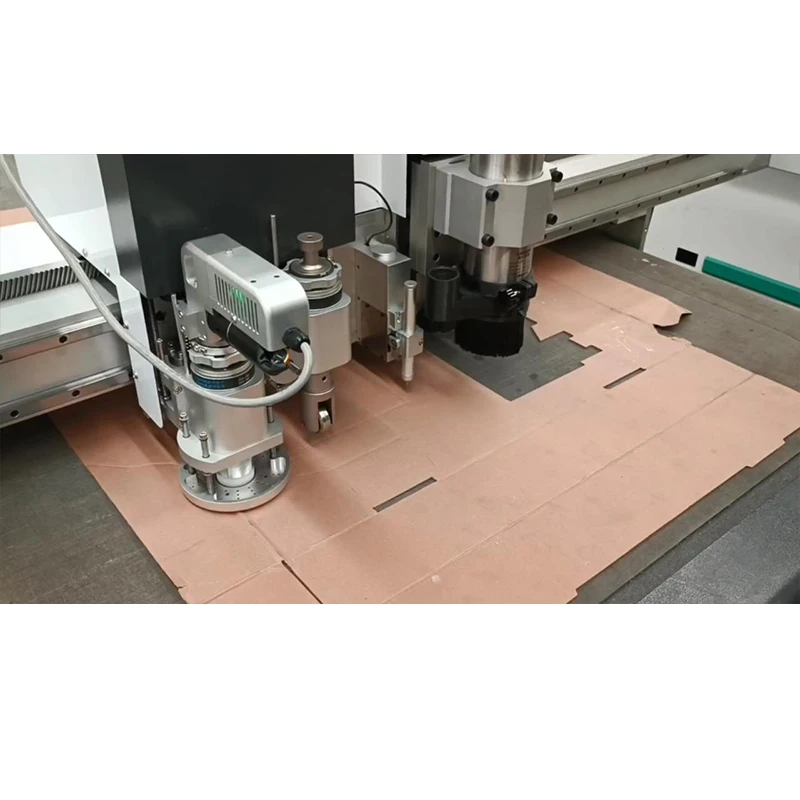
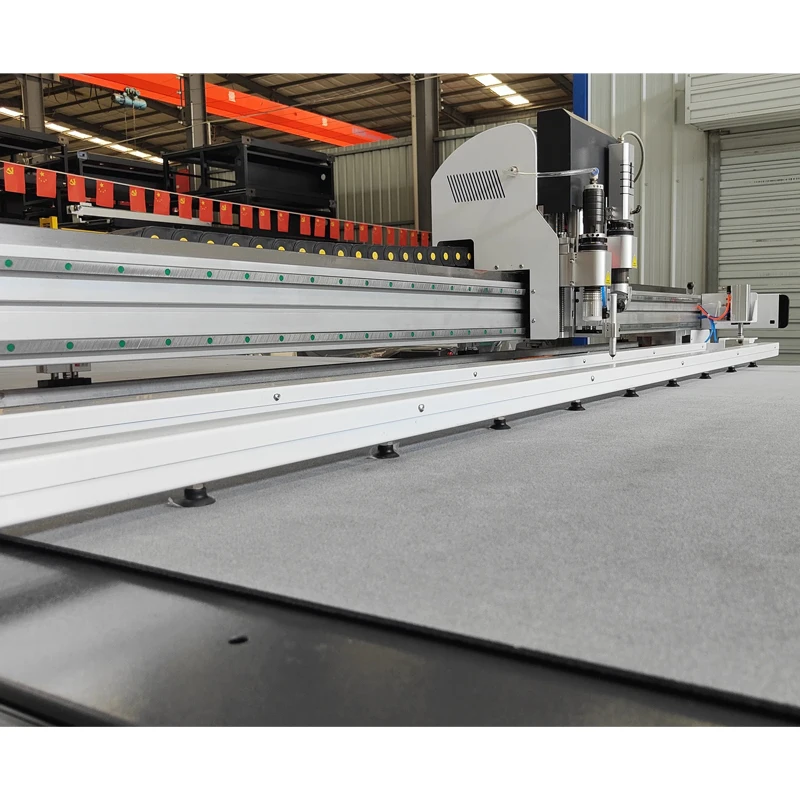
RT-D2516/RT-S2516, CNC Oscillating Knife Cutting Machine, 1600×2500mm working area — designed for corrugated honeycomb paper board and packaging sample cutting. Features Swiss imported oscillating knife head with full and half cutting functions, aluminum alloy honeycomb vacuum platform, and Delta servo motors with Taiwan Hiwin rails for ≤0.1mm repeated accuracy. HP-GL compatible system supports professional carton nesting software with multiple file format imports.
- Tool head and table configuration specified per material type and production volume
- Sample cutting available on buyer’s own material before commitment
- Electrical schematic and voltage confirmation provided for target market
You’re now subscribed to price tracking for this product. We’ll notify you if the price drops.

Fast Delivery
Quick, reliable shipping to any location.

Free & easy returns
Return this item by mail or in store within 90 days for a full refund.
Precision tooling matched to substrate — Every RT-D2516/RT-S2516 configuration is validated against the buyer’s actual corrugated or honeycomb board grade before the order is confirmed, ensuring the oscillating knife delivers clean edges without crushing the flute structure.
Technical Specifications
| Parameter | Value |
|---|---|
| Product Type | CNC Oscillating Knife Cutting Machine |
| Working Area | 1600×2500 mm |
| Machine Dimensions | 3450×2300×1250 mm |
| Rated Power | 9 kW |
| Table Type | Flat aluminum alloy honeycomb vacuum platform |
| Tool Head | Swiss imported oscillating knife with full cut, half cut, and cursor location |
| Safety Device | Infrared sensors |
| Translational Velocity | 800–1200 mm/s |
| Cutting Speed | 200–800 mm/s (varies with material type and thickness) |
| Cutting Thickness | Up to 100 mm (varies with material density and layer structure) |
| Repeated Accuracy | ≤0.1 mm |
| Transmission System | Digital servo motor, linear guide, synchronous belt, ball screw |
| Servo Motor | Delta |
| Linear Rail | Taiwan Hiwin |
| Vacuum Pump | 7.5 kW |
| Feeding System | Germany imported conveyor belt with auto feeding |
| Instruction System | HP-GL compatible format |
| Software | Professional carton nesting software, multiple file format import |
| Voltage | 380V±10% |
| Control Language | English, Russian, Italian, Chinese (other languages customizable) |
| Frame | Welded thick square seamless steel structure, high temperature treated |
| Standards | CE |
Application Suitability
| Application | Material or Output |
|---|---|
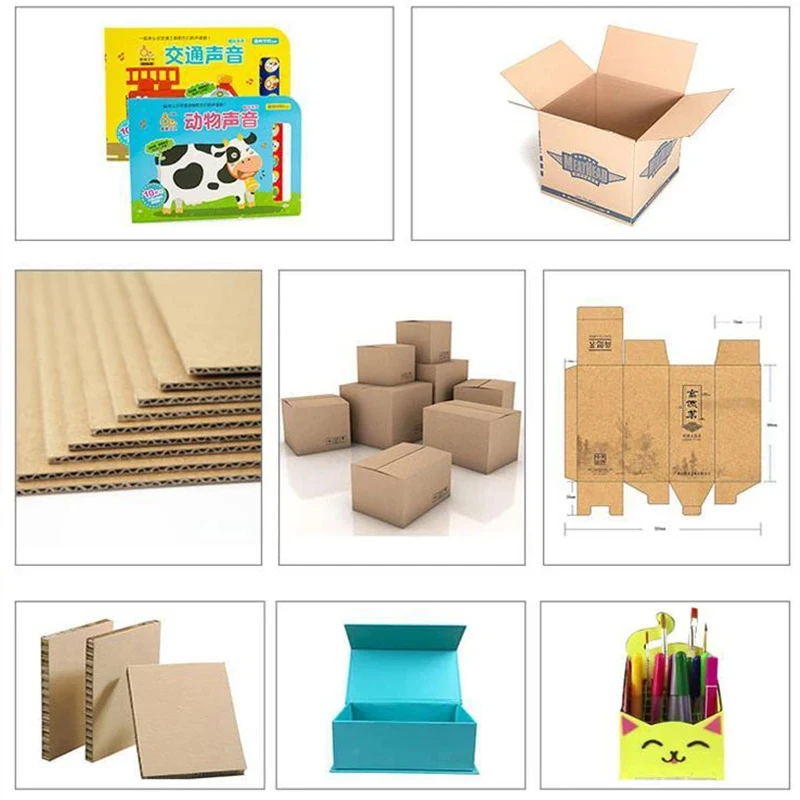
| Carton sample making and short-run packaging | Corrugated board, honeycomb paper board, grey board |
| Large-format electrical appliance carton packaging | Heavy-duty corrugated and honeycomb board up to 100 mm |
| Express and e-commerce paper box production | Single and double-wall corrugated, kraft paper |
| Snack food and consumer goods packaging | Folding carton, card stock, coated board |
| High-end gift box prototyping and production | Rigid board, composite panels, foam inserts |
| Signage and billboard flat cutting | PVC foam board, acrylic sheet, vinyl |
| Gasket and seal cutting | Rubber, silicone, sponge composite leather |
| Leather goods and flexible material cutting | Natural and synthetic leather, PU, fabric |
Why Board Thickness Matters More Than Working Area When Choosing a CNC Digital Cutting Machine for Sale
A bed size that fits your sheet means nothing if the knife head cannot push through the actual flute profile at production speed.
I learned this the hard way at a carton sample maker’s facility. We had specced a flatbed cutter based on their standard B-flute corrugated sheets. Two weeks into production they switched to high-GSM honeycomb board for a premium electronics client. The knife pressure was not enough to cut through cleanly, edge fibers started tearing, and two shifts of samples were scrapped. That is why the first thing I ask now is for the buyer’s heaviest production substrate, not just the sheet dimensions. When evaluating a CNC oscillating knife cutting machine manufacturer, the conversation should start with material density and flute structure before moving to table size. [NEED_CITE: corrugated board flute profiles and compression resistance standards]
Mapping the Full Equipment Range Across Materials
This catalogue positions each knife and laser model against the substrates and production volumes they actually serve. The RT-D2516/RT-S2516 sits in the mid-to-large format range for packaging and carton work, where the 1600×2500 mm bed handles most standard sheet sizes used in European and North American corrugated supply chains. Buyers comparing a CNC digital cutting machine for sale across multiple vendors should look at where this model overlaps with laser options for thinner substrates and where it hands off to heavier-duty multi-layer systems for fabric and composite work.
Knife Versus Laser: Matching the Method to the Substrate
Oscillating knife cutting handles thick, fibrous, and compressible materials that a laser beam would char, melt, or leave a burnt edge on. Honeycomb paper board, multi-wall corrugated, foam gaskets, and sponge composite leather all fall into this category. Laser cutting, by contrast, seals the edge on synthetics and delivers fine detail on thin acrylic and wood veneer. A buyer producing both rigid box prototypes and acrylic signage pieces may need one of each method rather than forcing a single machine to cover both. This full range exists so the cutting method follows the material, not the other way around. [NEED_CITE: thermal versus mechanical cutting edge quality on composite substrates]
Reading the Specs That Actually Affect Cut Quality
The Swiss imported oscillating knife head provides three distinct functions on one tool mount: full cutting through the board, half cutting for crease-and-fold lines, and cursor location for register marks. This matters on honeycomb board because a half-cut crease that crushes the internal cell structure will produce a weak fold line that splits during assembly. The Delta servo motors paired with Taiwan Hiwin linear rails hold repeated accuracy within 0.1 mm, which keeps crease lines aligned with printed graphics across long production runs. The 7.5 kW vacuum pump feeding the aluminum honeycomb platform must generate enough zoned suction to prevent small carton blanks from lifting mid-cut, a problem that appears on machines with undersized vacuum zoning when cutting nested layouts of small parts. The HP-GL compatible instruction system and professional carton nesting software accept common packaging file formats directly, removing the need for manual geometry redraw before each job. [NEED_CITE: vacuum hold-down requirements for nested small-part cutting on flatbed tables]
What Happens When Configuration Does Not Match the Job
Choosing the wrong tool head for a given board grade produces ragged edges on honeycomb and crushed flute walls on heavy corrugated. Insufficient vacuum zoning lets small nesting parts drift during high-speed passes, registering as dimensional errors downstream at the folding and gluing station. A software workflow that cannot import the buyer’s existing DXF or PLT files forces operators to rebuild geometry by hand, adding hours to each new job setup. Voltage mismatches discovered after arrival mean rewiring the shop panel or running the machine through an external transformer, both of which introduce points of failure that did not exist at the factory. [NEED_CITE: electrical infrastructure requirements for industrial CNC equipment import]
Why Buyers Source This Range Here
In-house design and production cover both oscillating knife and laser cutting platforms, so a packaging buyer comparing methods gets an honest comparison rather than a single-method pitch. Every tool head and vacuum table configuration is specified against the buyer’s declared material list and daily volume before the order is placed. CCD camera contour recognition is available for printed packaging work where register accuracy matters. Software compatibility and file format support are confirmed with test files before the machine enters production. Voltage, control language, and safety labeling are set to the destination market’s requirements, documented in the electrical schematic before shipment.
Documentation & Verification
- Machine specification sheet listing tool head and table configuration matched to declared substrates
- Electrical schematic confirming 380V±10% wiring and component ratings for destination market
- Sample cutting report on buyer’s own corrugated or honeycomb board grade before dispatch
- Software license documentation with confirmed file format compatibility list
- Factory test record showing repeated accuracy and cutting speed on specified material thickness
- CE declaration documentation package for European market entry compliance
Installation, Commissioning & Support
- Floor space allocation for 3450×2300 mm machine footprint plus material infeed and offtake clearance
- Dedicated electrical circuit rated for 9 kW total draw with 380V±10% supply verification on site
- 7.5 kW vacuum pump requires separate exhaust routing to maintain workshop air quality standards
- First-run commissioning includes crease pressure calibration on buyer’s heaviest board grade
- Operator training covers nesting software workflow, tool head changeover, and vacuum zone configuration
- Spare parts list includes Swiss knife blades, conveyor belt sections, and Hiwin rail carriages
Preparing Your Inquiry
Tell us the board types and flute profiles you run most often, including the heaviest honeycomb or multi-wall grade in your current order book. Share your typical sheet dimensions, daily volume targets, and whether you need creasing alongside full cutting on the same tool head. Confirm your facility voltage and frequency, preferred control language, and whether your design team works in DXF, PLT, or another format so we verify software compatibility before building your configuration.
Frequently Asked Questions
Q: How do I decide between oscillating knife and laser for my packaging substrates?
A: Oscillating knife handles thick, fibrous, and compressible materials like corrugated and honeycomb board without charring the edge. Laser is better suited to thin synthetics, acrylic, and wood veneer where edge sealing is a benefit. If your production spans both categories, you may need one machine from each family rather than compromising on a single method.
Q: What working area and vacuum zoning do I need for nested small carton blanks?
A: The 1600×2500 mm bed accommodates most standard packaging sheet formats. For small nested parts, vacuum zoning must be granular enough to hold individual blanks flat during cutting. Undersized zoning causes part lift at high translational speeds, producing dimensional errors that only show up at the folding station downstream.
Q: Which tool heads are available across this range for different packaging materials?
A: The oscillating knife head delivers full and half cutting for corrugated and honeycomb board. A drag knife suits thin vinyl and sticker stock. A creasing wheel produces fold lines on folding carton without cutting through. Your material mix determines which combination goes on the multifunction head, and this is confirmed before the order is finalized.
Q: How is software and file format compatibility confirmed before I commit?
A: We verify that your existing DXF, PLT, or other design files import correctly into the professional carton nesting software and produce accurate geometry on screen. This check happens before the order is placed, not after delivery, so there are no surprises when your first production file is loaded on the shop floor.
Q: Can voltage, control language, and safety labels be set to my local standards?
A: Yes. The standard 380V±10% configuration can be adapted to match your facility supply, and the control interface is available in English, Russian, Italian, Chinese, or other languages by request. Electrical schematics and safety labeling are confirmed to destination market requirements before the machine ships.










商品评价
There are no reviews yet.