




Fast Delivery
Quick, reliable shipping to any location.

Free & easy returns
Return this item by mail or in store within 90 days for a full refund.
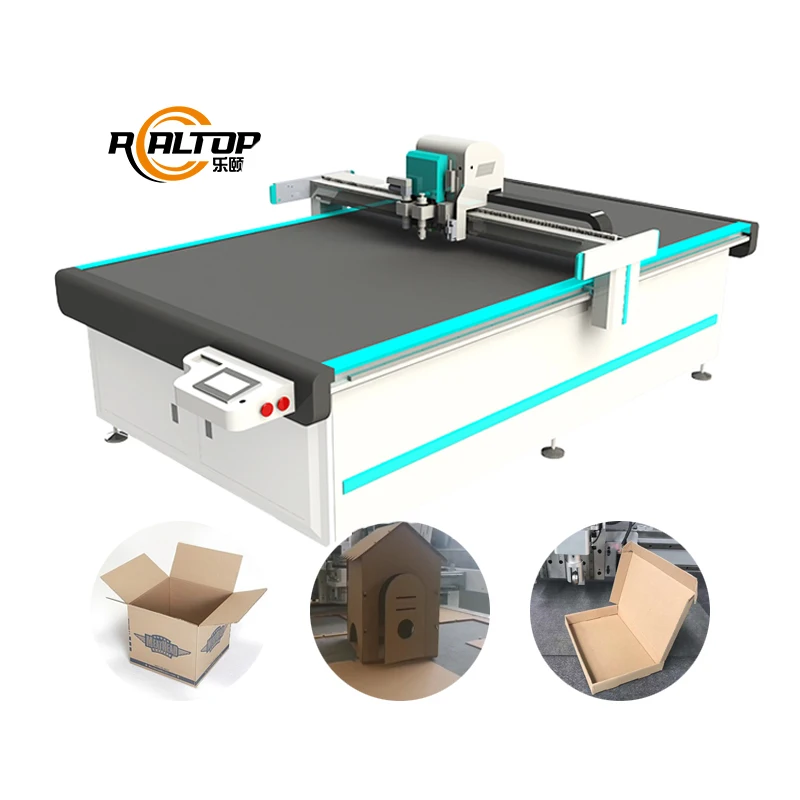
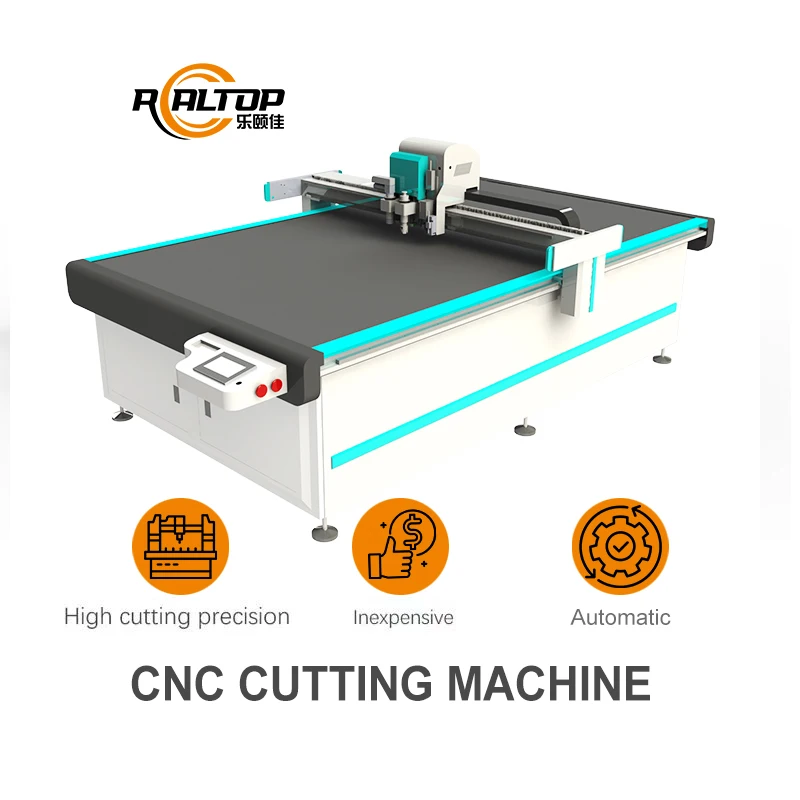
Complete Catalogue Access — the RT-D2516 and RT-S2516 represent the midpoint of our flatbed knife cutting range, bridging carton sample making with full-volume flexible material processing.
Technical Specifications
| Parameter | Value |
|---|---|
| Model | RT-D2516 / RT-S2516 |
| Product Type | CNC Digital Flatbed Cutting Machine |
| Working Area | 1600 × 2500 mm |
| Overall Dimensions | 3450 × 2300 × 1250 mm |
| Rated Power | 9 kW |
| Voltage | 380V ±10% |
| Tool Head | Multifunctional head with Swiss imported knife (vibration full cut, vibration half cut, cursor location) |
| Translational Velocity | 800–1200 mm/s |
| Cutting Thickness Capacity | Up to 100 mm (basis to be confirmed) |
| Repeated Accuracy | ≤0.1 mm |
| Transmission | Delta digital servo motors, Taiwan Hiwin linear guides, rack and synchronous belt |
| Worktable | Aluminum alloy honeycomb vacuum adsorption platform |
| Vacuum Pump | 7.5 kW |
| Conveyor Belt | Germany imported |
| Control Format | HP-GL compatible |
| Safety Device | Infrared sensors and emergency stop |
| Software | Professional carton nesting software, multi-format import, multi-language interface |
| Assembly State | Fully assembled |
Application Suitability
| Application | Material or Output |
|---|---|
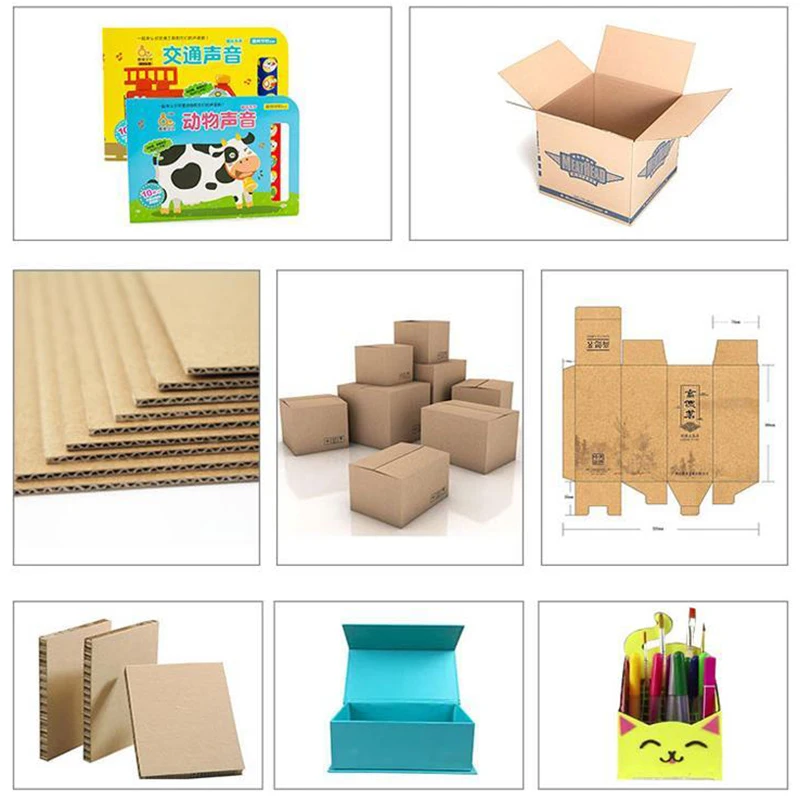
| Carton and packaging sample making | Corrugated board, grey board, folding carton stock — cutting and creasing in one setup |
| Signage and sticker contour cutting | Self-adhesive vinyl, printed stickers, PVC foam board, acrylic thin sheet |
| Flexible material processing | Leather, clothing textiles, sponge composite leather, silicone, rubber, soft glass |
| Business cards and hang tags | Card stock, coated paper, laminated sheets |
What Working Area Alone Will Not Tell You About CNC Cardboard Cutting Machine Selection
A 1600×2500 mm table that cannot hold a small sticker flat is no better than a machine half its size.
I once spent three weeks chasing a transformer across the Middle East because we shipped a carton creasing unit without confirming the site voltage. The machine sat idle while the customer missed delivery deadlines. Since that job, I check vacuum zoning, tool head compatibility and electrical specs before I ever talk working area. A CNC cardboard cutting machine manufacturer who skips these questions is selling you dimensions, not a production solution. Buyers routinely specify table size based on sheet size, then discover the vacuum zones cannot secure small offcuts or the oscillating knife crushes rather than slices their foam [NEED_CITE: vacuum zoning strategies for flatbed cutting tables].
Knife Versus Laser: Matching the Method to the Material
The RT-D2516 and RT-S2516 sit in the knife cutting half of the catalogue, where the oscillating blade handles materials that laser heat would seal, melt or discolour. Corrugated board creases cleanly under a wheel tool, while stickers and textiles part without the burnt edge a CO2 beam leaves behind. When the material is organic, fibrous or layered, a CNC flatbed digital cutting table for sale with knife tooling almost always wins on edge quality and throughput.
The Full Range View — Where This Model Sits
Within the catalogue, the 1600×2500 mm footprint covers the volume sweet spot for packaging sample rooms and mid-scale signage shops. Larger formats exist for textile roll production, and compact units serve prototyping desks. The RT-D2516 and RT-S2516 bridge these worlds: big enough for a full corrugated sheet, compact enough to fit a standard workshop bay without foundation work. Buyers comparing across the range should weigh daily sheet count against floor space before stepping up to a larger format [NEED_CITE: production volume benchmarks for packaging sample departments].
Transmission and Accuracy in Daily Production
Delta digital servo motors paired with Taiwan Hiwin linear guides and rack transmission deliver ≤0.1 mm repeatability across the full 1600×2500 mm travel. In carton sample making, this means a crease line lands in the same position on the five-hundredth box as it did on the first. Translational velocity reaches 800–1200 mm/s on straight runs, though actual cutting speed depends on material density and corner frequency. The aluminum honeycomb vacuum table, backed by a 7.5 kW pump, holds porous corrugated stock flat without mechanical clamps that would interfere with the tool path.
The Cost of Skipping Configuration Verification
Choosing the wrong tool head for your material produces ragged edges on stickers or crushed corrugation on carton — defects that only appear once the machine is running production. Insufficient vacuum zoning lets small parts lift during cutting, sending half-finished sheets into the waste bin. And confirming voltage after the machine ships means weeks of downtime waiting for a step-down transformer. Every one of these problems is preventable with a specification conversation that happens before the purchase order [NEED_CITE: common causes of CNC cutting machine downtime after installation].
Why Source This Range Here
In-house design covers both knife and laser platforms, so a buyer comparing methods gets an honest recommendation rather than a forced fit. Tool head and table configuration are specified per material and production volume, not left to a default build. Sample cutting on your own stock confirms edge quality before commitment. CCD camera positioning is available where printed contour work demands it. Software compatibility — file formats, nesting workflow, interface language — is verified at order, not discovered at commissioning. Voltage, plug type and control language are locked in before the machine enters packing.
Documentation & Verification
- Machine specification sheet listing confirmed tool head and table configuration for your material
- Electrical schematic with voltage and frequency matched to your site supply
- Sample cutting report produced on your own material stock and thickness
- Software licence and file format compatibility note covering your design workflow
- Factory test record documenting repeatability and cut quality before dispatch
- Spare parts list identifying consumable blades, creasing wheels and vacuum seals
Installation, Commissioning & Support
- Fully assembled delivery at 3450×2300×1250 mm — confirm workshop door clearance and floor levelness before arrival
- 380V ±10% supply with dedicated 9 kW circuit plus separate 7.5 kW vacuum pump feed
- First-run parameter setting covers vacuum zone mapping, tool depth calibration and servo tuning on your stock
- Operator training addresses carton nesting software workflow, file import and multi-language interface selection
- Consumable spare kit includes Swiss imported oscillating blades and creasing wheels matched to your material mix
- Routine maintenance schedule covers linear guide lubrication, belt tension checks and vacuum filter cleaning intervals
What to Include in Your Enquiry
Tell us the material type, maximum thickness and sheet dimensions you run daily, along with your local voltage and frequency. If you work with printed contours, share a sample file so we can confirm software compatibility and positioning accuracy. The more specific the brief, the tighter the configuration we recommend.
Frequently Asked Questions
Q: How do I decide between knife and laser cutting for my material?
A: Knife cutting suits fibrous, layered or heat-sensitive materials like corrugated board, textiles and foam where a laser would seal or melt the edge. Laser wins on acrylic and thin wood where a sealed edge is desirable. Share your material sample and we will recommend the method that produces the cleanest edge at production speed.
Q: Can the vacuum table hold small sticker parts securely?
A: The aluminum honeycomb platform supports configurable vacuum zoning, so suction concentrates under the actual part footprint rather than spreading across the full table. This prevents small offcuts from lifting during contour cutting. Confirm your smallest part dimensions so we can specify the zone layout before build.
Q: Will the software accept my existing design files?
A: The HP-GL compatible control system supports multiple file format imports and works with the included professional carton nesting software. Share your current file formats and nesting workflow at enquiry stage so we confirm compatibility and map the import path before the machine ships.
Q: How do I verify cutting speed claims against my actual material?
A: Translational velocity of 800–1200 mm/s applies to straight-line travel; real cutting speed depends on material density, corner frequency and tool path complexity. Request a sample cutting report on your own stock — it documents actual cycle time and edge quality under production-representative conditions.
Q: What voltage and language customisation is available?
A: The standard configuration is 380V ±10%, but voltage and plug type are confirmed per destination market before shipment. The control interface supports English, Russian, Italian, Chinese and other languages. Specify your site supply and preferred operator language at order to avoid post-delivery delays.
Complete Catalogue Access — the RT-D2516 and RT-S2516 represent the midpoint of our flatbed knife cutting range, bridging carton sample making with full-volume flexible material processing.
Technical Specifications
| Parameter | Value |
|---|---|
| Model | RT-D2516 / RT-S2516 |
| Product Type | CNC Digital Flatbed Cutting Machine |
| Working Area | 1600 × 2500 mm |
| Overall Dimensions | 3450 × 2300 × 1250 mm |
| Rated Power | 9 kW |
| Voltage | 380V ±10% |
| Tool Head | Multifunctional head with Swiss imported knife (vibration full cut, vibration half cut, cursor location) |
| Translational Velocity | 800–1200 mm/s |
| Cutting Thickness Capacity | Up to 100 mm (basis to be confirmed) |
| Repeated Accuracy | ≤0.1 mm |
| Transmission | Delta digital servo motors, Taiwan Hiwin linear guides, rack and synchronous belt |
| Worktable | Aluminum alloy honeycomb vacuum adsorption platform |
| Vacuum Pump | 7.5 kW |
| Conveyor Belt | Germany imported |
| Control Format | HP-GL compatible |
| Safety Device | Infrared sensors and emergency stop |
| Software | Professional carton nesting software, multi-format import, multi-language interface |
| Assembly State | Fully assembled |
Application Suitability
| Application | Material or Output |
|---|---|
| Carton and packaging sample making | Corrugated board, grey board, folding carton stock — cutting and creasing in one setup |
| Signage and sticker contour cutting | Self-adhesive vinyl, printed stickers, PVC foam board, acrylic thin sheet |
| Flexible material processing | Leather, clothing textiles, sponge composite leather, silicone, rubber, soft glass |
| Business cards and hang tags | Card stock, coated paper, laminated sheets |
What Working Area Alone Will Not Tell You About CNC Cardboard Cutting Machine Selection
A 1600×2500 mm table that cannot hold a small sticker flat is no better than a machine half its size.
I once spent three weeks chasing a transformer across the Middle East because we shipped a carton creasing unit without confirming the site voltage. The machine sat idle while the customer missed delivery deadlines. Since that job, I check vacuum zoning, tool head compatibility and electrical specs before I ever talk working area. A CNC cardboard cutting machine manufacturer who skips these questions is selling you dimensions, not a production solution. Buyers routinely specify table size based on sheet size, then discover the vacuum zones cannot secure small offcuts or the oscillating knife crushes rather than slices their foam [NEED_CITE: vacuum zoning strategies for flatbed cutting tables].
Knife Versus Laser: Matching the Method to the Material
The RT-D2516 and RT-S2516 sit in the knife cutting half of the catalogue, where the oscillating blade handles materials that laser heat would seal, melt or discolour. Corrugated board creases cleanly under a wheel tool, while stickers and textiles part without the burnt edge a CO2 beam leaves behind. When the material is organic, fibrous or layered, a CNC flatbed digital cutting table for sale with knife tooling almost always wins on edge quality and throughput.
The Full Range View — Where This Model Sits
Within the catalogue, the 1600×2500 mm footprint covers the volume sweet spot for packaging sample rooms and mid-scale signage shops. Larger formats exist for textile roll production, and compact units serve prototyping desks. The RT-D2516 and RT-S2516 bridge these worlds: big enough for a full corrugated sheet, compact enough to fit a standard workshop bay without foundation work. Buyers comparing across the range should weigh daily sheet count against floor space before stepping up to a larger format [NEED_CITE: production volume benchmarks for packaging sample departments].
Transmission and Accuracy in Daily Production
Delta digital servo motors paired with Taiwan Hiwin linear guides and rack transmission deliver ≤0.1 mm repeatability across the full 1600×2500 mm travel. In carton sample making, this means a crease line lands in the same position on the five-hundredth box as it did on the first. Translational velocity reaches 800–1200 mm/s on straight runs, though actual cutting speed depends on material density and corner frequency. The aluminum honeycomb vacuum table, backed by a 7.5 kW pump, holds porous corrugated stock flat without mechanical clamps that would interfere with the tool path.
The Cost of Skipping Configuration Verification
Choosing the wrong tool head for your material produces ragged edges on stickers or crushed corrugation on carton — defects that only appear once the machine is running production. Insufficient vacuum zoning lets small parts lift during cutting, sending half-finished sheets into the waste bin. And confirming voltage after the machine ships means weeks of downtime waiting for a step-down transformer. Every one of these problems is preventable with a specification conversation that happens before the purchase order [NEED_CITE: common causes of CNC cutting machine downtime after installation].
Why Source This Range Here
In-house design covers both knife and laser platforms, so a buyer comparing methods gets an honest recommendation rather than a forced fit. Tool head and table configuration are specified per material and production volume, not left to a default build. Sample cutting on your own stock confirms edge quality before commitment. CCD camera positioning is available where printed contour work demands it. Software compatibility — file formats, nesting workflow, interface language — is verified at order, not discovered at commissioning. Voltage, plug type and control language are locked in before the machine enters packing.
Documentation & Verification
- Machine specification sheet listing confirmed tool head and table configuration for your material
- Electrical schematic with voltage and frequency matched to your site supply
- Sample cutting report produced on your own material stock and thickness
- Software licence and file format compatibility note covering your design workflow
- Factory test record documenting repeatability and cut quality before dispatch
- Spare parts list identifying consumable blades, creasing wheels and vacuum seals
Installation, Commissioning & Support
- Fully assembled delivery at 3450×2300×1250 mm — confirm workshop door clearance and floor levelness before arrival
- 380V ±10% supply with dedicated 9 kW circuit plus separate 7.5 kW vacuum pump feed
- First-run parameter setting covers vacuum zone mapping, tool depth calibration and servo tuning on your stock
- Operator training addresses carton nesting software workflow, file import and multi-language interface selection
- Consumable spare kit includes Swiss imported oscillating blades and creasing wheels matched to your material mix
- Routine maintenance schedule covers linear guide lubrication, belt tension checks and vacuum filter cleaning intervals
What to Include in Your Enquiry
Tell us the material type, maximum thickness and sheet dimensions you run daily, along with your local voltage and frequency. If you work with printed contours, share a sample file so we can confirm software compatibility and positioning accuracy. The more specific the brief, the tighter the configuration we recommend.
Frequently Asked Questions
Q: How do I decide between knife and laser cutting for my material?
A: Knife cutting suits fibrous, layered or heat-sensitive materials like corrugated board, textiles and foam where a laser would seal or melt the edge. Laser wins on acrylic and thin wood where a sealed edge is desirable. Share your material sample and we will recommend the method that produces the cleanest edge at production speed.
Q: Can the vacuum table hold small sticker parts securely?
A: The aluminum honeycomb platform supports configurable vacuum zoning, so suction concentrates under the actual part footprint rather than spreading across the full table. This prevents small offcuts from lifting during contour cutting. Confirm your smallest part dimensions so we can specify the zone layout before build.
Q: Will the software accept my existing design files?
A: The HP-GL compatible control system supports multiple file format imports and works with the included professional carton nesting software. Share your current file formats and nesting workflow at enquiry stage so we confirm compatibility and map the import path before the machine ships.
Q: How do I verify cutting speed claims against my actual material?
A: Translational velocity of 800–1200 mm/s applies to straight-line travel; real cutting speed depends on material density, corner frequency and tool path complexity. Request a sample cutting report on your own stock — it documents actual cycle time and edge quality under production-representative conditions.
Q: What voltage and language customisation is available?
A: The standard configuration is 380V ±10%, but voltage and plug type are confirmed per destination market before shipment. The control interface supports English, Russian, Italian, Chinese and other languages. Specify your site supply and preferred operator language at order to avoid post-delivery delays.










商品评价
There are no reviews yet.