

Fast Delivery
Quick, reliable shipping to any location.

Free & easy returns
Return this item by mail or in store within 90 days for a full refund.
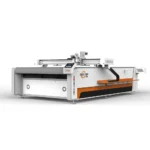
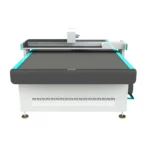
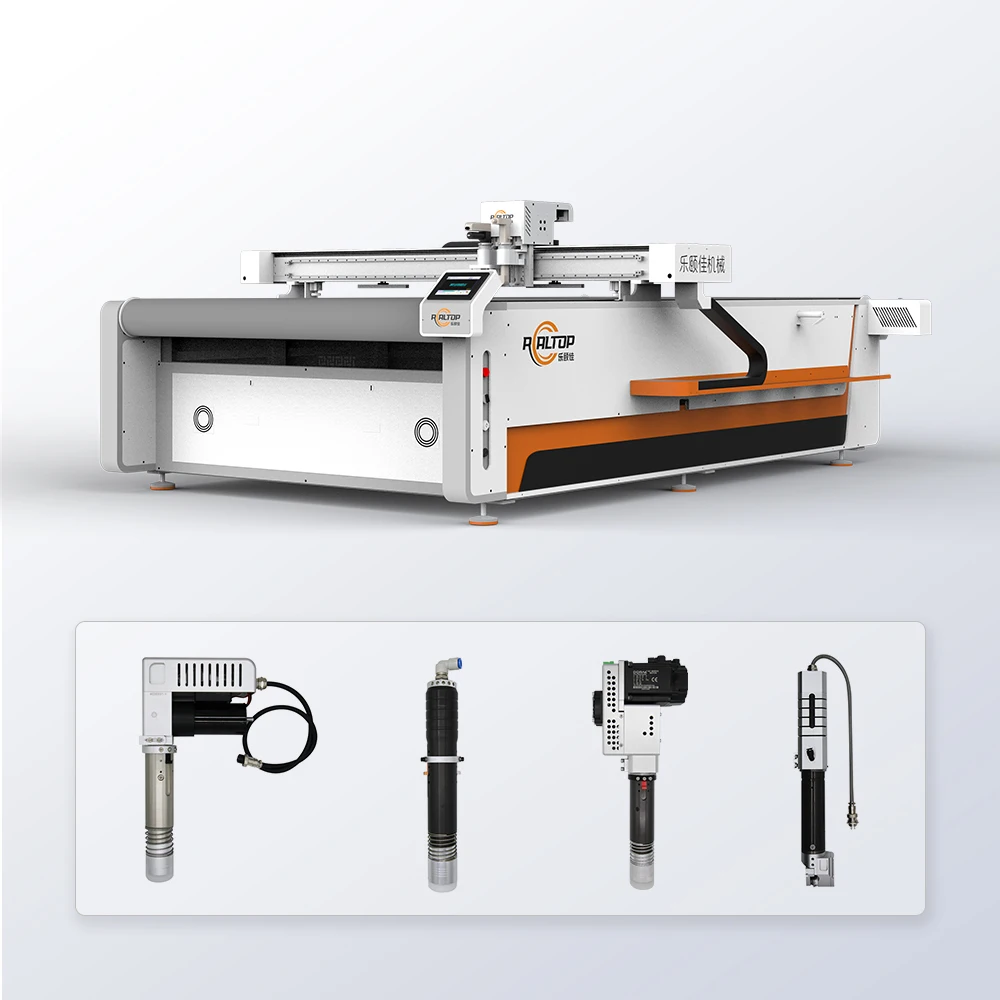
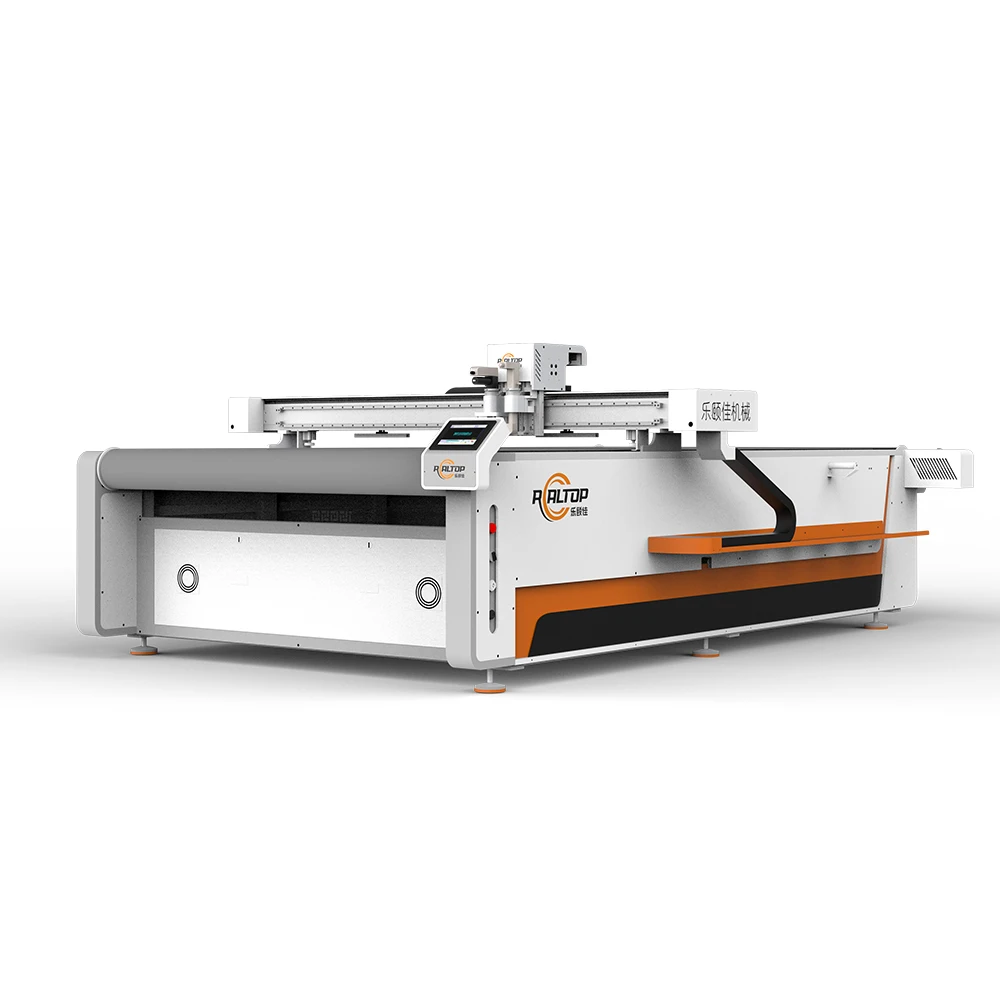
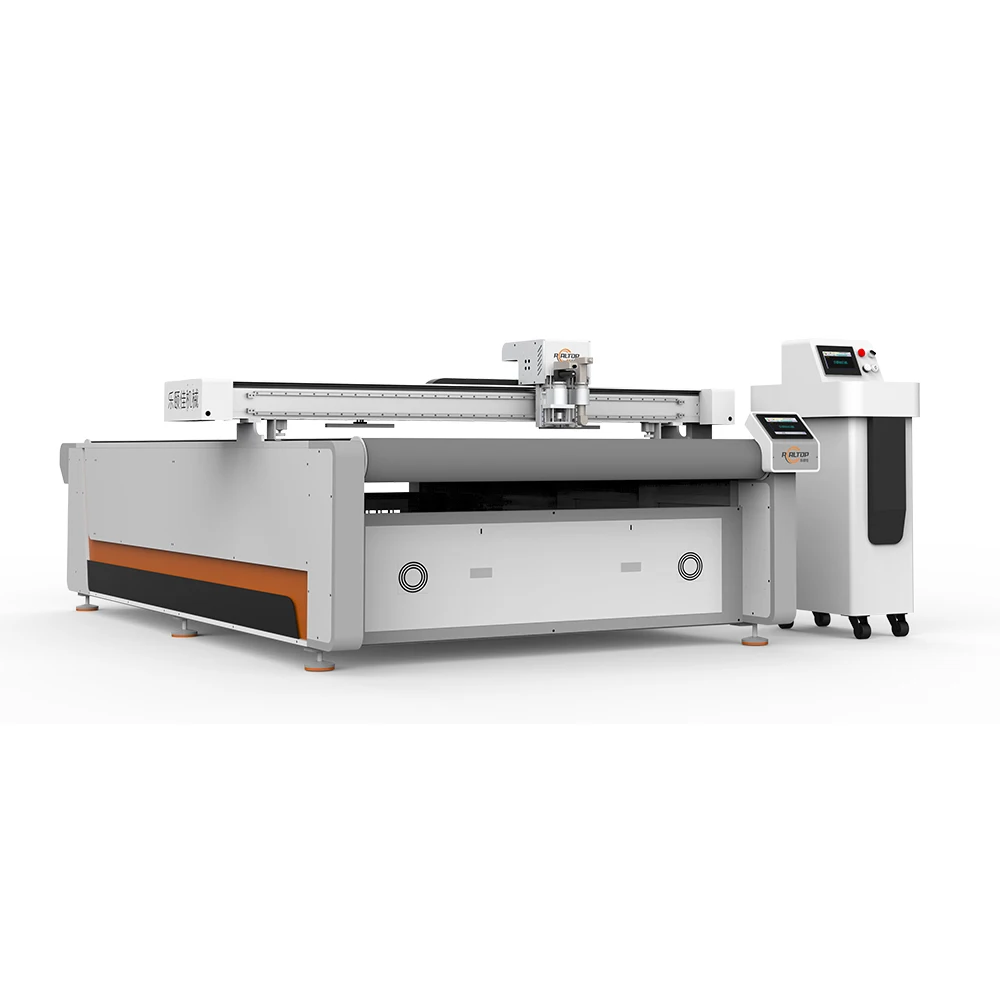
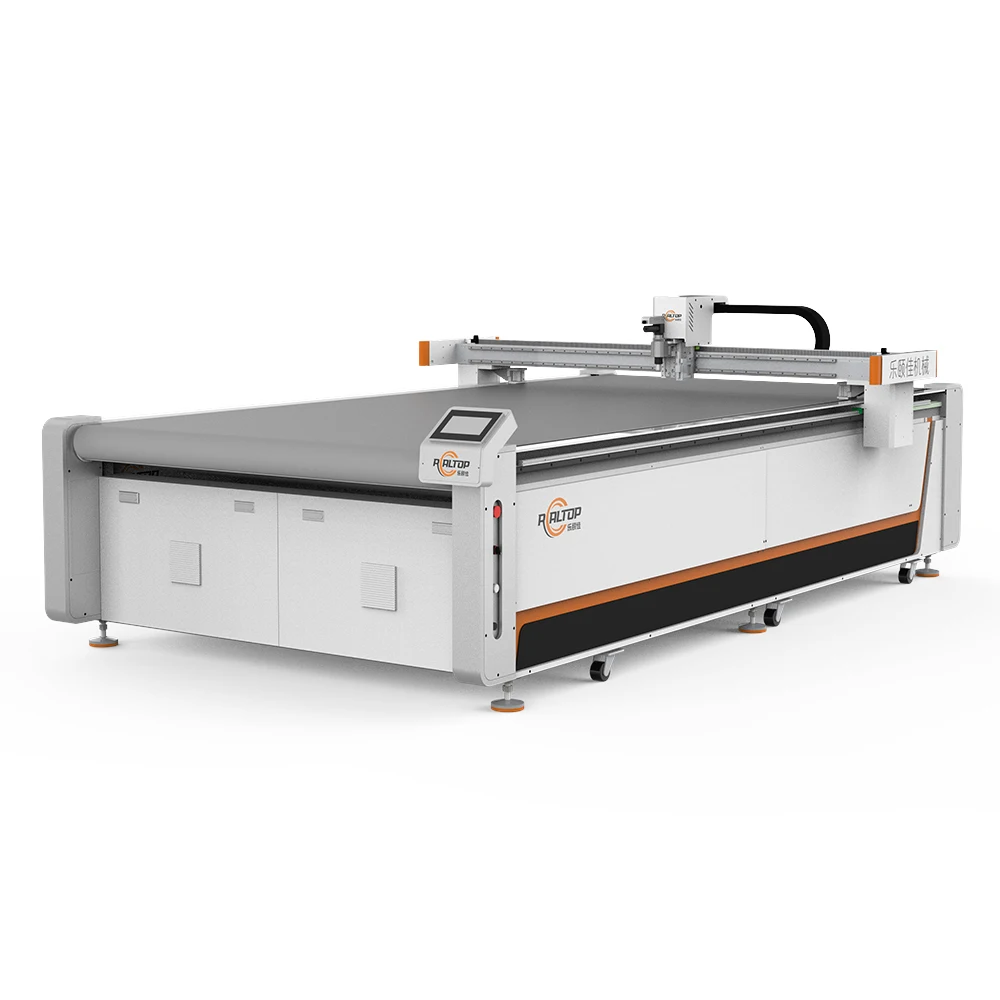
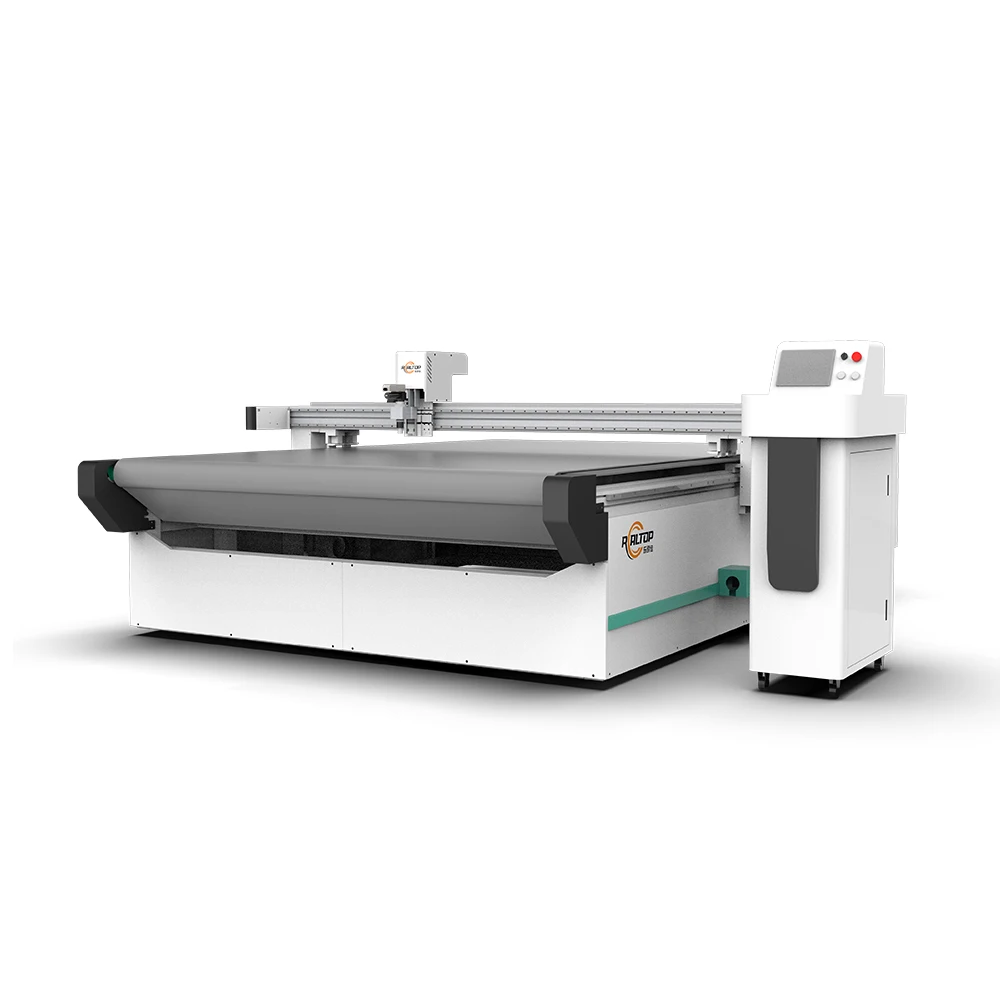
Versatile tool head configuration — the 1625 platform accommodates seven interchangeable cutting and creasing tools, enabling buyers to match the head to the material rather than force a single method across every job.
Technical Specifications
| Parameter | Value |
|---|---|
| Model | 1625 |
| Product Type | CNC Oscillating Knife Cutting Machine |
| Working Area | 1600×2500 mm |
| Tool Head Options | Oscillating knife, Driven rotary knife, Creasing wheel, Kiss cutting tool, Pneumatic knife, Milling tool, V groove knife |
| Cutting Speed | 0–2000 mm/s |
| Cutting Thickness | ≤ 30 mm (basis not stated in source — confirm block format / material / thickness) |
| Positioning Accuracy | ±0.1 mm |
| Vacuum Pump Power | 9 kW |
| Voltage Options | 110V, 220V, 380V (frequency not specified in source) |
| Control System | PLC control panel (source value — verify against manufacturer catalog) |
| Supported File Formats | PLT, DXF, AI, PDF |
| Servo Motor Options | Panasonic, Delta, Dorna (rated or peak not specified in source) |
| Vacuum Table | Aluminum bellows vacuum table (zoning not specified in source) |
| Safety Devices | Infrared sensor device, Emergency stop device |
| Machine Dimensions (L×W×H) | 3300×2100×1350 mm |
| Software Language Options | English, Russian, Italian, Chinese, custom languages available |
| Key Features | Intelligent nesting with automatic defect avoidance, Multi-layer cutting capability, CCD camera contour recognition option |
Application Suitability
| Application | Material or Output |
|---|---|
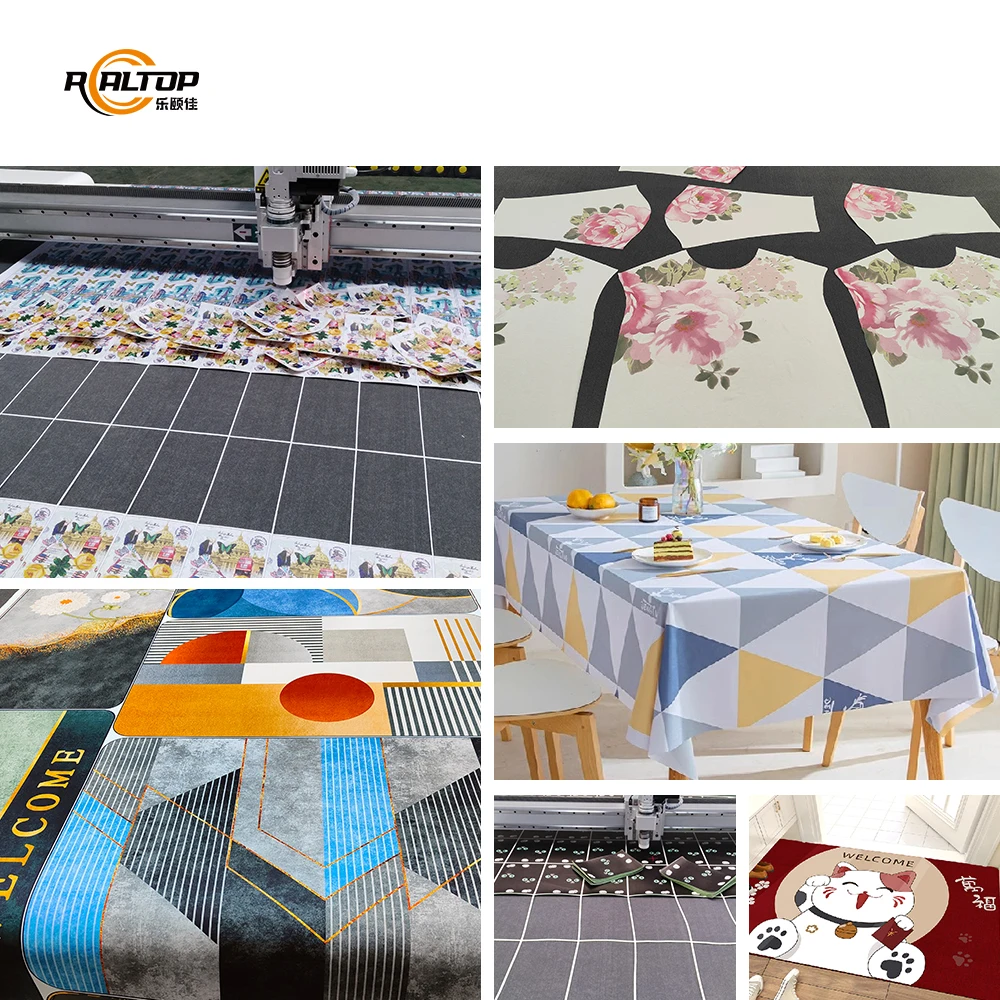
| Apparel manufacturing | Suits, knitwear, lace, complex woven and knitted fabrics with pattern-matching layouts |
| Automotive interiors | Seat fabrics, carpets, PVC mats cut to contour with oscillating or driven rotary knife |
| Home textiles | Sofa fabrics, curtains, rugs processed in multi-layer stacks |
| Composite material processing | Carbon fiber prepreg, aramid, specialty materials processed with cold cutting to avoid delamination |
| Flexible material conversion | Knits, wovens, plush, leather, foam, cardboard, PVC, EVA, acrylic, PTFE, rubber |
Why Material Thickness Claims Can Mislead Buyers of a CNC Oscillating Knife Cutting Machine
A thickness rating without a material qualifier is not a thickness rating.
I once worked with an aviation interior parts manufacturer who tested standard carbon cloth on a flatbed cutter and placed an order immediately. When his actual high-resin prepreg arrived on the production floor, the blade dragged, edges frayed, and output dropped sharply. The machine had not changed — the material had. Thickness limits on any CNC oscillating knife cutting machine manufacturer catalogue must be read against the specific stock being processed [NEED_CITE: material-dependent cutting depth standards for oscillating knife systems]. Resin content, weave density, and backing adhesive all alter how a blade engages the material, and those variables rarely appear on a spec sheet.
Matching the Tool Head to the Stock
The 1625 offers seven tool head options because no single blade geometry handles every soft material cleanly. An oscillating knife slices through multi-layer knitwear stacks with a vertical vibration that prevents fabric shifting, while a driven rotary knife follows tight contours on automotive seat leather without lifting the ply. Creasing wheels score carton board without cutting through, and kiss cutting tools score vinyl liners without penetrating the backing paper. Selecting the correct head is the first decision a buyer makes after identifying the material, and it determines edge quality more than any other variable on the CNC oscillating knife cutting machine manufacturer specification list.
Vacuum Table Flatness and Small-Part Hold-Down
The aluminum bellows vacuum table on this platform provides a rigid, flat cutting surface across the full 1600×2500 mm working area. Flatness matters most when cutting small gaskets or pattern pieces where edge lift can pull the part into the blade path. A 9 kW vacuum pump generates sufficient suction to hold thin films and heavy multi-layer fabric stacks alike, though zoning configuration should be confirmed at order stage for buyers running predominantly small parts [NEED_CITE: vacuum table zoning requirements for small-part digital cutting]. Without adequate zoning, a narrow offcut near the table edge may lose suction and shift mid-cycle.
Reading the Specifications Against Your Production Reality
Positioning accuracy of ±0.1 mm across the 1600×2500 mm working area is maintained by the servo drive system, available with Panasonic, Delta, or Dorna motors depending on the buyer’s existing maintenance ecosystem. Cutting speed ranges from 0 to 2000 mm/s, but the effective speed on any given material depends on thickness, blade type, and contour complexity — straight cuts on single-ply fabric reach the upper range, while tight curves on 30 mm foam stacks require slower traversal. The PLC control panel accepts PLT, DXF, AI, and PDF file formats, which covers most nesting workflows in garment and composite fabrication. Intelligent nesting with automatic defect avoidance helps reduce waste on natural materials where flaws must be routed around, though yield improvement depends on the specific defect frequency in the buyer’s stock.
The Cost of Skipping the Sample Cut
I have seen buyers commit to a configuration based on a brochure photograph, only to discover on delivery that their material required a different blade angle or a cooling attachment to prevent resin buildup on the knife. Edge fraying on prepreg, crushed cells on foam, and fused edges on synthetic textiles are all symptoms of a tool head or speed setting that was never validated against the actual stock. A sample cutting report on the buyer’s own material removes this risk before the machine enters production [NEED_CITE: sample testing protocols for industrial cutting equipment procurement].
Why Source the 1625 From This Line
The design and build of both knife and laser platforms under one roof means the 1625 is not a compromise forced by a single-technology factory. Tool head and table configuration are specified per material and production volume rather than sold as a fixed package. CCD camera positioning is available for printed contour work where registration marks must be tracked at production speed. Voltage, plug type, and control language are confirmed against the destination market before the machine leaves the assembly hall. Every unit ships with a factory test record run on the buyer’s material sample, so edge quality and thickness handling are documented before commitment.
Documentation & Verification
- Machine specification sheet confirming working area, tool head list, and thickness range per material
- Electrical schematic with voltage, frequency, and plug type matched to destination market
- Tool head and table configuration list tied to the buyer’s material sample
- Sample cutting report on buyer-supplied stock documenting edge quality and throughput
- Software licence and file format compatibility note for the buyer’s nesting workflow
- Operation and maintenance manual in the selected control language
Installation, Commissioning & Support
- Floor space allocation based on 3300×2100×1350 mm machine dimensions plus operator clearance
- Dedicated power circuit matching confirmed voltage option (110V, 220V, or 380V) and local frequency
- Vacuum pump 9 kW circuit separated from control electronics to prevent interference
- First-run parameter setting on the buyer’s material with blade depth, speed, and vacuum zoning calibration
- Operator training on PLC control panel in the configured display language
- Spare parts list covering blades, knife holders, and vacuum table seals for initial maintenance cycles
Before You Request a Quote
To configure the 1625 correctly, send the material type, resin content or backing specification, sheet dimensions, and maximum ply count for multi-layer work. Confirm your local voltage, frequency, and plug standard along with the preferred control panel language. If you run an existing nesting software, provide a sample file so format compatibility is verified before the order is placed.
Frequently Asked Questions
Q: How do I decide between oscillating knife and laser cutting for my material?
A: Oscillating knife suits materials where thermal damage must be avoided — carbon fiber prepreg, aramid, foam, and multi-layer fabrics. Laser is preferred for edge sealing on synthetics and engraving on acrylic or wood. The 1625 is a knife platform; laser models are listed separately in the catalogue for side-by-side comparison.
Q: How do I match tool head and thickness range to my production job?
A: Start with material type and maximum ply height. Oscillating knife handles most woven and knitted fabrics up to the stated thickness range. Driven rotary knife is better for tight contours on leather. Request a sample cut on your stock to confirm edge quality before finalizing configuration.
Q: What configuration options are available across the machine families?
A: The 1625 offers single or multi-head setups, seven tool head types, CCD camera contour recognition, conveyor or static vacuum table, and multiple servo motor brands. Working area, voltage, and control language are all configurable to match the buyer’s production environment and export market requirements.
Q: How are voltage and control language handled for different export markets?
A: Voltage options include 110V, 220V, and 380V, with plug type and frequency confirmed at order stage. The PLC control panel supports English, Russian, Italian, Chinese, and custom languages. Electrical schematics ship with the machine documenting the exact configuration for local electricians.
Q: Can I request sample cutting on my own material before selecting a model?
A: Yes. Send a representative sample of your stock — including backing paper or release film if applicable — and the factory runs a cutting test documenting edge quality, achievable speed, and thickness handling. The sample report accompanies the quotation so you can verify performance before committing.










商品评价
There are no reviews yet.